分类: politics

  • Antiguans voting for a new government

    Antiguans voting for a new government

    Residents across Antigua and Barbuda have turned out to 190 polling stations nationwide on Thursday for a snap general election, called nearly two years ahead of its constitutionally mandated schedule by sitting Prime Minister Gaston Browne. Polling got underway at 6:00 a.m. local time, with voting scheduled to wrap up 12 hours later at 6:00 p.m. the same day.

    According to the Antigua and Barbuda Electoral Commission (ABEC), a total of 63,330 eligible voters are registered to select representatives for 17 contested parliamentary seats – marking an increase of nearly 3,000 eligible voters from the previous election cycle. The electoral body has publicly committed to running a fully transparent, smoothly coordinated voting process for all participants.

    To address common last-minute administrative issues, ABEC announced that eligible voters needing to replace expired voter identification cards will be able to obtain a temporary Special Identification Card at on-site constituency registration units open throughout election day, from 6:00 a.m. to 6:00 p.m. ABEC Public Relations Officer Elisa Graham urged all qualified residents to exercise their democratic right to vote, while noting that no voter will be permitted to cast a ballot without valid official identification. Voters applying for the temporary special ID are required to bring one passport-sized photograph to complete their application on site.

    The election is being overseen by independent international observer delegations from three major regional and global bodies: the Caribbean Community (Caricom), the Organization of American States (OAS), and the Commonwealth. These observers will monitor the voting process to assess its compliance with international democratic standards.

    Prime Minister Browne, who leads the incumbent Antigua and Barbuda Labour Party (ABLP), is campaigning to secure an unprecedented fourth consecutive term in office – a milestone no other prime minister in the nation’s history has achieved. Framing his party’s platform as a “renaissance in changing times,” Browne urged voters to stick with the incumbent administration, warning against supporting an opposition that he claims is unprepared to govern. “On election day, do not take a risk on a leader and a team that’s just not ready. Let’s keep Antigua and Barbuda in strong and safe hands,” Browne said.

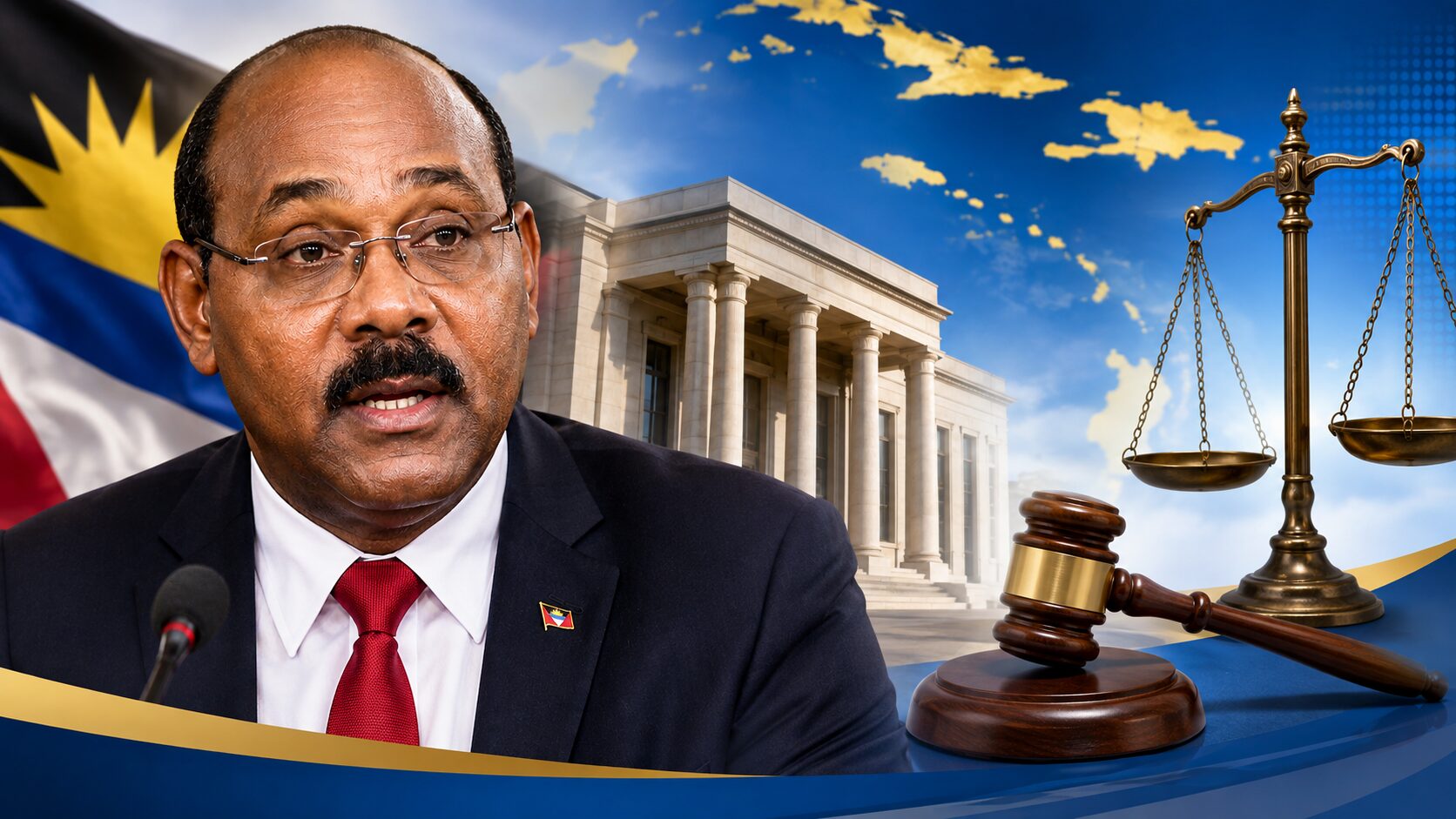
    The ABLP’s hold on power is being challenged by the nation’s main opposition bloc, the United Progressive Party (UPP), led by first-time election candidate Jamale Pringle. Pringle has campaigned on widespread discontent with the current administration, arguing that Antiguans and Barbudans have endured too many hardships under Browne’s government. “No longer will the people be subjected to the whims and fancy of a political party or a candidate or political person,” Pringle said. He pledged that a UPP government would implement inclusive policies that benefit all citizens, free of partisan political interference.

    For this election cycle, the incumbent ABLP is fielding candidates in all 17 parliamentary seats. The UPP is running candidates for the 16 seats located on Antigua, while its political affiliate, the Barbuda People’s Movement (BPM), contests the single seat allocated to the island of Barbuda. Three independent candidates are also running for office across multiple constituencies.

    The 2026 snap election comes three years after the 2023 general election, where the ABLP secured a narrow majority, winning 9 of the 17 available seats. The UPP won the majority of the remaining seats, with one seat going to an independent candidate. All eyes are now on the final vote count, which will determine whether Browne makes history as the first prime minister to win four consecutive terms, or if the opposition UPP will unseat the incumbent after three terms in power.

  • Afscheid van een markant legerbevelhebber

    Afscheid van een markant legerbevelhebber

    On Thursday, Suriname prepares to lay to rest one of its most decorated military leaders, Colonel Ernst Mercuur, a figure whose name has long been synonymous with respect, integrity, and unwavering service to the nation. The widespread admiration that surrounds Mercuur’s legacy is no coincidence: it is the product of extraordinary achievements, decades of relentless dedication, and above all, a moral character that stood firm through some of the country’s most turbulent moments. Throughout his life and career, Mercuur consistently demonstrated unshakable resolve, steadfast character, and remarkable courage, even during periods of widespread unrest. Those who served alongside him and knew his work hold deep reverence for the consistent commitment to core values, ethical standards, and principled conduct he embodied every day.

    For 11 years, Colonel Mercuur led the Suriname National Army with distinction, placing integrity, professional excellence, and wholehearted service to the Surinamese people at the center of his leadership. Through the most challenging periods of his tenure, he remained unyielding, always prioritizing the needs of the country’s civilian authorities and placing himself at their service. His loyalty to legitimate governing power was never in question; he was a leader that the nation could count on unconditionally.

    At the same time, Mercuur was known as a complex, no-nonsense commander: straightforward in his approach, and clear and uncompromising in his views. Throughout his long career, including during the period of Suriname’s Inner War, he repeatedly proved his courage and unwavering determination. These traits earned him natural, widely respected authority and the deep admiration of his troops, non-commissioned officers, and fellow officers alike.

    The tribute was written by Ivan Fernald, former Minister of Defence of Suriname, who had the privilege of working closely alongside Mercuur for five years. Fernald recounts that Mercuur consistently translated instructions from the presidency and the Ministry of Defence into strong, actionable mandates for military units across the service, always aligned with the Law on Instructions for the Commander of the National Army, while bringing his own distinct approach to every task.

    “A great man has left us,” Fernald wrote. “Mercuur was an outstanding commander who fulfilled a crucial historical role at a moment when a bold, distinctive leader like him was absolutely indispensable.” During his tenure, Mercuur worked tirelessly to uphold military discipline, strengthen the army’s operational capacity, and invest continuously in the human capital of the force through ongoing training programs.

    Fernald highlights three key contributions that stand out as defining parts of Mercuur’s legacy: first, his persistent push to expand access to foreign military training for service members at every rank; second, his successful work to restore public order and security following violent clashes in Papatam, near Albina; and third, his coordinated support to the Suriname Police Corps in line with the army’s mandated special duties during periods of civil unrest, including the unrest in Nieuw Koffiekamp.

    In closing, Fernald offered a final tribute to his former colleague: “Colonel, rest in peace.” To Mercuur’s family, he extended words of comfort and encouragement: “Draw strength from the fact that his contributions are celebrated across the entire nation. As time passes, his achievements will earn a permanent, prominent place in the historical records of the Ministry of Defence. Keep his memory alive, and draw inspiration from it for the road ahead.”

  • Pringle says the challenges he faced within the UPP prepared him to be Prime Minister

    Pringle says the challenges he faced within the UPP prepared him to be Prime Minister

    On the eve of Antigua and Barbuda’s April 30 general election, United Progressive Party (UPP) leader Jamale Pringle delivered a passionate, deeply personal closing rally address to supporters in All Saints, framing his political journey through months of internal party friction, public scrutiny and leadership uncertainty as a formative trial that has prepared his party to govern from its first day in office.

    Pringle built his closing argument to voters around the core narrative of being “forged in fire,” walking the gathered crowd through the sequence of challenges that he says shaped his leadership style. He listed the burdens of shouldering the party through periods of division, harsh public criticism, a contested leadership race, and schisms brought by former allies who turned against one another. He also highlighted the slow, deliberate work of rebuilding voter trust one constituency and one voter at a time, as well as mending fractured internal relationships to restore a sense of collective brotherhood focused on public service rather than personal gain.

    “After all this… the United Progressive Party team of candidates is emerging from the fire,” Pringle told the crowd, emphasizing that these trials have readied both him and his full slate of candidates to assume national leadership immediately if elected. He positioned the upcoming vote as a defining crossroads for the dual-island nation, framing the contest as a stark choice between two incompatible national futures: one path leading to democracy, expanded opportunity, equal justice, and broad prosperity, and the other continuing what he called a dark status quo of systemic corruption, political self-enrichment, and voter bribery.

    Pringle pushed back directly against public predictions from incumbent Prime Minister Gaston Browne, leader of the ruling Antigua and Barbuda Labour Party (ABLP), who claimed the ABLP would secure a landslide 17-9 seat victory. Dismissing the forecast as empty, attention-seeking rhetoric, Pringle asserted that voters would deliver a very different outcome, noting that the UPP had defied expectations of a weak campaign and proven its resilience through months of on-the-ground outreach.

    He went on to accuse the incumbent ABLP of engaging in unethical voter influence tactics, including tearing down UPP campaign posters and billboards, ridiculing opposition candidates, and using public resources for last-minute voter handouts ranging from electronic food vouchers to gas subsidies. Pringle questioned the suspicious timing of these expenditures, suggesting they indicated Browne already knows his party is poised to lose, asking, “why would he try to dry out the treasury before the UPP gets into office?”

    A recurring central theme of Pringle’s speech was the ultimate authority of the Antiguan and Barbudan voter. He repeatedly reminded attendees that all governing power resides with the public, urging them not to hesitate to exercise that power at the polls. He pledged a fundamental shift in governance style, promising a people-centered administration that prioritizes public input and works for all citizens rather than political elites.

    Dedicating a significant portion of his address to sports development, Pringle framed sports as a uniquely unifying force in Antigua and Barbuda and promised it would be a top policy priority for a UPP administration. He outlined a plan to redevelop the underutilized Mock Pond playing field into a full-service national training facility that would support youth talent development, club competitions, and community sports gatherings, with plans for new changing rooms, dedicated workout spaces, and expanded public parking.

    Pringle extended this sports vision nationwide, announcing that similar community-focused facilities would be rolled out across the country tailored to local popular sports, including basketball, tennis, and football. He also laid out plans to launch national under-20 tournaments and bi-annual parish sports competitions by the third year of the UPP’s first term if elected. Most notably, he revealed that private investors have already committed $3 million in backing for the planned redevelopment of the Sir Vivian Richards National Sports and Entertainment Complex, with an initial $1 million pledge followed by two additional $1 million commitments from separate private business leaders.

    Reaffirming his contrast with the current government, Pringle emphasized that the UPP rejects the self-serving governance he says defines the incumbent administration, promising that all state resources would be directed toward benefiting all Antiguans and Barbudans rather than lining the pockets of political leaders. He also underscored his party’s commitment to inclusive governance, noting that sustainable national progress requires full representation for Barbuda at all decision-making tables, stressing that the party represents the unified nation of Antigua and Barbuda, not one island over the other.

    Pringle formally endorsed all 25 UPP candidates and extended the party’s support to Trevor Walker, leader of the Barbuda People’s Movement, framing the entire opposition slate as a unified team focused entirely on advancing voter interests. Closing his address with a rousing call to action, Pringle urged voters to deliver the UPP a clear, decisive mandate in Monday’s poll. “We are ready… Jamal Pringle is ready… the United Progressive Party is ready,” he declared, before asking the cheering crowd, “Are you ready?”

  • WATCH: Pringle says his team is qualified and ready to lead Antigua and Barbuda on day one

    WATCH: Pringle says his team is qualified and ready to lead Antigua and Barbuda on day one

    On the first day of the new administration’s tenure leading Antigua and Barbuda, political leader Pingle has publicly stated that his assembled team is fully qualified and prepared to take the reins of national governance. Delivering his opening remarks to reporters and supporters, Pingle emphasized that every member of his cabinet and leadership cohort brings targeted expertise, on-the-ground experience, and a clear commitment to serving the people of the twin-island nation.

    The remarks come on the heels of a tightly contested electoral process that brought Pingle’s coalition to power, with high expectations from voters for tangible progress on key national priorities. These priorities include boosting the country’s tourism-reliant economy, strengthening infrastructure resilience against climate change, expanding access to affordable healthcare and education, and attracting foreign direct investment to create new local jobs.

    In his address, Pingle pushed back against early criticisms that questioned the experience level of some of his newly appointed team members, noting that each appointment was made based on merit and alignment with the administration’s policy agenda. He outlined that the leadership team would hit the ground running, with an immediate 100-day action plan set to be rolled out in the coming week to address the most pressing concerns of Antigua and Barbuda’s citizens.

    Local political observers note that the opening statement from Pingle serves as a clear signal of the new government’s intent to establish its credibility early, as it begins the work of governing one of the Caribbean’s most tourism-dependent small island states.

  • 253 application were made to renew Voter ID’s on April 28

    253 application were made to renew Voter ID’s on April 28

    As Antigua and Barbuda counts down to its April 30 general election, a dramatic late push for voter identification card renewals has kept electoral officials working around the clock, with hundreds of applications still flowing in during the final days before polling opens.

    New data released by the Antigua and Barbuda Electoral Commission paints a clear picture of growing last-minute activity this week. Following 73 replacement ID requests on April 26, the number of applications jumped sharply to 289 on April 27, before dipping slightly to 253 on April 28. This brings the total number of renewal requests processed in the week leading up to the election to 615, confirming a significant late surge among voters rushing to secure the valid documentation required to cast a ballot.

    Since the start of April, more than 32,000 replacement voter ID cards have been issued across the country’s constituencies, with many districts already reporting completion rates above 60 percent, and several approaching full processing of outstanding requests. St. Peter constituency leads all regions with an impressive 93 percent completion rate, followed by All Saints West at 72 percent and St. Mary’s South at 71 percent. These high rates signal broad engagement among voters in key constituencies ahead of the vote.

    Even with the high cumulative numbers of completed renewals, electoral commission observers confirm that applications have continued to arrive “down to the minute” in the lead-up to election day, as many voters leave their ID updates to the final possible moment. With polling stations set to open across the twin-island nation this Thursday, April 30, officials are working overtime to process all outstanding requests to ensure every eligible voter can exercise their democratic right.

  • ABLP Mourns the Passing of Comrade Philbert Mason

    ABLP Mourns the Passing of Comrade Philbert Mason

    The Antigua and Barbuda Labour Party (ABLP) has issued a heartfelt statement of condolence following the death of Philbert Mason, a beloved comrade who left an indelible mark on both the nation’s scientific community and the country’s leading political movement.

    Widely celebrated as a national treasure, Mason carved out a legendary reputation as one of Antigua and Barbuda’s most recognizable and accomplished meteorologists. His decades of work in climate and weather science laid critical groundwork for the country’s modern development, a contribution that earned him formal national recognition at the 1995 National Awards Ceremony. At the event, he was honored for his outsized role in shaping the contemporary Antigua and Barbuda we know today.

    Beyond his groundbreaking professional achievements, Mason was a deeply loyal and unwavering stalwart of the ABLP, serving multiple terms with distinction as the party’s Second Vice Chairman. Throughout his decades of involvement, he remained steadfastly committed to advancing the party’s mission and driving inclusive progress for the entire nation.

    A multi-faceted leader, Mason wore many hats that all reflected his devotion to his country: he was a shrewd political strategist, a nurturing mentor to emerging leaders, a successful entrepreneur, and a passionate patriot. He gave freely of his time, hard-earned wisdom, and natural talent to lift up others, mentoring and encouraging countless political candidates over the years. His guidance was always rooted in decades of on-the-ground experience, unshakable loyalty to the party’s values, and a firm belief that strong, accountable governance is the foundation of lasting national growth.

    Leaders and members of the ABLP say they are overwhelmed by profound sorrow at the passing of such a distinguished public servant and dedicated comrade. His legacy, the party notes, will remain permanently etched in the institutional history of the ABLP, and his enduring example of selfless service, unwavering dedication, and commitment to nation-building will continue to inspire coming generations of Antiguan and Barbudan leaders.

    The party closed its statement with a final tribute: May his soul rest in eternal peace.

  • OAS Electoral Observation Mission pays Courtesy Call on the Governor General

    OAS Electoral Observation Mission pays Courtesy Call on the Governor General

    In a diplomatic gathering held at Government House, His Excellency Sir Rodney Williams, Governor General of Antigua and Barbuda, welcomed a delegation from the Organization of American States (OAS) Electoral Observation Mission for a formal courtesy meeting focused on upcoming electoral processes in the nation.

    This discussion forms a core segment of the OAS mission’s official mandate, which centers on bolstering transparent, inclusive electoral practices and reinforcing public trust in democratic institutions across the Americas. During the meeting, both sides exchanged perspectives from key political stakeholders that are deeply tied to the conduct of the upcoming electoral cycle, aligning with the mission’s core objectives.

    The OAS delegation in attendance was led by Maricarmen Plata, the mission’s chief of mission. She was joined by Melene Glynn, the deputy chief of mission, Diego Paez, who serves as the group’s press officer, and Clarissa Ribeiro, the mission’s specialists coordinator.

    The meeting with Governor General Williams is one stop in the mission’s broader outreach program, which includes targeted consultations with a wide range of national stakeholders. Through these discussions, the mission aims to comprehensively evaluate the pre-electoral environment in Antigua and Barbuda, and deliver targeted support that strengthens the country’s existing framework of democratic governance, per the statement from the Office of The Governor General of Antigua and Barbuda.

  • Gov’t will enforce taxes, not raise them — PM

    Gov’t will enforce taxes, not raise them — PM

    Eight years after St. Vincent and the Grenadines (SVG) first slid into a state of high risk of debt distress, the island nation’s newly elected government has laid out a balanced fiscal strategy that prioritizes strengthened tax enforcement over new tax hikes, paired with private sector-led growth and targeted debt restructuring to reverse the country’s strained fiscal position.

    Prime Minister and Finance Minister Godwin Friday outlined the administration’s approach during a joint press briefing with the International Monetary Fund (IMF) in Kingstown on Tuesday, held alongside the release of the IMF’s latest economic outlook for SVG. Friday, whose New Democratic Party (NDP) secured a landslide 14-1 victory over the long-ruling Unity Labour Party in the November 2025 general election, ended 25 years of opposition rule and inherited a daunting fiscal landscape: as of December 31, 2025, the country carries a total national debt of 3.5 billion Eastern Caribbean dollars, with a debt-to-GDP ratio hovering between 113% and 120% per World Bank data.

    Framing the government’s core revenue strategy, Friday emphasized systemic tax reform and modernization, with a near-term focus on closing compliance gaps rather than raising existing tax rates. “We’ve identified property tax enforcement as one of our key priority areas,” he explained, noting that current compliance rates for property taxes sit at just 20% — a figure he called shockingly low. “Simply making the existing system work, without changing rates or adding new financial burdens for taxpayers, will deliver significant revenue gains. That’s the approach we are adopting to strengthen our revenue position,” the prime minister said, adding that broader tax system modernization efforts are underway but declined to share further details.

    On the expenditure side, the administration plans to pursue targeted rationalization of large recurring spending items, including public sector wage bills, pension obligations, and government subsidies, while directing limited public resources toward high-impact productive investments to drive economic expansion. Friday highlighted agriculture, tourism, and the blue economy as key growth sectors, noting that tourism has already posted solid gains over the past two to three years, while the blue economy holds untapped transformative potential for the island nation.

    Against a backdrop of limited fiscal space that rules out large-scale public-led investment, Friday made clear that the government’s growth strategy centers on private sector leadership, attracting both domestic private capital and foreign direct investment to drive expansion. “The scope for government to lead the large-scale investments we’ve seen in the past is very limited right now, because we simply don’t have the fiscal room for that,” he noted.

    To address the country’s heavy debt burden directly, Friday laid out a three-pronged strategy combining active debt management operations, fiscal adjustment, and a new citizenship by investment (CBI) programme — a key campaign promise from the NDP that the party has said will not add to existing national debt. The plan includes debt swapping and refinancing to replace higher-interest debt obligations with lower-cost alternatives, and Friday stressed that while the government is negotiating with bilateral and multilateral partners to ease its debt load, it remains fully committed to meeting all its existing financial obligations. The end goal, he said, is to free up critical fiscal space to maintain core government functions and fund new strategic investments.

    Under the proposed CBI programme, which would grant citizenship in exchange for qualified investments, Friday confirmed that all generated revenue will be prioritized for debt reduction and capital projects, rather than covering routine day-to-day government spending, a model aligned with how other Caribbean nations have structured similar programmes. IMF Mission Chief for SVG Sergei Antoshin noted during the briefing that a well-designed CBI programme could deliver a modest boost to fiscal revenue, but also carries inherent risks that require careful structural planning to maximize benefits. Friday responded that he broadly accepts the IMF’s guidance, noting that the government’s revenue allocation strategy aligns with that risk-mitigation approach.

    Currently, SVG’s baseline annual growth projection sits at around 2.7% — a rate Friday says is too slow to address the full scale of the country’s fiscal and social challenges. “We need faster growth than that, and we have a clear roadmap to deliver it. We are working to put all these measures in place as quickly as possible,” he said. The prime minister framed growth, debt sustainability, and social protection as mutually dependent objectives, noting that long-term stability depends on getting the balance right: “Sustainability only comes when we can meet our debt obligations, invest in our productive sectors, and build the infrastructure that generates further growth. These are significant challenges, and we are fully aware of the work ahead of us.”

  • API apologises for ‘genuine error with malicious intent’

    API apologises for ‘genuine error with malicious intent’

    A state-run public information agency in the Caribbean has found itself embroiled in minor political controversy after a costly administrative error triggered multiple conflicting apologies this week. On Tuesday, the Agency for Public Information (API) mistakenly distributed a media advisory announcing that former Prime Minister Dr. Hon. Ralph Gonsalves would host a press conference on April 28, 2026, a date more than two years in the future at the time of the error.

    The blunder comes five months to the exact day after opposition leader Godwin Friday was sworn in as the new prime minister, ending Gonsalves’ historic 25-year consecutive tenure in the nation’s top office.

    Within minutes of the first incorrect advisory going out, API dispatched a follow-up email to correct the mistake. That initial correction, signed by acting API director Nadia Slater, included a contradictory phrasing that only amplified confusion: it claimed the agency “sincerely apologises for the typing error in the previous email and wishes to indicate that it was a genuine error with malicious intent.” The contradictory wording immediately sparked speculation about whether the gaffe was a deliberate political slight rather than an innocent mistake.

    To address the growing confusion, API issued a third formal, press release-style apology hours later, walking back the contradictory language from the first correction. In this statement, the agency emphasized that the misidentification of the prime minister was purely accidental, stemming from a routine administrative oversight during draft preparation.

    “There was NO disrespect, political motive, or malicious intent whatsoever,” the statement read, reaffirming the agency’s commitment to upholding strict standards of professionalism, accuracy, and accountability across all official communications.

    The agency acknowledged that it failed to meet its own quality benchmarks with the erroneous correspondence, attributing the mistake to unintended human error. “We regret any misunderstanding or concern caused by this error and thank the public and members of the media for your understanding,” the statement continued. API officials noted that internal procedural changes are already underway to strengthen pre-release review processes, with the goal of preventing similar embarrassing missteps in the future. Unlike the first correction, this final formal apology was only signed “Director (Ag.)” with no specific named signature.

  • Anger over Delcy’s brooch

    Anger over Delcy’s brooch

    A seemingly small accessory has ignited a major diplomatic row across the Caribbean Community (Caricom), just days before a landmark international court hearing on one of the Western Hemisphere’s longest-running territorial disputes. The source of the tension is a deliberately worn brooch, shaped as a map of Venezuela that claims the resource-rich Essequibo region as Venezuelan territory, sported by Venezuela’s acting President Delcy Rodriguez during back-to-back official visits to two Caricom member states in late April 2026.

    Rodriguez’s visit schedule saw her meet Grenada Prime Minister Dickon Mitchell on April 9, before traveling to Bridgetown on April 27 to hold talks with Barbados Prime Minister Mia Mottley. Her choice of accessory did not go unnoticed by Guyanese leadership, which has formally protested the act to Caricom chairman Dr. Terrance Drew in an official letter dated April 28, 2026.

    For decades, the 159,000-square-kilometer Essequibo region — which makes up nearly two-thirds of Guyana’s current territory and holds vast untapped oil, mineral and forestry reserves — has been at the center of a sovereignty dispute between the two neighboring South American nations. The root of the conflict dates back to the 1899 Arbitral Award, which set the current border when Guyana was still a British colony. In 2018, Guyana launched formal proceedings at the International Court of Justice (ICJ) in The Hague to secure a binding ruling affirming the 1899 award’s legal validity and Guyana’s full sovereignty over the region. Oral hearings in the landmark case are scheduled to open on May 4, 2026.

    Venezuela has consistently rejected the 1899 award as legally flawed, and has refused to recognize the ICJ’s jurisdiction over the dispute, instead pushing for negotiations under the 1966 Geneva Agreement framework. Despite Venezuela’s jurisdictional challenge, the ICJ ruled in 2023 that it holds authority to adjudicate the case, and issued binding provisional measures ordering both parties to maintain the status quo, avoid any actions that would escalate the dispute, and allow Guyana to continue administering the region. Upcoming oral hearings mark a major step toward a final binding resolution.

    The current context of Venezuelan politics adds a new layer of urgency to the dispute: earlier in 2026, on January 3, a United States military operation removed long-time Venezuelan President Nicolás Maduro from power, taking him into custody to face criminal charges in New York. Rodriguez, a close ally of Maduro, was installed as acting president following Maduro’s ouster, and is preparing to contest upcoming national elections in Venezuela. Political analysts view her deliberate display of the disputed map as a move to galvanize nationalist support among Venezuelan voters ahead of the ballot.

    In his formal letter to Caricom’s leadership, Guyanese President Dr. Irfaan Ali described Rodriguez’s brooch as a calculated and provocative escalation of Venezuela’s territorial claim, directly violating the ICJ’s provisional measures and the 2023 Argyle Declaration. That agreement, brokered by Caricom in St. Vincent and the Grenadines in December 2023, saw then-President Maduro and President Ali commit to avoid the use or threat of force, refrain from escalation, and respect the ongoing ICJ process while the case is pending.

    Ali stressed that displaying a map claiming Essequibo as Venezuelan territory during official Caricom-hosted engagements risks being interpreted as regional acquiescence to Venezuela’s unlawful claim. “Venezuela cannot, while the case is before the Court, seek to normalise by symbols, maps, legislation, appointments or official display what it has failed to establish in law,” Ali wrote in the letter. He added that such provocative actions undermine Venezuela’s stated commitment to peaceful dispute resolution, international law, and good neighborly relations, noting that repeated symbolic and administrative moves to assert claim over Essequibo directly contradict the ICJ’s 2023 order requiring maintenance of the status quo.

    The Guyanese president reaffirmed his country’s unwavering commitment to a peaceful, lawful resolution through the ICJ, noting that Guyana continues to place full confidence in the court’s process and upcoming ruling. He called on all nations, including Venezuela, to abide by United Nations Charter principles, refrain from provocative acts, and respect the ongoing judicial process. Ali also urged Caricom to uphold its long-standing stated support for Guyana’s sovereignty and territorial integrity in both official declarations and the conduct of official regional engagements, calling for continued vigilance to safeguard the bloc’s principled position on the dispute.

    Reaction across Caricom has been mixed so far. Trinidad and Tobago Prime Minister Kamla Persad-Bissessar stated she remains unfazed by Rodriguez’s meetings with regional leaders, noting that Trinidad and Tobago maintains open diplomatic channels with Venezuela’s interim government. She also pointed out that Rodriguez, who was previously sanctioned by the United States, had only recently regained the ability to travel internationally for official engagements. In addition to her meetings with the Grenadian and Barbadian prime ministers, Rodriguez also held a previously unannounced meeting with former Trinidadian Prime Minister Stuart Young, who now serves as energy minister. Young publicly disclosed the meeting by posting a photo of himself and Rodriguez to social media.

    Prior to Maduro’s ouster, Guyana and international partners had repeatedly accused Venezuela of violating both the Argyle Declaration and ICJ provisional measures through a series of escalatory moves, including formally declaring Essequibo a new Venezuelan state, moving to award oil exploration concessions in the disputed region, and conducting maritime incursions near Guyana’s existing offshore oil operations. International bodies including the Commonwealth have repeatedly stated that these actions run counter to the spirit of the Argyle agreement, and have called on Venezuela to adhere to the ICJ’s binding provisional orders.