分类: politics

  • LISTEN: Government’s Bill to WIOC Nears EC$10 Million as It Keeps Fuel Prices Down

    LISTEN: Government’s Bill to WIOC Nears EC$10 Million as It Keeps Fuel Prices Down

    Against a backdrop of global energy market volatility stoked by ongoing geopolitical unrest, Antigua and Barbuda’s government has accumulated close to EC$10 million in outstanding debt to the West Indies Oil Company, Prime Minister Gaston Browne confirmed during his weekly appearance on Pointe FM over the weekend.

    This debt stems from a deliberate policy choice by the Browne administration: the government has forgone collecting full fuel taxes to subsidize retail fuel costs, rather than passing the burden of spiking international oil prices onto local consumers. Instead of letting prices rise with global market trends, the government has covered the gap between unsubsidized costs and fixed retail rates, resulting in the current outstanding balance owed to the regional energy firm.

    Browne explained that the intervention has successfully capped retail prices at EC$14.25 per gallon for gasoline and EC$14.50 per gallon for diesel – rates that remain among the lowest across the entire Caribbean, only outperformed by major oil-producing states in the region. The prime minister traced the current upward pressure on global energy prices to two key sources of geopolitical tension: the ongoing war in Ukraine and heightened geopolitical friction involving Iran, both of which have disrupted global energy supplies and pushed up international crude prices.

    “ We were able to contain the costs of fuel, but it came at a cost to the government,” Browne emphasized during the broadcast. “We’ve been paying them to keep the prices where they are.”

    The administration plans to maintain this price stability framework for as long as possible, arguing that consistent, predictable fuel prices deliver widespread benefits to both domestic households and local businesses. Browne framed the policy as a commitment to protecting the public during periods of economic uncertainty, noting that when fiscal conditions improve, the government will not face criticism for its proactive support during downturns. “At the end of the day, when the bad days arrive, you can be sure that we’ll provide a cover for you, the people,” he said.

    Notably, the prime minister ruled out further cuts to retail fuel prices, warning that artificially low rates would risk encouraging excessive energy consumption that would undermine long-term energy sustainability. “You don’t want gas prices to be too low because that will fuel excessive consumption, and on the other hand you don’t want them to be too high,” he noted. “That $14.25 and $14.50 is reasonable.”

    Looking ahead, the government’s long-term energy strategy does not rely on permanent fuel subsidies. Instead, Browne outlined plans to bring down overall energy costs through two core initiatives: introducing liquefied natural gas as a lower-cost transition fuel and scaling up investment in renewable energy infrastructure. The current subsidy framework will remain in place only until these alternative energy projects are operational and able to drive down baseline fuel costs permanently, the prime minister confirmed.

  • Nayib Bukele files to seek a third consecutive presidential term

    Nayib Bukele files to seek a third consecutive presidential term

    In a historic development for El Salvador’s political landscape, President Nayib Bukele has formally submitted his pre-candidacy to run for a third consecutive presidential term in the 2027 general election. This step comes just months after a controversial constitutional revision cleared the way for unlimited presidential re-election, rewriting the rules of the country’s democratic process.

    The ruling Nuevas Ideas party made the official announcement of the candidacy filing on Sunday, confirming that incumbent Vice President Félix Ulloa has also put forward his name to seek another term in office. Xavi Bukele, head of the Nuevas Ideas party, posted images of the completed registration documents across multiple social media platforms, making the news public for supporters and observers alike. Following the registration, Ulloa released a statement expressing gratitude to the party for the chance to continue advancing their shared political agenda. For his part, Bukele has yet to make any public statement addressing his pre-candidacy, and political analysts widely agree he will not face any serious challengers during the party’s upcoming primary selection process.

    The constitutional changes that made Bukele’s third-term run possible were approved by the country’s Legislative Assembly back in July 2025. In addition to eliminating term limits for the presidency, the reform package also pushed the date of the next presidential election forward to 2027, and extended all future presidential terms from five years to six. The reform has drawn sharp criticism from domestic opposition groups and international democracy watchdogs, who argue that removing term limits undermines the checks and balances core to democratic governance. Despite this backlash, Bukele maintains sky-high approval ratings among the Salvadoran public, a popularity built largely on his aggressive, widely supported crackdown on violent gang activity that once terrorized communities across the country. Even so, growing economic uncertainty and rising cost-of-living concerns have become increasingly top-of-mind for Salvadoran voters in recent months, creating an undercurrent of unease heading into the 2027 campaign cycle.

  • Leonel Fernández urges Dominican government to lower fuel prices as oil prices fall

    Leonel Fernández urges Dominican government to lower fuel prices as oil prices fall

    PUERTO PLATA — In a pointed address to party leadership over the weekend, former Dominican Republic president Leonel Fernández publicly pressed the current administration to roll back recent domestic fuel price increases, arguing that shifting global oil markets have created room for immediate relief for ordinary consumers.

    Speaking at a gathering of his People’s Force (FP) party in Puerto Plata on Sunday, Fernández laid out the context for his demand: the current government raised domestic gasoline prices earlier this year when global crude spiked to $104 per barrel amid escalating conflict in the Middle East, a move that required the state to step in with fuel subsidies to stabilize markets. Now, however, global benchmark crude has settled at roughly $70 per barrel — exactly the price range the government itself projected for coming years when it drafted the 2026 General State Budget.

    Given this sharp drop in international costs, Fernández argued that Dominican households deserve to see those savings reflected at the pump. He questioned why domestic fuel rates have stayed locked at their current elevated levels despite the retreat in global crude prices, and went further to level a political accusation against the sitting administration: he claimed the government is intentionally keeping prices high to rake in extra public revenue for hidden political objectives.

    Beyond his critique of the administration’s energy pricing policy, Fernández used the party assembly to outline the FP’s coordinated political roadmap ahead of the 2028 Dominican general elections. He called on all party leaders and members to maintain tight unity and disciplined organizational structure, framing the opposition’s goal as preparing to retake national executive power in the upcoming electoral cycle.

  • Dominican immigration inspector arrested in alleged bribery scheme at Punta Cana Airport

    Dominican immigration inspector arrested in alleged bribery scheme at Punta Cana Airport

    In a coordinated anti-corruption operation in the Dominican Republic’s top tourist hub of Punta Cana, law enforcement agencies have taken into custody an immigration control inspector caught in the act of soliciting a large bribe from a traveler seeking to depart for Spain. The accused, named Carlos Javier Sánchez, was arrested during a court-sanctioned controlled delivery sting, which was staged when he arrived to collect the demanded 100,000 Dominican pesos payoff from the female traveler. The investigation is a joint effort led by four key Dominican law enforcement bodies: the national Public Prosecutor’s Office, the Specialized Prosecutor’s Office for the Prosecution of Administrative Corruption (known locally by its acronym Pepca), the regional La Altagracia Prosecutor’s Office, and the country’s General Directorate of Migration. Prosecutors have emphasized that the arrest, which was carried out under a formal judicial warrant, is part of a sustained, systemic push by Dominican authorities to root out public sector corruption and crack down on transnational organized crime that operates through the country’s major border and airport entry points. Over the coming hours, officials will bring Sánchez before a local court to formally file a request for pretrial detention measures, which will remain in place while investigators continue to build their case and explore potential connections to other corrupt activities tied to the accused inspector.

  • Antigua and Barbuda to Acquire Major Solar Energy Plant Within 24 Months, PM Says

    Antigua and Barbuda to Acquire Major Solar Energy Plant Within 24 Months, PM Says

    In a landmark announcement made during his weekly broadcast on Pointe FM this past Saturday, Prime Minister Gaston Browne laid out an ambitious new energy strategy for Antigua and Barbuda that places both decarbonization and broad public economic participation at its core. Over the coming 24 months, the government will move forward with the development of a utility-scale solar generation facility, projected to produce between 15 and 20 gigawatt hours of clean electricity annually, and open up future renewable energy projects to direct investment from ordinary Antiguans and Barbudans.

    The initiative marks a deliberate break from the nation’s past energy development model, which has historically concentrated ownership of electricity infrastructure among a small cohort of private companies. Browne stressed that the new framework is designed to democratize access to the growing renewable energy market, allowing everyday citizens to build wealth and share in the economic benefits of the clean energy transition, rather than limiting these gains to a small group of corporate stakeholders. “We want this to be a shared situation which will provide opportunity for Antiguans and Barbudans to invest in energy,” Browne told listeners, noting that the policy’s core goal is to diversify ownership across the country’s energy sector.

    Contrary to some potential interpretations, the prime minister clarified that the plan does not sidelined existing energy operators. Current market players, including the Antigua Public Utilities (APC) and major private groups such as Eagle and the Hadid Group, are fully welcome to participate in bidding for stakes in the new solar project and future renewable developments. Browne emphasized that the policy is not intended to displace existing operators, nor is it rooted in animosity toward any current market leaders. “I say this with no hostility towards Eagle or towards the Hadid group of companies,” he explained. “The members of the Hadid family and I get on pretty well. We haven’t had any issues, but I speak truth to power, and ultimately my responsibility is to the people of Antigua and Barbuda. No friendship, no interests supersede the interests of the people.” APC could even emerge as the single largest investor in the new solar plant depending on its available resources, Browne added.

    The new large-scale solar facility is positioned as a complementary addition to the government’s ongoing transition to liquefied natural gas (LNG), which Browne framed as a pragmatic mid-term transition fuel. As Antigua and Barbuda scales up its renewable energy generation capacity over time, LNG will serve as a lower-emission alternative to the diesel and heavy fuel oil that currently dominate the nation’s energy mix, delivering immediate reductions in both consumer electricity costs and national carbon output. Browne outlined that the broader energy transition strategy will deliver two core, interconnected benefits for residents: “a reduction in price compared to using diesel or heavy fuel, and similarly there’s going to be a reduction in our carbon footprint.” This dual approach aligns with the government’s long-term goal of cutting the nation’s reliance on imported fossil fuels while expanding and strengthening the country’s overall electricity infrastructure.

  • EU Threatens to End Visa-Free Access for Antigua and Barbuda and OECS by Year-End, PM Says

    EU Threatens to End Visa-Free Access for Antigua and Barbuda and OECS by Year-End, PM Says

    The Caribbean nation of Antigua and Barbuda is facing a critical diplomatic challenge, after Prime Minister Gaston Browne confirmed the European Union has issued a warning that the country could forfeit its visa-free travel access to the Schengen Area by the end of 2024. The core of the EU’s objection centers on scrutiny of Antigua and Barbuda’s long-running Citizenship by Investment (CBI) Programme, a policy that grants citizenship to foreign individuals in exchange for qualified economic investment in the country.

    Speaking during an interview with local radio outlet Pointe FM over the weekend, Browne outlined that his administration is moving swiftly to ramp up high-level diplomatic outreach, with the explicit goal of arranging a direct meeting with EU officials to reverse the proposed policy change. “The European Union has threatened that they could withdraw their visa-free access, potentially by the end of the year,” Browne told listeners. “We don’t know for sure they will, but we’re trying to have a high-level engagement with them to see if we can actually reconsider their position.”

    The prime minister put forward a compromise proposal that he argues balances the EU’s stated security concerns with preserving the decades-long visa-free arrangement Antigua and Barbuda has enjoyed. Rather than eliminating visa-free access entirely, Browne said his government believes implementing an electronic travel authorization system would address European security needs while maintaining the current travel arrangement. “We have the view that an electronic travel authorization should be sufficient,” Browne said. “We think that it’s a sensible thing to do to maintain the good relations that we’ve had over the years and not to throw the baby out with the bath water.”

    Browne emphasized that the EU’s scrutiny is not isolated to Antigua and Barbuda, noting that other Eastern Caribbean states that run similar investment migration programmes are also facing the same threat of restricted travel access. He pointed to a recent precedent, where Ireland ended visa-free travel arrangements for a number of Caribbean nations, and acknowledged that even with intensive diplomatic work, a total discontinuation of Schengen visa-free access remains a possible outcome. “We can anticipate that, despite our best efforts, these visa-free arrangements may be discontinued,” he said.

    However, even if the worst-case scenario comes to pass, Browne made clear that the CBI Programme will remain a core part of the country’s economic strategy, describing it as an indispensable pillar of Antigua and Barbuda’s public finances. “What I will say here, under my leadership and certainly under the Labour Party’s governance of this country, with or without those visa-free arrangements, our CIP programme continues,” Browne stated. “It is too important a source of non-tax revenue to give it up.”

    Addressing questions about the integrity of the country’s CBI Programme, Browne pushed back against criticism, arguing that while no global immigration system can claim to be 100 percent free from abuse, Antigua and Barbuda’s due diligence processes are on par with, and in many cases stronger than, those used by much larger developed nations. “We are pretty sure that we have strengthened our programme and that it does not represent any significant risk to any country,” he said. “Nothing is foolproof… I believe that our programmes are better run than theirs.”

    Browne also rejected the widespread claim that Caribbean investment migration programmes represent a unique global security risk, pointing out that many of the same European countries that criticize the region’s programmes operate their own investment-based immigration pathways for foreign nationals. “I can say definitively in the case of Antigua and Barbuda, our programme is run with integrity,” he said. “I’ve never once overturned any case that was actually rejected by the CI Unit. We have allowed the unit and the board to operate independently.”

    He added that Antigua and Barbuda’s small geographic size and close-knit population actually makes it far harder for individuals with criminal intent to hide within the country, compared to larger nations. “If anything, our CIP programmes are helping these larger countries to unearth the criminals,” Browne said. He also noted that legitimate high-net-worth individuals seeking to travel to Europe are already able to secure direct visas from European nations regardless of their Caribbean citizenship status.

    The prime minister also called out what he described as a clear double standard in how the international community treats Caribbean CBI Programmes, arguing that the region is unfairly tarred with a broad brush when any concerns about investment migration arise. “The unfortunate thing about it is that they keep dubbing us with the same brush,” he said.

    Looking forward, Browne reaffirmed Antigua and Barbuda’s commitment to strengthening international security cooperation, saying the country is willing to introduce additional targeted safeguards to address EU concerns. These proposed measures include mandatory biometric screening for all CBI applicants and expanded information sharing agreements with foreign governments. “If we can collaborate and make sure that we have the biometric exam for these CIP citizens and that we can share information, if anything, it will help them to unearth these criminals,” he added.

  • PM Browne Says LNG Dispute With U.S Firm Resolved, First Ship Expected Within 30 Days

    PM Browne Says LNG Dispute With U.S Firm Resolved, First Ship Expected Within 30 Days

    After weeks of tense negotiations and high-stakes disagreements between the Antigua and Barbuda government and private contractors on the country’s landmark liquefied natural gas (LNG) infrastructure project, a last-minute compromise has cleared the path for the first cargo of LNG to arrive on national shores within one month, Prime Minister Gaston Browne has confirmed. Speaking in an interview with local radio outlet Pointe FM over the weekend, Browne broke down the origins of the conflict, which traced back to unforeseen complications during critical dredging work required to widen and deepen shipping channels to accommodate large LNG tankers. Initial geotechnical surveys had incorrectly characterized the seabed as composed entirely of sand, but crews encountered large formations of solid, extremely dense rock that drastically slowed progress. The government first deployed its domestic dredging firm Blue Ocean to complete the work, but when the company was unable to overcome the geological obstacles, international contractor Dutch Dredging was brought in – and still faced persistent challenges that extended the project timeline far beyond initial projections.

  • James serves notice of lawsuits over alleged police brutality

    James serves notice of lawsuits over alleged police brutality

    A sitting senator and practicing attorney from St. Vincent and the Grenadines is moving forward with high-stakes legal action against the island nation’s government, alleging two of the most egregious recent examples of police brutality and abuse of power in the country’s recent history. At a Wednesday press conference held in the capital city of Kingstown, Carlos James revealed that his legal firm has already submitted formal statutory notices under the territory’s Crown Proceedings Act on behalf of two vulnerable male residents who say they suffered unprovoked, brutal harm at the hands of serving police officers.

    The first case centers on Kenton Harris, a chronically mentally ill man from Lodge Village who is legally unable to manage his own personal and legal affairs. Harris’ ordeal gained nationwide public attention after a graphic video filmed on May 21, 2026 near Coreas on Hillsboro Road in Kingstown circulated widely on social media. The footage, which went viral and was covered extensively by local media outlets, shows multiple uniformed officers repeatedly beating Harris while he was already in handcuffs. But according to James, the alleged abuse of Harris began months before the viral confrontation was captured on camera.

    James outlined three separate alleged assaults by officers of the Royal St. Vincent and the Grenadines Police Force (SVGPF) against the vulnerable man. The first took place on March 11 at Kingstown’s Central Police Station, where James says officers physically attacked Harris, leaving him with a fractured left arm that required emergency medical intervention. More than three months after that initial incident, James says no formal investigation has been launched. While an inquiry has been opened into the May 21 beating, no official updates on potential criminal charges against the involved officers have been released to the public one month after the assault. The third alleged attack occurred while Harris was being held in a police holding cell and transported to Milton Cato Memorial Hospital (MCMH), following which James says Harris’ physical and mental health declined drastically. After the third assault, Harris was first transferred to the Mental Health Rehabilitation Centre (MHRC) in Glen, then rushed back to MCMH for urgent orthopedic care.

    The formal notice of upcoming civil proceedings, which James read in full during the press briefing, names the Attorney General as the defendant and is being pursued through Harris’ mother and litigation friend, Anesta Harris-Robinson. The claims against state agents include assault and battery, professional negligence, misfeasance in public office — defined as deliberate, oppressive and malicious misuse of state power to target a mentally disabled individual — and multiple violations of Harris’ constitutional rights, most notably his fundamental right to protection from cruel, inhumane and degrading treatment. James is seeking aggravated and exemplary damages for the what the legal document describes as “highly oppressive, high-handed and arbitrary” conduct, alongside compensation for pain and suffering, lost amenities, lost earnings and future earning capacity, past and future medical and rehabilitation costs, as well as legal fees and accrued interest. James also confirmed that his legal team is exploring the possibility of filing an additional constitutional motion, noting that the Harris case could set a critical precedent for reforming police interactions with mentally ill citizens across the country.

    The legal notice also includes a formal demand that the Attorney General’s Chambers preserve and turn over a full suite of evidence related to both the March 11 and May 21 incidents within a 14-day window. Required records include holding cell logs and occurrence book entries from Kingstown Central Police Station, full custody records and rosters for the incident dates plus two days before and after, formal statements from five named officers and all on-duty holding cell staff, any available surveillance footage from across the police station, and complete medical records, admission logs and diagnostic images from both MHRC and MCMH related to Harris’ care.

    Speaking briefly at the press conference, Harris-Robinson called for accountability for her son. “I would like to see justice for my son, because what the police and them do to him, they didn’t have the right to do it. They’re very wrong, and I would like to see justice for him,” she said. James emphasized that local police have long been aware of Harris’ mental health condition, a fact that increased rather than decreased their legal duty of care to the man. “For the very reason that he’s known, it gives even a greater level of responsibility on the officers… His mental condition warrants that, and that duty of care, in my opinion, was broken,” James said.

    The second, even more disturbing case outlined by James involves Louis Mercury, a resident of Redemption Sharpes who was shot multiple times by police inside MCMH on March 29. According to James, Mercury arrived at the public hospital around 8 p.m. that day to receive treatment for injuries he had sustained earlier in the Vermont area. Instead of being directed to the Accident and Emergency Department, Mercury was placed in a hospital ward corridor. When a hospital security guard ordered him to leave the area and Mercury refused to go until he received the medical care he needed, the guard called in a uniformed officer from the police Special Services Unit (SSU). James claims that the officer loaded his service weapon, and during the subsequent confrontation, fired between seven and eight rounds at Mercury from point-blank range, every one of which struck the man. “Our client posed no threat to life and did not resist the officer,” James stated in the legal notice.

    Mercury was hit in both arms and his right leg, and underwent emergency life-saving orthopedic surgery, remaining hospitalized for five weeks before being discharged on May 5. Mercury joined James at the press conference in a wheelchair, and James confirmed that the 54-year-old is now permanently unable to walk, his right arm is almost completely immobile, and a bullet remains lodged in his right leg. Mercury requires additional corrective surgeries that will require significant blood transfusions, James said. “As we speak, Mr. Mercury is unable to walk, he’s unable to use his right hand and is unable to fend for himself,” James added. Mercury told reporters he feels his fundamental rights have been taken from him. “I want justice for what happen to me dey. I’m feeling like my rights being affected like I don’t have none, no rights,” he said, issuing a public appeal for community members to donate blood to the hospital blood bank in his name to support his upcoming procedures.

    The second statutory notice of intended civil proceedings also names the Attorney General as a defendant, with the SSU officer listed as an unknown defendant, and copies the Commissioner of Police. The claim alleges unlawful, disproportionate and extremely reckless use of lethal force by the on-duty officer, alongside assault and battery, negligence, misfeasance in public office, and statutory state liability for the harmful acts carried out by its agents and employees. Mercury is seeking compensation for pain and suffering, permanent disability, past and future lost earnings, medical expenses, aggravated and exemplary damages, legal costs and accrued interest.

    James questioned how a trained, experienced officer could justify using such extreme force in that context. “What will possess a right-thinking, trained, experienced police officer at close range to use a service firearm to unleash not just one or even two shots to a member of the public, but at least seven to eight bullets across the body of a citizen…?” James said. “This is not someone escaping and running into the hills and you’re firing at the person and you’re hoping one or two of the bullets hit. You’re standing in front of the individual and you have unleashed seven to eight rounds of ammunition, paralysing this person.” James added that the proportionality and necessity of the force used demand rigorous, independent scrutiny, saying “We are to ask the question whether or not this is, in fact, lethal force, excessive force, far removed from any of the training that any officer would receive… and whether or not that is proportionate in the circumstances.”

    James also alleged that attempts to file a formal internal complaint about the shooting were blocked by police administration. He said Mercury’s relatives first notified a senior police officer of the shooting, and on that officer’s advice, visited the Police Public Relations and Complaints Department to submit a formal grievance. But James says a staff member at the department refused to take their statement, claiming the incident had already been reported to a senior officer. “Here it is that someone is going to lodge a formal complaint… and is being advised that a statement cannot be taken,” James said. “I find it very strange… Those are my instructions on behalf of the family… and hence the reason why, when I inquired, nobody seems to be aware of a man being shot seven to eight times by the police.” With the statutory notices now filed, the government is now required to respond to the claims in both civil and potentially criminal court in the coming weeks.

  • Staatsraad presenteert 2e rapportage en adviseert regering te focussen op prioriteiten

    Staatsraad presenteert 2e rapportage en adviseert regering te focussen op prioriteiten

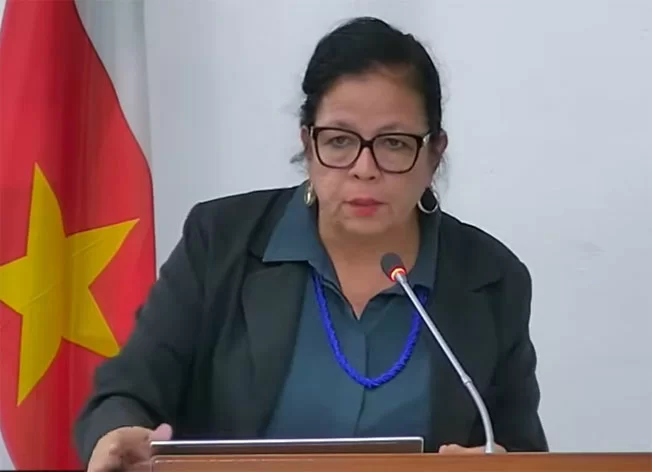
    On June 28, 2026, Suriname’s newly constituted Council of State marked a key milestone in its governance mandate by officially presenting its first half-yearly progress report to Council President Jennifer Simons, alongside launching new official digital platforms to boost public accessibility and transparency.

    The submitted document, the second formal report released by the body overall and the first periodic report since the current Council took office, combines a full accountability update on the institution’s operations with far-reaching strategic policy advice for the national government. Beyond detailing its core activities over the opening months of 2026, the report outlines the Council’s stance on personnel management, organizational structure, and public financial stewardship. According to the official documentation, the Council has fully accounted for all public funding allocated to it between January and April 2026, with all financial disclosures submitted to the president on schedule since the current administration of the Council took office. No public funds had been disbursed for the May and June reporting period at the time of the report’s publication.

    In addition to financial accountability, the report provides a full breakdown of the Council’s legislative advisory work in the reporting period. Over the opening months of 2026, the body delivered formal feedback on six private members’ bills, 16 draft pieces of legislation, and four draft state decrees. At the request of its own members, the Council also prepared a standalone advisory analysis examining how shifting global geopolitical developments are impacting Suriname’s domestic economy, collecting input and data from multiple government ministries, regulatory agencies, and independent research institutions to inform its findings.

    Drawing on this analysis, the Council formulated roughly 30 concrete policy recommendations for the government. Its core overarching conclusion calls on the administration to prioritize eight key policy areas in the coming years: expanded domestic production, food security, public healthcare access, quality education, national security, currency and price stability, and energy security.

    Alongside the report’s presentation, the Council officially launched its new dedicated website and official Facebook page during the formal ceremony, with Simons heading the launch, watched by Vice President Amzad Abdoel and Council member Caroline Heilbron. The institution says the new digital channels are designed to increase transparency, allowing the general public easier access to information about the constitutional advisory body’s policy recommendations and day-to-day work.

    Transparency and public accountability form the core guiding principles of the Council’s work, leadership emphasized in the ceremony. “The Council works for the people, using public resources from the people. It must never be the case that society does not know what we are working on and what activities we carry out,” a Council statement read. The full presentation and full text of the 2026 report are available for public download via the Council’s new digital platforms.

  • Hadeed’s search warrants reveal conspiracy to murder probe

    Hadeed’s search warrants reveal conspiracy to murder probe

    A prominent Trinidadian businessman and his wife have hit a legal roadblock in their bid to secure release from police custody, after the High Court dismissed their habeas corpus application earlier this week, amid an ongoing investigation into allegations of conspiracy to commit murder.

    The case centers on Dominic Hadeed, a well-known local businessman, and his spouse Genevieve Hadeed, who were taken into police custody following the execution of court-approved search warrants at multiple properties linked to the couple, carried out by officers from the Trinidad and Tobago Police Service’s Special Branch. Issued on June 24 by Master Valene Guerra-Abraham under Section 5 of the 2011 Administration of Justice (Indictable Proceedings) Act, the search warrants explicitly authorized law enforcement to seize and forensically examine a broad spectrum of electronic devices and stored digital data tied to the conspiracy probe.

    The investigation itself is being conducted under Section 5(a) of the Offences Against the Person Act, Chapter 11:08, which criminalizes conspiracy to commit murder as an indictable offence. Separate warrants for each spouse laid out the specific locations to be searched: Genevieve Hadeed’s properties at #2 Orange Grove Estate in Trincity and #47 Western Circle in Westmoorings, while Dominic Hadeed’s locations were #1-3 Golden Grove Road in Piarco and #23 Pine Avenue, Bayshore in Westmoorings, plus the Blue Waters offices in Orange Grove. Officers were granted permission to enter the premises at any time, seize all relevant devices, extract stored data, and submit the collected evidence to the High Court for review.

    Per the terms of the warrants, police were authorized to seize every type of digital device, including smartphones, laptops, tablets, external hard drives, portable flash drives, and physical paper documents. The scope of the data extraction covered all potentially relevant information: communication logs, stored messages, photographs, voice notes, audio and video recordings, closed-circuit television footage, text messages, GPS location history, and application-specific data. A handwritten inventory attached to subsequent court documents confirms law enforcement seized a range of devices, including multiple Apple iPhones, Samsung handsets, Apple laptops, iPads, a Dell Latitude laptop, multiple flash drives, and a full computer processing unit from the searched locations.

    Representing the couple, senior counsel Faris Al-Rawi filed the habeas corpus application with the High Court, attaching copies of the executed search warrants to his supporting affidavit. Al-Rawi’s core legal argument centered on the claim that the Hadeeds were arrested during the execution of standard search warrants tied directly to the conspiracy to murder investigation, not under the 2026 Emergency Powers Regulations. He contended that the police’s subsequent use of emergency powers to extend the couple’s detention was legally invalid. “The Applicants were not arrested or detained under Regulation 13(1) of the Emergency Powers Regulations, 2026, nor under those Regulations at all. They were arrested in the execution of ordinary search warrants in respect of the offence of conspiracy to murder, which is not an offence against the said Regulations. The only basis advanced by the Respondent for the continued detention of the Applicants appears to be the Emergency Powers Regulations, which do not apply to the Applicants,” Al-Rawi stated in his affidavit.

    After hearing initial arguments, Justice Frank Seepersad ruled to dismiss the habeas corpus application seeking immediate release of the couple from custody. However, the judge issued a formal directive to Police Commissioner Allister Guevarro to deliver official clarification on whether the Hadeeds are currently being held under a Preventive Detention Order (PDO). The next stage of the legal proceeding has been scheduled for a virtual hearing to be held at 9 a.m. the following day, as the court works to resolve the dispute over the lawfulness of the couple’s detention.