分类: politics

  • France condemns US operation to capture Maduro; Russia ‘strongly urges’ release

    France condemns US operation to capture Maduro; Russia ‘strongly urges’ release

    PARIS, France — The French government issued a stern condemnation on Saturday regarding the United States-led military operation that resulted in the capture of Venezuelan President Nicolas Maduro, denouncing it as a violation of fundamental international legal principles. Concurrently, Russia demanded the immediate release of the detained Venezuelan leader and his wife.

    French Foreign Minister Jean-Noel Barrot articulated the nation’s position through a formal statement on social media platform X, acknowledging Maduro’s record of human rights violations against Venezuelan citizens while simultaneously condemning the American intervention. Minister Barrot emphasized that the operation “contravenes the principle of non-use of force, which serves as a cornerstone of international law.”

    The French diplomatic statement further cautioned that escalating violations of this fundamental principle by permanent members of the United Nations Security Council would inevitably yield “serious consequences for global security, sparing no nation.” Barrot underscored that sustainable political resolutions cannot be externally imposed, reflecting France’s commitment to diplomatic norms and multilateral governance structures.

    Meanwhile, the Russian Foreign Ministry issued multiple statements expressing profound alarm over the development, characterizing the American operation as “an act of armed aggression against Venezuela.” Russian officials dismissed Washington’s justifications for the intervention as “untenable,” asserting that “ideological hostility has triumphed over businesslike pragmatism” in American foreign policy decision-making.

    The Kremlin demanded immediate clarification regarding the circumstances surrounding Maduro’s apprehension and called for the unconditional release of both the Venezuelan president and his spouse. Russia, which had reaffirmed its support for Maduro following his controversial re-election in 2024 and remains Venezuela’s principal strategic ally in South America, stopped short of explicitly committing military assistance to Caracas in potential confrontations with the United States.

    The coordinated responses from both European and Russian diplomatic channels highlight growing international concern over unilateral military actions and their implications for global security architecture. The developments mark a significant escalation in the ongoing Venezuelan political crisis that has drawn in major world powers with competing geopolitical interests.

  • Venezuelan capital quiet, streets empty after US strike

    Venezuelan capital quiet, streets empty after US strike

    CARACAS, Venezuela — The Venezuelan capital awoke to a transformed political reality Saturday following a pre-dawn U.S. military operation that resulted in the capture and removal of longstanding leader Nicolás Maduro. The city remained under a tense calm, with the distinct odor of explosives permeating the air as residents processed the dramatic overnight events.

    Beginning approximately at 2:00 AM local time, a series of powerful detonations rocked the city of six million, initially mistaken by some residents for fireworks. The strikes generated substantial shockwaves that rattled windows throughout the metropolitan area, prompting many citizens to rush onto terraces and balconies as military aircraft conducted operations overhead.

    Maria Eugenia Escobar, a 58-year-old Caracas resident, described the traumatic experience: “The explosion force literally threw me from my bed. In that terrifying moment, I thought ‘My God, the day has finally arrived,’ and I simply broke down crying.”

    Strategic military installations including the extensive compound in the Coche neighborhood, La Guaira’s airport and port facilities, along with targets in Maracay and Higuerote, sustained significant damage. Eyewitnesses reported observing substantial smoke columns rising from multiple locations across the city, eventually creating a dense, haze-like blanket over the urban landscape.

    U.S. President Donald Trump confirmed that American special operations forces successfully apprehended Maduro, who now faces transport to New York for judicial proceedings. The President emphasized that no American casualties occurred during the operation, though Venezuelan military and civilian casualties remain unverified.

    The city’s typically vibrant streets remained predominantly deserted throughout the day, with occasional vehicles passing through areas monitored by heavily armed security personnel in black uniforms. While numerous establishments chose to remain closed, limited commercial activity resumed at select locations implementing controlled customer entry.

    Approximately several hundred dedicated Maduro supporters congregated at an improvised demonstration site, demanding information regarding their leader’s whereabouts and current condition. The gathering featured revolutionary music amplified through makeshift speaker systems alongside chants of “Long live Nicolás Maduro!”

    Katia Briceno, a 54-year-old university professor participating in the protests, condemned the American intervention as “barbaric,” questioning the legitimacy of foreign powers removing a national leader. Meanwhile, Defense Minister General Vladimir Padrino López accused U.S. forces of deploying missile and rocket attacks against civilian residential zones from combat helicopters.

    President Trump indicated readiness for potential additional military measures, stating he remained “unafraid of boots on the ground” while suggesting the possibility of “significantly expanded” subsequent strikes if warranted. The administration committed to overseeing Venezuelan governance until completing an appropriate political transition.

    Opposition leader Maria Corina Machado advocated for Edmundo Gonzalez Urrutia—whom opposition groups recognize as the legitimate winner of July 2024’s contested elections—to immediately assume presidential authority. However, Trump dismissed Machado’s leadership potential, instead expressing willingness to collaborate with Maduro’s deputy Delcy Rodriguez, whom he described as receptive to necessary reforms.

  • US aviation regulator shuts Caribbean airspace amid Venezuela action

    US aviation regulator shuts Caribbean airspace amid Venezuela action

    The United States Federal Aviation Administration (FAA) issued a significant airspace advisory on Saturday, directing commercial carriers to avoid portions of Caribbean airspace. The directive cited an ongoing ‘potentially hazardous situation’ linked to U.S. military operations, which culminated in the capture of Venezuelan President Nicolás Maduro.

    The aviation alert specifically warned of ‘safety-of-flight risks associated with ongoing military activity,’ effectively creating a no-fly zone for commercial aviation in the specified region. This precautionary measure underscores the scale and sensitivity of the military action undertaken.

    U.S. President Donald Trump publicly confirmed the successful capture of the Venezuelan leader, describing it as the result of a ‘large-scale strike’ conducted on Venezuelan territory. This decisive military intervention represents a dramatic escalation in a prolonged campaign of pressure against Maduro’s government.

    The operation follows an extensive period where the U.S. applied intensifying economic sanctions and diplomatic isolation tactics targeting Maduro’s socialist regime and its oil-dependent economy. Notably, this military action occurred just 48 hours after Maduro had extended an overture to the Trump administration, proposing bilateral cooperation on critical issues such as narcotics trafficking and illegal migration control.

  • Hurricane recovery a catalyst to address long-standing development constraints

    Hurricane recovery a catalyst to address long-standing development constraints

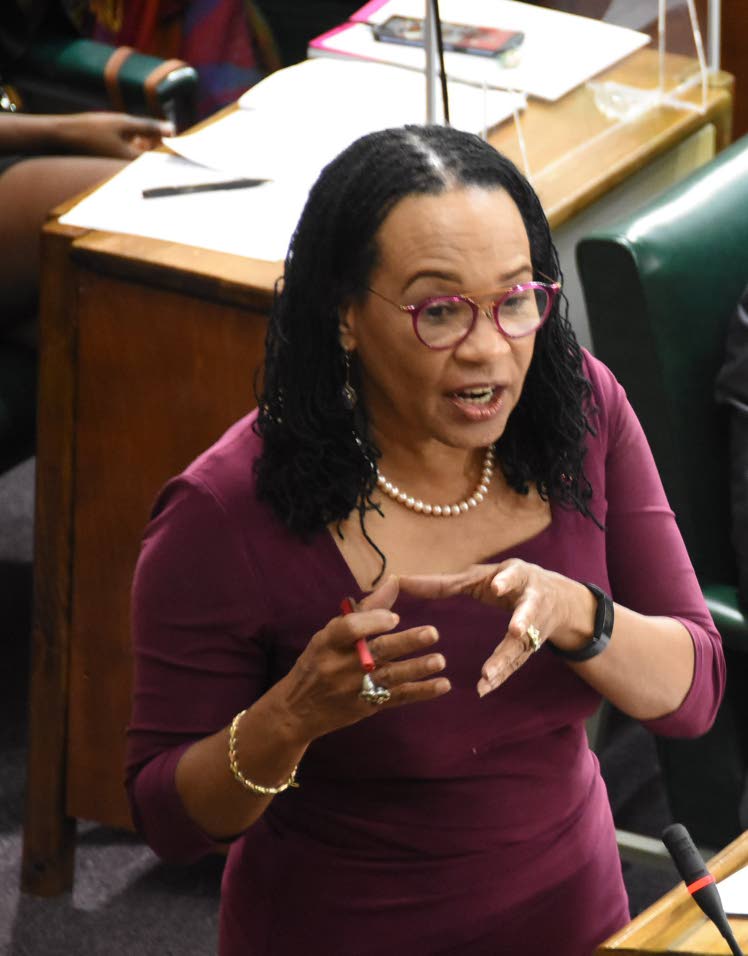
    Prime Minister Andrew Holness has declared that Jamaica’s rehabilitation efforts in the wake of Hurricane Melissa should serve as a springboard for tackling persistent developmental obstacles while simultaneously accelerating national objectives. During a media engagement in Black River after the inaugural Fireworks Festival on New Year’s Eve, Holness emphasized that the catastrophic event unveils a unique chance for nationwide transformative progress.

    Holness articulated that the disaster necessitates reconstruction that transcends mere restoration of pre-existing conditions, which he identified as inherent impediments to development. The hurricane laid bare structural deficiencies, particularly in infrastructure design and urban planning, that have historically stifled growth. He highlighted severe congestion as a principal developmental barrier, citing inadequate road dimensions and traffic overcrowding as critical constraints.

    The Prime Minister outlined a vision for constructing contemporary, functional towns equipped with modern amenities such as expansive sidewalks and sufficient parking to enhance mobility and livability. He affirmed that public safety continues to be a paramount concern, noting Jamaica’s achievement in reducing homicide rates to a 31-year low of approximately 700 cases.

    Economic resilience remains crucial to recovery, with Holness referencing a recent quarterly growth peak of five percent—the highest recorded in years. However, he cautioned that economic advancement must be paralleled by social cohesion and disciplined public behavior. Addressing broader societal violence and dysregulated conduct is essential alongside crime reduction, he stated.

    Holness concluded that societal peace, coupled with strategic investments in infrastructure, will catalyze visible transformations in both communities and individual lives across Jamaica.

  • Trump: US will run Venezuela – Maduro, wife captured in overnight strike

    Trump: US will run Venezuela – Maduro, wife captured in overnight strike

    In a dramatic escalation of long-standing tensions, United States military forces executed a precision strike in Caracas, Venezuela, in the early hours of January 3rd, resulting in the capture of President Nicolas Maduro and First Lady Cilia Flores. The operation, which U.S. officials described as a surgical extraction mission, targeted a heavily fortified compound and concluded without American casualties, though one helicopter sustained damage from enemy fire.

    At a subsequent news conference held at his Mar-a-Lago estate in Florida, President Donald Trump declared the United States’ intention to assume provisional control of the South American nation. He outlined plans to oversee a ‘safe, proper and judicious transition’ of power while simultaneously leveraging Venezuela’s vast oil reserves for international sale. The captured leaders were transported to the amphibious assault ship USS Iwo Jima, part of a larger U.S. naval contingent deployed to the southern Caribbean since last August, and are slated to be extradited to New York to face federal narco-terrorism conspiracy charges.

    The legal foundation for the action was presented by Attorney General Pam Biondi, who unsealed a detailed indictment from the U.S. District Court for the Southern District of New York. The document characterized the Maduro administration as a ‘corrupt, illegitimate government’ sustained by a large-scale drug trafficking operation that deliberately flooded U.S. markets with cocaine.

    President Trump explicitly dismissed the potential leadership of exiled opposition figure Maria Corina Machado in any interim government, citing her alleged lack of domestic support. Instead, he indicated that an American-appointed administration, involving figures such as Senator Marco Rubio, would be designated to manage Venezuelan affairs temporarily. Trump further warned that had the extraction mission failed, a larger military offensive was prepared, and affirmed a willingness to deploy ground troops to maintain order.

    In response to the power vacuum, Venezuelan Vice President Delcy Rodriguez was swiftly sworn in. However, her subsequent televised address presented a starkly contradictory narrative. She vehemently denounced the U.S. incursion as an ‘atrocity’ and a violation of international law, proclaiming, ‘There is only one president in this country and his name is Nicolas Maduro.’ She stopped short of declaring herself acting president and gave no indication of cooperating with Washington, despite Trump’s claims to the contrary. The Venezuelan government declared a national emergency, with Defense Minister Vladimir Padrino López and Interior Minister Diosdado Cabello projecting defiance and urging citizens to take to the streets in defense of national sovereignty.

    The international community reacted with sharp division. United Nations Secretary-General Antonio Guterres expressed ‘deep concern’ that the rules of international law were not respected, calling the events a ‘dangerous precedent.’ Conversely, Argentine President Javier Milei hailed the development as ‘excellent news for the free world.’ Condemnation was swift from leaders in Brazil, Colombia, China, and Russia, while Mexico decried a ‘clear violation’ of the U.N. Charter. Colombia reinforced its shared border to stem a potential influx of refugees, even as expatriate Venezuelans in Chile celebrated the news. The U.N. Security Council scheduled an emergency meeting to address the crisis.

  • PM: Venezuela’s people free at last

    PM: Venezuela’s people free at last

    In a dramatic predawn operation on January 3, 2026, US special forces successfully captured Venezuelan President Nicolás Maduro and First Lady Cilia Flores from a heavily fortified compound in Caracas. The operation, reportedly involving the elite Delta Force unit, marks an unprecedented military intervention in South American politics.

    Trinidad and Tobago Prime Minister Kamla Persad-Bissessar immediately celebrated the capture as a “moment of liberation” for the Venezuelan people. In an official statement on social media platform X, she expressed hope that Venezuela would now “transition away from years of oppression and dictatorship toward democracy, justice, and prosperity.”

    The PM’s endorsement came shortly after former US President Donald Trump detailed the operation in a press conference, announcing that the United States would assume control of Venezuela’s governance temporarily. Trump revealed plans for American oil companies to rehabilitate Venezuela’s energy infrastructure while casting doubt on whether exiled opposition leader María Corina Machado or current Vice President Delcy Rodríguez would participate in any interim government.

    The geopolitical shift has significant implications for Trinidad and Tobago’s energy interests. Following bilateral discussions with US Secretary of State Marco Rubio, Trinidad secured a six-month OFAC license for the cross-border Dragon gas project—a reversal from Persad-Bissessar’s earlier declaration that the deal was “dead” after taking office.

    Despite maintaining formal neutrality, the Trinidadian government has supported broader US military activities in the region, including radar system installations in Tobago and granting indefinite transit rights for US military flights. This stance has created divergence with other CARICOM members concerned about regional militarization.

  • Positive thinking for the New Year

    Positive thinking for the New Year

    As 2026 commences, a global political phenomenon demands examination: the ascendancy of unconventional leaders challenging established norms. The recent election of Zohran Mamdani—a 34-year-old Muslim progressive from Uganda—as mayor of New York City represents this trend in its most striking form. His victory under a conservative federal administration led by a New Yorker who considers the city his dominion appears particularly paradoxical.

    This political upset follows Kamala Harris’s decisive defeat in the 2024 presidential election, which restored a previous Republican president to the White House. The contrast between these outcomes suggests voters are increasingly drawn to candidates who promise disruptive change rather than incremental moderation.

    The term ‘maverick’ originates from Samuel Maverick, a Texan rancher who defied convention by refusing to brand his cattle. His unorthodox approach allowed him to claim unbranded calves as his own, accelerating his prosperity. Contemporary political mavericks similarly reject conventional branding and party orthodoxy, appealing to electorates weary of traditional politics.

    Globally, this pattern repeats. Trinidad and Tobago recently elected a new government seeking departure from established political norms. The newly appointed prime minister demonstrates maverick tendencies that voters endorsed despite potential discomfort. This reflects broader societal willingness to embrace political experimentation amid dissatisfaction with current systems.

    Some analysts attribute this shift to perceived failures of contemporary capitalism. While democracy remains robust in many nations, economic systems face mounting criticism for perpetuating inequality and instability. The adage that societies are “three meals away from chaos” underscores the urgency with which leaders must address these challenges.

    The management of maverick leadership presents particular difficulties. While organizations benefit from disruptive thinkers who challenge groupthink, balancing innovation with cohesion requires nuanced leadership. Senior figures often become risk-averse, potentially stifling the creativity necessary for progress in business, politics, and governance.

    As societies navigate increasing complexity, the certainty of past decades gives way to uncertainty. The unwritten rules of politics and governance are being rewritten, demanding greater adaptability from both leaders and citizens. Embracing this discomfort may be necessary to address pressing global challenges effectively.

  • Trump posts photo of handcuffed, blindfolded Maduro

    Trump posts photo of handcuffed, blindfolded Maduro

    WEST PALM BEACH, United States — In a dramatic escalation of tensions, former US President Donald Trump utilized his Truth Social platform to disseminate an image depicting Venezuelan President Nicolas Maduro in captivity aboard a US naval vessel. The photograph, released on Saturday, portrays the Latin American leader blindfolded, handcuffed, and outfitted with apparent noise-cancelling ear protection, alongside grey Nike-branded athletic wear.

    This visual confirmation followed Trump’s earlier announcement revealing that US forces had successfully executed a ‘large scale strike’ operation within Venezuela, resulting in Maduro’s capture and subsequent transport to the USS Iwo Jima. The operation represents the culmination of an extensive campaign employing both military and economic pressure tactics against Maduro’s government and its oil-dependent economy.

    The capture occurred merely forty-eight hours after Maduro had extended an overture to the Trump administration, proposing bilateral cooperation on critical issues including narcotics trafficking containment and illegal migration mitigation. This strategic military action underscores the severe deterioration of diplomatic relations between the two nations and marks an unprecedented intervention in South American political affairs.

  • Caricom leaders meet on US invasion of Venezuela

    Caricom leaders meet on US invasion of Venezuela

    GEORGETOWN, Guyana – Caribbean Community (Caricom) leaders convened an emergency session early Saturday following the United States’ military incursion into Venezuelan territory and the reported capture of President Nicolas Maduro along with his spouse. The regional body, representing 15 member states, issued an official communiqué through its Secretariat characterizing the development as a matter of “grave concern” with potential ramifications for neighboring nations.

    The brief two-paragraph statement confirmed that the integration bloc is “actively monitoring the situation” and pledged to keep Caribbean citizens informed as additional intelligence becomes available. This emergency diplomatic mobilization reflects the region’s apprehension about destabilizing effects from foreign military actions within their sphere.

    In a significant regional development, Trinidad and Tobago’s Prime Minister Kamla Persad-Bissessar explicitly distanced her nation from the operations. Through an official statement disseminated on social media platform X on January 3rd, 2026, the Prime Minister clarified that “Trinidad and Tobago is NOT a participant in any of these ongoing military operations” initiated by the United States earlier that morning. This declaration highlights divisions within the hemisphere regarding appropriate responses to the Venezuela situation and demonstrates Caricom members’ cautious approach to the escalating crisis.

  • Trump: US will run Venezuela

    Trump: US will run Venezuela

    In a dramatic escalation of international tensions, United States military forces have executed a precision operation in Caracas, resulting in the capture of Venezuelan President Nicolas Maduro and First Lady Cilia Flores. The operation, conducted approximately at 2 AM local time, involved elite units including the Army’s Delta Force targeting a heavily fortified compound.

    President Donald Trump confirmed the development during a Florida press conference, announcing that both detainees are currently aboard the USS Iwo Jima amphibious assault vessel in the Caribbean Sea. They are scheduled for transport to New York to face narcotics trafficking charges in federal court.

    The US administration has declared its intention to administer Venezuela during a transitional period. Trump stated, “The US is going to run Venezuela until such time as we can do a safe, proper, and judicious transition,” though specific details regarding the transitional governance structure remain undefined.

    Following Maduro’s capture, Vice President Delcy Rodriguez was reportedly sworn in as president and has engaged in discussions with US Secretary of State Marco Rubio. However, Trump expressed skepticism about long-term roles for any members of the current administration, including Rodriguez.

    The administration also cast doubt on opposition leader Maria Corina Machado’s potential leadership, citing insufficient domestic support. Trump indicated that interim governance would be directed by officials including Rubio and other advisors.

    General Dan Caine, Chairman of the Joint Chiefs of Staff, confirmed that US forces remain on high alert throughout the Caribbean region. The operation reportedly involved months of coordination between military intelligence and agencies including the CIA.

    The geopolitical implications extend throughout the region, with recent military cooperation between US forces and Trinidad and Tobago including joint exercises, radar installations at ANR Robinson International Airport, and transit flight agreements—all previously characterized as counter-narcotics measures.