分类: politics

  • Parker Warns Expanded Search Warrant Powers Could Threaten Constitutional Rights

    Parker Warns Expanded Search Warrant Powers Could Threaten Constitutional Rights

    A heated debate unfolded in the national Senate Monday over legislation that would dramatically expand police powers to issue search warrants, ending with the governing majority pushing the measure into final approval despite fierce warnings from the opposition that the change threatens core constitutional privacy protections.

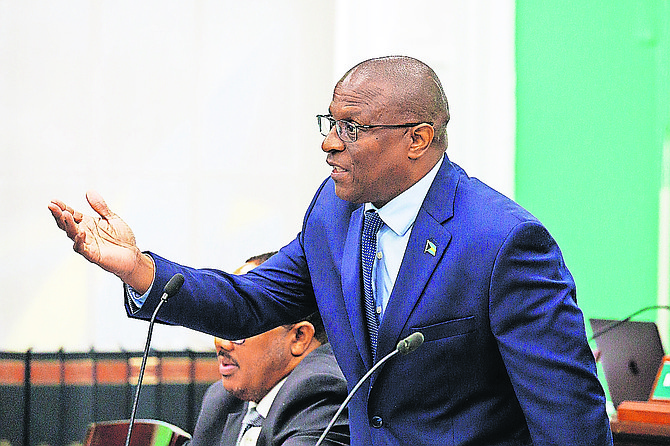
    At the center of the opposition pushback was Senator Malaka Parker, who argued that the Magistrates’ Code of Procedure (Amendment) Bill 2026 is far more than a routine update to existing procedural rules. Instead of clarifying and limiting law enforcement authority, the bill broadens the eligibility criteria for search warrants to a sweeping scope: it allows magistrates to grant warrants when there is reasonable cause to believe *any offense* has occurred, rather than restricting this power to serious, indictable crimes as has been long-standing legal precedent.

    Parker rejected framing the bill as a necessary modernization, emphasizing that the proposal erodes critical checks on state power by failing to set clear boundaries for expanded police authority. She warned the legislation risks triggering major constitutional challenges, as it rebalances the delicate existing relationship between law enforcement power, judicial oversight, and the fundamental citizen right to privacy. Beyond the expanded warrant eligibility, the opposition leader raised alarms over a new provision that allows police to seize evidence of unconnected offenses discovered during a valid search, without establishing clear legal safeguards for how that process should work. To address these gaps, Parker put forward two key changes: requiring all evidence collected outside the original scope of a warrant to be reviewed by a magistrate within 48 hours to maintain judicial supervision, and calling on the government to draft a full, unified legal code governing search warrants, evidence retention and police procedures rather than making fragmented, piecemeal changes to existing law. “Judicial oversight is non-negotiable to prevent abuse of power and protect fundamental rights,” Parker emphasized. “That’s why police are required to obtain a warrant in the first place.”

    Government representatives pushed back hard against these criticisms, framing the expansion as a critical update to match evolving criminal threats. Senate Government Business Leader Shenella Govia rejected claims that the amendment weakens constitutional protections, arguing that outdated legal language has left law enforcement ill-equipped to tackle increasingly sophisticated and organized transnational and domestic criminal activity. “As crime evolves alongside the changing world, our legal framework must evolve too,” Govia said. She explained that replacing narrow references to specific offenses with broad, flexible language ensures the search warrant framework will remain effective as new types of criminal activity emerge. Addressing the provision allowing seizure of unrelated evidence discovered during a lawful search, Govia asked: “If you enter a home under a valid warrant and see a bag of illegal drugs right in front of you, what are you supposed to do? Crime does not stick to arbitrary categories or limits.” She also noted that judicial oversight remains fully in place, because officers are still required to present sworn evidence to a magistrate to secure a warrant before any search can be carried out. Government senators reiterated that the changes are designed to strengthen public safety without eroding existing constitutional privacy safeguards.

    Despite the opposition’s vocal concerns and formal proposals for additional protections, none of the proposed amendments were accepted during the bill’s committee stage. Following the debate, the Senate held a third reading and passed the bill, clearing the way for the expanded search warrant provisions to officially become law.

  • Antigua and Barbuda Hosts Commonwealth Leaders Lunch Ahead of CHOGM 2026

    Antigua and Barbuda Hosts Commonwealth Leaders Lunch Ahead of CHOGM 2026

    As Antigua and Barbuda enters the pre-summit preparation phase for the 28th Commonwealth Heads of Government Meeting (CHOGM) 2026, key Commonwealth stakeholders have gathered for a high-profile leaders’ luncheon in London to align priorities and build momentum ahead of the November 1–4 gathering in St. John’s. The event was jointly hosted by three organizing partners: Antigua and Barbuda’s High Commission in London, the Commonwealth Enterprise and Investment Council (CWEIC), and the Sustainable Markets Initiative (SMI).

    The luncheon opened with warm introductory remarks from Her Excellency Karen-Mae Hill, Antigua and Barbuda’s top diplomatic representative to the United Kingdom. Following her welcome, the floor was given to the Honourable E. Paul Chet Greene, who serves as Antigua and Barbuda’s Minister for Foreign Affairs, Trade and Immigration, and also chairs the national task force steering preparations for the 2026 CHOGM. A number of other senior Antigua and Barbuda diplomatic officials joined the gathering, including H.E. Theon Ali, who holds dual appointments as Ambassador to Qatar and Deputy Head of Mission at the country’s embassy in the United Arab Emirates, alongside Brent Scotland, Second Secretary at the London High Commission.

    In his address to attendees, Minister Greene extended formal gratitude to Lord Swire KCMG PC, Deputy Chairman of CWEIC, and Jennifer Jordan-Saifi, MVO, Chief Executive Officer of SMI, for their organizational support and ongoing collaborative engagement with Antigua and Barbuda’s summit planning efforts. He centered his remarks on the official 2026 CHOGM theme: “Accelerating Partnerships and Investment for a Prosperous Commonwealth”. Minister Greene emphasized that this theme was intentionally crafted to reflect the urgent need to deepen cross-sector collaboration between national governments, global investors, private sector enterprises, and multilateral institutions. These partnerships, he noted, are the cornerstone of advancing inclusive, climate-resilient sustainable development across all 56 Commonwealth member states.

    Following the discussion segment, the luncheon drew to a close with closing votes of thanks delivered by Jordan-Saifi and Lord Swire on behalf of their respective organizations. Looking ahead, Antigua and Barbuda is preparing to welcome a diverse cross-section of global leaders to St. John’s, including heads of government, foreign ministers, business executives, civil society representatives, youth advocates, women’s rights leaders, and faith-based community leaders.

    For context, CWEIC is the official accredited business network of the Commonwealth, with a core mandate to boost cross-border trade and stimulate investment flows across the bloc’s 56 member nations. SMI, meanwhile, was first launched in 2020 by His Majesty King Charles III, when he still held the title of Prince of Wales. The initiative brings together private sector actors, national governments, and global stakeholders to speed up the global transition to a low-carbon, environmentally sustainable global economy.

  • Bouva: Guyana moet Grenscommissie benoemen voor hervatting Tigri-overleg

    Bouva: Guyana moet Grenscommissie benoemen voor hervatting Tigri-overleg

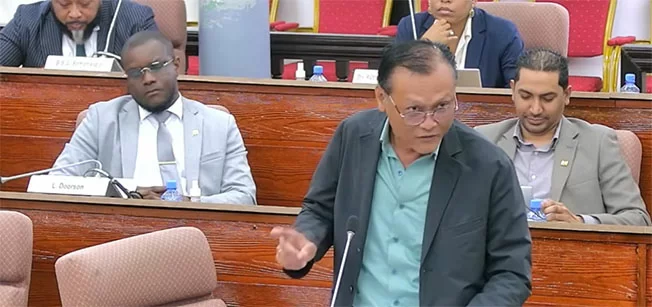
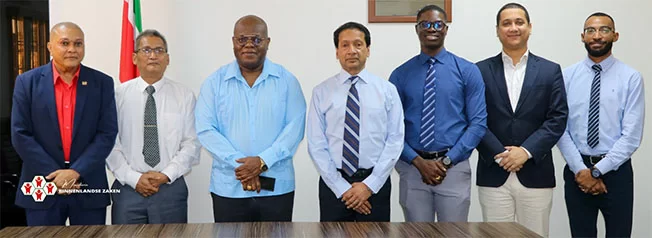
    A long-running territorial dispute over the Tigri region between Suriname and neighboring Guyana has entered a new diplomatic phase, with Suriname’s top foreign affairs official pushing for immediate action to move negotiations forward. Speaking during budget deliberations in Suriname’s National Assembly on Monday, Minister Melvin Bouva—who oversees Foreign Affairs, International Trade and Cooperation (BIS)—announced plans to convene the long-idle joint Suriname-Guyana Border Commission at the earliest possible date to advance talks on the contentious issue. The latest controversy flared after Guyana issued a formal protest note over a map displayed during a presentation by Suriname’s state-owned oil company Staatsolie, which labeled the Tigri region as Surinamese sovereign territory. Multiple members of parliament raised questions about the government’s response to Guyana’s protest, putting the ruling administration’s diplomatic strategy for the border dispute under public scrutiny. VHP parliamentarian Mahinder Jogi pressed Bouva to outline concrete steps to advance Suriname’s claims in the dispute, noting that Guyana has increasingly taken aggressive unilateral actions to advance its position along the shared border. Minister Bouva reaffirmed Suriname’s unwavering commitment to defending its territorial sovereignty in the Tigri region, emphasizing that the government’s core priority remains protecting Suriname’s national interests. “Our priority is unwavering: we will safeguard, advance, and stand firm in defense of Suriname’s territorial sovereignty,” Bouva stated. He explained that like Guyana, Suriname routinely files formal official protests whenever developments related to the disputed region contradict its territorial claims, pointing to a recent incident where the Surinamese government issued a formal objection within days after an incorrect map of the country was published and used in the Netherlands. However, Bouva stressed that diplomatic protest notes alone are insufficient to resolve the decades-long disagreement. “Protests stacked on top of protests will never resolve this dispute,” he said. According to the minister, the path forward hinges on resuming formal negotiations through the joint Border Commission. Suriname has already appointed its full delegation to the body and selected its commission chair, but the government remains waiting for Guyana to finalize its own representatives to enable the commission’s seventh plenary meeting. “Our commission chair is ready to convene at any time. We expect Guyana to confirm its delegation so the meeting can move forward, and we will continue to press for this step,” Bouva added. The minister also revealed that he held a personal one-on-one conversation with his Guyanese counterpart on the sidelines of a recent international summit shortly after the map controversy broke. The two foreign ministers agreed to schedule a follow-up meeting during the upcoming CARICOM heads of government summit to continue bilateral discussions on the Tigri issue and other outstanding cross-border matters. When pressed by lawmakers to share additional details on Suriname’s broader diplomatic strategy for the dispute, Bouva declined to disclose sensitive information in an open parliamentary session. Instead, he invited the National Assembly to continue the discussion in a closed committee-general session, a confidential format reserved for sharing sensitive information related to national security and diplomatic positioning. The call for a closed-door discussion drew immediate criticism from some lawmakers. Jogi questioned whether negotiation through the joint Border Commission alone is sufficient to resolve the dispute, noting that Guyana has previously turned to international legal procedures to advance its claims in other border conflicts. He warned that Suriname cannot afford to remain passive while Guyana actively strengthens its legal and diplomatic position to assert control over the Tigri region. Other members of parliament joined the debate with differing perspectives. Rabin Parmessar, leader of the NDP parliamentary faction, commended the current administration for taking proactive action on the Tigri issue, recalling that the dispute was raised during the very first meeting between Suriname President Jennifer Simons and her Guyanese counterpart. Parmessar, who previously raised repeated concerns about the Tigri region during the prior administration’s term, noted that little progress was made on the issue in previous years. VHP lawmaker Dew Sharman argued that Suriname must take an even more proactive stance, pointing out that Guyana has little incentive to prioritize convening the joint Border Commission. In contrast, NDP representative Ebu Jones asserted that for Suriname, the Tigri region is not a disputed territory at all. “Tigri belongs to Suriname,” Jones stated, adding that the joint Border Commission has a broader mandate that covers far more than just the Tigri dispute. As the regional summit approaches, all eyes are turning to whether the two South American nations can break the long-standing deadlock and move toward a peaceful, negotiated resolution of the territorial disagreement.

  • As a sister nation, Cuba celebrated the 105th anniversary of the founding of the Communist Party of China

    As a sister nation, Cuba celebrated the 105th anniversary of the founding of the Communist Party of China

    On the eve of the 105th anniversary of the founding of the Communist Party of China (CCP) and the 90th anniversary of the victory of the Long March, an official commemorative ceremony co-hosted by the Central Committee of the Communist Party of Cuba (PCC) and the Chinese Embassy in Cuba was held on Monday afternoon at Havana’s Palace of the Revolution, gathering senior political leaders, diplomatic envoys and representatives from both countries to celebrate these landmark events in modern Chinese history and strengthen socialist fraternity between the two nations.

    The highest-ranking guest of the ceremony was Miguel Díaz-Canel Bermúdez, First Secretary of the PCC Central Committee and President of the Republic of Cuba, whose presence underscored the deep strategic bond between the two socialist parties and countries. The event also drew a wide range of attendees from Cuba: members of the PCC Political Bureau, senior leaders of the Cuban state and government, representatives of the Young Communist League, mass organizations, the Revolutionary Armed Forces, the Ministry of the Interior, the Cuban Institute of Friendship with the Peoples, alongside other invited guests. From the diplomatic community, ambassadors and other members of the diplomatic corps accredited to Cuba were in attendance, while Chinese participants included embassy officials, Chinese students studying in Cuba, and representatives of Chinese enterprises operating on the island.

    Speaking at the ceremony from Portocarrero Hall, Hua Xin, China’s Extraordinary and Plenipotentiary Ambassador to Cuba, opened his remarks by extending sincere gratitude to the PCC Central Committee for organizing the event, and conveyed warm greetings to the Cuban party, government, and people from all sectors who have long upheld friendship between the two sides. He noted that shared ideological convictions and shared experiences of revolutionary struggle have long bound the two socialist nations, both led by communist parties, in an unbreakable fraternal tie.

    “The Communist Party of China will always stand with the Communist Party of Cuba,” Hua affirmed, before outlining the core ideological legacy of the CCP over its 105-year history. He recalled the founding spirit forged by the CCP’s early pioneers: adhering to truth, upholding ideals, staying true to the original aspiration, shouldering historical missions, being ready for sacrifice, waging heroic struggle, and remaining loyal and committed to the people. This spirit, he emphasized, remains the eternal spiritual source of the CCP.

    Hua went on to note that the CCP’s century of extraordinary achievements stems from its consistent commitment to strengthening its own governance capacity. Over 105 years, the party has synthesized accumulated experience, integrated innovative theoretical approaches and governance strategies, with Xi Jinping Thought on Socialism with Chinese Characteristics for a New Era playing a central guiding role. This process has reinforced a core conclusion: Party leadership is the defining feature of socialism with Chinese characteristics.

    Turning to the current challenges facing Cuba, Hua reaffirmed China’s unwavering solidarity. “Today, faced with the escalating blockade imposed by the United States, as well as its military threats, the Party, the Government, and the people of Cuba remain steadfast in their conviction, will not yield to pressure, and will resolutely defend national sovereignty and the socialist cause,” he stated. Hua categorically opposed illegal unilateral sanctions and all forms of military intervention against Cuba, called on the United States to immediately end its decades-long blockade and all coercive measures against the Caribbean nation, and demanded an end to violations of the Cuban people’s inalienable rights to survival and development. He added that China firmly supports Cuba in exploring a socialist development path aligned with its own national conditions, applauds the PCC’s courageous push for economic and social transformation reforms, and expressed full confidence that under PCC leadership, the Cuban people will overcome current difficulties and secure new victories in socialist construction.

    The keynote address was delivered by Emilio Lozada García, member of the PCC Central Committee and head of its International Relations Department. Lozada traced the CCP’s extraordinary growth, noting that what began as a small group of just 50 revolutionary militant pioneers has grown into the world’s largest communist party, boasting more than 100 million members today.

    Recounting the CCP’s 105 years of historic victories, Lozada highlighted the 1934–1936 Long March led by the Red Army as one of the most defining episodes in the party’s revolutionary history. “This campaign gave a new and decisive direction to the Chinese revolution and demonstrated what a people, guided by its Communist Party, is capable of achieving,” he said. Lozada further noted that the CCP’s more than 70 years of guiding China’s complex, long-term process of socialist construction represents an unprecedented contribution to global socialist practice.

    On the global stage, Lozada praised the CCP’s consistent commitment to advancing world peace, multilateralism, upholding international law, and defending the purposes and principles of the United Nations Charter. He singled out the major global initiatives put forward by General Secretary Xi Jinping in recent years—including the Belt and Road Initiative, the vision of a Community with a Shared Future for Mankind, and the Global Development Initiative, Global Security Initiative, Global Civilization Initiative, and Global Governance Initiative—as particularly impactful contributions to global progress.

    Lozada stressed that the PCC and CCP are currently working together to build a bilateral China-Cuba Community with a Shared Future, and expressed deep gratitude for China’s unwavering support for Cuba in the face of U.S. aggression. “We appreciate the firm and unwavering support of the Communist Party of China against the economic, commercial, and financial blockade and the energy embargo imposed by the United States government, as well as against the infamous accusation against Army General Raúl Castro Ruz,” he said. “The Communist Party of Cuba is grateful for the constant support and accompaniment of the Communist Party of China, especially in the current circumstances of collective punishment and silent genocide against the Cuban people.”

    Closing his remarks, Lozada reaffirmed the Cuban perspective on the CCP’s global significance: “The Communist Party of China is today an indispensable reference point in the process of building socialism and has demonstrated that the socialist system is a viable alternative to the savage capitalism that they are trying to impose on us from the North. Its commitment to achieving a more just, democratic, and equitable international order reaffirms that a better world is possible.”

  • Column: Comité-generaal: uitzondering of nieuwe regel?

    Column: Comité-generaal: uitzondering of nieuwe regel?

    A heated debate over parliamentary transparency has emerged in Suriname, centered on plans to discuss two high-profile public cases — the disappearance of more than 300 kilograms of mercury from the Geyersvlijt police station and the theft of gold from Grassalco’s vault — behind closed doors in a special committee-general session. Justice and Police Minister Harish Monorath has announced his intention to share details on the stolen mercury during the closed meeting, while the sensitive cross-border Tigri dispute, a matter touching on national security and diplomatic interests, is also set for the closed-door committee-general discussion, a mechanism built into Suriname’s National Assembly for handling exceptional, confidential matters where open debate would compromise state interests. But this move to hold the stolen mercury and gold case discussions in secret has sparked principled pushback from across the political spectrum, raising fundamental questions about the core values of parliamentary democracy and the public’s right to information.

    During recent budget debates, assembly member Raymond Sapoen correctly emphasized that parliament’s core function is to exercise public oversight over the government. The disappearance of hundreds of kilograms of mercury is no routine administrative incident; it is a major public concern that gives society a clear right to know key details of the case, Sapoen argued. This does not mean releasing sensitive investigative details that could derail an ongoing criminal probe, but rather that the public is owed a clear update on the state of the case: what steps authorities have already taken, what new security measures have been implemented, and how the government plans to prevent a similar incident from happening again. These are all legitimate, public governance questions that do not require secrecy.

    Acting National Assembly Speaker Ronnie Brunswijk has also publicly questioned the need for a closed session for these cases, noting that not every issue demands secret discussion. His comment cuts to the very heart of Suriname’s parliamentary system: open debate is the rule, and closed-door proceedings are supposed to be the rare exception, not the new normal.

    Beyond transparency concerns, the push for closed hearings also raises critical constitutional questions about the separation of powers and the independence of the Public Prosecution Service (OM), which leads all criminal investigations. First, it is unclear whether the Minister of Justice and Police actually has full access to all ongoing investigative information, and second, it is unresolved whether sharing that information with assembly members in a closed session would compromise the OM’s constitutionally protected independent status. Parliament exercises oversight over the executive branch (the government), not over the independent Public Prosecution Service. That means the justice minister is under no obligation to share details of active criminal investigations such as witness testimony, persons of interest, or investigative strategies. But the minister is fully required to account for his ministry’s administrative actions: when he was first informed of the missing mercury, what immediate measures his ministry put in place, whether security protocols have been updated, whether internal administrative probes have been launched, and what steps are being taken to prevent recurrence. None of these administrative questions require a closed committee-general session.

    Critics warn that accepting the logic that any ongoing investigation justifies a closed hearing sets a dangerous precedent for democratic governance. Nearly every major public case is in the investigation stage at some point, if this becomes the new standard, parliamentary oversight will increasingly be pushed out of public view. There is an additional critical risk: committee-general proceedings are bound by strict secrecy rules, meaning assembly members cannot disclose any information shared during the session to the public. If a minister provides incomplete or even inaccurate information in the closed meeting, representatives can barely push back publicly without violating their own secrecy obligations. This effectively shuts down public debate entirely. Because of this far-reaching impact, the committee-general is a heavy, extraordinary parliamentary tool that should only be used with extreme caution, advocates for transparency argue.

    No one disputes that closed proceedings are necessary for certain truly sensitive matters: military strategy, national security threats, and high-stakes diplomatic negotiations are appropriately held out of public view. But cases like missing mercury, stolen gold, and other dossiers that center primarily on administrative accountability should, as a matter of principle, be subject to public reporting.

    At its core, the debate boils down to a fundamental question about the purpose of parliamentary democracy. Parliaments are not created to guard government secrets; they exist to hold the executive branch accountable on behalf of the public. The question facing Suriname’s political leaders is not whether a committee-general is permitted by the rules, but whether the nation should accept that secrecy is replacing transparency when transparency is the foundation of a functioning parliamentary democracy. Ultimately, all information about government action — unless there is clear, proven evidence that public disclosure would harm the national interest — belongs not to the government or to parliament, but to the people of Suriname.

  • Regering kiest voor eigen financiering Corantijnbrug: Het wordt een Surinaamse brug

    Regering kiest voor eigen financiering Corantijnbrug: Het wordt een Surinaamse brug

    In a major policy shift announced to Suriname’s national legislature, the South American nation’s government has abandoned its original joint development framework with neighboring Guyana and will now build and fully finance the long-planned Corantijn River bridge on its own.

    Public Works and Spatial Planning Minister Stephen Tsang confirmed the new direction during a budget debate for his department on Monday evening, responding to questions from opposition VHP party leader Asis Gajadien about the cross-border infrastructure project’s current status. “The government has decided to 100 percent finance the bridge itself,” Tsang told the National Assembly, stressing that the completed infrastructure will be unequivocally a Surinamese project. “Fact is that it must and will be a Surinamese bridge,” he added.

    The Corantijn River forms the natural border between Suriname and Guyana, and the proposed bridge has long been framed as a landmark initiative to boost regional economic integration across the Guiana Shield and broader South America. It is designed to replace the existing ferry connection between South Drain in Suriname and Moleson Creek in Guyana, cutting transit times and significantly streamlining the movement of goods and people between the two neighboring countries.

    Minister Tsang noted that multiple financing models for the fully domestically led project are currently under active review alongside Suriname’s Ministry of Finance, with the option of toll collection being among the options still on the table. “Everything is still open. All models are being examined together with the finance ministry,” Tsang said. Depending on which financing structure the government ultimately selects, a new tender process will almost certainly be required, he added.

    Gajadien pressed the minister for clarity on the status of the tender process launched by the previous administration, as well as details of updated agreements with Guyana following the policy shift. While Tsang confirmed a new tender is likely, he offered no timeline for when the new bidding process would open. He also declined to comment on how the decision to take full control of the project will alter existing bilateral agreements with Guyana that were negotiated under the prior joint development plan.

    For years, the bridge project advanced as a collaborative cross-border undertaking, with planning work carried out jointly by the two countries under Suriname’s previous administration. The new unilateral approach marks a sharp break from that earlier cooperation framework, though the full implications for bilateral infrastructure ties have not yet been disclosed by the Surinamese government.

  • Another Mira-Associated Business Drawn Into Smart Stream Invoice Controversy

    Another Mira-Associated Business Drawn Into Smart Stream Invoice Controversy

    A fresh development has emerged in the unfolding Smart Stream invoice controversy rocking Belize’s government agencies, as a second company tied to the Mira network has become the focus of growing scrutiny over leaked documents and structured sub-$10,000 payments from the country’s Ministry of Defense.

    According to records obtained through the Smart Stream leak, FT Williams and Associates — a Belize City-based mechanical firm that advertises itself as specializing in air conditioning solutions on its official website — submitted a series of invoices to the Ministry of Defense between November and December 2021. Multiple of these submitted invoices list “Mitsubishi” as their core line item. What has raised flags among observers is the structure of the payments: the Ministry of Defense disbursed five separate payments of $9,603 to the firm in November 2021, followed by an identical set of five payments of the same amount the following month, bringing the total of these transactions to 10 payments all falling just under the $10,000 reporting threshold for government contracts in many jurisdictions.

    This structured payment pattern has sparked questions over whether the arrangement was designed to avoid higher levels of regulatory oversight that apply to larger government contracts. Beyond the Defense Ministry transactions, the leaked invoices also show FT Williams and Associates carried out contracted work for two additional government bodies around the same period: the Ministry of Rural Development and the Ministry of Finance. Unlike the Defense Ministry payments, those transactions were valued well above the $10,000 threshold, matching standard government contracting protocols.

    On Monday, both FT Williams and Associates and Fast Construction, another firm previously linked to the controversy, issued formal press releases addressing the growing scrutiny. However, neither release addressed the core issues at the center of the scandal: the details of the Smart Stream leaks, the multiple overlapping invoices submitted to government agencies, or the unusual pattern of sub-$10,000 payments to the firms. No further comment has been offered by either company to clarify the transactions or the nature of the Mitsubishi-labelled work carried out for the Defense Ministry.

    This report is a verbatim transcript of an evening television newscast, with Kriol language portions transcribed using a standardized spelling system for accuracy.

  • Political Opponents Challenge Perez Over Voucher Program

    Political Opponents Challenge Perez Over Voucher Program

    A controversy over the allocation of disaster relief public funds has emerged as a major political flashpoint in the Belize Rural South constituency, just months after a previous public finance scandal left voters demanding greater accountability. At the center of the dispute is sitting Area Representative Andre Perez, who is facing sharp allegations from political opponents that a grocery voucher program funded through taxpayer-backed relief initiatives is improperly directing benefits to a business connected to his immediate family.

    Gabriel Zetina, caretaker for the opposition United Democratic Party (UDP) in Belize Rural South, has become the most prominent voice challenging Perez, amplifying long-running public concerns over transparency and responsible stewardship of public funds. Speaking on the controversy, Zetina pushed back against Perez’s framing of the criticism as a personal or political attack, emphasizing that the public has a non-negotiable right to clear answers when public money is involved.

    “After what happened with Oscar Mira, these questions have to be asked,” Zetina noted, referencing a prior public finance scandal that has fueled existing skepticism over government spending. “We are not attacking the man or his family. We are asking for answers. When you choose to serve as a public official, you have an obligation to respond to the public, especially when public funds are on the line. We acknowledge that many families in the area desperately need this disaster relief support, that is not what we are questioning. We just want confirmation that taxpayers are getting full value for the money they have contributed.”

    For his part, Perez has repeatedly denied any wrongdoing in the implementation of the program. The Area Representative has defended the voucher initiative, arguing that it is structured to intentionally benefit small, locally owned grocery operations rather than the larger corporate supermarket chains that dominate much of the country’s retail food sector. As the opposition ramps up pressure for a full independent review, the controversy continues to intensify, turning what began as an isolated funding question into a major test of political accountability ahead of any upcoming electoral contests in the constituency.

  • Mayor Nunez Challenges UDP Over Missing Audit Reveal

    Mayor Nunez Challenges UDP Over Missing Audit Reveal

    A political standoff has intensified in Belize’s San Pedro area this week, as caretaker leader of the ruling United Democratic Party (UDP) Gabriel Zetina pushed back against pointed criticism from San Pedro Mayor Wally Nunez over the sudden cancellation of a high-stakes press conference.

    The event, first announced two weeks prior, was billed as a forum to expose explosive, damaging findings from a financial audit of the San Pedro Town Council. But just before it was scheduled to begin, the press conference was called off without explanation, prompting Mayor Nunez to publicly condemn Zetina and the UDP leadership, accusing the party of backing away from promised transparency.

    In a new on-the-record interview with local outlet News Five on June 29, 2026, Zetina rejected Nunez’s accusations, explaining that the delay has nothing to do with a lack of evidence or a fabricated audit. Instead, he argued, the party made a strategic decision to combine the audit reveal with the official unveiling of its full municipal candidate slate, a combination that required pushing the event back to align with the schedules of prospective candidates.

    “Some of them still have personal and political matters to sort out before they can publicly put their name forward,” Zetina explained. “That is the only reason we hit pause. The audit documentation is already in our hands, complete with the findings we promised. This is not a manufactured story — the evidence is there for anyone to review once we go public.”

    When pressed for a timeline for the rescheduled event, Zetina confirmed that party leadership would hold a key meeting with senior party elders and central executive members the same evening he spoke to reporters. He said the press conference and slate reveal would be held “very soon” following that gathering.

    Local news outlet News Five has committed to continuing coverage of the developing story, and will publish full details of the UDP’s municipal slate and audit findings once they are officially released.

    This report is adapted from a transcript of News Five’s evening television broadcast, which was made available to online readers.

  • $272m pipeline targets infrastructure, technology, growth

    $272m pipeline targets infrastructure, technology, growth

    Barbados’ newly appointed Minister of Agriculture Dr. Shantal Munro-Knight has laid out an ambitious, long-term strategic roadmap to reposition the agriculture sector from a overlooked production activity to a foundational pillar of national stability, backed by sweeping systemic reforms, expanded technical capabilities and an estimated $272 million in prioritized public investment. The plan, officially branded Agriculture 2030, was presented to industry stakeholders during a breakfast colloquium hosted by the Ministry of Agriculture and Food and Nutritional Security at the Lloyd Erskine Sandiford Centre this Monday.

    Dr. Munro-Knight, who assumed the agriculture portfolio after the February 11 general election, told attendees that national dialogue around agriculture has long been unnecessarily narrow, limited to just open-field crop production, which has shrunk the sector’s perceived and actual role in national life. Instead, she emphasized that agriculture is inextricably tied to three critical national priorities: long-term resilience, public health, and national security. “It’s not just about growing food,” she explained to gathered stakeholders. “It’s a national resilience conversation. It’s a health conversation. It’s a national security conversation.”

    After taking office, the minister opted to delay quick, reactive policy changes to instead spend months consulting directly with farmers, ministry staff, and other interest groups to identify root causes of persistent sector challenges. She noted that while she faced pressure to roll out immediate changes, rushed action would only address surface-level issues without fixing deep-seated systemic problems. “When I came into the ministry, I was inundated with calls about what people wanted to see, what we needed to immediately… but I wanted to make sure that I resisted that notion of responding immediately because what happens at a systems level is you end up putting out fires, but you don’t deal with the root,” she said. Persistent problems including crop and livestock theft, destructive foraging by wild monkeys, declining soil fertility, and widespread pest damage are all examples of long-standing issues that demand coordinated, sustained action rather than short-term fixes, she added.

    The Agriculture 2030 transformation strategy is built on four core pillars, starting with internal restructuring of the Ministry of Agriculture itself. “My first pillar… my starting point is I need to get my house right,” Dr. Munro-Knight stated. Internal reviews of existing projects and programs are already underway, with efforts focused on upgrading outdated internal processes via digital transformation, realigning human resource allocations, and making the ministry more responsive to the needs of farmers and industry participants. Several ongoing digital initiatives were highlighted during the colloquium, including a new centralized agricultural portal, expanded online services, and data-driven decision support tools that boost service delivery and open new market access for small producers. The newly launched Agridata platform was a key showcase: the tool centralizes market price data, production contract opportunities, harvest forecasts, and national agricultural statistics in a single accessible hub for all farmers.

    While Dr. Munro-Knight praised the existing ministry staff for their commitment and subject-matter expertise, she emphasized that the current technical capacity is insufficient to support scaled growth. Currently, only 18 extension officers serve the entire island’s farming community. “We’re just not enough,” she said. “If I’m asking again for delivery at scale, I need to make sure that the ministry has the technical resources.”

    The strategy’s second pillar centers on reconnecting ordinary Barbadians to agriculture, shifting public perception to recognize the sector’s full value. “I don’t believe that the average Barbadian has really connected with the value of agriculture,” the minister explained. “So part of that hearts and minds concept is about how do we reconnect Barbadians with the notion of agriculture and what we grow and the value of it.” To build this public connection, the ministry is developing youth outreach initiatives including tertiary-level agricultural internships, summer immersive programs that introduce young people to farming and agribusiness, and partnerships with primary and secondary schools to expand agricultural education and youth entrepreneurship training.

    A third core pillar focuses on building industry-wide capacity through expanded technical support, broader adoption of agricultural technology, upgraded staff training, and strengthened quality assurance and regulatory frameworks to boost farmer support and overall sector competitiveness. Dr. Munro-Knight revealed that updated draft legislation regulating pesticide use, alongside new animal health and welfare laws, are already being prepared to modernize the country’s outdated regulatory system. The ministry will also prioritize risk management, with new targeted initiatives to crack down on persistent praedial larceny set to be announced in the near future. New governance and accountability measures will also be integrated into all programs to improve strategic planning and ensure public investment delivers transparent, measurable outcomes.

    The final pillar of the roadmap is a major infrastructure investment and innovation agenda designed to modernize aging agricultural infrastructure and lay the groundwork for long-term, sustainable growth. The Barbadian government has already earmarked approximately $272 million (US$136 million) for high-priority infrastructure projects, including cold-chain storage networks, an export-certified produce packhouse, expanded agricultural laboratory services, revival of domestic cotton production, expansion of the Black Belly sheep industry, and other initiatives targeted at boosting sector productivity and global competitiveness. “All of these things are actively being worked on. All of these things are part of the flight path and on the way to be delivered,” the minister confirmed.

    Despite the government’s aggressive investment and reform plan, Dr. Munro-Knight stressed that successful transformation of the sector will require collective action beyond the ministry. “Agriculture, food security, resilience, health – those are not just a ministry’s effort to deliver,” she said. “It has to be a holistic frame for delivery.”