分类: politics

  • APNU, WIN appeal to trade unions for support to dislodge PPPC from office

    APNU, WIN appeal to trade unions for support to dislodge PPPC from office

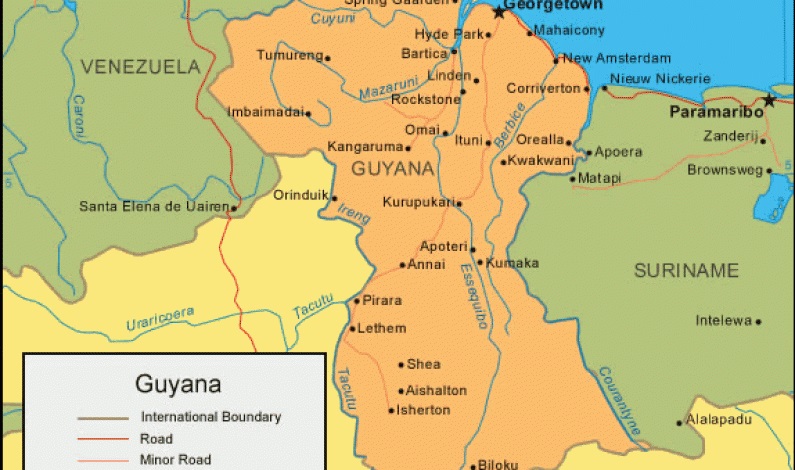
    On May 1, 2026 — International Labour Day — Guyana’s main opposition figures gathered with members of the Guyana Trades Union Congress (GTUC) following a low-turnout parade to mount a coordinated call for cross-group unity aimed at unseating the incumbent People’s Progressive Party Civic (PPP-C) administration ahead of the 2030 general and regional elections.

    The march, which stretched from Georgetown’s Parade Ground to Woolford Avenue, drew only 300 attendees representing affiliated GTUC unions, a far smaller crowd than organizers had anticipated. Even with the muted turnout, speakers at the subsequent post-rally meeting held at the Guyana Local Government Officers Union used harsh language to criticize the ruling government’s record on worker rights and economic policy.

    GTUC President Norris Witter opened the sharp critiques, framing the PPP as a public hazard that required collective action to eliminate. “For me the PPP is a dangerous disease and, therefore, we must work together to determine what kind of dangerous medicine is required to get rid of this disease,” Witter stated, arguing that broad-based unity — rather than divisive sectarian politics — was the only path to removing the government from power.

    Dr. Terrence Campbell, parliamentary leader of the main opposition bloc A Partnership for National Unity (APNU), expanded on this call, extending the demand for unity beyond opposition political parties to include trade unions and civil society groups. Campbell labeled the current administration a “wicked, evil, inhumane, despicable regime” and urged union members to back opposition-led protests on any issue — from cash grant increases to electoral reform — ahead of the 2030 vote. “When we call a protest whether it be for cash grants or a protest for a new voters list or biometrics; whether invited or uninvited, I would expect to see my union brothers standing there with us,” Campbell said.

    Azruddin Mohamed, Guyana’s Opposition Leader, echoed Campbell’s calls, pressing unions to mobilize around core worker grievances that include stagnant low wages and retaliatory administrative measures, such as punitive transfers for public sector workers who oppose the ruling government. Mohamed confirmed that he had provided financial support to the Guyana Teachers Union (GTU) during its recent strike for higher salaries, and committed that all opposition parties would collaborate with organized labor to secure better compensation and working conditions for public servants.

    Mohamed also took aim at the government’s recent policy priorities, questioning how the country’s nearly GY$6 trillion 2026 national budget has failed to deliver tangible improvements to working people. He pointed specifically to a May Day brunch hosted by President Irfaan Ali for nurses at State House, noting that the healthcare workers face a three-year wait to receive just GY$16,000 in promised compensation, while First Lady Arya Ali conducted an official visit to Singapore. Closing his remarks, Mohamed urged union leadership to reorganize and mobilize to deliver a much larger turnout for the 2027 May Day parade, emphasizing that collective organizing is the only way to oust what he called a “dictatorship, deceitful, treacherous government.”

    The event also exposed ongoing rifts within Guyana’s broader opposition coalition. Dorwain Bess, leader of the Vigilant Political Action Committee (VPAC), publicly called on Mohamed to honor his pledge to build genuine, inclusive collaboration across all opposition factions. Bess and his former coalition partner Amanza Walton-Desir of the Forward Guyana Movement have been locked in a public dispute over parliamentary representation following last September’s general and regional elections. Veteran politician Hamilton Green, who entered Guyanese politics shortly after completing his education, noted that the opposition’s biggest immediate challenge remains convincing ordinary Guyanese to join their political struggle.

  • Cabinet Ministers to Be Sworn In Tuesday Following ABLP Election Victory

    Cabinet Ministers to Be Sworn In Tuesday Following ABLP Election Victory

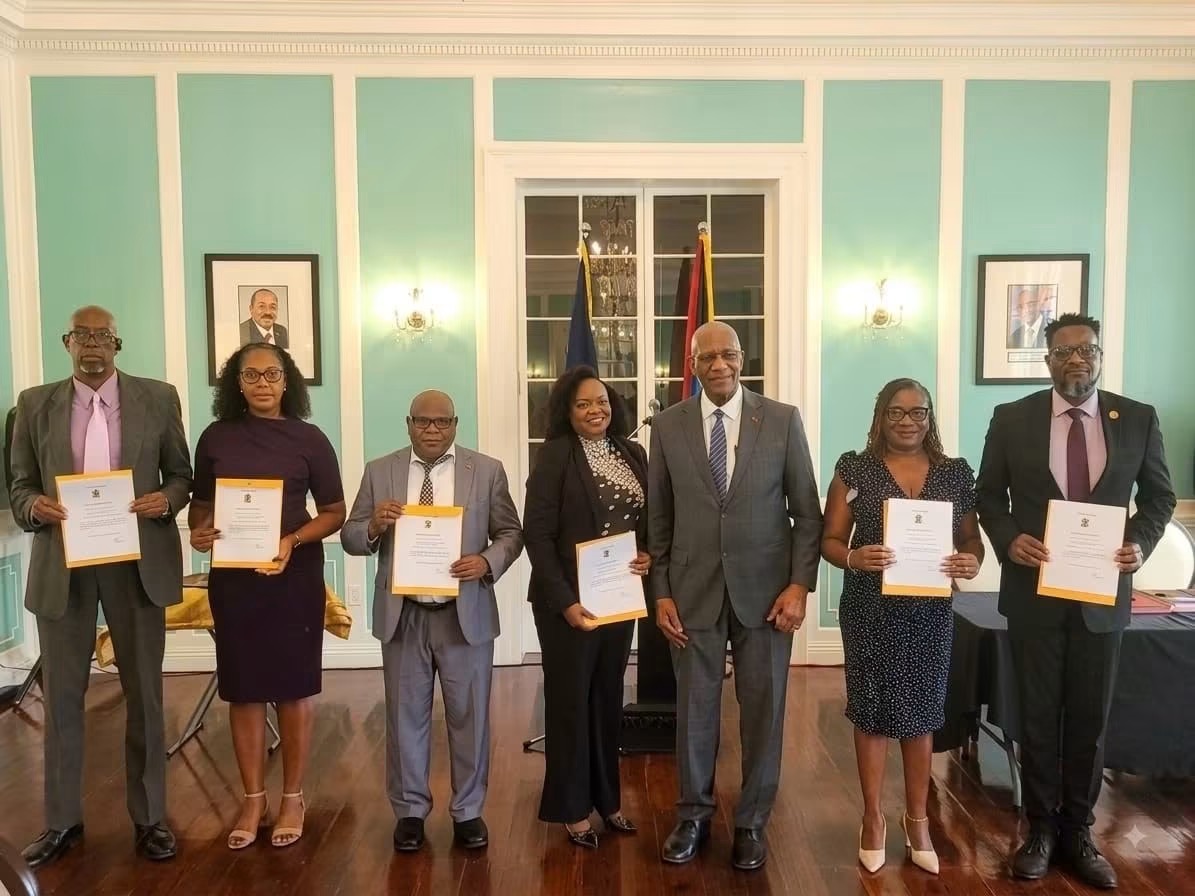
    After securing a historic landslide victory in Antigua and Barbuda’s general election, the Antigua and Barbuda Labour Party (ABLP) is preparing to finalize its new administration with the official swearing-in of cabinet ministers scheduled for Tuesday at the American University of Antigua (AUA).

    The timeline for this final transitional step was confirmed during Friday’s introductory ceremony at Government House, where ABLP leader Gaston Browne officially took office for his fourth consecutive term as Prime Minister. He was joined at the event by Steadroy Cutie Benjamin, who will continue his role as Attorney General in the new administration.

    Thursday’s national vote delivered a sweeping mandate for the incumbent ABLP, which claimed 15 of the 17 available seats in the country’s parliament. The resounding win extends the party’s uninterrupted hold on national governance past the 10-year mark and solidifies Browne’s status as the longest-serving head of government in modern Antigua and Barbuda political history.

    The main opposition United Progressive Party (UPP) faced a major blow in the election, being reduced to just a single parliamentary seat. The Barbuda People’s Movement (BPM), meanwhile, held onto its traditional seat representing the country’s sister island Barbuda, retaining its voice in the new legislature.

    Political observers have characterized this election outcome as one of the most decisive shifts in power in the nation’s recent history, and Tuesday’s ceremony will formalize the full cabinet that will steer the country’s policy agenda through the coming term.

    Speaking at Friday’s event, Governor-General Sir Rodney Williams framed the landslide result as a historic mandate for the incoming administration, while noting that the lopsided vote of confidence also brings sharply elevated public expectations for progress over the coming term.

    In his first public remarks since the election win, Prime Minister Browne reaffirmed his commitment to governing, pledging to intensify his work for the Antigua and Barbuda people. He promised an administration rooted in accountability, national unity, and a sustained focus on lifting household living standards across the country.

    As of Friday, the full composition of Browne’s cabinet and the specific portfolios for incoming ministers had not been publicly released. All eyes are now turning to Tuesday’s event, where the full make-up of the executive branch and the government’s policy priorities for the new term will come into clearer focus. The AUA ceremony will mark the final milestone in the transition from election victory to fully functional governance, as each minister receives their formal appointment.

  • WATCH: ‘Bigger Mandate, Bigger Expectations’: Governor-General Tells PM Browne

    WATCH: ‘Bigger Mandate, Bigger Expectations’: Governor-General Tells PM Browne

    On a formal Friday ceremony held at Government House, Antigua and Barbuda’s incoming Prime Minister Gaston Browne and Attorney General Steadroy Cutie Benjamin took their oaths of office, capping off a landslide general election victory that will see the Antigua and Barbuda Labour Party (ABLP) return for an unprecedented fourth consecutive term. Governor-General Sir Rodney Williams, who presided over the constitutional swearing-in, opened his remarks by issuing a clear caution to the newly installed leadership: public expectations for the new term are extraordinarily high, even as the party enters government with a renewed, resounding mandate from voters.

    The historic vote unfolded just 12 hours before the ceremony, when polls closed across the twin-island nation on Thursday. Williams characterized the electoral process as a peaceful demonstration of democratic values, noting that the will of the people emerged with unambiguous clarity. The final results delivered a striking victory for ABLP, which secured 15 of the 17 available seats in parliament — a margin that Williams described as nothing short of a monumental moment in the country’s political history.

    What makes the outcome particularly unprecedented, Williams emphasized, is Browne’s achievement of securing a fourth consecutive term in office, a feat no other political leader in Antigua and Barbuda has ever accomplished. This landslide outcome, he argued, is more than just a numerical triumph: it is a clear reflection of the enduring confidence that the nation’s electorate has placed in Browne’s leadership and long-term vision for the country. “To lead a nation into a fourth term is a rare distinction that speaks to a deep and unbreakable bond between a leader and his people,” Williams told attendees of the ceremony.

    While celebrating the scale of the ABLP’s victory, Williams was quick to reframe the win around the weight of responsibility it brings to the new administration. “While the numbers tell a story of a landslide triumph, the true weight of this victory lies in the responsibility that it carries,” he said. He added that the decisive electoral mandate gives the new government the political stability and governing strength needed to tackle the complex, evolving challenges facing the nation in the current global and local context.

    Framing the swearing-in as one of the highest pinnacles of democratic constitutional tradition, Williams called on all attendees and newly installed leaders to rededicate themselves to public service for the people of Antigua and Barbuda. He urged the leadership to balance the momentum and energy generated by their historic victory with intentional humility, a core value needed to serve the public effectively. Closing the ceremony, Williams offered a formal blessing for the new administration as it embarks on its four-year term: “May God grant you the wisdom of Solomon and the strength of character to lead our nation to even greater heights.” The ceremony officially marked the start of one of the most politically decisive new administrations in Antigua and Barbuda’s modern history.

  • Lovell Congratulates Anthony Smith, Thanks Supporters After All Saints West Defeat

    Lovell Congratulates Anthony Smith, Thanks Supporters After All Saints West Defeat

    Following the conclusion of Antigua and Barbuda’s general election held this Thursday, defeated All Saints West constituency candidate Harold Lovell has issued a public statement extending warm congratulations to his victorious opponent, Anthony Smith of the Antigua and Barbuda Labour Party (ABLP).

    In the remarks released immediately after the final results were confirmed, Lovell opened by acknowledging the official outcome of the race, emphasizing his unwavering respect for the democratic will of All Saints West voters. “I extend sincere congratulations to Anthony Smith on his victory in All Saints West,” Lovell said, noting that while the final result did not align with the outcome he and his team had worked toward, he accepts the decision made by the electorate.

    A core focus of Lovell’s statement was gratitude toward the network of volunteers, voters, and advocates who backed his electoral campaign. He highlighted that the dedication, consistent energy, and steadfast commitment demonstrated by his supporters throughout the election cycle were an invaluable part of his candidacy, adding that their backing means more to him than any verbal expression of thanks can fully capture. “To every supporter who stood with me throughout this journey… your support, energy, and commitment mean more than words can express,” he added.

    Looking back on his tenure representing the All Saints West constituency, Lovell described the opportunity to serve local residents as one of the greatest honours of his public life. Even in the wake of his electoral defeat, he made clear that his dedication to advancing both local community progress and national growth for Antigua and Barbuda remains unchanged. “I remain committed to our community and to the continued development of our nation,” Lovell confirmed, signaling he will continue to engage in public and community work moving forward.

  • WATCH: Wickham says Pringle’s Days As UPP Leader Are Numbered

    WATCH: Wickham says Pringle’s Days As UPP Leader Are Numbered

    In the wake of a devastating general election performance that left Antigua and Barbuda’s main opposition United Progressive Party (UPP) holding just one parliamentary seat, leading regional pollster Peter Wickham has cast major doubt on Jamale Pringle’s long-term future as the party’s leader. Despite Pringle retaining his own constituency seat of All Saints East and St. Luke, Wickham argues that this narrow personal electoral survival does not automatically grant him the legitimate authority to lead the party moving forward.

    Wickham explained that Pringle’s current position as the UPP’s sole parliamentary representative, and thus de facto opposition leader, is the result of pure electoral arithmetic rather than broad confidence in his leadership among party members. This is not an unprecedented situation for Pringle: following the 2018 general election, he also emerged as the UPP’s only elected lawmaker, earning him the widely circulated nickname “single Pringle.”

    The 2023 election results delivered a historic landslide victory for the incumbent Antigua and Barbuda Labour Party (ABLP), which secured 15 of the 17 available parliamentary seats to win its fourth consecutive term in office. The lopsided outcome has left the UPP facing its most challenging political moment in recent history, requiring a full reassessment of its strategy, leadership structure, and long-term direction.

    Drawing on lessons from other political parties across the Caribbean that have faced similarly devastating electoral losses, Wickham notes that it is common for parties in this position to split the roles of parliamentary leadership and broader party leadership. In many regional cases, rebuilding efforts have been successfully led by figures who do not hold elected office, meaning the UPP’s next permanent party leader could come from outside the current parliamentary caucus.

    Wickham added that Pringle himself must now carefully consider his future role in the party, particularly as the organisation enters an expected multi-year rebuilding phase. While the UPP’s single seat leaves it with a slim official presence in parliament, Wickham frames this as a small but critical lifeline: the single seat guarantees that the party retains an official opposition platform to rebuild its brand and connect with voters ahead of the next election cycle. “The electorate has effectively ensured that there is still an opposition voice,” he noted.

    As the dust settles on the election, Antigua and Barbuda’s political landscape has undergone a dramatic shift, with the ABLP cementing its long hold on power and the UPP entering what most political observers predict will be an extended period of internal reflection and potential restructuring.

  • Jamaica PM Holness Congratulates Browne on Historic Fourth Term

    Jamaica PM Holness Congratulates Browne on Historic Fourth Term

    On April 30, the dual-island Caribbean nation of Antigua and Barbuda held its general election, delivering a historic landslide victory that will keep incumbent Prime Minister Gaston Browne in office for a fourth consecutive term. Following the final vote count, Jamaica’s Prime Minister Andrew Holness issued an official statement extending his warm congratulations to Browne and his winning political bloc.

    Browne’s long-governing Antigua and Barbuda Labour Party (ABLP) secured an overwhelming mandate, claiming 15 out of the 17 available seats in the country’s national parliament. This lopsided result stands as one of the most decisive election outcomes in Antigua and Barbuda’s recent political history, and extends the ABLP’s uninterrupted hold on government to more than 10 years. Beyond his party’s victory, the re-election cements Browne’s status as the longest-serving prime minister in Antigua and Barbuda’s modern political era, a milestone Holness explicitly acknowledged in his remarks.

    “Congratulations to Prime Minister-elect Gaston Browne on retaining a fourth term in office… I look forward to the continued strengthening of the partnership between our countries as we advance our shared regional priorities,” Holness wrote in his public statement.

    Full official results confirm the scale of the ABLP’s win over rival parties. The main opposition bloc, the United Progressive Party (UPP), was left with just a single parliamentary seat after facing a major voter backlash. The Barbuda People’s Movement (BPM), meanwhile, held onto its traditional stronghold of the island of Barbuda, retaining the one seat it held prior to the vote.

    Holness’ congratulatory message is far from an isolated gesture; it joins a growing wave of responses from leaders across the Caribbean region. Top political figures across the Caribbean Community have emphasized their anticipation for continued collaboration with Browne’s new administration on key shared goals, including cross-border economic growth, deeper regional integration, and coordinated progress on collective policy priorities.

    With the election result finalized, Browne is set to formally take office for his new term following an official swearing-in ceremony. His team is now moving forward with plans to assemble a new Cabinet to lead the country through the next legislative cycle, capitalizing on the historic mandate delivered by voters.

  • PM says Sir Rodney Williams Will Remain As Governor General of Antigua and Barbuda

    PM says Sir Rodney Williams Will Remain As Governor General of Antigua and Barbuda

    During his official swearing-in ceremony for a new term on Friday, Antigua and Barbuda Prime Minister Gaston Browne issued a direct public clarification, rejecting widespread pre-election speculation that his incoming administration planned to remove the sitting Governor-General, Sir Rodney Williams.

    Opening his address by formally recognizing Sir Rodney, Browne stated clearly: “And by the way, there’s no intention to remove him as Governor General.” This public confirmation directly counters an unconfirmed report circulated ahead of the April 30 general election by Real News Antigua, an outlet aligned with the country’s political opposition. Citing anonymous, unnamed sources, the pre-election report claimed the Browne-led administration had already shortlisted a replacement for the ceremonial role, and that the planned shake-up had sparked internal unease among government officials.

    While Browne did not name the opposition-aligned publication directly in his remarks, his on-the-record dismissal of the speculation came as part of a broader critique of the misinformation and deceptive political narratives that spread across the public sphere during the recent election campaign. Just one day before the clarification, Browne’s long-governing Antigua and Barbuda Labour Party (ABLP) secured a landslide victory in the national polls. The party won 15 out of the 17 available parliamentary seats, granting Browne an unprecedented fourth consecutive term as the country’s head of government.

    Under Antigua and Barbuda’s constitutional system, the Governor-General acts as the ceremonial representative of the British monarch, with no executive policy-making authority. Prior to Browne’s remarks, no official statement from the government had ever confirmed any plans to alter the leadership of the Government House, the official residence and office of the Governor-General. Browne’s explicit confirmation has now laid the pre-election speculation to rest, confirming that Sir Rodney Williams will remain in his post as the ceremonial vice-regal representative as the new ABLP administration begins its four-year term.

  • Johnson Smith to welcome India’s foreign minister to Kingston

    Johnson Smith to welcome India’s foreign minister to Kingston

    KINGSTON, Jamaica — A landmark chapter in Jamaica-India diplomatic relations is set to open this weekend, as Jamaica’s Minister of Foreign Affairs and Foreign Trade, Senator Kamina Johnson Smith, prepares to welcome India’s Minister of External Affairs, Dr. S. Jaishankar, for the first-ever bilateral visit by an Indian External Affairs Minister to the Caribbean nation.

    Dr. Jaishankar is slated to touch down at Kingston’s Norman Manley International Airport this Saturday, kicking off a three-day itinerary focused on deepening bilateral cooperation across multiple priority sectors. Ahead of the visit, Jamaica’s Ministry of Foreign Affairs and Foreign Trade released an official statement noting that the high-level trip will give both top diplomats a chance to review the current state of bilateral ties and move forward with talks to activate existing Memoranda of Understanding covering three key areas: public health, energy solarisation, and public broadcasting.

    Beyond operationalizing these existing agreements, the two sides are also set to explore new and expanded collaboration in high-impact areas including agriculture, digital technology and innovation, tourism, and align on regional and multilateral issues that are of shared interest to both nations.

    “This visit builds on the strong foundation between Jamaica and the Republic of India, rooted in history, shared values and a common vision for inclusive and sustainable development. I look forward to welcoming Minister Jaishankar to Kingston as we continue to strengthen the longstanding ties between our countries,” Johnson Smith said in a statement. “It presents an excellent opportunity to translate the strong political will demonstrated by our leaders into tangible outcomes that benefit our peoples.”

    Johnson Smith also highlighted that the visit will serve as a key moment for Jamaica’s government and people to formally renew their sincere gratitude to India for the generous relief supplies New Delhi donated in the wake of Hurricane Melissa, and to reaffirm both countries’ shared commitment to advancing long-term economic resilience across the Global South.

    Official bilateral talks between Dr. Jaishankar, Johnson Smith, and a select group of Jamaican cabinet ministers are scheduled for Monday, May 4. Following the plenary discussions, the Indian External Affairs Minister will pay a courtesy call on Jamaica’s Prime Minister Dr. Andrew Holness at Jamaica House, and hold engagements with private sector leaders and other senior Jamaican government officials.

    The bilateral relationship between Jamaica and India stretches back more than six decades: the two countries formally established diplomatic relations on August 12, 1962, just months after Jamaica gained its independence. The partnership has gained significant momentum in recent years, starting with Jamaica’s launch of its first resident diplomatic mission in India in September 2020. Earlier this year, the Jamaican High Commission in New Delhi was formally opened during Prime Minister Holness’ official trip to India, which marked the first official visit by a sitting Jamaican head of government to the South Asian nation.

  • Need for NaRRA

    Need for NaRRA

    When opening debate on the proposed National Reconstruction and Resilience Authority (NaRRA) Bill in Jamaica’s Senate on Friday, Education Minister Senator Dr. Dana Morris Dixon centered her argument for urgent legislative action on a striking example of bureaucratic gridlock: a perimeter security fence for Naggo Head Primary School that took nearly 18 months to earn approval, putting vulnerable students at unnecessary risk.

    Morris Dixon’s push for the bill comes as critics have raised alarms that the new legislation would grant the Jamaican government unchecked authority to bypass existing regulatory bodies, particularly through the controversial “step-in” powers outlined in Clauses 21 to 24 of the draft text. Rejecting claims that these provisions amount to a blanket override of all national regulatory agencies, the minister pushed back against what she called widespread mischaracterization of the powers in public discourse.

    “Step-in orders,” she explained, are not designed to be used lightly or arbitrarily. A strict series of procedural safeguards must be exhausted before extraordinary action can be taken: independent technical assessment must first confirm a delay, the relevant regulatory body must receive formal notification, the agency must be given a full opportunity to respond to concerns, and a continued failure to act within required timelines must be documented. Only after all these steps are complete would the government exercise its step-in authority, Morris Dixon emphasized.

    To illustrate the urgent need for streamlining project approvals, the minister detailed the years-long safety crisis at Naggo Head Primary, located in Portmore. For years, school leadership and local officials have flagged risks of criminal actors accessing the unsecure campus. By November 2024, the Education Ministry had already allocated full funding for the fence project, but officials were forced to wait for approval from the local municipal corporation. That approval did not come through until April 2026, a wait of 17 months that put students and staff in danger the entire time. Local Member of Parliament Alando Terrelonge had previously raised public alarms about the safety threats stemming from the delay to the J$40 million perimeter project, echoing concerns shared by the school’s principal, who personally pleaded with Morris Dixon to resolve the impasse.

    This case, Morris Dixon argued, is exactly why the NaRRA legislation is necessary. The bill, drafted in response to widespread devastation caused by Hurricane Melissa in October last year, aims to establish a centralized authority to speed up post-disaster reconstruction and resilience projects, while also cutting red tape for major infrastructure and investment developments across the country.

    Beyond disaster recovery, the minister framed the legislation as a transformative policy that would turn a national crisis into a catalyst for long-term change. “NaRRA is not just about creating growth and investment architecture. It is not just about repairing what Hurricane Melissa damaged,” she told senators. “NaRRA is about converting a moment of national crisis into a platform for resilience, modernisation, and economic resurgence. That, in truth, is what this is all about. Speed with structure, execution with oversight, and rebuilding with purpose.”

  • Cybercrimes have devastating consequences, warns Senator Gayle

    Cybercrimes have devastating consequences, warns Senator Gayle

    KINGSTON, Jamaica — As the Jamaican Senate concluded debate and passed the landmark Cybercrimes (Amendment) Act 2026 on Friday, government Senator Kavan Gayle has emphasized the urgent need for the updated legislation, warning that unregulated cybercrime carries potentially devastating long-term harms for individual victims across the country.

    The revised bill introduces two key changes to the existing legal framework: significantly harsher criminal penalties for offenders, particularly for those who misuse digital devices to distribute malicious communication, and expanded formal protections for cybercrime victims through a structured, accessible compensation system. This framework explicitly covers people whose intimate images are shared or published online without their consent, a pervasive form of digital abuse that has previously lacked clear redress for victims.

    In his address to the upper legislative chamber, Gayle stressed that strengthening victim compensation is rooted in a simple, critical reality: cybercrimes are not victimless offenses. “Behind every compromised bank account, stolen identity, or act of online harassment is a person whose financial security, emotional well-being, and sense of safety have been undermined,” he explained. “Ensuring that victims can access adequate compensation is a critical step in restoring dignity, promoting recovery, and reinforcing public confidence in the rule of law. I want to commend the Government for this move of protection.”

    A professional trade unionist, Gayle outlined the wide spectrum of cyber threats that Jamaican citizens now face on a regular basis. These range from identity theft and phishing scams that steal sensitive financial information to unauthorized bank account breaches, cyberstalking, and ransomware extortion attacks that target both individuals and small businesses. Unlike many traditional offenses, he noted, the harm from cybercrime extends far beyond immediate financial losses: it can permanently damage personal and professional reputations, disrupt stable livelihoods, and leave victims with lasting psychological trauma.

    To address these harms, Gayle said, the compensation system must be robust enough to cover all categories of harm suffered by victims. This includes reimbursement for out-of-pocket financial losses, funding for costs associated with restoring stolen identities and damaged credit ratings, compensation for diagnosed psychological harm, and coverage of legal fees related to recovering damaged data or reputation. “A comprehensive system ensures that victims are not left to bear the burden of crimes committed against them,” he added.

    One of the core changes included in the 2026 amendment stems from a key recommendation made by the joint select committee that reviewed the original Cybercrimes Act: the repeal of the act’s Section 15, which will allow the broader, more structured compensation framework outlined in Section 24A of the Criminal Justice (Administration) Act to apply to cybercrime cases.

    Gayle explained that aligning the Cybercrimes Act with this existing comprehensive regime brings multiple benefits to Jamaica’s legal system. First, it creates consistency in how crime victims are treated, ensuring that people harmed in digital space have access to the same range of remedies as those harmed in physical space. It also reduces fragmentation in national law, and sends a clear signal to the public that the Jamaican government recognizes the severity of cyber harm and is committed to taking decisive action to address it. Most importantly, the amendment strengthens offender accountability: perpetrators will now face both criminal sanctions and court-ordered restitution to victims where appropriate, creating a balanced justice system that combines punishment with remediation.

    The push for reform comes amid official data that highlights the growing scale of cybercrime in Jamaica. Data shared with the joint select committee by the Jamaica Cyber Incident Response Team shows that in 2020 alone, 136 separate cyber incidents were reported across the country. The three most common categories were abusive online content, identity impersonation, and non-consensual intimate image sharing (often called revenge pornography). More than 70 percent of these cases were deemed prosecutable and referred to the Counter-Terrorism and Organised Crime Investigation Branch, but Gayle noted that a large share never moved forward to formal prosecution — exposing a critical gap between initial reporting, investigation, and final judicial outcomes.

    Additional caseload data from the Office of the Director of Public Prosecutions reinforces this challenge. Between 2017 and 2020, Jamaican parish courts maintained a persistent, fluctuating backlog of cybercrime cases. In 2017, there were 65 active cases, 6 inactive cases, and 26 cases finalized. In 2018, 61 cases remained active, 2 were inactive, and only 12 were completed. Between 2019 and 2020, 83 new cybercrime cases were filed, 103 were disposed of, and 107 remained pending. Gayle called these numbers clear evidence that Jamaica’s current justice system is under strain, and needs reforms to speed up case resolution and improve throughput.

    The reform process also identified a hidden transparency gap in cases of cyber fraud targeting financial institutions. Gayle highlighted a recent real-world incident where fraudsters ran a phishing campaign targeting a Jamaican bank, using deceptive emails and phone calls to steal customer banking credentials. While existing laws technically covered this conduct, Gayle noted that most financial institutions handle cyber fraud incidents internally rather than reporting them publicly. This lack of public data limits the ability of policymakers and law enforcement to accurately measure the full scale of cyber fraud and track how many cases result in successful prosecution.

    To address this gap, the joint select committee recommended a new reporting requirement: financial institutions will be required to share aggregated, anonymized data on cyber fraud incidents with the Bank of Jamaica. The committee further recommended that both the Bank of Jamaica and the Financial Services Commission collect and publish this aggregated data, making it accessible to both law enforcement and the general public. Gayle said this step will dramatically improve transparency, help policymakers craft more targeted future reforms, and strengthen Jamaica’s overall national cybercrime response strategy.

    On the topic of malicious online communication, which Gayle described as a rapidly growing problem, the committee balanced free expression protections with the need to protect individuals from harm. “While the right to free expression must always be preserved, the Committee was clear that there must be a firm boundary where speech becomes harmful, particularly when it threatens an individual’s reputation, livelihood, or safety,” he said.