分类: politics

  • Liba kwie op beurs:  waarde toevoegen aan een onderbelichte vissoort

    Liba kwie op beurs: waarde toevoegen aan een onderbelichte vissoort

    Suriname’s annual Agricultural Trade Fair, organized by the country’s Ministry of Agriculture, Livestock and Fisheries (LVV), opened its doors to visitors on Friday, running through Sunday May 3, with a standout innovative exhibit that is turning heads and challenging long-held local beliefs about a native aquatic species. At the heart of the buzz is a new smoked fish sausage product drawing crowds of attendees eager to sample the offering. When asked to guess what type of fish the sausage is made from, most visitors stammer out guesses ranging from kandratiki to bang bang and tukunari, none coming close to the actual ingredient: the liba kwie, a fish long viewed by local communities as a destructive pest. The surprise reveal always draws gasps from the crowd, as few have previously considered the invasive-feeling species as a viable food source.

    Developed through a collaborative public-private partnership between the LVV and local food entrepreneurs, the liba kwie sausage has proven to be a hit with fairgoers, sparking widespread public interest in the novel product. LVV Minister Mike Noersalim explained in an interview that this initiative serves a dual purpose: adding economic and culinary value to a fish that has long been maligned for the damage it causes by burrowing holes in critical dam infrastructure across the country. Minister Noersalim noted that his team has worked closely with counterparts from the Ministry of Public Works and Spatial Planning to identify long-term solutions to reduce the species’ negative environmental and infrastructure impacts, and turning it into a popular food source emerged as a win-win outcome.

    Testing and product development confirmed that liba kwie is not only safe and palatable for human consumption, but also versatile enough to be processed into a range of popular products, from fish balls to the smoked sausage that is wowing fair attendees. Compounding this benefit is the fact that liba kwie populations are abundant across Suriname’s waterways. Turning the species into a mass-market food product delivers three interconnected advantages: it reduces the pressure of overpopulation that causes damage to dam walls, expands local food output, and strengthens the nation’s core goal of food security.

    Food security and expanded domestic food production are the central themes of this year’s Agricultural Trade Fair, a focus echoed by Suriname’s President Jennifer Simons during her opening address to attendees and sector stakeholders. President Simons acknowledged that efforts to grow and modernize the country’s agricultural sector have faced setbacks and inconsistent progress in past years. To address these challenges, she emphasized that greater investment and attention must be directed to pre-production planning, targeted research, and every link along the entire agricultural production chain. She stressed that transforming the sector is not a one-year project, but a gradual, step-by-step process that can eventually grow agriculture into one of Suriname’s strongest core economic sectors.

    “ We truly have all the potential we need to feed ourselves, ” President Simons told the crowd. She pointed not only to future export opportunities for Surinamese agricultural products, but centered her remarks on the urgent priority of national food sovereignty. According to President Simons, Suriname must ramp up production of its own food to reduce reliance on imported goods. “ We need to be absolutely certain that if supply ships don’t arrive, Surinamese people will still have enough to eat, ” she said, underscoring the critical importance of expanding local production.

    President Simons called on all agricultural sector stakeholders – from smallholder farmers to large producers, private businesses, and government agencies – to commit their full efforts to lifting the sector to a new level of productivity over the next 12 to 24 months. Once Suriname achieves full domestic food sovereignty and works out the early growing pains in production and processing infrastructure, she explained, the country will be ready to make the strategic shift to expanding agricultural exports to global markets.

    For the LVV, public-private partnership is far more than a policy buzzword: it is a concrete, practical tool to strengthen the country’s entire agricultural production sector. Minister Noersalim added that the national government is also working to strengthen cross-ministerial collaboration to speed up sector development, breaking down bureaucratic silos that have slowed progress in past years. “ By giving entrepreneurs space to showcase their innovations and new products to both investors and the general public, we are building up the economic backbone of Suriname together, ” Noersalim said. “ This trade fair is proof that we achieve more when we work together. Our goal is clear: Suriname will build a modern, productive, and competitive agricultural economy that works for all of our citizens. ”

  • CARICOM Election Observation Mission to the General Elections of Antigua and Barbuda

    CARICOM Election Observation Mission to the General Elections of Antigua and Barbuda

    At the official invitation of the Government of Antigua and Barbuda, the Caribbean Community (CARICOM) organized a six-person international election observation mission led by CARICOM Secretary-General Dr. Carla Barnett to oversee the country’s 30 April 2026 general election. The mission brought together seasoned electoral experts from six CARICOM member states: Barbados, Dominica, Jamaica, Saint Lucia, Suriname, and Trinidad and Tobago. According to the mission’s deployment schedule, the chief of the observer team and all other members arrived in Antigua and Barbuda in phases between 23 April and 27 April 2026, with their departure scheduled for 3 May 2026.

    Prior to election day, the mission held extensive consultations with a diverse cross-section of Antiguan and Barbudan stakeholders, spanning civil society groups, political actors, and electoral administrators. On the day of voting, mission observers deployed across 16 of the country’s 17 electoral constituencies, accessing 182 of the nation’s 185 total polling stations to monitor every stage of the electoral process. Observers arrived at their assigned polling locations well before opening time to document the pre-voting preparations.

    The mission’s on-site observations identified multiple strengths of the electoral process. All polling sites were secured by adequate, professional police presence, all required election materials arrived on schedule, and every polling station had two accredited polling agents from each competing political party in attendance as mandated. Required voter notices and procedural instructions were clearly posted at all sites, and polling staff followed all official opening protocols step-by-step. As a result, every polling station opened promptly at 6:00 a.m., and voters were able to cast their ballots in an atmosphere of calm and order, with lines of voters already waiting when observers arrived at many sites.

    During the voting period, mission observers confirmed that voter rolls were clearly displayed in prominent locations for electors to verify their registration details. Information clerks were on hand at all visited stations to assist voters with checking their registration and directing them to the correct voting booths. Polling staff demonstrated solid training, professional courtesy, and a consistent commitment to impartiality, going out of their way to support elderly and disabled voters needing assistance. Voter turnout followed an expected pattern, with peak participation in the early morning and in the final hours before polls closed, and a predictable lull in voting through the midday period. Throughout the entire voting day, staff maintained consistent focus on their duties, ensuring that all eligible voters were able to exercise their right to vote in line with the Electoral Commission’s official guidelines.

    Observers stayed at their assigned stations to monitor the closing of polls at 6:00 p.m. While most stations had no remaining lines of voters at closing time, any electors still waiting were permitted to cast their ballots in accordance with electoral regulations. The mission also observed post-closing procedures, including the sealing of ballot boxes and the secure transportation of ballots to central counting centers. At counting sites, observers documented that all counting procedures were followed as required: ballot boxes were opened in the presence of polling agents and other authorized observers, and ballots were counted per established protocol.

    In its overall interim assessment, the CARICOM Election Observer Mission found that the 2026 Antigua and Barbuda general election allowed voters to exercise their democratic franchise in a peaceful, orderly process free of major disruptive incidents. The mission commended polling staff for their high level of professionalism and the national police force for their effective, impartial maintenance of law and order at polling sites, noting that security personnel interacted professionally with both voters and all other stakeholders. The mission extended formal congratulations to the Antigua and Barbuda Electoral Commission for its competent administration of the entire electoral process, as well as to all competing political parties, their on-site agents, and supporters for conducting themselves in a peaceful manner throughout election day.

    The observer team also expressed gratitude to CARICOM’s Secretary-General for extending the invitation to field the mission and providing the logistical and operational support needed for the team to fulfill its mandate, as well as to all individuals and organizations that met with mission members to share perspectives. This release represents the mission’s interim preliminary assessment; a comprehensive final report containing full findings and actionable recommendations will be submitted to CARICOM’s Secretary-General in the coming weeks. CARICOM reaffirmed its longstanding commitment to continuing to support Antigua and Barbuda’s democratic development and the country’s efforts to build a peaceful, unified, and prosperous future for all its citizens.

  • Antigua and Barbuda to swear in new ministers on 5 May

    Antigua and Barbuda to swear in new ministers on 5 May

    The Eastern Caribbean twin-island nation of Antigua and Barbuda is preparing to mark a critical milestone in its post-election democratic process this week, with the official swearing-in ceremony for its new cabinet of government ministers scheduled to take place Tuesday, May 5. The event will be hosted at the AUA Conference Centre, located along Jabberwock Drive, according to official invitations distributed by Government House to expected guests.

    Per the details laid out in the official correspondence, the formal ceremony will kick off at 5:00 p.m. local time, with Governor General Sir Rodney Williams presiding over the proceedings alongside Sandra Lady Williams. This ceremonial event comes directly on the heels of the country’s recent general election, and will formally seat the incoming administration’s ministerial team, officially launching the new government’s full term in office.

    Organizers have outlined clear protocols for attendees, requiring all guests to adhere to a business attire dress code for the formal constitutional occasion. Invited attendees have also been provided with a dedicated contact point to confirm their participation ahead of the event.

    As a foundational step in the parliamentary democratic process, swearing-in ceremonies carry significant constitutional weight. It is during this formal ritual that incoming ministers officially take their oath of office, a binding step that allows them to formally assume all the powers and responsibilities of their government roles.

  • Prime Minister Hon. Dickon Mitchell extends congratulations to Prime Minister Hon. Gaston Browne on his re-election

    Prime Minister Hon. Dickon Mitchell extends congratulations to Prime Minister Hon. Gaston Browne on his re-election

    Following the conclusion of Antigua and Barbuda’s general election on April 30 that saw incumbent head of government Gaston Browne secure a historic fourth term in office, the Government of Grenada has issued a formal message of warm congratulations to the re-elected prime minister.

    Grenada’s own Prime Minister Dickon Mitchell delivered the official congratulations alongside a package of heartfelt best wishes for Browne’s incoming administration. In his remarks, Mitchell emphasized his firm confidence that under Browne’s continued stewardship, the people of Antigua and Barbuda will sustain their trajectory of stable governance, inclusive social progress, and broad-based economic prosperity in the years ahead.

    Beyond extending well wishes, Mitchell took the opportunity to reaffirm Grenada’s long-standing commitment to deepening collaborative ties between the two Caribbean sister nations. This shared cooperation, he noted, will continue to be advanced through the existing institutional frameworks of the Organisation of Eastern Caribbean States (OECS) and the Caribbean Community (CARICOM), the two key regional blocs that coordinate collective action on cross-border priorities across the Caribbean.

    Looking ahead, the Government of Grenada said it is eager to build on the decades-long, close bonds of friendship and mutual partnership that connect the two countries. As small island developing states navigating shared economic and climate challenges, both Grenada and Antigua and Barbuda will continue working side by side to advance common regional goals that benefit all citizens across the Caribbean.

  • Antigua and Barbuda polls transparent, media polarisation concerns emerge, says Commonwealth observers

    Antigua and Barbuda polls transparent, media polarisation concerns emerge, says Commonwealth observers

    The preliminary assessment of Antigua and Barbuda’s 2026 General Elections, released by the Commonwealth Observer Group, paints a broadly positive picture of the island nation’s democratic process, while flagging long-standing areas for reform ahead of the group’s final official report.

    Speaking at a press briefing hosted in St. John’s, group chairperson Hon. Dr. Pelonomi Venson — a former foreign affairs minister of Botswana — delivered the organization’s interim findings on behalf of the entire observer team. In her remarks, Venson highlighted that election day operations unfolded in an orderly, calm, and transparent manner, with all key stakeholders conducting themselves appropriately throughout the voting process.

    The observer team monitored final campaign events across both islands of the nation, including public rallies and candidate gatherings. Team members noted that these events drew robust crowds, demonstrating that citizens across Antigua and Barbuda remain actively engaged in the country’s democratic governance. The group also reserved special praise for the Antigua and Barbuda Electoral Commission, which provided observers with a detailed, comprehensive information package covering critical logistics: polling station coordinates, registered voter counts per site, and demographic voting data broken down by age and gender. This level of preparation eliminated avoidable disruptions to voting flow, keeping polling stations running smoothly on election day.

    Despite the overall positive assessment, the group did raise recurring concerns that have persisted across past electoral cycles. Most notably, observers called out growing polarization in the country’s media landscape, an issue first flagged in a previous Commonwealth observation mission. To address this divide, the group recommends implementing stronger editorial standards and clearer regulatory guidelines to mandate respectful political communication, particularly during active campaign periods, to foster more constructive public discourse around election issues.

    A second long-standing recommendation was also reiterated: the need to strengthen existing campaign finance legislation. The group urged national authorities, all registered political parties, and relevant stakeholders to explore new measures that boost both regulation and transparency around campaign funding, closing gaps that could undermine the integrity of the democratic process.

    In closing, the Commonwealth Observer Group commended the people of Antigua and Barbuda for their ongoing, unwavering commitment to upholding democratic principles. The mission’s full, final report — which will include complete findings and granular, targeted recommendations — will be submitted to Commonwealth Secretary-General Hon. Shirley Botchwey in the coming weeks. After review, the report will be distributed widely to the Government of Antigua and Barbuda, the national electoral commission, all registered political parties, and other key democratic stakeholders.

    As a contextual note, the Commonwealth is a voluntary association of 56 independent, equal sovereign states spread across every inhabited continent, with a combined population of 2.7 billion people, more than 60 percent of whom are under the age of 30. Thirty-three of the bloc’s members are classified as small states, with a large share made up of island nations like Antigua and Barbuda. The Commonwealth Secretariat, the organization’s administrative body, supports member nations in building inclusive democratic institutions, strengthening governance frameworks, advancing human rights, growing sustainable economies, boosting intra-bloc trade, building national resilience, empowering youth populations, and addressing transnational challenges including climate change, sovereign debt instability, and systemic inequality. The bloc is supported by a network of more than 80 intergovernmental, civil society, cultural, and professional organizations working across member states.

  • Beckles: Decision pending

    Beckles: Decision pending

    A deepening parliamentary controversy in Trinidad and Tobago has placed two opposition senators under formal investigation, with one already stepping forward to offer her resignation amid allegations of conspiracy to deceive a key legislative committee. The controversy traces back to an ongoing Public Administration and Appropriations Committee (PAAC) inquiry into the government’s pharmaceutical acquisition processes, which centers on claims that former Health Minister Terrence Deyalsingh pressured the National Insurance Property Development Company Ltd (NIPDEC) to grant preferential payment terms to a major pharmaceutical importer.

    The issue first came to light two weeks ago, on April 13, during a closed-door PAAC meeting. When Deyalsingh submitted a formal witness statement to the committee on April 8, committee investigators discovered tracked edits in the document that could be traced directly to Opposition Senator Janelle John-Bates. The PAAC subsequently finalized a Special Report highlighting John-Bates’ conduct, and alleged that she and fellow Opposition Senator Faris Al-Rawi participated in a conspiracy to commit contempt of Parliament by failing to disclose their roles in preparing Deyalsingh’s evidence.

    During yesterday’s sitting of the Senate, the upper house of Trinidad and Tobago’s Parliament, John-Bates opened her remarks by issuing a public apology and formally submitting her resignation to Opposition Leader Pennelope Beckles. While she apologized for the public controversy her involvement sparked, John-Bates firmly denied any allegations of conspiracy or intent to obstruct parliamentary work. “I recognise that my involvement in this matter has given rise to public concern and has contributed to a level of controversy that risks distracting from the important work of this honourable Parliament and from the issues affecting the people of Trinidad and Tobago,” she stated in her address. “For that, I apologise unequivocally to the citizens of our country and to the members of this Senate. It was not my intention to obstruct or impede the work of the Committee or the Parliament, and I deny that I conspired to commit a contempt of Parliament.”

    For his part, Al-Rawi has defended his actions, noting that he served as Deyalsingh’s personal attorney for the committee proceedings, and has not issued an apology or resignation to date.

    Speaking to reporters outside the Red House before yesterday’s sitting, Beckles confirmed that she is actively reviewing John-Bates’ resignation offer, but declined to share a timeline for a final decision. “Well, I am happy that she apologised so it’s under active consideration at this time,” Beckles told reporters. When asked whether Al-Rawi should also step down and issue a public apology, the opposition leader added that she had already requested a full written report from Al-Rawi and planned to hold a one-on-one meeting with him to discuss the matter before making any decision on his future in the Senate.

    Shortly after John-Bates’ resignation announcement, Senate President Wade Mark ruled that a prima facie case of breach of parliamentary privilege had been established against both senators, following a motion raised by Government Senator and PAAC member David Nakhid. Mark formally referred both cases to the Senate’s Privileges Committee for full investigation. If the committee finds the two senators liable for contempt or breach of privilege, both could face suspension from the legislature.

    “In this instance, my role is limited to determining whether a prima facie case of breach of privilege exists,” Mark explained in his ruling. “The decision on whether any matter referred to is indeed a breach of the privilege of this Senate or contempt of Parliament falls to the Committee of Privileges. I have carefully considered both matters and having regard to the facts presented and well-established parliamentary practice and procedure, I am satisfied that a prima facie case has been made in each instance, accordingly, I now refer both matters to the Committee of Privileges for investigation and report.”

    Notably, Al-Rawi is currently a sitting member of the Privileges Committee, which means he will need to be replaced by an alternate opposition senator for the duration of the investigation into his conduct. The committee is chaired by Mark, and also includes Attorney General John Jeremie, Government Senator Darrell Allahar, and Independent Senator Michael Simon de la Bastide.

    Pressure on John-Bates had already intensified earlier this week, when the Joint Select Committee on National Security – of which she is a member – was forced to suspend business after Energy Minister Dr Roodal Moonilal tabled a motion calling for her removal from the committee, citing concerns over perceived conflict of interest and impaired impartiality.

    Yesterday also saw the Senate debate and vote on a motion to formally adopt the PAAC’s Special Report on the pharmaceutical inquiry. The motion passed with a clear majority, earning 18 votes in favor, 7 votes against, and 4 abstentions. Al-Rawi and John-Bates voted alongside other opposition lawmakers against adoption, while independent senators were split on the decision: one voted against the motion, three supported it, and four abstained. John-Bates will retain her senate seat until Opposition Leader Beckles makes a final decision on whether to accept her resignation.

  • Faris under fire

    Faris under fire

    A major parliamentary controversy unfolded during a recent sitting of the Senate of Trinidad and Tobago, where sitting government ministers launched sharp criticism against opposition Senator Faris Al-Rawi, SC, over his alleged role in a coordinated plan to compromise the integrity of the Public Administration and Appropriations Committee (PAAC). The fallout has led the Senate President to order both Al-Rawi and fellow opposition Senator Janelle John-Bates, a sitting PAAC member, to face investigation by the parliamentary Privileges Committee over allegations of contempt of Parliament.

    The confrontation was opened by Labour Minister Leroy Baptiste, who tabled a motion to adopt the PAAC’s Special Report detailing John-Bates’s misconduct. Baptiste argued that Al-Rawi was fully aware of John-Bates’s status as a PAAC member, and documentary evidence attached to the special report directly and irreversibly implicates the opposition senator in the misconduct.

    The evidence in question centers on a witness statement submitted to the PAAC by former Health Minister Terrence Deyalsingh. In-depth metadata and tracked change analysis of the document reveals that both John-Bates and Al-Rawi contributed extensively to drafting the statement, with Al-Rawi personally carrying out revisions, edits, and in multiple cases overwriting changes previously made by other contributors.
    Baptiste emphasized that Al-Rawi’s participation in the drafting process cannot be written off as an innocent oversight. Instead, he framed the actions as part of a prearranged sequence of coordinated activities that resulted in fabricated and improperly shaped evidence being presented to the parliamentary committee, directly undermining the body’s institutional integrity.

    During the subsequent parliamentary debate, Senate President Wade Mark approved two separate privilege motions put forward by Government Senator and sitting PAAC member David Nakhid. Nakhid’s first motion addressed John-Bates’s conduct, noting that the PAAC’s own special report had concluded she deliberately compromised the committee’s impartiality and took part in what amounts to a conspiracy to commit contempt of Parliament. Nakhid explained that John-Bates violated core parliamentary standards by failing to recuse herself from the committee’s review of Deyalsingh’s evidence, despite having secretly assisted in drafting and advising on the memorandum, and failing to disclose her involvement to the committee. He added that if the PAAC chair had not intervened to stop her, John-Bates would have continued to take part in the committee’s deliberations, raising severe red flags about commitment to impartiality and adherence to parliamentary ethics.

    Nakhid’s second privilege motion targeted Al-Rawi, a senior barrister with decades of legal experience. He pointed out that Al-Rawi’s edits appear repeatedly across the tracked version of Deyalsingh’s statement, and argued that as a Senior Counsel, Al-Rawi should have recognized immediately that John-Bates’s involvement in the drafting process was improper. Citing Erskine May’s seminal Treatise on the Law, Privileges, Proceedings and Usage of Parliament, Nakhid noted that any conspiracy to deceive either chamber of Parliament or its committees is legally defined as contempt of Parliament. He further argued that legal professional privilege cannot be invoked to shield deceptive conduct, alleging that Al-Rawi conspired with Deyalsingh and John-Bates to mislead the PAAC, thereby committing contempt and abusing the parliamentary privilege afforded to his position.

    Following the debate, Senate President Wade Mark formally ruled that both Al-Rawi and John-Bates must be referred to the Privileges Committee for full investigation into the allegations.

    Minister of Housing Anil Roberts joined the growing chorus of government criticism against Al-Rawi, noting that the opposition senator’s actions are particularly troubling given his prior service as Attorney General of the country. Roberts argued that the full weight of the PAAC special report and supporting evidence shows Al-Rawi witnessed a young parliamentary colleague making a serious, admitted error, and chose to do nothing to stop it. He dismissed the entire affair as an undisputed political horror story for the opposition People’s National Movement (PNM), noting that both Al-Rawi and John-Bates are trained attorneys, making their conduct all the more disappointing.

    Roberts further called out Al-Rawi, a third-generation parliamentarian, by referencing public criticism from former PNM General Secretary Ashton Ford, who previously labeled Al-Rawi a non-performer. He stressed that Al-Rawi, a 30-year veteran of legal practice who previously led a high-profile prosecution that secured a witness tampering charge, should have recognized immediately that John-Bates’s actions were improper. Roberts alleged that Al-Rawi not only failed to warn John-Bates that her conduct amounted to witness tampering and urge her to resign and apologize to the PAAC, but actually joined the scandalous conspiracy alongside John-Bates and Deyalsingh to corrupt and undermine the PAAC’s core work.

    Roberts closed by calling on the full Parliament to defend its institutional integrity by demanding both senators resign from office. He directed his call specifically at Al-Rawi, claiming the senior senator refuses to apologize or step down despite the weight of evidence against him. To prevent a repeat of the prior high-profile “Emailgate” parliamentary scandal, Roberts called for an immediate full investigation, including retaining United States legal counsel to compel Google via subpoena to preserve all email correspondence between Al-Rawi, John-Bates, and Deyalsingh stored on the company’s servers. He also urged the Parliament to seek formal legal opinion on whether the conduct amounts to criminal offenses including witness tampering, conspiracy to pervert the course of justice, misconduct in public office, corruption, and fraud.

  • REFINERY SOON

    REFINERY SOON

    On this year’s May Day commemorative march, which started from the Oilfields Workers’ Trade Union (OWTU) headquarters in San Fernando’s Circular Road and ended at Harris Promenade, Joint Trade Union Movement (JTUM) president Ancel Roget delivered a series of key updates for Trinidad and Tobago’s labor movement, sharing promising news on the long-shuttered Pointe-a-Pierre refinery and ongoing wage negotiations.

    Roget, who also leads the OWTU, told assembled workers that the years-long campaign to restart the 2018-closed refinery is in its final stages, with a reopening now within close reach. Once operational again, he emphasized, the facility will bring critical employment opportunities to more than 4,000 skilled and semi-skilled workers, delivering broad economic benefits to working people across the entire nation.

    The labor leader credited progress on the refinery restart to the union movement’s strategic engagement with national governance, pointing to the collaborative work with La Brea MP Clyde Elder, Point Fortin MP Ernesto Kesar, and Labour Minister Leroy Baptiste. Roget stressed that he maintains full confidence in his allies within the current government and parliament, calling on all union members to stand firm in solidarity with representatives pushing for worker interests at the national level.

    His comments align with recent remarks from Energy Minister Dr Roodal Moonilal, who told attendees at the United National Congress’ national congress Saturday that multiple entities have formally expressed interest in the refinery restart program, with new inquiries emerging as recently as April 24.

    Roget used the May Day platform to push back against former prime minister and former energy minister Stuart Young, accusing him of seeking to undermine the current government’s work. He issued a clear warning: if any actor attempts to derail the government’s work to advance national prosperity and progress, the country’s trade unions are prepared to launch public, on-the-ground campaign actions in response. “Leave the Government alone to conduct the business in the interest of the people of Trinidad and Tobago,” Roget said, pushing back against criticism of the administration’s efforts.

    Addressing speculation around the union movement’s strategic approach, Roget responded to critics who had questioned his public silence on key issues in recent months. He explained that the movement often pursues private, behind-the-scenes advocacy to deliver results, noting that a lack of public comment does not equal inaction. “Sometimes not because you’re not hearing us saying something publicly, it does not mean we are not representing privately. We are but we have to be strategic…we are very focused and our eyes remain on the prize,” he explained.

    On the topic of wage negotiations, Roget outlined significant progress for public sector workers, noting that a 10% wage adjustment has already been secured for members of the Public Services Association (PSA) and the National Union of Government and Federated Workers (NUGFW), delivered through the persistent advocacy of the union-aligned representatives. For outstanding negotiations with other unions, Roget confirmed that JTUM has scheduled a May 13 meeting with Labour Minister Baptiste, where union representatives will present their proposals and enter formal discussions. While he declined to share a fixed timeline for concluding all remaining talks, Roget gave a firm assurance to workers that every outstanding negotiation will be settled in favor of labor.

    This year’s May Day march carried the official theme of “advancing the workers’ agenda,” designed to center the needs of all working people across Trinidad and Tobago regardless of sector or affiliation. Roget emphasized that the most important element of the day is participation to protect worker rights and working conditions, rather than the size of the crowd. Still, turnout for the 2024 march was notably lower than 2023’s event, including a complete absence from the Trinidad and Tobago National Nursing Association (TTNNA). TTNNA’s absence came in protest of the fact that regional health authority workers, who remain on 2013 salary scales, did not receive the 10% wage increase granted to PSA workers, a point confirmed by Stuart.

    Roget closed his remarks with a political appeal to members, urging them to retain their religious values and to never support a return of the People’s National Movement (PNM) to government. Representatives from a range of major national employers including T&TEC, PowerGen, NP, The University of the West Indies, the University of Trinidad and Tobago, NTA, YTEPP, TTPWU, TIWU and MTS did participate in the event.

  • Gov’t to boost financial security for lowest-paid public workers

    Gov’t to boost financial security for lowest-paid public workers

    St. Vincent and the Grenadines’ national parliament has advanced two pieces of pro-worker legislation designed to strengthen financial protections for the country’s lowest-paid public service employees, sending both bills to a cross-party select committee for in-depth analysis and public consultation before a full parliamentary vote. Spearheaded by Deputy Prime Minister St. Clair Leacock, who oversees the Public Service portfolio, the two bills—the Daily Paid and Minor Salaried Officers (Compassionate Gratuity) Bill 2026 and the Pensions Amendment Bill 2026—target longstanding financial gaps for low-wage public sector workers. The Compassionate Gratuity Bill specifically creates a framework to provide one-time compassionate gratuity payments to eligible daily-wage and low-salaried public officers when they retire, or to their families if the worker dies while still in active service. Leacock told parliament that the bill stands to deliver critical financial relief to roughly 2,831 workers across the lowest public service pay grades, including grades L, M, and entry-level grades 1 and 2. The deputy prime minister shared that he would have pushed for an immediate parliamentary debate and vote to deliver the promised benefits to eligible workers as quickly as possible. However, he confirmed that the government, led by Prime Minister Godwin Friday, opted to prioritize broader public engagement by sending the legislation to a select committee, to ensure all stakeholders have an opportunity to weigh in on the proposals. “But it is the considered opinion of the Honourable Prime Minister and our colleagues that to the extent that this important bill that will grant relief to nearly 3,000 of our public servants, we allow for more public listening and interest in the subject matter,” Leacock told parliament. The cross-party select committee will include senior government members: Prime Minister Friday, Attorney General Louise Mitchell, Agriculture Minister Israel Bruce, Family, Gender Affairs and Labour Minister Laverne Gibson-Velox, Housing Minister Andrew John, and government senators Jemalie John and Chieftan Neptune. Three opposition members will also serve on the committee: Opposition Leader Ralph Gonsalves, and opposition senators Carlos James and Keisal Peters, marking a collaborative approach to reviewing the worker-focused legislation. The second piece of legislation, the Pensions Amendment Bill 2026, will also be reviewed by the same cross-party committee. This bill adjusts retirement rules for public officers holding non-pensionable positions, raising the compulsory retirement age from 60 to 65, while giving workers the voluntary option to retire as early as age 60 if they choose. Leacock explained that the reform responds to repeated requests from public servants approaching the traditional 60-year retirement age, many of whom face significant financial gaps after leaving work at 60 before they can access alternative support. “Simply put, every week we have coming before the Cabinet of this country public servants who attain the age of 60 and can’t take care of themselves between that and the retirement age, asking for extension of service,” Leacock said. He added that the policy change could encourage private sector employers to adopt similar reforms, addressing the urgent question many low-income non-pensionable workers face when they are forced to retire at 60: “How do I live for the next five years?” The bill creates a formal, structured avenue for workers to extend their service if they wish, closing a critical financial gap for this group. Leacock framed both pieces of legislation as core components of the administration’s bottom-up development agenda focused on lifting up vulnerable public sector workers. “We are providing them an avenue, another wonderful piece of legislation that builds a government, a country, the people from the ground up, from the bottom up, a new vision for the development of [the country],” he said. The deputy prime minister confirmed that the select committee will conduct its review and public outreach before returning the bills to parliament for full debate and a final vote, and teased that additional pro-worker reforms may be introduced in the future as part of the government’s commitment to supporting low-income public servants.

  • Trump breidt sancties tegen Cubaanse regering uit in nieuwe drukcampagne

    Trump breidt sancties tegen Cubaanse regering uit in nieuwe drukcampagne

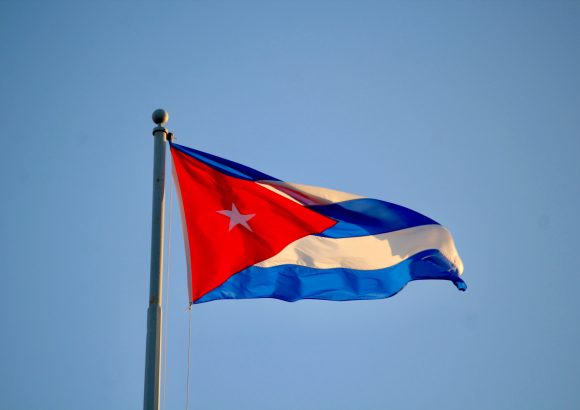
    In a significant escalation of Washington’s campaign against Havana, former U.S. President Donald Trump signed an executive order on Friday dramatically expanding existing sanctions targeting the Cuban government and its international allies, the White House confirmed to news agency Reuters. The move comes hot on the heels of Trump’s removal of Venezuelan leader Nicolás Maduro, marking a sharp acceleration of pressure on left-aligned governments across the Latin American region.

    The newly expanded sanctions regime targets individuals, entities, and associates linked to Cuban security services, those involved in alleged corruption or severe human rights violations, as well as sitting Cuban government officials and their supporters. While the full list of sanctioned actors has not yet been released, the executive order explicitly states that any foreign individual operating in key sectors of Cuba’s economy — including energy, defense, mining, financial services and security — can now be placed under sanctions.

    Notably, the new framework also allows for secondary sanctions to be imposed on third-party companies and individuals that facilitate transactions with sanctioned Cuban entities. Jeremy Page, a former sanctions researcher at the U.S. Department of the Treasury, described the provision as the harshest measure targeting non-U.S. businesses since the decades-long U.S. trade embargo on Cuba was first imposed. “Oil and gas firms, mining companies and global banks that previously managed to separate their Cuban operations from their U.S. activities now face major vulnerability to American enforcement,” Page explained.

    Cuba has issued a fierce condemnation of the new measures. Cuban Foreign Minister Bruno Rodríguez, who recently met with his Russian counterpart Sergei Lavrov in Moscow, denounced the sanctions as illegal unilateral coercive measures that violate the United Nations Charter. Rodríguez stressed the measures amount to collective punishment targeting the entire Cuban people, emphasized that Washington has no legal authority to impose such restrictions on the island nation, and made clear that Cuba would not be intimidated into abandoning its sovereign policies.

    The expanded sanctions fit into a broader, increasingly aggressive U.S. campaign against Cuba, which Trump has repeatedly claimed is on the brink of collapse. The move also aligns with recent shifts in U.S. engagement across the region: just days before the order was signed, the first commercial flight from Miami to Venezuela in seven years was completed, a visible signal of growing American intervention in Latin American and Caribbean affairs.

    During Trump’s term, U.S. forces have also carried out military operations targeting suspected drug trafficking originating from Venezuela, leading to the detention of Maduro. At the time, Trump openly warned that “Cuba is next,” accusing Havana of maintaining close ties to Iran and militant groups including Hezbollah. A senior U.S. official further framed the Trump administration’s position, arguing that Cuba provides “an accessible hub for hostile foreign intelligence, military and terrorist activities less than 100 miles from the U.S. coast.”

    Washington has long maintained three core demands of Havana: opening Cuba’s state-led economy to foreign and private investment, providing compensation for properties seized by Fidel Castro’s revolutionary government, and holding what the U.S. describes as free and fair elections. Cuba has consistently rejected external interference, reiterating that its socialist political and economic system is non-negotiable for the Cuban people.

    Friday’s executive order builds on a series of escalating U.S. measures against Cuba implemented earlier this year. After Maduro was removed from power, the U.S. halted Venezuelan oil exports to Cuba, one of the island’s primary energy sources. Trump subsequently threatened steep tariffs on any country that continued shipping oil to Cuba, prompting major suppliers including Mexico to suspend their oil deliveries to Havana. Those earlier restrictions have already triggered severe fuel shortages across the island, leading to nationwide power outages and the cancellation of most international commercial flights.