分类: politics

  • Security : Training of 15,000 FAd’H soldiers…

    Security : Training of 15,000 FAd’H soldiers…

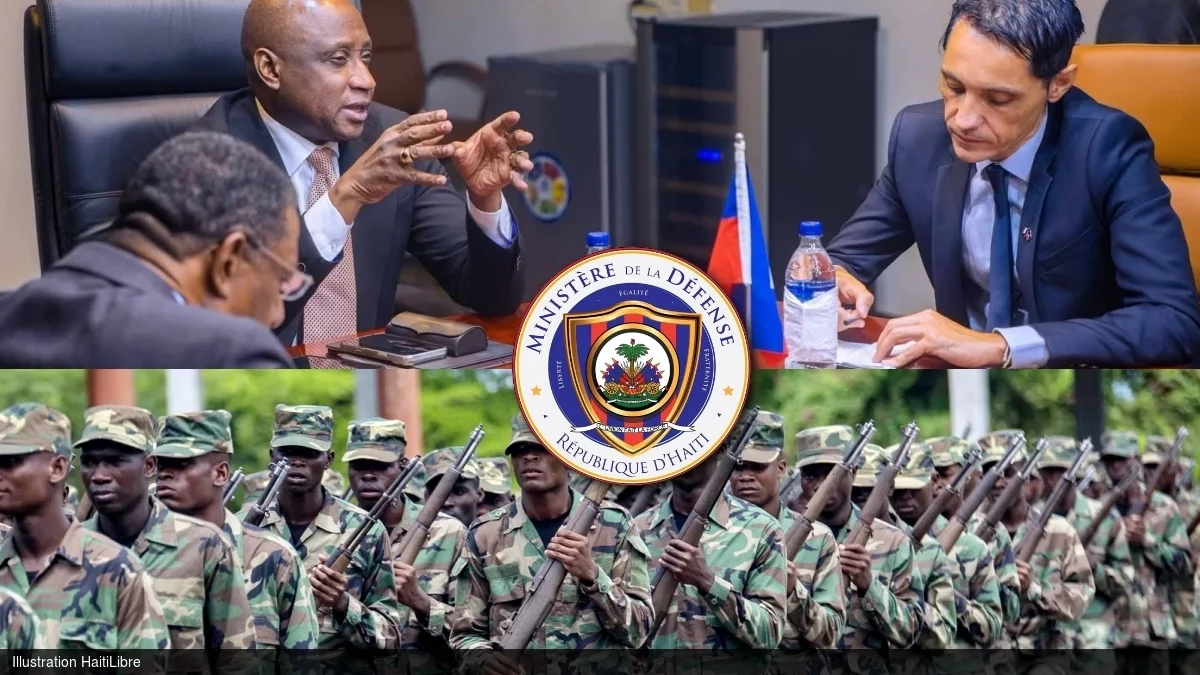
    On August 19, 2026, senior diplomatic and defense officials from France and Haiti held high-level talks focused on expanding bilateral military cooperation, advancing an ongoing training initiative for Haiti’s national armed forces and outlining a five-year capacity-building target. The meeting brought together Grégoire Varenne, France’s Chargé d’Affaires in Port-au-Prince, and Mario Andrésol, Haiti’s Minister of Defense, for nearly an hour of discussion centered on aligning both nations’ shared security and institutional development goals.

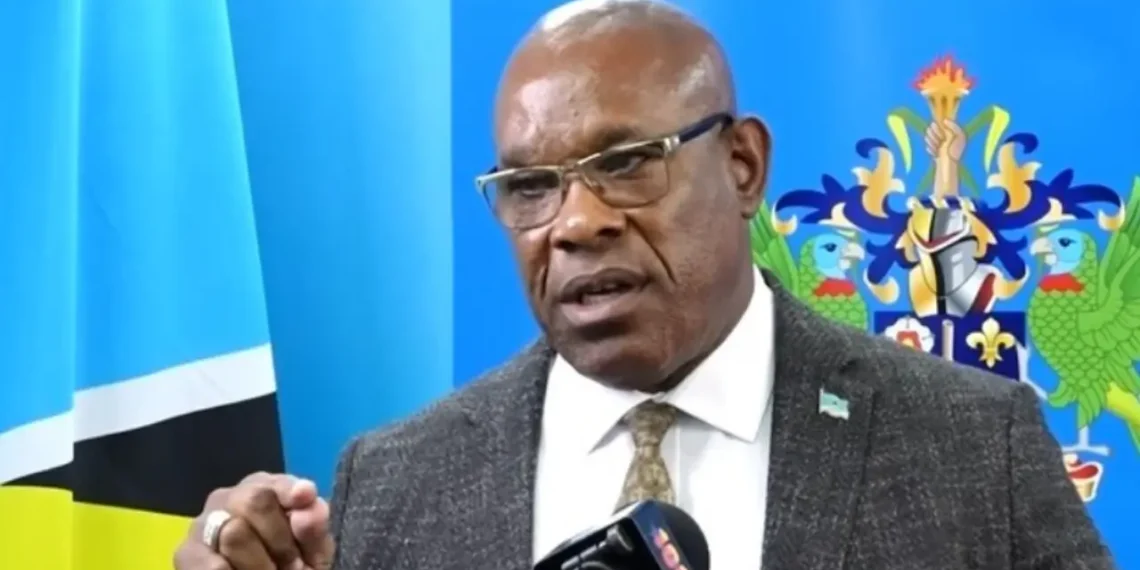
    The talks opened with a comprehensive progress review of the existing Haitian soldier training program, which is carried out under a formal bilateral memorandum of understanding. Varenne emphasized the substantial gains the partnership has already delivered: between 2024 and 2026, seven full contingents of Haitian military personnel have completed training courses in Martinique, laying an early foundation for professionalizing Haiti’s armed forces (known locally as FAd’H).

    Beyond ongoing basic training, the conversation turned to pressing gaps in the FAd’H’s operational capacity, specifically the need for purpose-built equipment and materials tailored to Haiti’s unique on-the-ground security challenges. By the end of the discussion, officials from both sides had identified multiple categories of equipment that match the force’s stated requirements, opening a path for future support deliveries.

    A centerpiece announcement from the meeting came from Defense Minister Andrésol, who laid out the Haitian government’s ambitious long-term goal: to train 15,000 new and existing FAd’H soldiers over the next five years. This target aligns with the country’s broader national vision to grow and strengthen the institutional capacity of its armed forces, at a time when Haiti faces persistent domestic security instability.

    Senior officer development and advanced education also occupied a key spot on the meeting’s agenda. The two sides explored new opportunities to offer academic scholarships to high-ranking Haitian military officers, enabling them to access specialized, top-tier training in France. Specifically, officers poised to take on increased senior leadership responsibilities — including those promoted to the rank of Lieutenant-Colonel — would be eligible for advanced courses covering military education, national strategy, and defense industry management.

    Andrésol further outlined Haiti’s specific request to send selected FAd’H senior leaders to enroll in the Master 2 program “Industrial Strategies and Public Defense Policies” (SIPPD), hosted by University of Paris 1 Panthéon-Sorbonne. The program is run in partnership with the French Ministry of the Armed Forces through the Directorate General of Armaments (DGA), making it a well-aligned fit for Haiti’s goal of building senior defense leadership capacity.

    The meeting marks another step forward in the deepening security partnership between France and Haiti, as the Caribbean nation works to rebuild and professionalize its military after decades of institutional restructuring.

  • Briceño Speaks on BTL/Speednet Failed Proposal

    Briceño Speaks on BTL/Speednet Failed Proposal

    In a press briefing held on August 19, 2026, Belizean Prime Minister John Briceño pushed back against speculation that he single-handedly derailed BTL’s proposed $80 million takeover of competitor Speednet Communications, also known as SMART, emphasizing that the final rejection of the deal was a collective decision by the national Cabinet.

    Addressing questions from local outlet News Five, Briceño reaffirmed that all Cabinet discussions follow strict confidentiality protocols, and said the body collectively determined moving forward with the acquisition did not align with the public interest. “I believe that Cabinet in its wisdom decided that we should not proceed,” the prime minister stated.

    The rejection of the merger announcement late last week drew an immediate response from Speednet. In an official statement issued after the decision was made public, the telecommunications provider signaled that all future government telecommunications contracts would need to be opened up to public tender. The statement also referenced the existing regulatory designation of BTL as a dominant market player, which carries a series of competition-focused obligations: these include requirements to share network infrastructure with competitors at cost, along with potential adjustments to the surcharges BTL currently charges rival providers for access to its network.

    When asked whether Speednet’s statement amounted to a threat against the government, Briceño rejected that framing, telling reporters “I don’t think it was a threat.”

    Briceño went on to defend the existing regulatory framework that designated BTL as a dominant telecommunications operator, a ruling issued by Belize’s Public Utilities Commission (PUC). He noted that the PUC’s designation followed directions from the national courts, meaning the regulatory body had no choice but to formalize the dominant provider classification. “They did what the court had been saying, BTL is a dominant operator and as such they had to do that, to declare that,” Briceño explained.

    When reporters asked if the government would move to support a repeal of the Statutory Instrument (SI) that enshrines BTL’s dominant provider status, Briceño tied the question to longstanding public demands for stable telecommunications pricing. Pointing out that widespread public opposition to price hikes has been a core demand from labor unions and the general public, the prime minister noted that the dominant provider classification is a critical tool for preventing excessive price increases. “You all have been saying you don’t want prices to go up… BTL is a dominant operator and as such they had to do that,” he said.

    Briceño also addressed growing market concerns that Speednet could deliberately undercut BTL’s pricing to gain market share following the collapsed merger. He clarified that the existing SI only imposes restrictions on price increases for dominant providers, not price cuts. “What the SI says is that they cannot raise their prices, but of course a company can reduce its prices,” he confirmed.

  • PSU President Challenges AG: “How Many Complaints Have You Made?”

    PSU President Challenges AG: “How Many Complaints Have You Made?”

    A public confrontation over government accountability has emerged in Belize, where the leader of the nation’s largest public sector union is pressing the country’s top auditor to answer for unexplored enforcement action against officials responsible for widespread mismanagement of official government records.

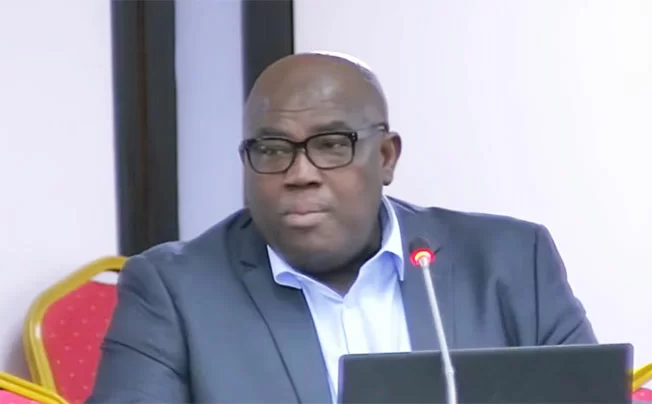
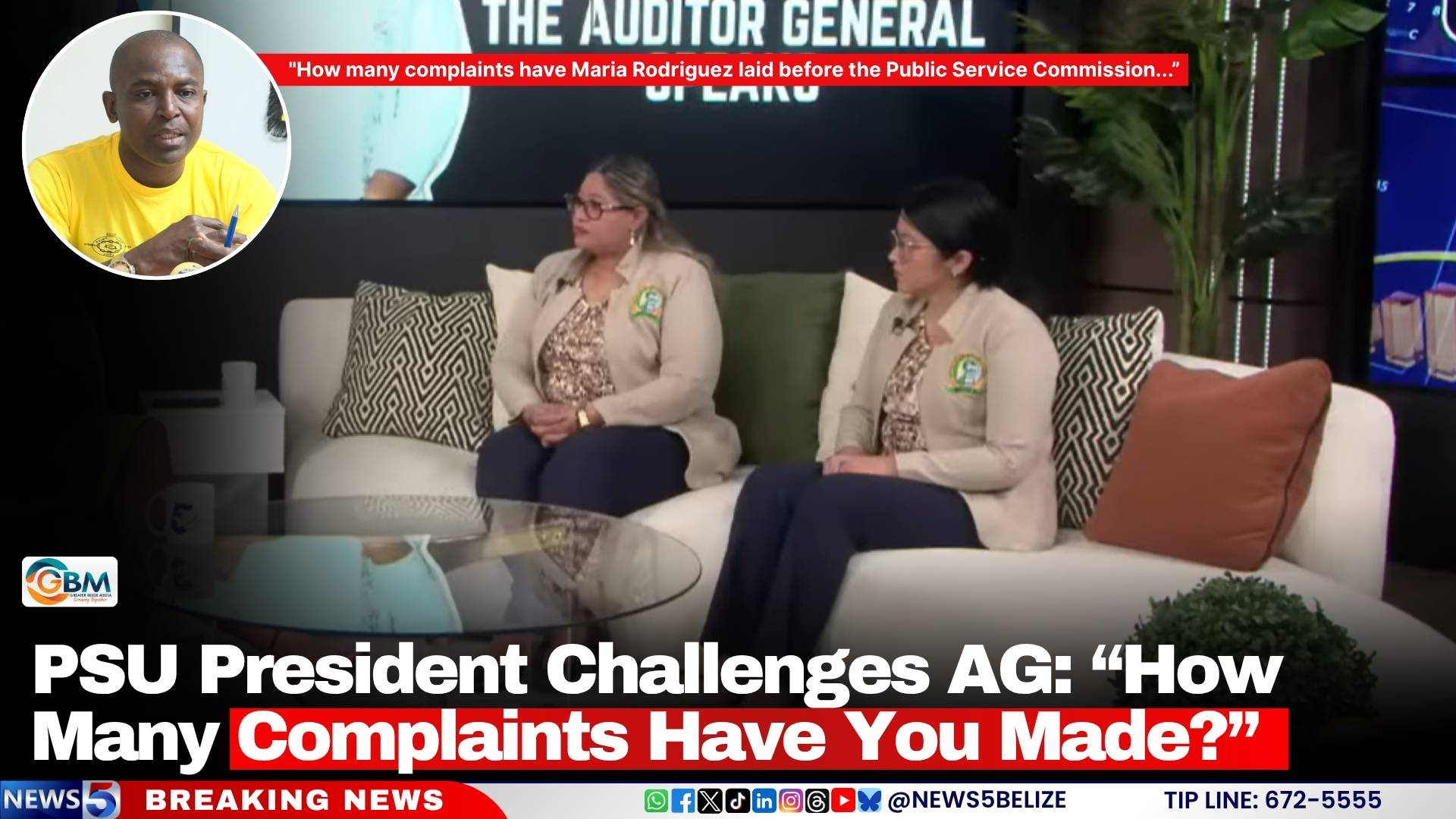
    Dean Flowers, president of the Public Service Union (PSU), laid out the challenge during a press conference hosted Tuesday by the National Trade Union Congress of Belize. His comments came in direct response to recent public remarks from Auditor General Maria Rodriguez, who last Thursday appeared on the local current affairs program *Open Your Eyes* to detail the deep, systemic barriers her office faces in completing routine government audits.

    During that interview, Rodriguez painted a stark picture of record-keeping failure across Belize’s government ministries. She explained that decades of accumulated physical documents have left agencies critically short on storage space, forcing years of official records to be packed away in unventilated, unconditioned storerooms that lack basic utilities like electricity. Without climate control, documents quickly develop mold, decay, and become permanently damaged or illegible long before auditors can access them for financial reviews. Rodriguez labeled the ongoing crisis a “systemic” failure that has contributed to a crippling backlog of uncompleted annual audit reports. As of August 2026, the most recent finalized audit report released by her office covers the 2017-2018 fiscal year, leaving nearly a decade of government spending unvetted.

    Beyond storage-related damage, Rodriguez also noted that public officials have at times withheld original documents to obstruct audit work. Because photocopied records can easily be altered to misrepresent official transactions, her auditors require access to original primary documentation to verify spending. She confirmed that her team has encountered multiple cases where altered copies contradicted the content of original documents, creating further delays and uncertainty in the audit process.

    In his response, Flowers questioned why Rodriguez has not exercised the full enforcement authority granted to her office under Belize’s Finance and Audit Reform Act (FARA) to hold errant public officials accountable for obstructing audits and destroying records. He specifically cited Section 13(4) of the legislation, which explicitly grants the Auditor General the power to file formal disciplinary and criminal complaints against public officers who violate record-keeping rules.

    Under that provision, Rodriguez can file disciplinary complaints directly with the Public Service Commission, which has the authority to terminate employment for officers found guilty of misconduct. She also has the power to refer criminal cases to the Director of Public Prosecutions for formal charges under Belize’s Criminal Code.

    Flowers is now demanding public transparency around how often the Auditor General has used this power. “How many complaints have Maria Rodriguez laid before the Public Service Commission for those public officers to be sent home?” Flowers asked reporters Tuesday. “How many complaints have Maria Rodriguez made to the Director of Public Prosecution under the Criminal Code or any other law, as the FARA says, for people to be charged and prosecuted?”

    The exchange has reignited longstanding questions about institutional accountability in Belize, focusing attention on a core gap between identifying public sector wrongdoing and taking actionable enforcement against the officials responsible. For Flowers and the PSU, the crisis of missing and damaged records is not just an administrative oversight—it is a failure of enforcement that demands clear answers from the nation’s top auditor.

  • MP speaks out about damage to water infrastructure

    MP speaks out about damage to water infrastructure

    Amid a crippling rainfall deficit that has strained regional water supplies, a top Saint Lucian government official has issued a sharp public warning about intentional tampering with critical water systems, stressing that such criminal acts harm local residents rather than the state.

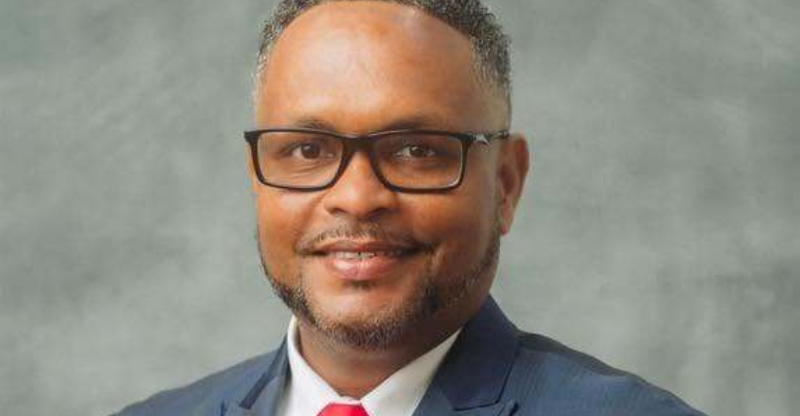
    Keithson Charles, the Member of Parliament for Choiseul/Saltibus and the country’s Minister for Public Utilities, made the statement following an official incident report from the Water and Sewerage Company (WASCO), which confirmed that an unknown actor deliberately manipulated a key supply valve serving the Delcer Treatment Plant located in Choiseul. The illegal interference cut the flow of water entering the treatment facility, worsening already tight water access for the region.

    Charles shared the details of the incident and his warning in an official post on his public Facebook page, emphasizing that acts of sabotage against public utilities do not target government entities — they hurt the people who rely on those services every day. “When you tamper with our utility infrastructure, you are not hurting the government – you are hurting your own neighbours, your own farmers, and your own community,” he wrote.

    The minister confirmed that WASCO crews were able to locate the tampered valve and repair the damage to restore the plant to full operating capacity. Even so, he stressed that the unauthorized interference is far from a minor offense: “This kind of unauthorized interference is a criminal offense, and an investigation is actively underway.”

    The incident comes at a particularly vulnerable time for the southern region of Saint Lucia, which is currently grappling with an extreme 45% deficit in seasonal rainfall. With rivers already running at historically low levels, any disruption to water treatment operations has an immediate, outsized impact on local communities that depend on the plant for potable water.

    To help residents cope with the ongoing dry conditions, Charles urged the public to prioritize rainwater harvesting, noting that the national government has already taken steps to ease the cost of water storage by removing value-added tax (VAT) on residential water tanks. He called for collective responsibility in protecting regional water resources.

    “Let us conserve our potable water for essential use, utilize harvested rainwater where possible, and act as our brother’s keeper by protecting our infrastructure,” Charles urged.

    WASCO had previously confirmed that it launched the probe into the tampering incident, which took place in the Unionville neighborhood of Delcer. The company also reminded the general public that intentional damage to or tampering with public water infrastructure is explicitly classified as a criminal offense under Section 90 of the country’s Water and Sewerage Act, meaning perpetrators can face legal penalties for their actions.

  • Belize Calls for Action Over Attacks on Palestinian Communities

    Belize Calls for Action Over Attacks on Palestinian Communities

    In a strongly worded official statement released on August 19, 2026, the Government of Belize has condemned the sharp escalation of violence targeting Palestinian civilians across the West Bank and East Jerusalem, calling for urgent coordinated global intervention to address the worsening humanitarian crisis.

    The Central American nation voiced profound alarm over the rapidly deteriorating security situation, warning that ongoing unaddressed hostilities are creating a cycle of further aggression against Palestinian communities. According to latest data compiled by United Nations monitors, violence in the region has reached unprecedented levels in 2026, surpassing all recorded totals since systematic monitoring of the conflict began. This year alone, violent incursions, home demolitions, and forced evictions have displaced thousands of Palestinian people from their ancestral lands and residences.

    Extending sincere condolences to the families of all victims of the ongoing violence, Belize reaffirmed its unwavering opposition to the systematic destruction of Palestinian communities. The government explicitly placed responsibility for upholding civilian safety on Israel, noting that binding international humanitarian law mandates the occupying power to protect all civilians within the territories under its control.

    Belize called on Israeli authorities to intervene immediately to halt attacks, launch full and transparent investigations into reported abuses, and hold all perpetrators of violence against Palestinian civilians accountable under law. The country’s Ministry of Foreign Affairs also issued an explicit demand for an immediate end to all policies that constitute collective punishment against Palestinian families, a practice widely condemned under international law.

    Beyond addressing the Israeli government, Belize issued a formal call to the broader international community to take concrete meaningful action to protect civilian lives and uphold universally recognized legal standards in the region. Reaffirming its longstanding support for a negotiated two-state solution as the only sustainable path to lasting peace between Israelis and Palestinians, the Belizean government pledged to continue elevating these pressing concerns at United Nations forums and other multilateral bodies.

    The statement from the Government of Belize was aligned with comments made by Prime Minister Johnny Briceño, who separately called for immediate justice for Palestinian people, alongside addressing ongoing humanitarian and security crises in Haiti.

  • Criminal allegations against Richard Frederick unproven, police say

    Criminal allegations against Richard Frederick unproven, police say

    In a formal press briefing held Wednesday, Saint Lucia’s Police Commissioner Verne Garde announced the conclusion of a high-profile criminal investigation into government minister Richard Frederick, confirming that probing teams failed to uncover sufficient evidence to substantiate the claims against the senior official.

    Garde’s announcement marked the first time the police chief publicly named Frederick as the official arrested earlier this year, breaking the prior anonymity around the case. The investigation traces back to July, when local outlet St Lucia Times questioned Garde about unconfirmed reports of a senior government figure’s arrest at a June 2 press conference. Following the public reveal of the arrest, Garde ordered a full, follow-up inquiry to gather all relevant facts surrounding the allegations.

    Describing the probe as both extensive and logistically complicated, Garde detailed the significant efforts investigators put into securing testimony. In a notable step to build the case, one investigating officer traveled outside Saint Lucia to obtain a formal statement from the individuals who first brought the allegations, a milestone that had eluded the team in the early stages of the probe. “We expended all the resources within our unit to try to secure the statement, which we did,” Garde told reporters.

    After completing all follow-up examinations of the claims, Garde said the voluminous body of evidence collected throughout the inquiry failed to support the allegations. “An allegation was made. We looked into the particular allegation, and the allegation was not sustained,” Garde stated, clarifying that the term “not sustained” in this context confirms an absence of enough evidence to validate the claims. Garde added that he personally reviewed the investigation’s final findings and endorsed the lead investigator’s recommendation to close the case.

    Despite answering questions about the outcome of the probe, Garde remained unable to disclose the exact nature of the allegations against Frederick, citing legal restrictions outlined in the Saint Lucian Criminal Code that govern public disclosure of information during active and concluded criminal proceedings. Pressed for additional details on both the claims and the investigating team’s formal recommendation, Garde reiterated that legal constraints limited what information could be released publicly.

    In closing remarks, Garde emphasized that the dismissal of the allegations for lack of evidence does not create a barrier for future complaints from members of the public. “As long as somebody feels that their rights have been infringed, we are obligated to assist them,” he said, reaffirming the police force’s commitment to investigating all legitimate claims of criminal activity brought forward by community members.

  • DNA-leden zetten vraagtekens bij toekomst SLM; Landveld verwacht duidelijkheid in september

    DNA-leden zetten vraagtekens bij toekomst SLM; Landveld verwacht duidelijkheid in september

    On a Tuesday sitting of Suriname’s National Assembly, the future of state-owned Surinaamse Luchtvaart Maatschappij (SLM), the country’s national airline, once again took center stage in tense parliamentary debate. Lawmakers across parties pressed Transport, Communication and Tourism Minister Raymond Landveld for clear answers on three critical, unresolved questions: the airline’s exact outstanding debt level, how much additional public funding the government will need to inject into the struggling carrier, and most importantly, what long-term strategic path the administration will choose for SLM — retaining it as a fully state-owned national flag carrier, pursuing full or partial privatization, or shifting to an entirely new operating model. Minister Landveld could not provide definitive responses during the session, instead noting that full clarity will emerge following the shareholder meeting scheduled for September.

    NDP parliamentarian Raymond Sapoen pushed back on the lack of transparency, pointing out that after nearly a year of discussions, the legislature still has not confirmed even the basic details of SLM’s debt position. Multiple conflicting debt figures have circulated publicly, Sapoen noted, questioning why the country’s available financial expertise has not been able to pin down an accurate total. He also asked whether state-owned mining firm Grassalco continues to provide ongoing financial infusions to the airline. For Sapoen, the core issue remains the long-term future of the carrier: there is no justification for continuing to pour public funds into SLM without a formal, clear strategic direction from the government.

    VHP legislator Mahinder Jogi echoed these concerns, pressing for answers on how long the state can continue to financially support a consistently loss-making enterprise. Multiple lawmakers labeled SLM a potential “bottomless pit” for public funds during the debate. However, NDP’s Ebu Jones argued that SLM holds unique strategic value as Suriname’s national carrier. Jones noted that the airline’s presence on the high-demand Paramaribo-Amsterdam route helps keep airfare prices balanced for consumers, and he called on fellow politicians and ministers who support retaining the national carrier to practice what they preach by flying SLM for their official travel. NDP caucus leader Rabin Parmessar demanded that full, detailed financial documentation be provided to the legislature in writing, emphasizing that a substantive policy debate on SLM’s future is impossible without a clear picture of the company’s current financial and operational standing.

    Minister Landveld acknowledged that SLM is currently grappling with significant operational challenges. For the airline’s regional routes, SLM originally operated two aircraft, but internal analysis found each plane only had a passenger load factor of roughly 40 to 45 percent on average. To cut inefficiencies, the carrier has shifted to running most regular regional services with just one aircraft, pushing the load factor up to 85 to 90 percent, Landveld said. The second plane is now reserved for charter operations.

    Despite this adjustment, technical issues have disrupted SLM’s operations in recent weeks. One of the regional jets is currently undergoing repairs in neighboring Guyana, and Landveld projected it will return to service within one to two weeks. Even the wet-leased aircraft that operates the Paramaribo-Amsterdam route has encountered mechanical problems, forcing the cancellation of two flights and the rebooking of affected passengers. The minister expects service on the key Amsterdam route to return to normal within approximately one week.

    According to Landveld, SLM is currently working through the process of reconciling its total outstanding debt to creditors, alongside a full review of its route network and fleet composition. The airline is also in discussions with Brazilian aerospace manufacturer Embraer to explore options for fleet optimization, he confirmed. On the topic of public subsidies, Landveld explained that support has been inconsistent: there have been multiple months where SLM operated without needing any state financial support, while other months required emergency government funding. He asked parliament to give SLM management additional time to finalize all operational and financial data for review.

    The minister committed to providing supplementary information to the National Assembly in writing, and reiterated that the September shareholder meeting will be the key moment where a clear picture of SLM’s financial position and future strategic direction is finalized. With that, the biggest political question hanging over the carrier remained unanswered after Tuesday’s debate: exactly how much more public investment is the Surinamese government willing to commit to SLM, and what structural changes will it require in exchange for that support?

  • ‘I am Ready to Debate the Whistleblower’s Bill’ Says Union Senator

    ‘I am Ready to Debate the Whistleblower’s Bill’ Says Union Senator

    A long-delayed piece of anti-corruption legislation in Belize is back at the center of political tensions, as a senior trade union senator has issued an open challenge to the ruling Briceño administration to end the gridlock around the long-awaited Protected Disclosure Bill, better known as the Whistleblower’s Bill.

    Glenfield Dennison, the union-appointed Senate member, made the call during a Tuesday press briefing hosted by the National Trade Union Congress of Belize (NTUCB), where he slammed the government for allowing the critical anti-corruption legislation to languish in the House of Representatives for five full years. First drafted in 2021, the bill was developed after a decade of sustained advocacy from labor groups and anti-corruption activists who have pushed for formal legal protections for people who expose official misconduct and graft.

    “This legislation exists to protect the people who do what we desperately need more of in this country: speak up about corruption,” Dennison told reporters. He connected the urgent need for the bill to ongoing public scrutiny of the Ministry of Defence, where leaked documents have revealed that multiple high-value contracts were split into payments valued under the $10,000 threshold to avoid stricter oversight. He pointed specifically to the harassment targeting the sources who leaked evidence related to the ongoing Mira Millions corruption scandal, noting that the law would shield exactly these types of whistleblowers from retaliation.

    The issue gained new clarity after Nadia Caliz, president of the Belize National Teachers Union, confirmed that the government recently placed the bill on an indefinite pause during a House committee meeting. Out of 19 policy proposals labor groups brought forward for legislative consideration, Caliz said, only the whistleblower legislation was marked as “on pause” rather than formally rejected, leaving its future uncertain.

    Dennison has issued a clear ultimatum to the administration: move the bill forward for a full vote and debate within 90 days. “Let us get that out in the next 90 days. I am ready to debate that in the Senate. Senator Channona, are you ready to debate that in the Senate? I am ready,” he said.

    The path to the bill has been decades in the making. Unions first formally demanded a whistleblower protection law back in 2012, when the previous Barrow administration held power, meaning the advocacy effort has now stretched 14 years. A full legal review of the 2021 draft completed earlier this year found that the current text still falls short of global best practices, with critical gaps including no provisions for financial incentives for whistleblowers, no guarantees for personal physical safety, and no mandate for an independent oversight body to receive and investigate disclosures.

    For its part, Prime Minister John Briceño, leader of the ruling People’s United Party (PUP), addressed the Mira Millions scandal during a July national party council meeting in Dangriga, where he sought to reassure the public that his administration would not cover up wrongdoing. “When we see these mistakes, we don’t hide it. We don’t put it under the rug. We fix it. Because you put us to work for you. You are our bosses,” Briceño said. That commitment is now being tested by labor leaders who say the continued pause on the whistleblower bill contradicts that public pledge of transparency.

  • Government Plans Tighter Surveillance to Stop Illegal Guns Entering Antigua and Barbuda

    Government Plans Tighter Surveillance to Stop Illegal Guns Entering Antigua and Barbuda

    Antigua and Barbuda’s government has launched a formal review of advanced electronic surveillance tools designed to boost monitoring capabilities across the country’s ports and border crossings, the nation’s Minister of Information Technology Melford Nicholas has publicly confirmed.

    The review process moved forward after a recent gathering of the country’s National Security Council, with Nicholas convening a follow-up working meeting that brought together senior representatives from the national police service, the country’s military, and the Office of National Drug and Money Laundering Control (ONDCP). During these closed-door discussions, stakeholders assessed what next-generation electronic systems are required to step up inspection protocols at all official points of entry, with the core goal of improving interception of illegal firearms and other prohibited contraband before it can enter national territory.

    Speaking Tuesday evening on the government-run public radio program *Taking Stock*, Nicholas outlined the scope of the ongoing evaluation. “I had a follow-on meeting with members of all the forces to look at the whole electronic framework for scrutiny at the ports and our borders,” he told listeners. As Information Technology Minister, Nicholas noted that a key part of his portfolio is ensuring that national security bodies have unimpeded access to the cutting-edge technological infrastructure they need to carry out consistent, effective monitoring of border activity.

    “The whole question of managing the border entry and giving the type of surveillance apparatus to the police force, the army and the ONDCP is a matter of concern,” Nicholas added. Due to the sensitive, classified nature of national security operations, the minister declined to release specific details about what types of surveillance technology are under consideration for deployment.

    This government review comes at a time of rising public and official anxiety over the flow of illegal firearms into Antigua and Barbuda, a problem that has been directly linked to a growing incidence of violent crime across the twin-island nation. Nicholas openly acknowledged that the country’s current border infrastructure leaves entry points vulnerable to smuggling, confirming that the national administration is prioritizing the allocation of new additional resources to the agencies tasked with securing the country’s territorial borders.

  • Grenada at 13th Commonwealth Youth Parliament, Australia

    Grenada at 13th Commonwealth Youth Parliament, Australia

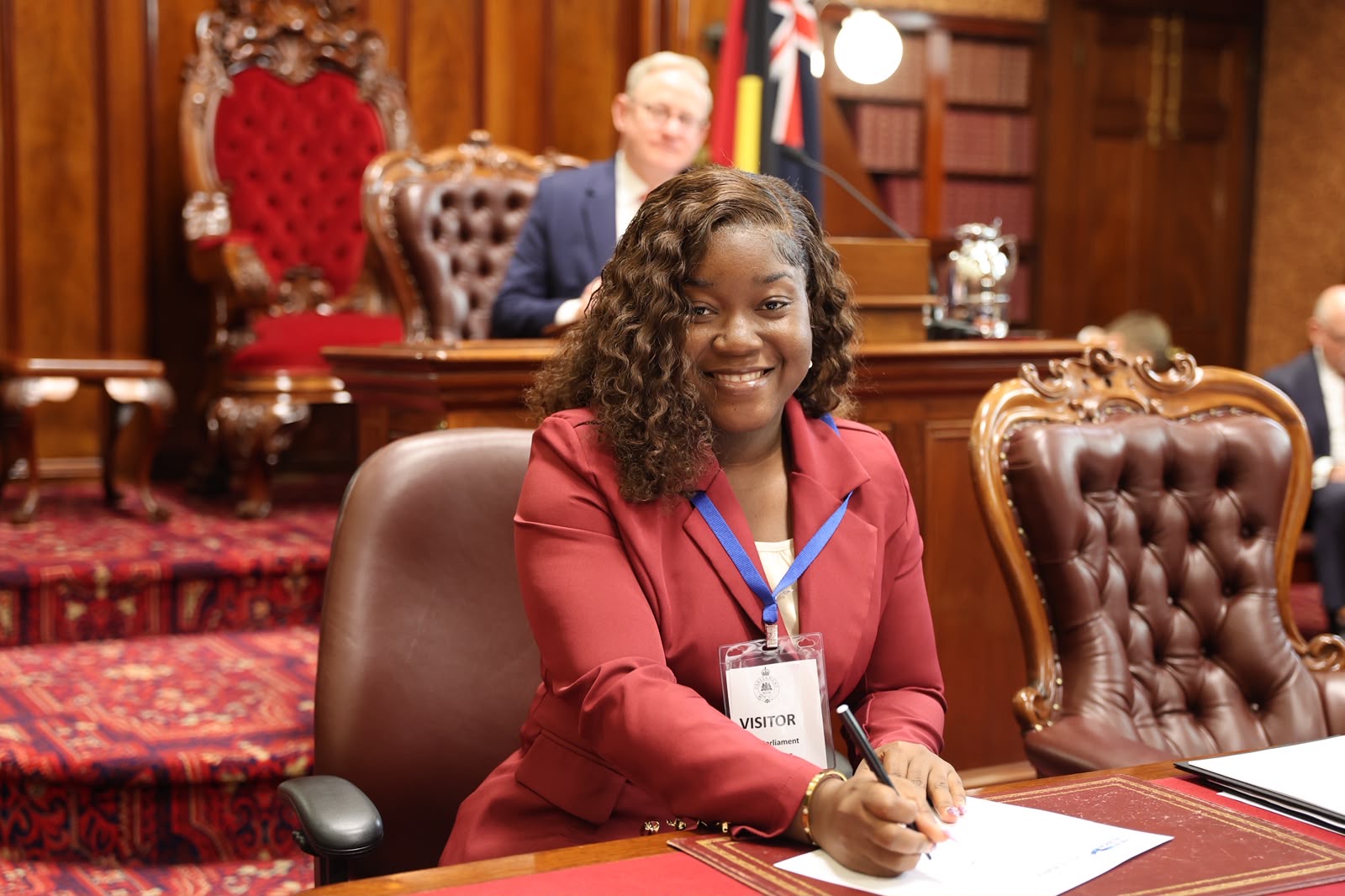
    Two young Grenadian parliamentarians have carried their nation’s voice to one of the Commonwealth’s most prominent youth governance gatherings, wrapping up a week of global dialogue focused on emerging threats and opportunities for democratic systems in the digital age. Tariq Miller and Kerri Ann Marrast represented Grenada at the 13th Commonwealth Youth Parliament (CYP13), held this year in Sydney, Australia, joining more than 50 young leaders from 50+ member nations across the bloc.

    This year’s flagship youth governance event centered on the timely theme of “Democracy in the Age of Artificial Intelligence”, bringing emerging debates around AI’s dual impact on democratic institutions to the forefront of the Commonwealth’s youth agenda. Over the seven-day gathering, delegates took part in mock parliamentary debates, skills-building leadership workshops, and cross-national dialogues designed to equip the next generation of leaders with tools to address 21st-century governance challenges. For Grenada, Miller and Marrast brought forward unique small-state perspectives to conversations about how AI can strengthen inclusive governance, as well as the disproportionate risks that unregulated AI poses for smaller developing democracies.

    Following the conclusion of CYP13, Grenada’s Ministry of Youth issued a public statement congratulating the two delegates for their successful participation and for upholding Grenada’s reputation on the global Commonwealth stage. “We are incredibly proud of Tariq and Kerri Ann for amplifying the voices of Grenada’s young people at this critical international forum,” the ministry noted in its statement.

    Beyond international participation, Grenada’s Youth Parliament Programme is gearing up for a key domestic milestone: national elections for new youth representatives are scheduled to take place across the country this December. The upcoming process will give the highest-performing debaters from each of Grenada’s parish-level youth parliaments the chance to campaign among their peers, win election to the national body, and take on two core roles: advocating for youth-led policy priorities to national government leaders, and serving as official youth ambassadors to the Ministry of Youth and Sports.

    For young Grenadians and community members seeking additional details about the upcoming national election or the broader Youth Parliament Programme, officials with the Ministry of Youth and Sports have shared multiple contact points. Interested parties can reach the ministry via phone at 1 (473) 440-6917, extension 22017, or follow the ministry’s official social media channels for ongoing updates and announcements.

    This report was shared via contributor submission to NOW Grenada, which notes that it does not take responsibility for the opinions, statements, or third-party media content included in contributor-submitted materials. Users may flag abusive content via the platform’s official reporting channel.