分类: politics

  • FNM demands accounting for 50th Independence spending

    FNM demands accounting for 50th Independence spending

    As The Bahamas gears up to mark its 53rd year of sovereign independence this year, a long-simmering question over public spending on the country’s landmark 50th anniversary celebrations three years ago has reemerged, with the opposition’s top culture official calling for full, public accounting of taxpayer funds used for the events.

    Serfent Rolle, culture shadow minister for the opposition Free National Movement, laid out the call for greater fiscal transparency and governmental accountability in public statements this week, emphasizing that Bahamian citizens have an inherent right to know exactly how their money is allocated and spent for national initiatives. His remarks come at a time when basic spending details for not just the 50th anniversary, but also Independence events held in the two years following that milestone, remain undisclosed, with government officials unable or unwilling to release cost breakdowns when formally requested.

    “Unanswered questions still remain about the gap between the original allocated budget and the final total expenditure for our 50th Independence celebrations,” Rolle explained. “Moving forward, we must prioritize and insist on the level of transparency and accountability that Bahamian people reasonably expect, and are fully entitled to, for national celebrations and all public events.”

    Rolle added that while national events should deliver meaningful, unifying moments that inspire national pride, that goal should never come at the cost of open fiscal governance. “The national pride we feel for our country is limitless, especially on these milestone occasions. But our public resources are finite, and every cent of taxpayer money must be accounted for,” he said.

    Official budget documents show $5.2 million was earmarked for the 50th anniversary celebrations in the 2022-2023 national fiscal plan, but to date there has been no official confirmation of whether event organizers came in under budget, stayed on target, or overspent the allocation. Back when the budget was first approved, St Anne’s Member of Parliament Adrian White questioned why the Cabinet Office’s ceremonial events budget jumped from the usual $750,000 to $5.2 million for the year. Then-Deputy Prime Minister Chester Cooper responded at the time that the golden independence anniversary was a “big, big deal for us and we are going to celebrate it thoroughly.”

    The 50th anniversary festivities featured a packed multi-event schedule, including galas hosted across The Bahamas and international celebrations in major cities with large Bahamian diaspora populations: London, Miami, and Atlanta. Domestic highlights included the 50th Golden Soirée, a nationwide float parade, and a multi-day jubilee in Nassau’s Pompey Square that featured an evening night market and a series of public concerts. Despite the high-profile, public nature of the events, organizers have repeatedly deflected questions about the final total cost of the elaborate celebrations, offering only vague excuses instead of concrete numbers.

    Rolle stressed that all elected and appointed public officials have a core responsibility to voluntarily answer to the public for how they manage taxpayer assets. “Those of us in positions of public trust must always be prepared, willing, and open to account for our stewardship of public funds,” he said. “When we do this, we cut down on unnecessary distractions and reduce the potential for division at moments when we should be coming together as a nation to celebrate our shared identity as Bahamians.”

    Notably, Rolle stopped short of criticizing the celebrations themselves, praising organizers for putting together a series of events that created a lasting moment of national pride for the country. He added that he fully supports holding a high-quality 53rd Independence anniversary celebration that honors The Bahamas’ sovereignty and shared national identity, echoing the national unity he hopes can come from greater fiscal openness.

  • Abinader inaugurates modern CEMED facility to enhance emergency response capabilities

    Abinader inaugurates modern CEMED facility to enhance emergency response capabilities

    Santo Domingo – In a landmark step to reinforce the Dominican Republic’s ability to handle natural disasters and public emergencies, President Luis Abinader has officially opened the brand-new purpose-built headquarters of the Specialized Emergency and Disaster Mitigation Corps (CEMED), the nation’s leading emergency response body.

    Situated within the 16 August Military Camp, the modern 6,061-square-meter complex operates as the central operational hub for the emergency response division under the Dominican Ministry of Defense. Designed to support end-to-end emergency management, the facility hosts a full suite of purpose-built spaces: a dedicated administrative block, personnel barracks, multi-purpose training classrooms, a fully equipped crisis command center, strategic planning areas, a public-access helipad for rapid aerial deployment, climate-controlled specialized storage for emergency gear, and large training zones for emergency preparedness drills.

    Alongside the inauguration of the new headquarters, the Dominican government also unveiled a major upgrade to CEMED’s operational toolkit, handing over a wide range of new emergency response assets. These include modern fire trucks, large-capacity water tankers, specialized heavy rescue vehicles, rugged all-terrain units for hard-to-reach affected areas, civilian and search-and-rescue drones, mobile portable communications systems that can operate when ground infrastructure is damaged, advanced search-and-rescue detection technology, and a team of specialized disaster response canine units.

    Speaking at the official inauguration ceremony, President Abinader framed the initiative as a critical long-term investment in safeguarding Dominican lives and closing gaps in national emergency preparedness. He emphasized that accelerating climate change has driven a steady increase in the frequency and severity of natural disasters across the Caribbean, making it imperative for governments to shift from a purely post-disaster reactive model to a proactive strategy focused on prevention, advance planning, and rapid deployment capabilities.

    The entire project – encompassing both construction of the new headquarters and procurement of all specialized equipment – represents a total public investment of more than 454.6 million Dominican pesos. Beyond strengthening the nation’s domestic disaster response system, the government has outlined a broader strategic goal: to position the new CEMED headquarters as a leading regional hub for emergency response training and cross-border humanitarian assistance coordination, supporting neighboring Caribbean nations facing shared climate-driven disaster risks.

  • Pierre Takes CARICOM Chair, Pledges to Bring Regional Body Closer to the People

    Pierre Takes CARICOM Chair, Pledges to Bring Regional Body Closer to the People

    GEORGETOWN, GUYANA – 30 June 2026: With just hours remaining before he formally assumes the rotating leadership of the Caribbean Community (CARICOM), incoming Chair and Prime Minister of Saint Lucia Hon. Philip J. Pierre has laid out his vision for a people-centered six-month term, emphasizing collective action and tangible benefits for Caribbean citizens.

    Pierre will officially take over the chairmanship on 1 July 2026, and will hold the post through the end of December 2026. In his pre-assumption statement released by the CARICOM Secretariat, headquartered in Turkeyen, Greater Georgetown, Pierre framed his acceptance of the role as a commitment rooted in service to the Caribbean region’s 16 million residents.

    “CARICOM has always been built on a simple but powerful belief: that our countries can achieve more together than we ever could alone,” Pierre said, noting that this founding principle remains just as relevant today amid a period of profound global shifts. As Caribbean nations adapt their economies to new global realities and work to address evolving social challenges, Pierre argued that cross-border cooperation, innovation, and shared purpose are non-negotiable for progress.

    At the core of his incoming agenda is a focus on answering a critical question on the minds of ordinary residents across the region: How can CARICOM deliver more visible, meaningful improvements to everyday life? This question, Pierre stressed, will guide every policy and initiative pursued during his term.

    First on his priority list is strengthening regional solidarity. “The Caribbean is strongest when we work together, speak with purpose, and respect the voices and contributions of every Member State,” he noted, pointing to the region’s rich diversity of cultures, languages, and traditions as one of its greatest competitive and collaborative assets, not a barrier to unity.

    Pierre also highlighted the interconnected nature of development and public safety, pledging to advance collective work to build safer, more secure communities where all residents have the space to live, work, learn, and thrive with dignity. For the regional bloc, he emphasized, success can only be measured by whether ordinary people actually feel the benefits of integration in their daily lives. “Integration that our people cannot feel will not last,” he said.

    Looking ahead to his six-month tenure, Pierre called for collective action to build a CARICOM that is more united, inclusive, resilient, and future-ready, framing the next chapter of the bloc’s work as a journey “from resilience to renewal and revival.”

    Established in 1973 via the Treaty of Chaguaramas and revised in 2001 to launch a single market and economy, CARICOM stands as one of the most successful examples of regional integration in the developing world. The bloc comprises 15 full Member States and six Associate Members, with 60% of its combined population under the age of 30. Its work is organized around four core pillars: economic integration, coordinated foreign policy, human and social development, and security cooperation, with the overarching goal of building a unified, competitive global bloc where all citizens can access opportunity, enjoy guaranteed human rights and social justice, and share in shared economic, social, and cultural prosperity.

  • St. Lucia’s Pierre Pledges People-Centred Agenda as He Prepares to Chair CARICOM

    St. Lucia’s Pierre Pledges People-Centred Agenda as He Prepares to Chair CARICOM

    As Saint Lucia Prime Minister Philip J. Pierre prepares to take the reins of the Caribbean Community (CARICOM) on July 1, he has laid out a bold, citizen-focused vision aimed at revitalizing regional integration, boosting collective resilience, and advancing inclusive sustainable development across the Caribbean bloc.

    In an official public statement ahead of assuming the one-year chairmanship, Pierre framed his appointment as a profound responsibility to the people of the region, saying he accepts the role with humility, unwavering determination, and a deep-rooted commitment to public service for all Caribbean nations.

    Pierre reaffirmed the core founding principle that has guided CARICOM since its establishment: that Caribbean member states are far more powerful when working in collaboration than acting independently. That foundational belief, he stressed, has not lost its relevance amid the shifting global landscape of the 21st century – it is more critical than ever.

    Against the backdrop of a rapidly evolving global order, Pierre acknowledged that Caribbean nations are currently navigating unprecedented economic shifts and complex cross-border challenges that demand deeper cooperation, innovative problem-solving, and unwavering regional unity. He noted that a growing number of ordinary Caribbean citizens are asking a pressing question that will shape his tenure: how can CARICOM deliver tangible, meaningful improvements to everyday life across the region? That inquiry, he said, will serve as the north star for all the bloc’s work during his term.

    A top priority for Pierre’s chairmanship will be making CARICOM more visible, accessible, and relevant to everyday citizens, moving beyond high-level diplomatic meetings and formal declarations to embed regional integration in communities, schools, small businesses, and family homes across all member states.

    “CARICOM must continue to move closer to the people,” Pierre said. “It must be seen and felt not only in meetings and declarations, but also in communities, schools, businesses, homes, and in the opportunities available to every Caribbean citizen.”

    He outlined six key focus areas for his term: accelerating urgent climate action to address the Caribbean’s disproportionate vulnerability to global warming; strengthening regional food and nutrition security to shield communities from global supply chain disruptions; driving inclusive, sustainable economic growth that lifts all segments of society; speeding up digital transformation to close the digital divide across the region; expanding cross-border trade and foreign direct investment opportunities; and streamlining the free movement of people, skilled labor, services, and innovative ideas across the CARICOM bloc.

    Inclusivity will be a central throughline of all policy efforts, Pierre emphasized. He insisted that every Caribbean citizen must see their needs and priorities reflected in the regional agenda, no matter their age, gender, physical ability, socioeconomic background, occupation, or personal circumstance.

    Pierre also made public safety a core priority, noting that long-term development and community security are inherently interconnected. He pledged to work collaboratively with all member states to build safer, more stable societies where all citizens can thrive.

    Ultimately, Pierre argued, the true measure of CARICOM’s success is not the number of agreements signed or summits held, but whether ordinary citizens can actually feel the benefits of regional integration in their daily lives. “Integration that our people cannot feel will not last,” he noted.

    Looking ahead to his tenure, Pierre called on all CARICOM member states to maintain unwavering solidarity in pursuit of shared goals. He expressed clear confidence that the region can emerge more united, more inclusive, more resilient, and better prepared to face future challenges.

    In closing, Pierre urged all Caribbean citizens to stand together to move from collective resilience in the face of crisis to widespread renewal and revival, building a stronger, more prosperous Caribbean Community for current and future generations.

  • IMPORTANT NOTICE: Immigration Amnesty 2026

    IMPORTANT NOTICE: Immigration Amnesty 2026

    The Government of Antigua and Barbuda, through the Ministry of Immigration led by Honourable Minister E.P Chet Greene and the national Department of Immigration, has officially announced the launch of the 2026 Immigration Amnesty Programme, authorized under the recently passed Immigration and Passport (Amendment) Act, 2026. This three-month initiative is designed to create a formal pathway for long-term residents with unresolved immigration status issues to bring their documentation into compliance with local law.

    The amnesty initiative will run for exactly three months, opening for applications on Wednesday, July 1, 2026, and closing all submissions at the end of the day on Wednesday, September 30, 2026. Eligibility for the program is restricted to two core groups of residents: individuals who have maintained continuous residence in Antigua and Barbuda for a minimum of four years, and who currently face gaps, errors, or formal irregularities in their official immigration standing during that residency period.

    To complete an application, eligible candidates must prepare a set of required documentation to submit alongside their formal request. This includes one passport-sized biometric photograph, a filled-out Amnesty Application Form (which will be provided directly by the Department of Immigration on the day an applicant submits their materials), and official police clearance records from every country or territory where the applicant has lived over the past four years. In terms of administrative costs, applicants are required to pay a non-refundable processing fee of 500 Eastern Caribbean dollars, plus an additional 150 Eastern Caribbean dollar fee for formal change of status processing. Immigration officials have urged all candidates to double-check their materials before submission, noting that incomplete applications will either face significant processing delays or be rejected outright until all missing requirements are fulfilled.

    All applications are accepted exclusively at Antigua and Barbuda’s Immigration Headquarters, during a designated submission window of 2:00 p.m. to 4:00 p.m. from Monday to Friday. To streamline the process and avoid crowding or disorder, all submissions will be handled on a first-come, first-served basis, with a formal numbered queue system in place to manage applicant flow.

    For members of the public seeking general information outside of application submission hours, two dedicated enquiry channels are available. The first is a permanent Amnesty Information Desk located at the main entrance of Immigration Headquarters, and the second is a dedicated phone line staffed during regular business hours from 8:30 a.m. to 4:00 p.m. Additional guidance, program updates, and information on any unlisted supplementary requirements will be provided directly to applicants once they lodge their formal applications at headquarters.

    Officials have emphasized a key clarification for all potential applicants: meeting the program’s basic eligibility requirements does not guarantee final approval of status regularization. Every submission will undergo an individual assessment based on criteria laid out in the Immigration and Passport (Amendment) Act, 2026, and all other relevant national immigration laws and policies. In a closing statement, the Department of Immigration encouraged all individuals who meet the eligibility criteria to take advantage of this limited-time opportunity to resolve their immigration status before the program closes in September 2026.

  • Reform blueprint earns praise at national ideas forum

    Reform blueprint earns praise at national ideas forum

    At Monday’s Ideas Forum held in the Glebe, a resident of St George, Charles Brathwaite, laid out a far-reaching, interconnected long-term development strategy for Barbados that has earned high acclaim from Attorney General Wilfred Abrahams. Speaking before a high-profile panel that included the nation’s prime minister and full cabinet, Brathwaite pushed back against the incremental, quick-fix policy approaches that have dominated public debate to date, arguing that the island’s most pressing systemic challenges – from climbing crime rates and crippling traffic congestion to crumbling, decades-old infrastructure – are deeply interconnected. For these overlapping issues, he argued, siloed, short-term solutions will never deliver lasting progress; only coordinated, forward-looking national planning can put Barbados on a sustainable path.

  • NHC tenants ‘deserve better maintenance’ as ownership awaits – Rowe

    NHC tenants ‘deserve better maintenance’ as ownership awaits – Rowe

    During a Tuesday sitting of Barbados’ House of Assembly, Deputy Speaker Neil Rowe delivered a impassioned plea on behalf of long-term tenants of state-owned National Housing Corporation (NHC) accommodations, calling for fairer treatment as the body considers a historic bill that would transfer property titles to decades-long occupants.

    Rowe, who also serves as the Member of Parliament for St. Michael North West, threw his full support behind the State Acquisition and Vesting of Property Number 2 Bill — legislation that would grant full home ownership to 224 tenants who have occupied NHC-constructed units for extended periods. But while he hailed the bill as a transformative step for working families, he did not hold back criticism of the NHC’s longstanding failure to maintain properties in his constituency, even as tenants continue to fulfill their monthly rent obligations.

    “For many of my constituents, this bill is life-changing,” Rowe told the chamber. He shared that multiple households in his district have resided in their NHC terrace homes for 20, 25, even 30 years, turning these government-built units into deeply rooted community spaces. “Within those walls they raised children, cared for their elderly parents, celebrated birthdays, mourned loved ones and built strong communities. These are not merely buildings, they are homes,” he emphasized.

    The deputy speaker went on to outline the daily frustrations faced by his constituents, saying he feels profound distress that long-time tenants are still paying rent decades after moving in, yet cannot get even basic repair work completed. When residents reach out to the NHC’s central depot to request fixes for broken windows, damaged doors or leaking roofs, they are routinely turned away with the excuse that no funding is available for repair materials or labor.

    Rowe’s criticism extended to questions about financial accountability at the state-owned housing agency. “My question to the general manager and the management at the National Housing Corporation [is]: what is the National Housing Corporation doing with the rent that is being collected by tenants living in these units for more than 20 years, but still paying rent to the corporation?” he asked. He also called for transparency around how taxpayer funding allocated to the NHC is being used, noting that the problems affect hundreds of residents across four communities: Rosemont, Fernihurst, Deacon’s Farm and Golden Acre.

    Calling the ongoing situation a profound injustice, Rowe said constituents face an uphill battle every time they request basic upkeep, despite decades of consistent rent payments. “I take serious offense to things like this. I think it is a great injustice being done to my constituents that they are still paying rent to the corporation, but when it comes to maintenance and getting things done, it is very challenging, and sometimes seems like an uphill battle,” he said.

    In response to Rowe’s concerns, Minister of Housing Christopher Gibbs acknowledged that the NHC has fallen short on both customer service and maintenance response times. He committed to institutional changes to address the gaps, announcing plans to launch a dedicated rapid response maintenance unit within the Ministry of Housing, paired with a modernized web-based customer service portal that will let tenants submit and track repair requests far more efficiently.

    “We are going to be erecting a rapid response unit within the ministry,” Gibbs said. “We are going to tie that to an upgraded customer service platform that will be web-based…. The truth is we have to get with the times and upgrade our customer service so that our tenants and clients live in dignity.” The new unit, he added, will formalize tenants’ right to a timely and appropriate resolution whenever maintenance issues arise, bringing an end to long wait times and unaddressed requests.

  • Constitutional reform process about to kick off

    Constitutional reform process about to kick off

    Guyana’s ambitious national constitutional review process is poised to open public input this weekend, Attorney General and Minister of Legal Affairs Anil Nandlall confirmed in an announcement on his weekly social media program “Issues In The News” Tuesday evening. The process, led by the Constitutional Reform Commission (CRC), will kick off with a six-month window for written public submissions, to be followed by in-person public consultations held across every region of the South American nation.

    Under the framework outlined by Nandlall, the public can contribute recommendations via multiple channels: hand-delivered submissions to the CRC Secretariat office located on the Fifth Floor of the CRC building at 211 Camp and Lamaha Street in Georgetown, or emailed submissions sent to the official commission address gycrc2024@gmail.com. All submissions must include valid government-issued identification, Nandlall emphasized, ruling out anonymous input entirely. “This is serious business. If you want to make a contribution to such a nationally important process, then you must be able to say who you are and give us some form of ID, so that we can authenticate and verify who you are,” he explained in remarks Tuesday.

    The public engagement initiative comes amid mounting national and international debate around key governance and electoral issues that have divided Guyana’s political landscape in recent years. Top among the contentious topics are calls to clarify citizenship rules for non-Commonwealth migrants and migrant workers, and debate over whether foreign residents including Commonwealth citizens should be granted voting rights in national elections. The country’s opposition has repeatedly pushed for constitutional amendments to mandate periodic fresh voter registration, a change intended to remove names of deceased people and emigrated citizens from electoral rolls, addressing long-running claims of inflated voter lists and electoral fraud.

    Nandlall confirmed that electoral reform will be a core thematic priority for the review process, including potential changes to the composition of the Guyana Elections Commission (GECOM), the process for selecting GECOM’s chairman, and the commission’s jurisdiction over national registration and electoral administration. For decades, international election observation bodies have repeatedly called for an overhaul of Guyana’s voter registration system and a restructuring of GECOM to expand its representative base and resolve persistent political deadlock that has delayed past electoral processes.

    Beyond electoral changes, the CRC will consider a broad slate of additional reform priorities. These include strengthening legal protections for all fundamental rights and freedoms for Guyanese, upholding the specific rights of Indigenous peoples and children, eliminating all forms of systemic discrimination, guaranteeing minority representation in national decision-making, and expanding safeguards for economic, social and cultural rights for all citizens. Other key focus areas include measures to preserve and reinforce the independence of the judiciary, enhance accountability for public funds, and strengthen integrity standards for public office. The commission will also review the functioning of the National Assembly, exploring reforms to boost its capacity and effectiveness as a deliberative lawmaking body, and assess the local government system to identify improvements to its delivery and governance capacity.

    Notably, Nandlall stressed that the listed thematic areas are not exhaustive. Members of the public are welcome to submit recommendations on any constitutional matter that is not explicitly outlined in the public call, including proposals to add new provisions not currently included in the national charter. The attorney general issued a broad appeal for full participation from all segments of Guyanese society, including individuals, community groups, civil society organizations and public and private institutions.

    “This is a process of tremendous public importance. It will impact the type of amendments that we will see in the Constitution when the process concludes. Any responsible person, I think, would want to become part of this process,” Nandlall said, framing the reform process as a historic opportunity for Guyanese to shape the future of their national governance framework.

  • Sturge: MiLAT  suspended, not closed

    Sturge: MiLAT suspended, not closed

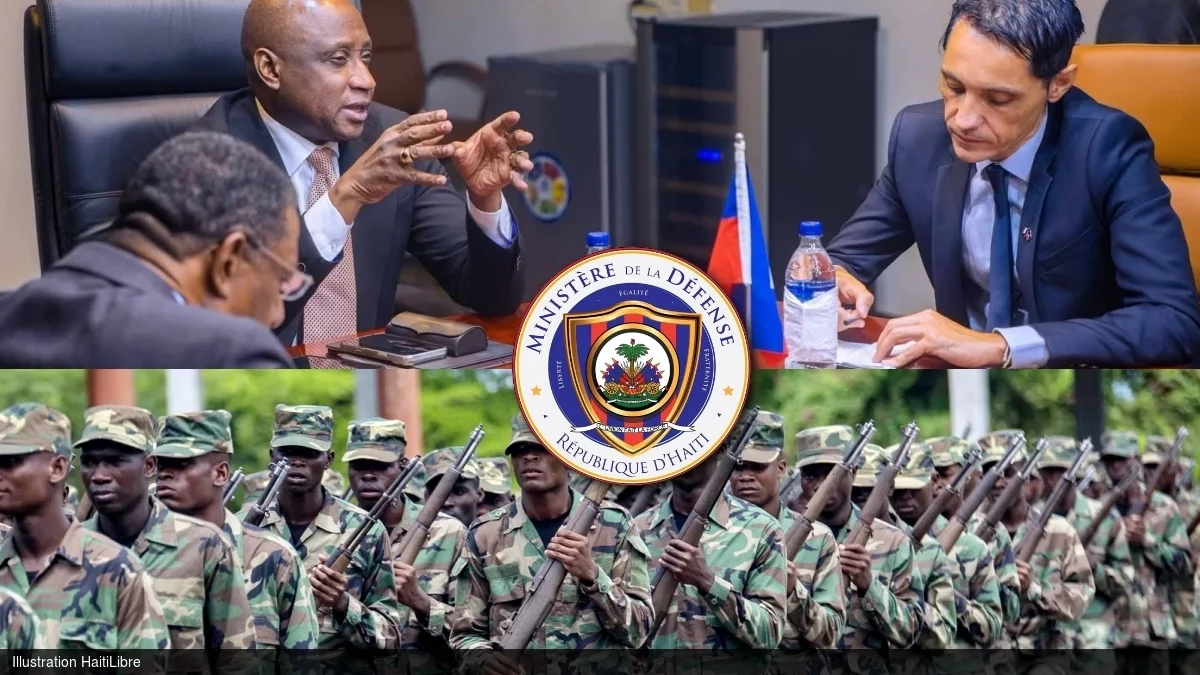
    Trinidad and Tobago’s Defence Minister Wayne Sturge has formally confirmed that the Military-Led Academic Training Programme (MiLAT), a long-standing initiative aimed at rehabilitating at-risk young people, has been temporarily paused. The confirmation came this week following swirling public speculation after all contracted teachers and civilian administrative staff attached to the programme were sent off-site on Monday, leaving nearly 100 junior trainees in limbo and sparking widespread questions about the initiative’s long-term future.

    Contrary to circulating reports that the programme had been permanently shut down, Sturge emphasized that the suspension is only a temporary measure while the government carries out a full-scale structural and financial restructuring of MiLAT. Speaking to local media outlet the Express, Sturge outlined that two key factors drove the decision: mounting financial pressures on the state and the programme’s current unsustainable business model.

    “The programme has not been closed down but temporarily suspended pending ongoing structural reform,” Sturge explained. “It was necessary to suspend at this time having regard to severe financial constraints coupled with the fact that it was not economically viable in its present form.”

    The minister added that the government deliberately timed the suspension to follow the completion of Caribbean Secondary Education Certificate (CSEC) examinations for the current Form Five cohort, minimizing disruption to students who were already close to finishing their academic cycle. Currently, government agencies are collaborating to redesign the programme to address its shortcomings: the Ministry of Defence is working in lockstep with the Trinidad and Tobago Defence Force Reserves and the Ministry of Tertiary Education to develop a revised framework that will allow remaining Form Four students to resume their training as quickly as possible.

    A core critique of the current MiLAT model laid out by Sturge is its disproportionately high operating costs. He noted that official data shows the per-student cost of the programme is significantly higher than the cost of educating a student at a public university, a gap that has made the current model unfeasible for continued state funding.

    Since its launch, MiLAT has been framed as a key public safety intervention: it combines military-style discipline, formal academic instruction, and practical life skills training for vulnerable youth, with the explicit goal of reducing youth engagement in crime and supporting rehabilitation for at-risk young people. Opposition critics have already raised alarms that pausing the initiative will remove a critical crime prevention tool and lead to a spike in criminal activity among disconnected youth.

    Sturge pushed back firmly against these claims, rejecting the opposition’s narrative outright. He argued that the link between MiLAT’s suspension and rising crime is unfounded, pointing out that even when the programme operated at full capacity under the previous national administration, crime rates surged to unprecedented historic highs. “I am firmly of the view that temporarily suspending the programme will have little to no effect on crime and criminality, given that the last administration had these programmes yet crime skyrocketed to record levels previously unseen. I don’t buy that narrative which has become a trademark of the Opposition,” he said.

    The minister declined to address two key outstanding questions raised by reporters: he did not directly confirm or deny reports that the contracts of all non-military staff would not be renewed, leaving the employment status of these workers unclear. He also declined to provide a specific timeline for when the restructured programme will resume operations, only stating that the government is committed to completing the restructuring process “in the shortest possible time.”

  • Gonsalves confirms ULP gov’t was in talks to lease cruise port

    Gonsalves confirms ULP gov’t was in talks to lease cruise port

    St. Vincent and the Grenadines’ Opposition Leader Ralph Gonsalves, head of the Unity Labour Party, has broken his silence on the newly signed cruise terminal concession deal with Global Ports Holdings (GPH), confirming that his administration held extensive, multi-round negotiations with the international port operator before leaving office following the November general election.

    Earlier this month, on June 10, the newly installed New Democratic Party (NDP) government formalized a memorandum of understanding (MOU) with GPH that sets the stage for exclusive negotiations over a 30-year concession agreement. The deal outlines a planned EC$250 million investment to carry out phased modernization work on the Kingstown cruise terminal, with provisions that allow local Vincentian investors to acquire up to a 30% stake in the project and guarantee local representation on the venture’s board of directors.

    Speaking this week on Star Radio, the Unity Labour Party’s official broadcast platform, Gonsalves launched pointed criticism of the NDP administration, accusing the sitting government of moving forward with a 30-year commitment without disclosing critical detailed terms of the arrangement to the public. He stressed that while the NDP has publicly announced the MOU, it has released no specific information about the core financial terms that will shape the project’s long-term impact on the country.

    Gonsalves recalled that his own administration engaged in multiple rounds of talks with GPH representatives, including a face-to-face meeting with GPH Chairman Mehmet Kuhmen. Shortly before the November 2025 general election that ended the Unity Labour Party’s term, GPH submitted a draft proposal to his administration, though Gonsalves has not released the specific content of that document. He also confirmed that GPH was one of multiple firms that approached his government to pitch proposals for upgrading the country’s cruise infrastructure.

    When GPH first presented its vision for the project, Gonsalves said, he walked the initial delegation through the existing port site and shared his administration’s development blueprint: constructing a brand-new terminal on the old port land, followed by a hotel and a purpose-built performing arts centre on adjacent parcels. Gonsalves noted that GPH representatives immediately signaled they were not interested in pursuing a development of that scale.

    As part of his administration’s due diligence, Gonsalves said he consulted with Antigua and Barbuda Prime Minister Gaston Browne, who reported that Antigua’s existing partnership with GPH in St. John’s has been satisfactory. However, Gonsalves also highlighted cautionary examples from other Caribbean nations: an agreement with GPH reached by the former Timothy Harris administration in St. Kitts and Nevis was ultimately scrapped after a review found it did not serve the country’s best interests, while a cruise port concession signed by the Freundel Stuart administration in Barbados was put on hold when the Mia Mottley-led government took power.

    Despite those past canceled deals, Gonsalves clarified that he does not oppose a partnership between St. Vincent and the Grenadines and GPH. His research, he said, confirmed that GPH is a well-established, professional operator with strong industry standing.

    After the third round of talks with GPH, Gonsalves said, his administration intentionally paused progress to request full, specific details of the proposed agreement, a step the NDP has skipped according to the opposition leader. He emphasized that while he understands GPH is a for-profit enterprise that is not operating as a philanthropic organization, the government and people of St. Vincent and the Grenadines have a non-negotiable stake in securing a fair, transparent deal.

    Gonsalves shared tentative terms that were discussed during his administration’s talks: GPH initially proposed an investment of US$30 million, with the option to allocate additional capital later. The phased plan the firm presented called for first repairing and upgrading the existing terminal facility, then building an additional new terminal. GPH proposed managing both facilities (without claiming ownership) in exchange for a long-term concession lease, drawing revenue from management fees and a share of head tax collected from cruise lines. However, Gonsalves stressed that GPH never finalized key details during his term, including the exact length of the proposed lease, the projected financial return for the firm, and what percentage of head tax revenue GPH would retain.

    “The devil is in the details, which is why we never signed on to anything,” Gonsalves said. He called on the NDP government to release full transparency, arguing that key details – including total project costs over the 30-year term, full financing structures, and the split of head tax revenue – must be publicly vetted to avoid a scenario where the country ends up paying out more than the value of GPH’s initial investment. “What worries people is that you agree in advance that you’re going to give them 30 years without knowing any details,” he added.