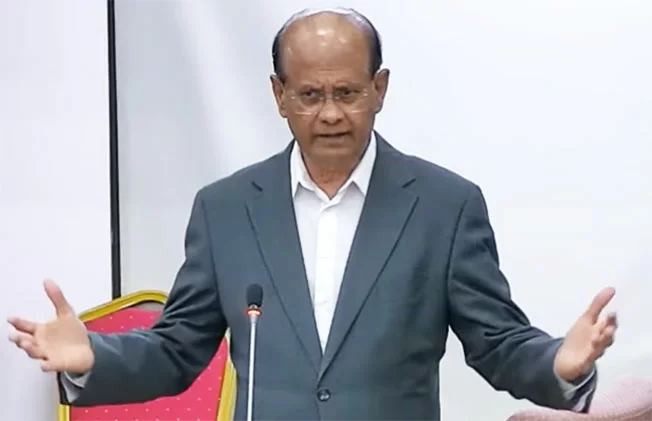
Rabin Parmessar, parliamentary faction leader of Suriname’s National Democratic Party (NDP), has put forward a series of demands to the Surinamese government targeting gaps in the country’s immigration and labor enforcement regime. Speaking during a Tuesday plenary session of the National Assembly, Parmessar called for full three-year statistical data on unauthorized foreign residency and pushed for a new mandatory health insurance requirement for all foreign visitors staying in the nation.
Parmessar opened his address by arguing that current enforcement of Suriname’s entry and residency policies falls far short of what is needed to protect public interests. He claimed that thousands of foreign nationals are currently residing in Suriname without valid residence or work permits, and called on the administration to provide clear public clarification on the country’s formal entry policy, including how authorities track incoming travelers, their stated purpose of visit, and the duration of their stay.
The NDP leader emphasized that the policy framework must strike a reasonable balance: while legitimate tourists should be able to enter Suriname without unnecessary bureaucratic barriers, the country cannot afford to maintain a fully hands-off, laissez-faire approach to immigration regulation. To build a clear picture of the scale of unauthorized residency, Parmessar is requesting granular data from the Surinamese Immigration Service covering foreign entry flows and residency patterns over the past three years, including specific counts of visitors who have overstayed their permitted residency periods.
Parmessar tied his call for stricter oversight to growing public concerns around public safety and neighborhood disruption linked to unregistered residents. He specifically cited increases in petty theft, unregulated prostitution, and traffic safety risks caused by unregistered foreign nationals operating electric bicycles, particularly in the northern district of the capital Paramaribo. Notably, however, the faction leader did not present empirical data to quantify the connection between unauthorized residency and these social issues during his address to the assembly.
One of Parmessar’s concrete policy proposals is a mandate requiring all foreign nationals entering Suriname to hold valid health insurance for the full duration of their stay. He argued that this requirement is necessary to prevent the Surinamese public from being forced to cover uncompensated medical costs incurred by foreign visitors during their time in the country. “If we do not put this requirement in place, we as a country will end up footing the bill for their medical care,” he explained.
Beyond residency regulation, Parmessar is also demanding answers on how authorities enforce work permit rules, noting that many unregistered foreign residents are also employed in Suriname without holding both valid residence and work authorization. He has asked not only for aggregated data on unauthorized work, but also for a concrete government plan to strengthen enforcement actions against violations of immigration and labor rules.
“What exactly is the Immigration Service doing to address this issue?” Parmessar asked, arguing that authorities need to improve end-to-end tracking of arrivals, departures, and individuals who remain in the country long-term without formal status. He concluded by stressing that the government can no longer allow the situation of widespread unauthorized residency to continue unaddressed, repeating his calls for enhanced border controls, full transparency around the true scale of unauthorized residency, and targeted policy interventions to reduce violations of the country’s residency and labor regulations.