分类: politics

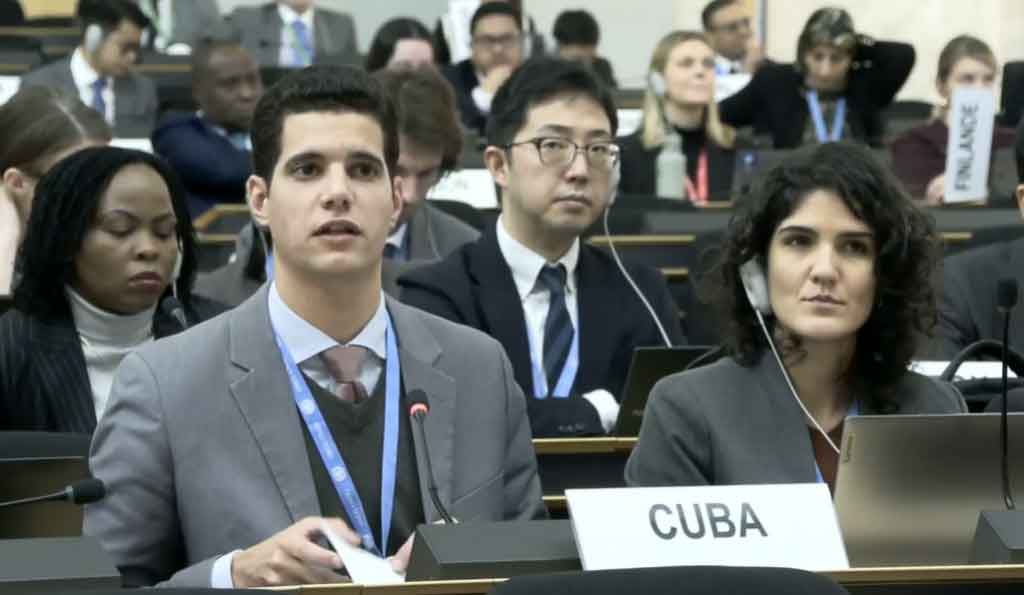
  • Cuba strongly condemns US aggression against Venezuela

    Cuba strongly condemns US aggression against Venezuela

    The Cuban Ministry of Foreign Affairs (Minrex) has issued a forceful declaration expressing solidarity with Venezuela and demanding immediate action from the United States government. The statement explicitly endorses the recent address by Venezuelan Executive Vice President Delcy Rodríguez, which called for Washington to provide verifiable proof of life for the country’s constitutional president, Nicolás Maduro Moros, and his wife, Vice President Cilia Flores.

    The Minrex communiqué characterizes recent US military maneuvers in the Caribbean Sea as a ‘cowardly aggression’ and a ‘criminal act,’ alleging they represent a dangerous escalation of a long-standing campaign against Venezuela. These actions, described as being based on ‘mendacious pretexts and unfounded accusations without any evidence,’ are stated to be in direct violation of International Law and the United Nations Charter.

    Cuba’s foreign ministry holds the US government, specifically naming former President Donald Trump and former Secretary of State Marco Rubio, directly responsible for the resultant human casualties and material damage. The statement further implicates ‘aggressive and hostile elements in Latin America and the Caribbean’ as complicit in these actions.

    Reiterating its unwavering support, the Minrex document praises the determination of the Bolivarian government and the Venezuelan people to defend their national sovereignty and independence against what it terms foreign aggression. The Cuban government’s central demand remains the immediate and unconditional release of President Maduro and Vice President Flores by US authorities.

  • US indictment outlines Maduro’s alleged narcotics and corruption crimes

    US indictment outlines Maduro’s alleged narcotics and corruption crimes

    The United States District Court for the Southern District of New York has unsealed a sweeping superseding indictment leveling grave charges against Venezuelan leadership. The document presents a comprehensive case alleging that President Nicolás Maduro and his inner circle orchestrated a quarter-century conspiracy involving narcotics trafficking, corruption, and narco-terrorism.

    Prosecutors depict a systemic corruption network where Venezuelan officials allegedly weaponized state institutions to facilitate massive cocaine shipments to the United States. The indictment identifies Maduro as the central figure in this operation, accusing him and his co-defendants of exploiting diplomatic protections and governmental authority to shield illegal activities.

    The judicial filing details sophisticated collaboration between Venezuelan officials and internationally recognized terrorist organizations and cartels. According to the charges, Maduro’s regime partnered with Colombia’s FARC guerrillas, Mexico’s Zetas cartel, and the violent Tren de Aragua criminal syndicate to transport cocaine through Caribbean and Central American transit points.

    Beyond drug trafficking, the indictment describes a pattern of political corruption including the alleged sale of Venezuelan diplomatic passports to drug traffickers seeking to move illicit proceeds. The document further connects these activities to Maduro’s contested political legitimacy, referencing internationally condemned presidential elections in 2018 and 2024.

    Additional high-profile defendants include Interior Minister Diosdado Cabello Rondón, former Interior Minister Ramon Rodriguez Chacin, First Lady Cilia Adela Flores de Maduro, the president’s son Nicolas Ernesto Maduro, and Hector Rusthenford Guerrero Flores of Tren de Aragua.

    The unsealed indictment represents one of the most significant narcotics cases ever brought against a sitting head of state, alleging that Venezuela’s leadership transformed the nation into a narco-state that threatened regional security and American communities through drug-fueled corruption.

  • America First: 21e-eeuwse déjà vu

    America First: 21e-eeuwse déjà vu

    In an unprecedented diplomatic maneuver, the United States has recalled thirty ambassadors, including 29 career diplomats and its envoy to Suriname, signaling a dramatic shift in Western Hemisphere policy. This mass recall—the largest simultaneous withdrawal of diplomatic personnel in American history—stems directly from President Donald Trump’s newly implemented National Security Strategy (NSS) published in December 2025.

    The 30-page NSS document, crafted under Trump’s direct supervision, introduces what it terms the ‘Trump Corollary to the Monroe Doctrine’ on its fifteenth page. This policy marks a modern revival of the 1823 Monroe Doctrine originally articulated by President James Monroe, which sought to limit European colonization and intervention in the Americas while asserting U.S. dominance in the Western Hemisphere.

    The updated doctrine emphasizes restoring American security interests through commercial diplomacy and discouraging partnerships with nations outside the hemisphere. It prioritizes combating illegal migration, dismantling drug trafficking networks, enhancing maritime stability, and supporting governments that align with U.S. objectives.

    Most significantly, the NSS legitimizes expanded U.S. military presence in the region through four key provisions: appropriate coast guard and maritime deployments to combat drug trafficking and illegal migration, and control of crucial routes during crises. Current reports indicate over 10,000 U.S. troops are now deployed across the Caribbean region.

    This policy has manifested dramatically in Venezuela, where since November 2025, U.S. military aircraft have conducted operations that Caracas has denounced at the United Nations as violations of national sovereignty. The situation escalated on January 3, 2026, with targeted U.S. airstrikes on Venezuelan territory and the reported capture of President Maduro, whom American authorities accuse of involvement in international drug trafficking.

    The developments raise profound questions about sovereignty and interventionism, echoing historical U.S. military actions in the Dominican Republic (1965) and Nicaragua (1983). With the U.S. likely to veto any UN Security Council action, the international community faces limited options to address what many consider unlawful sovereignty violations.

    For Caribbean nations like Suriname, the new doctrine presents both challenges and opportunities. Regional cohesion through organizations like CARICOM becomes increasingly vital, while commercial diplomacy divorced from military objectives could offer benefits if aligned with national trade strategies. As the hemisphere navigates this new diplomatic landscape, nations must balance engagement with sovereignty in what appears to be a return to great power politics in America’s backyard.

  • PM Browne Tells Caribbean People to Stay Calm Amid Venezuela Concerns

    PM Browne Tells Caribbean People to Stay Calm Amid Venezuela Concerns

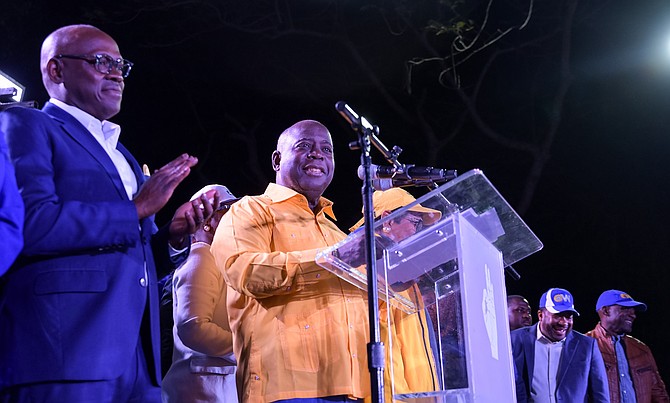
    Amid escalating regional apprehensions stemming from Venezuela’s ongoing political crisis, Prime Minister Gaston Browne of Antigua and Barbuda has delivered a stabilizing address urging Caribbean citizens to maintain composure and fortitude. While avoiding direct mention of Venezuela, Browne’s carefully timed statement emphasizes the necessity of collective resilience and optimistic outlook during periods of geopolitical uncertainty.

    The Prime Minister’s message arrives as Venezuela’s internal political turmoil continues to attract significant international scrutiny, generating concerns throughout the Caribbean regarding democratic stability and regional security. Browne refrained from specifying policy positions but strategically positioned his administration as an advocate for diplomatic dialogue and regional cohesion.

    Antigua and Barbuda maintains a longstanding tradition of promoting democratic principles and multilateral cooperation within Latin American and Caribbean spheres, particularly during times of political volatility affecting neighboring nations. This approach reflects the nation’s commitment to peaceful conflict resolution and institutional respect.

    Browne’s diplomatic communication aligns with consistent patterns among Caribbean leadership emphasizing unity, calculated diplomacy, and emotional steadiness when external developments threaten to disrupt regional equilibrium. The statement serves both as psychological reassurance for citizens and diplomatic positioning within the broader inter-American community.

  • Trump Rules Out Venezuela’s Opposition Leader Machado Taking Power

    Trump Rules Out Venezuela’s Opposition Leader Machado Taking Power

    In a significant development regarding the political transition in Venezuela, U.S. President Donald Trump publicly questioned opposition figure Maria Corina Machado’s capacity to assume leadership following the dramatic removal of Nicolas Maduro. Speaking on Saturday, Trump expressed skepticism about Machado’s political viability despite the successful U.S. military operation that extracted Maduro from Caracas.

    Trump characterized Machado as ‘a very nice woman’ but explicitly stated, ‘I think it would be very tough for her to be the leader. She doesn’t have the support within – or the respect within – the country.’ The comments came hours after American forces conducted targeted strikes in Venezuela’s capital and captured Maduro, who is now en route to the United States to face trial.

    The President revealed that U.S. authorities had not established contact with Machado’s team throughout the operation, despite her prominent role in the opposition movement. When Newsweek sought comment from Machado’s representatives on Saturday afternoon, no immediate response was available.

    Trump further outlined America’s strategic interests in Venezuela, emphasizing the importance of regional stability and energy security. ‘We have to be surrounded by safe, secure countries, and we also have to have energy – very important – we have to have energy that’s real energy,’ he stated during the press conference, indicating plans for U.S. involvement in rebuilding and expanding Venezuela’s oil infrastructure.

    The administration’s stance suggests a hands-on approach to Venezuela’s political future and economic reconstruction, though specific details about interim governance arrangements remain undisclosed. This developing situation marks a pivotal moment in U.S.-Venezuela relations and regional power dynamics.

  • Russia urges US to release Venezuela’s Maduro

    Russia urges US to release Venezuela’s Maduro

    The Russian Foreign Ministry issued a forceful condemnation on Saturday of what it characterized as an American ‘act of armed aggression’ against Venezuela, following reports that President Nicolás Maduro was captured in a US military operation in and around Caracas. In a series of official statements, Moscow demanded the immediate release of the ‘legally elected president’ and his wife, framing the intervention as a severe violation of international sovereignty.

    While expressing ‘solidarity’ with the Venezuelan people and calling for renewed dialogue between Washington and Caracas, the Russian government notably refrained from committing to any immediate military or financial support for its embattled ally. The ministry dismissed the justifications presented by the United States for the operation as ‘untenable,’ asserting that ‘ideological hostility has triumphed over businesslike pragmatism.’

    Russia, which remains one of the few nations to have recognized Maduro’s controversial re-election in 2024, described the news of his apprehension as ‘deeply alarming.’ The South American nation holds significant strategic importance for the Kremlin as its closest regional partner and a major client for Russian military exports. In a related development, Moscow officially denied as ‘fake’ circulating reports that Venezuelan Vice President Delcy Rodríguez had sought refuge on Russian soil.

  • Suriname uit grote bezorgdheid over escalatie na luchtaanvallen op Venezuela

    Suriname uit grote bezorgdheid over escalatie na luchtaanvallen op Venezuela

    The Surinamese government has expressed profound concern regarding the deteriorating security situation in the region following overnight airstrikes targeting Venezuela. President Jennifer Simons participated in an emergency summit of CARICOM heads of state before convening urgent national consultations with political and security authorities to assess implications for Suriname and neighboring nations.

    In an official statement, the government confirmed it had ‘taken note with great concern of the escalation of the security situation in our region resulting from nocturnal aerial attacks on the Bolivarian Republic of Venezuela.’ The emergency CARICOM summit brought together regional leaders to coordinate responses to the developing crisis.

    President Simons subsequently convened an emergency meeting with Vice President Ronnie Brunswijk, ministers of Foreign Affairs, International Trade, Defense, Justice and Police, the Chairman of the National Assembly, parliamentary faction leaders, and all national security authorities. The Ministry of Foreign Affairs has established contact with Surinamese diplomatic representation in Venezuela, confirming all personnel remain safe.

    The government has committed to ensuring the security of Surinamese citizens potentially affected by the escalating situation and is working to facilitate the safe return of any nationals stranded in the region. Within CARICOM frameworks, ongoing discussions will address the broader regional implications, with particular solidarity expressed for Caribbean islands experiencing immediate economic disruption from the crisis.

    Suriname has issued an appeal to international organizations including the Organization of American States, the United Nations, and the global community to actively promote regional peace and uphold international legal order. The government emphasized that vulnerable nations can only thrive within a functioning international legal framework committed to by all countries.

    Meanwhile, authorities are implementing necessary measures in anticipation of potential refugee movements and have called for public calm during this period of regional instability.

  • President Simons voert veiligheidsoverleg over ontwikkelingen in Venezuela

    President Simons voert veiligheidsoverleg over ontwikkelingen in Venezuela

    Surinamese President Jennifer Simons convened high-level consultations with government ministers, security agencies, and political leaders on January 3rd to address the escalating situation in neighboring Venezuela. The emergency meetings focused on regional security implications and reaffirmed Suriname’s commitment to international legal standards.

    The comprehensive briefing brought together ministers of Foreign Affairs, International Trade and Cooperation, Justice and Police, and Defense at the Presidential Cabinet. Following the ministerial session, President Simons engaged in separate discussions with leadership from various security services, the Chairman of the National Assembly, and parliamentary faction leaders to assess the evolving developments in the Bolivarian Republic of Venezuela.

    Suriname officially endorsed and expressed full support for the CARICOM (Caribbean Community) declaration regarding the Venezuelan crisis. The South American nation emphasized that the international legal order must be consistently respected and upheld by all parties involved.

    President Simons stressed the critical importance of maintaining calm, stability, and security throughout the region to preserve the foundations of peace and cooperation among neighboring states. As a nation committed to dialogue and collaborative solutions, Suriname called on all involved parties to pursue peaceful resolutions while upholding the principles of international law and regional solidarity. The government’s statement highlighted that regional stability remains paramount for continued development and cooperation among Caribbean and South American nations.

  • VS wil Venezuela samen besturen en olie-industrie hervormen

    VS wil Venezuela samen besturen en olie-industrie hervormen

    In a historic development that marks an unprecedented escalation of U.S. involvement in Latin America, President Donald Trump announced from his Mar-a-Lago estate that the United States will govern Venezuela directly until a “secure transition” of power can be established. The declaration follows a meticulously planned military operation that resulted in the capture of Venezuelan leader Nicolás Maduro and his wife.

    Speaking at a press conference with Defense Secretary Pete Hegseth at his side, Trump characterized Maduro as a leader who has “perpetually engaged in violence, terror, and subversion against the United States,” threatening both American citizens and regional stability. The president revealed that overwhelming evidence of Maduro’s crimes had been obtained by U.S. judicial authorities, describing the situation as “both horrifying and breathtaking.”

    The military operation, codenamed “Absolute Resolve,” was executed on January 2 at 22:46 local time after months of preparation. Chairman of the Joint Chiefs of Staff General Dan Caine disclosed that over 150 aircraft provided air cover while intervention forces stormed Maduro’s residence in Caracas. Venezuelan air defenses were neutralized, and despite one helicopter being struck, it remained operational. Maduro and his wife surrendered without further incident and were taken into custody by the U.S. Department of Justice.

    Trump has appointed Secretary of State Marco Rubio to lead a governance team that will oversee Venezuela’s administration. The president expressed skepticism about opposition leader María Corina Machado’s capacity to lead, questioning her popular support among Venezuelans.

    In a significant policy statement, Trump indicated that ground troops would be deployed if necessary and promised that U.S. oil companies would invest billions to restore Venezuela’s damaged oil infrastructure. Profits from these ventures would be partially returned to Venezuela while providing compensation to the United States.

    International reactions have been mixed, with allies including Italy and Israel expressing support while other nations warn of escalation and emphasize the importance of dialogue and international law. Regional neighbors are monitoring developments closely due to potential impacts on refugee flows and stability. Brazil temporarily closed its border with Venezuela but has since reopened it.

    The legal legitimacy of the operation remains contentious, as Trump did not consult Congress beforehand, raising questions about the action’s compliance with international legal standards.

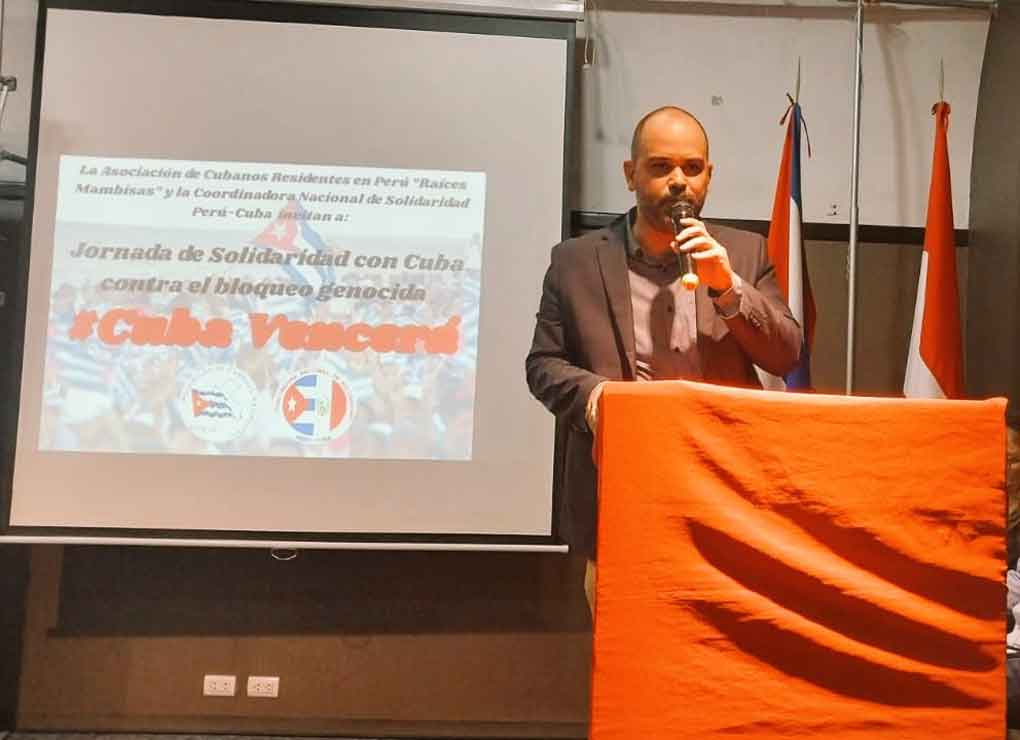
  • Cuba denounces attack on Venezuela as an act of state terrorism

    Cuba denounces attack on Venezuela as an act of state terrorism

    During a significant address at Havana’s Anti-Imperialist Tribune, Cuba’s leadership delivered a vehement condemnation of a recent military operation conducted against Venezuela. The Saturday dawn incursion was characterized as a treacherous act forming part of a broader neo-fascist strategy designed to forcibly overthrow the Venezuelan government and appropriate the nation’s vast natural resources, with petroleum reserves representing a primary target.

    The Cuban head of state explicitly dismissed Washington’s justification of combating narco-terrorism as entirely disingenuous, asserting instead that the operation’s true objective involves dismantling the regional integration and resistance project initiated under former Venezuelan leader Hugo Chávez.

    In a firm rejection of hemispheric hegemony, the leader unequivocally denounced the Monroe Doctrine and all extraterritorial claims over Latin American territories. The address included a formal demand for the United States to provide immediate proof of life regarding Venezuelan President Nicolás Maduro and his spouse.

    Drawing stark parallels to contemporary global conflicts, the Cuban leadership compared the operation’s characteristics to crimes against humanity perpetrated by Israeli Zionism in Gaza, emphasizing numerous violations of international law and ethical standards.

    The warning extended beyond regional implications, with the statement characterizing the event not merely as an attack against Venezuela but as a genuine threat to global humanity. The address urgently called upon the international community to mobilize decisively against the advancement of modern fascism disguised as foreign policy.

    Concluding with a powerful declaration of solidarity, Cuba reaffirmed its readiness to defend, “with its own blood if necessary,” the independence and sovereignty of the Americas.