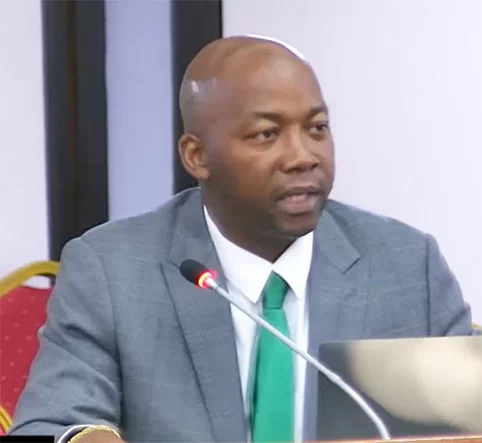
Suriname’s debate over gold mining concessions has intensified following a recent outbreak of mass fish deaths in the Saramacca River, with Natural Resources Minister David Abiamofo pushing back against accusations that his administration approved new mining permits in the sensitive region surrounding Pikin Saron and Maripaston. In testimony before the National Assembly (DNA) on August 20, the minister firmly stated that all contested mining rights in the area predate his assumption of office, clarifying that no new concessions have been granted under his watch.
The controversy surrounding the concessions emerged as lawmakers pushed for full transparency around mining activity in the area affected by the recent fish mortality event, which has raised widespread public concerns about the environmental impact of unregulated or poorly monitored gold extraction. Abiamofo has already submitted an initial overview of active gold concessions to the National Assembly, but lawmakers specifically requested additional, targeted details about permits in the Pikin Saron vicinity.
Addressing parliamentary questions, Abiamofo emphasized, “This minister has issued zero new gold concessions in that area – zero.” He went on to outline that many of the active mining rights in the region were first granted as far back as 2011, 2012, 2015, and 2017, long before he took up his ministerial post. To resolve lingering confusion over the timing of permit issuance, the minister has committed to expanding the existing concession overview to add a new column explicitly noting the original year each mining right was first granted. This additional context, he explained, will clarify the historical background of each concession, a critical detail given that permits are often extended or modified over the course of their lifecycle, leading to misperceptions about when the original approval was granted.
The parliamentary discussion soon expanded beyond concession timing to broader questions about how Suriname regulates and oversees its lucrative gold mining sector. Lawmakers noted that current rules require concession holders to submit regular activity and production reports to the Geological and Mining Service, but many argue existing oversight frameworks are fragmented and insufficient.
VHP party faction leader Asis Gajadien has proposed a sweeping overhaul of sector transparency, calling for the integration of disconnected datasets covering concession issuance, production volumes, extraction methods, environmental impact, tax payments, and gold exports. Gajadien argued that linking these disparate information streams would allow authorities to track the entire gold supply chain from initial permit approval through to final export, closing gaps that enable illegal activity and environmental harm.
Gajadien also brought forward the proposal for a dedicated Gold Board, framing the institution not as an unnecessary additional bureaucratic layer, but as a coordinating mechanism to unify information flows across the sector and strengthen regulatory oversight. The parliamentary session also raised fresh questions about the state-owned gold mining company Grassalco, with lawmakers demanding greater transparency around reports that third-party operators are exploiting portions of the company’s concessions. Legislators have called for full clarity on the terms of these third-party arrangements and the revenue that Grassalco earns from these agreements.