分类: politics

  • President of the Republic Declares National Mourning

    President of the Republic Declares National Mourning

    Cuban President Miguel Díaz-Canel Bermúdez has issued Presidential Decree 1147, establishing a period of national mourning following the deaths of 32 Cuban military personnel in Venezuela. The solemn observance will commence at 6:00 a.m. on January 5 and continue through midnight on January 6, 2026.

    The decree, published in Cuba’s Official Gazette, comes in response to what the Cuban government describes as a criminal attack against Venezuela by the United States government on January 3, 2026. According to the presidential statement, the deceased Cubans were fulfilling missions at the request of Venezuelan counterpart agencies when they perished during combat operations or facility bombings.

    President Díaz-Canel characterized the fallen personnel as having fulfilled their duties with dignity and heroic resistance, noting that they embodied the solidarity principles valued by millions of Cubans. The declaration was made under constitutional authority granted by Article 125 of the Cuban Constitution and relevant provisions of Law 136 from October 28, 2020.

    During the mourning period, the Lone Star Flag will be flown at half-mast on all public buildings and military institutions nationwide. Additionally, all public entertainment and festive activities have been suspended throughout the two-day observance.

    The implementation and enforcement of these measures fall under the responsibility of ministers from the Revolutionary Armed Forces, Interior Ministry, and Foreign Affairs Ministry. The decree was formally issued from the Palace of the Revolution on January 4, 2026, designated as the ‘Year of the Centennial of Commander-in-Chief Fidel Castro Ruz.’

  • There can be no silence or acceptance in the face of this act of state terrorism

    There can be no silence or acceptance in the face of this act of state terrorism

    Havana witnessed massive demonstrations over the weekend as Cuban leadership and citizens united in vehement condemnation of what they termed “fascist” military aggression against Venezuela. The attack, which reportedly resulted in civilian casualties, has sparked international concern and drawn parallels to historical imperial interventions.

    President Miguel Díaz-Canel Bermúdez joined citizens at the Anti-Imperialist Tribune to protest both the assault on Venezuelan sovereignty and the alleged kidnapping of President Nicolás Maduro and First Combatant Cilia Flores. The gathering represented a significant show of solidarity between the two nations, with participants echoing the historic slogan “Cuba and Venezuela, one flag.”

    Gerardo Hernández Nordelo, national coordinator of Cuba’s Committees for the Defense of the Revolution, delivered a stark warning about the consequences of imperial aggression. “Humanity must raise its voice and tell the empire that we are in the 21st century,” he declared, criticizing unilateral actions that violate international norms. He emphasized that the bombs striking Venezuelan cities “did not ask who was a Chavista and who was not when they exploded,” highlighting the indiscriminate nature of the attacks.

    Cultural and political leaders framed the conflict as a fundamental struggle between opposing forces. Abel Prieto Jiménez, president of Casa de las Américas, characterized it as a battle between “the forces of hatred, war, and death and the forces of sovereignty, dignity, and life.” He invoked Fidel Castro’s famous statement on Vietnam—”We are willing to give even our own blood”—applying it to the current Venezuelan crisis.

    Fernando González Llort of the Cuban Institute of Friendship with the Peoples described the operation as a “cowardly and vile attack” that constitutes “a heinous assault on the aspiration to build a zone of peace.” He warned that the aggression transcends Venezuela’s borders and represents a direct challenge to international law.

    The scientific community joined the condemnation, with prominent researcher Belinda Sánchez Ramírez contrasting Cuba’s medical missions with what she called “specialists who cause death and pain.” She warned that today’s target might be Venezuela, but tomorrow it could be “Cuba, Nicaragua, Mexico, or any country with natural resources or independence.”

    Medical worker Agnerys Cruz Rodríguez, who spent a decade serving in Venezuela, questioned the international community’s silence: “Where is the United Nations? Where are those who define themselves as defenders of peace?”

    Young activists highlighted patterns of imperial strategy, with Adriana Amore Moreno noting a “familiar sequence” of economic sanctions, media warfare, financial blockade, and finally direct aggression. She affirmed that “Venezuela is not alone, because its cause is our cause,” emphasizing that Venezuelan sovereignty remains inseparable from broader Latin American struggles.

  • APNU demands GY$2.7 billion govt accounting on markets, drainage

    APNU demands GY$2.7 billion govt accounting on markets, drainage

    Guyana’s political opposition has launched a formal demand for financial transparency regarding substantial government allocations for urban infrastructure projects. The A Partnership for National Unity (APNU) coalition is pressing the administration to provide complete public accounting for GY$2.7 billion (approximately US$13 million) designated for market rehabilitations and drainage improvements throughout Georgetown.

    APNU Parliament member Ganesh Mahipaul, who serves as the party’s local government spokesman, issued a formal statement expressing profound public dissatisfaction with the apparent lack of visible progress. “Citizens see little to no tangible improvement on the ground,” Mahipaul declared, highlighting the growing disparity between budget announcements and physical implementation.

    The political challenge emerges against a backdrop of ongoing urban tensions, including the recent removal of vendor stalls from outside Yhip’s Bakery on Robb and Alexander streets under a High Court order. While no APNU representatives were present during the demolition of these predominantly female-operated businesses, Mahipaul pledged his party’s continued advocacy for market vendors across the capital.

    Citing official responses provided during February 2025 Budget Estimates discussions, the opposition lawmaker detailed specific allocations that remain unaccounted for, including GY$40 million for Bourda Green project design consultancy, GY$260 million for phase one construction of Bourda Green, and substantial sums earmarked for market rehabilitations in East Ruimveldt, La Penitence, and Stabroek areas.

    Mahipaul described concerning conditions persisting at multiple market locations, with Bourda Market reportedly remaining in “deplorable condition” while Merriman’s Mall shows “no transformation.” He noted widespread infrastructure deficiencies, sanitation challenges, and unsafe environments for both vendors and shoppers throughout Georgetown’s commercial spaces.

    The APNU demands extend beyond mere financial accounting, seeking detailed explanations of specific works completed under each budget line item, expenditure rates, current fund locations, contract award details, and explanations for missed completion timelines. The party emphasizes that ministerial consultations and public walkabouts cannot substitute for concrete deliverables, particularly when billions of dollars and public welfare are at stake.

    The infrastructure concerns are compounded by Georgetown’s persistent drainage problems, with many drains and trenches remaining choked by silt and solid waste despite recent desilting of some outfall channels to the Demerara River. During heavy rainfall, sections of Bourda Market reportedly flood with foul-smelling water, while clogged drains overflow throughout the commercial district.

    The opposition’s financial transparency demand arrives as Georgetown faces additional urban management challenges, including overflowing government-donated waste bins that have complicated drainage systems since late December 2025.

  • USA : Maduro and his wife will appear this Monday before a federal judge

    USA : Maduro and his wife will appear this Monday before a federal judge

    In an extraordinary development in international relations, Venezuelan President Nicolás Maduro and First Lady Cilia Flores are scheduled to appear before Federal Judge Alvin K. Hellerstein in Manhattan on Monday at 12:00 p.m. local time (17:00 GMT). This follows their dramatic capture by American military forces during an unprecedented operation in Caracas on January 3rd, 2026.

    The high-profile defendants currently remain detained at the Metropolitan Detention Center in Brooklyn, a high-security federal facility, while facing serious allegations from U.S. prosecutors. Maduro confronts four federal charges including criminal conspiracy, narcoterrorism, conspiracy to import cocaine, and weapons violations involving automatic firearms and explosive devices.

    According to court documents referenced by American media outlets, Flores faces accusations of providing both logistical and financial support to criminal organizations designated as terrorist entities by Washington.

    The recently unsealed indictment presents a comprehensive case alleging that Maduro personally led the ‘Cartel of the Suns’—a drug trafficking network whose name reportedly references Venezuela’s military leadership. Prosecutors assert this organization pursued dual objectives of personal enrichment and political consolidation while deliberately flooding American territories with cocaine, effectively weaponizing narcotics against the United States.

    Evidence detailed in the indictment outlines sophisticated alliances with multiple transnational criminal organizations including the FARC, ELN, Sinaloa Cartel, Los Zetas, and the Tren de Aragua Cartel. The documentation further describes exploitation of diplomatic privileges, government-controlled airports, and state-protected maritime routes for narcotics transportation.

    Official estimates from the State Department, cited within the legal filing, indicate that approximately 200-250 tons of cocaine transited through Venezuelan territory annually en route to the United States around 2020.

    This current indictment expands upon previous charges filed against Maduro in Manhattan during March 2020, which emerged from an extensive Drug Enforcement Administration (DEA) investigation encompassing similar allegations of narcoterrorism and cocaine importation conspiracies.

  • FLASH : Trump justifies the operation against Venezuela with a doctrine more than 200 years old

    FLASH : Trump justifies the operation against Venezuela with a doctrine more than 200 years old

    In a dramatic geopolitical development, former President Donald Trump has invoked a centuries-old foreign policy doctrine to rationalize recent U.S. military operations in Venezuela that resulted in the capture of Nicolás Maduro. During a January 3rd press briefing at his Mar-a-Lago estate in Florida, Trump resurrected the Monroe Doctrine—originally articulated in 1823—to validate American interventionism in the Western Hemisphere.

    The Monroe Doctrine, established by President James Monroe during a period of global transformation following Latin American independence movements, fundamentally distinguished between the ‘Old World’ (Europe) and the ‘New World’ (the Americas). It committed the United States to non-interference in European affairs while declaring the Americas closed to further colonization, positioning any European meddling as a direct provocation against U.S. interests.

    The doctrine was significantly expanded by President Theodore Roosevelt in 1904 through his ‘Roosevelt Corollary,’ which cast the United States as the ‘Policeman of the Americas.’ This amendment granted Washington purported authority to militarily intervene in Latin American nations during instances of perceived ‘governmental failure,’ setting precedents for actions ranging from the annexation of Puerto Rico to Cold War anti-communist operations.

    Trump’s contemporary application of this doctrine aligns with his administration’s newly articulated National Security Strategy, which emphasizes three core objectives: securing priority access to strategic resources (particularly Venezuelan oil reserves), stabilizing governments to reduce northward migration, and countering influence from global competitors like China and Russia in the region.

    The updated strategy explicitly states that the U.S. will prevent ‘non-hemispheric competitors’ from establishing military presence or controlling strategic assets in the Americas—a clear reference to China’s role as Venezuela’s primary oil purchaser. Trump’s vision appears to extend beyond Venezuela, with aspirations ranging from Greenland acquisition to Panama Canal reclamation, suggesting an expansionist reinterpretation of American sovereignty that challenges conventional geographical boundaries.

  • Situation in Venezuela ‘of grave concern’ to SVG, region – Bramble

    Situation in Venezuela ‘of grave concern’ to SVG, region – Bramble

    The government of St. Vincent and the Grenadines has declared profound apprehension regarding recent military developments in Venezuela, where United States forces have reportedly captured President Nicolas Maduro and his spouse. Foreign Minister Fitz Bramble, communicating through official state media channels on Sunday, confirmed that Kingstown is maintaining vigilant surveillance of the escalating situation.

    Minister Bramble, drawing upon his diplomatic expertise, revealed that continuous communication has been established with Gareth Bynoe, SVG’s ambassador stationed in Caracas. Preliminary assessments confirm the safety of all Vincentian diplomatic personnel, with current reports indicating relative calm within the Venezuelan capital. The embassy has not received any distress communications from Vincentian citizens potentially residing in Venezuela during this crisis.

    Addressing the complex diplomatic landscape, Bramble characterized both nations involved—Venezuela and the United States—as friends of SVG, emphasizing shared membership in international bodies including the United Nations and Organisation of American States. This dual allegiance creates particular challenges for the small island nation, with Bramble highlighting the situation’s “grave concern” for both SVG and the broader Caribbean region.

    The Foreign Minister articulated serious concerns about potential “far-reaching implications” for St. Vincent and the Grenadines as a small island developing state. In response, the government has committed to ongoing assessment of possible economic and security impacts, pledging to implement responsive measures as circumstances evolve.

    Prime Minister Godwin Friday’s administration reaffirmed its dedication to regional development and alignment with CARICOM’s collective stance. SVG endorses statements issued by the CARICOM Conference of Heads of Government on January 2nd and 3rd, 2026, which emphasize unwavering commitment to international law principles and multilateralism as codified in the UN Charter.

    CARICOM leadership convened an emergency session Saturday to address the Venezuelan crisis, with the Secretariat acknowledging the situation’s grave regional concerns and potential implications for neighboring states. The organization has committed to providing continuous updates as information becomes available, while SVG’s government has similarly promised to keep its citizens informed of developments.

  • PM outlines conditions for accepting refugees and deportees

    PM outlines conditions for accepting refugees and deportees

    The Prime Minister has articulated a definitive and robust policy framework outlining the precise conditions under which the nation will consider accepting refugees and individuals facing deportation from other countries. This strategic announcement signals a significant shift toward a more selective and criteria-based immigration approach.

    The policy hinges on a multi-layered assessment protocol that prioritizes national security and successful integration prospects. Key conditions include rigorous, enhanced background checks to verify identities and ensure no links to criminal or terrorist organizations. Furthermore, a demonstrated willingness to actively participate in integration programs, including language acquisition and cultural orientation, is deemed mandatory.

    A cornerstone of the new framework is the requirement for bilateral cooperation. The government will only accept deportees from nations that reciprocate by entering into legally binding agreements, ensuring a mutually accountable process. The announcement also emphasized the nation’s commitment to its international humanitarian obligations, but clarified that this commitment will be exercised within a framework that prioritizes the country’s security and social cohesion. This recalibration is presented as a move to ensure a orderly, controlled, and sustainable system for accepting newcomers.

  • Barbados voelt directe gevolgen crisis in Venezuela

    Barbados voelt directe gevolgen crisis in Venezuela

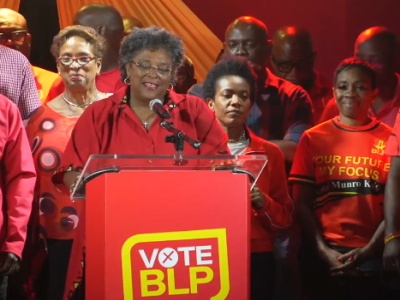
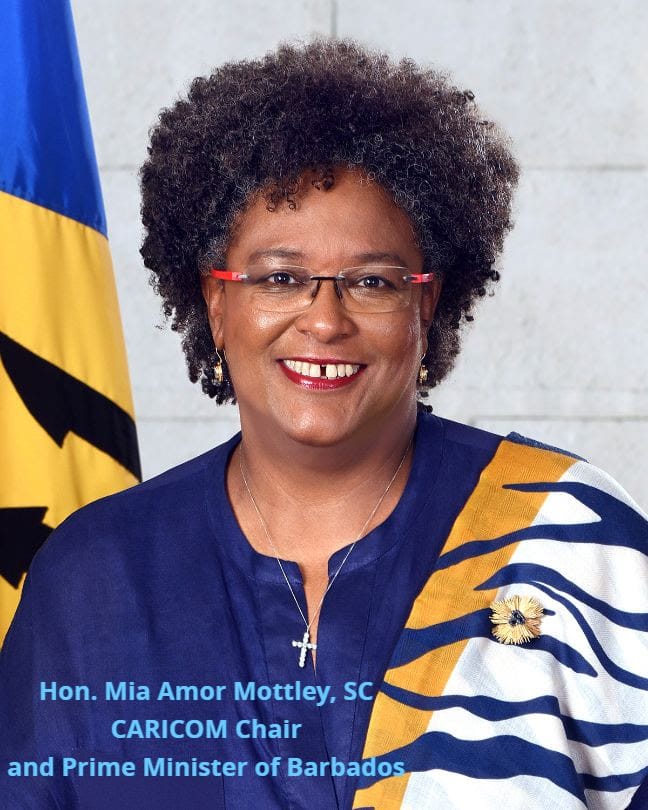
    Barbados Prime Minister Mia Amor Mottley has issued a stark warning that her nation is experiencing immediate repercussions from the United States’ military intervention in Venezuela. The escalating situation in Caracas has triggered significant aviation disruptions across the Caribbean region, resulting in canceled flights, stranded passengers, and mounting pressure on the island’s tourism and transportation infrastructure.

    Addressing journalists at Ilaro Court, Mottley characterized the preceding 24 hours as ‘extremely challenging,’ noting that her government had to simultaneously manage national security concerns, aviation emergencies, and humanitarian issues amid rapidly evolving developments in Venezuela. The US operation, which reportedly resulted in the capture of President Nicolás Maduro and his wife aboard a naval vessel, prompted immediate security and air traffic alerts throughout the Caribbean, triggering emergency consultations among regional leaders.

    Thirteen scheduled flights to Barbados were canceled, affecting thousands of passengers including cruise travelers and customers of JetBlue, Delta, United Airlines, and KLM. The crisis has extended to Bridgetown’s port, where four cruise ships are currently docked with a fifth expected, creating logistical challenges due to limited berthing capacity. The Barbadian government has implemented measures to assist stranded travelers while coordinating with tourism and immigration authorities to manage the situation, though airspace has since reopened.

    When questioned about Barbados’ position regarding the developing crisis, Mottley emphasized her country’s commitment to regional coordination through CARICOM and adherence to international law. ‘Let me be very clear: Venezuela is our friend, the United States of America is our friend. The Caribbean Community is the body with which we, as a matter of principle, align our foreign policy,’ the Prime Minister stated. She indicated Barbados would await additional information before taking collective action, refusing to ‘preempt or compromise the integrity of CARICOM’s consultation process.’

    Mottley reiterated Barbados’ fundamental foreign policy principle: ‘Our principles are clear: small states can only survive within a rules-based international order. Anything that undermines that causes us grave concern, both in Barbados and throughout the region.’

    Other Caribbean nations have expressed serious concerns about the situation. The CARICOM chair condemned the escalation and called for dialogue and peaceful solutions to prevent further regional destabilization. Colombia, which shares a border with Venezuela and hosts significant refugee populations, expressed apprehension about regional implications while emphasizing the importance of stability and security. Trinidad and Tobago, a key transportation hub, reported heightened readiness at airports and ports while expressing solidarity with affected passengers.

    The Caribbean has endured years of impacts from the Venezuelan crisis, including migration flows and economic pressures, with these latest developments underscoring the critical need for enhanced regional cooperation.

  • Latin American Countries and Spain reject aggression on Venezuela

    Latin American Countries and Spain reject aggression on Venezuela

    A coalition of nations has issued a formal condemnation of recent actions authorized by former U.S. President Donald Trump, declaring them in direct violation of fundamental principles of international law. The collective statement emphasizes that these operations contravene core tenets of the United Nations Charter, specifically the prohibition against the use and threat of force and the imperative to respect state sovereignty and territorial integrity.

    The nations further characterized these actions as establishing an ‘extremely dangerous precedent’ that severely undermines regional peace and security while placing civilian populations at significant risk. The statement articulates a firm position that the resolution of the Venezuelan situation must be achieved exclusively through peaceful means, including dialogue and negotiation that respects the expressed will of the Venezuelan people, free from any form of external interference and in strict compliance with international legal standards.

    Reaffirming the foundational status of Latin America and the Caribbean as a ‘Zone of Peace,’ the document underscores principles of mutual respect, the peaceful settlement of disputes, and absolute non-intervention. It issues a powerful call for regional unity, transcending political differences, to confront any measures that threaten to destabilize the area.

    The coalition has formally urged United Nations Secretary-General António Guterres, along with member states of pertinent multilateral mechanisms, to employ their diplomatic offices to actively contribute to de-escalating tensions and safeguarding regional peace.

    Concluding the declaration, the nations expressed profound concern regarding any external attempts to seize governmental control, administration, or ownership of Venezuela’s natural and strategic resources. They emphasized that such appropriation is fundamentally incompatible with international law and poses a direct threat to the political, economic, and social stability of the entire region.

  • Uruguay reiterates rejection of US intervention in Venezuela

    Uruguay reiterates rejection of US intervention in Venezuela

    In a nationally televised statement, Uruguay’s President Luis Lacalle Pou articulated his nation’s firm commitment to foundational principles of international relations, emphasizing non-intervention and the peaceful settlement of disputes. The address outlined Uruguay’s diplomatic stance regarding external military involvement in Venezuela’s political affairs.

    The president underscored that Uruguay maintains a long-established foreign policy tradition that rejects interference in the internal matters of sovereign states, particularly through coercive measures or military force. He reiterated his government’s dedication to resolving international conflicts through dialogue and negotiation rather than confrontation.

    Central to Uruguay’s position are the core tenets of international law, including the sovereign equality of all nations and the imperative of defending multilateralism. President Lacalle Pou emphasized that these principles form the bedrock of his administration’s approach to global affairs.

    Significantly, the Uruguayan leader revealed that his country coordinates with a coalition of nations including Brazil, Colombia, Chile, Mexico, and Spain regarding the Venezuela situation. This collaborative approach aims to present a unified perspective in international forums while seeking diplomatic solutions.

    President Lacalle Pou confirmed that Uruguay will pursue this consensus position through multiple diplomatic channels, including active engagement within the Community of Latin American and Caribbean States (CELAC) and the Organization of American States (OAS). The ultimate objective remains facilitating a peaceful resolution to the ongoing political crisis in Venezuela through institutional frameworks and dialogue.