分类: politics

  • Maduro pleads not guilty to drug trafficking charges in U.S. court

    Maduro pleads not guilty to drug trafficking charges in U.S. court

    In a dramatic courtroom appearance that has sent shockwaves through international diplomatic circles, former Venezuelan President Nicolás Maduro entered a plea of not guilty to multiple narcotics-related charges before U.S. District Judge Alvin Hellerstein on Monday. The proceeding marked an extraordinary development in the long-standing tensions between Washington and Caracas.

    Maduro, who maintained his presidential status throughout the hearing, reportedly declared himself ‘kidnapped’ since his capture by U.S. authorities on January 3. His wife, Cilia Flores, similarly pleaded not guilty as a co-defendant in the case—a notable expansion from the original 2020 indictment that initially targeted only Maduro.

    The charges against the Venezuelan leader are extensive and severe: narco-terrorism, conspiracy to import cocaine into the United States, and weapons violations involving firearms and explosive devices. Federal prosecutors allege Maduro orchestrated a sophisticated drug trafficking network that collaborated with multiple notorious criminal organizations, including Mexico’s Sinaloa and Zetas cartels, Colombian FARC rebels, and Venezuela’s Tren de Aragua gang.

    According to the prosecution’s timeline, Maduro’s involvement in narcotics operations dates back to his tenure in Venezuela’s National Assembly in 2000, continuing through his service as foreign minister and his presidency following Hugo Chávez’s death in 2013.

    The legal proceedings unfolded amid heightened tensions outside the courthouse, where both supporters and opponents of Maduro gathered to express their views during the thirty-minute hearing. The case has sparked immediate controversy within international legal circles, with experts questioning the jurisdictional basis of the U.S. operation and its implications for international law.

    Maduro’s defense is being led by attorney Barry Pollack, while Mark Donnelly represents Flores. The court has scheduled the next hearing for March 17, setting the stage for what promises to be a complex legal battle with significant geopolitical ramifications.

    The United States has consistently regarded Maduro as an illegitimate ruler since his controversial victory in the 2018 elections, which were widely criticized for alleged irregularities. This case represents the most direct confrontation between the Venezuelan government and U.S. judicial authorities to date.

  • Dominica to accept refugees deported from US

    Dominica to accept refugees deported from US

    The Commonwealth of Dominica has formally established a refugee resettlement arrangement with the United States, enabling the transfer of third-country refugees to the Caribbean nation when repatriation to their countries of origin proves unfeasible. Prime Minister Roosevelt Skerrit confirmed the bilateral agreement during a press briefing in Roseau, emphasizing that stringent security protocols would prevent individuals with violent histories or potential security risks from entering Dominica.

    Skerrit characterized the agreement as a strategic diplomatic advancement that strengthens bilateral relations while safeguarding national interests. The arrangement specifically addresses Dominicans’ access to lawful travel, education, employment opportunities, and family connections in the United States. While Skerrit declined to disclose the national origins of prospective migrants, he confirmed that all operational details had been thoroughly negotiated within a memorandum of understanding that reflects Dominica’s security concerns.

    Concurrently, Antigua and Barbuda Prime Minister Gaston Browne vehemently denied opposition claims regarding a separate US arrangement. Contrary to allegations by the United Progressive Party of a secret agreement to accept 100,000 criminal deportees, Browne clarified that his government had consented to review up to ten non-criminal refugees possessing skills deemed valuable to the local economy. The agreement explicitly grants Antigua full discretionary authority regarding individual admissions and includes US provisions of biometric data and criminal background information.

    Browne revealed that over 100 nations received similar invitations from the US government to alleviate refugee processing burdens, with several CARICOM member states already participating in the initiative. Both leaders framed their respective agreements as demonstrations of regional cooperation while maintaining rigorous immigration controls and national security standards.

  • Nicolás Maduro verschijnt kalm in rechtbank New York; pleit onschuldig

    Nicolás Maduro verschijnt kalm in rechtbank New York; pleit onschuldig

    In a dramatic courtroom appearance at Manhattan Federal Court, deposed Venezuelan leader Nicolás Maduro defiantly proclaimed his innocence against serious U.S. charges of narco-terrorism and weapons possession. The proceeding marked an unprecedented legal confrontation between the United States and a former head of state accused of orchestrating international drug trafficking operations.

    Maduro, dressed in a striking blue and bright orange shirt with hands shackled, delivered an impassioned declaration in Spanish asserting his legitimate presidential status and characterizing his detention as an unlawful kidnapping. Throughout the brief but symbolically charged hearing, the ousted leader maintained detailed notes and engaged directly with the court proceedings despite judicial attempts to limit political commentary.

    The session witnessed several tense moments, including when Maduro addressed the packed courtroom instead of simply confirming his identity as requested. “I am the president of Venezuela who has been kidnapped,” he stated calmly. “I was captured in my home in Caracas.” The presiding judge intervened, reminding Maduro that there would be more appropriate times and venues for such political statements.

    Emotional intensity peaked when a spectator launched accusations against Maduro, prompting his self-identification as both “kidnapped president” and “prisoner of war” before court security removed the protester. Meanwhile, defense attorneys for Maduro’s wife, Cilia Flores, indicated she showed signs of possible mistreatment during her arrest.

    Outside the courthouse, polarized demonstrations unfolded with competing chants and banners. Supporters displayed messages reading “USA, hands off Venezuela” while opponents expressed gratitude to President Trump for pursuing legal action.

    The four-count indictment alleges Maduro and his associates collaborated with drug cartels for decades to smuggle thousands of tons of cocaine into the United States while possessing illegal machine guns and heavy weaponry. Legal experts anticipate defense teams will invoke head-of-state immunity arguments, though such defenses have rarely succeeded in comparable historical cases.

    The case represents one of the most significant and complex prosecutions ever brought against a former national leader. With the next hearing scheduled for March 17th, the proceedings have ignited diplomatic tensions as Venezuela’s interim government and China call for sovereignty respect while the United States maintains its commitment to judicial process.

  • GOB Calls for Restraint Following “Removal” of Maduro

    GOB Calls for Restraint Following “Removal” of Maduro

    The Government of Belize has formally responded to the recent United States military intervention in Venezuela that resulted in the capture of President Nicolás Maduro. In an official statement released on January 5, 2026, the Briceño Administration expressed deep concern over the large-scale operation that involved approximately 150 aircraft and reportedly required months of strategic planning.

    Belizean authorities revealed they had been monitoring the gradual military buildup in the southern Caribbean region over the preceding four months, warning that such developments pose significant threats to regional stability. The government aligned its position with the collective stance adopted by the CARICOM Heads of Government Bureau, which had issued its own declaration on January 3 regarding the escalating situation.

    Reaffirming its commitment to international legal frameworks, the statement emphasized Belize’s dedication to the principles enshrined in the United Nations Charter, which it considers fundamental to maintaining global peace and security. Officials called for all involved parties to demonstrate restraint, respect established international laws, and pursue constructive dialogue to peacefully resolve the ongoing crisis.

    The government specifically referenced Belize’s historically cordial and cooperative relationship with Venezuela, expressing hope for a prompt restoration of constitutional order determined by the Venezuelan constitution and the democratic will of its citizens. Additionally, the administration confirmed the safe return of all Belizean students who had been pursuing education in Venezuela, providing reassurance to concerned families and the general public.

    Belize remains engaged with CARICOM member states and other hemispheric nations to coordinate responses as the situation continues to evolve.

  • Skerrit calls for ‘democracy’ and ‘peace’ in Venezuela following President Maduro’s capture

    Skerrit calls for ‘democracy’ and ‘peace’ in Venezuela following President Maduro’s capture

    In his first press conference of the new year, Dominica’s Prime Minister Roosevelt Skerrit addressed the unprecedented capture of Venezuelan President Nicolás Maduro and First Lady Cilia Flores by United States military forces. The January 3rd operation, which involved a large-scale strike on Caracas, resulted in Maduro being transported to the United States to face trial on drugs and weapons charges.

    Prime Minister Skerrit emphasized Dominica’s unwavering commitment to international law principles and the United Nations system. ‘Dominica has always firmly committed to the principles of international law, multilateralism, and the United Nations system,’ Skerrit stated, highlighting the nation’s longstanding respect for sovereignty, territorial integrity, and human dignity.

    The Caribbean leader expressed particular concern for the Venezuelan populace, noting that ‘political developments have real consequences for ordinary citizens, affecting social and economic stability and, in many instances, access to essential services.’ Skerrit called for restraint and actions prioritizing peace and human life protection.

    Addressing regional implications, Skerrit revealed that the military activity in Venezuela initially disrupted flight schedules throughout the Caribbean, causing inconveniences for travelers to Dominica, though operations have since normalized. He emphasized the interconnected nature of Caribbean nations through trade, energy cooperation, and migration, noting that ‘developments in one country inevitably have ripple effects across neighbouring states.’

    While acknowledging his government’s lack of control over the situation, Skerrit expressed hope that Maduro would receive respectful treatment and an impartial hearing. The Prime Minister confirmed Dominica’s continued engagement with CARICOM partners and support for dialogue-based solutions grounded in mutual respect and international norms.

    Skerrit concluded by assuring Dominican citizens that his administration would continue to represent their interests with diligence and careful consideration amidst these regional developments.

  • Maduro: I’m innocent, I am still the president of Venezuela

    Maduro: I’m innocent, I am still the president of Venezuela

    In a dramatic legal development, Venezuelan President Nicolás Maduro and First Lady Cilia Flores have entered not guilty pleas against sweeping U.S. federal charges encompassing narcoterrorism, cocaine importation conspiracies, and weapons possession offenses. This courtroom appearance followed an extraordinary operation conducted by U.S. military teams that resulted in the couple’s transfer from Venezuelan territory to New York for prosecution, an action Venezuelan authorities have condemned as a sovereign violation.

    The high-profile defendants appeared before Federal Judge Alvin Hellerstein in Manhattan’s federal court under intense security arrangements, having been transported from Brooklyn’s Metropolitan Detention Center for the proceedings. The hearing initiates what legal experts anticipate will be extensive judicial proceedings potentially stretching over several months.

    President Maduro has retained Barry Pollack, a distinguished trial attorney renowned for representing WikiLeaks founder Julian Assange and negotiating his 2024 release agreement. Flores is represented by Texas-based counsel Mark Donnelly, according to official court documentation. Both defense teams are currently pursuing bail arrangements for their clients.

    The indictment, unsealed last Saturday, names four additional co-defendants including Maduro’s son and Venezuela’s Interior Minister Diosdado Cabello. The case represents the culmination of what U.S. officials describe as sustained pressure campaign against Caracas, though Venezuelan leadership has characterized the extraction operation as an unlawful kidnapping following President Donald Trump’s characterization of the action as a “full-scale attack on Venezuela and its leader.”

  • President installeert nieuwe Deviezencommissie voor versterking economisch beleid

    President installeert nieuwe Deviezencommissie voor versterking economisch beleid

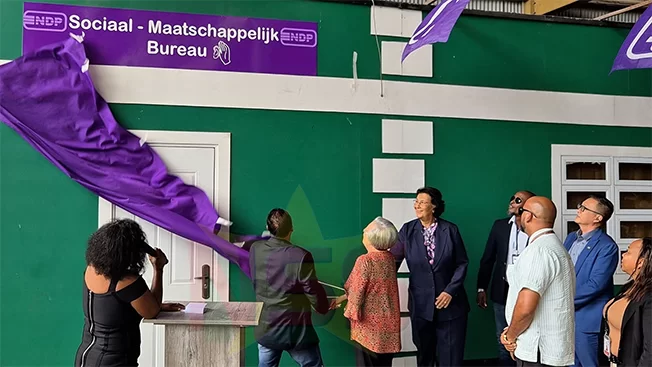
    Surinamese President Jennifer Simons has officially inaugurated the nation’s new Foreign Exchange Commission during a cabinet ceremony, marking a significant advancement in the government’s efforts to overhaul and reinforce financial-economic policies. The establishment of this specialized body represents a strategic move to address critical monetary challenges and enhance Suriname’s international economic standing.

    Chaired by Robin Huiswoud, the commission comprises distinguished members Ireen Parbhoe, Dorothy Emanuelson-Hellings, Roy Smit, Ismanto Adna, Cathleen Kejansi, and Ravin Soerdjbalie. During the installation proceedings, Finance and Planning Minister Adelien Wijnerman expressed strong confidence in the committee’s expertise and operational independence, emphasizing its vital advisory role to the government, presidency, and her ministry.

    Minister Wijnerman articulated that robust and well-considered foreign exchange policy serves as the cornerstone for sustainable economic development. “Given recent economic developments and challenges, installing a new Foreign Exchange Commission became imperative,” she stated, highlighting the necessity of this institutional response to contemporary financial pressures.

    The commission’s mandate encompasses comprehensive analysis of export-related matters, foreign currency generation mechanisms, and strategies to fortify Suriname’s global economic position. Core responsibilities include examining necessary adjustments to existing legislative frameworks while evaluating current procedures, implemented exchange policies, and overarching strategic vision. This systematic review aims to identify structural improvements within Suriname’s financial governance architecture.

  • Nicolás Maduro pleads not guilty in New York court

    Nicolás Maduro pleads not guilty in New York court

    Venezuelan President Nicolás Maduro has formally entered a not guilty plea to comprehensive drug trafficking and narco-terrorism conspiracy charges during his inaugural appearance in a United States federal courtroom. The hearing marked a significant development in a case initially brought by the Trump administration, which had previously authorized a multi-million dollar bounty for Maduro’s capture.

    Addressing the court through an interpreter, Maduro asserted his innocence and presidential status, declaring, “I’m innocent. I am not guilty. I am a decent man, the president of my country.” The Venezuelan leader indicated he had not previously reviewed the indictment nor been adequately informed of his legal rights, stating, “Your honor is informing me of them now.”

    Following procedural formalities, the presiding judge recorded an official not guilty plea on Maduro’s behalf. When directly questioned about his plea, Maduro reaffirmed his position: “I am innocent. I am not guilty of anything that is mentioned here.”

    The judicial proceedings subsequently extended to First Lady Cília Flores, who similarly pleaded not guilty to related charges. Identified herself as “first lady of the Republic of Venezuela,” Flores asserted her complete innocence before the court.

    The case represents an unprecedented legal confrontation involving a sitting head of state and underscores the deteriorating relations between the United States and Venezuela. The charges allege Maduro’s involvement in coordinating with Venezuelan officials and Colombian rebel groups to transform Venezuela into a strategic hub for cocaine trafficking destined for the United States.

  • Mexican President says people can limit Trump

    Mexican President says people can limit Trump

    Mexican President Claudia Sheinbaum has firmly dismissed the possibility of U.S. military intervention in Mexico, emphasizing national sovereignty and a comprehensive domestic approach to tackling organized crime. Her statements came during a routine press conference at the National Palace, where she addressed concerns about former U.S. President Donald Trump’s repeated proposals to deploy American troops into Mexican territory under the pretext of combating drug cartels.

    President Sheinbaum argued that external military involvement would not resolve Mexico’s security challenges, noting that such interventions undermine constitutional principles and national autonomy. Instead, her administration is implementing a four-pillar strategy focused on addressing socioeconomic root causes, ensuring judicial accountability, strengthening institutions, and promoting regional development.

    She also criticized domestic opposition groups that she accused of seeking foreign support to gain political advantage, warning that such approaches ultimately fail to resonate with the Mexican public. The president reaffirmed that unity and a clear vision grounded in Mexico’s legal framework are essential to navigating complex bilateral relations with the United States.

    Sheinbaum expressed confidence that Mexico possesses the capacity and resources to manage its security situation without external interference, highlighting collaboration with international partners on terms that respect Mexican law and self-determination.

  • Cuban Embassy in the US honors fallen combatants in Venezuela

    Cuban Embassy in the US honors fallen combatants in Venezuela

    In a solemn display of diplomatic solidarity, Cuban mission staff assembled Monday morning under the leadership of Head of Mission Lianys Torres to commemorate personnel lost in the line of duty. The gathering transformed into a powerful political demonstration against what officials characterized as imperial aggression targeting Venezuela’s constitutional order.

    Oscar Larralde, addressing colleagues as their representative, condemned Saturday’s offensive against Venezuela and the abduction of its constitutional president as a fundamental assault on national sovereignty. ‘In the face of this aggression,’ Larralde declared, ‘we reaffirm our unwavering solidarity with the Venezuelan people and their legitimate government.’ The diplomat revealed that thirty-two Cuban citizens had perished on Venezuelan soil, their blood serving as testament to the profound solidarity binding the two nations.

    The ceremony evolved into a historical rallying cry, with Larralde invoking the legacy of Major General Antonio Maceo, Cuba’s legendary Bronze Titan from the independence wars. He reiterated Maceo’s uncompromising principle that Cuban independence remains non-negotiable—a warning directed at contemporary ‘imperialist gentlemen’ and ‘circling hawks.’ The official channeled the warrior’s defiant proclamation that any attempt to seize Cuba would yield only ‘blood-soaked dust’ unless aggressors perished in the struggle.

    The emotionally charged event culminated with diplomatic personnel singing Cuba’s National Anthem with fervent patriotism, followed by vocal acclamations celebrating Cuba, its revolutionary tradition, and current leadership. The gathering simultaneously functioned as a memorial for fallen heroes and a strategic political statement reinforcing Cuba’s alliance with Venezuela’s government amid escalating regional tensions.