分类: politics

  • Broken bodies

    Broken bodies

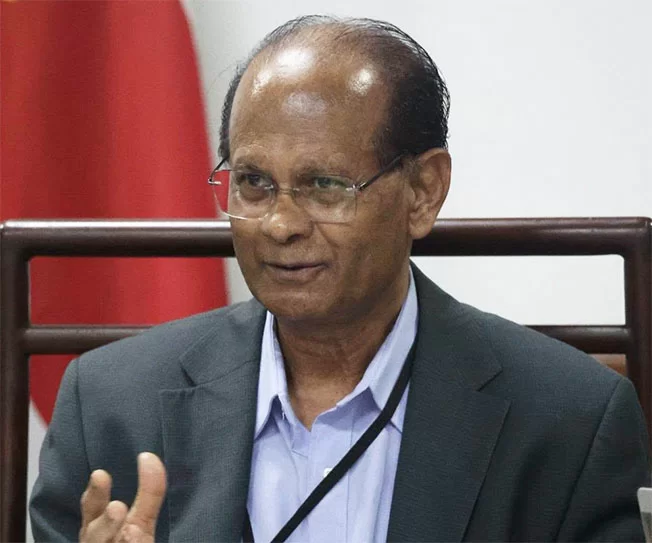
    Veteran Jamaican attorney Howard Mitchell, who leads a government-appointed review committee probing governance irregularities at the University Hospital of the West Indies (UHWI), has sounded the alarm over a deeply entrenched culture of insufficient accountability and lax oversight that permeates nearly the entire public sector. Far from being an isolated issue at the prominent teaching hospital, Mitchell argues that the gaps uncovered during the UHWI investigation are symptomatic of broad, structural flaws that have undermined the performance and integrity of state institutions across the island.

    Mitchell outlined three core drivers that allow governance failures to persist across the country’s 156 public bodies: widespread non-compliance with existing regulatory requirements, toothless monitoring mechanisms, and inadequate enforcement of established rules. To illustrate the scope of the compliance crisis, he noted that only 12 of the 156 public bodies are fully up to date on the mandatory financial and operational reports required under the Public Bodies Management and Accountability Act (PBMA). Shockingly, at least one public body has failed to submit a single required report in the 50 years since it was founded, leaving public funds unaccounted for and raising urgent questions about fiscal transparency. This lack of transparency is particularly striking, Mitchell emphasized, given Jamaica’s widely celebrated recent successes in macroeconomic management.

    The review committee was convened specifically to examine procurement and governance shortcomings at UHWI, following a 2025 report from Jamaica’s Auditor General that flagged major irregularities at the facility. But Mitchell said the investigation quickly revealed that the same weaknesses extend across the entire public administration system. A primary contributing factor, he explained, is that the agencies tasked with overseeing public bodies are themselves starved of the resources, staffing, and training needed to do their jobs effectively. The Auditor General’s Department, for example, faces such significant budget constraints that it can only conduct superficial, one-off checks rather than sustained follow-up oversight. Compliance units within the Ministry of Finance and the Public Service also lack sufficient funding and capacity to drive the cultural shift needed to embed accountability across all public institutions.

    Compounding the challenge is the unwieldy structure of Jamaica’s public sector, which places an unmanageable number of agencies under the supervision of individual ministries. Mitchell noted that some cabinet departments are responsible for monitoring more than two dozen public bodies, while 39 separate agencies report directly to the prime minister – a workload that makes consistent, effective oversight functionally impossible.

    Over time, these persistent systemic failures have created a dangerous trust deficit that erodes public confidence in national institutions, Mitchell warned. When public bodies fail to deliver on their mandated services, the backlash falls directly on political leaders and state institutions, damaging social cohesion and undermining the legitimacy of governance. He added that political stakeholders have begun to recognize that this gap between public promises and actual service delivery is a core root of declining citizen trust.

    Against this backdrop, the UHWI reform process has emerged as a critical test case for broader public sector overhaul. The review committee has concluded that Jamaica lacks the specialized local expertise to manage the complex transformation of a large teaching hospital, and is therefore recommending that the government hire an independent international change management expert to lead UHWI’s restructuring, develop a formal implementation roadmap, and enforce accountability for outcomes. Health Minister Dr. Christopher Tufton has endorsed the recommendation, confirming that the government will source the required expertise from the international market, as no local firm possesses the specialized experience in teaching hospital governance and service delivery needed for the project.

    Mitchell stressed that the UHWI reform should not be a standalone fix. Instead, he framed the process as a critical wake-up call for Jamaica to address the accountability crisis across all public bodies, using the hospital’s transformation as a benchmark to raise standards across the entire public sector.

  • Hoe China de richting van de oorlog tussen de VS en Iran kan bepalen

    Hoe China de richting van de oorlog tussen de VS en Iran kan bepalen

    On a Wednesday marked by accelerating efforts to broker a historic peace agreement between Tehran and Washington, Iranian Foreign Minister Abbas Araghchi held high-stakes talks with his Chinese counterpart Wang Yi in Beijing. The meeting came just hours after U.S. President announced a pause in military efforts to forcibly reopen the Strait of Hormuz, setting the stage for a critical diplomatic turning point in the months-long regional conflict.

  • DNA eist onafhankelijk onderzoek naar doden Royal Hill

    DNA eist onafhankelijk onderzoek naar doden Royal Hill

    PARAMARIBO – Deadly violence in the Royal Hill gold mining region near Koffiekamp has sparked fierce backlash from lawmakers in Suriname’s Nationale Assemblee (National Assembly), who are calling for a full independent investigation into the circumstances that left two small-scale gold prospectors dead. The incident, reported on May 6, has exposed deep divisions between official accounts and witness testimony, as well as long-simmering frustration over the government’s failure to address the root causes of informal mining in the country.

    The most vocal critic of the government and police’s official narrative is Edgar Sampi, a parliamentarian representing the ABOP party. Sampi has pointed to major contradictions between official statements and accounts from people on the ground. Official government and police reports frame the two deaths as accidents that occurred during operations targeting illegal gold mining activity in the region. But eyewitnesses tell a different story, alleging that the miners were killed in an episode of excessive force, and may have been shot in cold blood. These conflicting accounts make an independent, impartial inquiry non-negotiable, Sampi argued.

    Multiple members of the National Assembly have echoed Sampi’s concerns, noting that the issue of unregulated informal gold mining has plagued the country for decades. Lawmakers stress that forced evictions of informal miners without providing viable alternative livelihoods do nothing to create a long-term solution to the crisis. “As soon as security pressure eases, people go back to the area to mine,” Sampi explained, pointing out that prospectors have no other way to earn income to support their families.

    The growing calls for action are not limited to a probe into the recent deadly incident. Parliament is increasingly demanding a structural, comprehensive approach to the gold mining sector that addresses both public safety concerns and the socioeconomic needs of communities that rely on informal mining for survival. In response to the outcry from lawmakers, the Surinamese government has confirmed that the incident is receiving full attention, and that additional investigation into the deaths will be carried out in the coming period.

  • Bill to overhaul treatment of crime victims in Senate today

    Bill to overhaul treatment of crime victims in Senate today

    Trinidad and Tobago’s criminal justice system is poised for its most sweeping shift in how crime victims are treated, as Justice Minister Devesh Maharaj introduces a transformative, revolutionary Victims’ Rights Bill for its first reading in the national Senate on Monday.

    For decades, victims of crime across the twin-island nation have reported systemic neglect: left uninformed of investigation progress, sidelined during court proceedings, and forced to wait years for tangible justice. The new legislation directly addresses these longstanding grievances by codifying a full suite of formal rights for victims, upending a justice system that has historically centered the rights of the accused. The bill redefines victims as active, recognized stakeholders in the legal process rather than passive bystanders, expanding the definition of a victim to include not only people directly harmed by a crime, but also immediate family members and witnesses, regardless of whether an offender is ever identified or convicted.

    Key provisions of the landmark legislation mandate consistent, transparent communication from law enforcement and judicial bodies to victims. Police will be required to share regular updates on the status of investigations, while prosecutors must notify victims of all court developments: from initial charges and hearing schedules to case outcomes, appeals, bail decisions, and any protective conditions imposed on accused individuals. In high-stakes case decisions—including dropping charges, accepting plea bargains, or appealing sentences or acquittals—the Director of Public Prosecutions will be legally required to consult victims before finalizing a call. The bill also guarantees victims the right to attend court proceedings (barring specific judicial exceptions), formalizes the right to submit impact statements outlining the emotional, psychological and financial toll of a crime ahead of sentencing, and sets strict rules to minimize unnecessary contact between victims and accused persons to reduce intimidation and trauma.

    A core priority of the legislation is addressing the widespread problem of secondary victimization, where survivors experience additional harm through insensitive interactions with police, court staff and legal processes. The bill requires all authorities to treat victims with dignity, compassion and respect, with accommodations tailored to individual needs including language barriers, disabilities and age. It also places strict limits on the public disclosure of victims’ personal identifying information, mandates the timely return of personal property seized for investigations, and guarantees access to information on existing support services ranging from counseling to legal aid. Victims also retain the right to appoint a representative to act on their behalf if they are unable to advocate for themselves.

    On the compensation front, the bill consolidates existing fragmented support systems into a single, streamlined framework. It expands pathways for financial redress, allowing victims to pursue compensation directly from offenders through civil court claims, while opening access to state-funded compensation in cases where other mechanisms are not available. Currently, the Criminal Injuries Compensation Board provides this support, having disbursed roughly $1.2 million to eligible victims to date; the new bill brings this existing program under its comprehensive umbrella, along with victim voice provisions from the existing Criminal Procedure Plea Discussion and Plea Agreement Act.

    To ensure accountability across all agencies that interact with victims, the legislation establishes a formal, multi-tiered complaints process. Victims can file grievances over inadequate treatment, seek remedies including formal apologies, explanations and corrective action, and escalate unresolved complaints to the national Ombudsman. The bill also requires mandatory training guidelines for all personnel working with victims—including police, prosecutors and support staff—to ensure consistent, sensitive and professional care, and mandates the Justice Minister submit a detailed public report to Parliament every two years, including data on complaints filed, services accessed, and overall program outcomes.

    In an interview ahead of the bill’s debut, Maharaj acknowledged that the existing justice system suffers from a critical, long-standing gap: victims are routinely sidelined rather than prioritized as key stakeholders. He described the legislation as revolutionary, noting that it will accelerate the delivery of justice by embedding accountability into every stage of the legal process. While Maharaj acknowledged the reform will face early teething challenges, as agencies align their processes with the new requirements, he said the government will roll out comprehensive awareness and training programs to bring all stakeholders on board. He added that the government is already working to address broader systemic issues slowing justice delivery, including a massive case backlog, by expanding capacity for the DPP’s office with additional prosecutors and increasing the number of public defenders.

  • UPP Chair D. Gisele Isaac Claims Election Was Influenced by State Power, Cash Handouts

    UPP Chair D. Gisele Isaac Claims Election Was Influenced by State Power, Cash Handouts

    Weeks after the ruling Antigua and Barbuda Labour Party secured its fourth consecutive term in the April 30 general election, the chair of the main opposition United Progressive Party (UPP), D. Gisele Isaac, has raised explosive allegations that systemic advantages, misuse of state assets, and direct voter bribes skewed the final result.

    In a scathing opinion piece published Tuesday in the Daily Observer, Isaac delivered a damning indictment of the country’s electoral landscape, labeling Antigua and Barbuda’s democracy “plywood-built” – a fragile structure that inherently favors sitting governments through unfair constitutional and institutional advantages.

    At the core of Isaac’s criticism is the argument that incumbent administrations hold an unbeatable advantage thanks to their unilateral control over all state institutions and resources. She specifically named key state bodies including the national Treasury, Immigration Department, Port Authority, Public Works Department, the Antigua Public Utilities Authority (APUA), ABS-TV and even the independent Electoral Commission as entities the ruling party leveraged for electoral gain. Unlike challengers, sitting leaders hold full authority over when, where, and how state resources are deployed during election cycles, creating a fundamentally uneven playing field that opposition groups can never overcome, she argued.

    Beyond institutional bias, Isaac detailed what she claims was widespread and deliberate vote-buying during the recent campaign. She cited direct cash handouts to voters, campaign motorcades that paired promises of road repairs with free gasoline giveaways, and distribution of supermarket vouchers, personal gifts, and free concerts to sway voter sentiment. Isaac framed these tactics as exploitative of widespread economic hardship facing the country, arguing that the ruling party’s short-term inducements undercut opposition plans for long-term economic improvement.

    “To thousands of families, scrunting because of the high cost of groceries and living with termites, the cash in hand and plywood were more attractive than the Opposition’s plans to make life better, healthier and more affordable,” Isaac wrote, acknowledging that widespread economic distress left many voters with little choice but to accept immediate assistance over future policy gains. She added that the cycle of vote-buying perpetuates poverty, leaving voters dependent on ruling party handouts rather than building sustainable economic growth.

    Isaac also openly addressed internal instability that weakened the UPP in the lead-up to the election, confirming reports of high-profile party defections, infiltration by “double-agents” aligned with the ruling party, and internal disagreements over key campaign decisions. Despite these challenges, she defended the UPP’s campaign performance, arguing that the opposition overcame massive resource disadvantages to mount a credible challenge. “Without apology I will say, again, that the Opposition — with its small resources but great goodwill and superior talent — pulled off an election campaign that was A+,” she wrote.

    The veteran political leader also pulled no punches on the outsized role of corporate and private donor influence in national politics. She argued that election outcomes and subsequent government policy are ultimately controlled not by voters, but by wealthy interests that fund political campaigns. “Vote all you want — whether for a political leader or a party; it is those who open the purse — or keep it closed — that determine the outcome,” she wrote.

    Isaac closed her column with a sober warning about the long-term health of Antigua and Barbuda’s democratic system, admitting that she struggles to encourage public trust and electoral participation when the principle of “one man, one vote” does not align with the reality of how elections are run in the country. Her comments represent one of the most high-profile critiques of the island nation’s electoral system from a major opposition leader in recent years, opening new conversation about the need for electoral reform to level the political playing field.

  • All Saints East & St. Luke MP Thanks Constituents After Election Victory

    All Saints East & St. Luke MP Thanks Constituents After Election Victory

    Fresh off the 2026 general election results, the incumbent Member of Parliament for All Saints East and St. Luke has moved quickly to extend heartfelt appreciation to the voters who delivered him another term in office. In a widely shared public statement following the announcement of poll outcomes, the legislator emphasized that his electoral success was not a personal victory, but a reflection of the deep-rooted trust, sustained backing and shared commitment that define his relationship with the constituency he represents.

    Acknowledging the weight of the mandate handed to him by residents, the MP has pledged to raise the bar for his service moving forward. Contrary to speculation that post-election engagement would taper off, he made clear that his on-the-ground presence and regular outreach to constituents will only grow stronger in the coming term. Centering his policy priorities on accountable, responsive governance, the legislator reaffirmed his commitment to collaborative lawmaking, noting that every decision he advances will be shaped by direct input from the communities he serves.

    Looking ahead, the MP outlined his core overarching goal: to work hand-in-hand with residents of All Saints East and St. Luke to drive inclusive, sustained growth across Antigua and Barbuda. Closing his message, he repeated his sincere gratitude to every constituent who cast a ballot, offered support, or placed their confidence in his leadership ahead of the 2026 poll.

  • ILO report links labour rights to journalist safety and press freedom

    ILO report links labour rights to journalist safety and press freedom

    To commemorate World Press Freedom Day on May 3, the International Labour Organization (ILO) has published a groundbreaking report that centers a long-overlooked angle of journalist protection: the fundamental role of labor rights in safeguarding media workers around the globe. For decades, the global community has debated threats to press freedom through the lens of free expression, but the ILO’s new analysis argues that this framework is incomplete — journalists are first and foremost workers, and their ability to do their jobs safely depends entirely on whether they can access the core labor protections guaranteed to workers in every other sector. Alarmingly, the risks facing media personnel have grown steadily worse over the past three decades. Data from UNESCO’s Observatory of Killed Journalists confirms that more than 1,850 journalists have lost their lives while on the job since 1993. For the vast majority of these killings, no perpetrators have been held to account, leaving a pervasive culture of impunity that emboldens further attacks. Beyond lethal violence, hundreds more journalists today are arbitrarily detained, disappeared, or targeted with sustained threats. Legal harassment, physical violence, and widespread digital and gender-based abuse — which disproportionately harms women journalists — add layers of insecurity that force many to censor their work or leave the profession entirely. The ILO report makes a clear, evidence-backed case: the safety of journalists does not rely solely on protecting freedom of speech. It is inextricably linked to their ability to exercise core labor rights, from fair working conditions to collective bargaining. The analysis explores how the ILO’s own fundamental principles of work rights, paired with established international labor standards, can be leveraged to strengthen existing safety frameworks. It also offers actionable guidance for governments, media outlet employers, labor unions, and journalist associations to build tailored, sustainable protection strategies that address the unique risks the sector faces. “Journalists are key defenders of human and labor rights across the world,” noted Frank Hagemann, Director of Sectoral Policies at the ILO, in comments accompanying the report’s release. “But they are also workers themselves, and the framework of labor rights provides an underutilized, powerful tool to protect them while they carry out their critical work.” The ILO has long been engaged in global efforts to protect press freedom, and it is a core partner in the United Nations Plan of Action on the Safety of Journalists and the Issue of Impunity. That plan, first adopted by the United Nations System Chief Executives Board for Coordination back in 2012, established a coordinated cross-UN approach to tackling rising violence against media workers and ending the cycle of impunity for attacks on journalists. This new report builds on that decade-long initiative, bringing a fresh labor-focused perspective to a growing global crisis that shows little sign of abating.

  • Browne Says Antigua and Barbuda Can Become ‘Lifestyle Superpower’

    Browne Says Antigua and Barbuda Can Become ‘Lifestyle Superpower’

    Fresh off a historic landslide win in the April 30 general election, Prime Minister Gaston Browne has laid out an ambitious new national vision for Antigua and Barbuda, positioning the country to evolve from a growing economy to what he calls a global “lifestyle superpower” that delivers widespread, tangible benefits to all citizens.

    Browne laid out this policy framework during his official swearing-in ceremony on Tuesday, where he emphasized that the new administration’s development strategy rejects the narrow focus on gross economic expansion that has guided many small island nations. Instead, his government will center national progress on simultaneous growth of the national economy and improvement of everyday quality of life for Antigua and Barbuda’s residents.

    “We have to continue the transformational build of this country,” Browne told attendees gathered for the inauguration. He went on to explain that the administration’s holistic vision encompasses far more than GDP gains, covering eight core pillars of development: modern infrastructure, investment in people, enhanced national competitiveness, renewed national pride, environmental stewardship, and comprehensive public safety and security.

    Browne argued that Antigua and Barbuda has already built a strong foundation of steady economic progress and political stability, and now it is time to leverage those advantages to build a nation that appeals equally to international visitors and domestic residents. “We have to position Antigua and Barbuda as a lifestyle superpower,” he declared to the audience.

    The Prime Minister tied this bold ambition to a series of ongoing and planned public investments across key sectors, including transportation and utility infrastructure, affordable housing, public education, and core public services. Alongside these infrastructure and social spending commitments, he stressed that national pride and inclusive social development are just as critical to achieving the “lifestyle superpower” goal.

    His administration’s core mission, he said, is to continue building a cohesive society that guarantees widespread access to opportunity, personal security, and a steadily improving quality of life for all citizens. “We must work boldly,” Browne stated, urging both public officials and private citizens to join in sustained efforts to boost the country’s global competitiveness and long-term resilience to economic and climate challenges.

    Browne also placed a particular focus on youth investment, noting that empowering young Antiguans and Barbudans is critical to creating the stable, enabling conditions needed for long-term economic and social advancement. He reiterated that for his administration, economic expansion is not an end in itself: the ultimate goal is to ensure that every community across both islands sees tangible, measurable improvements from national development.

    Browne’s Antigua and Barbuda Labour Party secured a dominating mandate in last week’s general election, winning 15 out of the 17 available parliamentary seats, clearing the way for the administration to advance its full policy agenda over the coming term.

  • The boxer on the ropes – an analysis of the Antigua and Barbuda 2026 General Elections | Part II

    The boxer on the ropes – an analysis of the Antigua and Barbuda 2026 General Elections | Part II

    When the final votes were tallied in Antigua and Barbuda’s 2026 general election, the Antigua and Barbuda Labour Party (ABLP) secured a historic fourth term in office. But to understand the true weight of this victory, one must look beyond raw seat counts and vote totals to the deeper shifts in party identity, national vision, and democratic practice that it reveals. This election win is more than a political triumph—it is a case study in intentional institutional renewal, reconnection to core roots, and the resilience of democratic governance in an era of global democratic backsliding.

    One of the most striking markers of ABLP’s success is its deliberate commitment to generational rebuilding rather than superficial cosmetic change. Ahead of the poll, the party fielded 10 new candidates, a large share of whom are under 40 years old, bringing fresh perspective and energy to the political landscape. This blend of seasoned veteran leadership and emerging young talent sends a clear message: the ABLP is no static relic of the nation’s independence era, but a dynamic, evolving institution adapting to the demands of a new age.

    The party has redefined leadership as a relay race rather than a permanent throne—prioritizing the smooth passing of the baton to the next generation over clinging to power. This marks a tangible shift away from the individualistic politics and personality cults that have eroded democratic institutions in many parts of the world, refocusing instead on collective responsibility and long-term institutional continuity. It is a reminder that robust democracies are built on robust, self-renewing parties that survive not by centering individual personas, but by refreshing their values, updating their leadership, and staying rooted to the communities they exist to serve.

    Beyond internal renewal, the 2026 election also revealed a stark shift in national vision between Antigua and Barbuda’s two major parties. Where the ABLP’s historic opposition, the United Progressive Party (UPP), once built its brand on a “broad tent” philosophy of inclusive politics, the party has gradually drifted from that founding ethos in recent years: its outreach has shrunk, its policy focus has narrowed, and its appeal has become far more limited. The ABLP, by contrast, has returned to its foundational roots as a working-class movement, expanding the modern “House of Labour” to reflect the diverse reality of work in the 21st century.

    Today’s working class encompasses far more than the traditional labor movements of the past: the ABLP recognizes that teachers, hotel workers, young coders, fishermen, nurses, technicians, and small business owners are all workers contributing to Antigua and Barbuda’s national progress. The party’s flagship policy push for a living wage is not just a campaign slogan—it is a reflection of its core belief that democracy must deliver more than just the right to vote; it must deliver tangible, improved quality of life for all citizens.

    Any analysis of ABLP’s present must acknowledge the weight of its storied past. The legacy of Sir Vere Cornwall Bird, the father of Antigua and Barbuda’s independence, remains a cornerstone of the nation’s identity. Bird’s lifelong sacrifice, unwavering commitment to working people, and steady leadership through the transition from colonial rule to self-governance are etched permanently into the country’s history. But national progress does not end with political independence: today’s unfinished work lies in securing economic independence—narrowing systemic inequality, expanding access to opportunity, and ensuring that free education, quality healthcare, and dignified employment are universal guarantees, not privileges reserved for a select few.

    That legacy of working-class empathy lives on in the leadership of current Prime Minister Gaston Browne, who carries forward Bird’s vision into the complex landscape of 21st-century global competition and technological change. Like U.S. President Franklin D. Roosevelt’s iconic fireside chats, Browne prioritizes open, direct communication with the public, explaining policy and direction in plain, honest language. His regular “Browne and Browne” public affairs program, a frequent, unscripted space for national conversation, represents a modern iteration of this accessible leadership tradition, embodying the democratic principle that leadership requires visible, accountable connection, not distant authority.

    This election was not only a test for the ABLP—it was a test for Antigua and Barbuda’s democracy as a whole, and the nation passed with flying colors. At a time when democratic norms are under growing strain across the globe, Antigua and Barbuda delivered a calm, peaceful, transparent election that fully honored the will of the people. Voters turned out in force, cast their ballots freely, and accepted the outcome unified, reaffirming the core democratic truth that sovereign power belongs to the people.

    Citizens evaluated the competing visions on offer, and chose the path they believed best aligned with their hopes, needs, and national ambitions. They made clear that while they do not expect perfection—no government is without flaw—they approve of the country’s current direction, the leadership’s willingness to adapt and adjust, and its commitment to inclusive national development.

    To frame this moment in sporting terms: the ABLP once found itself backed against the ropes, weathering heavy criticism and electoral setbacks. Instead of collapsing, it absorbed the blows, learned from its mistakes, and rebuilt itself from the inside out: it restructured internal party institutions, elevated new generational talent, returned to its working-class roots, and put forward an inclusive national vision big enough to unify all corners of the country. What we see today is a party that has stepped off the ropes and back to the center of the ring, ready for a new term of leadership.

    Now the question turns to what the ABLP will do with this historic mandate. The party won the right to lead for a fourth term, and it must approach this responsibility with humility, responsiveness, and courage. The core questions that will define this term are straightforward: Will the ABLP deepen democratic participation? Will it expand economic opportunity for all? Will it transform national institutions to ensure that future generations never have to choose between dignity and economic survival?

    Early signs point to a positive path forward—if the party retains the lessons that brought it to this moment: why it was once written off by political observers, and why the people of Antigua and Barbuda chose to give it a renewed mandate. If this lesson is fully embraced, the 2026 election will stand as a defining turning point for the nation: a moment when a party, a people, and a democracy chose transformation over complacency, and forward-looking leadership over stagnation.

    As former U.S. President John F. Kennedy famously noted, the future is not inherited—it is built, and the challenges we face as people can be solved by people. The charge ahead for the ABLP and the people of Antigua and Barbuda is clear: now that the party has returned to the center of the political ring, it must use this mandate not just to hold power, but to continue the collective work of building a more just, more inclusive, and more prosperous nation. As iconic Antiguan calypso artist Short Shirt long urged, nation-building requires collective effort: “put your shoulder to the wheel,” he urged, and remember that work, not empty talk, is what builds a strong nation—progress demands relentless, shared toil.

  • Congratulatory Message from CARICOM Chair to the Prime Minister of Antigua and Barbuda

    Congratulatory Message from CARICOM Chair to the Prime Minister of Antigua and Barbuda

    Following the conclusion of Antigua and Barbuda’s general elections on April 30, the Chairman of the Caribbean Community (CARICOM) has issued a formal message of warm congratulations to Prime Minister Gaston Browne, who secured a historic fourth consecutive term in national office.

    Browne’s landslide win at the polls is widely interpreted as a clear demonstration that the electorate of Antigua and Barbuda retains unwavering confidence in his leadership style and long-term development blueprint for the twin-island nation. The outcome of the election has not only cemented Browne’s political legacy but also reaffirmed the public’s commitment to the regional democratic norms that the Caribbean has long prioritized.

    In the congratulatory statement, the CARICOM Chairman also extended praise to the people of Antigua and Barbuda for upholding the region’s longstanding, proud tradition of conducting free, fair, and peaceful democratic elections. This peaceful transition of power through the ballot box stands as a testament to the maturity of the country’s democratic institutions, the statement added.

    Looking ahead, the Chairman expressed sincere well wishes for a productive and impactful new term, highlighting hopes that Browne’s leadership will drive continued social and economic progress across Antigua and Barbuda. The statement also underscored CARICOM’s eagerness to maintain close collaborative work with Browne’s administration, as both sides work together to tackle the wide range of cross-border challenges that impact the entire Caribbean region.