分类: politics

  • PM Browne Says Government Housing Policies Have Reduced Wealth Inequality

    PM Browne Says Government Housing Policies Have Reduced Wealth Inequality

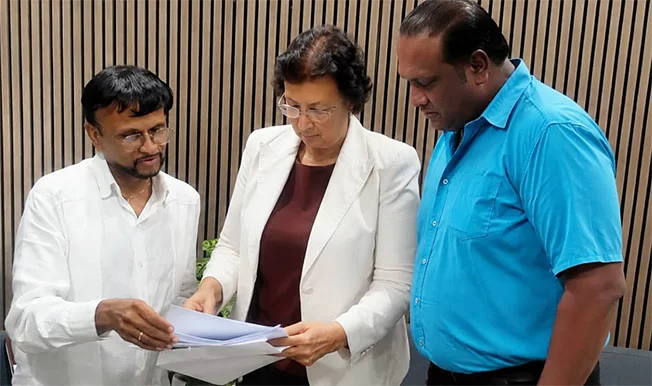
    Antigua and Barbuda Prime Minister Gaston Browne has credited his administration’s targeted housing initiatives with driving a dramatic reduction in national wealth inequality, announcing a sharp improvement in the country’s Gini coefficient over his decade in office. Speaking during an appearance on the Brown and Brown Show this past Sunday, Browne outlined that core programs including the Housing Assistance Programme for Indigent People (HAPI) and large-scale affordable housing developments are intentionally structured to expand access to homeownership, a key tool for transferring accumulated wealth to working and low-income citizens.

    “Every time we construct these homes and a member of the public gets to benefit from that property, we are actively moving wealth into the hands of ordinary men and women across the country,” Browne explained during the interview.

    The Gini coefficient, a globally recognized statistical metric that measures the gap between the most and least wealthy members of an economy, ranges from 0 (perfect equality across all population segments) to 1 (maximum inequality, with almost all wealth concentrated in a tiny elite). When Browne’s administration took power in 2014, the prime minister noted, the country recorded a Gini coefficient of 0.87—an extremely high figure pointing to severe wealth concentration. That figure has now fallen to 0.47, a drop of 0.40 that marks one of the most rapid improvements in wealth distribution recorded in the region.

    “The closer the Gini coefficient gets to one, the more skewed wealth distribution becomes. It means a tiny group of wealthy individuals are capturing almost all of the country’s economic gains,” Browne added. He emphasized that the dramatic reduction in the metric confirms that wealth is now spread far more broadly across Antigua and Barbuda’s population than it was a decade ago.

    Browne used the interview to push back against widespread criticism that recent economic growth in the country has only benefited a small, well-connected elite. He argued that if corruption and mismanagement of public resources were as widespread as critics claim, the national statistical data would reflect that failure, rather than showing clear progress in reducing inequality.

    Beyond the drop in wealth inequality, the prime minister highlighted additional markers of economic progress under his leadership: a significantly strengthened national fiscal position, and steady growth in per capita income across the country.

  • Minister Freeland Attends Global Intellectual Property Talks in Geneva

    Minister Freeland Attends Global Intellectual Property Talks in Geneva

    A high-stakes global gathering on intellectual property governance is kicking off in Geneva this month, with a senior official from Antigua and Barbuda set to represent the small Caribbean nation at one of the world’s most influential forums for creative and economic policy. From July 7 to 15, Minister of State for Tourism Michael Freeland is taking part in the 68th session of the World Intellectual Property Organization (WIPO) Assemblies of Member States, the UN agency’s top decision-making body that draws more than 1,000 delegates from national governments and international institutions each year.

    In advance of the official opening of the assembly proceedings, Freeland will join a preeminent ministerial policy dialogue centered on a pressing global question: how can intentional investment in innovation and creative industries lay the foundation for more inclusive future societies and drive long-term, sustainable economic expansion? The core agenda of the two-week gathering brings together public sector leaders from every region of the world to tackle cross-cutting intellectual property (IP) issues, from standards for patents and trademark protection to rules governing copyright and geographical indication labeling, with the ultimate goal of charting the trajectory of global IP policy for years to come.

    Beyond plenary sessions and policy debates, Freeland has a packed schedule of bilateral and regional engagements during his time in Geneva. He is scheduled to hold official talks with Daren Tang, WIPO’s Director General, join a dedicated ministerial meeting for Caribbean nations, and lead technical discussions focused on strengthening Antigua and Barbuda’s domestic intellectual property framework.

    Key priorities for the Caribbean nation’s delegation include advancing actionable updates to national legislation governing new plant varieties, upgrading the country’s existing Industrial Property Automation System, rolling out convenient online filing services for IP applicants, expanding national access to and use of the WIPO-administered Madrid System for international trademark protection, moving forward with long-planned copyright reform, and rolling out public awareness campaigns to boost understanding of IP rights across the country.

    As the top decision-making forum for the global IP ecosystem, the WIPO Assemblies play a critical role in aligning national policy frameworks with global standards, creating opportunities for small and developing nations to shape rules that work for their unique economic and development goals. For Antigua and Barbuda, participation in this year’s gathering offers a key platform to advance domestic IP modernization that aligns with the country’s broader goals of sustainable growth and innovation-driven development.

  • Freedom 250 statement by US Chargé d’Affaires Karin Sullivan

    Freedom 250 statement by US Chargé d’Affaires Karin Sullivan

    As the United States prepares to mark the 250th anniversary of its founding under the national commemoration banner “Freedom 250”, a senior U.S. diplomatic representative to the region has outlined the country’s vision for continued collaboration with Eastern Caribbean and Organization of Eastern Caribbean States (OECS) nations. Writing in an op-ed, Chargé d’Affaires Karin Sullivan of the U.S. Embassy to Barbados, the Eastern Caribbean, and the OECS emphasized that this milestone is far more than a retrospective of American history: it is a moment to reaffirm the shared global ideal of freedom that connects communities across national boundaries and generations.

    Citing a statement from former President Donald Trump that “The story of America makes everyone free,” Sullivan noted that the U.S. legacy of independence is not merely a historical artifact. Instead, it serves as a global call to action to work alongside international partners — including the small island nations of the Eastern Caribbean — to build a shared future defined by widespread opportunity, collective security, and mutual prosperity. In framing the commemoration, Sullivan stressed that Freedom 250 is not just a centennial celebration of the past, but a strategic launchpad for a new era of international collaboration aligned with the Trump administration’s diplomatic vision. This vision prioritizes forging new collaborative partnerships, championing cross-border innovation, and redefining U.S. diplomacy to guide global engagement for the next 250 years.

    At the core of current U.S. engagement in the Eastern Caribbean is a straightforward guiding principle: collective success between nations translates to safer populations, more resilient national economies, and stronger, more adaptable local communities. Across the region, this collaborative approach has already delivered tangible, measurable benefits to local populations. In Barbados, where the country is rapidly emerging as a leading regional technology hub, U.S. investment in advanced digital connectivity is laying the foundational infrastructure for a growing digital economy. This investment is unlocking new opportunities across high-impact sectors including telemedicine, distance education, artificial intelligence innovation, financial technology, and climate-smart agricultural practices, building a modern bilateral partnership rooted in shared democratic values, transparent commercial exchange, and mutual economic growth.

    Bilateral collaboration extends across every Eastern Caribbean nation, each tailored to address local priorities. In Antigua and Barbuda, joint work on new energy infrastructure is boosting national climate resilience, creating new economic opportunities, and driving long-term sustainable growth. In Dominica, U.S. support for geothermal energy development is expanding access to reliable, affordable power while strengthening the country’s long-term energy independence and security. For Grenada, technical cooperation and local capacity-building programs are helping strengthen national water security, advance sustainable natural resource management, and build greater resilience to climate and resource-related shocks.

    In St. Kitts and Nevis, bilateral cooperation has deepened across multiple sectors, including citizen security, economic development, education, and cultural heritage preservation. A flagship project is U.S. support for the restoration of the historic Bath Hotel on Nevis, a landmark closely tied to Alexander Hamilton, one of the United States’ founding fathers, that reflects centuries of shared social and cultural ties between the two nations. In St. Lucia, expanded collaboration with the U.S. Drug Enforcement Administration is boosting local capacity to detect fentanyl trafficking, strengthen cross-border criminal prosecutions, and make communities safer across the entire region. In St. Vincent and the Grenadines, U.S. Peace Corps volunteers continue to work alongside local educators to strengthen primary and secondary education, improve English literacy outcomes, empower local teaching staff, and drive inclusive community development, forging lasting people-to-people bonds between the two nations.

    Beyond individual country projects, the United States and Eastern Caribbean nations are collaborating to address transnational regional challenges that cannot be solved by single nations acting alone. To combat cross-border crime and drug trafficking, the United States has committed more than $8 million in funding to upgrade Caribbean forensic science laboratories, improve regional drug detection capabilities, expand coordinated law enforcement cooperation, and counter the threat of transnational organized crime. The U.S. also continues to invest in the next generation of regional and American leaders through longstanding professional and educational exchange programs, including the Fulbright Programme, the Young Leaders of the Americas Initiative, and the International Visitor Leadership Programme.

    As the United States marks this historic 250-year milestone, Sullivan emphasized that the celebration centers not just on American history, but on the enduring international partnerships that will shape both the United States’ and the region’s shared future. Freedom 250, she noted, is a global commemoration of the United States’ founding ideals of liberty, democratic governance, and individual freedom. Closing the op-ed, Sullivan reaffirmed the United States’ commitment to the region: “The United States is proud to stand alongside the people of the Eastern Caribbean as a trusted neighbour, partner, and friend. As it has since its founding in 1776, the United States remains a trusted, dynamic partner ready to lead in the next 250 years. Together, we look forward to the next 250 years of freedom, opportunity, innovation, and shared prosperity.”

  • Ministry of Finance Official attends Prestigious Oxford Sustainable Finance Executive Programme

    Ministry of Finance Official attends Prestigious Oxford Sustainable Finance Executive Programme

    In a milestone that highlights the growing voice of climate-vulnerable small nations in global sustainability conversations, Carlon Knight, a senior finance official from Antigua and Barbuda, has earned a spot in the prestigious Sustainable Finance Executive Programme at the University of Oxford — an institution that has held the top spot in the Times Higher Education World University Rankings for a full decade.

    Hosted at Oxford’s historic Rhodes House from July 6 to 10, the immersive programme is developed and led by the Oxford Sustainable Finance Group, the globe’s largest academic center focused exclusively on research and education in sustainable finance. Under the direction of founding director Dr. Ben Caldecott and senior associate Dr. Alex Money, the programme brings together a handpicked cohort of global leaders in finance, policy, and climate action. This year, Knight stands out as the only participant hailing from a Small Island Developing State (SIDS) and the sole representative from the entire Caribbean region. He joins an elite group of professionals from top global institutions including the International Sustainability Standards Board, Fidelity International, the Glasgow Financial Alliance for Net Zero, WWF-UK, and the Bank of England.

    In his day-to-day role as Senior Projects Officer in Antigua and Barbuda’s Ministry of Finance and Corporate Governance Project Management Office, Knight wears multiple critical hats for the eastern Caribbean nation. Working in close partnership with Director Gail Imhoff-Gordon, he oversees and coordinates the country’s full portfolio of externally financed infrastructure and development projects. This includes a wide range of climate finance initiatives backed by major global and regional development partners such as the World Bank, the Caribbean Development Bank, and the Saudi Fund for Development, among other multilateral and sovereign funders. Beyond project coordination, Knight also serves as the PMO’s Chief Risk and Compliance Officer, responsible for upholding robust governance standards for public investment.

    Knight’s expertise in sustainable development extends beyond the public sector: he also holds an appointment as an Adjunct Lecturer at The University of the West Indies Five Islands Campus, where he teaches undergraduate economics courses and leads a graduate-level specialized program in sustainable finance. Earlier this year, he was selected as an Alliance of Small Island States Fellow, where he supported Antigua and Barbuda’s official climate finance negotiation delegation at the 29th UN Climate Change Conference (COP29) held in Baku.

    In comments following his selection to the Oxford programme, Knight emphasized the outsized importance of such capacity-building opportunities for small island developing states like his own. “We are on the front line of climate risk, yet we are too often on the margins of the conversations shaping global sustainable finance,” he explained. “Building technical capacity at this level allows us to bring that expertise home and put it to work for our country. I am deeply proud to represent Antigua and Barbuda, and small island states more broadly, as the lone participant in this cohort.”

    Knight also extended his gratitude to local leadership, saying: “To the Financial Secretary, my Director, Dr Murdock, Ms Gardiner and the Board of Education — thank you for believing in this and for backing me every step of the way.”

    Government officials note that Knight’s selection is not an isolated achievement, but rather a reflection of the Government of Antigua and Barbuda’s broader strategic push to strengthen technical capacity across the public service, with targeted focus on sustainable and climate finance. For a low-lying island nation that faces disproportionate exposure to climate impacts including sea level rise, tropical storm damage, and coastal erosion, this policy area holds growing national strategic importance. Continued investment in specialized high-level training at world-class institutions like Oxford, officials say, will be central to equipping the Ministry of Finance to successfully access, structure, and manage the climate and development financing that the country will require to build resilience and drive inclusive growth in the coming years.

  • NIBTT owes $50m to vendor for Empower tech upgrade

    NIBTT owes $50m to vendor for Empower tech upgrade

    Trinidad and Tobago’s National Insurance Board (NIBTT) is confronting growing parliamentary scrutiny after confirming it holds more than $50 million in outstanding payments to a digital service vendor working on its flagship Empower digitization initiative, a project designed to overhaul the agency’s outdated service delivery and revenue collection systems.

    The details of the unpaid liability were brought to light during a Friday sitting of the Joint Select Committee (JSC) on Finance and Legal Affairs, a parliamentary panel currently conducting a review of NIBTT’s public accessibility, responsiveness, and overall service performance. Committee members have raised pointed questions about the financial sustainability of the $300 million-plus project, which is funded entirely through NIBTT’s existing contribution collections and investment returns, at a time when the agency already faces a gap between incoming contributions and outgoing benefit payouts.

    NIBTT leadership has defended the multi-phase transformation effort, arguing that the deep digitization push is non-negotiable for the agency’s long-term functionality. For decades, NIBTT has relied on slow, paper-based and manual processing systems to handle its massive annual workload: roughly 40,000 new claims and 480,000 employer submissions each year. Executive Director Niala Persad-Poliah explained that existing legislation, the NIBTT Act, prohibits the agency from using bond financing to fund capital projects like Empower, forcing the organization to draw on its operating revenue. The first two phases of the project, which launched in 2022 and wrapped up implementation in August 2024, delivered a new human capital management system and an integrated financial platform, laying the groundwork for full operational overhaul.

    Persad-Poliah also clarified the discrepancy between the original $164 million project budget and the much higher total spending to date. She noted that the initial budget only covered core hardware and software costs, excluding critical supporting expenses including consultant fees, marketing outreach, and third-party project management services. To date, $143 million in solution implementation costs plus $10.3 million in value-added tax have been paid, with ongoing annual maintenance costs set at $18 million for existing systems, rising to $50 million annually once the full project is complete. The $50.9 million outstanding payment to the lead vendor will be settled once the final phase of work is delivered, and NIBTT management has already submitted a request to its board for additional funding to cover outstanding obligations.

    The final phase of the Empower project will focus on rolling out customer-facing digital tools, including an online portal that allows claimants to track their applications in real time and access services remotely, addressing longstanding public complaints about extended processing delays. So far, roughly 1,400 employers have registered for the new portal, and Persad-Poliah has urged more businesses to adopt the digital system to speed up processing. Agency technology leaders report that user acceptance testing (UAT) for the full system is 96% complete, with final end-to-end testing now underway to verify the entire workflow from claim submission to payment disbursement.

    Despite the progress, NIBTT acknowledges that thousands of claims remain backlogged, and the full public benefits of the project have yet to take effect. Human Resources Executive Director Isha Khan told the committee that the agency has reassigned existing staff full-time to backlog reduction over the past two years, used acting arrangements to fill vacant roles, and brought on external contract workers to support entry-level operations. Even with these adjustments, staff remain overburdened by the high volume of claims.

    JSC Chair Dr. Marlene Attzs, an Independent Senator, echoed committee members’ concerns, pressing NIBTT leadership for clarity on when vulnerable populations, who rely most heavily on NIBTT benefits, will see tangible improvements to service speed and accessibility. NIBTT officials reaffirmed that once fully implemented, the Empower system will dramatically expand access for people with special needs and other vulnerable groups by eliminating the need for in-person visits and reducing processing wait times.

  • ‘Petty politics’ over funding

    ‘Petty politics’ over funding

    A high-profile public dispute over delayed public servant salaries has broken out in Trinidad and Tobago, with Rural Development and Local Government Minister Khadijah Ameen accusing the Port of Spain City Corporation and its mayor of prioritizing petty political gain over worker stability.

    The conflict began last week, when Port of Spain Mayor Chinua Alleyne publicly raised alarm over delayed June paychecks for the city’s monthly-paid municipal employees. Alleyne claimed the central Local Government Ministry had dragged its feet on approving June payroll funding, warning that no financial provision had even been made for salary payments beyond the month of June. He added that City Hall had repeatedly alerted national government officials that the corporation would be unable to meet its payroll obligations, but those warnings were ignored. Just one day after his initial statement, however, Alleyne updated the public via his official Facebook page that the corporation had received a funding cheque — though he clarified the sum still did not cover payroll obligations past June.

    Minister Ameen pushed back against Alleyne’s narrative while speaking to reporters at a Venezuela earthquake relief donation drive in Woodbrook earlier this week, laying full blame for the delay at the feet of the city corporation. She explained that following a mandated public service salary increase, ministry officials required updated documentation from all municipal corporations to properly recalculate and audit payroll allocations. Meetings were held with Port of Spain representatives in March and again in April to outline these requirements, but the city failed to submit the necessary paperwork on time.

    According to Ameen, the situation moved toward resolution only after the city finally submitted its first set of documents the previous Friday. Ministry staff worked through the weekend to process the submission, but a second round of documents turned in on Sunday contained errors. City officials finalized corrections on Monday, clearing the way for full funding to be disbursed.

    Ameen confirmed that the cheque the corporation received covers all salary obligations from the mid-year budget review through the end of the current financial year, meaning all affected monthly-paid workers under the Public Services Association have now received their pay. She noted that daily-paid and contract municipal workers were never impacted by the administrative backlog.

    The minister went a step further, accusing Alleyne of seeking cheap political mileage by going public with the dispute before the issue could be resolved internally. She argued that the premature publicity caused unnecessary harm to workers, sharing that one employee contacted her in tears after a local credit union halted approval on her long-awaited loan over unfounded concerns about her job security.

    Ameen also pointed to broader administrative frictions with municipal corporations controlled by the opposition People’s National Movement (PNM), claiming petty political posturing often leads PNM-led bodies to avoid routine outreach that would prevent processing delays. She emphasized that she has maintained close coordination with public service unions to protect worker interests, and stressed that no politics will be allowed to jeopardize employee pay or job security. She issued a public assurance to all municipal workers across the country that their salaries are fully secure and all outstanding administrative issues have been resolved.

  • No legal requirement

    No legal requirement

    For more than two months, Trinidad and Tobago has not held a formal post-Cabinet media briefing, sparking widespread debate over government communication practices and transparency standards. The final such briefing was held on May 7, when cabinet ministers addressed reporters on a broad spectrum of pressing public issues, from the high-profile triple homicide in Belmont’s Rifle Hill to regional security coordination following the Shield of the Americas summit, the country’s UN Security Council non-permanent seat bid, new UK visa requirements for Trinidad and Tobago citizens, and bilateral relations with neighboring Venezuela. That session was chaired by Wilfred Nicholas Morris, Minister in the Office of the Prime Minister.

    In recent interviews, two leading Trinidadian political scientists have offered divergent perspectives on the ongoing hiatus, while agreeing on a core legal point: there is no binding legal mandate requiring the government to host these formal press briefings.

    Dr. Bishnu Ragoonath, a prominent political scientist, explained that longstanding constitutional and procedural traditions frame Cabinet deliberations as inherently confidential. Cabinet meeting minutes and discussion notes are legally protected from public disclosure, he noted, and no constitutional clause or statutory law requires ministers to update the public immediately following every Cabinet gathering. Ragoonath added that post-Cabinet briefings emerged in recent decades as a voluntary practice for governments seeking to signal greater openness and align with modern good governance standards, not as a legally required obligation.

    While affirming the lack of a legal requirement, Ragoonath emphasized that transparency remains a foundational pillar of legitimate democratic governance. “I have always been one for accountability and transparency. Ethics is dependent upon integrity and accountability and transparency,” he stated. That said, he harshly criticized the current government’s broader communication strategy, arguing it is structurally inadequate and frequently fails to provide necessary context for major policy changes.

    Pointing to the recent suspension of the Military-Led Academic Training (MILAT) Programme as a key example, Ragoonath said officials only announced the termination of the program without offering any public explanation for the decision. He later learned through unconfirmed secondary sources that the program carried a price tag of roughly $135,000 per trainee, a cost that reportedly prompted the review. “If those were the facts which caused the review of the programme, come out and say it. Without giving context and without adequate background, one wonders whether or not there is a hidden agenda,” Ragoonath said.

    Dr. Indira Rampersad, another respected political scientist, shared Ragoonath’s conclusion that no legal obligation exists for post-Cabinet briefings, but pushed back on the framing that the current government is failing to communicate with the public. She argued that Prime Minister Kamla Persad-Bissessar and her cabinet have maintained consistent public outreach through alternative channels, making announcements and responding to reporter questions on all major policy topics. These include the mid-year budget review, national crime reduction initiatives, regional diplomatic affairs, and the country’s successful campaign for a UN Security Council non-permanent seat.

    Rampersad noted that the government’s approach is flexible: officials share information when they have updates to deliver, through whatever format works best, rather than adhering to a rigid requirement for a formal post-Cabinet briefing every time. She also pointed to practical logistical reasons that may explain the current hiatus, noting that Cabinet meetings often run well over schedule due to crowded policy agendas, leaving little time for an immediate press briefing.

    Further, Rampersad said the public has not been left uninformed, and ministers remain accessible to journalists for questions and comments. She also reminded observers that some matters, including ongoing criminal investigations and sensitive national security issues, cannot reasonably be discussed publicly by cabinet ministers for legal and public safety reasons.

  • ‘Logistical issues’ as PM misses Caricom leaders line-up

    ‘Logistical issues’ as PM misses Caricom leaders line-up

    The 51st Regular Meeting of the Conference of Caribbean Community (Caricom) Heads of Government kicked off in St. Lucia on Sunday, but the event opened with an unexpected disruption: logistical complications delayed the arrival of Trinidad and Tobago Prime Minister Kamla Persad-Bissessar, forcing her to miss the official group photograph and stage line-up that has become a longstanding tradition for regional leaders at the summit’s opening.

    Minister in the Office of the Prime Minister Nicholas Morris, who is part of the Trinidad and Tobago delegation traveling to the summit, confirmed the delay to local outlet Express via a WhatsApp message from St. Lucia. Morris clarified that despite the late arrival, Persad-Bissessar made it to the opening ceremony before outgoing Caricom Chairman Dr. Terrance Drew, Prime Minister of St. Kitts and Nevis, delivered his keynote address to assembled delegates.

    After joining the summit proceedings, Persad-Bissessar shared photographic evidence of her participation on her official social media channels, showing her alongside other members of the Trinidad and Tobago delegation during meeting sessions. While the prime minister attends the summit in St. Lucia, Works and Infrastructure Minister Jearlean John has been tapped to serve as acting prime minister back in Port of Spain, a role she has filled previously during Persad-Bissessar’s travel. The Trinidad and Tobago delegation departed the country on Sunday with a roster of senior officials, including Foreign and Caricom Affairs Minister Sean Sobers, Cabinet Ministers Nicholas Morris and Darrell Allahar, and Head of the Foreign Service Randall Karim.

    The logistical hiccup comes amid preexisting tensions between the Persad-Bissessar administration and Caricom leadership, most notably over the planned reappointment of current Caricom Secretary-General Dr. Carla Barnett. Last week, Persad-Bissessar publicly reaffirmed Trinidad and Tobago’s long-held opposition to Barnett’s reappointment, stating that her government will refuse to recognize Barnett once her current term expires this August. The prime minister has repeatedly argued that the process used to approve Barnett’s reappointment violates the Revised Treaty of Chaguaramas and Caricom’s official governance protocols.

    Despite the standoff, Barnett opened the summit on Sunday evening by outlining the bloc’s key priorities for the coming days. She told regional leaders that core discussions would center on advancing the Caribbean Single Market and Economy (CSME), including a planned rollout of full free movement of people across four member states set to launch in October 2025. Additional key agenda items include expanding regional food security frameworks, building collective climate resilience across vulnerable island nations, and expanding governance and stability support for crisis-stricken Haiti. Barnett also used her opening remarks to announce two major expansions of the bloc: Martinique has officially joined the summit as an associate member, while French Guiana is expected to formalize its own accession agreement during the course of the summit.

    This is not the first time Persad-Bissessar has publicly clashed with Caricom leadership. During the 50th Regular Meeting of Caricom Heads of Government held in St. Kitts and Nevis this past February, then-opposition leader Persad-Bissessar delivered a speech that openly criticized the Caricom Secretariat for its failure to respond to the 2022 abduction of Trinidad and Tobago national Brent Thomas from Barbados, calling the incident deeply unsettling and noting that she had never received a response to a formal letter she sent to the Secretariat requesting answers. Barnett was in the audience for the critical remarks.

    Last year, Persad-Bissessara again broke with the bloc when she openly voiced support for United States lethal airstrikes targeting alleged drug traffickers operating in the Caribbean, a position that directly contradicted Caricom’s longstanding formal commitment to preserving the region as a Zone of Peace. She also previously accused Caricom of being an unreliable partner after the bloc remained silent when the former Maduro administration in Venezuela issued territorial threats against Trinidad and Tobago.

  • «The abolition of the death penalty in Haiti: a commitment to be preserved» dixit lawyer Jean Wilner Morin

    «The abolition of the death penalty in Haiti: a commitment to be preserved» dixit lawyer Jean Wilner Morin

    When global anti-death penalty advocates gathered in Paris last week for the 9th World Congress Against the Death Penalty, Haiti’s top human rights oversight official brought a urgent, nuanced message from his violence-plagued nation: the hard-won abolition of capital punishment must be defended, even as the country grapples with a systemic breakdown that threatens the fundamental right to life every day.

    Jean Wilner Morin, Haiti’s Ombudsman, addressed a dedicated congress session focused on advancing life protection and the global elimination of capital punishment, delivering a talk titled “The Right to Life and the Abolition of the Death Penalty in Haiti: A Commitment to Uphold.” Morin opened his remarks grounding his advocacy in universal human rights principles: the right to life, he emphasized, serves as the irreplaceable foundation of all other fundamental human freedoms, a value formally codified in every core international human rights agreement. This universal recognition, he argued, places a non-negotiable legal and moral obligation on all sovereign states to shield every individual within their borders from arbitrary deprivation of life.

    Turning to Haiti’s own legal history, Morin walked the audience through the decades-long process that removed capital punishment from the country’s framework. Formal abolition was first enshrined as a constitutional principle in Article 20 of Haiti’s 1987 constitution, adopted nearly 40 years ago after the end of decades of authoritarian rule. That landmark constitutional commitment was solidified a year later, when a government decree issued in June 1988 fully struck all references to the death penalty from the country’s national legal code. Morin framed this step as one of the most significant advances for fundamental human rights in Haiti’s modern democratic history.

    But the ombudsman did not shy away from the profound challenges that now undermine that progress, laying bare the grim reality of the country’s ongoing security and institutional collapse. Haiti is currently grappling with an unprecedented security crisis marked by the rapid expansion of violent armed groups, widespread and repeated violations of basic human rights, and a judicial system that has been weakened to the point of near collapse. This confluence of crises has created a pervasive culture of impunity, Morin explained, that has opened the door to a surge in extrajudicial killings, mob lynchings, and vigilante justice – all practices that systematically violate the fundamental right to life that abolition was meant to protect.

    Morin stressed that the Haitian state’s obligation to protect the right to life extends far beyond simply maintaining the formal abolition of capital punishment. Upholding that core principle requires far more systemic action: active prevention of summary executions, aggressive prosecution of perpetrators of human rights abuses, sustained efforts to root out systemic impunity, and guarantees that all victims of violence have meaningful access to fair and effective justice.

    In closing, Morin outlined the defining challenge facing Haiti today: rebuilding respect for the rule of law by reconstructing a judicial system that is independent, accessible to all Haitian citizens, and effective at upholding the law. He reaffirmed that consistent respect for the right to life – from ending capital punishment to curbing extrajudicial violence – remains an essential precondition for consolidating Haiti’s fragile democracy, protecting all fundamental human rights, and rebuilding the Haitian people’s shattered trust in their public institutions.

  • FAd’H : 665 new Recruits begin their Military Training

    FAd’H : 665 new Recruits begin their Military Training

    On June 7, 2026, Haiti’s Ministry of Defense confirmed the completion of selection procedures for the latest cohort of recruits joining the Armed Forces of Haiti (FAd’H), with the final selection round wrapping up on July 5. After navigating a rigorous multi-stage vetting process that evaluated medical fitness, physical endurance, psychotechnical aptitude, and administrative eligibility, 665 candidates have officially earned a spot in the new recruit class, including 98 women who will move forward to start their foundational military training.

    This step marks a key milestone in the Haitian government’s broader strategic push to rebuild and modernize the country’s national armed forces. The administration has framed the expansion of FAd’H as a core priority to enhance the military’s operational capacity, ultimately building a professional, disciplined, and fully functional military institution that can effectively respond to persistent national security challenges and support long-term national development initiatives.

    Looking ahead, defense officials have announced that a second round of recruitment will launch immediately after this initial cohort is deployed to their active units. As part of this next phase, 2,000 additional candidates will be called to participate in the same standardized selection testing process that guided the current intake.

    To uphold core values of transparency, inclusivity, and equal opportunity, the upcoming selection process will draw from candidate pools registered at recruitment centers across all of Haiti’s major urban centers. This decentralized geographic approach is designed to ensure balanced regional representation in the armed forces, guaranteeing that any qualified applicant from across the country has an equal chance to serve in FAd’H ranks.