分类: politics

  • The houses are here, says Fitz-Henley

    The houses are here, says Fitz-Henley

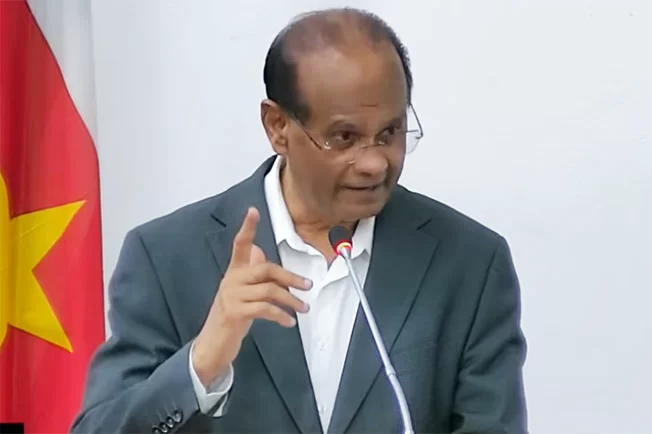
    A heated exchange during Friday’s Senate debate on Jamaica’s landmark National Reconstruction and Resilience Authority (NaRRA) Bill has brought clarity to the status of promised post-hurricane housing for displaced Jamaicans. As proceedings adjourned for the midday break, Opposition Senator Dr. Floyd Morris, the party’s spokesperson for housing and sustainable living and a visually impaired legislator, pressed the government for concrete answers about the 5,000 promised containerized homes for victims of Hurricane Melisa. Using local Jamaican vernacular to emphasize his urgency, Morris stated: “I want to know, weh di house dem deh. Where are the houses for the people that you have promised […] I look down at the wharf and I caw find dem.”

    Within moments, Government Senator Abka Fitz-Henley delivered an official response, disclosing that 924 prefabricated modular and containerized homes have already arrived on the island, with hundreds more en route. Fitz-Henley explained that Prime Minister Dr. Andrew Holness, who holds direct ministerial responsibility for the national housing portfolio, convened a cross-agency coordination meeting with the National Housing Trust, the Office of Disaster Preparedness and Emergency Management, and the Social Housing Programme just one day prior on Thursday. At that meeting, Holness confirmed that the full order of 5,000 units has been finalized: 924 are already cleared at Jamaican ports, a further 700 are currently in transit, and an additional 700 will be shipped in the coming weeks.

    Fitz-Henley reaffirmed the administration’s commitment to delivering on its promise to support Jamaicans displaced by the destructive impact of Hurricane Melisa. He went on to draw a contrast with past housing initiatives, alleging that the previous administration’s Operation Pride programme was marred by systemic corruption that saw hundreds of millions of dollars in public taxpayer funds stolen, resulting in the arrest of a People’s National Party (PNP) activist. He emphasized that under Prime Minister Holness’ leadership, the current government prioritizes full accountability and transparency in all public spending. The modular housing relief programme, he noted, operates under strict, independent regulatory oversight to eliminate mismanagement and graft, addressing any concerns about the integrity of the initiative. By closing out the exchange, Fitz-Henley reminded Morris that his question had received an immediate, official answer just minutes after it was raised during debate.

  • Sweden charges teen for promoting violent acts online in sadistic online network

    Sweden charges teen for promoting violent acts online in sadistic online network

    In a long-awaited transparency move decades in the making, the U.S. Pentagon has opened the vault on more than 160 previously classified documents detailing public and official sightings of Unidentified Anomalous Phenomena (UAP, the Defense Department’s official term for what are commonly known as UFOs), spanning more than 75 years of reported encounters. The publication of the files, announced Friday by Defense Secretary Pete Hegseth, fulfills a transparency directive issued by President Donald Trump earlier this year.

    Hegseth emphasized in an official statement that decades of secrecy around these records had sparked widespread, well-founded public curiosity, and that the administration was committed to giving the American public direct access to the unredacted original files. The records, hosted on the Defense Department’s public website, include entries stretching all the way back to the late 1940s – the era when modern UFO lore first entered mainstream American culture. Among the earliest documents is a 1947 compilation of multiple “flying disc” sightings, followed a year later by a top-secret Air Force intelligence memo detailing reports of “unidentified aircraft” and “flying saucers.” More contemporary entries include a 2023 incident in which three separate teams of federal law enforcement special agents independently submitted reports of glowing orange orbs in the sky that launched smaller red objects.

    The declassification push traces back to February 2024, when President Trump ordered all federal agencies to begin the process of sorting through and releasing all government-held records related to UFOs and potential extraterrestrial activity, citing overwhelming public demand for greater government openness around the topic. Alongside issuing the order, the Republican president drew controversy by accusing his Democratic predecessor, former President Barack Obama, of improperly disclosing classified information during a viral podcast interview. In that conversation with host Brian Tyler Cohen, Obama addressed persistent speculation surrounding Area 51 – the highly classified Nevada military base that has been the center of UFO conspiracy theories for decades – noting, “They’re real, but I haven’t seen them, and they’re not being kept in… Area 51.” When pressed by reporters, Trump argued Obama had broken classification protocols with his comments, while adding that he personally remained undecided on the question of extraterrestrial life: “I don’t know if they are real or not.”

    To date, no formal evidence of intelligent extraterrestrial life has been presented by the U.S. government. Public and official interest in UAP has surged in recent years, however, driven by a steady stream of declassified military footage of unexplained aerial encounters and growing national security concerns that some unidentified objects could be advanced surveillance or weapons technology developed by U.S. geopolitical adversaries. In a major update published just months ago in March 2024, the Pentagon confirmed that it has yet to find any conclusive evidence linking reported UAP sightings to extraterrestrial technology. The vast majority of unexplained encounters, officials found, can be traced back to ordinary human activity, including weather balloons, commercial and military aircraft, reconnaissance drones, orbital satellites, and atmospheric anomalies.

  • Fitz-Henley insists NaRRA Bill contains strong oversight mechanisms

    Fitz-Henley insists NaRRA Bill contains strong oversight mechanisms

    KINGSTON, Jamaica — As debate over the National Reconstruction and Resilience Authority (NaRRA) Bill unfolds in Jamaica’s Senate, government Senator Abka Fitz-Henley has issued a forceful rebuttal to widespread claims that the proposed legislation lacks robust checks and balances to ensure accountability for the new disaster recovery body. The NaRRA Bill, if passed, will formalize the legal mandate of the already-established NaRRA, the government’s lead agency for rebuilding infrastructure and communities devastated by Hurricane Melissa. That powerful storm slammed into Jamaica’s southwestern parishes last October, leaving behind an unprecedented US$12.2 billion in total damage.

    Critics of the bill have repeatedly argued that the draft legislation does not include enough formal mechanisms to oversee NaRRA’s operations and prevent misuse of public reconstruction funds. Addressing these claims directly on the Senate floor, Fitz-Henley rejected the criticism as entirely unfounded, then walked through a comprehensive list of accountability guardrails built into the proposed framework.

    First, NaRRA will fall fully under the jurisdiction of Jamaica’s Auditor General, who retains the authority to launch audits and assessments of the agency’s activities at any time. All of NaRRA’s work, including every cent of public expenditure, will also be subject to ongoing oversight by two key parliamentary committees: the Public Accounts Committee and the Public Appropriations and Administration Committee.

    The bill also requires NaRRA to maintain all financial records in strict alignment with accounting standards set by the Institute of Chartered Accountants of Jamaica. The agency must submit annual audited financial statements to the responsible government minister, who is legally required to table those documents for full review by Parliament. Additionally, NaRRA is mandated to conduct an independent internal audit each year, led by a certified registered public accountant meeting the qualifications outlined in Jamaica’s Public Accountancy Act.

    Other requirements include the submission of a yearly corporate plan, complete with detailed revenue and expenditure projections, to the responsible minister. NaRRA must also maintain a public, searchable register of all its projects and initiatives with full pertinent details, which will be published in the official government gazette and open to inspection by any member of the Jamaican public. To top these existing safeguards, the government has established an entirely independent oversight body, the Jamaica Reconstruction and Resilience Oversight Committee (JAMRROC), tasked specifically with monitoring NaRRA’s activities.

    To put the scope of these safeguards in context, Fitz-Henley drew a comparison to the post-disaster reconstruction framework put in place by the former People’s National Party (PNP) administration after Hurricane Ivan struck Jamaica in 2004. At that time, the PNP government launched the Office of National Reconstruction (ONR) to oversee billions in recovery spending, but the agency lacked most of the formal oversight mechanisms included in the current NaRRA Bill, he noted. The ONR’s chief executive officer also served as its chairman, and the body answered directly to then-Prime Minister Percival Patterson, with only a private sector auditor providing limited review. Fitz-Henley emphasized that the comparison is not intended to undermine the ONR’s work, but rather to put current criticisms of the NaRRA Bill in proper historical context.

    The senator also acknowledged concerns raised by Jamaican citizens that the new agency could create opportunities for corruption, noting that many well-meaning members of the public hold this worry out of genuine concern for public funds. “To them I say, we hear the concern and we are not dismissive,” he stated.

    Fitz-Henley admitted that no legal framework anywhere in the world can completely eliminate the risk of public office abuse. But he argued that the multiple layers of checks and balances built into the NaRRA Bill address this risk head-on. He added that the current administration has strengthened Jamaica’s anti-corruption ecosystem through both increased funding for independent anti-corruption bodies and legislative reforms that have toughened existing anti-corruption laws.

    Closing his remarks, Fitz-Henley took a direct swipe at the opposition PNP, noting that when credible, evidence-backed allegations of public malfeasance have emerged during the current administration’s tenure led by Prime Minister Dr. Andrew Holness, the government has acted swiftly and decisively to address wrongdoing. He also highlighted that Jamaica has achieved its highest ever anti-corruption transparency score from international assessment bodies during the Jamaica Labour Party administration’s time in office.

  • Appeal denied

    Appeal denied

    Two men serving life sentences for a deadly 2011 home invasion in Westmoreland, Jamaica, have seen their final attempt to overturn their convictions rejected after the island’s Court of Appeal refused permission to introduce previously undisclosed police evidence that they claimed would prove their innocence.

    Carvel Hines and Bruce Lamey were found guilty by a seven-member jury at the Westmoreland Circuit Court in February 2017 on charges of murder and wounding with intent. The crimes dated back to January 27, 2011, when the pair allegedly forced entry into the home of 72-year-old Bernice Clarke and her 67-year-old husband Clement in Clark’s Town. Prosecutors argued the attack was carried out that night shortly after 8 p.m., leaving Bernice dead and Clement wounded by gunfire. He survived only by playing dead after the shooting.

    In March 2017, the court handed down dual sentences: 18 years of hard labor for the wounding conviction, and a life term for the murder conviction, with a requirement that each man serve a minimum of 33 years behind bars before becoming eligible for parole. All sentences were ordered to run concurrently. An initial application for leave to appeal was turned down in 2018, and the pair launched a second bid that included a motion to admit the new evidence from the 2011 police station log.

    The appeal panel, made up of three senior judges, heard the application across two hearings in December 2023 and May 2024, and issued a final ruling rejecting the motion. In their ruling, the judges issued an unqualified apology to both the convicted men and other parties for the multi-year delay in delivering their decision.

    The sole eyewitness to the crime was Clement Clarke, who survived the attack. He told the trial that he heard a loud impact on his front door, went to investigate, and found Hines — a man he already knew — standing inside his hallway, armed with a gun. Clarke grabbed a machete to defend himself, but Hines shot him, forcing him to drop the weapon. As he retreated to his bedroom, Hines continued firing and followed him inside, then shot Bernice Clarke. Lamey, who Clarke also knew by sight, joined Hines in the bedroom and also opened fire on the 72-year-old, according to the eyewitness testimony. Clarke fell on top of his wife and pretended to be dead until the two men left the property, then called police for help. He was treated for his wounds at a local hospital, but Bernice Clarke died from her injuries.

    At the original trial, both Hines and Lamey denied any involvement in the attack and claimed they were not present at the scene. Hines argued he was with his partner in St Ann on the night of the murder, while Lamey stated he was a father of three and would never commit such a violent crime.

    The fresh evidence the pair sought to introduce was a single line entry from the Bethel Town Police Station diary, written the day after the murder by a detective corporal, that noted the killing was believed to be a reprisal attack. Attorneys for the men argued that the prosecution’s failure to disclose this diary entry before and during the trial violated its legal duty to share potentially exculpatory evidence. They contended the entry undermined the credibility of Clement Clarke’s identification of the two men as the attackers, and would have opened new avenues of investigation for the defense that could have changed the trial’s outcome.

    Prosecutors pushed back against these claims, noting that the defense never requested access to the police station diary before or during the 2017 trial, and that the document was available for the defense to obtain if they had sought it out. The Crown also argued that the line about a reprisal motive was purely speculative, not factual, and would not have impacted the jury’s assessment of Clarke’s identification of the defendants.

    In their ruling dismissing the application, the appeal judges agreed with the prosecution’s assessment. They noted that the diary entry was not a record of direct sensory observation by the officer, but merely a note of an unsubstantiated belief about the motive, meaning it could not qualify as credible factual evidence. Even if it had been introduced at trial, the panel ruled, the entry would not have changed the jury’s guilty verdict. The court added that the core information from the entry was already brought to the jury’s attention as part of the defense’s original case, so it could not qualify as new material that meets the legal standard for admission on appeal. For these reasons, the application to admit the fresh evidence was refused.

  • $3m for 30 teachers in 14 schools

    $3m for 30 teachers in 14 schools

    In a celebratory Teachers’ Day gathering held Wednesday at the Montego Bay Convention Centre, Edmund Bartlett — Jamaica’s Minister of Tourism and Member of Parliament for East Central St James — unveiled a new JMD $3 million grant programme designed to uplift 30 educators across the 14 public schools falling within his constituency, kicking off a year of activities marking three decades of his sustained investment in local education.

    Under the terms of the new initiative, each selected educator will receive an equal grant of JMD $100,000 to pursue specialized tertiary training in any academic subject of their choice at any accredited higher education institution across Jamaica. Bartlett emphasized that the grants form a core component of his longstanding effort to acknowledge the underrecognized contributions of teaching professionals and remove barriers to their professional growth.

    “For the past 30 years, we have continuously awarded scholarships and provided institutional support to every one of the 14 schools in this constituency,” Bartlett shared with attendees, noting that the programme has already helped hundreds of educators advance their skills and career trajectories. When pressed for details about two other annual flagship education programmes in the constituency — the Primary Exit Profile (PEP) awards held each July and the Tertiary Scholarship Programme typically awarded in August — Bartlett declined to share specifics, saying that announcements would be made closer to each event’s schedule. He did confirm that support for these programmes would continue, and expressed pride in the decades of impact the constituency’s education initiatives have already delivered.

    Bartlett used the occasion to highlight the extraordinary adaptability and commitment Jamaican educators demonstrated throughout the COVID-19 pandemic, praising them as “the technology that transforms children into nations.” He went on to challenge educators to bring that same resilience and innovation to the national recovery effort following Hurricane Melissa, noting that the work of rebuilding and repositioning the country for long-term growth will depend heavily on a skilled, adaptable education workforce.

    “We saw what you accomplished during COVID: when there was no electricity for internet connectivity, you walked kilometers to students’ homes to deliver lessons. You risked your own safety to keep learning going,” Bartlett said. “You also quickly upskilled to master cutting-edge tools — artificial intelligence, virtual and augmented reality, and new digital knowledge-sharing platforms — that were completely new to many of you. That same ingenuity and flexibility is exactly what we need right now as we recover from Melissa. We aren’t just building back what was lost; we’re building forward, building better, and building a more resilient nation — and all of Jamaica’s young people have to be part of that process of reimagining our future.”

    Beyond recovery work, Bartlett stressed that educators hold the critical responsibility of reshaping public perceptions of Jamaican culture that currently threaten the country’s core tourism industry. He argued that shifting narratives of violence, crassness and disrespect that deter some international visitors can only be changed through intentional education that rewrites behavioral norms and builds a culture of mutual respect.

    “The future of Jamaica’s stability, the future of law and order in this country, rests once again with our education system and our teachers,” he added.

    Adding his support to the call, newly appointed Tourism Enhancement Fund (TEF) Chairman Ryan Parkes echoed Bartlett’s vision, urging educators to help build a new, people-centered niche within Jamaica’s education system that aligns with the nation’s evolving tourism strategy. Parkes noted that Jamaica must move beyond its longstanding “sun, sand and sea” tourism brand to build a new global competitive advantage rooted in the quality of its human capital.

    “Our tourism minister is currently leading the charge to reimagine our entire tourism product, an effort that has been branded Tourism 3.0,” Parkes explained. “This is an incredibly timely shift. There has never been a better moment than right now for educators to step into this role and help drive the transformation of our tourism economy.”

  • WATCH: Promised housing for Petersfield High shelterees ‘not ready’, says Dwayne Vaz

    WATCH: Promised housing for Petersfield High shelterees ‘not ready’, says Dwayne Vaz

    A Jamaican opposition politician has publicly condemned the national government for failing to deliver on a critical pledge to relocate displaced hurricane survivors from a Westmoreland Parish school shelter by the agreed deadline, leaving dozens of residents stuck in unsanitary, dangerous conditions.

    Dwayne Vaz, the People’s National Party Member of Parliament for Westmoreland Central, says the administration’s missed May 8 deadline has forced people who were staying at the Petersfield High School hurricane shelter to move into adjacent, rodent-infested housing originally built for school teachers.

    The government’s original promise included the construction of 50 prefabricated container homes at a new site in Shrewsbury, located just a short distance from the current overcrowded school shelter. But according to Vaz, work on the development has barely progressed: only five concrete foundations have been poured, and no basic infrastructure including electricity, running water, or a working sewage system has been installed at the property.

    Vaz placed direct blame for the delay squarely on the head of the Minister of Local Government, arguing that the failure to keep this promise to vulnerable survivors exposes deep-seated incompetence within the minister’s portfolio. He has now called on Jamaica’s Prime Minister to step in and address what he frames as a clear case of mismanagement of the national hurricane recovery program.

    “We are calling out the prime minister. Please assist the residents in Shrewsbury and get them to where was promised to them,” Vaz told reporters.

    The Ministry of Local Government and Community Development first made the public commitment to relocation last month, as part of the country’s ongoing post-disaster recovery work. The pledge came in the wake of unconfirmed reports that shelter residents were engaging in inappropriate sexual conduct in the presence of students attending the school, sparking public outcry over the continued use of campus facilities as long-term emergency housing.

    The survivors currently housed at the site were displaced by Hurricane Melissa, which impacted Jamaica in recent years, leaving hundreds of residents across the country without permanent housing.

  • Senator Tomlinson cites ‘trust deficit’ as he flags lack of accountability in NaRRA Bill

    Senator Tomlinson cites ‘trust deficit’ as he flags lack of accountability in NaRRA Bill

    KINGSTON, Jamaica — In a sharply critical address during Friday’s Senate debate on landmark post-disaster legislation, Opposition Senator Cleveland Tomlinson has drawn national attention to a stark “trust deficit” at the heart of the proposed National Reconstruction and Resilience Authority (NaRRA) Bill, warning that the legislation’s weak accountability frameworks could open the door for unchecked misuse of billions in public reconstruction funds. NaRRA was framed by the ruling administration as a dedicated central body to coordinate recovery and rebuilding efforts after Hurricane Melissa, a catastrophic storm that inflicted an estimated $12.2 billion USD in widespread damage across the island nation. But Tomlinson argues that the legislation’s structural flaws, paired with the government’s own track record on constitutional compliance, make granting the proposed body such broad, unconstrained power unjustifiable. In his remarks to the upper chamber, Tomlinson framed the debate as a fundamental question of good governance, rather than a partisan attack. “When a Government asks its citizens to accept a statutory body with vast powers, a single unaccountable executive, no governing board, no audit committee, no mandatory parliamentary oversight of its directions and decisions, when it asks for that level of trust, the threshold question is: has this Government demonstrated, through its conduct in office, the kind of probity and respect for institutional boundaries and constitutional norms that would justify giving any administration this kind of unrestrained executive authority over billions of public dollars?” he said. Tomlinson went on to note that the government has repeatedly received adverse constitutional rulings from Jamaica’s independent judiciary, a matter of public record that he says directly undermines its claim to unchecked executive authority. “This is a Government that has faced repeated adverse findings in our courts on constitutional grounds. This is a Government whose record of respect for constitutional constraints has been tested and found wanting, not by the Opposition, but by the judiciary,” he stated. “When the courts of this land have had occasion to examine whether this administration has remained within its constitutional boundaries, the rulings have not been flattering. That is a matter of public record, and it is directly relevant to whether this Senate should be comfortable passing legislation that concentrates this much un-reviewed executive power in this administration’s hands.” Beyond constitutional concerns, Tomlinson pointed to longstanding systemic issues in Jamaica’s public financial management that the proposed legislation fails to address, and in fact exacerbates. Under the current draft of the bill, Tomlinson explained, NaRRA would operate outside the standard national budget appropriation process, with no explicit language confirming it falls under regular budget oversight. The body’s chief executive officer would be permitted to sign procurement contracts of any value without a required co-signatory, while written operational directions from the responsible minister would not need to be gazetted, reported to parliament, or released publicly to the people whose funds are being spent. “In a country where procurement irregularities have been a persistent feature of public life, where major infrastructure projects have been plagued by cost overruns and questionable contractor selections, the Government is asking us to create a procurement and project delivery vehicle with less oversight than the bodies that already exist. That is extraordinary,” Tomlinson said. The senator emphasized that his critique is not an accusation that the current government intends to embezzle public funds, but rather a defense of the core principles of institutional accountability that apply regardless of which party holds power. “This is not an argument that the Government is planning to steal. It is an argument that good governance does not depend on the personal integrity of those who happen to hold power at any given moment. Good governance depends on systems, on structures, on checks and balances that work regardless of who is in office,” he said. Closing his remarks, Tomlinson summarized the core failure of the proposed bill, noting that the creation of a dedicated reconstruction authority is not the problem — the lack of guardrails to ensure it serves the public good is. “The tragedy of this Bill is not that it creates NaRRA; it is that it creates NaRRA without the institutional architecture that would make it trustworthy under any Government,” he added. Reporting by Lynford Simpson.

  • US says two dead, one survivor in latest boat strike

    US says two dead, one survivor in latest boat strike

    In a latest development of the United States’ escalating anti-narcotics operation in the eastern Pacific Ocean, the US military confirmed Friday that it has targeted and struck another vessel accused of involvement in drug trafficking. The attack left two people dead and one person still alive, with an ongoing search and rescue mission organized by the US Coast Guard.

  • Council of Churches calls for greater accountability, consultation and safeguards in NaRRA Bill

    Council of Churches calls for greater accountability, consultation and safeguards in NaRRA Bill

    KINGSTON, Jamaica — As a key faith-based organization holding broad national influence, the Jamaica Council of Churches (JCC) has joined a growing chorus of voices demanding stricter transparency and accountability measures embedded in the National Reconstruction and Resilience Authority (NaRRA) Bill, a piece of critical emergency legislation currently undergoing debate in the country’s Senate.

    The proposed legislation already cleared the House of Representatives last week Wednesday, passing through a tight early-morning vote that split sharply along partisan lines, with every opposition legislator voting against its adoption. Once given final approval by the Senate, the NaRRA Act will formalize the creation of a dedicated central body tasked with leading large-scale recovery and rebuilding efforts across the island in the wake of Hurricane Melissa, which left widespread damage in its wake.

    In an official public statement released this week, the JCC confirmed it has been closely following the heated national conversation that has emerged around the proposed bill.

    “As a collective fellowship of Christian communities dedicated to advancing the moral, spiritual, and social welfare of all Jamaicans, we recognize how critical it is to strengthen the nation’s ability to respond to natural disasters, growing climate vulnerability, widespread infrastructure damage, and mass community displacement,” the organization noted in its statement. “Recent destructive events, most notably Hurricane Melissa and a string of other severe weather events over recent years, have made it clear that Jamaica needs a coordinated, robust national framework to deliver reconstruction that lasts.”

    Despite acknowledging the urgent need for improved disaster response systems, the JCC argued that the urgency of national crisis should never erode the core democratic principles of accountability, transparency, broad public consultation, and fair justice that undergird the country’s governance.

    “Our faith tradition teaches us that rebuilding after a crisis is far more than just a technical engineering or administrative project — it is fundamentally a moral undertaking,” the council explained. “Looking back to the ancient rebuilding narratives recorded in the Book of Nehemiah and the Book of Ezra, reconstruction was paired with intentional public accountability, responsible stewardship of public resources, open consultation with the broader community, and rigorous oversight for those granted governing authority.”

    Building on this framing, the JCC is calling on the Jamaican government and sitting senators to revise the bill to embed strong, independent oversight mechanisms, clear transparent procurement and public reporting processes, explicit safeguards against conflicts of interest, structured opportunities for meaningful input from communities directly impacted by disaster, enforceable environmental protections, and equitable safeguards for marginalized and vulnerable citizen groups.

    The organization stressed that its intervention is not an attempt to block reconstruction efforts, improve national resilience, or streamline administrative efficiency.

    “Instead, we hold that national rebuilding must earn and maintain the public’s trust, and reflect the core ethical values of fairness, responsible resource stewardship, and accountability to all Jamaicans,” the JCC said.

    “At this critical moment for our nation, we encourage leaders to continue open national dialogue before giving the bill final approval,” the organization added, pointing out that legislation passed during periods of acute urgency often leaves a lasting impact on Jamaican national life for generations to come.

    “That is why it is essential that this legislation secures broad public confidence, and reflects the collective wisdom of the Jamaican people,” the council concluded.

  • Rubio says had ‘very good meeting’ with Pope Leo

    Rubio says had ‘very good meeting’ with Pope Leo

    VATICAN CITY, ROME — Amid already heightened tensions sparked by former U.S. President Donald Trump’s public rebuke of Pope Leo XIV’s anti-war stance, U.S. Secretary of State Marco Rubio announced Friday that his closed-door discussions with the pontiff yielded a constructive, productive exchange. Speaking to assembled reporters on the grounds of the Vatican immediately after the hour-long meeting, Rubio characterized the encounter as a “very good meeting” that laid clear ground for mutual understanding between the U.S. government and the Holy See.