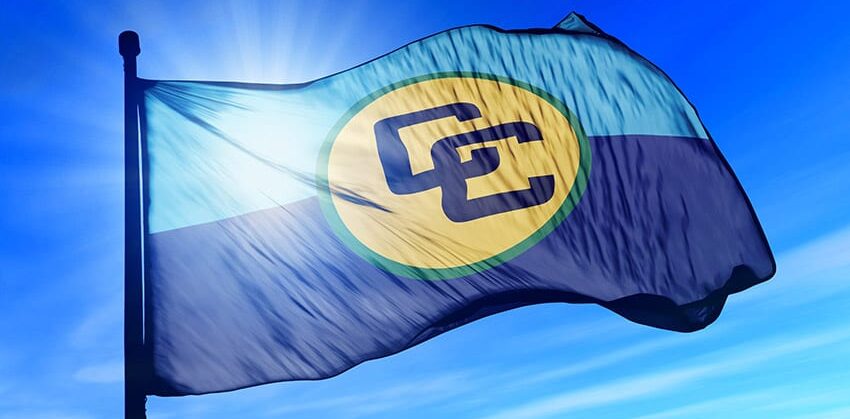
Five decades after the founding of the Caribbean Community (CARICOM), the call for a unified regional public holiday to commemorate the integration project is once again on the table for Caribbean policymakers to consider in July 2026.
The story of CARICOM begins on July 4, 1973, when four transformative regional leaders — Errol Barrow of Barbados, Forbes Burnham of Guyana, Michael Manley of Jamaica, and Eric Williams of Trinidad and Tobago — gathered in Chaguaramas to sign the foundational Treaty of Chaguaramas. They launched what remains the most ambitious cross-border integration initiative ever undertaken by small developing states globally. Vere Bird of Antigua and Barbuda, a key early signatory to the precursor Dickenson Bay Agreement, also stands as a towering figure in the history of Caribbean regional cooperation. That 1973 date is far more than a footnote in history books: it marks the official birth of CARICOM, and the moment Caribbean nations first formalized their collective identity as “one out of many.”
Public holidays around the world are never just exercises in historical remembrance. They serve critical contemporary and future-focused functions, giving communities a structured opportunity to reaffirm shared values, preserve collective memory, and nurture intergenerational bonds of belonging and continuity. National observances from Independence Day to Emancipation Day fulfill this role by reminding citizens not just of what happened on a historic date, but why it mattered and what it means for collective identity today. Yet despite decades of integration progress, CARICOM remains in an unusual position: it has built most of the infrastructure of a unified economic space, with shared institutions, a common legal heritage, coordinated educational systems, and an increasingly interconnected single market, but it lacks a single, collective day for all Caribbean citizens to pause and reflect on the regional project that made these achievements possible. Establishing an official CARICOM Day would fill this long-standing gap.
Sustainable communities are shaped not just by geographic borders and bureaucratic institutions, but by shared symbols, traditions and collective rituals. These moments give ordinary citizens the chance to see themselves as part of a shared, ongoing enterprise. A yearly CARICOM Day would create exactly that kind of unifying moment. Instead of drawing a boundary on a map, it would carve out a shared space in time: one day each year for all Caribbean people to reflect on the regional integration journey and the shared aspirations that still drive it forward. Coincidentally, this date already carries global significance: on July 4 this year, the United States celebrates the 250th anniversary of its Declaration of Independence, a milestone that sees Americans gather yearly to mark their national origin. That same date offers the Caribbean a perfect, already recognizable opportunity to mark the birth and ongoing evolution of its own regional community.
Regional integration has always been a multi-generational project. The founding leaders who gathered in Chaguaramas in 1973 understood that building a unified Caribbean would take decades, not years, so the responsibility to advance their vision has passed sequentially from one generation of leaders to the next. The foundational work of the region’s founding fathers was carried forward by a second generation of leaders including P.J. Patterson, Basdeo Panday, Owen Arthur, and Bharrat Jagdeo, who deepened economic integration and strengthened core regional institutions. In more recent years, contemporary leaders such as Kenny Anthony, Patrick Manning, Ralph Gonsalves, and Mia Mottley have continued to champion cross-border cooperation, adapting the integration movement to meet 21st-century challenges and realities. CARICOM, in short, is not the achievement of any single generation — it is a shared inheritance passed down across decades of progress.
A yearly regional holiday would give Caribbean people a regular opportunity to reflect on how far the integration movement has come, and how much work remains to reach the project’s full vision. CARICOM has persisted and matured through changing national administrations, global economic turbulence, devastating natural disasters, and shifting global power dynamics. It has endured because its core idea remains as compelling today as it was in 1973: that Caribbean people, despite their diverse ancestral and national backgrounds, can deliver greater welfare, security, and shared prosperity by working together than they can ever achieve alone.
Twenty years ago, the entry into force of the Revised Treaty of Chaguaramas and the launch of the CARICOM Single Market and Economy (CSME) marked a major milestone in the realization of that founding vision. Today, Caribbean nationals enjoy opportunities that would have been unthinkable to the founding generation. Citizens can travel freely across member state borders, launch businesses, provide professional services, pursue employment opportunities, and invest outside their home countries. The push for full free movement of all CARICOM nationals continues to advance, and every step forward reinforces a simple, powerful truth: a Jamaican, Dominican, Vincentian, Kittitian, Barbadian, Trinbagonian, Guyanese, or Belizean is not just a citizen of their individual nation — they are also a citizen of the broader Caribbean Community. The CARICOM passport stands as a tangible, widely recognized symbol of this shared identity.
CARICOM’s shared regional institutions have also become one of the Caribbean’s greatest collective strengths. The University of the West Indies (UWI) has educated generations of Caribbean leaders, scholars, professionals, and public servants. The Caribbean Examinations Council (CXC) administers qualifications recognized across the region and around the world. The Caribbean Development Bank (CDB) has funded critical development projects across all member states. The Caribbean Public Health Agency (CARPHA) has strengthened the region’s collective capacity to respond to public health emergencies, while the Caribbean Disaster Emergency Management Agency (CDEMA) coordinates cross-border disaster relief when hurricanes and other crises strike. West Indies Cricket and the CARIFTA Games have long demonstrated sport’s unique power to unify the region, serving as enduring symbols of shared Caribbean identity and pride. The Caribbean Court of Justice (CCJ), the apex court for participating member states and the judicial guardian of the rights enshrined in the integration treaty, carries the unique responsibility of adjudicating regional matters, and has made significant progress in ruling on cases that shape the daily lives of Caribbean people. True to its motto “One People. One Region. One Court,” the CCJ belongs to all Caribbean people, and the public is encouraged to engage with the court’s work, whether via an in-person visit to its Port-of-Spain headquarters or through its official website and social media channels, to understand how its rulings impact communities from Kingston to Georgetown.
These integration gains are too valuable to be taken for granted, and a shared holiday would help cement public understanding of their value. Establishing CARICOM Day as an official public holiday on July 4 (with the holiday moved to the first Monday of July when July 4 falls on a weekend — this year that falls on July 6) would mean far more than just an extra day off. It would act as a catalyst for action across all sectors of Caribbean society: for schools to integrate the history of regional integration into their curricula; for national governments to highlight the impact and achievements of shared regional institutions; for businesses and civil society groups to celebrate Caribbean enterprise and collective innovation; and for ordinary citizens to reflect on the shared inheritance that binds the region’s diverse communities together.
Already, two CARICOM member states — Antigua and Barbuda, and Guyana — have formally recognized CARICOM Day as a public holiday, proving that the idea is practical, feasible, and widely popular. It is time for the rest of the region to follow their lead. Policymakers across the Caribbean should not let another five years pass without taking serious action to formalize this shared celebration of Caribbean history and future. Every July 4, all Caribbean people should pause to celebrate the movement’s hard-won achievements, reflect on the shared journey that brought the region to this point, and renew their collective commitment to the ongoing CARICOM project. At the end of the day, regional cooperation is the Caribbean people’s most valuable shared asset — imperfections and all.