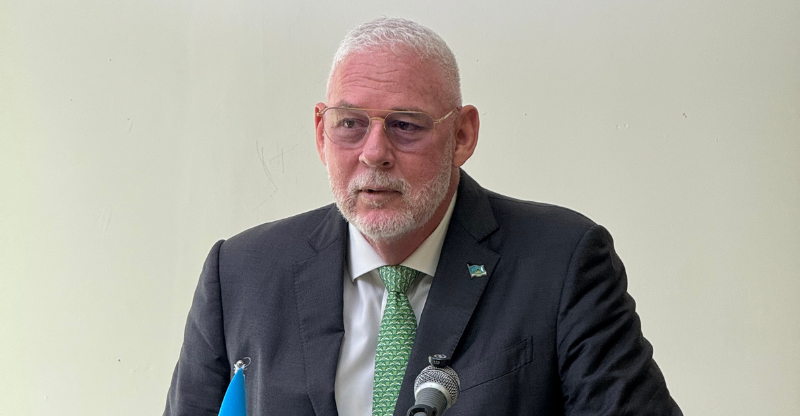
Six months ago, following a disappointing defeat in the most recent general election, Allen Chastanet, leader of Saint Lucia’s United Workers Party (UWP), announced the party would launch a comprehensive internal performance review, with the entire process expected to wrap up within half a year. As that deadline draws near, the review is still ongoing, and the party has not yet announced a firm date for its leadership convention, leaving supporters waiting for clarity on the opposition party’s future direction. Critics have suggested the extended timeline is a sign of internal stagnation, but Chastanet pushed back against that narrative during a press briefing held Tuesday, insisting that meaningful work is advancing behind closed doors. The core sticking point that has slowed progress, he explained, is a fundamental strategic debate dividing party stakeholders: should the UWP first resolve the structural and operational weaknesses uncovered by the internal review, or hold its long-awaited convention first and roll out reforms after new leadership is confirmed? During the briefing, Chastanet openly acknowledged that the party’s internal structures have clear flaws that demand attention. “There are clearly things within the party that we need to look at,” he told reporters from the St. Lucia Times, adding that meaningful organizational change requires widespread consensus from party members to succeed. “You need to get buy-in to what that change is going to be. And that’s what the party’s process is right now. Change within any organisation can be difficult.” When Chastanet first announced the review back in March, he explicitly stated that the convention would ultimately formalize the party’s leadership going forward, a comment that fueled speculation about potential challenges to his position. Today, the UWP leader does not shy away from the open questions about his leadership, calling the scrutiny entirely reasonable. “There’s significant questions about my leadership. And that’s fair. That’s a fair question,” he said. He added that lingering uncertainty around the top party position has created a drag on reform efforts, with many members hesitant to fully commit to organizational overhauls while the leadership question remains unresolved. In the coming weeks, a series of high-stakes closed-door meetings will be held to settle the debate over the convention and review timeline. “There will be a couple of critical meetings coming up to make a determination. Do we go and have a convention earlier and have a staged process to the changes we think that the party thinks needs to be taking place? Or do we make the changes and go to the convention afterwards?” Chastanet explained, noting that a final decision on the path forward is expected within the next few weeks. Chastanet rejected claims the party has been inactive during this period of internal deliberation, noting that party leadership has remained actively engaged in planning and stakeholder outreach. “I think it’s unfair to say that the party’s doing nothing. The party is extremely active,” he said. That said, he did concede that he wants to see more engagement and organizing work at the local grassroots level across the island. Despite the current internal challenges and the post-defeat slump in public confidence, Chastanet stressed that the UWP remains a robust, competitive political force. He did, however, acknowledge that the party has significant work ahead to rebuild trust with voters after its general election loss. “I will accept that we have to do more to build up people’s confidence in the party,” he said. “And that is why this part of the process is so important that you get it right.”
分类: politics
-
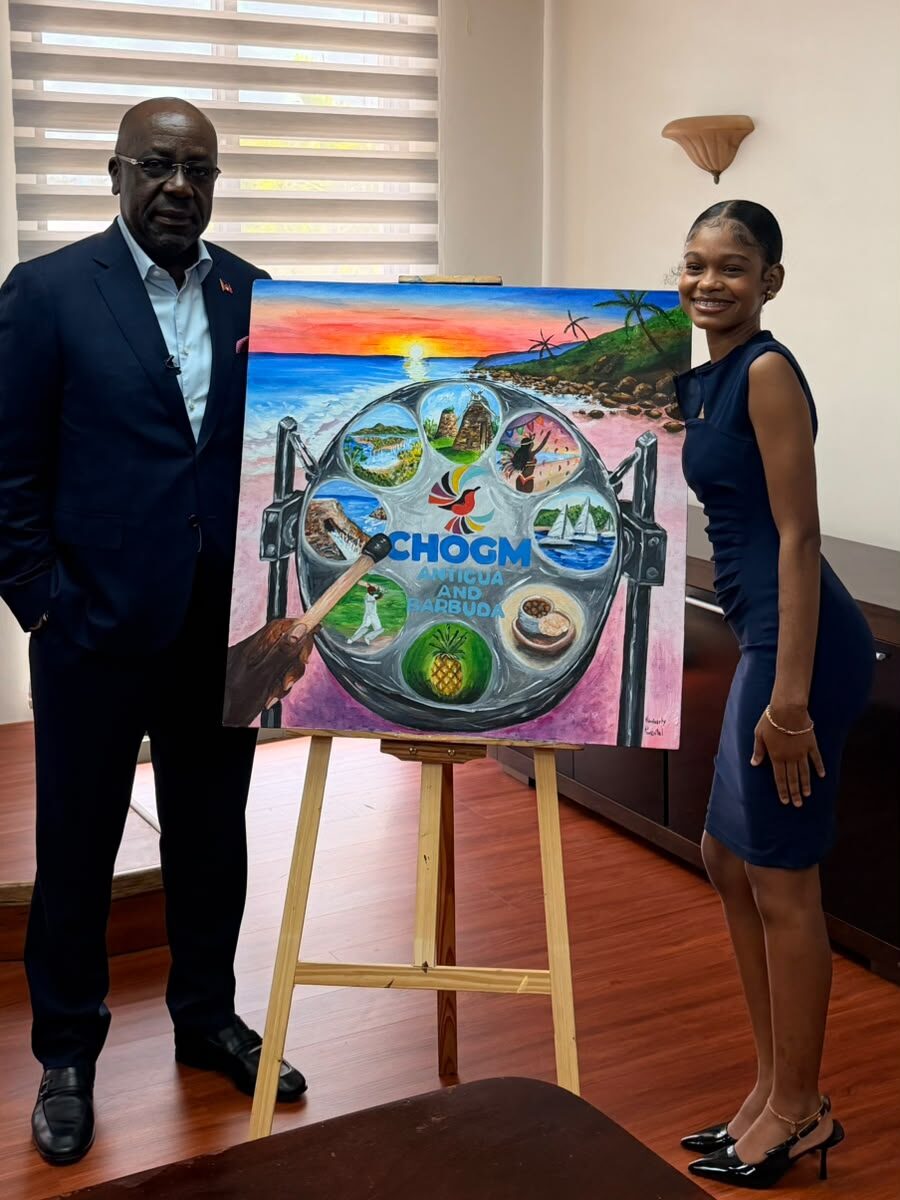
Kimberly Pimentel Paints Antigua Offering a Glimpse of CHOGM 2026
As Antigua and Barbuda gears up to host the 2026 Commonwealth Heads of Government Meeting (CHOGM), one rising young creative is stepping into the national spotlight to share her love for her country with the global community. Kimberly Pimentel, a 2-year self-taught painter from the twin-island nation, has created an original, site-specific artwork that weaves together the natural beauty, cultural heritage, and distinct identity of Antigua and Barbuda — all to offer a preview of what international delegates and visitors can expect when they arrive for the November 2026 summit.
Pimentel, who only launched her official public art page this past June to grow her brand and refine her artistic perspective, draws consistent inspiration from personal memory, local culture, the Caribbean natural landscape, and the everyday beauty of her home. Just weeks ago, she formally presented her CHOGM-inspired piece to Hon. E. P Chet Greene, Antigua and Barbuda’s Minister of Foreign Affairs, Trade and Immigration, who also serves as chair of the 2026 CHOGM National Taskforce.
Greene, who was deeply impressed by both the technical skill of the work and its thematic message, extended an invitation for Pimentel to present the painting to the full Antiguan and Barbudan Cabinet on 26 August 2026. For the young emerging artist, this opportunity marks a full-circle moment for her burgeoning creative career.
“As a self-taught artist, my journey has always been about exploring my creativity and finding ways to express the places and experiences that mean the most to me,” Pimentel shared in comments after the initial presentation. “Creating a piece tied to CHOGM and my home country is such a special opportunity. I wanted the painting to capture the core of what makes Antigua and Barbuda unique, while giving viewers a sense of what they can look forward to when they visit. I’m just grateful to be able to contribute my art to this important national moment.”
Greene emphasized that Pimentel’s work is more than just a visually striking piece of art: it is a reflection of the vibrant young talent that Antigua and Barbuda nurtures, and a powerful example of how local creatives can contribute to national events of global significance. “Kimberly’s creation is a meaningful reflection of Antigua and Barbuda through the eyes of one of our brightest young creatives,” Greene said. “Her work showcases the incredible talent and imagination of our young people, while offering a one-of-a-kind window into our country for the entire Commonwealth. I was so struck by the intentional thought behind every element of this piece, and I knew it was important to give her the chance to share her vision directly with Cabinet.”
Briana Anthony, Public Relations Officer and Local Media and Outreach Lead for 2026 CHOGM, echoed Greene’s praise, noting that Pimentel’s initiative perfectly aligns with the organizing committee’s goal of engaging broad local participation, particularly from youth, in the lead-up to the summit. “Kimberly’s work is an excellent example of how our young people can contribute to this national effort through their unique talents and creativity,” Anthony explained. “Through her art, she has crafted a distinct narrative of Antigua and Barbuda, giving the Commonwealth an early look at the beauty, culture and character that every visitor will get to experience in November. CHOGM is a national milestone, and we want all Antiguans and Barbudans, especially our young people, to see themselves as part of this moment.”
Pimentel’s upcoming Cabinet presentation will give government leaders a chance to view the work in person and hear directly from the artist about the creative process and inspiration that shaped the piece. When the summit kicks off from 1 to 4 November 2026, Antigua and Barbuda will welcome heads of government and official delegates from all 56 member states of the Commonwealth for what is set to be a landmark event for the small island nation.
-
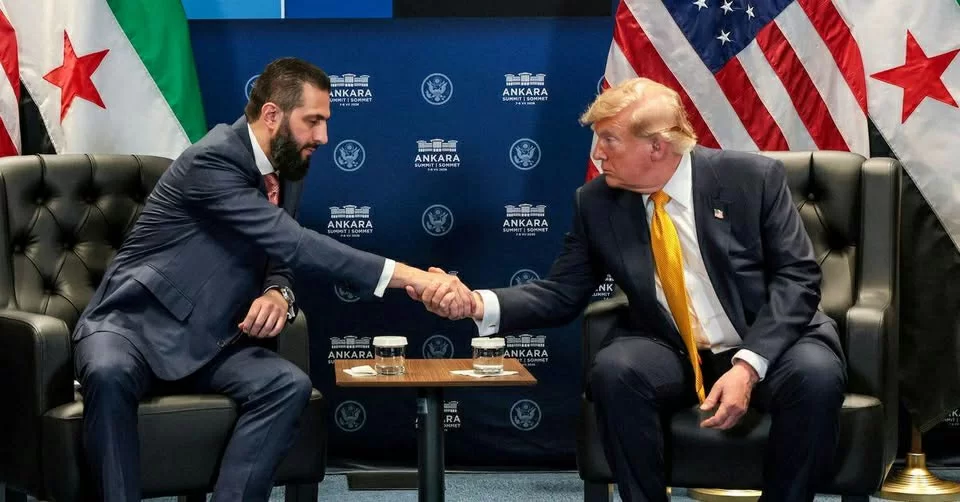
VS verwijdert Syrië van lijst ‘staatssponsor van terrorisme’
After 47 years of continuous designation, the United States has formally removed Syria from its list of State Sponsors of Terrorism, a landmark policy shift that went into effect on Monday following a mandatory 45-day congressional review period. The development has been hailed by Syrian President Ahmed al-Sharaa as a historic turning point that will accelerate the war-torn nation’s recovery after 14 years of brutal civil conflict.
The process to lift the decades-old designation was launched in early July, when U.S. President Donald Trump formally notified Congress of his administration’s intent to rescind the labeling. Syria first appeared on the U.S. blacklist back in 1979, when the government of then-president Hafez al-Assad was accused of supporting armed militant groups. The designation remained in place throughout the rule of Hafez’s son, Bashar al-Assad, who was ousted from power in December 2024 by a rebel coalition led by the current president al-Sharaa.
For nearly half a century, the terrorism sponsor designation imposed crippling restrictions on Syria. These included a full ban on U.S. foreign assistance, prohibitions on weapons exports, restrictions on sales of dual-use civilian-military technologies, and sweeping curbs on cross-border financial transactions. Even after broader U.S. and international sanctions on Syria were relaxed in recent months, the blacklisting effectively blocked most global banks and private investors from engaging with the Syrian market, creating a major barrier to post-conflict recovery.
The delisting marks a significant breakthrough in ending Syria’s long international isolation. It clears the way for cross-border commercial investment, U.S. financial assistance, and even regulated defense trade with Damascus, opening new pathways for Syria to rebuild its shattered economy and reintegrate into the global economic system.
Beyond recognizing political changes under al-Sharaa’s new administration, U.S. officials frame the move as a calculated strategic step to shift Syria away from the geopolitical influence of Iran and Russia, two powers that embedded deep influence in Syria over decades of alliance with the former Assad regime. The policy shift is also designed to encourage Syria’s full participation in global counterterrorism efforts. As part of the broader changes, the U.S. has also lifted the terrorist designation for Hayat Tahrir al-Sham (HTS), the group previously known as al-Nusrah Front that was long labeled al-Qaeda’s Syrian affiliate.
Al-Sharaa celebrated the U.S. decision as the opening of a “new chapter” for his country, saying Syria can now turn its full focus to national development, post-war reconstruction, and long-term stability. Syria’s finance minister and central bank governor echoed that assessment, calling the delisting a historic step that will return Syria to the global economic framework and unlock access to much-needed foreign investment and modern technology.
U.S. Treasury Secretary Scott Bessent emphasized that the decision aligns with the Trump administration’s pledge to deliver targeted sanctions relief to foster political and economic stability in conflict-affected regions. Analysts broadly expect the delisting to drive an increase in foreign direct investment into Syria, a critical requirement for rebuilding shattered infrastructure and reviving an economy gutted by 14 years of war. Beyond Syria’s borders, the shift is expected to strengthen regional stability by addressing the root causes of refugee flows and cross-border security challenges that have plagued neighboring countries for years.
Even with the landmark policy change, significant uncertainties remain. Russia and Iran retain deep economic and security ties within Syria, meaning the trajectory of the country’s new political independence and planned reforms will continue to be closely watched by the international community. Globally, the delisting is widely seen as a clear signal of shifting regional power dynamics, and a potential opening for full diplomatic and economic normalization between Syria and the wider international community.
-
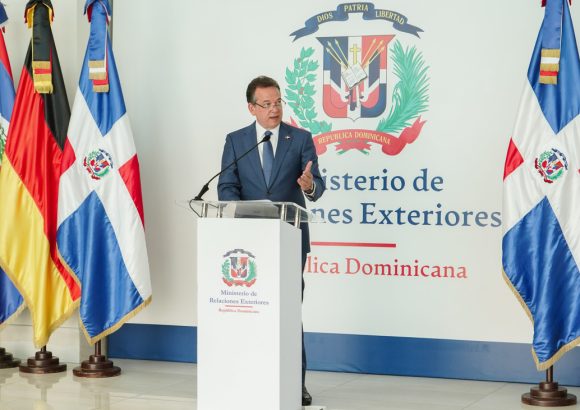
New Foreign Minister Ito Bisonó sets priorities for Dominican foreign policy
In a ceremonial gathering held at the Ministry of Foreign Affairs (MIREX) Convention Center in Santo Domingo, newly appointed Dominican Republic Foreign Minister Víctor “Ito” Bisonó accepted formal congratulations from the full body of accredited diplomatic, consular and international organization representatives based in the country.
The introductory meeting marked Bisonó’s first public appearance as the nation’s top diplomatic official, where he laid out his core governing priorities and committed to building close, collaborative working relationships with all foreign envoys and institutional representatives operating within Dominican territory.
Bisonó made clear that his tenure will maintain continuity with the foreign policy trajectory set by sitting President Luis Abinader. The overarching goals of this direction remain centered on advancing and protecting the Dominican Republic’s core national interests, projecting the country’s core cultural and societal values to the global community, and expanding access to new development opportunities that directly benefit all Dominican citizens.
A key internal priority highlighted by the new minister is continued institutional strengthening and professionalization of the Dominican foreign service. He stressed the need to transform MIREX into a more modern, publicly accessible and outcome-driven institution that can effectively adapt to and address the growing complexity of 21st-century international affairs.
Bisonó structured his foreign policy vision around three clear, foundational pillars. The first focuses on protecting the rights and advancing the social integration of Dominican citizens living and working outside the country’s borders. The second pillar centers on expanding national exports, attracting increased foreign direct investment, and unlocking new economic opportunities that drive domestic growth. The third and final pillar is dedicated to upholding global democratic standards, protecting universal human rights, and defending the foundational principles of peaceful international coexistence.
Beyond the core pillars, Bisonó emphasized that deepening bilateral ties will be a key operational priority. He called for strengthening existing partnerships with partner nations while actively pursuing new areas of mutually beneficial cooperation with governments across the globe.
On the multilateral stage, the new foreign minister reaffirmed the Dominican Republic’s longstanding commitment to inclusive multilateral cooperation, binding international law, and the peaceful settlement of cross-border disputes. He also underscored the country’s support for expanded collective international action to tackle transboundary challenges that no single nation can address effectively on its own.
-
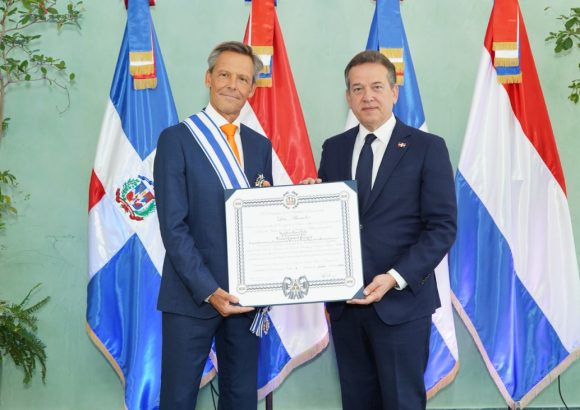
Dutch Ambassador Fredrik Lammert Keurhorst receives Dominican Republic’s Order of Merit
In a formal ceremony held at the Dominican Ministry of Foreign Affairs in Santo Domingo, the Caribbean nation has honored departing Dutch Ambassador Fredrik Lammert Keurhorst with one of its highest state distinctions, the Order of Merit of Duarte, Sánchez and Mella, Grand Cross Silver Plaque. The award recognizes Keurhorst’s four years of dedicated diplomatic work and his far-reaching contributions to advancing cooperation between the Dominican Republic and the Kingdom of the Netherlands.
The honor was formally authorized by Dominican President Luis Abinader via Decree No. 532-26, a presidential order that explicitly acknowledges the ambassador’s key achievements over his tenure and his instrumental role in deepening bilateral collaboration. Dominican Foreign Minister Víctor “Ito” Bisonó, who presented the decoration on behalf of the president, used the occasion to underscore the enduring, friendly relations that have linked the two nations for decades, while also highlighting the remarkable expansion of their economic partnership in recent years.
Official data shared by Minister Bisonó shows that bilateral trade between the two countries is on track to hit $841 million USD in 2025, with Dominican exports to the Netherlands accounting for $479 million of that total. This robust trade volume solidifies the Netherlands’ position as the Dominican Republic’s 10th largest trading partner worldwide, a milestone that reflects the growing integration of the two economies.
After accepting the award, Keurhorst extended his sincere gratitude to President Abinader and the Dominican people for the recognition. He reflected on the wide range of joint initiatives launched and advanced during his time in post, spanning sectors as diverse as sustainable urban mobility, climate action and environmental protection, human rights advocacy, gender equality, digital connectivity, and cross-border trade and investment.
Speaking about his host nation, the outgoing ambassador praised the Dominican Republic as a dynamic, economically open country that has delivered impressive, broad-based economic progress in recent years while steadily strengthening its standing in global diplomatic and economic forums. The ceremony drew a diverse crowd of senior attendees, including top leadership from the Dominican Ministry of Foreign Affairs, senior staff from the Dutch Embassy in Santo Domingo, members of the national Diplomatic Corps, representatives of global intergovernmental organizations, other senior Dominican government officials, and invited special guests.
-
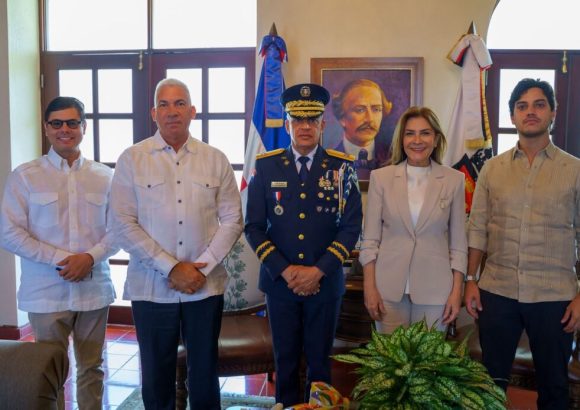
National Police and Santo Domingo Mayor Coordinate Security Measures for USIP World Games
In a high-level working meeting held at the National District City Hall in Santo Domingo, the top leadership of the Dominican National Police and the municipal government of the National District have finalized a series of new cooperative agreements aimed at boosting public safety across the capital, rolling out an upgraded policing model, and ensuring the smooth hosting of an upcoming international sporting event for law enforcement.
During a courtesy visit from National Police Director General Major General Ernesto Rodríguez García to National District Mayor Carolina Mejía, the two senior officials conducted a comprehensive review of ongoing joint projects designed to enhance crime prevention and security infrastructure across all neighborhoods of the National District. Both sides emphasized that coordinated action between national law enforcement and local municipal authorities is a core pillar of creating a safer urban environment for residents and visitors alike.
A central focal point of the discussions was the phased rollout of a new community-oriented police patrol framework. The two leaders reaffirmed their commitment to close inter-agency coordination, aligning municipal resource allocation with national police operational planning to expand patrol coverage, cut response times to security incidents, and strengthen trust between law enforcement and local communities.
Preparations for the IV USIP World Games also emerged as a key priority on the meeting’s agenda. The quadrennial event, which gathers law enforcement delegations from police agencies across dozens of countries, is scheduled to take place in the Dominican Republic, drawing hundreds of international participants. The two sides aligned on coordinated security and logistical support to ensure the event runs safely and successfully, highlighting the opportunity the games present to showcase the Dominican Republic’s capacity to host major international gatherings.
-
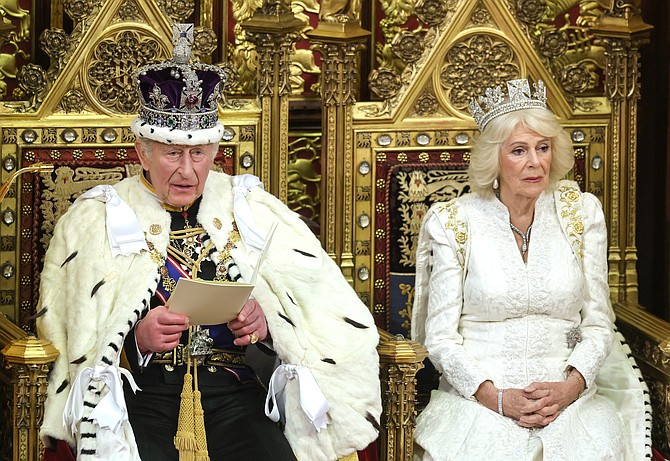
King Charles III to make first visit to The Bahamas as monarch
Buckingham Palace has officially announced that King Charles III will embark on his first multi-stop Caribbean tour as Britain’s head of state in October 2026, a journey that will see him visit three Commonwealth nations ahead of the 2026 Commonwealth Heads of Government Meeting (CHOGM). The 9-day trip, running from October 27 to November 4, 2026, will include joint travel with Queen Camilla, and touches on key diplomatic milestones and long-standing royal ties to the region.
According to the palace’s official statement, the royal couple will kick off their tour with an official visit to The Bahamas, marking King Charles’ first trip to the Caribbean nation since he ascended to the British throne following Queen Elizabeth II’s death in 2022. For The Bahamas, King Charles remains the ceremonial head of state, making the stop a significant moment for bilateral and Commonwealth relations.
After wrapping up their time in The Bahamas, the pair will travel to Antigua and Barbuda to attend the 2026 CHOGM, which is scheduled to take place in the country from November 1 to 4. Following the summit, King Charles will carry out a formal state visit to Guyana, extended at the invitation of Guyana’s president and at the formal request of the United Kingdom government. This state visit will coincide with the 60th anniversary of formal bilateral diplomatic relations between the UK and Guyana, a milestone that underscores the long-standing ties between the two nations.
Buckingham Palace noted that the entire autumn tour is designed to celebrate the diverse communities, vibrant cultures, and unique natural environments that make up the 56-nation Commonwealth family.
The upcoming visit to The Bahamas fulfills a promise King Charles made back in 2024, when he was forced to cancel plans to attend the Caribbean nation’s 50th independence anniversary celebrations due to ongoing cancer treatment. At the time, he expressed his sincere regret to Bahamian Prime Minister Philip “Brave” Davis and shared his firm commitment to visit the country at the earliest opportunity.
This new visit will be King Charles’ first time in The Bahamas as monarch, but it is not his first connection to the nation’s key historical moments. His last visit to The Bahamas came in 1973, when he was still the Prince of Wales, and he represented the late Queen Elizabeth II at the country’s official independence ceremonies. Queen Elizabeth II, for her part, maintained deep ties to The Bahamas over her 70-year reign, completing five official visits to the nation over the decades. Her final trip to The Bahamas came in 1994, when she also attended the CHOGM hosted by the country that year.
-
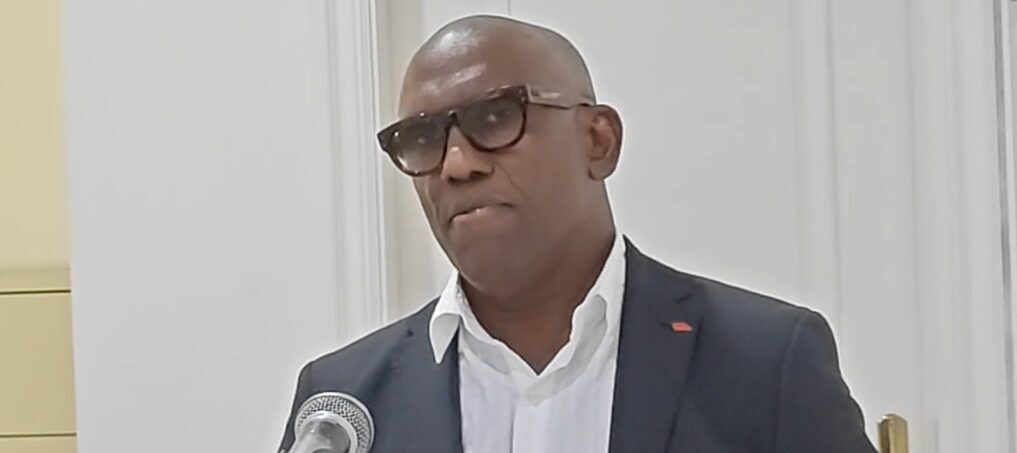
Electoral Commission addresses discrepancy over candidate deposit
A recent administrative misstep has prompted the Electoral Commission to issue an official clarification on the mandatory candidate registration deposit for upcoming elections, following amendments to the nation’s electoral legislation.
Commission Chairman Duncan Stowe addressed the discrepancy during a press briefing held last Thursday, clearing up confusion that stemmed from outdated information printed on official candidate registration forms. Per the recently revised electoral laws, the required registration deposit has been raised from the original EC$500 to EC$1,000. However, the Electoral Office’s publicly distributed registration documents continued to list the old, lower EC$500 fee long after the legislative change took effect.
This mismatch between statutory regulation and administrative documentation created a significant risk of misunderstanding for individuals planning to stand as candidates in the coming electoral contest. Stowe emphasized that the EC$1,000 deposit is the legally mandated amount that all candidates must pay to complete their registration under the updated rules.
To resolve the issue, the Electoral Office has announced it will immediately move to correct the error by printing and distributing fully updated registration forms that accurately reflect the current statutory fee requirement. The commission’s proactive clarification comes as it works to ensure full transparency and compliance with the amended election laws ahead of candidate registration opening.
-
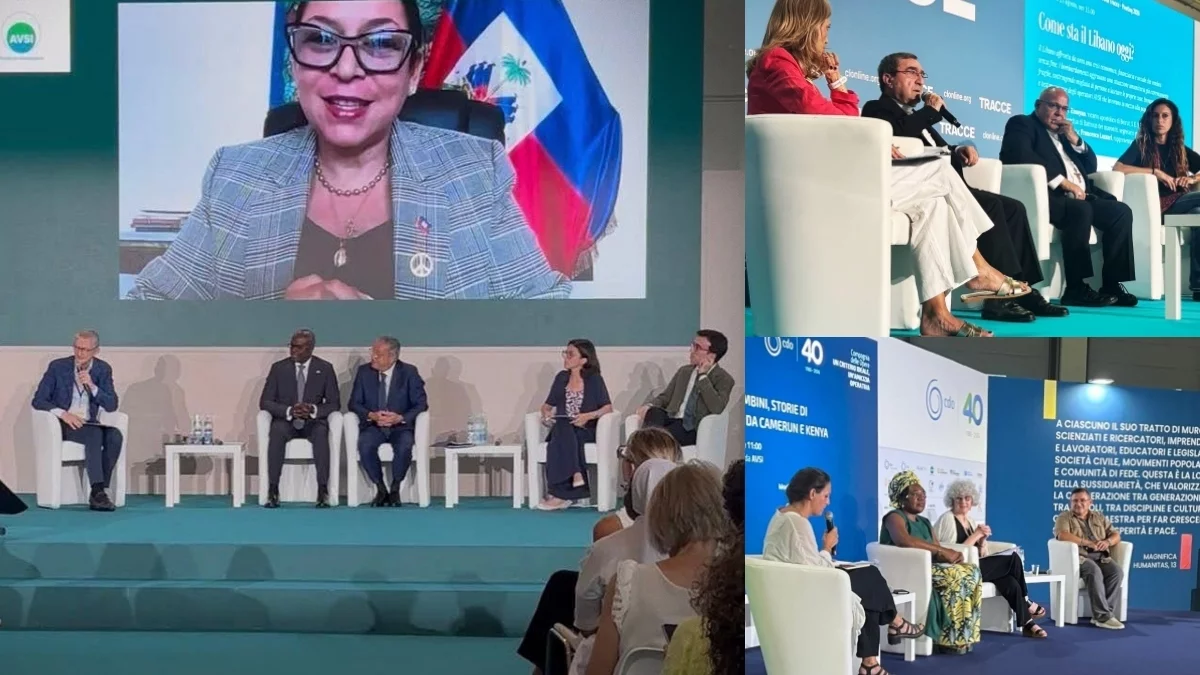
Politic : Towards a strengthened partnership with Italy?
Against a backdrop of ongoing political and humanitarian instability in Haiti, senior officials from both the Caribbean nation and Italy gathered for a high-profile discussion at Italy’s 2026 Rimini Meeting on August 24, opening a new pathway toward deepened bilateral cooperation. Haitian Foreign Minister Raina Forbin joined the panel, titled “Haiti and the strength to rise again”, virtually, while the event was organized by Associazione Volontari per il Servizio Internazionale (AVSI), an Italian international volunteer service organization. The discussion was moderated by Stefano Gatti, Director General for Development Cooperation at Italy’s Ministry of Foreign Affairs and International Cooperation, and featured a lineup of senior stakeholders including Italian Undersecretary of State Massimo Dell’Utri, Haitian Ambassador to Italy Gandy Thomas, FAO Deputy Director-General Maurizio Martina, and AVSI’s Haiti representative Annalisa Costanzo.
In her address to the panel, Minister Forbin laid out the core governing priorities of the current administration led by Haitian Prime Minister Alix Didier Fils-Aimé. The government’s immediate and long-term agenda centers on four critical pillars: reestablishing widespread national security and full state authority across the country, holding inclusive democratic elections to legitimize governing institutions, kickstarting broad economic recovery after years of contraction, and scaling up responses to the country’s worsening humanitarian emergency. She emphasized that the administration is actively pursuing coordinated efforts to pull Haiti out of its protracted crisis and lay the foundation for long-term, sustainable stability.
Minister Forbin used the platform to formally call for a strengthened bilateral partnership between Haiti and Italy, outlining a wide range of high-priority sectors for collaborative action. These proposed areas of cooperation include security sector support, capacity building for Haitian government institutions, sustainable agricultural development, expanded vocational training programs for the country’s large youth population, support for growing small and medium-sized enterprises, cross-border skills transfer, and attraction of productive foreign direct investment from Italian firms.
The participation of top-ranking Italian government officials in the discussion and the substantive nature of the talks signal a shared commitment to advancing bilateral dialogue and collaboration between the two nations. From Italy’s perspective, Haiti offers unique strategic value: its central location in the Caribbean, close proximity to major North and South American markets, large young population, expansive global diaspora network, and untapped economic potential position the country as a strategic gateway for Italian businesses, universities, cultural institutions, and development cooperation initiatives to expand their footprint across the broader Caribbean and Latin American region.
Rather than framing Haiti solely through the lens of its well-documented challenges, Minister Forbin repositioned the country as an emerging market of opportunity and a reliable long-term strategic partner. She emphasized that a deepened partnership between Haiti and Italy would deliver mutual benefits to both nations, opening a new chapter in bilateral diplomatic and economic relations.
-
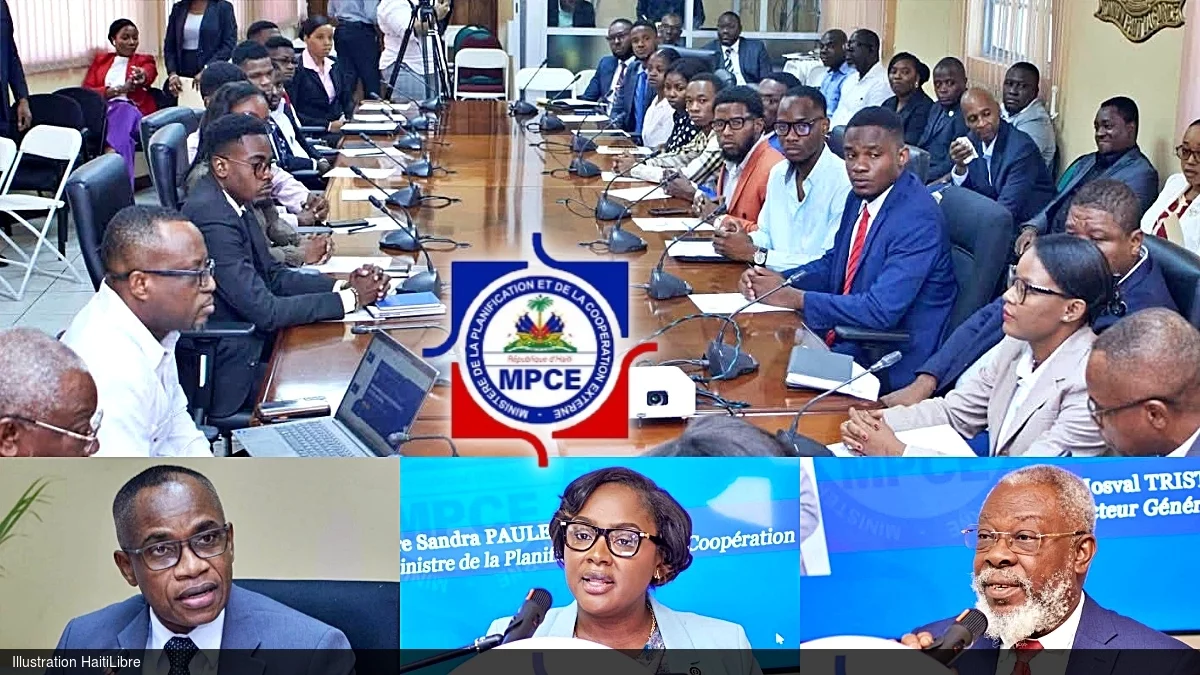
Politic : Launch of an internship program for graduating students of CTPEA
In a landmark step to reinforce Haiti’s public sector technical capabilities and bridge a long-standing gap in talent integration, Minister of Planning and External Cooperation (MPCE) Sandra Paulemon has officially launched a 12-week internship program for 18 final-year students from the Center for Planning Techniques and Applied Economics (CTPEA).
CTPEA, an autonomous academic institution overseen by the MPCE, trains students in three high-demand fields for public service: applied economics, statistics, and development planning. This new internship initiative aligns directly with both the Haitian government’s strategic priorities and the 2016 founding decree that established the MPCE’s mandate to build a skilled, capable public administration.
Speaking at the launch event, Minister Paulemon framed the program as a long-term investment in the next generation of technical leadership for Haiti’s state institutions. By bringing early-career talent directly into ministry operations, the initiative aims to sustainably boost the state’s capacity to design and implement effective development planning. The minister emphasized that the program reflects the administration’s goal of gradually strengthening the MPCE’s workforce with well-trained, qualified professionals, operating fully within established civil service rules and requirements. Ultimately, the effort is part of a broader vision to build a public administration that can deliver rigorous data-driven analysis, model future development scenarios, craft evidence-based public policies, select high-impact public investments, and accurately measure policy outcomes.
Addressing the participating students directly, Minister Paulemon shared four core guiding principles for their internships and future public service careers: unwavering integrity in all professional duties, strict rigor in analytical work and project delivery, consistent humility to support ongoing learning, and a deep-rooted commitment to public service.
Guy Roméro Latry, Director General of the MPCE, noted that this program marks a historic turning point for the institution. Until 2025, he explained, CTPEA graduates had no formal pathway to integration into the MPCE’s workforce. He praised the initiative as a reflection of the dynamic new leadership within the ministry, and highlighted the strengthened collaborative relationship between the MPCE and CTPEA that has made the program possible. With this new partnership, Latry added, CTPEA is poised to reclaim its role as a premier breeding ground for specialized talent and expertise in Haitian development planning.
The 18 participating students, drawn equally from CTPEA’s planning, applied economics, and statistics programs, will complete a structured curriculum covering nine critical thematic areas relevant to public service work. These modules include general public administration orientation, strategic foresight and development planning, poverty reduction and combating social exclusion, spatial planning and subnational development, public investment programming and budgeting, monitoring and evaluation for public projects, development cooperation coordination, NGO activity coordination, and sectoral public policy design alongside Public Investment Program (PIP) planning.