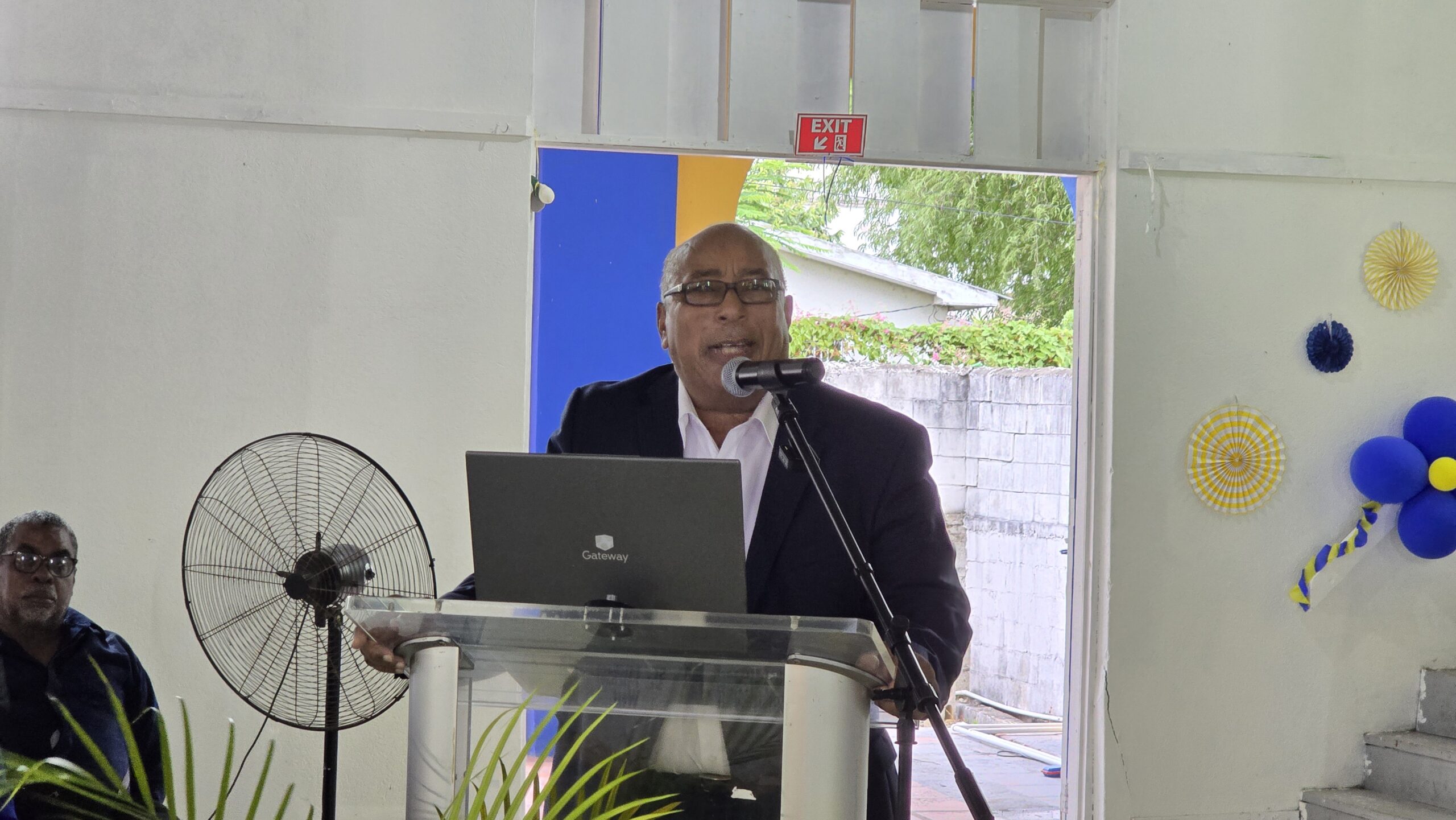
Following a decisive victory in the Democratic Labour Party (DLP) presidential election held Saturday night at the party’s George Street headquarters during its 71st annual general conference, former cabinet minister Dr. David Estwick has laid out a sweeping vision to overhaul the once-dominant Barbadian political party and reposition it as a ready-to-governing alternative for the country.
A veteran figure from the DLP’s old guard, who previously held senior cabinet portfolios in agriculture and economic affairs during the Freundel Stuart administration between 2010 and 2018, Estwick immediately signaled a major strategic shift for the party. Instead of continuing the DLP’s history of reactive, opposition-focused criticism of the sitting government, he pledged to prioritize the development and clear presentation of concrete alternative policy platforms to voters.
Outlining the core challenges the party faces, the new president called for radical, solution-focused internal reform, rejecting the common political practice of scapegoating and commission-led blame assignments. Estwick identified a raft of internal weaknesses that require urgent attention: underdeveloped organizational structures, lagging policy innovation, outdated constituency outreach mechanisms, poor public communication with the Barbadian electorate, inconsistent candidate recruitment pipelines, disconnected engagement with young Barbadians, and a missing organizational culture that prioritizes competence, preparation, discipline and public service.
“I want to establish a system that finds solutions to the problems facing the party, not commissions that hunt for people to blame,” Estwick stated in his victory address. “The Democratic Labour Party must become a government in waiting, and that will be the guiding principle of my tenure. I bring decades of experience across representative politics, opposition work, and cabinet governance to this task, and I am fully committed to seeing this transformation through.”
In a push to mend internal party divisions following the leadership contest, Estwick extended an open invitation to members who backed other candidates, emphasizing that no one would be sidelined in his new leadership. “There will be no victors and vanquished here, no hierarchy of first-class and second-class Democrats. We are one Democratic Labour Party, and all personal divisions must be set aside for the good of the Barbadian people,” he said.
To deliver on his policy-focused promise, Estwick proposed the creation of three dedicated advisory councils focused on distinct policy areas: economic and financial matters, parliamentary and legal affairs, and social development. These specialized bodies will be tasked with researching, analyzing, and drafting alternative policy solutions across a wide range of pressing national issues, from economic growth and investment to the cost of living, taxation, housing, healthcare, education, agriculture and food security, water and energy security, national security, pensions and social protection, youth development, technology and artificial intelligence. Crucially, Estwick stressed that the party would not peddle populist policies that are politically convenient but unworkable for the country.
A core priority of Estwick’s presidency is nurturing the next generation of DLP leadership. To advance this goal, he announced plans to restart the Sir James Cameron Tudor Institute of Politics within 60 days, a training body designed to equip young party members with practical knowledge of governance, communication, political organizing, and leadership. “We must deliberately cultivate the leaders of tomorrow, and young Democrats must be given meaningful responsibility early in their careers,” Estwick explained. “My presidency should not be judged by the leaders I appoint to senior positions today, but by the new leaders I help create for the party’s future.”
Looking ahead to the 2026 general election and beyond, Estwick called for the DLP to modernize its infrastructure and communication strategies, investing in professional policy research capacity and youth training frameworks. But he warned against overreliance on digital tools, stressing that grassroots community engagement remains irreplaceable for building trust with voters.
“Technology is a useful tool, we will use computers and social media to amplify our message, but a computer cannot shake a voter’s hand or look them in the eye,” he noted. “We have to get out into every constituency, knock on every door, and listen to the people of Barbados.”
Estwick emphasized that rebuilding public trust in the DLP will be a gradual process that cannot be rushed, and that trust can only be earned through consistent action, not empty promises. “Trust is not given freely, it has to be earned through our conduct, the quality of our ideas, how we treat all people, how we hold ourselves accountable in public life, and our willingness to put Barbados’ interests ahead of our own personal political ambitions,” he said.
He cautioned members that the path to rebuilding will not be quick or easy, and will require widespread sacrifice, collective discipline, and a willingness to abandon outdated political practices that have held the party back. “I will not stand here and tell you rebuilding the DLP is a simple task. It will take time, it will require all of us to sacrifice, to embrace discipline, and to set aside personal ambitions for the greater good of our party and our country. Change means doing things differently than we have before, and all of us must accept that,” Estwick said. He closed by calling on all DLP members to unite behind the plan to build a modern, disciplined, intellectually rigorous, socially responsible party that is truly ready to govern Barbados.