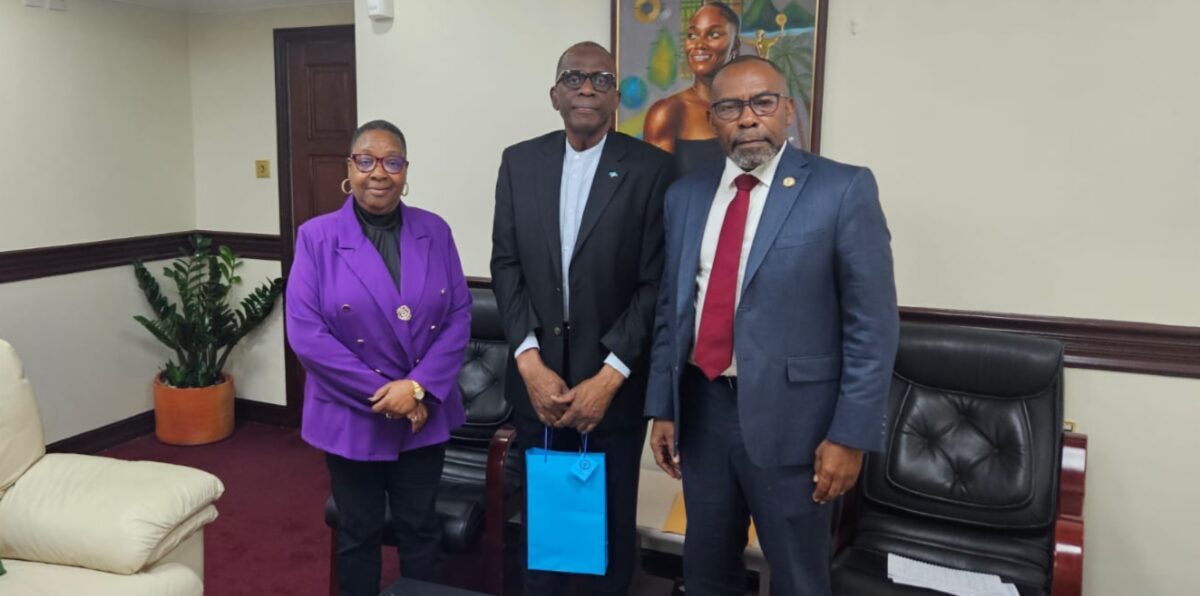
On July 5, 2026, as the Caribbean prepared for one of its most important annual regional governance gatherings, the Caribbean Court of Justice (CCJ) President Justice Winston Anderson made an official courtesy visit to Saint Lucia’s Prime Minister Philip J. Pierre, deepening judicial-government ties across the region. The meeting was held ahead of the opening of the 51st Regular Meeting of the Conference of Heads of Government of the Caribbean Community (CARICOM, which brought regional leaders to the island nation for three days of policy coordination and collective decision-making.
Justice Anderson was joined during the meeting by Her Ladyship Justice Margaret Price-Findlay, who holds dual senior roles as Chief Justice of the Eastern Caribbean Supreme Court and Commissioner of the Regional Judicial and Legal Services Commission. Following the courtesy engagement, Anderson took part in the official opening ceremony of the CARICOM Heads of Government summit, an appearance that came at the formal invitation of the conference. This attendance marked the continuation of a longstanding CCJ tradition of engaging with the highest regional political gatherings, reflecting the court’s integrated role in Caribbean governance.
In an official press statement published after the meeting, the CCJ emphasized that the dialogue was part of the court’s sustained, long-term strategy to strengthen collaborative ties with national governments and domestic judicial bodies across all CARICOM member states. The engagement also aligns directly with the court’s recently launched Strategic Plan for 2025–2032, a guiding document that prioritizes expanding and deepening partnerships between the CCJ and a broad range of regional stakeholders.
Beyond a formal diplomatic courtesy, the meeting created a dedicated space for open, continued dialogue between the Caribbean’s highest regional court and national political leadership. As Caribbean regional institutions increasingly work in lockstep to advance cross-border integration, sustainable development, and coordinated policy action, such engagements reinforce the shared commitment of judicial and governmental bodies to advancing collective progress across the region.