分类: entertainment

  • COMMENTARY: Review of ‘Fragments of the Dawn’ by Edward Oliver LeBlanc

    COMMENTARY: Review of ‘Fragments of the Dawn’ by Edward Oliver LeBlanc

    Literature has long held the power to divide works into two distinct camps: those crafted merely for casual diversion, and those that lift the human spirit, force collective conscience to confront uncomfortable truths, and shed light on the shared moral character of a community. Edward Oliver LeBlanc’s *Fragments of the Dawn*, a recently published posthumous poetry collection, falls unreservedly into the second transformative category. Shared with the author of this analysis by Ewart LeBlanc — the late statesman’s eldest son and a respected public figure — the collection is far more than a mere compilation of verse. It is a deep, contemplative exploration of core themes: life, national identity, systemic suffering, collective justice, intergenerational memory, the dignity of labor, and inherent human worth. As a cultural and intellectual gift, it holds profound meaning for both Dominica and the broader Caribbean region.

    Reading *Fragments of the Dawn* is an intimate invitation into the mind and soul of a veteran statesman, who carried the quiet humility of a Dominican peasant alongside the sharp, trained intellect of a scholar, agricultural scientist, and apiarist. LeBlanc’s verse is irrevocably rooted in the lush, natural beauty of Dominica — its rushing rivers, ancient forests, brutal tropical storms, towering peaks, fertile valleys, and tight-knit village communities. Yet his work expands far beyond the bounds of geography to offer universal reflections on the core of humanity. The rhythm of his lines mirrors the journey of a people stepping out of the shadows of colonial rule into newfound self-awareness and collective dignity.

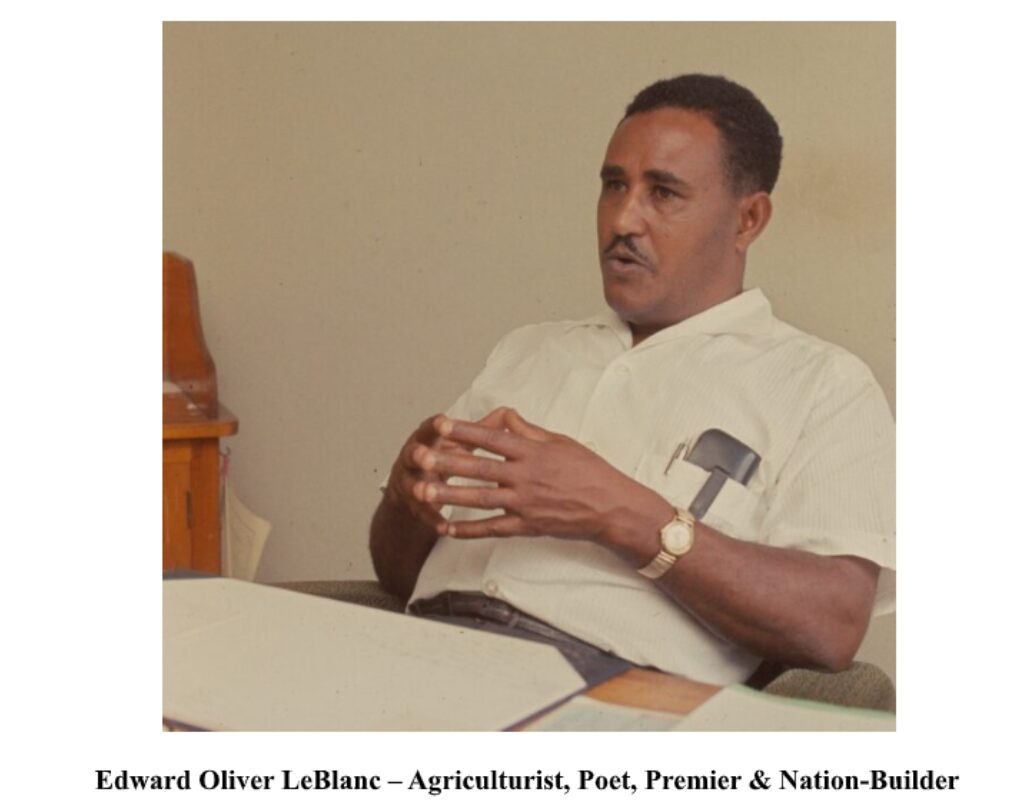
    LeBlanc’s rise to become one of the most transformative political leaders in Dominican history mirrored the social change he spent his career championing. Born in the rural village of Vieille Case on October 3, 1923, he emerged from working-class origins to become the enduring voice of Dominica’s working people and peasant communities. Trained in agricultural science at the Imperial College of Tropical Agriculture in Trinidad, he returned to his home island with a deep, abiding respect for rural life, manual labor, and national self-sufficiency. His early work with the Dominica Trade Union and the Dominica Labour Party placed him at the forefront of anti-colonial and working-class organizing during an era when all political and economic power was hoarded by a small, colonial-aligned elite. By 1961, LeBlanc had risen to the role of Chief Minister of Dominica, and in 1967, when the island gained Associated Statehood, he became the nation’s first Premier.

    Alongside Dominica Labour Party co-founder Phyllis Shand Allfrey, LeBlanc served in the West Indian Federal Parliament based in Port of Spain, Trinidad, under West Indian Federation Prime Minister Sir Grantley Adams. When the federation dissolved in 1962, after Jamaica and Trinidad chose to leave the union and pursue full independence separately, LeBlanc emerged as a key leader in organizing the “Little Eight” — a coalition of smaller Caribbean nations working to rebuild a unified regional federation. He worked tirelessly to persuade leaders of Antigua, Barbados, Grenada, St. Kitts, St. Lucia, and St. Vincent to join Dominica in forging a new regional union. Though the effort ultimately failed to unite the Little Eight, two of LeBlanc’s poems — *The Little Eight* and *Towards a West Indian National Song* — reveal his lifelong commitment to Caribbean integration and his unwavering support for African independence movements.

    LeBlanc’s political impact on Dominica cannot be overstated. He reshaped the nation’s social and political landscape by centering the needs of “the little man”: laborers, smallholder farmers, fishers, domestic workers, and rural villagers who had been systematically sidelined under colonial rule. Under his administration, Dominica expanded public access to education, healthcare, road infrastructure, affordable housing, pension benefits, and local village development. At the same time, he nurtured a new wave of cultural nationalism rooted in the dignity of Dominican identity, the Kwéyòl language, and African-Caribbean cultural traditions.

    His government democratized political participation in a way that had never been done before in Dominican history, making ordinary people feel seen and represented within the structures of state power. Though critics at times took issue with his populist approach and confrontational political style, LeBlanc remains widely revered as the “Father of the Dominican Nation” for the fundamental shift he created in both the material and psychological conditions of Dominican society. He replaced the culture of deference demanded by colonial rule with a new national ethos of self-confidence and collective social uplift.

    Across the collection, LeBlanc reveals himself not just as a political leader, but as a philosopher-poet of liberation. His verses return again and again to the cycles of life, the moral obligations of individuals and societies, the suffering created by systemic exploitation, and the eternal conflict between material greed and spiritual integrity. In works such as *Life’s Philosophy* and *The Cycle of Life*, he grapples with questions of mortality, intergenerational legacy, and the ethical weight of human existence.

    What stands out most in this body of work is its striking fusion of accessible simplicity and profound depth. LeBlanc’s language is approachable for everyday readers, while its philosophical implications are broad, resonant, and enduring.

    Particularly moving are the verses that grapple with colonial oppression and the dehumanization of African-descended people under systems of racial and economic domination. In haunting lines that describe enslaved and exploited workers’ “naked” backs under the unforgiving midday sun, LeBlanc documents the violation of women, the denial of dignity to working people, and the theft of peasant labor. In doing so, he turns poetry into a living historical testimony. Yet the collection never descends into mere bitterness. Instead, it points toward renewal, reclamation, and the enduring triumph of human resilience. Readers can clearly recognize the same moral force that drove LeBlanc’s political leadership during Dominica’s most transformative decades.

    LeBlanc’s professional background as an agricultural scientist and apiarist adds unique depth and texture to his poetry. His sensitivity to the rhythms of nature — changing seasons, living soil, life-giving rain, growing seeds, maturing trees, the labor of cultivation — permeates every page. In his writing, nature is not decorative; it is a teacher. His agricultural imagery becomes a powerful metaphor for nation-building: requiring patience, sacrifice, steady growth, and periodic renewal. Just as a beekeeper understands that collective effort sustains the entire hive, LeBlanc understood that national development depends on social cooperation, shared discipline, and a common purpose. His scientific understanding of cultivation deepened his philosophical understanding of humanity.

    Beyond his public life, LeBlanc was a devoted family man, and the love of his home created the nurturing environment that allowed his creativity to flourish. In 1949, he married Ethel Patrick, and the couple raised five children: Ewart, Erin, Einstar, Earlsworth, and Eustace. Their loving home became a spiritual cocoon that fostered a shared commitment to community, justice, and the power of the written word. Earlsworth LeBlanc often recalls that Rudyard Kipling’s poem “IF” was posted on the family home door, a small detail that reflects LeBlanc’s lifelong immersion in literature and moral philosophy.

    The collection carries a distinct, deeply rooted Caribbean sensibility: reflective, communal, spiritually awake, and historically conscious. It echoes the region’s oral traditions, village wisdom, and ancestral memory. It challenges readers to resist colonial conditioning and racial prejudice not through hatred, but through self-knowledge, dignity, creativity, curiosity, and moral independence. This is literature serving its highest purpose: the liberation of the mind.

    It is no coincidence that LeBlanc’s distinguished relative, Dr. Irving W. André, has built a prominent place for himself within Dominica’s literary and intellectual landscape. Over decades of rigorous scholarship, historical preservation, and literary advocacy, Dr. André has written extensively on Dominican history, politics, identity, and culture, ensuring that the Dominican experience is documented with depth, dignity, and intellectual rigor. His work reflects the same commitment to national consciousness, social justice, and historical memory that defined LeBlanc’s public life and philosophical outlook.

    This shared commitment to literary and historical preservation found institutional form in Pont Casse Press, founded in 1992 by Dr. André and Gabriel J. Christian, Esquire. The press was created with an explicit mission to advance Dominican history, literature, political thought, and cultural identity. Over the decades, it has grown into a critical intellectual repository for Dominican scholarship and creative expression, preserving stories that would otherwise have been lost to historical neglect or colonial indifference. In every sense, *Fragments of the Dawn* fits squarely within this noble mission: it is a work committed not just to artistic expression, but to the moral and intellectual liberation of a people.

    The tradition of literary stewardship within the extended LeBlanc family underscores a deeper truth: the struggle for national progress is not limited to politics alone. It must also be waged in the realms of literature, education, philosophy, and historical preservation. Edward Oliver LeBlanc helped liberate the Dominican people politically and materially; today, scholars and writers like Dr. André, and institutions like Pont Casse Press, continue that liberating work in the realm of ideas, collective memory, and cultural identity.

    For this reason, *Fragments of the Dawn* deserves a place on every bookshelf in every Dominican home and every Dominican school. Young people, in particular, should engage with these poems, because they offer not just literary beauty, but moral and ethical formation. In an era defined by rampant materialism, constant distraction, and widespread historical amnesia, LeBlanc’s work reminds readers of the values of decency, discipline, compassion, introspection, and national consciousness. It teaches that every ordinary laborer, farmer, mother, fisherman, or child carries inherent dignity and philosophical worth.

    It was a distinct honor to participate in a recent public discussion hosted by Sheridan Gregoire on Q95 FM, alongside Ewart LeBlanc and Earlsworth LeBlanc, to explore this landmark contribution to Dominican literature. The discussion reaffirmed a core truth: Edward Oliver LeBlanc’s literary legacy is inextricably tied to the political and moral awakening of the Dominican people.

    Ultimately, *Fragments of the Dawn* is far more than a collection of poetry. It is the reflective voice of a nation-builder, who understood that true independence is not just political — it is psychological and spiritual. It is the testimony of a man who believed that literature, philosophy, labor, and public service must all work together to lift up humanity. In these poems, Edward Oliver LeBlanc continues to guide Dominica — not from a political platform, but from the enduring realm of ideas, collective memory, and moral imagination. This work deserves careful study, broad circulation, and permanent recognition as a landmark contribution to Caribbean intellectual and literary history.
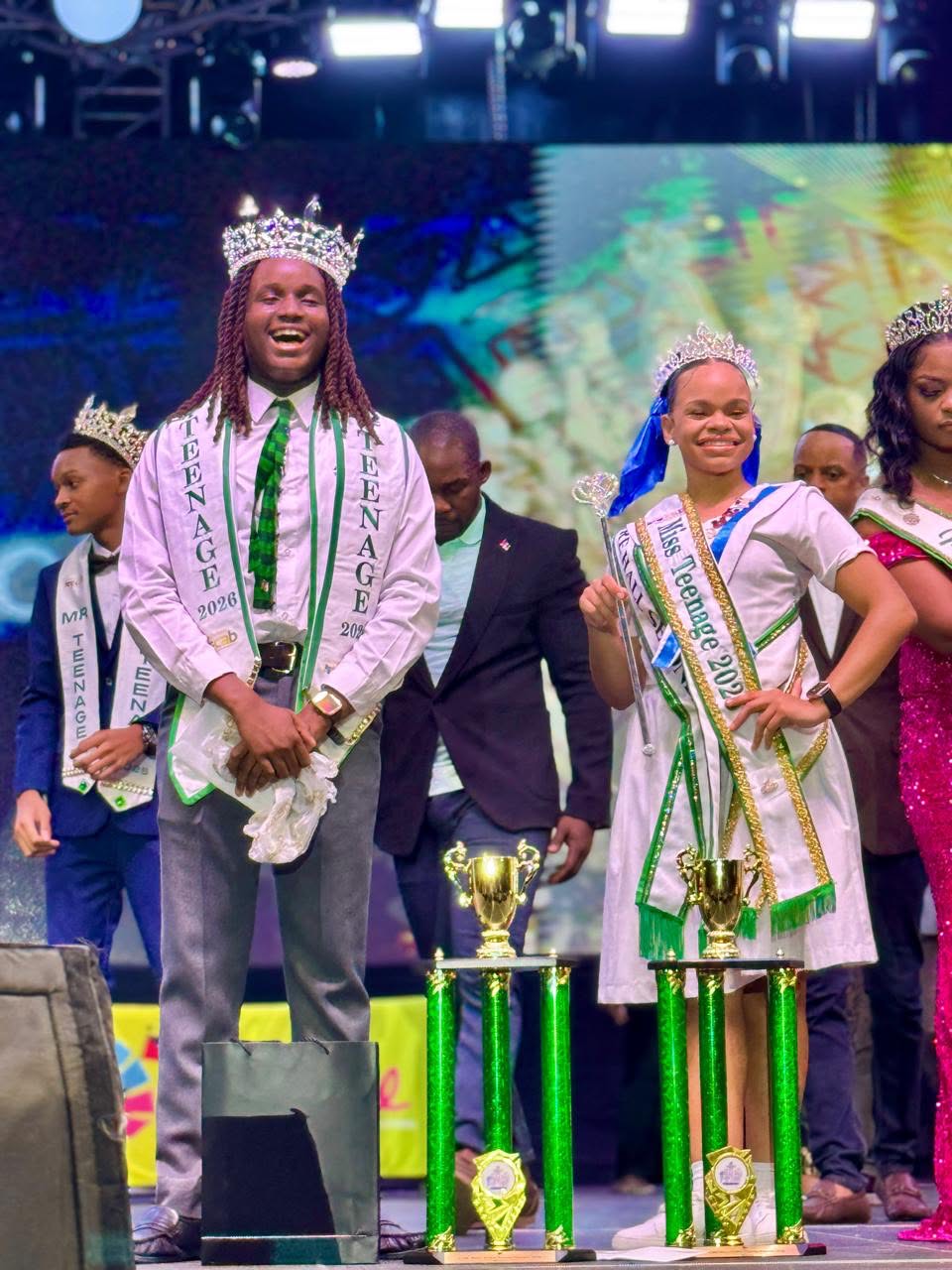

  • Clare Hall Secondary and Antigua Grammar Top ECAB Mr. and Miss Teenage Pageant

    Clare Hall Secondary and Antigua Grammar Top ECAB Mr. and Miss Teenage Pageant

    The excitement of Antigua Carnival reached a dazzling climax this year as the annual ECAB Teenage Pageant concluded with two standout students claiming the most coveted titles. Katherine Pimentel, representing Clare Hall Secondary School, walked away with the ECAB Miss Teenage 2026 crown, while Soleil Williams from Antigua Grammar School secured the ECAB Mr. Teenage 2026 honors at the closing ceremony.

    Pimentel’s road to victory was marked by consistent excellence across multiple competition categories, beyond just capturing the overall title. The young competitor also swept four major individual awards: Personality and Aspiration, Interview, and Leadership in the female division, cementing her status as a well-rounded frontrunner throughout the event.

    The pageant also recognized a host of other talented participants from secondary schools across the region. Andrisa Thomas of Antigua Girls’ High School and Xion Joseph of St. Joseph Academy claimed first runner-up positions in the female and male categories respectively, while Brianna Lewis from Christ the King High School and Douve’rt Burnes of Clare Hall Secondary School took home second runner-up honors.

    In a standout showing, first runner-up Xion Joseph dominated the male special awards category, taking home five trophies: Most Congenial, Mr. Photogenic, Personality and Aspiration, Interview, and Leadership. Other individual award winners included Narla Nathaniel of Jennings Secondary School, who earned the title of Miss Photogenic; Andrisa Thomas, who received the female Punctuality Award; and Jahmarly Hunts of Ottos Comprehensive School, who won the male Punctuality honor.

    Further category awards saw Andrisa Thomas claim the female Creative Research prize, while Douve’rt Burnes took home the male equivalent of that award. The Performing Talent category was overwhelmingly dominated by contestants from St. Mary’s Secondary School, with Kallie Guiste winning the female division and Kristopher Lee securing the male prize. Rounding out the special recognitions, the Most Improved awards went to two students from Pares Secondary School: Kareem Amedee for males and Sarah Williams for females.

    Following the conclusion of the competition, the Antigua Carnival Festivals Commission issued a formal statement congratulating every teenager who participated in the 2026 pageant, highlighting the hard work and dedication each contestant brought to the event. The commission also extended special gratitude to title sponsor ECAB, as well as all organizers, volunteers, and supporters whose contributions made the 2026 edition of the pageant a success.

  • Diaspora : 20th edition of the Haiti en Folie Festival (program, video)

    Diaspora : 20th edition of the Haiti en Folie Festival (program, video)

    Montreal’s beloved celebration of Haitian culture is gearing up for a landmark milestone this summer, as the Fabienne Colas Foundation prepares to launch the 20th edition of the Haiti en Folie Festival, presented by TD Bank Group. Running from July 23 to 27, 2026, this year’s hybrid programming blends in-person outdoor experiences across four iconic Montreal public spaces with accessible online content, inviting both local attendees and global audiences to engage with the rich artistic and cultural heritage of Haiti. More than 200 artists from across North America and the Caribbean are set to take part in the five-day event, which will unfold at Parc Lafontaine, Quartier des Spectacles, Jardins Gamelin, and Parc des Compagnons.

    The 2026 festival lineup is packed with diverse offerings for visitors of all interests, centered around a core schedule of TD-sponsored music performances, industry conferences, literary showcases, the popular SAQ Food and Craft Fair, panel discussions, hands-on workshops, the annual Rara parade, and dozens of family-friendly interactive activities. To mark the 20th anniversary of the event, headlining musical performances will come from a stacked roster of acclaimed talent, including Grammy-nominated Haitian roots group Boukman Eksperyans, award-winning international artist BélO, multidisciplinary creator Rebecca Jean, rising R&B performer Papi Jay, and vocalists Ericka Julie, Jessie Simmons, and Modeline Raymond, alongside emerging acts Cinthia Michel, Sara Rénélik (performing as Luna Taina), Barnev, and the Montreal Community Choir.

    A fan-favorite staple of the festival, the annual Rara Parade will mark its own 10th consecutive year as part of the 2026 event. The decade-old parade was created to honor Haiti’s national soccer team, the Grenadiers, who made history by qualifying for the FIFA World Cup in 2010, ending a 52-year drought for the nation. This year’s parade will feature energetic live sets from Rara Jazz, Rara Pa Nou, and Ayiti Makaya, carrying forward the tradition of celebration that has defined the event for a decade.

    Additional standout programming includes the late-afternoon “Haiti Madness 5 to 7” showcase, which will feature DJ sets from DJ Cliff and DJ Nalee, alongside live performances from Ensemble Afrovibes and Kayos KF. Visitors can also explore curated literary events, join thoughtful panel discussions on Haitian arts, culture, and diaspora life featuring creator Sara Renélik, Grammy-winning musician Wesli, multidisciplinary artist Rebecca Jean, poet Sylphir, and many other leading voices from the Haitian community. The SAQ Haiti en Folie Food Fair, a perennially popular attraction, will return to offer attendees a chance to sample authentic Haitian cuisine and handcrafted goods from local vendors. All online programming, including pre-recorded panel discussions and film screenings, will be accessible to remote attendees around the world, expanding the festival’s reach beyond Montreal’s city limits.

    Full information on the festival schedule, venue locations, ticket access, and online viewing options is available now on the official Haiti en Folie website at www.HaitiEnFolie.com.

  • Leisure : Did you know ? #42

    Leisure : Did you know ? #42

    Twice every week, the popular Haitian digital platform HaitiLibre releases a new installment of its engaging general knowledge series “Did you know?”, presented through its interactive Quiz.Haitilibre project. The 42nd entry of the column, published July 18, 2026, poses a compelling question centered on Haitian cultural history: In what year did the inaugural edition of Haiti Fashion Week take place?

    The answer to the trivia question traces a pivotal milestone for Haiti’s creative economy: the very first Haiti Fashion Week launched in 2012 in the capital city of Port-au-Prince. This landmark event came just two years after the catastrophic 2010 earthquake that devastated much of Haiti’s infrastructure, displaced hundreds of thousands of people, and shattered the country’s existing economic networks.

    Organized by the Haitian Fashion Network (CHAM) with backing from both local cultural institutions and international partners, the first Haiti Fashion Week was far more than a showcase of glamorous runway shows. It was framed as a deliberate, strategic initiative to drive post-disaster economic recovery by leveraging the country’s rich cultural and artisanal heritage. For the first time, dozens of local Haitian designers gained access to a professional, curated platform where they could display their work directly to international buyers and global fashion journalists. The event successfully demonstrated that high-end Haitian craftsmanship could compete in global luxury markets, while opening up critical professional dialogue that laid the groundwork for a more structured, sustainable national textile production chain.

    Beyond sharing this little-known piece of Haitian cultural and economic history, the column also promotes the full Quiz.Haitilibre platform, which offers free, no-registration general knowledge games for audiences of all ages and skill levels. Each quiz on the platform comes in three difficulty tiers: easy, intermediate, and expert, and is available in both French and English to accommodate a wide user base. As part of the platform’s monthly content refresh, 31 new quizzes were added on July 1, 2026, bringing the total number of available games to 180, with new content added on a monthly rolling basis. The platform covers topics ranging from local Haitian history and culture to global current events and specialized subjects, allowing users to expand their knowledge and test their skills across a wide range of themes. Visitors are invited to access the full platform at quiz.haitilibre.com, share the resource with friends and family, and leave feedback via a comment form available at the end of every game.

  • ‘’Barbados loves you eternally’: Rihanna’s tribute to Sir Garry

    ‘’Barbados loves you eternally’: Rihanna’s tribute to Sir Garry

    Barbados is in national mourning this week after the passing of Sir Garfield Sobers, the globally celebrated cricket icon and one of the island nation’s most revered national heroes. Tributes have poured in from across the world, and among the most heartfelt came from global music superstar Robyn Rihanna Fenty — who shares the rare distinction of being one of Barbados’ only two living national heroes.

    In an emotional audio message released Friday, Rihanna opened up about the profound loss of the man widely regarded as the greatest cricketer in the history of the sport. “Barbados, today we lost a legend and an icon, the Right Excellent Sir Garfield Sobers, the greatest cricketer this world has ever seen,” she said.

    Rihanna’s connection to Sobers runs deeper than just shared national honor. The Grammy-winning artist, who was named a national hero alongside Sobers in 2021 when Barbados officially transitioned to a republic, recalled growing up inspired by his athletic feats, just like generations of young Barbadians before her. She shared a playful personal memory of her childhood, noting that even she tried her hand at the sport as a kid, running around a local cemetery to keep up with her brother and ending up with bruised shins — all inspired by Sobers’ example.

    For Rihanna, the admiration extended beyond his public legacy. She expressed deep gratitude for having had the rare chance to meet the legendary sportsman in person, an introduction arranged through Barbadian Prime Minister Mia Mottley. “I’m just so grateful that I had the honour to be introduced to him by Prime Minister Mia Mottley,” she said.

    Rihanna went on to honor Sobers’ trailblazing career, highlighting one of his most groundbreaking achievements: at just 21 years old, he became the youngest player in Test cricket history to score the highest individual innings, notching an unbeaten 365 runs that held the world record for 36 years. She also acknowledged his 1975 knighthood from Queen Elizabeth II, a testament to his global impact on the sport.

    “Sir Garry’s legacy will live on forever, a light and inspiration to us all. Barbados loves you eternally, Sir Garry,” she said, extending her deepest condolences to Sobers’ family, loved ones, and the global community of cricket fans mourning his loss. Calling out his lasting impact on young Barbadians, she emphasized that his influence will continue to shape generations of islanders long after his passing.

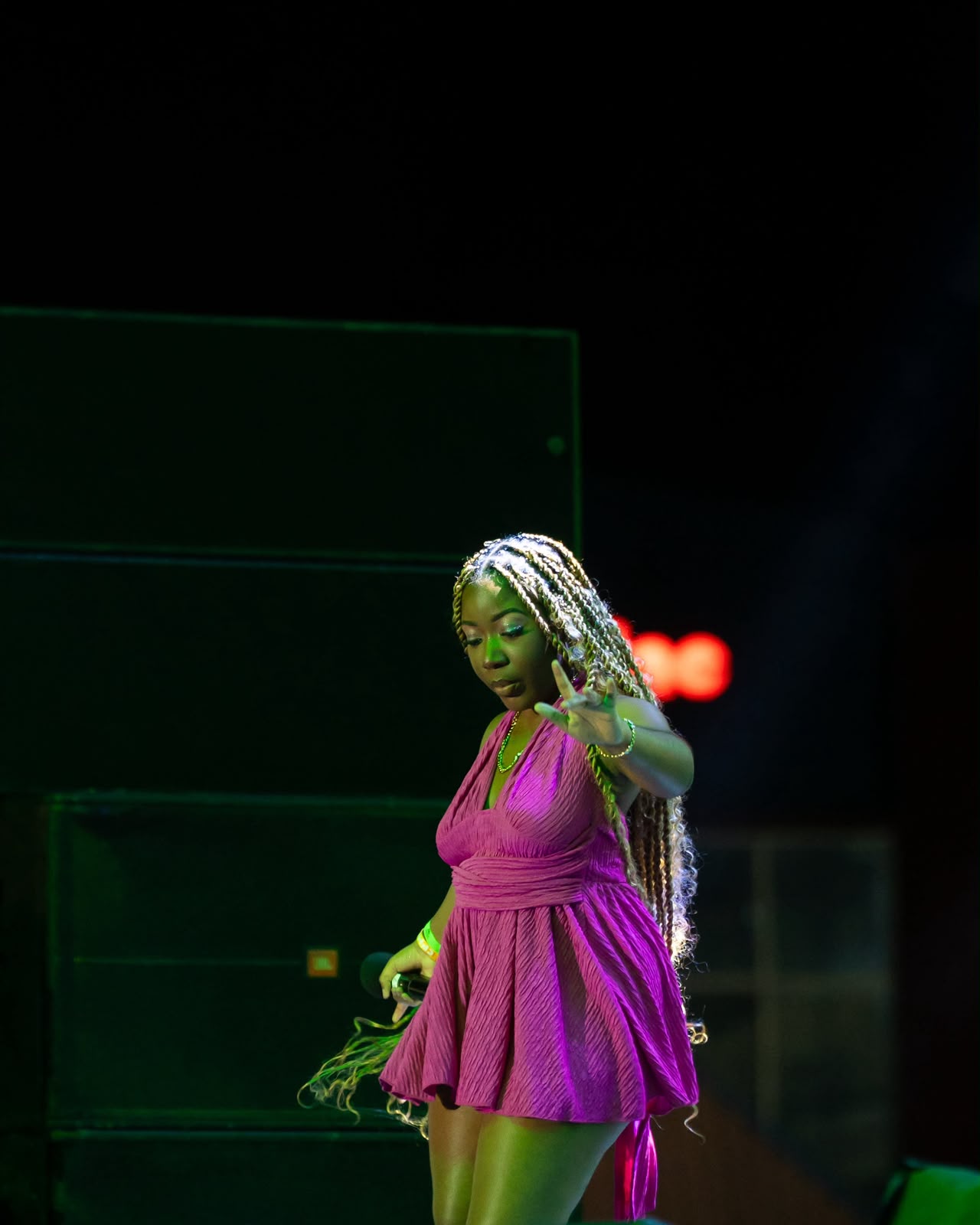
  • Soca artiste Lolani building her name in music industry

    Soca artiste Lolani building her name in music industry

    A rising young creative is making steady waves across Saint Lucia’s vibrant Caribbean music landscape, building her career one intentional performance and genre-blending track at a time. For Lolani, the emerging soca artist whose journey has blended early training, bold risks, and hard-won growth, the path to establishing herself among the island’s well-known musical names has been equal parts demanding and deeply fulfilling.

    Lolani’s entry into soca came from a willingness to step outside her comfort zone and embrace new creative challenges. “I love to try new things, so I decided to try soca,” she shared in an interview, crediting fellow Saint Lucian artist Orion with encouraging her to make the jump into the genre. That partnership yielded her first competition entry: the power soca track *Sorry*, which marked her official debut in the 2025 Soca Monarch competition, kicking off her formal journey as a soca artist.

    Long before her first soca release, Lolani’s relationship with music began in early childhood. Starting singing at just four years old, she cut her teeth in group choral and sacred music, performing with a range of ensembles from school choirs to her local church choir, and eventually earning a spot in Saint Lucia’s National Combined Schools Choir. It was only later that she made the decision to leave group performance behind to pursue a solo career, a shift that set her on the path to exploring calypso and eventually soca.

    Her first foray into competitive solo performance came during her time at Castries Comprehensive Secondary School, when she auditioned for a calypso competition despite widespread assumptions that her shy demeanor would hold her back. “I love to prove people wrong,” she noted, and her confidence proved well-placed: she went on to represent her school and claimed first runner-up in the 2023 contest. Though she ultimately did not connect with the calypso genre long-term, the experience was formative, teaching her to embody distinct characters through performance and build the commanding stage presence that defines her work today.

    As a female artist navigating a crowded, well-established local music scene, Lolani says her time in soca has transformed her both as a person and a professional. Working alongside and sharing the stage with iconic local performers including Arthur, Ricky T, Cupid, and Keisha has given her unparalleled opportunities to learn, grow, and build name recognition among fans and industry peers alike, moving her from an unknown newcomer to a recognized emerging talent. Taking part in industry panels and collaborative performances has also dramatically boosted her confidence, creating a foundation for her continued growth.

    Most recently, Lolani returned to the Soca Monarch competition for her second year, competing in two segments. As a solo act, she entered the groovy soca category with *Life Sweet*, a track produced by local label Stratosphere Musik. She advanced to the quarterfinals but did not move on to the next round, a disappointing outcome that left her heartbroken. “I cried so much because I really wanted this year to be like my year,” she admitted, though she ultimately framed the result as a matter of timing, concluding “It just wasn’t my time.” She also competed in the power soca segment alongside collaborator Jurgen, with their track *Can’t Let Go* advancing to the semifinals. Though the track did not deliver the final placement the pair had hoped for, Lolani emphasized that the collaboration was an overall positive experience, calling the song a standout carnival season anthem.

    One of the most meaningful highlights of her recent competition run came even outside the finalist ranks: an invitation to perform as a guest artist on the iconic Soca Monarch stage, an opportunity she counts as a major milestone in her early career.

    Beyond competition placements, Lolani anchors her artistry on purpose-driven work. Every track she releases carries a intentional message, and she actively experiments with blending soca with other popular genres including R&B, afrobeat, and the locally rooted Dennery segment. When creating Dennery segment work, a subgenre most often centered on upbeat party themes, she has intentionally reoriented the sound to center women’s empowerment, rejecting typical tropes to create content that uplifts female audiences. For the rising artist, connecting with listeners on a deep emotional level is the core of her work. “The most important thing for me is to reach out to people and touch people’s hearts,” she explained, a goal she pursues through thoughtful lyricism and authentic live performance.

    As she continues to evolve, Lolani says fans should expect versatility paired with unwavering commitment to quality. “Expect the unexpected from Lolani,” she said of her dynamic sound, describing herself as a spontaneous creator who never compromises on the standard of her music.

    Looking ahead, beyond growing her own career, Lolani is invested in lifting up Saint Lucia’s broader music industry. Having seen firsthand the depth of untapped creative talent across the island, she argues that local artists only need greater access to the right opportunities to push the national music scene to new global heights. For the emerging artist, her own early journey is just the first step in what she hopes will be a long career contributing to her country’s rich musical legacy.

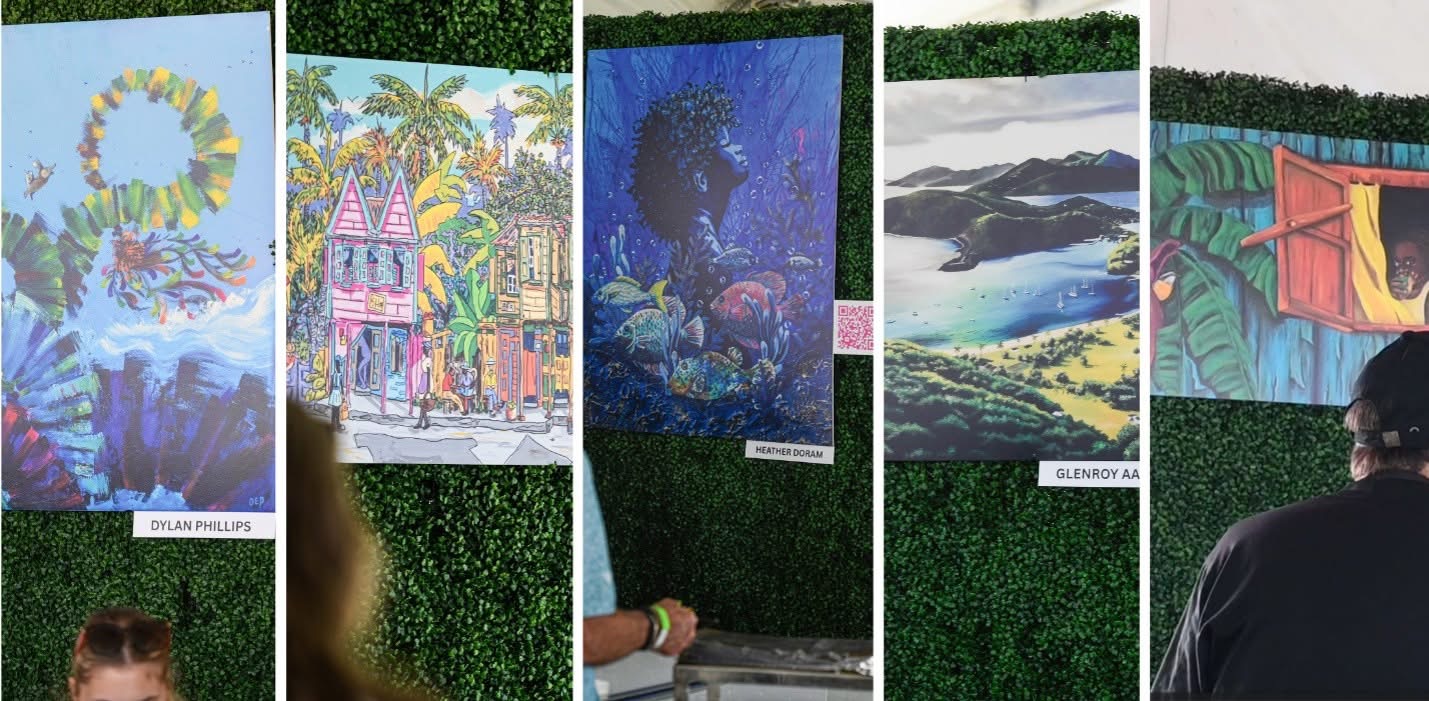
  • Local Artists Showcase Antigua and Barbuda’s Culture at Toronto Charity Polo Event

    Local Artists Showcase Antigua and Barbuda’s Culture at Toronto Charity Polo Event

    A curated collection of talented local artists from Antigua and Barbuda brought the vibrant, sun-kissed cultural heritage of their twin-island nation to one of Toronto’s most anticipated annual charity polo events, turning the upscale equestrian venue into a dynamic celebration of Caribbean art and tradition.

    Organized in partnership with Caribbean cultural advocacy groups and the event’s charitable foundation, the showcase featured a diverse range of creative works, from vivid acrylic canvases depicting Antigua’s iconic pink-sand beaches and traditional fishing villages to handwoven textiles crafted using age-old Barbadian techniques passed down through generations of artisan families. Attendees also had the opportunity to experience live folk music performances, traditional dance demonstrations, and a curated tasting of authentic Antiguan and Barbudan cuisine, including pepperpot and fresh coconut-based desserts.

    Proceeds from sales of artwork sold during the showcase, as well as a portion of the event’s general ticket revenue, will be directed to two key causes: supporting emerging young artists in Antigua and Barbuda through grants and professional development programs, and funding disaster relief and resilience initiatives for small island communities affected by rising sea levels and tropical storm activity. Event organizers noted that the collaboration between the polo charity and the Antigua and Barbuda creative community offers a unique opportunity to build cross-cultural connections between Caribbean creators and North American audiences, while raising critical funds for causes that directly impact the nation’s most vulnerable groups.

    Many attendees at the event shared that the showcase offered a far more intimate and authentic look at Antigua and Barbuda’s culture than typical tourist marketing, highlighting the depth of creative talent that exists across the twin islands. Polo participants also expressed enthusiasm for integrating the cultural showcase into future charity events, noting that it adds a meaningful, community-focused layer to the traditional equitarian gathering.

  • Humble Official releases debut studio album to help boost Saint Lucia’s music scene

    Humble Official releases debut studio album to help boost Saint Lucia’s music scene

    Emerging from Saint Lucia’s vibrant music scene, independent artist Berty James, who performs under the stage name Humble Official, has launched his highly anticipated 16-track studio project titled *The Grammy*, a genre-defying collection crafted to resonate with listeners across diverse musical tastes. The album breaks conventional genre boundaries by weaving together a rich tapestry of Caribbean and global sounds: from the energetic rhythms of soca, bouyon, and Dennery segment (a signature local Saint Lucian style) to the catchy beats of dancehall and Afrobeat, plus the soulful depth of gospel influences. This intentional fusion is designed to welcome a broad, varied audience, ensuring there is something for every listener to connect with.

    Among the project’s standout tracks is *Summertime*, a laid-back, upbeat cut positioned to become the defining Caribbean summer anthem for 2026. What sets the album apart beyond its eclectic sound is its collaborative core: it brings together emerging local Saint Lucian talent alongside both homegrown and internationally acclaimed award-winning producers, blending grassroots artistry with top-tier production expertise.

    In an exclusive interview with local publication *St Lucia Times*, James opened up about his gratitude for the opportunity to share his work with the world. “I feel grateful and I give thanks to the Most High for allowing me to be a blessing to this world by releasing this album,” he shared. For the artist, the project is more than just a collection of songs—it is a career milestone that he believes will solidify his standing as a serious professional in the global music industry.

    Beyond his own career goals, James has his sights set on lifting up his home community. The artist has long prioritized advancing Saint Lucia’s local music ecosystem, and he says *The Grammy* is a key step in his mission to push Saint Lucian music onto the global stage and elevate the entire regional industry to new heights. “I am really interested in taking music in St. Lucia to another level,” he emphasized.

    James describes the album as one-of-a-kind in both its sonic identity and structural approach, highlighting its multi-faceted nature as its biggest strength. “My album is different from other albums because it’s multi-faceted,” he explained. “It consists of a wide variety of genres to cater to the wider audience. Everyone can find a song or more on there that they love.” That cross-genre appeal, he argues, allows different fans to build personal connections with the project, regardless of their preferred style of music. He remains confident that the album will win over listeners both in Saint Lucia and across international markets.

    True to its name, *The Grammy* carries a bold core ambition: James is openly targeting a nomination for the prestigious Grammy Awards, calling this his top career goal for the year. While he acknowledges that earning a spot among Grammy nominees is no small feat and a long shot for an independent Caribbean artist, he maintains an unshakable optimism about his chances. “I know it’s a long shot but my mind is limitless,” he said. He attributes his confidence to a mix of unwavering self-belief and his faith, noting, “If anyone can do it, I can because I believe in myself and I believe in the Most High and together we are unstoppable.”

    *The Grammy* is available for streaming now on YouTube, via the official album playlist, as well as all major global music streaming platforms.

  • Antigua Naval Dockyard Celebrates 10 Years of UNESCO World Heritage Inscription

    Antigua Naval Dockyard Celebrates 10 Years of UNESCO World Heritage Inscription

    On July 16, 2026, Antigua and Barbuda’s National Parks Authority (NPA) gathered to mark a landmark decade: 10 years since the Antigua Naval Dockyard and Related Archaeological Sites earned a coveted spot on the UNESCO World Heritage List. Originally inscribed at the 40th session of the UNESCO World Heritage Committee held in Istanbul, Turkey, on July 16, 2016, this 10-year milestone brings a decade of global recognition for one of the Caribbean’s most culturally significant landscapes.

    This anniversary arrives on the heels of two other momentous milestones for the region’s heritage sector: the NPA celebrated its 40th year since formal establishment in December 2024, and the dockyard itself will mark its 300th founding anniversary in September 2025. Collectively, these overlapping celebrations honor a site whose layered history stretches across three full centuries.

    Founded in 1725, the Antigua Naval Dockyard stands as a defining example of Georgian naval architecture adapted to the unique tropical conditions of the Caribbean. For nearly 200 years, it functioned as a strategic hub of maritime power, military engineering, and imperial strategy. But beyond narratives of empire and conflict, the site also bears powerful witness to the labor, ingenuity, and resilience of both free and enslaved African people, whose work carved the landscape and built the structures that survive to this day.

    After the Royal Navy withdrew from the base in 1899, the dockyard entered a new phase of transformation. Locally-led conservation efforts by the Friends of English Harbour, paired with the rapid growth of the Caribbean yachting industry in the 1960s, turned the once-abandoned naval outpost into a thriving global heritage destination. In 1984, the government of Antigua and Barbuda formally established Nelson’s Dockyard National Park and created the National Parks Authority to steward a 16-square-mile interconnected network of terrestrial and marine habitats stretching from Mamora Bay to Carlisle Bay.

    Over the past four decades, the NPA has grown into one of the Caribbean’s leading heritage management institutions. Its mandate has expanded far beyond basic maintenance of historic structures, now encompassing archaeological research, environmental conservation, sustainable tourism development, public education, and deep community engagement. Signature restoration projects, including the full rehabilitation of Clarence House and structural stabilization work at the Blockhouse Military Complex, demonstrate the organization’s commitment to preserving the site’s historic authenticity while keeping heritage assets accessible and active for modern visitors. All projects are led by skilled local craftspeople, reflecting the NPA’s investment in local capacity, community partnership, and the core belief that heritage conservation acts as a catalyst for inclusive socio-economic growth.

    The 2016 UNESCO inscription formally recognized the site’s Outstanding Universal Value as an exceptional example of 18th and 19th-century British naval infrastructure, and as a living cultural landscape that weaves together histories of naval innovation and the lived experiences of the free and enslaved people who built the dockyard. In the 10 years since that designation, the NPA has expanded its stewardship work to address pressing modern challenges, including climate change adaptation, disaster risk reduction, full archaeological documentation, long-term sustainable development planning, and enhanced visitor experiences that center local narratives.

    Community-focused initiatives, such as the 8th of March Project, have reshaped how the site’s history is shared, placing local voices, ancestral traditions, and lived experiences at the core of its public narrative. This shift ensures the dockyard is recognized not just as a collection of historic stone structures, but as a site shaped by the people whose stories continue to give it meaning today.

    “Today, the National Park is far more than a monument to the past. It is a living heritage landscape where history, culture, nature, commerce, and community coexist,” explained NPA Parks Commissioner Ann Marie Martin. “It remains an engine of sustainable tourism, a center for research and education, and a source of national pride and identity.”

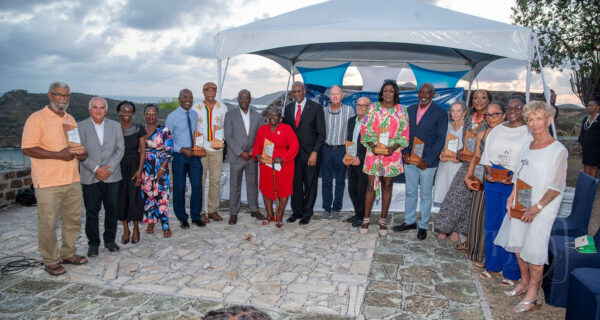
    During the July 16 anniversary ceremony, held under the official theme “A Decade Celebrating Centuries,” the NPA honored 12 individual contributors and community groups whose longstanding dedication has been critical to the site’s success. Recognized honorees included Franklyn Braithwaite MBE, GOH, OLY, Jean Weste, Paul Deeth, Elizabeth Jordan, Althea Joseph, Karl James MBE, Jennifer Byerley Bentley, Capewell William Greene II, Louise Edwards, Marinus Smith, Leslie Roberts, and the Shirley Heights Lookout community group.

    Honourable E.P. Chet Greene, the cabinet minister responsible for the National Parks Authority, used the occasion to issue a renewed call for collective commitment to heritage stewardship. “This cultural landscape is the people’s place, and beyond words, we are committed to ensuring its protection through sound policy and legislation, preserving it for future generations,” Greene said. “We remain dedicated to safeguarding our rich African heritage and ensuring that young people understand, embrace, and value the cultural legacy that surrounds them. The protection of spaces such as this demonstrates the importance of our heritage today and its continued significance for tomorrow.”

    As Antigua and Barbuda marks 10 years of UNESCO World Heritage status for the dockyard, the milestone is both a celebration of decades of progress and a renewed pledge to protect the site for future generations. Heritage conservation is an ongoing responsibility that demands ongoing innovation, cross-sector collaboration, and adaptive resilience in the face of evolving global challenges from climate change to shifting tourism patterns. The Antigua Naval Dockyard and Related Archaeological Sites belong first to the people of Antigua and Barbuda, and through its UNESCO designation, to the wider world. The National Parks Authority remains steadfast in its mission to protect, preserve, and promote this extraordinary legacy for generations to come.

  • Machel, Skinny Fabulous join Saint Lucia’s best for Color Me Red

    Machel, Skinny Fabulous join Saint Lucia’s best for Color Me Red

    One of the most anticipated staples of Saint Lucia’s annual carnival calendar is gearing up for a milestone celebration, as organizers officially announced that Color Me Red (CMR) — the island’s signature standalone carnival concert — will return as “CMR – the Encore” on Carnival Friday, July 17, 2026. Held to mark the event’s 20th year as a cornerstone of Lucian carnival culture, the anniversary show will take place at the iconic Daren Sammy Cricket Ground in Beausejour, drawing top soca talent from across the Caribbean.

    The lineup already boasts an impressive roster of homegrown and regional stars, including leading voices from Saint Lucia’s popular Dennery Segment movement: Blackboy, Mighty, Tallyboy, and fan-favorite Andrew “the biscuit man”. Completing the bill are award-winning local carnival soca acts: Groovy Monarch Kisha, Power Soca Monarch Ezra D’funmachine, Shemmy J, and Sedale. Headliners for the landmark anniversary show, however, are two of Caribbean soca’s biggest names who share decades of history with the CMR event, Skinny Fabulous and Machel Montano, both of whom opened up about their return at an official press conference held Thursday at Saint Lucia’s Windjammer Hotel.

    Speaking to attendees at the launch, Thaddeus Antoine, founder and director of Red Carnival — the production company behind CMR — explained the meaning behind the “Encore” moniker, emphasizing that the 20th iteration is unlike any previous edition. “Early in CMR’s run, Skinny Fabulous was just a rising artist studying at the University of the West Indies when he opened for Ricky T here. Machel graced our stage for five straight years, those were some of the best years CMR has ever had. Now both are back, and what do you call a return from fan favorites? That’s an encore,” Antoine said.

    For Vincentian soca star Skinny Fabulous, the 2026 show marks a full-circle moment in his decades-long career. He recalled his first trip to Saint Lucia, when he explored the coastal town of Soufriere and took in the world-famous views of the Pitons, and shared how early opportunities at CMR helped shape his path in the industry. “I competed against Ricky T, who I’ve always considered a legend, at the 2009 OECS Soca Monarch. I met Thaddeus back when he worked as an entertainment lawyer, and he was one of the first promoters to give me a large platform to perform. Now I’m back, sharing the stage not just with a pioneering promoter, but with my good friend and brother Machel — it’s really come full circle,” he explained.

    Skinny Fabulous echoed Antoine’s excitement, noting that Carnival Friday is widely considered the official start of the full carnival celebration in Saint Lucia, and promised attendees that the 20th anniversary show will be the largest and most impressive celebration of Lucian and Caribbean musical talent ever staged at CMR.

    Trinidadian soca icon Machel Montano, who also returns as a headliner, said he has long felt a deep connection to Saint Lucia, dating back to his childhood. “I’m absolutely thrilled to be here. This feels like sitting with family. I’ve been coming to Saint Lucia since I was 9 years old, back when I was too young to even perform soca,” Montano shared. “Two years ago, I played Saint Lucia Jazz and it was one of the best nights of my entire career, the energy from the crowd was unmatched. I haven’t experienced Saint Lucia carnival in years, and as they say, absence makes the heart grow fonder. I’m coming with brand new hits this time around.”

    Montano also reflected on his long history of collaboration with Saint Lucian creatives, including producers Pen and Ace and soca legend Ricky T, noting that these cross-island partnerships helped lay the groundwork for the Caribbean unity the show celebrates today. He added that he has watched the island’s homegrown Dennery Segment genre grow from a local sound to a major, distinctive force across the Caribbean, and he is eager to share the stage with the movement’s leading artists. “It’s an honor to be invited back to CMR. This is a family affair, and I can’t wait to put on a show full of hits alongside my Saint Lucian and Caribbean family,” he said.

    To make the milestone celebration memorable for all attendees, organizers have curated special experiences for both general admission guests and VIP ticketholders. They also extended formal thanks to the event’s platinum sponsors — Bank of Saint Lucia and Windjammer — along with all supporting sponsors and partner organizations that have made the 20th anniversary show possible.