分类: education

  • UWI Five Islands expands community outreach and academic offerings

    UWI Five Islands expands community outreach and academic offerings

    The University of the West Indies (UWI) Five Islands campus has announced a significant expansion of both its community engagement efforts and academic program portfolio, marking a key milestone in the institution’s growth trajectory in the Caribbean region.

    Long positioned as a regional higher education hub focused on accessible learning, the Five Islands campus has ramped up its community outreach to address pressing local needs. New initiatives include free financial literacy workshops for small business owners across Antigua and Barbuda, STEM outreach programs for underserved secondary school students, and collaborative environmental conservation projects with local coastal protection nonprofits. University leadership notes that these programs are designed to bridge the gap between academic research and community action, bringing institutional resources directly to residents who stand to benefit most.

    Parallel to its community-focused expansion, the campus has added 6 new undergraduate and graduate degree programs aligned with growing regional industry demand. The new offerings include a bachelor’s degree in sustainable tourism management, a master’s program in digital public governance, and certifications in climate resilience planning—fields projected to drive job growth across the Caribbean over the next decade. Campus administration reports that enrollment for the new programs will open for the upcoming fall semester, with need-based scholarships available to support local students.

    Local education stakeholders have welcomed the expansion, noting that the moves will strengthen the campus’s role as a driver of social and economic development for Antigua and Barbuda, while expanding access to world-class UWI education for students across the Eastern Caribbean.

  • UWI Five Islands Honours Top Students with Principal’s List and Honour Roll Recognition

    UWI Five Islands Honours Top Students with Principal’s List and Honour Roll Recognition

    The University of the West Indies (UWI) Five Islands Campus has recently celebrated the exceptional academic achievements of dozens of high-performing students from the first semester of the 2025–2026 academic year, inducting the standout scholars into two prestigious honorary groups: the campus-wide Honour Roll and the selective Principal’s List.

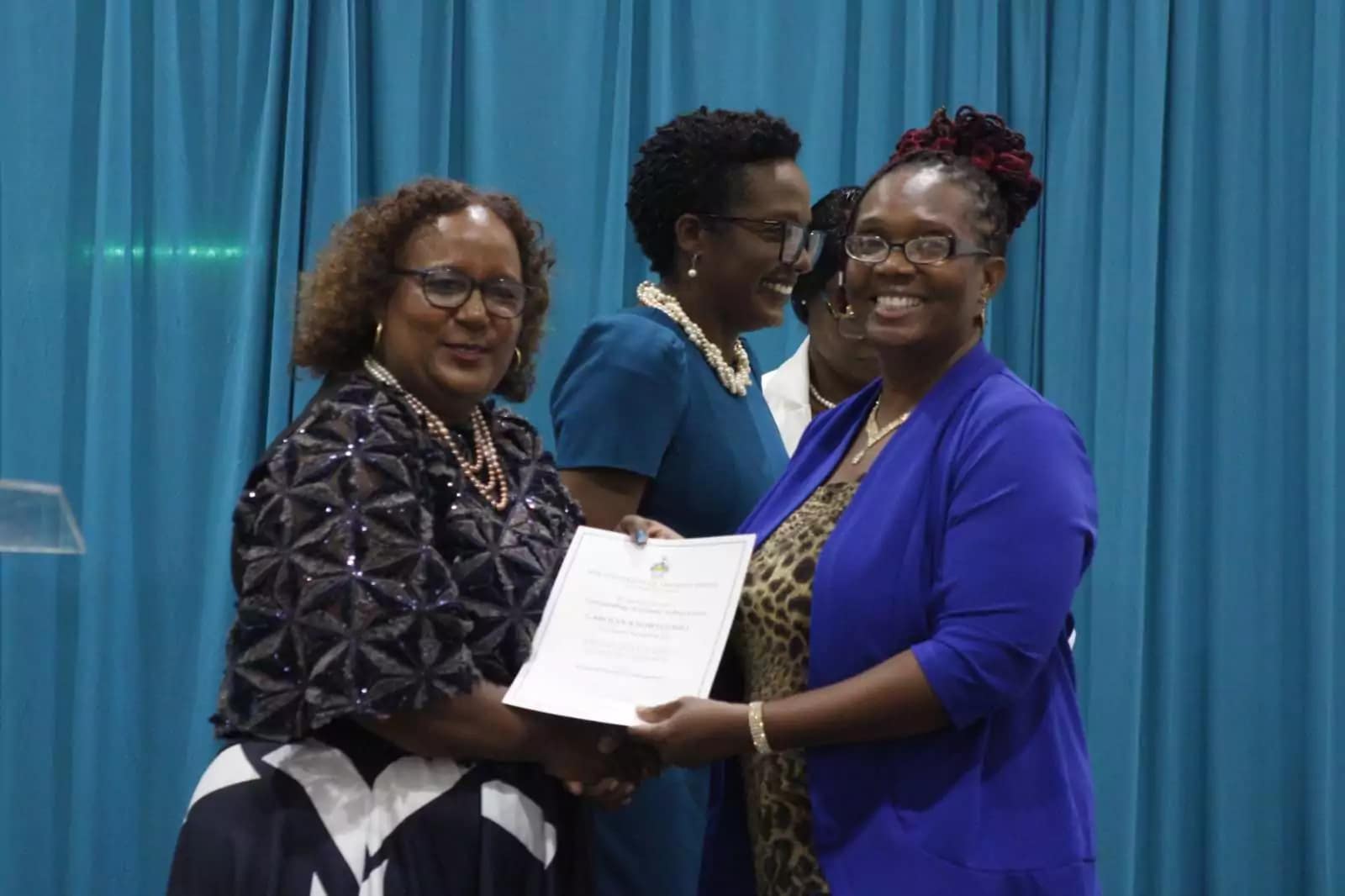
    Held as a hybrid event that allowed both in-person attendance and remote participation for students, family members, and faculty across different locations, the ceremony featured opening remarks from Dr. Camille Samuel, the campus’ Registrar, who spoke on behalf of Principal Professor Justin Robinson. In her address, Dr. Samuel emphasized that these annual awards are far more than just ceremonial recognition—they are a tangible reflection of the institution’s core institutional commitment to centering student success and implementing rigorous, consistent monitoring of every student’s academic progress throughout their program of study.

    “Tonight, we gather not just to hand out certificates, but to formally acknowledge the hard work, late nights, and relentless dedication that have led you to this level of academic excellence,” Dr. Samuel told the assembled honourees. She went on to outline the campus’ ongoing strategic efforts to boost student retention and lift overall academic performance across all disciplines, noting that these honorary inductions are a key marker of how those investments are paying off for driven students.

    The two honorary tiers carry distinct criteria to recognize different levels of sustained achievement. The Honour Roll is awarded to students who earn exceptionally high grade point averages (GPAs) during the most recent semester, rewarding strong performance in a single academic term. In contrast, the Principal’s List is the campus’ highest undergraduate academic honor, reserved exclusively for students who have maintained top-tier academic results across the entirety of their degree program, rewarding consistent excellence rather than just a single strong term.

    In her closing remarks to the honourees, Dr. Samuel encouraged the recognized students to frame this achievement as a foundational milestone rather than a final career or academic destination. She reminded the emerging scholars that the professional world beyond campus does not reward unfulfilled potential—it rewards consistent, intentional execution of skills and knowledge. She closed by urging all award recipients to leverage their academic training and demonstrated discipline to create meaningful, positive change across their local and regional communities after graduation.

  • Hurricane Hunters Touch Down for Education, Not Emergency

    Hurricane Hunters Touch Down for Education, Not Emergency

    For most people around the world, the U.S. Air Force Reserve Hurricane Hunters are only a name tied to breaking emergency weather coverage: when a catastrophic tropical cyclone is barreling toward populated coastlines, these elite pilots and their specially modified aircraft fly straight into the storm’s eye to collect life-saving data that forecasters rely on to track intensity and path. But this week, the Hurricane Hunters are touching down in Belize for an entirely different mission – one centered on education, not disaster response.

  • STATHS to get renewable energy laboratory

    STATHS to get renewable energy laboratory

    KINGSTON, Jamaica — A landmark initiative to boost technical and vocational training in clean energy is moving forward at St Andrew Technical High School (STATHS), as procurement begins for a purpose-built renewable energy laboratory on the institution’s campus. Jamaica’s Minister of Education, Skills, Youth and Information, Senator Dana Morris Dixon, announced the timeline for the project during an official alumni engagement visit this Tuesday, held to mark the school’s 65th anniversary under the celebratory theme “Inspiring Change: Reshape, Realign, Refocus”.

    According to Minister Dixon, construction of the cutting-edge lab is scheduled to take place entirely over the upcoming summer holiday break, with a grand opening planned for the start of the new academic semester in September. The facility is designed to give hands-on technical training to students across a range of fast-growing renewable energy sectors. “Students will gain practical knowledge of solar technology, complete training for solar panel installation, and learn the ins and outs of energy storage batteries. They will also study core concepts of wind power generation,” Dixon explained during her address. “In the lab, they will master every step of working with renewable energy systems: how to install them, how to continuously monitor their performance, how to carry out repairs and maintenance, and they will even get to explore other clean energy solutions beyond solar and wind,” she added.

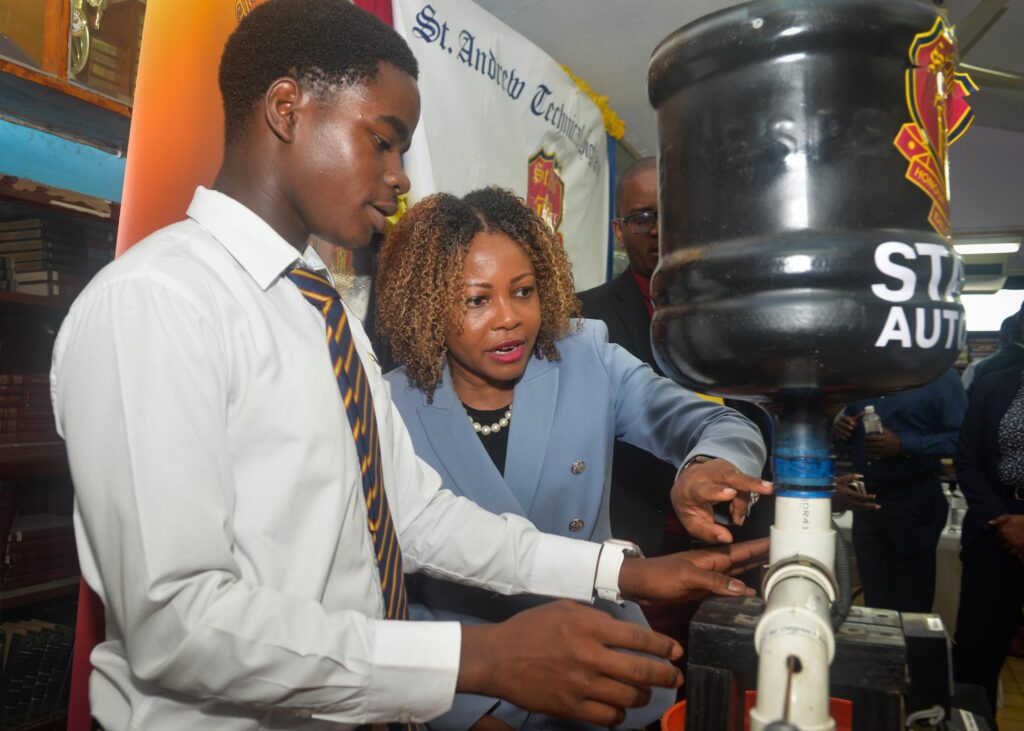
    During her visit, the minister also conducted a tour of STATHS’ existing Technical and Vocational Education and Training (TVET) facilities, where she got a first-hand look at the innovative work already being carried out by the school’s student body. Two 11th-grade students, Nathaniel Hurge and Cameron Pinnock, took the opportunity to present STATHS Autopeck, an automated chicken feeder the pair developed alongside two other classmates, to address a common challenge for small-scale poultry raisers.

    Nathaniel explained that the idea grew out of a widespread inconvenience: many small poultry keepers and agricultural teachers struggle to monitor chick feeding overnight, creating an unnecessary daily hassle. To solve this problem, the team designed and built their low-cost automated solution from readily available materials over just two weeks of work. The device operates using two reduction motors for power, paired with three 3D-printed spiral screws arranged in clockwise, counter-clockwise, and central positions to guide feed smoothly downward into feeding basins. A programmable timer module lets users set custom feeding durations and intervals to match the needs of their flock, while an integrated weighted sensor automatically shuts the machine off if too much feed accumulates in the basins, preventing harmful overfeeding.

    While the device is not the first automated chicken feeder on the market, Nathaniel noted that it features a custom, low-cost design tailored to small-scale use, and the team already has big plans for future upgrades. “Down the line, we want to add a connected app that will let users monitor the feeder remotely from any location,” he said. Cameron added that the project required cross-disciplinary collaboration across multiple technical fields, pulling in skills from electrical engineering, building construction, plumbing, and even visual arts to bring the idea to life. Built with affordable off-the-shelf components including reduction motors, a DC power outlet, a repurposed five-gallon plastic bottle, plumbing pipes, and a control switch, the project pushed the students to problem-solve through unexpected challenges. “It was a demanding task, but we pushed through and got it done,” Cameron said. “Our next upgrade will be adding an integrated solar power system to cut the device’s reliance on continuous grid electricity, making it even more sustainable for off-grid use.”

  • Students Manage Media as Equipment Handed Over to Barbuda Secondary School

    Students Manage Media as Equipment Handed Over to Barbuda Secondary School

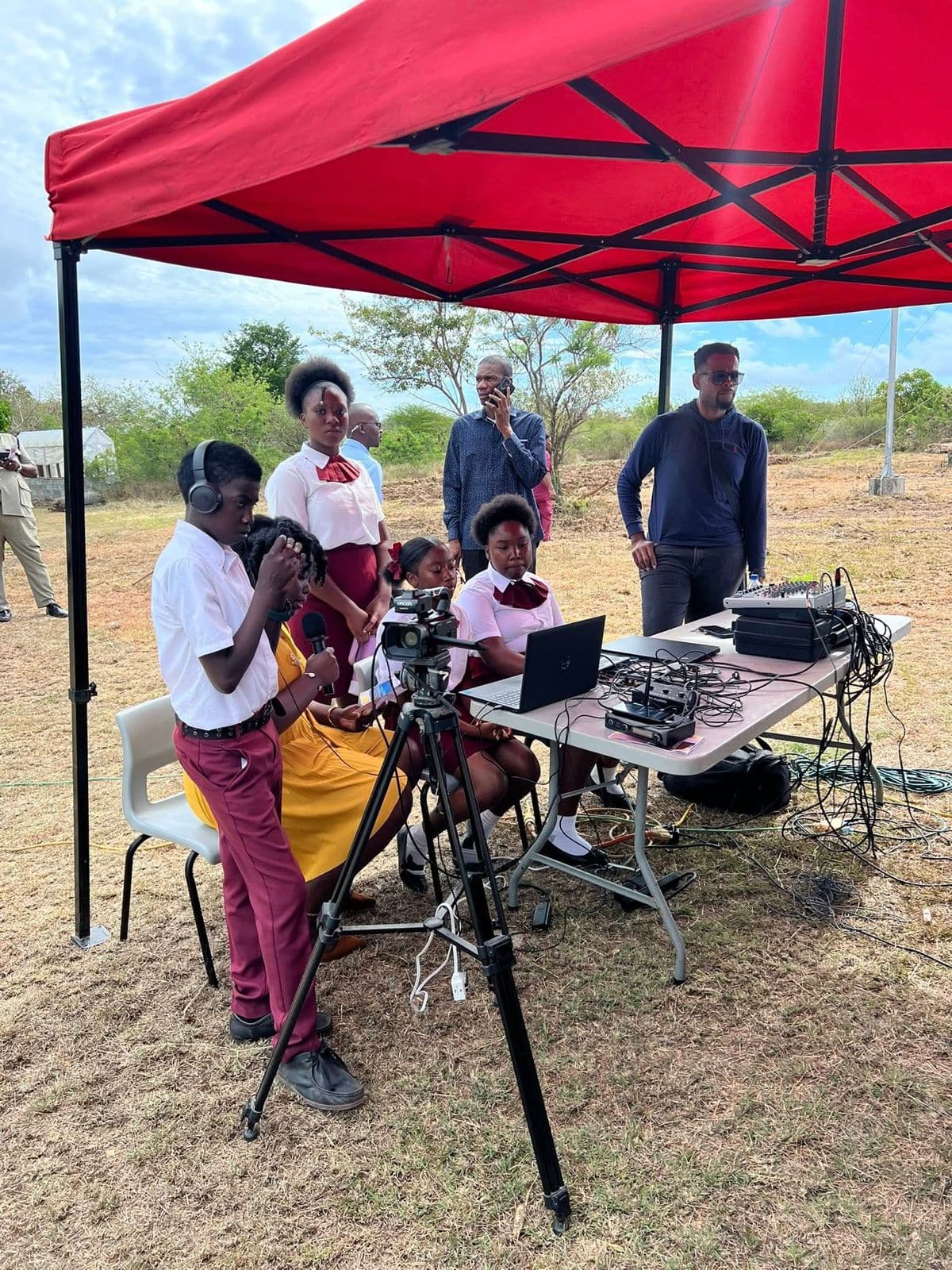
    At a recent equipment handover event held at Sir McChesney George Secondary School, students stepped into the spotlight by taking charge of all on-site media operations, turning a routine institutional ceremony into a dynamic hands-on learning opportunity. Rather than sidelining young people as passive attendees, event organizers intentionally integrated the student body into core operational roles, letting them put their communication, technical and collaborative abilities on full display.

    What makes this student-led management milestone particularly notable is that it demonstrates the versatile abilities young people build through school sports programmes – abilities that stretch far beyond athletic competition on the pitch or court. Education and sports officials who attended the event emphasized that embedding students in the event’s planning and execution gave them unparalleled real-world experience that cannot be replicated in a traditional textbook-only classroom setting.

    Officials further explained that intentional, practical involvement like this underscores the often-overlooked value of school sports initiatives. Beyond promoting physical fitness and team competition, these programmes cultivate a range of practical, transferable skills that serve students well in future academic pursuits and professional careers. Skills such as project coordination, media communication, problem-solving and cross-team collaboration, all fostered through participation in organized sports, proved critical to the students’ successful management of the handover ceremony’s media operations.

  • AdeKUS richt blik op kloof tussen beleid en uitvoering tijdens Bestuurskundeweek

    AdeKUS richt blik op kloof tussen beleid en uitvoering tijdens Bestuurskundeweek

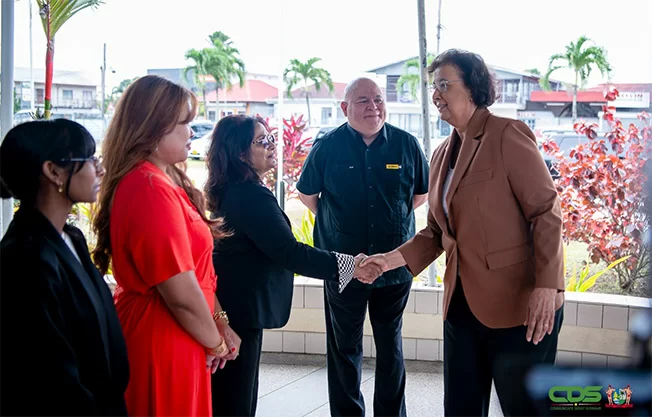
    On a recent Monday, the Anton de Kom University of Suriname (AdeKUS) officially launched the fourth iteration of its annual Public Administration Week, an event tailored to connect academic learning with real-world governance challenges. This year’s programming centers on a timely and critical theme: moving beyond Suriname’s traditional reliance on natural resource extraction to build inclusive, long-lasting sustainable development, with a specific focus on bridging the gap between policy design and on-the-ground execution. The opening ceremony was led by Suriname’s President Jennifer Simons, who used her opening address to emphasize that closing this implementation gap remains one of the most pressing ongoing challenges for the South American nation.

    Public Administration Week is structured to give undergraduate and graduate students in the public administration degree program hands-on learning opportunities that go far beyond traditional classroom instruction. Over the course of the five-day event, students will take part in interactive workshops led by practicing policymakers, site visits to regional government agencies, and panel discussions with leading governance experts from across Suriname and the Caribbean region. Every activity ties back to the event’s core theme: “From Natural Resources to Sustainable Development: Policy Choices for the Next Generation”.

    President Simons noted that the chosen theme cuts straight to the heart of Suriname’s most critical development questions. In her remarks, she outlined that effective governance relies on three non-negotiable pillars: full transparency, public accountability, and a consistent commitment to centering community input in policy design. She also pushed back on common framing of sustainable development, noting that it extends far beyond narrow metrics of economic growth or natural resource sector diversification. “Sustainable development is not just about drafting innovative policy ideas,” Simons said during her address. “It is about turning those ideas into tangible, effective action that improves lives for current and future generations.”

    Despite Suriname’s abundance of development ideas and access to skilled technical expertise, Simons acknowledged that turning plans into action frequently hits roadblocks. A range of systemic and institutional barriers often slow or fully block policy implementation across sectors, she explained. In response to this persistent gap, the president called on participating public administration students to bring fresh perspectives and innovative thinking to solve this challenge, as highlighted in an official release from the Communication Service of Suriname.

    Simons also stressed that building broad public buy-in is a non-negotiable component of successful policy execution. Even the most well-intentioned policy initiatives will face uncrossable barriers without widespread support from local communities and broader society, she noted. She further called for deeper, more structured collaboration between Suriname’s academic institutions and national government, including a proposal to integrate student graduation research more directly into government policy development processes.

    Loraine Arsomedjo, program coordinator for AdeKUS’s Public Administration degree, echoed the president’s remarks, underscoring that this year’s theme could not be more relevant to Suriname’s current context. Arsomedjo pointed out that while Suriname holds vast reserves of valuable natural resources, these assets alone are not enough to deliver equitable, sustained national development. “Without strong public institutions and thoughtful, intentional policy design, natural resource wealth can easily become a source of systemic vulnerability rather than national prosperity,” she explained.

    Arsomedjo added that the public administration program at AdeKUS is designed to培养 students who do not just understand how existing policy processes work, but who are also willing and able to think critically about how to improve governance systems. “You are not here to be passive observers of public affairs,” Arsomedjo told participating students. “You are the thinkers, the designers, and the leaders who will shape Suriname’s future.”

    Through the full week of programming, Public Administration Week aims to prioritize cross-sector knowledge sharing, critical reflection on Suriname’s governance challenges, and targeted preparation for students who will go on to fill key roles in Suriname’s public administration sector after graduation.

  • Caribbean Students shine in 2025–2026 YES Competition with innovative environmental solutions

    Caribbean Students shine in 2025–2026 YES Competition with innovative environmental solutions

    Macmillan Education Caribbean has officially announced the results of the 2025–2026 iteration of its annual Young Environmental Scientists (YES) Competition, a regional initiative that celebrates the creative problem-solving, sharp analytical thinking, and environmental commitment of primary and secondary school students across the Caribbean basin. Now a staple annual event for young science enthusiasts across the region, the YES Competition invites student teams from participating countries to identify pressing local environmental issues, then design and execute evidence-based, practical solutions tailored to their communities, all while building core skills in collaboration and critical thinking.

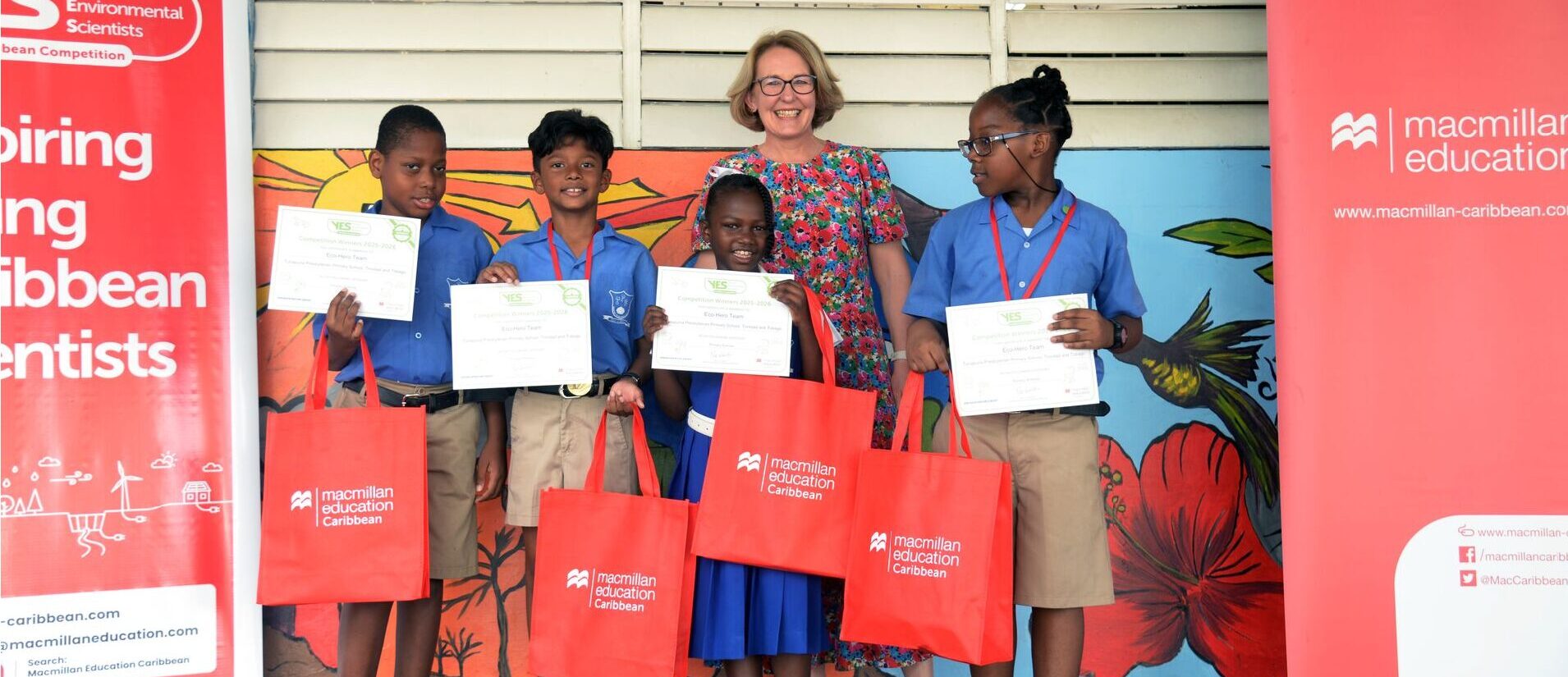
    In the primary school division, the 2025–2026 championship title went to the Eco-Hero Team from Tunapuna Presbyterian Primary School in Trinidad and Tobago. The team impressed judges with their community-focused project aimed at cutting single-use plastic consumption on their school campus. Their intervention centered on encouraging fellow students to bring and reuse personal reusable utensils, eliminating reliance on disposable plastic cutlery for school meals and activities. To embed long-term behavior change, the team rolled out targeted awareness campaigns, hosted a school-wide poster contest to spread their message, and collected ongoing data to track shifts in student habits. Judges highlighted that the project powerfully demonstrated how small, accessible local actions can add up to substantial environmental benefits for school communities. Second place was awarded to the SVG Wildlife Warriors from Calliaqua Anglican Primary School in St Vincent and the Grenadines, while third place went to the Sea to Structure Solutionists of Grand Roy Government School in Grenada.

    For the secondary school division, the top prize was claimed by the ResistRx team from Queen’s College in Guyana, marking the institution’s second consecutive win at the YES Competition. The team’s groundbreaking research focused on a underaddressed environmental threat: the public health and ecological risks of improper antibiotic disposal. ResistRx mapped how antibiotic residues enter local ecosystems primarily through unsorted household waste and unregulated disposal practices on small-scale farms, documenting how these residues accumulate in soil and accelerate the development of dangerous antimicrobial resistance—a growing global public health concern. The team paired their research with actionable, scalable recommendations: establishing dedicated community collection bins for unused medications, introducing targeted composting guidelines for small-scale agricultural producers, and launching a regional public education campaign to raise awareness of the issue. A small pilot survey conducted by the team revealed that while public knowledge of improper antibiotic disposal risks was limited, a majority of community members expressed willingness to adopt safer disposal practices if given the infrastructure and information to do so. In a surprise showing for the secondary division, Trinidad and Tobago’s Five Rivers Secondary School claimed both second and third place, with the GASH – Giant African Snail Hunters Association taking second and the Wes4G 4-H Club securing third.

    All winning teams will take home a range of prizes designed to support their ongoing science education. First-place teams in both divisions receive a half-day hands-on science workshop, a full classroom set of science reference books, a US$250 bookstore voucher, and individual and team trophies, medals, and certificates. Second-place teams receive a US$100 bookstore voucher alongside their medals, trophies, and certificates.

    With the 2025–2026 awards finalized, organizers have already opened the call for greater regional participation for the 2026–2027 competition. Dr. Katy Anyasoro, Marketing Manager at Macmillan Education Caribbean, emphasized the growing impact of the event across the region. “The competition continues to grow as a regional platform for showcasing Caribbean students’ innovation and environmental stewardship,” she said. “This year’s projects, which ranged from reducing plastic waste to addressing antimicrobial resistance, reflect the increasing awareness among young people of the need for sustainable solutions to real-world challenges.”

    In the coming weeks, the public will be able to access a public highlight reel featuring standout project submissions from across the region, alongside photographs from national award ceremonies held in all participating countries. Open to students between the ages of 7 and 18, the YES Competition is designed to nurture the next generation of Caribbean environmental scientists and sustainability leaders by giving young people the opportunity to lead hands-on research, collaborate on team-based solutions, and turn their ideas for local environmental change into action.

  • GBSS runner up in Regional Schools Investment Competition

    GBSS runner up in Regional Schools Investment Competition

    On March 26, 2026, St. Lucia hosted the official awards ceremony to honor top-performing teams from the 3rd Annual Regional Schools Investment Competition (RSIC), an innovative educational initiative designed to introduce secondary school students across the Eastern Caribbean to the world of securities investing. To ensure broad participation and recognition, the entire event was broadcast via live virtual stream, allowing standout competitors from Grenada and St. Vincent and the Grenadines to be celebrated in real time while giving students and community members across the region access to the celebration.

    Launched in October 2025 and concluding in November of the same year, the RSIC was spearheaded by the Eastern Caribbean Securities Exchange (ECSE), with collaboration from the Eastern Caribbean Securities Regulatory Commission (ECSRC) and licensed member broker-dealers. Unlike traditional academic competitions, the RSIC combines practical financial experience with academic reflection: participating student teams were evaluated on two core metrics: the final value of their simulated investment portfolios, and pre-recorded video submissions that detailed their strategic decision-making processes and key lessons learned throughout the competition.

    Four top teams walked away with major awards at the ceremony. Alite Investors, representing St. Lucia’s Choiseul Secondary School, claimed the title of Regional Champion, taking home the prestigious Sir K Dwight Venner Champion Trophy. The runner-up position went to Boys on the Hill Investment from Grenada Boys Secondary School (GBSS) in Grenada. Additional specialty awards went to N’Oct’urnal Invests of Vieux-Fort Comprehensive Secondary School (St. Lucia), which won the Most Creative Video Submission prize, and SMSS Prosperity Pioneers of St. Martin’s Secondary School (St. Vincent and the Grenadines), recognized for the Most Well-Presented Strategic Approach.

    Prizes for the winning teams and their supporting advisors reflected the initiative’s focus on encouraging long-term engagement with finance. Champion team members each received gold medals, personalized certificates of achievement, an investment gift voucher worth EC$540, and branded partner gift backpacks. The school itself took home a champion plaque and a cash prize of EC$6,500. Supporting teachers also earned recognition: each received a certificate of achievement, a gift certificate waiving broker fees for their first personal investment, a branded tote bag filled with partner gifts, and a special dedication award from the ECSRC for their commitment to student development.

    For the runner-up GBSS team, the school received a plaque and EC$3,000 cash prize. Individual student members earned silver medals, achievement certificates, EC$270 investment vouchers, and branded gift backpacks. Their teachers received comparable recognition to the champion team’s advisors, including the broker fee waiver voucher and partner gifts. Recipients of the specialty video award each took home a participation certificate and an EC$250 cash prize.

    Organizers extended congratulations to all winning teams and expressed sincere gratitude to every participating school across the region for their engagement. Launched as a developmental educational program, the RSIC continues to fulfill its core mission: giving young people across the Eastern Caribbean hands-on exposure to core investment principles and direct experience with how regional securities markets operate, building a foundation for future financial literacy and economic participation.

  • In-person meeting at Fort Young Hotel 16th April 2026 from 6pm Edinburgh Napier University

    In-person meeting at Fort Young Hotel 16th April 2026 from 6pm Edinburgh Napier University

    Prospective students and higher education seekers in the region have a new opportunity to explore study pathways at one of the United Kingdom’s dynamic modern universities, with an in-person information session scheduled for April 16 at the Fort Young Hotel. Hosted by Southpoint Education International, the event will kick off at 6:00 PM local time, and is designed to give attendees clear, first-hand insight into the diverse range of undergraduate, postgraduate, and professional study programs offered by Edinburgh Napier University.

    Unlike virtual information sessions that often leave questions unanswered, this face-to-face gathering will allow prospective students to connect with education representatives directly, ask personalized questions about program curricula, admission requirements, scholarship opportunities, and student life on Edinburgh Napier’s campuses. Edinburgh Napier University, based in Scotland, is widely recognized for its industry-aligned programs, strong graduate employment outcomes, and inclusive campus community that welcomes hundreds of international students from across the globe each year.

    Organizers note that space for the session is limited to ensure attendees receive dedicated attention, so pre-registration is required for all those planning to attend. Interested individuals can secure their spot at the event by completing the RSVP form through Southpoint Education International’s official registration portal.

  • The King’s Foundation and ABCAS announce selected participants for UK Building Craft Programme

    The King’s Foundation and ABCAS announce selected participants for UK Building Craft Programme

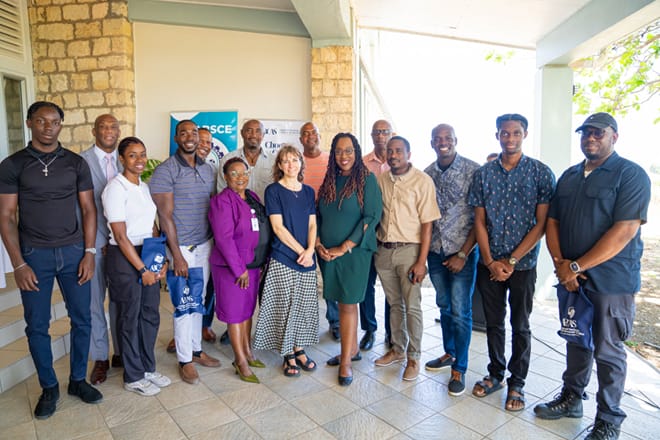
    A landmark skills development initiative focused on heritage conservation and climate-resilient construction has officially kicked off in Antigua and Barbuda, with eight local participants selected to take part in the 2026 Building Craft Programme. The collaborative effort, led by The King’s Foundation—King Charles III’s charity dedicated to nature and sustainability—in partnership with the Antigua and Barbuda College of Advanced Studies (ABCAS) and the country’s Ministry of Foreign Affairs, marked its launch with an opening ceremony on April 8, 2026 at ABCAS’s Muriel O’Mard Campus. The event brought together key stakeholders from all partnering organizations, alongside the newly selected cohort of trainees, to kick off the innovative training initiative.

    After a rigorous competitive application and screening process that included final interviews, the eight chosen participants—Kyla Weaver, Glennoy Goodwin, Shannoy Spencer, Jesse Gilpin, Devon Thomas, Johnathan Joseph, Edmund Map, and Akeem Javin James—represent a diverse cross-section of Antigua and Barbuda’s construction and design industry. The entire training opportunity is fully funded by The King’s Foundation and its partner donors, including The King Charles III Charitable Fund, Kestrel Liner Agencies Ltd, and the Mill Reef Fund, removing financial barriers for emerging and established industry professionals looking to advance their skills. Two experienced ABCAS staff members will accompany the group for the UK-based portion of the programme: Jace Gore, Head of the Department of Industrial Technology, and Garry Southwell, CVQ Implementation Officer, who will offer ongoing academic and technical guidance throughout the training period.

    The cohort brings together a wide range of professional backgrounds, including practicing architects, civil engineers, skilled trade workers, one former ABCAS graduate, and one currently enrolled ABCAS student. This mix creates a dynamic group united by shared passion and commitment to advancing two critical priorities for Antigua and Barbuda: heritage preservation and climate-resilient building practices. Since the programme’s opening, participants have begun a week-long on-site orientation in Antigua, led by ABCAS with logistical and content support from The King’s Foundation. The orientation combines in-class foundational learning with hands-on field exposure to prepare trainees for the intensive training ahead. On April 12, the group will depart Antigua for the four-week UK-based portion of the programme, which will be hosted at The King’s Foundation dedicated training sites, starting at the charity’s headquarters at Dumfries House in Ayrshire, Scotland, with additional training taking place at Highgrove Gardens in Gloucestershire, England.

    During their time in the UK, participants will gain immersive, hands-on experience in a range of high-value traditional building crafts and modern sustainable techniques. Key skill areas include precision carpentry, traditional masonry, lime-based building methods, heritage structure restoration, and contemporary climate-resilient construction practices. After completing the UK training segment, participants will return to Antigua and Barbuda to put their newly learned skills into practice during a local community-focused live construction project, allowing them to apply their knowledge directly to a real-world development need in their home country.

    In remarks at the opening ceremony, Dr. Na-Ajele Buffonge, Vice President of ABCAS, emphasized the long-term value of cross-sector partnerships for skills development in the region. “At ABCAS, we remain committed to developing talent through meaningful partnerships,” Buffonge said. “This programme provides participants with internationally recognised skills while supporting sustainable and heritage-focused development in Antigua and Barbuda.” Dr. Simon Sadinsky, Executive Director of Research, Impact and Learning at The King’s Foundation, echoed that enthusiasm, noting “We are delighted to welcome these talented individuals to The King’s Foundation training sites, including Dumfries House in Ayrshire, Scotland, and Highgrove Gardens in Gloucestershire, England, to enhance their skills in heritage building crafts and climate-resilient construction.”

    A follow-up cocktail reception for stakeholders and participants was held on April 9 at Galley Bay Resort and Spa, creating space for continued dialogue and relationship-building as the programme moves forward. Overall, the 2026 Building Craft Programme marks a major milestone for Antigua and Barbuda’s efforts to build national capacity in heritage conservation and sustainable construction, aligning directly with the country’s core national development priorities while empowering local professionals with globally competitive, industry-leading skills.