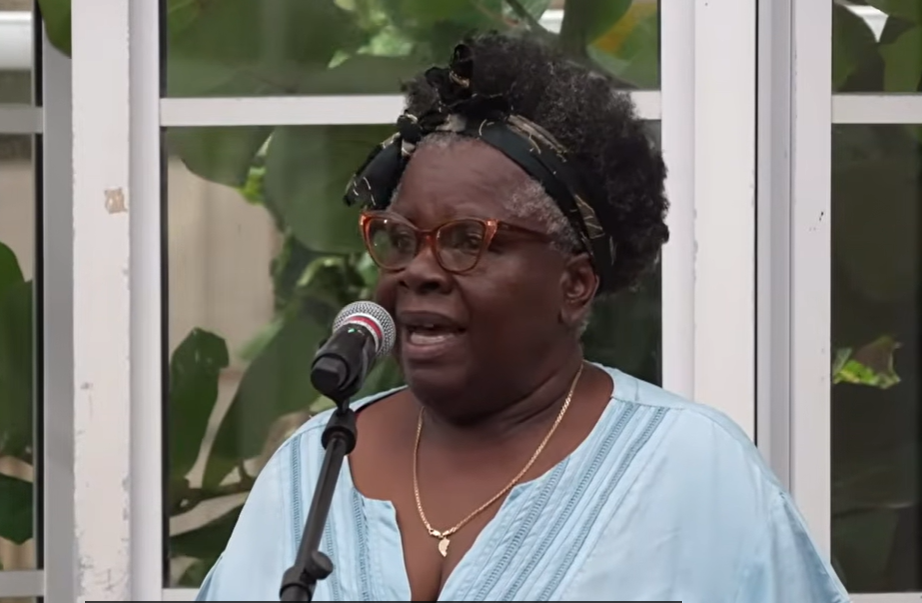
As Barbados grapples with a steadily climbing national crime rate, its ripple effects are now reaching the island’s classrooms, pushing veteran St Philip educator Betty-Lyn Estwick to push for a critical policy shift: placing a full-time, permanent counselor in every school to support young people living with the trauma of family-connected crime. Estwick outlined her proposal during Monday’s St Philip Ideas Forum, hosted at Princess Margaret Secondary School, where she shared firsthand observations of children who witnessed family members commit violent offenses, only to go on to replicate that harmful behavior later in life.
Estwick argued that part-time, visiting counselors, who only spend a few hours or one day a week on campus, are unable to provide the consistent, long-term support at-risk youth need. Instead, she called for dedicated, full-time staff who can monitor students showing early warning signs of falling into criminal patterns, and intervene early to steer them away from a life of violence. “If we look at the backgrounds of many people currently committing murder on the island, we see this pattern of intergenerational exposure to crime,” she noted. “Children of murder victims, abused youth, and vulnerable young people need consistent, ongoing follow-up and support that only a permanent on-site counselor can provide.”
Estwick also drew sharp criticism to the Ministry of Education Transformation’s upcoming universal free breakfast program, set to launch in September. She argued the initiative is unnecessary to serve all students, claiming that existing community-led breakfast programs already identify needy children through on-the-ground knowledge from teachers. Instead of rolling out a new universal program, she suggested the government should allocate the funding to upgrading existing initiatives and improving overall school infrastructure to create better learning environments for both students and staff, calling the proposed universal program “a joke.”
Responding to Estwick’s call for early intervention for at-risk youth, Attorney General Wilfred Abrahams confirmed that the government is already moving forward with a targeted diversion program, spearheaded by the Barbados Defence Force, designed to identify vulnerable youth before they enter the criminal justice system. New legislation to establish the residential program will be introduced imminently, Abrahams said, adding that the initiative will be developed in partnership with the Ministry of Education and the Social Empowerment Agency. Unlike existing programs that only work with youth who have already broken the law, this new effort will focus on pre-emptive intervention for children showing early signs of heading down the wrong path.
Education Transformation Minister Chad Blackman pushed back against Estwick’s criticism of the free breakfast program, defending its core purpose and goals. Blackman explained that while some students may not come from low-income backgrounds, many arrive at school early having not eaten any breakfast, often because their parents leave for work well before the school day begins. “We can build state-of-the-art schools, train every teacher to the highest standard, and roll out all the best education technology in the world, but if a child is hungry, they simply cannot learn,” Blackman said. Extensive research confirms that access to a nutritious morning meal improves academic outcomes, he added, making the program a fundamental investment in education transformation.
St Philip North Member of Parliament Dr. Sonia Browne, who has run a community school breakfast program for years, backed the minister’s position. She noted that her own program found that many food-insecure students are not from underprivileged backgrounds – they just arrive at school too early for their parents to prepare breakfast, and any hungry child should be fed regardless of their family’s income. Her policy has always been that “if you’re hungry, you get fed,” she said.
Blackman also clarified that the new program does not aim to replace existing community and philanthropic meal initiatives. Instead, the government is partnering with more than 40 churches and community organizations to coordinate delivery, and will meet with these groups within two days to finalize arrangements. The goal is to preserve the spirit of local philanthropy while creating a more coordinated, comprehensive system that reaches more hungry children, he added. The minister also rejected claims that funding for the breakfast program will divert resources from school infrastructure improvements, noting that the government is already advancing extensive modernization and refurbishment work across the island’s school network, much of which is between 50 and 200 years old. This work, carried out over the recent summer break after the secondary school entrance examination, includes upgrades to improve schools’ resilience to hurricanes and climate change impacts, alongside general modernization to create safe, functional learning spaces for students and teachers. Beyond infrastructure, the government is also investing in teacher training and new education technology, he added.
The forum also included calls for greater investment in homegrown education technology from Teddy Leon, founder of local startup EduConnect. The real-time platform connects schools and parents, cutting down on administrative work for teachers while improving communication between families and school staff. Unlike foreign-developed education tools that are not adapted to Barbados’ unique context, Leon said, the island should prioritize building its own digital education infrastructure developed by local innovators who understand the country’s specific challenges. EduConnect, which has been piloted at multiple schools across Barbados, allows administrators to send messages to individual parents, entire classes, or all schools across the island with one click, delivering messages even to users without mobile data. Leon urged the government to build deeper, more intentional partnerships with local tech innovators to strengthen the island’s education ecosystem.