分类: education

  • UWI recognises excellence in teaching with distinguished award ceremony

    UWI recognises excellence in teaching with distinguished award ceremony

    KINGSTON, JAMAICA – In a ceremony celebrating the quiet backbone of higher learning across the Caribbean, the University of the West Indies (UWI) gathered last Thursday to fête 37 exceptional educators, an event organized by the institution’s Centre for Excellence in Teaching and Learning (CETL) in partnership with the Office of the Deputy Principal.

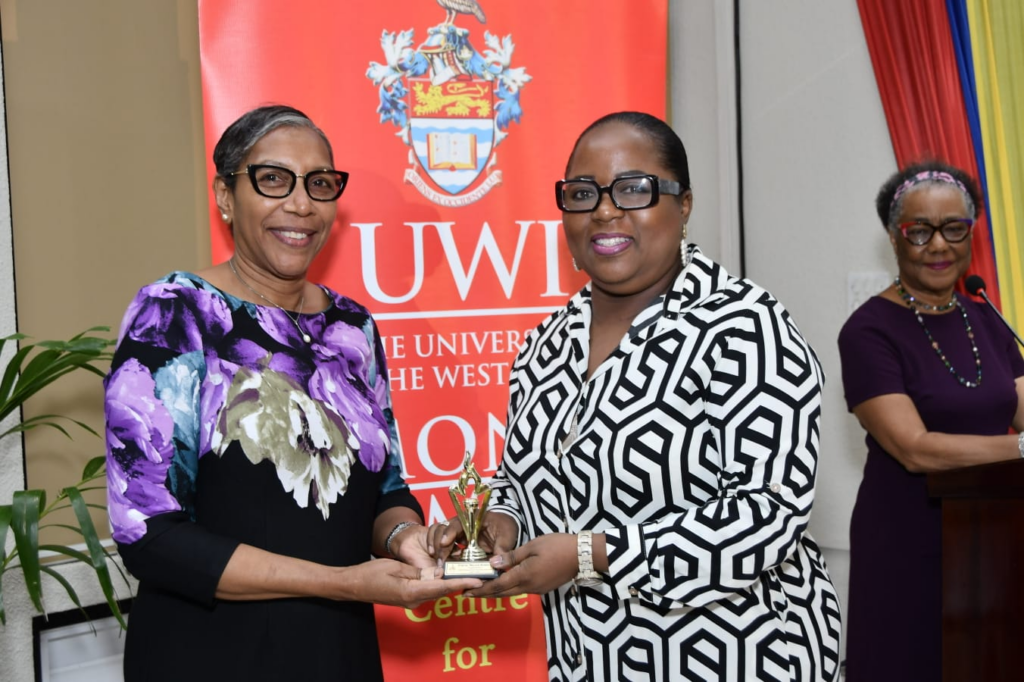
    At the apex of this year’s honorees was Ethnie Miller Simpson, who claimed the prestigious UWI Distinguished Teaching Award for the 2023–2025 cycle, a recognition reserved for academics who demonstrate extraordinary commitment and innovation in the classroom. Accepting the honor with characteristic humility, Miller Simpson drew heavily on insights shared by keynote speaker Dr Rohan Jowallah, Senior Instructional Designer at the University of Central Florida, to frame her own reflections on modern education.

    One core concept from Jowallah’s address struck a particular chord with the award recipient: “the productive struggle of learning.” Miller Simpson argued that this idea perfectly encapsulates the dual journey of students and educators alike. For learners, it describes the challenging but rewarding work of pushing through complex material to earn a degree, while for teachers, it demands constant adaptation of teaching strategies and course content to keep lessons relevant, engaging, and aligned with a rapidly shifting world.

    Going beyond classroom practice, Miller Simpson outlined a forward-looking agenda for Caribbean education. She emphasized that educators must continuously refine their approaches to ensure that learning translates directly to solving real-world challenges, while keeping pace with shifts across Jamaica, the broader Caribbean region, and the global economy. Most notably, she drew attention to the urgent conversation around “Assessment, Equity and AI: Governance in Caribbean Education,” identifying the meaningful integration of artificial intelligence into teaching as one of the defining challenges for the sector from 2026 onward.

    Miller Simpson stressed that education in the AI era must move far beyond the superficial “cut-and-paste” work that has become increasingly common with generative AI tools. For both students and instructors, she argued, the responsibility now is to foster creativity and practical, applied understanding that delivers value beyond exam scores, preparing learners to contribute meaningfully to workplaces and communities across the region. She also posed a provocative question for regional stakeholders: should the Caribbean prioritize building and retaining ownership of its own homegrown AI systems, rather than relying on foreign-developed tools, to shape the region’s educational and economic future?

    The recognition of these 37 educators comes as the University of the West Indies retains its long-held reputation for academic excellence, holding a spot among the top 3.6 percent of universities worldwide.

  • Educators: Trust in process key strategy ahead of entrance exam

    Educators: Trust in process key strategy ahead of entrance exam

    As the highly anticipated Barbados Secondary Schools’ Entrance Examination prepares to get underway on Tuesday, a quiet shift has taken hold across the island’s primary education community: final countdown preparation is no longer centered on frantic last-minute cramming. Instead, educators and students alike are focusing on building confidence, maintaining steady routines, and leaning into the months — or even years — of consistent work that has already been completed.

    Across multiple institutions on the island, this student-centered approach to pre-exam preparation reflects a growing consensus among Barbadian education leaders about what truly helps young learners succeed in high-stakes testing. At Welches Primary School, Class Four teacher Mona Jones has watched her cohort of 14 students grow since she began teaching them in Class Three, describing the multi-year journey as one defined by steady progress even amid widespread challenges.

    Jones says what has stood out most about this group is their commitment to friendly, supportive competition rather than cutthroat individualism. “They have been very competitive in a very friendly way… they’ve also helped each other… they have worked towards improving themselves,” she explained in the lead-up to exam day. For Jones, success is not measured by perfect scores alone: while she expects every student to bring their full effort to the test, she says any result that reflects their hardest work is already enough.

    That culture of peer support is echoed by Welches Primary head boy Aaron Prince, who acknowledges the years of preparation have been demanding, but says the grind has been worthwhile. “For me, it has been a little bit tough, but I have gotten through it and I feel ready,” Prince said. He has personally contributed to the collaborative culture, stepping in to tutor three classmates in both Mathematics and English as they worked through challenging concepts.

    Over at Bay Primary School, principal Stacey Blunte says the institution’s pre-exam strategy intentionally moves away from introducing new material in the final weeks, putting all focus on mental preparation. “At this stage, it is not about introducing any new concepts… it is really about building confidence to ensure that they approach this important milestone… knowing that they can do extremely well,” Blunte explained. She praised both teaching staff and students for their relentless commitment throughout the preparation cycle, noting that many pupils took the initiative to request extra review sessions in the final stretch.

    Bay Primary Class Four teacher Dwayne Hayde says consistent routine, or what he calls “rhythm,” is the foundational building block of long-term exam readiness. “Children need rhythm. And when that rhythm is broken, they tend to forget what they would have learned,” he said. This philosophy led the school to schedule structured review sessions over the Easter break, and even organize a pre-exam visit to the Graydon Sealy Secondary School, the venue where students will sit their test on May 5, to help them acclimate to the space and ease pre-test anxiety.

    For students like Bay Primary head girl Maniyah Worrell, who has set her sights on earning a spot at either Queen’s College or Harrison College, the preparation process has taught more than just academic content. “Common entrance preparation has been very helpful and it has taught me to never stop believing in myself,” Worrell said.

    At Bridgetown Seventh-day Adventist Primary School, teacher Lance Ward echoed the widespread rejection of last-minute cramming, emphasizing that steady, year-long preparation across English, Mathematics and Composition has been core to his students’ readiness. Even the Easter break was used to maintain the steady learning rhythm, rather than force a cram of new material. “We didn’t want them to lose anything,” Ward explained. His simple advice to students heading into Tuesday’s exam echoes the broader ethos across the island: “Go into the exam and understand that it is just what you’ve been doing… the names may change, the numbers may change, but the concepts remain the same.”

    Student Hezekiah Roberts, who is aiming for a spot at Combermere School to take advantage of its elite athletic program, says his teacher’s consistent support helped him work through early struggles with new course material. “Preparing for the exam was a bit difficult at first because I had to learn new topics, but as I go, Sir Ward has been helping me,” Roberts said.

    At Westbury Primary School, which currently houses the student body of Wesley Hall Primary, senior teacher Carlos Edwards says educators have worked through notable challenges, particularly in mathematics, but he remains optimistic about his students’ performance on Tuesday. “The students… have been coming along very good… all in all, the students will be progressing nicely, and I expect them to do pretty well in the exam,” he said. Edwards’ approach blends traditional paper-based practice with holistic skill-building: students work through extensive past paper reviews and problem-solving exercises, while also receiving guidance to grow into well-rounded citizens beyond academics.

    For Wesley Hall Primary student Mekhi Harewood, the preparation process has required personal sacrifice, but he says the trade-off is worth the long-term reward. “I lost a lot of the things I like to do until it is finished, but it is for a good reason,” he said. “I’m sure that when I get back my results, I’ll be happy with it.”

    This island-wide focus on long-term readiness aligns with messages shared by other leading primary school principals earlier in the term. Collette Applewhaite of Grazettes Primary and Sophia Bentham of Eden Lodge Primary both stressed that exam readiness begins the moment a student enters primary school, not just in the final months ahead of the test. Dr Marvalene Roach, principal of St Patrick’s Roman Catholic Primary, urged both students and parents to reframe their expectations ahead of the exam, emphasizing personal growth over competitive rankings. “Your child needs to be the best he or she can be,” Roach said.

    Across the board, that message has resonated with the cohort of test-takers gearing up for Tuesday’s exam. For most, the plan is simple: bring full effort, stay calm, and trust the years of preparation that have already gotten them to this point.

  • UWI Vice-Chancellor’s report broadcast set for May 8

    UWI Vice-Chancellor’s report broadcast set for May 8

    The University of the West Indies (UWI) has announced that its Vice-Chancellor, Professor Sir Hilary Beckles, will present his official annual report covering the 2024/2025 academic year to the institution’s top governing body, the University Council, in a publicly accessible live broadcast on Friday, May 8, 2026.

    Per an official statement released by the regional higher education institution, Professor Beckles’ presentation will lay out the university’s most important milestones from the past academic year, a full review of the institution’s overall performance, and its planned strategic trajectory for the coming years. The report will specifically highlight UWI’s ongoing work to advance its core long-term priorities: strengthening institutional resilience to navigate shifting educational and economic landscapes, building capacity to address emerging global and regional challenges, and expanding the university’s impact and standing across the Caribbean and worldwide.

    As the highest governing authority in the UWI system, the University Council holds responsibility for supervising all of the university’s administrative and operational affairs, including the appointment of senior leadership. The body is currently chaired by Chancellor Dodridge Miller, who oversees the Council’s deliberations and formal decision-making processes.

    To make this key annual governance event accessible to students, faculty, alumni, and members of the public across the region, the full proceedings will be broadcast live via UWItv. The broadcast is scheduled to kick off at 10:00 a.m. Atlantic Standard Time (Eastern Caribbean time) and 9:00 a.m. Eastern Standard Time (Jamaica time). Interested viewers can stream the event live through the official UWItv website at www.uwitv.global, or access the broadcast on UWItv via FLOW EVO cable television services.

  • BIUSM secures re-registration with the BAC

    BIUSM secures re-registration with the BAC

    Barbados’ tertiary education quality oversight body has formally greenlit the continued operation of one of the country’s leading medical schools, marking a key milestone in the Caribbean nation’s ongoing push to raise academic standards across higher education institutions.

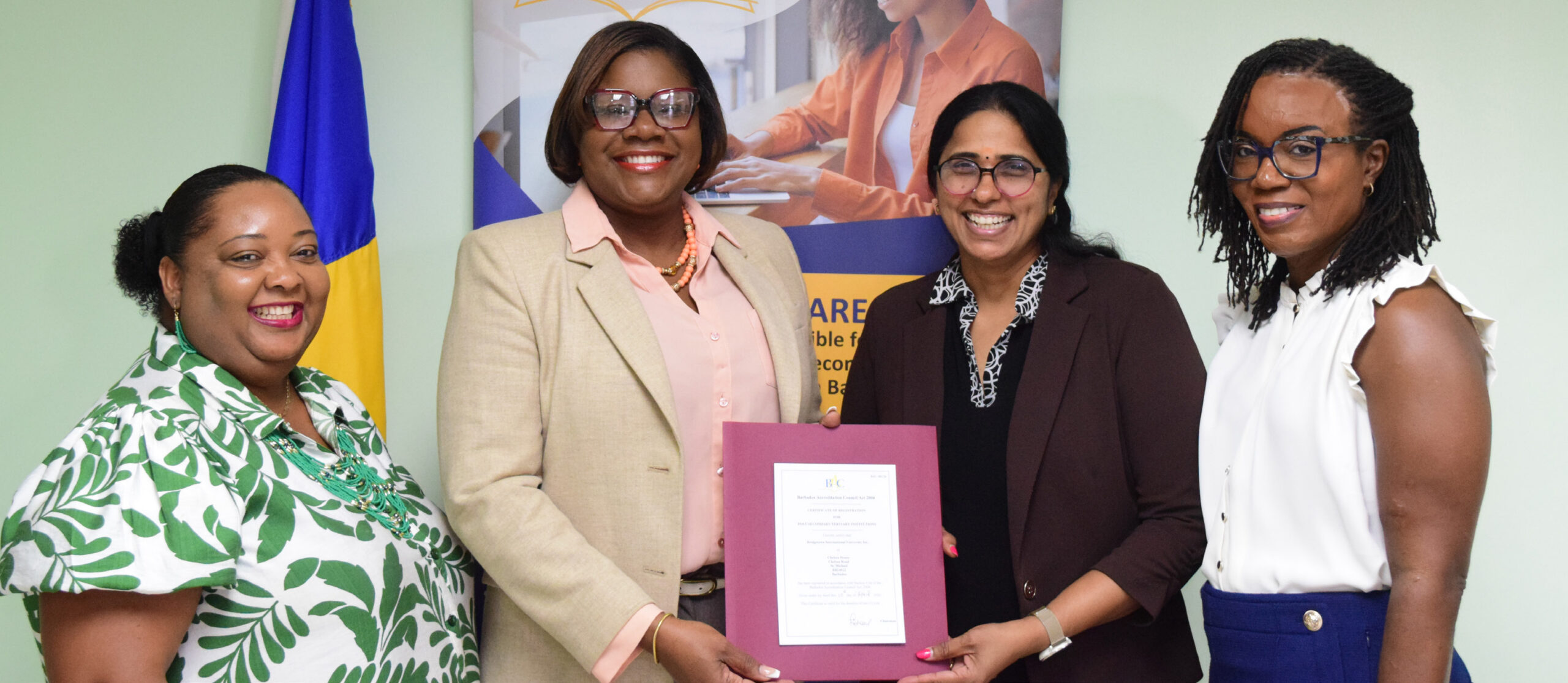
    On April 23, 2026, the Barbados Accreditation Council (BAC) officially awarded a re-registration certificate to the Bridgetown International University School of Medicine (BIUSM) during a ceremony held at the BAC’s Phoenix Centre headquarters. Representing BIUSM at the event were the university’s Director Dr. Ganapriya Kancherla and Executive Dean Dr. Chrisita Powlett, who accepted the official documentation on the institution’s behalf.

    This re-registration is far more than a routine administrative renewal: it is a core component of BAC’s national quality assurance framework. All registered tertiary institutions in Barbados must complete this periodic, full-spectrum assessment at set intervals, with evaluators scrutinizing every aspect of an institution’s work, from core academic curricula and faculty standards to institutional governance, student support services, and operational management. The rigorous, multi-stage process is designed to hold higher education providers accountable to the public, ensure they adapt to evolving industry and educational best practices, and embed a culture of ongoing improvement across Barbados’ entire tertiary education ecosystem.

    BIUSM first earned initial BAC registration back in February 2022, meaning this successful re-evaluation confirms the institution has maintained and elevated its standards over four years of operation. In remarks following the certificate presentation, Dr. Kancherla thanked BAC’s Quality Assurance team for their constructive guidance throughout the re-registration process, noting that their input has been invaluable as BIUSM works to develop and launch new medical education programs to expand its academic offerings.

    As Barbados continues to invest in strengthening its higher education sector to serve both domestic and international students, mechanisms like mandatory periodic re-registration play a critical role in upholding rigorous standards that deliver tangible benefits to multiple stakeholders. For students, these standards guarantee a quality education that meets global professional expectations; for employers, they ensure graduates possess the skills and knowledge needed to excel; and for the broader Barbadian society, they reinforce the country’s reputation as a hub for high-quality regional higher education.

  • Tech Meets Education at Belize’s GeoEducation Expo

    Tech Meets Education at Belize’s GeoEducation Expo

    In a transformative shift for education across Belize, the 10th annual GeoEducation Expo opened this week, turning traditional textbook-based geography learning into an immersive, hands-on experience that connects students directly to the cutting-edge geospatial tools driving global industries. For 15 years, organizer Total Business Solutions Limited (TBSL) has worked to integrate geospatial skill-building into mainstream education, overcoming obstacles including the COVID-19 pandemic and frequent hurricane disruptions to reach this decade-long milestone of the public expo.

    This year’s event drew participants from 30 schools spanning the entire nation, from northern Belize to Punta Gorda in the south. Unlike traditional classroom settings where students memorize map locations, the expo invites learners to interact directly with geographic data, testing tools that professionals rely on every day for urban planning, business development, environmental conservation, and public policy. Attendees got practical experience flying survey drones, testing Geographic Information System (GIS) mapping software, exploring Belize’s natural landscapes via virtual reality (VR), and engaging with interactive displays built by partners from both the public and private sectors.

    At the core of the event is GIS technology, a powerful platform that layers multiple sets of geographic data to uncover hidden patterns and relationships across landscapes, communities, and industries. In one of the most popular exhibits, TBSL experts digitized the exact paper maps students already use in their textbooks—including the *Atlas of Belize* and *Belize Facts and Figures*—to turn static pages into dynamic, interactive learning tools. “The exact same maps that are in some of the publications… we actually kind of recreated those so that students can actually be interactive,” explained Carmichael Ellis, Geospatial Solutions Manager at TBSL. “They could get to see the different relationships between those data sets, zoom in and get a real understanding of the topography of Belize and the social interactions between those different data.”

    Beyond exploring pre-built digital maps, the platform gives students free access to build their own custom maps using real, up-to-date data shared by Belizean government agencies including the Forestry Department and the Statistical Institute of Belize. Users can toggle between layers to view rivers, watersheds, population demographics, and topographical features, and even add their own data layers using built-in sketch tools. As TBSL GIS Technician Jamel Tun noted, this free access to ArcGIS Online removes financial barriers for schools, putting professional-grade technology into the hands of learners regardless of their district’s resources. TBSL also highlighted MapMaker Atlas, another free tool for schools that was demoed at this year’s expo to expand classroom access long after the event closes.

    For Belize’s Ministry of Education, the expo represents far more than a showcase of new technology—it is a catalyst for rethinking how students learn to problem-solve. Dian Maheia, Chief Executive Officer of the Ministry of Education, emphasized that the goal is to foster a new generation of curious, innovative critical thinkers. “I hope that they’re going to recognize the importance of really engaging, not just being viewers of technology, but looking at these maps, looking at the data that’s presented in different ways, and really thinking, like, what does that mean, and how could I use that, and maybe even more, ‘how can I create these sorts of things? How can I be innovative? How can I support?’” Maheia said. “We want our students to really become more scientific thinkers in that way… just questioning things and wanting to figure out how to make things better or how to use tools that are available to us.”

    Organizers note that GIS is already integrated into nearly every sector of Belize’s economy, from election districting and tourism development to agricultural planning and national census data collection. By expanding free access to geospatial training in K-12 and secondary schools, the initiative aims to prepare students for high-skill careers that did not exist a generation ago, building a pipeline of homegrown innovators equipped to solve Belize’s most pressing 21st-century challenges with data-driven insight.

  • Over 900 candidates to sit Caribbean Examinations Council exams this year, says CXC Registrar.

    Over 900 candidates to sit Caribbean Examinations Council exams this year, says CXC Registrar.

    The annual Caribbean Examinations Council (CXC) testing window has officially kicked off across the region, with local examination officials confirming that more than 1,700 total candidates are registered to sit for this year’s battery of secondary and post-secondary assessments. Local Registrar Magalie Celestine shared details of the exam timeline and new testing initiatives, noting that the 2026 season got an early start on April 13 with music practical examinations, which have already wrapped up successfully.

    Currently, the next wave of practical and oral assessments is in progress: Physical Education and Sports practical tests, along with French and Spanish oral examinations, are being administered through April 30, according to Celestine. The main written exam portion of the season is scheduled to launch on May 4, falling this year on the May Day public holiday, and will follow a staggered end date. For students pursuing the Caribbean Secondary Education Certificate (CSEC), written exams will conclude on June 9, while candidates sitting for the Caribbean Advanced Proficiency Examination (CAPE) and the Caribbean Certificate of Secondary Level Competence (CCSLC) will continue their assessments through June 16, bringing the full six-week exam season to a close.

    Celestine reported that preparations have proceeded smoothly so far, with all 70 trained invigilators in place and 17 testing centers activated across the island to accommodate all registered candidates. Breakdowns of candidate numbers show 965 registered for CSEC, split between 743 school-based candidates and 222 private candidates. An additional 119 candidates are registered for CAPE, 641 for CCSLC, and all testing centers will also host GCE A-Level Cambridge Exams alongside CXC assessments, Celestine confirmed.

    The most notable addition to this year’s exam calendar is the launch of a first-of-its-kind pilot program for the Caribbean Targeted Education Certificate (CTEC), a new modular alternative to the traditional linear assessment model used for CSEC. Unlike the standard full-length linear exams, CTEC breaks subject syllabi into smaller, focused modules that reduce testing time per sitting.

    To illustrate the new structure, Celestine used the example of the CTEC Mathematics assessment: the full CSEC syllabus is split into three separate modules, and candidates sit a shortened version of each exam paper alongside traditional CSEC test-takers. Where standard CSEC Mathematics Paper 1 requires 60 multiple-choice questions completed over 90 minutes, CTEC candidates answer 20 questions in 30 minutes. Similarly, CTEC Paper 2 is trimmed to four structured questions to be completed in 50 minutes, compared to the longer traditional version.

    Fifty private candidates are registered for this inaugural CTEC pilot, marking the first time the modular assessment program has been rolled out anywhere in the Caribbean. Celestine noted that the pilot is the first step in a broader long-term plan to convert all 33 existing CSEC subjects to a modular format, which will eventually give all students the flexibility to choose between the traditional linear assessment pathway and the new modular CTEC option that better fits their learning pace and needs.

  • Muffles College Heads to Global Robotics Stage

    Muffles College Heads to Global Robotics Stage

    A new milestone for STEM education in Belize is set to unfold this week, as 10 talented high school students from Muffles College High School (MCHS) are preparing to carry their nation’s flag at the 2026 FIRST Championship, one of the world’s most prestigious youth robotics competitions, hosted in Houston, Texas’s George R. Brown Convention Center.

    The team, nicknamed the MCHS Bobcats, earned their invitation to the global stage after securing first place at the 2026 Belize National FIRST LEGO League (FLL) competition held this past March. Co-hosted by Belize Elementary School and Belize High School, the national championship drew 10 competing teams from every region of the country. Following the competition’s 2026 theme “Unearthed”, participating students were tasked with developing creative, technology-powered solutions drawing inspiration from the field of archaeology – a challenge that pushed the young innovators to blend historical thinking with cutting-edge technical skill. The MCHS Bobcats outperformed their fellow national competitors to claim the national title and a coveted spot at the global event.

    Organized by the international non-profit organization FIRST, the annual championship runs from April 29 to May 2, bringing together thousands of top youth STEM talent from across the world. The event is designed to showcase young people’s proficiencies in engineering, coding, and critical problem-solving, all within a collaborative, high-energy environment that encourages cross-cultural exchange and innovation. This year’s competition will see the Belizean team go head-to-head with the best young robotics teams from dozens of countries, giving the small Central American nation a rare opportunity to demonstrate its growing STEM capacity on a global platform.

    Sponsored by RF&G, the MCHS Bobcats delegation consists of students Maidie Oliva, Giselie Garcia, Carlos Blanco, Jaevanie De Paz, Aiden Logan, Anais Cruz, Mannat Lalwani, Morgan Chavarria, Zyanie Urbina, and Krystian Krystian, with four faculty coaches Carim Ramirez, Michael Williams, Cecilio Garcia, and William Robinson leading the team in preparation and competition.

  • Applications open: 2027 MEXT Scholarship Programme

    Applications open: 2027 MEXT Scholarship Programme

    Opportunities for international students aiming to pursue advanced academic study in Japan have arrived, as the Embassy of Japan has officially launched the application window for the 2027 Ministry of Education, Culture, Sports, Science and Technology (MEXT) Scholarship Programme, fully funded by the Japanese government.

    Designed to connect exceptional global talent with world-class Japanese higher education institutions, the program serves a dual purpose: it opens doors for transformative academic growth for outstanding overseas students, while advancing cross-border people-to-people exchange and nurturing the next generation of globally minded leaders.

    Per the official announcement from the Embassy of Japan, applications are only open to candidates who plan to enroll in a Master’s degree or higher-level doctoral or professional research program at a Japanese university. Successful awardees will receive comprehensive financial support that removes key barriers to studying abroad: the scholarship covers all academic-related costs including entrance examination fees, university admission fees, and full tuition fees. Beyond academic costs, recipients also get a monthly living stipend to cover daily expenses during their studies, plus a complimentary round-trip air ticket between Japan and their home country.

    All applications must be submitted no later than 1 June 2026, and the embassy has confirmed that no deadline extensions will be granted under any circumstances.

    To showcase the program’s long-running impact and the diversity of its past recipients, the embassy shared portraits of recent MEXT scholars from across the Caribbean region: 2022 awardee Darey Ann-Louisville from Suriname, who studies at the University of Tokyo; 2023 recipient Melanie Griffith-Quintyne of St. Lucia, enrolled at Akita University; 2024 scholar Brandon Tulsie from Guyana, attending the Shibaura Institute of Technology; and 2025 awardee Bridget Francis of Trinidad and Tobago, pursuing study at Kyoto University. All photographs included in the announcement are provided by the Embassy of Japan.

    Prospective applicants are advised to review full eligibility criteria and step-by-step application guidance by accessing the Embassy of Japan’s official website, or by scanning the QR code included on the program’s informational flyer.

    Highlighting the value of the opportunity, the embassy emphasized that the program is an ideal fit for driven, ambitious individuals seeking advanced academic experience in Japan, while also creating pathways to contribute to stronger bilateral and global cultural and educational exchange. For students ready to begin their academic journey in one of the world’s leading higher education systems, the application window is open now.

  • CXC calls on Caribbean to rally behind May–June 2026 Examination Candidates

    CXC calls on Caribbean to rally behind May–June 2026 Examination Candidates

    As the 2026 May-June regional examination cycle approaches, the Caribbean Examinations Council (CXC) has released a heartfelt, personal appeal to thousands of test-takers across the Caribbean, encouraging candidates to enter their exams with confidence while prioritizing self-care, and reaffirming the institution’s unwavering support for every learner sitting its assessments.

    The message, delivered via a public video address to candidates, parents, teachers and regional education stakeholders, comes from CXC Registrar and Chief Executive Officer Dr. Wayne Wesley, who framed his communication as a personal note from a lifelong Caribbean educator to students in their final preparation phases. This appeal also lands at a meaningful milestone for the 54-year-old regional assessment body, which has anchored Caribbean education systems for more than half a century.

    Founded in 1972, CXC was created to build and operate a locally rooted assessment system that centers the lived realities, collective aspirations, and sovereign cultural identity of Caribbean people. The first CXC examinations were held seven years after its founding, in 1979, and today, decades later, Dr. Wesley confirmed that the organization’s core founding commitments remain unchanged. “While much has shifted across education and the region over the decades, there are values that have stood the test of time: the cultural relevance of our syllabuses, the global recognition of our qualifications, the dedication of our team, and our absolute commitment to the success of every single candidate that takes a CXC exam,” he stated in his address.

    The upcoming 2026 May-June session will include the full range of credentials offered by CXC, spanning the Caribbean Advanced Proficiency Examination (CAPE), Caribbean Secondary Education Certificate (CSEC), Caribbean Vocational Qualification (CVQ), Caribbean Certificate of Secondary Level Competence (CCSLC), and the Caribbean Primary Exit Assessment™ (CPEA™).

    A highlight of the 2026 cycle is the official pilot launch of the Caribbean Targeted Education Certificate (CTEC) Mathematics Module 1, a development Dr. Wesley framed as proof of CXC’s ongoing work to expand accessible learning pathways for regional learners. More than 2,400 candidates from 13 CXC member states have already registered to participate in this first pilot. Participants in the pilot will earn a CTEC micro-credential as they work toward completing their full CSEC certification, marking a new flexible direction for assessment across the Caribbean.

    The CTEC initiative was first introduced as a key flexible education pathway proposal during CXC’s inaugural Regional Education Conference and Ministerial Forum, co-hosted with Jamaica’s Ministry of Education, Skills, Youth and Information in Kingston this past March. Education observers have described the four-day gathering as a watershed moment for Caribbean education; the event brought together more than 400 education leaders, policymakers, and practitioners from 27 nations to address the pressing challenges of teaching, learning, and assessment in an increasingly digital era. During the conference, Dr. Wesley emphasized that the region’s assessment systems must adapt to match how digital-native learners engage with and process knowledge, adding that educational equity is not a compromise on excellence, but rather its most authentic form.

    Closing his address to upcoming exam candidates, Dr. Wesley framed current innovations like CTEC as the tangible future of Caribbean education already taking shape across the region. “As you wrap up your final preparations, use your study time wisely. Look after yourself and your mental wellbeing. Eat well, and rest when you need to. Be confident, show up for all of your examinations — you’ve got this,” he urged.

    This report carries a disclaimer from NOW Grenada, which notes that the outlet is not responsible for the views, statements, or third-party media content shared by contributors, and provides a channel for users to report abusive content.

  • Japan embassy announces 2027 MEXT Scholarships

    Japan embassy announces 2027 MEXT Scholarships

    The Embassy of Japan has formally launched the application window for its highly anticipated 2027 Ministry of Education, Culture, Sports, Science and Technology (MEXT) Scholarship Program, a fully-funded initiative backed by the Japanese government that opens doors to world-class higher education for outstanding international students. More than just a financial aid package, this scholarship serves as a cornerstone of Japan’s global academic exchange strategy, designed to cultivate cross-border understanding and nurture the next generation of globally minded leaders. Eligibility for the 2027 intake is restricted to candidates aiming to complete a master’s degree or doctoral-level research in Japan, targeting ambitious scholars seeking advanced academic training in one of Asia’s leading higher education systems. The comprehensive funding package eliminates major financial barriers for awardees: it covers all academic-related costs including entrance examination fees, university admission charges, and full tuition, alongside a steady monthly stipend to cover living expenses during the program. To support travel, the scholarship also includes a complimentary round-trip air ticket between recipients’ home countries and Japan, removing additional financial burdens for international participants. A critical note for prospective applicants is the firm application deadline set for June 1, 2026, with embassy officials confirming that no extensions will be granted under any circumstances, so early preparation is strongly encouraged. To help candidates navigate the process, the embassy has published full details on eligibility criteria and step-by-step application guidelines on its official website. Interested individuals can also access this information by scanning the QR code included on the program’s official promotional flyer. Widely regarded as one of the most generous academic scholarship opportunities for international students in Japan, the MEXT Scholarship stands out as a life-changing pathway for motivated scholars ready to advance their academic careers while contributing to stronger people-to-people connections between Japan and countries across the globe. For anyone ready to begin their academic journey in Japan, the application window is open now, and officials urge eligible candidates to submit their materials ahead of the deadline to secure consideration.