分类: education

  • Confucius Institute official promotes study opportunities in China

    Confucius Institute official promotes study opportunities in China

    On the sidelines of the 2026 China Bridge Chinese Proficiency Competition held Saturday, the director of Barbados’ Confucius Institute has issued a warm invitation to local students, urging them to leverage bilateral cultural and educational exchange programs to pursue life-changing academic opportunities in China.

    Dr. Ché Corbin, who leads the Confucius Institute hosted at the University of the West Indies (UWI) Cave Hill Campus, shared details with local outlet Barbados TODAY about the annual competition, which has become a cornerstone of Chinese language promotion and cultural exchange across Barbados. Designed to give young language learners a stage to demonstrate their linguistic skills, connect with like-minded peers, and deepen their engagement with Chinese culture, the 2026 contest divided participants into three distinct divisions aligned with their education levels: primary school, secondary school, and tertiary students from UWI.

    Top performers from each Barbadian division earn the highly coveted prize of an all-expenses-paid trip to Beijing to compete in the contest’s global final round. In a special provision for young primary school competitors, the institute even covers the full cost of airfare and travel for one parent to accompany their child on the international trip, a benefit that has drawn widespread enthusiasm from participating families.

    During this year’s national round, contestants were evaluated on two core segments: self-introductions and open-topic speeches, which allowed judges to assess both their command of the Chinese language and their public speaking confidence. Corbin noted that the event has seen explosive growth in local interest in recent years, with so many students eager to take part that organizers were forced to implement participation caps to keep the competition manageable.

    Currently, the Confucius Institute delivers on-site Chinese language courses to students at multiple primary and secondary institutions across Barbados, including well-known campuses such as Charles F. Broome Memorial Primary, St George Primary, St Stephen’s Primary, The Alleyne School and Ellerslie School. Looking ahead, Corbin announced that the institute is moving forward with plans to expand access to language learning by adding new weekend sessions, which will open up slots for additional learners including adults and parents who have expressed interest in picking up the language themselves.

    Drawing from his own two-decade-long journey with Chinese language and culture, Corbin shared that learning the language opened unprecedented academic and professional doors for him personally. Two decades ago, he began studying Chinese, and eventually earned a full scholarship to study traditional Chinese medicine at a university in China, an experience that shaped his career. He urged current Barbadian students to follow the same path, noting that China offers world-class educational opportunities that can transform young people’s futures. “It’s one of the best places to be a student,” he emphasized.

  • Abergower, UWI in strategic partnership to drive innovation and economic growth

    Abergower, UWI in strategic partnership to drive innovation and economic growth

    After more than 12 months of ongoing negotiations and collaborative planning, United Kingdom-based digital solutions provider Abergower Ltd. has formalized a strategic partnership with The University of the West Indies (The UWI) through a signed Memorandum of Understanding (MOU). The agreement is set to accelerate system-wide digital upgrades across all UWI campuses, while nurturing a new generation of student innovators prepared for the modern digital workforce.

    With Abergower’s regional headquarters already based in Bridgetown, Barbados, the partnership was built through more than a year of sustained discussion to align both parties’ strategic goals. The core of the MOU establishes a formal collaborative framework centered on three key pillars: digitally enhanced teaching and learning, industry-aligned research, and inclusive innovation across the university system.

    Under the terms of the agreement, the two partners will collaborate to expand research and development initiatives that directly address pressing real-world needs of the digital sector. They will also jointly explore pathways for commercializing new research outcomes and facilitating streamlined technology transfer from academic labs to industry. A central focus of the work will be upskilling students through co-developed education and training programs designed to produce talent equipped for the evolving digital economy.

    The partnership is fully integrated with The UWI’s flagship OneUWI Digital Transformation Programme, a university-wide initiative aimed at modernizing infrastructure and operations across all campuses. Beyond upgrading the university’s own digital capacity, the collaboration is expected to advance Barbados’ national goal of positioning itself as a leading innovation and knowledge-based economy hub for the Caribbean region.

    The MOU was finalized and formally signed by Professor Winston Moore, Deputy Principal of The UWI Cave Hill Campus, and Robin Prior, Chief Executive Officer of Abergower Ltd. Both academic and industry leaders were key to shaping the collaborative framework, which prioritizes cross-sector knowledge sharing, mutual growth, and long-term value creation for all stakeholders.

    In comments following the signing, Prior emphasized the transformative potential of bridging the gap between private sector expertise and academic insight. “This agreement represents a powerful alignment between industry and academia. Together we are creating a foundation for innovation that will not only benefit our organisations but also contribute to the long-term prosperity of Barbados,” Prior said.

    Professor Moore echoed this sentiment, highlighting the partnership’s alignment with The UWI’s core mission of translating academic excellence into tangible public and economic benefit. “This partnership reflects our commitment to applying academic excellence to real-world challenges. By working closely with Abergower Ltd, we can accelerate innovation and deliver tangible benefits for our students, our partners and our country,” Moore noted.

    The MOU is structured to provide a flexible yet organized foundation for long-term collaboration, allowing the scope of work to adapt and expand as new opportunities emerge in the fast-changing digital sector. Both institutions have reaffirmed their commitment to delivering measurable, meaningful outcomes that benefit students, the regional tech ecosystem, and Barbados’ broader economy.

  • Wolmer’s celebrates 297 years with bold vision for future

    Wolmer’s celebrates 297 years with bold vision for future

    One of the Caribbean’s most storied educational institutions marked a major milestone this week, as Wolmer’s Schools celebrated its 297th anniversary on Thursday with the launch of a transformative infrastructure initiative designed to cement its status as a regional leader in educational technology by its tricentennial in 2029.

    The announcement was delivered to hundreds of assembled students inside Kingston’s Douglas Orane Auditorium at Wolmer’s Boys’ School by Courtney Wynter, chairman of the institution’s joint board of management, during the annual Founder’s Day celebration. Wynter framed the multi-year expansion as a proactive response to shifting global workforce demands, driven by rapid technological advancement and the growing mainstream integration of artificial intelligence across every sector of the modern economy.

    “Positioning Wolmer’s for the next 300 years requires us to equip our students — both young men and women — with the tools and training they need to meet the challenges of a fast-changing future,” Wynter told the audience. The phased development programme, set to kick off in June 2025 and run through to the 300th anniversary celebrations in 2029, will overhaul the school’s tech and multimedia infrastructure to support next-generation learning.

    Construction work will get underway next month with the addition of a new floor to the institution’s sixth-form block. Over the first three years of the project, the school will add a minimum of 16 new purpose-built spaces, including a state-of-the-art lecture hall, expanded information and communications technology (ICT) laboratories, a full-scale professional multimedia production studio, and a centralized multimedia center designed to support cross-curricular tech-focused learning.

    Wynter emphasized that all new facilities will be fitted with cutting-edge, future-forward learning tools built to scale with emerging technological developments over coming decades. He confirmed the initiative represents the largest single infrastructure investment in Wolmer’s nearly 300-year history, a commitment that will firmly establish the school as the Caribbean’s premiere hub for technology talent development once completed.

    To deliver on the ambitious vision, Wynter called for full collaboration across all of Wolmer’s stakeholder groups, highlighting the critical need for financial contributions to the school’s expansion fund and ongoing professional upskilling programmes for teaching staff to ensure they can leverage the new facilities effectively.

    The Founder’s Day event also reflected on Wolmer’s remarkable 297-year legacy of resilience and educational excellence. Wynter noted that through centuries of economic, social, and political upheaval, the institution has never merged, been absorbed into another body, or divested, retaining its independent identity as Jamaica and the Caribbean’s oldest continuously operating co-educational secondary school system.

    “Today we stand proudly as the oldest, and without question, the most well-rounded educational institution in Jamaica and the wider Caribbean,” Wynter said. “For 297 years, our core identity has been defined by two enduring attributes: a culture of resilience and an unbroken tradition of excellence.”

    Responding to common public narratives that often frame Wolmer’s reputation around its dominant performance in national inter-school athletic competitions such as the Manning Cup football tournament and the Inter-Secondary Schools Association Boys’ and Girls’ Athletics Championships (Champs), Wynter reaffirmed the institution’s standing as the region’s top academic provider. “Wolmer’s is unquestionably the crème de la crème of Caribbean educational institutions,” he said. “No other high school in the country can claim consecutive top excellence ratings from the National Educational Institute Inspectorate — that distinction belongs to Wolmer’s alone. We pause today to thank the generations of leaders, educators, and alumni who laid this foundation of excellence that we build on today.”

    Thursday’s celebration included special devotions attended by students from both Wolmer’s Boys’ School and Wolmer’s High School for Girls, as well as a symbolic torch ceremony to mark the official countdown to the 2029 tricentennial, led by Wolmer’s Boys’ School Principal Dwight Pennycooke and senior teacher Princess Hemmings.

  • WorldSkills Programme readying children for dynamic workforce

    WorldSkills Programme readying children for dynamic workforce

    As the global job market undergoes rapid transformation, equipping young people with adaptive, cutting-edge technical skills has emerged as a top priority for Barbados’ national economic development strategy. This vision took center stage Wednesday at the official launch of the sixth annual WorldSkills Barbados Junior Future Skills Camp, hosted by the Technical and Vocational Education and Training (TVET) Council at its Hastings, Christ Church headquarters. Senior government and education officials used the platform to emphasize the critical value of early exposure to modern industry innovation to ready the island’s next generation of workers.

    Henderson Eastmond, Executive Director of the TVET Council, outlined how the long-running initiative has continuously updated its curriculum to align with shifting global industry trends, crafting targeted learning pathways for youth entering fast-growing emerging career fields. First launched as a remote online program in 2021 to address pandemic-era learning disruptions, the camp has expanded significantly to serve 10- to 16-year-old students, introducing them to the wide range of technical and vocational education and training (TVET) opportunities available across the country.

    This year’s program features a robust slate of hands-on training opportunities developed in partnership with both regional and local organizations. Working with collaborators from the Dominican Republic, students will dive into fast-growing fields including cybersecurity and mobile application development. Local partners, such as Barbados’ own Robot Adventures, will lead in-person sessions covering advanced electronics, aerial robotics, and 3D printing, giving camp participants practical, tangible experience with emerging technologies.

    Eastmond explained that the entire curriculum was intentionally structured to match current and projected global industry demand, with the core goal of positioning Barbadian youth as competitive innovators in the global workforce. He noted that organizers have recorded steady growth in both student participation and enthusiasm in recent years, with many young learners actively seeking out the practical, hands-on learning environment the camp offers that traditional academic programs often lack.

    Beyond building technical proficiencies ranging from cybersecurity fundamentals to robotic engineering, the camp also fosters the soft skills that employers increasingly prioritize, including cross-team communication, collaborative problem-solving, and professional confidence. Eastmond stressed that the program also works to reframe how young people see their own capabilities, breaking down outdated stigma around technical and vocational careers. “By engaging in practical skills-based activities, students begin to see themselves as capable, creative, and future ready,” he said. Many participants leave the program with renewed interest in applying their new skills and even pursuing entrepreneurship ventures, he added.

    For many attendees, the Junior Future Skills Camp also acts as a pipeline to higher-level professional opportunities, granting access to advanced training at the Global Training Centre, eligibility for the national WorldSkills Barbados Competition, and even the chance to compete at the International WorldSkills Competition. “This creates a seamless progression from early exposure to advanced training and global recognition,” Eastmond explained. He also shared that the Barbados model has started drawing interest across the Caribbean region, with education and workforce organizations in Grenada and other neighboring island nations already exploring plans to adapt the program for their own youth populations.

    Sandra Husbands, Barbados’ Minister of Technological and Vocational Training, echoed Eastmond’s remarks, framing the WorldSkills Barbados initiative as a foundational building block for a stronger, more inclusive national economy. Husbands argued that the program helps shift outdated cultural narratives that frame traditional academic study as the only path to professional success, instead promoting a multi-path model that creates opportunity for all learners regardless of their interests and strengths. “Technical skills were central to national development and economic growth,” she said, noting that the WorldSkills Barbados program has evolved into “a strategic national platform for workforce development and economic advancement.” She emphasized that the initiative’s long-term impact makes it a critical investment for Barbados’ future economic competitiveness.

    This year’s in-person camp will run from July 6 through August 21, hosted at the Samuel Jackman Prescod Institute of Technology (SJPI), offering more than two months of immersive, hands-on skills training for participating students across the island.

  • BioSci Series returns to give students early look into world of genetics

    BioSci Series returns to give students early look into world of genetics

    A transformative hands-on science education initiative is preparing to welcome its third cohort of young learners in Saint Lucia this coming July, when the popular BioSci Series returns to expand access to cutting-edge biological science training for secondary school students across the northern region of the island. Designed specifically to address a longstanding gap in Caribbean science education — the lack of early practical exposure to advanced molecular and genomic fields typically reserved for university-level study — the 2026 programme offers fully free participation for selected students, with a new expansion to southern Saint Lucia planned later in the year.

    Now hosted by CariGenetics Saint Lucia following GenTech Analytica’s recent integration into the regional CariGenetics network, the BioSci Series maintains its core focus on student-centered, active learning. The initiative’s mission is to reframe public perception of modern science, demonstrating that young learners are not just passive consumers of scientific knowledge, but capable contributors to the field. In a statement announcing the 2026 programme, Gemmia Jn Pierre, a representative of CariGenetics Saint Lucia, noted that for most secondary students across the island, hands-on experience with advanced lab science is inaccessible until late in their academic careers. “The BioSci Series exists to change that narrative,” Jn Pierre explained. “We give students early access to the tools, techniques, and career pathways that define modern biology, helping them see that they belong in science, even beyond traditional, well-worn career tracks.”

    Running for two weeks from July 13 to July 28 at Saint Joseph’s Convent Secondary School, the 2026 programme packs a robust schedule of immersive, real-world lab activities that bring theoretical biological concepts to life. Participants will take part in hands-on exercises ranging from simulated CRISPR gene editing experiments and studies of genetic inheritance patterns, to hands-on diagnostic scenarios focused on identifying haemophilia-linked genetic markers, and independent investigations into the growing public health challenge of antimicrobial resistance. Unlike traditional classroom learning that prioritizes textbook theory, the BioSci Series frames learning around open-ended, real-world scientific questions: students explore how genetic traits pass between generations, how genomic data informs modern clinical diagnosis, and how emerging biotechnologies are reshaping the future of global medicine and life science research.

    The programme’s impact on past participants speaks to its success in nurturing early scientific passion. Ariel Edward, a former attendee who has gone on to pursue medical studies, shared that the two-week experience created a lasting shift in her academic and career trajectory. “What started as casual curiosity in the classroom turned into a firmly rooted passion by the end of the workshop,” Edward explained. “The experience inspired me so much that I now plan to pair my medical degree with a PhD in genetics, so I can carry out research that bridges clinical practice and the cutting-edge science that will define the next era of medicine.”

    Since its launch, the BioSci Series has relied on widespread support from local communities, educators, parents, and corporate sponsors to remain free for participating students. Key backers including the Bank of Saint Lucia, LUCELEC, Massy Stores, and Lab Services & Consultations Ltd have enabled the programme to grow, removing financial barriers that would otherwise exclude many young learners from the opportunity. Beyond providing local opportunities in Saint Lucia, the initiative forms part of a broader regional effort to strengthen genomic literacy, improve pre-university science education, and build long-term research capacity across the Caribbean, with the ultimate goal of empowering young people to not just learn about science, but actively contribute to its advancement.

    Registration for the 2026 July cohort is open now, but organizers emphasize that available spaces are limited. Interested students, parents, and teaching staff are encouraged to submit their applications early to secure a spot. Full details on eligibility requirements and registration procedures will be published through CariGenetics Saint Lucia’s official communication channels.

  • Studenten krijgen weer studiebeurzen voor Ghana

    Studenten krijgen weer studiebeurzen voor Ghana

    A groundbreaking educational partnership has been established that will soon open new academic doors for Surinamese students seeking advanced technical training. The Anton de Kom University of Suriname (AdeKUS) has signed a memorandum of understanding with Ghana’s Kwame Nkrumah University of Science and Technology and the Otumfuo Osei Tutu II Foundation to launch a annual scholarship scheme for Surinamese learners.

    The collaborative initiative is designed to offer up to five scholarships each year to Surinamese students admitted to postgraduate programs at the Ghanaian institution. Priority for the awards will be given to candidates enrolling in high-demand technical fields critical to Suriname’s growing resource sector, including mining engineering, oil and gas technology, general engineering and other related technical disciplines.

    The initial signing of the non-binding intent agreement took place during an official working visit by a Ghanaian delegation to Suriname, with senior government representatives including Sergio Akiemboto, Chief of Staff to the President of Suriname, in attendance to mark the milestone. At present, AdeKUS confirms that the university is awaiting final formal signatures from its Ghanaian partners on the intent agreement. Once that step is completed, work will begin to draft and finalize a binding full partnership agreement that outlines the details of program administration, selection criteria and funding arrangements.

    Organizers are moving forward with an ambitious timeline, with plans to have the first cohort of scholarship recipients begin their academic programs in Ghana as early as this August. To streamline the process for selected students, planning teams are working alongside Suriname’s Ministry of Foreign Affairs, International Trade and Cooperation to work out logistical details, including visa processing, in-country student support, and preparation of required travel documentation.

    The partnership represents a deepening of educational cooperation between Suriname and Ghana, addressing a gap in advanced technical training opportunities for Surinamese students in sectors that form a core part of the country’s national economy.

  • CPEA under scrutiny: Parents and teachers voice concerns

    CPEA under scrutiny: Parents and teachers voice concerns

    Each year, as primary school students prepare to transition to secondary education, all eyes turn to the Caribbean Primary Exit Assessment (CPEA), a standardized testing framework rolled out by the Caribbean Examination Council (CXC) that has reshaped end-of-primary evaluation across the region. First introduced in several Caribbean nations as early as 2012, the CPEA was created to replace the decades-old Common Entrance exam, with a core mission of delivering a more holistic, accurate measure of student readiness before they enter secondary schooling. For Saint Lucia, the full transition to the new assessment system was completed in May 2022, closing a chapter on the traditional Common Entrance model and cementing CPEA as the official exit evaluation for the island’s primary students.

    Unlike the outgoing Common Entrance system, which centered entirely on a single high-stakes final exam that determined secondary placement, the CPEA model incorporates continuous ongoing coursework and formative assessments throughout a student’s final primary year. The original design of the framework was intended to cut down on the acute stress caused by a one-off make-or-break test, while also encouraging greater active engagement from both students and their families in the learning process. But more than a decade after its initial launch, the assessment has failed to live up to its promises, according to hundreds of educators, parents, and students across the region, who have raised consistent alarms about its unintended negative consequences.

    Annual public discourse and social media conversations across participating nations have repeatedly highlighted that the CPEA’s structure has created unexpected new burdens that outweigh its intended benefits. Many observers note that by the time students complete the assessment and enter their first year of secondary school (known locally as Form One), they are already experiencing severe academic burnout.

    Worse, many secondary school educators report that current cohorts of students are less prepared for the demands of secondary-level coursework than those who took the old Common Entrance exam, with a worrying share of new Form One students lacking foundational proficiency in core skills including reading, writing, and mathematics.

    To dig deeper into these growing concerns, local St. Lucia Times news outlet conducted interviews with a range of stakeholders with direct experience of the new assessment system. One anonymous serving primary school teacher compared the heavy workload required for the CPEA’s internal assessment component to the course load of a graduate-level master’s degree. “Five essays, a book report, one major project, eight teacher-created exams, four student-developed tests—all of this has to be completed in a single Grade 6 academic year. It’s simply too much for 11 and 12 year old students,” the teacher explained.

    Claudine Louison, a Saint Lucian parent whose child is currently enrolled in Form Two, echoed that frustration. She noted that even with the CPEA’s rigorous evaluation requirements, the framework has not delivered on its core goal of creating a smooth transition between primary and secondary education. Even top-performing students, who often rely on intensive last-minute drilling to pass the CPEA’s requirements, struggle to adapt once they enter secondary school, Louison said.

    “It is incredibly stressful for everyone involved, and honestly, I do not think it is fair to either students or teachers,” Louison said. “Grading is based on a work sample from other students combined with multiple-choice tests, which doesn’t give an accurate picture of what a student actually understands. When students earn strong grades and move on to secondary school, it quickly becomes clear that they never mastered core basic concepts. That just creates more work for secondary teachers who are left to fill gaps that should have been addressed in primary school.”

    These concerns are not unique to Saint Lucia. Educators in other Caribbean nations that have adopted the CPEA have raised identical criticisms. One teacher from Grenada argued that the CPEA’s overreliance on multiple-choice questions actively holds back student development. “I believe the CPEA is crippling our students and robbing them of the chance to develop critical thinking skills,” the Grenadian educator said. “It also holds back their literacy skills by giving them almost no space to write and express their own ideas. The internal assessment component exists on paper, but even with that, the old Common Entrance exam truly tested students’ actual ability to apply knowledge.”

    The Grenadian teacher also pointed to two other systemic issues: widespread learning loss that occurs once the CPEA is completed, and a growing culture of teaching-to-the-test that prioritizes exam performance over actual long-term learning. “After the exam wraps up, both teachers and students should stay engaged in learning, just with a lighter load to keep skills sharp. Right now, too much of primary school is just focused on passing the assessment, that’s not what education is for. Secondary school also requires maturity and discipline, skills that the CPEA doesn’t foster.”

    During a pre-cabinet press briefing held on Monday, May 18, Saint Lucia’s Minister for Education Kenson Casimir acknowledged the growing calls for reform, but defended the core premise of moving away from a single high-stakes exam. Casimir noted that the shift to a continuous assessment model is progressive, aligned with modern workforce demands, and that all education assessment frameworks require ongoing review and adjustment to best serve student needs.

    “I am not someone who believes that single exams are the best way to measure student ability,” Casimir said. “I believe that from this young age, we need to treat children as developing professionals. Education should always be life-forming, helping students build sustainable life skills that will serve them through their careers, help them become productive progressive members of our society, and contribute to economic growth across our nation.”

  • Antigua and Barbuda Building Craft Programme Participants Honoured at Marlborough House

    Antigua and Barbuda Building Craft Programme Participants Honoured at Marlborough House

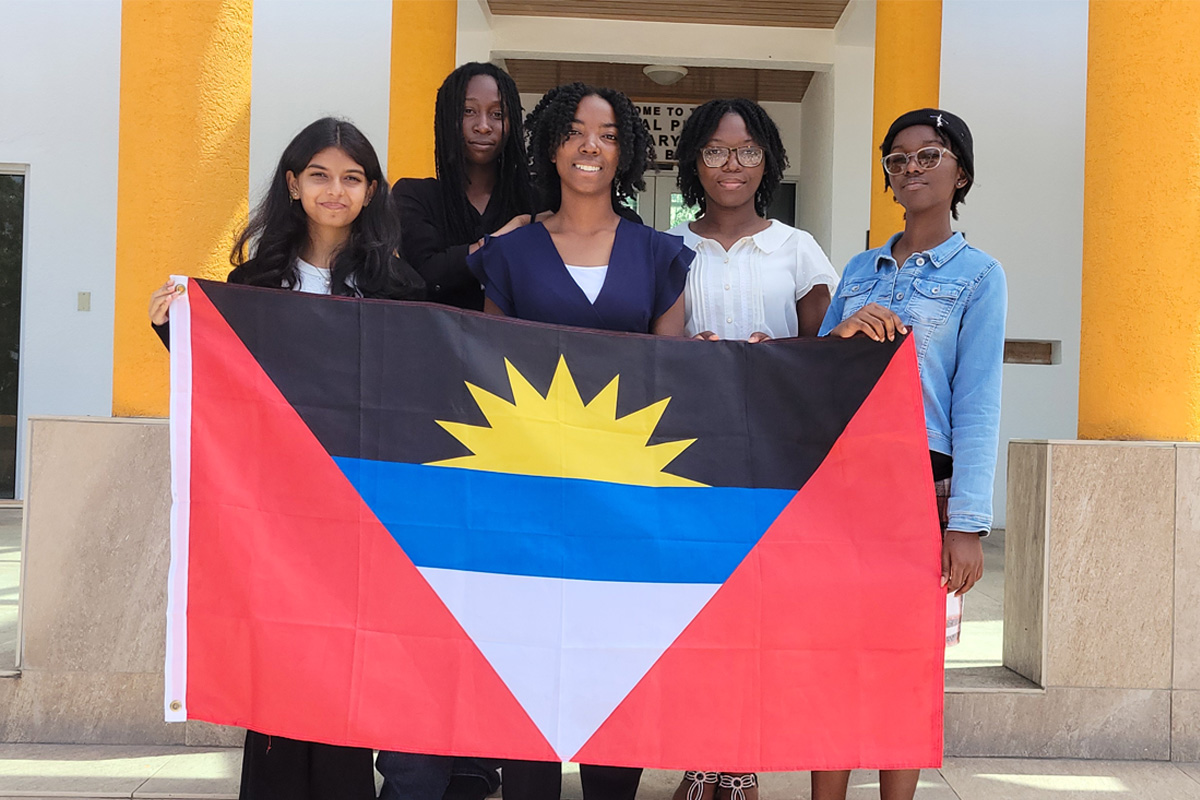
    On May 8, 2026, a meaningful certificate presentation ceremony was held at Marlborough House, the London headquarters of the Commonwealth Secretariat, to formally recognize participants who completed the landmark Building Craft Programme for Antigua and Barbuda. The event celebrated the successful conclusion of a specialized heritage building skills training initiative delivered in the United Kingdom, organized by The King’s Foundation in strategic partnership with three key stakeholders: the Antigua and Barbuda College of Advanced Studies, the country’s Ministry of Foreign Affairs, and the Commonwealth Heritage Forum.

    The day’s agenda began with a warm welcome for attendees, followed by a guided tour of Marlborough House itself—a centuries-old historic building that served as a living example of the heritage craft work the programme promotes. After the tour, official remarks were delivered by senior leaders from all partner organizations, before the formal certificate presentation got underway. Her Excellency Karen-Mae Hill, Antigua and Barbuda’s High Commissioner to the United Kingdom, took on the honor of presenting certificates to each graduating trainee, offering personal congratulations to every participant for their commitment and successful completion of the rigorous training course.

    Joining Hill in addressing the gathering were Jeremy Cross, Associate Director of Championing and Networks at The King’s Foundation; Kasia Howard, Senior Education Manager at the same institution; and Philip Davies OBE, Founder and Consultant Chief Executive of the Commonwealth Heritage Forum. Across all addresses, speakers centered two core themes: praise for the trainees’ consistent dedication throughout the programme, and emphasis on the long-term value of the skills the participants gained. The craft training, they noted, directly supports three critical national priorities for Antigua and Barbuda: preservation of the nation’s unique built heritage, advancement of more sustainable construction practices, and expansion of local professional capacity that drives inclusive economic growth.

    During their immersive training period in the UK, participants gained hands-on practical experience across a full suite of traditional heritage building techniques. The curriculum covered foundational and specialized skills alike, including traditional geometric measurement, technical drawing and design for historic structures, timber framing, plastering, traditional blacksmithing, lime mortar mixing and application, stone masonry, and conservation of historic brickwork. This in-depth training exposed participants to niche professional knowledge and evidence-based conservation practices that they can directly apply to the protection and restoration of at-risk historic buildings across Antigua and Barbuda once they return home.

    Reflecting on the transformative impact of the programme, graduating trainee Jace Gore shared his perspective on the experience. “This opportunity and guidance from expert tutors has given us the skills to help preserve our historic buildings and heritage at home in Antigua and Barbuda,” Gore said, capturing the collective sentiment of the participating cohort. All trainees have now returned to their home country, where they are expected to deploy their newly acquired skills across three key areas: heritage restoration projects, sustainable local construction initiatives, and broader national development efforts that protect the country’s cultural identity for future generations.

    Antigua and Barbuda’s Ministry of Foreign Affairs has reaffirmed its commitment to the programme’s mission, expressing enthusiasm for having supported the development of the initiative alongside the Antigua and Barbuda College of Advanced Studies and The King’s Foundation. The partnership has created a scalable model for skills development that ties cultural heritage preservation to sustainable construction and long-term economic resilience, creating a blueprint that could be replicated for other small island nations seeking to protect their historic built environments.

  • Third honorary doctorate for Coosal

    Third honorary doctorate for Coosal

    The University of the Southern Caribbean (USC) hosted its 93rd annual graduation ceremony yesterday at its St. Joseph campus, marking a day of dual celebration: the conferral of honorary doctorates on three distinguished regional trailblazers and major institutional milestones for the growing Caribbean higher education institution.

    Three standout leaders from across the private sector, industry and legal public health circles were recognized with honorary degrees for their decades of impact across the Caribbean region. Leading the group is veteran entrepreneur Sieunarine Coosal, group executive chairman and managing director of the Coosal’s Group of Companies, who accepted an honorary Doctor of Science, Honoris Causa. This marks Coosal’s third honorary doctorate, following previous recognitions from the University of the West Indies and the University of Trinidad and Tobago. USC officials praised Coosal as a “distinguished entrepreneur, industry leader and philanthropist,” highlighting his transformative leadership after taking the reins of the family-owned firm in 1991. Under his direction, Coosal’s Group grew from its origins into one of the Caribbean’s most diversified large conglomerates, leaving an indelible mark on civil engineering, construction, manufacturing and cross-regional infrastructure development across Trinidad and Tobago and beyond. Beyond his business achievements, the university highlighted Coosal’s long-standing commitment to humanitarian action, including his ongoing support for affordable housing, educational access and community development projects through partnerships with organizations such as Habitat for Humanity Trinidad and Tobago.

    Joining Coosal in receiving honors was Fitzroy Harewood, president of Point Lisas Nitrogen Limited and a graduate of USC, who was awarded an honorary Doctor of Business, Honoris Causa. The third recipient, Claire Chunlan Aleong-Hosten, a former USC valedictorian and accomplished attorney, accepted an honorary Doctor of Laws, Honoris Causa. Aleong-Hosten previously held senior roles with the Pan American Health Organization/World Health Organization based in Washington D.C. The honorary degree presentation was led by USC President Dr. Colwick Wilson and Provost Len Archer, with official photos captured by photojournalist Ishmael Salandy.

    Beyond the honorary recognitions, the 2026 commencement brought key updates on USC’s student body and academic programming. Dr. Wilson announced that a total of 503 students from 17 countries across the Americas and Caribbean crossed the stage this year, including graduates from Trinidad and Tobago, Guyana, Jamaica, Suriname, Grenada, Barbados and the United States. In a notable shift that reflects growing gender parity in higher education across the region, women accounted for 84% of the graduating class, totaling 423 of the 503 graduates.

    The School of Science, Technology and Allied Health produced the largest graduating cohort, with 232 students receiving degrees. Of that group, 176 graduates came from the university’s Bachelor of Science in Nursing program, accounting for 35% of the entire 2026 graduating class. It was this program that brought the ceremony’s biggest institutional announcement: USC has secured full accreditation from the Accreditation Commission for Education in Nursing (ACEN), one of only two nationally recognized nursing accrediting bodies in the United States. Dr. Wilson confirmed that the program received the maximum possible initial accreditation period of five years, a milestone he described as transformative for the institution and its students.

    “This achievement represents a defining moment for USC, one that advances our commitment to excellence in nursing education within the Caribbean region,” Wilson said. He added that the ACEN accreditation will open new doors for graduates, expanding access to advanced graduate study globally, qualifying graduates to sit international professional licensing examinations, and strengthening the global recognition of USC nursing credentials.

    Delivering the official valedictorian address, Shafiya Castello, a graduate of the School of Business and Entrepreneurship, reflected on the unique journey of the 2026 graduating class, centering her remarks on themes of resilience and personal growth amid challenge. “Success is not simply about reaching a destination; it is about the growth, the challenges and the perseverance that shape us along the way,” Castello told the crowd of graduates, family, faculty and staff.

    She extended gratitude to instructors, university staff, family members and peers for their unwavering support throughout the academic journey, while acknowledging the unseen struggles many students navigated to reach graduation. “There was a time when the goal was not excellence, but simply to keep going. Behind every assignment submitted, every exam written and every late night spent studying, there is a story of resilience, determination and growth,” she said. Castello closed her remarks with an emotional tribute to her late mother, a dedicated teacher and woman of faith whose legacy continues to shape her commitment to education. “Though she is no longer here physically, her lessons continue to guide me, and her belief in the power of education lives on through me,” she shared.

  • Surinaamse studenten behalen 3e plek op internationale PetroBowl-competitie in Argentinië

    Surinaamse studenten behalen 3e plek op internationale PetroBowl-competitie in Argentinië

    A team of petroleum engineering students from Suriname has earned international recognition by claiming an impressive third-place finish at the 2026 SPE Latin America and Caribbean Regional PetroBowl Championship, held in Buenos Aires, Argentina. The competition, which took place on May 15 as a flagship feature of the regional Latin America and Caribbean Student Symposium, brought together 21 top university teams from across the region to test their expertise in the oil and gas sector.

    Organized by the Society of Petroleum Engineers (SPE), the PetroBowl is a globally recognized academic quiz competition that centers on petroleum technology, emerging industry trends, and modern developments across the oil and gas space. This year’s event drew talented student competitors from eight regional nations, including Argentina, Brazil, Ecuador, Colombia, Guyana, Venezuela, and Suriname, all vying for the top podium spot in a fast-paced, intense series of knowledge challenges.

    The Surinamese delegation, representing the SPE Student Chapter Suriname at Anton de Kom University of Suriname (AdeKUS), was made up of team captain Rishano Hapdoel and members Altaaf Sultan, Latusca Reboe, and Ariantxa Djojodikromo. The team was coached and mentored by academic advisors Manisha Ori and Shaïza Simons, with participation made possible through financial and logistical support from SPE Suriname and multiple industry partners.

    Against a stacked field of elite regional competitors, the young Surinamese team outperformed most expectations to secure a spot in the top three, finishing behind first-place winners Universidad de Buenos Aires and second-place holders Instituto Tecnológica de Buenos Aires. This result marks another major milestone for the AdeKUS student chapter, building on its historic 2024 regional championship win that first put Surinamese energy talent on the international map.

    Beyond the podium finish, the result underscores Suriname’s rapidly growing standing in the regional oil and gas sector, as the nation continues to expand its domestic energy industry and develop a new generation of skilled petroleum professionals. For the students, the competition delivered far more than an award: it provided a valuable opportunity to test their academic knowledge in a global arena, gain hands-on international experience, and build professional connections with peers and industry leaders across the region. As a long-standing initiative of SPE, the PetroBowl remains dedicated to nurturing academic growth and preparing the next generation of experts to lead the evolving global energy sector.