分类: education

  • Common Entrance results show ‘worrying fall’ in English scores

    Common Entrance results show ‘worrying fall’ in English scores

    Barbados is facing a growing crisis in primary education, after newly released results from the national Secondary Schools’ Entrance Examination revealed a dramatic drop in English performance alongside persistent gaps in literacy and numeracy skills. Leading literacy specialist Shawntelle Morgan, founder of the educational consultancy I-Teach Transformative Knowledge Solutions Ltd, is sounding the alarm that the current state of young learners’ grammar and reading comprehension falls far short of acceptable standards, with long-term consequences for students moving into secondary education.

    Official data shows the national average English score tumbled from 72.5 in 2025 to 64.2 in this year’s examination. While Acting Chief Education Officer Julia Beckles framed overall results as broadly aligned with trends from recent years, she did confirm longstanding concerns around students’ core competencies: mastery of grammar and vocabulary, reading comprehension, and the ability to apply learned mathematical concepts to new problems.

    Morgan pushed back against framing the results as a status quo that can be accepted, telling local outlet Barbados TODAY that the declining scores demand far more aggressive action to close persistent learning gaps. She singled out deficits in expository text comprehension as a particularly pressing threat to secondary school success, noting that this type of informational writing forms the backbone of the secondary curriculum across all subjects. Students who struggle to parse expository text will face steep, avoidable barriers to learning as they advance, she explained.

    The literacy expert emphasized that gaps in foundational literacy identified at the primary level do not disappear when students transition to higher grades — they follow learners into secondary school and undermine their ability to engage with new, more advanced content. Instead of students shifting from “learning to read” to “reading to learn” as expected, many arrive at secondary school still needing to fill gaps in core foundational skills. Even high-performing overall students are not immune, Morgan added: while they may have solid general literacy skills, they often lack the disciplinary literacy specific to individual high school subjects, which demands more complex analytical reading skills.

    Morgan argues that the 2025 exam results should push educators and national policymakers to conduct a root-cause review of existing literacy initiatives. She questioned whether current programs are actually delivering meaningful improvements, or merely covering up deeper systemic flaws in the education system. “If we look at the data and see that we are regressing somewhat, then we have to ask ourselves why, and how do we pivot from where we currently are,” she said.

    While Morgan acknowledged that significant public and private investment has already gone into expanding literacy programs across Barbados, she said a one-size-fits-all approach is not working. Instead, the education system needs a more individualized model that assesses each learner’s unique gaps and adjusts instruction to meet those needs, she argued, noting that “you cannot build on a weak foundation.” She also called for a shift away from social promotion — moving students to the next grade simply based on age, rather than mastery of core skills — to ensure all learners have a solid foundational base before advancing.

    To address the crisis before the next academic year begins, Morgan is calling for a coordinated national response that brings together Ministry of Education officials, primary and secondary school teachers, and school administrators for targeted consultation. She stressed that incremental, short-term fixes such as summer intervention programs followed by a return to traditional outdated teaching methods are not enough to reverse current trends. “It cannot be business as usual,” she said.

    Among the key changes Morgan is pushing for: universal comprehensive diagnostic assessments to map learning gaps early, increased targeted funding for schools serving vulnerable student populations, and expanded learning resources to support students as the education system shifts toward more project-based learning models. Morgan emphasized that all preparations and resourcing must be completed before the new school year opens, saying meaningful change requires intentional pre-term planning to set students up for success.

  • Official summary results of the 2026 Caribbean Primary Exit Assessment

    Official summary results of the 2026 Caribbean Primary Exit Assessment

    For the 2025–2026 academic cycle, Grenada’s Ministry of Education, through its Educational Testing and Examinations Unit, has successfully concluded all components of the annual Caribbean Primary Exit Assessment (CPEA), releasing full results alongside universal secondary school placements aligned with the government’s flagship education policy.

    First introduced across the Caribbean in 2012 to replace the older National Common Entrance Examination, the CPEA was developed by the Caribbean Examinations Council (CXC) in partnership with regional education ministries to evaluate core skills of graduating primary school students, combining continuous assessment across Grades 5 and 6 with a standardized final external examination. This year’s assessment opened with internal assessment components in September 2025, and wrapped up with the external written papers on May 13 and 14, 2026. Eligibility was extended to all students who turned 11 years of age on or before September 1, 2025, and under the Universal Secondary Education Policy reinstated by the Ministry of Education in 2023, every student completing the CPEA is guaranteed a spot in secondary education.

    A total of 1,711 students (876 male, 835 female) registered for the 2026 CPEA, with all registered candidates completing the mandatory internal assessment component. The external assessment was completed by 1,709 students – 876 male and 833 female – all of whom have now been assigned to secondary schools for the 2026–2027 academic year. The CPEA weights the internal assessment (which includes class projects, book reports, writing portfolios, teacher-evaluated skills practice, and unit tests) at 40% of a student’s total score, while the external 50-question multiple-choice examination covering four core subjects accounts for the remaining 60%.

    Overall, 1,601 of the 1,709 students who completed the full assessment scored 50% or higher to pass the examination, split evenly between 802 male and 799 female students. Just 108 students, or 7% of all test-takers, scored below the 50% pass mark, with 74 male and 34 female students in this group.

    Breaking down performance by assessment component, the external examination saw 1,293 students (619 male, 674 female) score 50% or higher, while 416 students scored below the pass threshold. Subject-level analysis of external assessment national mean scores shows broad improvement across most core subjects from 2025 to 2026. Language Arts posted the most significant gain, rising from a national mean of 60.34 in 2025 to 64.13 this year, taking the top spot for performance improvement. Social Studies also recorded steady growth, climbing from 62.61 to 64.27 to maintain consistent strong results, while Science saw a minor uptick from 63.06 to 64.29, holding steady relative to previous years. The only major outlier was Mathematics, which saw the national mean drop sharply from 55.16 in 2025 to 52.58 in 2026, marking the largest single-year decline across all subjects and signaling a clear need for targeted curriculum and instruction support in this area.

    For the internal assessment, which all 1,711 registered candidates completed, 1,673 students scored 50% or higher (844 male, 829 female), with just 38 students falling below the pass mark. Subject performance mirrored the external assessment trends: Language Arts posted the highest national mean at 83.37, followed closely by Social Studies at 83.13 and Science at 82.56. Once again, Mathematics recorded the sharpest year-over-year decline, dropping from 82.86 in 2025 to 80.70 in 2026, reinforcing the need for focused intervention in mathematics instruction across Grenada’s primary schools.

    All 1,709 students who completed the external assessment have been assigned to secondary schools across the country, with gender distribution varying by institution. Single-gender schools include Grenada Boy’s Secondary School (167 male placements), Presentation Brothers College (70 male placements), Anglican High School (105 female placements), St Joseph’s Convent Grenville (99 female placements), and St Joseph’s Convent St George’s (100 female placements). St Andrew’s Anglican Secondary School recorded the largest total placement with 135 students, followed by Grenada Boy’s Secondary School with 167 and Happy Hill Secondary School with 98. Individual primary schools will receive customized placement lists for their Grade 6 graduates in the coming days.

    For families seeking reassignment to a different secondary school than the one initially assigned, the Ministry of Education has outlined strict eligibility and procedural rules. Reassignment requests will only be approved if the requested school has available space, adhering to the mandated 1:35 teacher-to-pupil ratio, following a vacated spot from another student, or if a student has a documented medical or psychological need that requires a transfer, or the family has moved residence closer to the requested school (with official proof required).

    All reassignment requests must be submitted electronically via a link that will be published at a later date; the Ministry will not accept hard copy requests, and families without access to digital tools can contact the official help desk at (473) 440-2737 for assistance. Requests go through a multi-step review process: first evaluated by a school-level transfer committee, which submits recommendations to the Office of the Chief Education Officer no later than two weeks after results are released – late submissions will not be accepted. Recommendations are then collated by the Ministry’s Planning Unit before being reviewed by a central CPEA Oversight Committee, which makes final approval decisions. All applicants will receive written notification of the outcome, and no transfers will be approved to schools that have already reached their maximum capacity.

  • Cuthbert Moore Primary toasts strong exam results, student development

    Cuthbert Moore Primary toasts strong exam results, student development

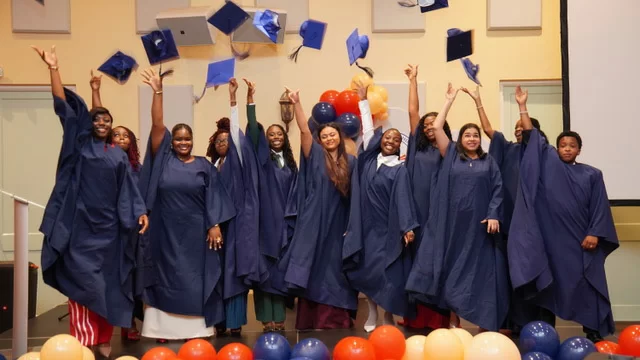
    The 2026 annual graduation ceremony of Cuthbert Moore Primary School, held at Massiah House in St John, Barbados, closed out a transformative academic year defined by standout academic performance, intentional character growth, and a packed schedule of enriching co-curricular activities. New principal Andrew Haynes, who took over leadership mid-transition this year, used his address to the graduating class, families, and staff to highlight both the school’s impressive Common Entrance Examination results and its unwavering commitment to nurturing well-rounded, morally grounded young people. The 2025-2026 academic year launched on September 8, 2025, with a total enrollment of 159 students – 95 boys and 64 girls – supported by a team of 22 certified academic educators and 11 ancillary staff members. The year brought a key leadership shift, as former administrator Karen Sealy-Cox transferred to Ellerton Primary School, clearing the way for Haynes to step into the principal role.

    Speaking to the core mission of the St George-based school, Haynes emphasized that while academic excellence across all disciplines is a point of institutional pride, the school’s ultimate priority lies in character development. “The greatest value is developing each student into a human who can face the world and overcome obstacles with moral force,” Haynes told the gathering. “Thus, we aim to develop integrated, functional, contributing boys and girls imbued with tough moral fibre.”

    This commitment to academic growth, aligned with the Ministry of Education’s national Transformation programme, yielded strong outcomes in this year’s Barbados Secondary Schools’ Entrance Examination (BSSEE), the nation’s common entrance test for secondary school placement. All 22 graduating students sat the exam, posting a mean score of 63.6 per cent in language arts and 67.6 per cent in mathematics. Two students stood out for exceptional individual performance: La’Wayne Arthur earned a 95 per cent score to claim the school’s top mathematics mark, while Najahri Neblett secured an 82 per cent in English alongside a Grade A distinction for the essay component. All graduating students earned placements at leading secondary schools across Barbados, including Alleyne School, St George Secondary, Combermere School, and Alexandra School.

    “These placements are a testament to the hard work and perseverance demonstrated by our students,” Haynes said, extending warm congratulations to graduates and their families, and thanking the teaching staff for their constant guidance and dedication. Beyond the classroom, the school prioritized holistic development through a full calendar of co-curricular, cultural, and community-focused initiatives throughout the year. Students took part in national Republic and Independence Month celebrations centered on the theme “All Things Bajan”, completed financial literacy training through the national FLITE programme, and engaged in cultural programming for African Awareness Month, Valentine’s Day, and Easter. A school-wide recycling competition also drove student engagement in environmental stewardship, helping instill lifelong habits of sustainability.

    One of the most memorable milestones of the year was an official visit from Barbadian President Jeffrey Bostic in May, an experience Haynes called deeply inspiring for every member of the school community. Athletic programs also saw major success: the school’s Purple Panthers house reclaimed the coveted inter-house track and field championship title, while the boys’ cricket team pulled off a dramatic last-ball victory over Shirley Chisholm Primary School. Haynes also highlighted the ongoing professional growth of his teaching team, noting that educators completed specialized training across key areas, from advanced reading comprehension instruction to integrating tablet technologies into daily lesson planning.

    Looking ahead, the principal expressed sincere gratitude to the school’s many supporters, including corporate benefactors, local community organizations, and political representatives – including Toni Moore, Member of Parliament for St George North – for their generous donations and ongoing backing for campus infrastructure upgrades and school events. Reaffirming the institution’s longstanding commitment to Barbados’ youth, Haynes closed his address with a clear vision for the future. “At Cuthbert Moore Primary, we will continue to strive to improve educational outcomes for all students,” he said. “May every one of us continue to strive for excellence as we work to build the nation’s greatest resource – its children.”

  • St Cyprian’s Boys’ celebrates strong results as Kaden Ward earns joint second place islandwide

    St Cyprian’s Boys’ celebrates strong results as Kaden Ward earns joint second place islandwide

    As one of the last cohorts of students prepare to transition to secondary school under Barbados’ existing placement system, a small private all-boys Anglican primary school is marking an exceptional year of academic and extracurricular achievement. St Cyprian’s Boys’ Primary School is celebrating extraordinary outcomes from the 2024 Barbados Secondary Schools’ Entrance Examination (BSSEE), headlined by 11-year-old student Kaden Ward who earned joint second place across the entire island. The standout student scored a perfect 100 in Mathematics and 94 in English, for a total combined score of 244.8. He will enroll at his top-choice institution, Harrison College, when the new academic term begins in September.

    Principal Dave Layne broke down the school’s impressive collective performance, noting that 30 boys from the school sat this year’s examination. Across the cohort, students posted an average score of 80% in English and 86.6% in Mathematics. Eighteen of the 30 test-takers earned scores above 80% in English, while 17 hit the 90% threshold in Mathematics. Eleven boys scored between 95 and 100 in Mathematics, including three students who achieved perfect marks of 100.

    Beyond individual and collective scores, the school saw overwhelming success in matching students to their preferred top secondary institutions. Ten students will move on to Harrison College, one of the island’s most elite secondary schools, and seven will attend The St Michael School, another top-performing Barbadian institution. Overall, 22 of the 30 graduating boys earned placement in one of their top two choice schools, six gained admission to their third-choice school, and only two were placed at their fourth option.

    Ward, who described his feeling about the result as simply “I feel great”, attributes his success to consistent discipline and intentional sacrifice. When asked what sacrifices he made to earn his top ranking, the 11-year-old explained he gave up recreational device use on weekends to prioritize his studies. He also emphasized that he could not have achieved the result without consistent support and extra guidance from his teachers throughout the exam preparation period, noting that educators pushed him with challenging practice work and stood by him every step of the way. Ward added that he selected Harrison College as his first choice after visiting the campus on a school tour and immediately connected with the institution’s environment.

    Principal Layne noted that the exceptional BSSEE results are just one highlight of what has been an all-around outstanding year for the school. Beyond academics, students have notched major achievements in inter-school sports, visual and performing arts, and a wide range of other extracurricular programs. Layne says the school’s core philosophy centers on the idea that meaningful achievement only comes through consistent, intentional hard work – a value he hopes graduating students will carry with them through the rest of their lives.

    As students prepare to make the transition to secondary education, Layne urged the graduating cohort to hold onto the core values they learned during their time at St Cyprian’s: discipline, respect for others and institutions, and a commitment to hard work. These foundational principles, he noted, serve people well across every stage of life. He also encouraged parents to remain actively engaged in their sons’ ongoing educational development, reminding them that consistent involvement and reinforcement of expectations helps students grow into responsible, successful adults.

    This year’s BSSEE cohort is among the final groups of students to sit the long-running Common Entrance Examination before Barbados transitions to a new secondary school placement system. When asked about the upcoming changes to the national education structure, Layne expressed confidence that St Cyprian’s and other primary institutions across the island will adapt successfully to the new framework. He noted that all schools are starting the transition on an equal playing field, and that institutions will adjust their approaches to meet the requirements of the new system.

    For the moment, however, the entire St Cyprian’s community is focused on celebrating the hard work and success of this year’s graduating class. Layne summed up the school’s core mission, saying that at St Cyprian’s, the goal is always to nurture every student, give them the strongest possible foundational skills, and send them on to secondary school confident that they have the tools they need to thrive at the next stage of their educational journey.

  • UG, ACCA ink accord advance dual award pathway in accounting education

    UG, ACCA ink accord advance dual award pathway in accounting education

    In a landmark move set to transform professional accounting education across the Caribbean region, the University of Guyana (UG) and the Association of Chartered Certified Accountants (ACCA) have formally signed a Memorandum of Understanding (MOU) to launch a pioneering dual award pathway for students enrolled in UG’s Bachelor of Science in Accountancy programme.

    The signing ceremony was held at UG’s Turkeyen Campus Education Lecture Theater, cementing a growing collaborative bond between the two institutions that began earlier this year when UG’s accountancy degree earned ACCA accreditation. That initial accreditation already secured graduates exemptions from four foundational ACCA papers and aligned UG’s curriculum with global professional benchmarks. The new MOU advances this partnership by establishing a formal structured framework for joint curriculum refinement and the creation of the integrated academic-professional dual award track.

    Guyana’s Minister of Education Sonia Parag, who delivered the event’s keynote address, emphasized that this initiative marks an unprecedented milestone for professional education in the region. “For the first time across the Caribbean, students will earn a dual credential – an academic degree from UG and a globally recognized ACCA professional qualification,” Parag noted. She added that the full alignment of the programme with international standards will leave graduates with far stronger competitive qualifications, cementing UG’s position as a globally competitive higher education institution. Parag also expressed strong backing for an early launch of the programme, suggesting a rollout as soon as September this year would allow students to begin accessing the benefits of the new pathway without delay.

    UG Vice-Chancellor Professor Paloma Mohamed Martin highlighted that the partnership directly aligns with Guyana’s national priorities for expanding professional certification and building a skilled, competitive workforce. She pointed out that the initiative matches the national vision laid out by Guyana’s President, who has publicly called for programmes that equip students with both academic degrees and industry-recognized professional certifications. Professor Martin noted that while UG currently maintains more than 170 international partnership MOUs, this agreement carries unique weight: it will not only strengthen professional career pathways in accounting and finance but also support stronger national fiscal accountability by producing a new cohort of experts trained to the highest global standards. She also extended the university’s gratitude to the Guyana Institute of Chartered Accountants, specifically senior leaders Ramesh Seebarran and Harry Parmesar, for their ongoing support of the initiative.

    Dr Alfred Aaron, Head of UG’s Department of Accountancy and Finance, framed the MOU as the natural next phase of collaboration between the two institutions, with core focuses on curriculum alignment and the rollout of the dual award structure. Aaron explained that the agreement will guide joint work to further align UG’s programme with international professional requirements, closing gaps between academic learning and professional practice. “We are incredibly excited about the opportunities this partnership opens up for our students,” Aaron said. “We look forward to collaborating with ACCA to review and strengthen our syllabus, secure additional exam exemptions for our students, and develop more specialized degree pathways tailored to evolving industry needs.”

    Melanie Proffitt, Global President of ACCA, emphasized that the new agreement reflects both institutions’ shared commitment to preparing next-generation finance professionals to thrive in a rapidly evolving global economy. Proffitt noted that Guyana is currently experiencing one of the fastest periods of economic growth anywhere in the world, a transformation that has generated urgent demand for skilled, ethically trained, globally competent finance leadership. “This is the first partnership of its kind in the entire Caribbean region, giving students a robust, internationally recognized pathway into the accounting and finance profession,” Proffitt said. “This is not a symbolic agreement. It is a practical, intentional partnership designed to evolve alongside Guyana’s growth.”

    Paula Marcelle-Irish, Head of ACCA Caribbean, echoed this sentiment, noting that the MOU represents a concrete commitment to expanding student opportunity while strengthening the regional accounting profession. “This MOU is far more than a formal signed document,” Marcelle-Irish said. “It is our commitment to growing the accounting and finance profession in Guyana, opening new doors for students, and ensuring the country has the skilled talent pool it needs to sustain its ongoing economic expansion.”

    In a pre-recorded address, Professor Leyland Lucas, Dean of UG’s School of Entrepreneurship and Business Innovation (SEBI), underlined that expanding high-quality educational offerings for Guyana requires cross-institutional collaboration. “Delivering the resources this nation needs cannot be accomplished by UG alone,” Lucas said. “We will need to continue deepening collaboration with our existing partners and forging new connections, and we look forward to building on this relationship as we roll out new programmes in the future.”

    Ramesh Seebarran, President of the Institute of Chartered Accountants of Guyana (ICAG), reaffirmed his organization’s full support for the initiative, while ICAG Council Member Harryram Parmesar noted that the agreement is the product of years of consistent, collaborative work to strengthen professional accounting pathways across Guyana. Earlier in the event, Deputy Vice-Chancellor for Academic Engagement Professor Emmanuel Cummings delivered opening welcome remarks, emphasizing the value of aligning academic and professional standards to expand opportunity for UG students.

    UG’s Bachelor of Accountancy programme earned ACCA accreditation in June 2026, with the accreditation valid from January 1, 2026 through December 31, 2030 after a rigorous assessment against ACCA’s global standards for accounting education.

  • St Gabriel’s claims top boy, girl in Common Entrance

    St Gabriel’s claims top boy, girl in Common Entrance

    Barbados’ private St Gabriel’s School has made history this examination cycle, becoming the first institution in the island’s education system to claim both the top male and top female positions in the annual Common Entrance Examination. This unprecedented double triumph has cemented the school’s long-standing reputation for academic excellence, while opening new conversations around ongoing national education reform efforts.

    Benjamin Enzo Luciene earned the title of the nation’s highest-scoring male candidate, and Xiomara Alexis Lascaris secured the top position for female students. In a further milestone for the two high achievers, both have already been accepted to study at Harrison College, one of the country’s most prestigious secondary institutions, where they will begin their post-primary education this coming September. At the time of the official results announcement, no public data was released on how government-funded public schools performed in terms of overall placement rates or distribution of top scores across institutions.

    Chad Blackman, Barbados’ Minister of Education Transformation, officially announced the results and extended warm congratulations to all participating students across the country, highlighting the extraordinary achievement of Luciene and Lascaris in particular. Blackman reaffirmed the government’s unwavering commitment to advancing comprehensive systemic reform in the national education sector, while framing the current results within the context of a planned long-term shift away from the high-stakes standardized testing model that the Common Entrance Examination represents.

    Blackman acknowledged that the examination has occupied a central role in the island’s education culture and national identity for decades. “This examination throughout the years has been an important part of our national psyche in terms of education,” he said. “That’s why I’m so excited about the future of that transition: it is going to be one that is based on equity and is one that is based on ensuring that we tap into the broad skill sets that our children have, and therefore not focused on a one-shot exam.”

    Celebrations erupted across the St Gabriel’s campus immediately after the results were made public, with jubilant cheers from students, faculty and parents echoing through school corridors. St Gabriel’s Principal Alexina Chandler shared in an interview that the school placed a total of four students in the national top 10, an achievement she called deeply rewarding for the entire school community.

    “We are so proud of them, over the moon,” Chandler said. “I mean, it’s not a total surprise because they’ve all worked very hard, but we’re very pleased, very pleased. We’ve had top students before, but not both. I’m not sure how many schools have had both, so that would be interesting to look into. I know they’ve worked extremely hard, and they’re focused children, lovely children. We also have two others in the top ten as well. I’m very proud of all of them.”

    Chandler explained that the school’s consistent strong performance stems from a deliberate approach to building academic and personal foundations starting in early childhood education, rather than cramming focused preparation only in a student’s final primary year. She noted that the modern teaching frameworks the Ministry of Education Transformation currently promotes nationwide have already been core to St Gabriel’s curriculum for decades.

    “The students work very hard, obviously the teachers as well, but it doesn’t just start in Class 4. It starts in the foundation years from nursery and reception onwards. We build that foundation. The ministry is talking about play-based learning; we already have that in place for many, many years, and then the children build on that,” she explained. “Even in Class 4, they continue with the other subject areas, so we will have well-rounded, confident students. So a lot of hard work from the students, the teachers, and the parents, their support as well.”

    Addressing the ministry’s push for systemic education reform that prioritizes holistic development over rote testing, Chandler added that St Gabriel’s has long balanced targeted exam preparation with investment in soft skills and well-rounded growth. For example, the school introduces test-taking strategies, time management and problem-solving skills as early as Class 3, helping students build confidence without sacrificing broader learning. Project-based learning, another reform priority, is already a core component of the school’s infant department, with plans to expand the model further to align with the ministry’s new guidelines.

    “It’s not just about mathematics and English for us; it is well-rounded students who, you know, [have] those soft skills … as well, project-based. We already have that going in our infant department. It’s now to extend more to the juniors in terms of what the ministry is looking at,” she said.

    As Luciene and Lascaris prepare for their move to Harrison College, Chandler expressed full confidence that the foundational, holistic education they received at St Gabriel’s will support them through the next stage of their academic journeys. She emphasized that the historic double win is not a one-off anomaly, but a reflection of the school’s long-held institutional culture and educational philosophy.

    “It sums up what we try to do at St Gabriel’s in a lovely way. It is not a surprise, as I said, everyone worked really hard and was focused. And so this is not an anomaly. This is not by accident. This is part of what we do at St Gabriel’s,” Chandler noted.

    Founded in 1947 at the request of the then Anglican Bishop of Barbados, William James Hughes, St Gabriel’s originally opened with just 28 students between the ages of four and eight, and was initially run primarily by teaching sisters from the Convent of Jesus the Good Shepherd based in England. The school later expanded to offer primary through O-level secondary education, before closing its secondary section in 1975 to consolidate as an Anglican denominational primary school under the Diocese of Barbados. Today, it operates with a Christian foundational ethos while serving a multi-faith student body.

  • St Gabriel’s Primary students take top honours in Common Entrance

    St Gabriel’s Primary students take top honours in Common Entrance

    One of Barbados’ most celebrated private primary institutions, St Gabriel’s Primary School, has turned in a standout performance in the 2024 Barbados Secondary Schools’ Entrance Examination, securing both the top male and top female scores island-wide while placing four students in the overall top 10 rankings. The landmark result ranks among the school’s strongest academic showings in modern history, sparking widespread celebration across the campus after official results were unveiled by Minister of Education Transformation Chad Blackman.

    For 11-year-old Benjamin Luciene, the newly crowned top-performing boy, the achievement is the product of years of steady support from his school, family, and friends. In an interview following the results announcement, Luciene spoke through a wide smile about his overwhelming pride and gratitude for everyone who walked the journey with him. “I’m just so happy and proud to have achieved this result – I couldn’t have asked for anything more,” he said. “I had consistent support from my family, my teachers, and my friends every step of the way. On exam day, I just focused on giving it my all, and I’m completely satisfied with how everything turned out.”

    Like many test-takers, Luciene acknowledged pre-exam jitters played a role in the lead-up to test day. “To be honest, I just wanted to get it over with,” he admitted. “When the day finally came, all I focused on was doing my best and staying calm no matter what happened.” His father, Maxime Luciene, credited the family’s low-pressure, balanced approach to childhood and academics for his son’s success, alongside the high-quality instruction St Gabriel’s provided. “We are over the moon with this result, and we have to thank God and the entire team at St Gabriel’s for everything they’ve done,” he said. “At home, our main goal was to create an environment where Benjamin could thrive naturally. We know academics matter a lot, but for us, it was just as important to make sure he got to be a kid first. We prioritized giving him a healthy home, nutritious food, spiritual guidance, and all the tools he needed to succeed on his own terms.”

    Claiming the title of top-performing girl was Xiomara Alexis Lascaris, who said months of consistent revision and intentional preparation paid off far beyond her expectations. Lascaris, who has long set her sights on attending Harrison College, shared that she already got a preview of her next academic home and is eager to start the new chapter. “I feel so accomplished right now – I know I put in the work, and it feels good to see that effort rewarded,” she said. “I’m so thankful to every single person who supported me to get here. I went on a campus tour of Harrison College recently, and it was just beautiful. I got to see the classrooms and learn all about the different opportunities I’ll have there, and I can’t wait for my time there.” Her mother, Witney Lascaris, praised her daughter’s relentless work ethic and willingness to make short-term sacrifices to reach her goal. “I couldn’t be more proud of Xiomara. She worked so hard for this, and there were definitely things she put on hold to focus on her prep. She’s such a hard worker, and she takes her studies incredibly seriously.” Lascaris also shared that her daughter’s long-term ambitions have evolved over the years, ranging from exploring space as an astronaut to flying commercial aircraft as a pilot.

    Two more St Gabriel’s students, Shiloh Noelle Brewster and Adelaide Mae Sikkens, also claimed spots in the island’s top 10 overall rankings, cementing the school’s dominant performance. For Brewster, who earned a spot at her first-choice school Queen’s College, the reward for her hard work is simple: getting back to the hobbies she put on pause during exam prep. “I’m really proud of myself, and I’m so happy to have my free time back now that it’s over,” she said with a laugh. To make space for studying, Brewster cut back on screen time and spent hundreds of hours working through practice exam papers, and her prize for hitting her goal is a simple one: her favorite doughnuts. Her father, Leon Brewster, said her result is a direct reflection of her innate discipline and quiet confidence, while her mother Denise Brewster noted that the entire family adjusted their routines to support Shiloh throughout her preparation.

    For Sikkens, the fourth top-10 performer from the school, the achievement came with characteristic modesty. When asked about her result, she simply smiled and said, “I feel happy.” Her mother Dana shared that the family followed a simple, low-stress strategy to keep her grounded ahead of the exam: “We just focused on keeping her calm and sticking to our normal routine. We didn’t want to add extra pressure, and it worked out perfectly.”

    Education observers across Barbados have noted that St Gabriel’s performance this year highlights the consistent quality of education the private institution delivers, and the balanced approaches taken by all four top-performing students’ families are already being cited as examples for future test-takers across the island.

  • FTC urges students to put consumer rights at centre of business

    FTC urges students to put consumer rights at centre of business

    As part of Parkinson Memorial School’s annual Business Week celebrations, the Barbados Fair Trading Commission (FTC) recently hosted an interactive, week-long consumer rights workshop aimed at equipping young business students with practical real-world knowledge and exam preparation for their 2027 Caribbean Secondary Education Certificate (CSEC) assessments. Centered on the theme “All About Business”, the program prioritized demystifying core consumer protection concepts, outlining official redress pathways for dissatisfied customers, and emphasizing the critical role of consumer rights in building sustainable, successful business ventures.

    Brian Parris, head of the business studies department at Parkinson Memorial School, opened the workshop by framing consumer rights as a foundational business principle, rather than an afterthought. He highlighted that consumers are the most critical stakeholders for any business, a reality many enterprises overlook when prioritizing short-term profit over long-term customer relationships. “What we are having today is a consumer rights workshop, and as we know, the customer is our major stakeholder in business,” Parris explained. Drawing a parallel between workplace protections for employees and consumer protections for customers, he noted that just as workers have established channels to address workplace grievances, consumers also have formal avenues to seek resolution when they receive faulty products or substandard services.

    Parris went on to clarify the FTC’s core mandate as the national body tasked with safeguarding consumer interests across Barbados. He emphasized that prioritizing consumer rights is not just a legal requirement—it is a strategic advantage for businesses. “You’ll find that businesses can enhance their relationships with customers if they understand the consumer rights that they have to protect and preserve,” he said. Beyond building practical business acumen, Parris shared his hope that the workshop would spark greater enthusiasm among students for business studies, encouraging them to pursue higher standards of academic and professional excellence. “I’m hoping that [today] not only just broadens their eyes to these business concepts but gets them more interested and enthused to take the bar a little higher,” he added.

    Dava Leslie Ward, Director of Consumer Protection at the FTC, followed with an actionable presentation outlining the commission’s ongoing work to advocate for Barbadian consumers and resolve a wide spectrum of consumer complaints. She explained that the FTC addresses every consumer concern through tailored, strategic approaches, drawing from recent advocacy work to illustrate the tangible impact of consumer protection regulation. One prominent example she highlighted is the FTC’s successful push for mandatory data usage alerts for mobile phone customers, a policy change that protects consumers from unexpected, excessive overage charges. “How many times have you gone over your data? Did you get a warning before you went over your data? At the commission, that’s one of the things we fought for from a consumer protection perspective and as well from a utility regulation perspective,” Ward said. She closed by reaffirming the FTC’s commitment to standing as a dedicated advocate for all Barbadians seeking fair treatment from businesses and service providers, noting that the commission regularly collaborates directly with providers to resolve disputes and deliver fair outcomes for consumers.

  • St Gabriel’s students top 2026 BSSEE

    St Gabriel’s students top 2026 BSSEE

    Barbados’ annual national secondary school placement assessment has wrapped up, and St Gabriel’s Primary School has claimed an unprecedented milestone: producing both the highest-scoring male and female candidates in the 2026 Barbados Secondary School Entrance Examination (BSSEE). The long-awaited results were officially unveiled Monday morning by Minister of Education Transformation Chad Blackman during a press briefing attended by senior ministry officials.

  • Belizean Students Turn New River into Real-World Science Lab

    Belizean Students Turn New River into Real-World Science Lab

    In the northern Belize district of Orange Walk, where the New River has long served as the economic and cultural heart of the region, a group of first-form students at New Hope High School have reimagined what science education can look like – turning the 85-mile waterway into an open-air, living laboratory whose findings are now contributing to global environmental research. What began as a standard class assignment in 2025 has evolved into a nationally recognized project honored by Belize’s Ministry of Education, Culture, Science and Technology (MOESCT) through its MoRE Campaign, a initiative designed to elevate project-based, community-focused learning.

    The project took root after the MOESCT introduced GLOBE, the NASA-affiliated Global Learning and Observations to Benefit the Environment program, to schools across the country. Under the guidance of their science teacher Zury Magana, who received specialized STEAM training from a Peace Corps education specialist, more than four dozen first-form students spent nine months systematically monitoring water quality in the New River, collecting on-the-ground measurements that have been uploaded to GLOBE’s open-source international database used by researchers around the world.

    For many of the students, the experience transformed their understanding of scientific work. Sophie Novelo, one of the student leaders who advanced the project beyond its original scope, explained that her initial expectation was just to complete the assignment for a grade. “Before I felt like it’s just for a grade. I’ll just do it for fun and so forth. But now knowing that this has gone so big that we went to present it and so forth, it got me really excited,” she shared in an on-site interview with News Five reporter Sabreena Daly.

    The student-led research yielded concerning results that match existing scientific observations of the New River’s declining health. Student Dylan Guerrero outlined the team’s key findings: low water transparency that makes it difficult for aquatic vegetation to photosynthesize, and consistently poor dissolved oxygen levels that threaten the survival of fish and other river wildlife. “As you could see in some pictures, you can’t see through the water… And then the dissolved oxygen, when we tested it, for the most part, we got poor results, which shows that the fish or any other animals in it would struggle to breathe, which is a big issue ‘cause animals need to eat fish, and we need to eat other animals too,” Guerrero explained.

    Beyond just collecting data on the river’s challenges, the project pushed students to engage with ongoing restoration solutions and connect local environmental health to regional ecosystems. Magana organized two educational excursions for the participating students: a site visit to PHYCORE, a biotech firm partnering with Columbia University students on large-scale bioremediation efforts for the New River, and a trip to Calabash Cay where students observed how runoff and pollution from mainland Belize eventually impacts the Caribbean Sea.

    The students didn’t stop at data collection and site visits. They formalized their findings and presented their work to two key stakeholders: Peace Corps officials in Belmopan and the Orange Walk Town Council. Student Eleazar Novelo, who presented the team’s research to local government leaders, said the council responded positively to the youth-led effort and pledged support for continued monitoring. “We thought the New River wouldn’t be safe, but in the end it was not perfect, but it was okay. The town council expressed that they would help and had a good attitude,” Novelo noted.

    The project’s alignment with the MOESCT’s MoRE Campaign – which stands for “doing more” for community-centered education – earned the school national recognition. Carlos Quiroz, MOESCT’s 501 Program Coordinator, explained that the New Hope High project embodied exactly what the campaign aims to encourage. “We encourage that because for us, that is what education and doing more is all about. It’s about going beyond just doing work for grades. It’s taking it into your community. It’s action in your community. So that’s why when it relates to doing more, we were happy to see that they decided to pick a topic that is very near and dear to their community and to try and find an understanding of the issue,” Quiroz said.

    Magana emphasized that the project’s greatest impact is not just the data it contributed, but the way it empowered young Belizeans to take ownership of local environmental issues. “So research like this is important because it gets the exposure to my students. They’re not only tackling problems that affect our community, but also if we don’t do anything about it, in the longer run, it will affect the entire country of Belize,” she said.

    What began with simple equipment – a few testing buckets and portable monitoring tools – and a stretch of river students pass every day has grown into a model for immersive, impactful science education that connects local action to global research. The project proves that curiosity, paired with committed teaching and institutional support, can turn everyday community spaces into opportunities that shape both student learning and real-world environmental progress.