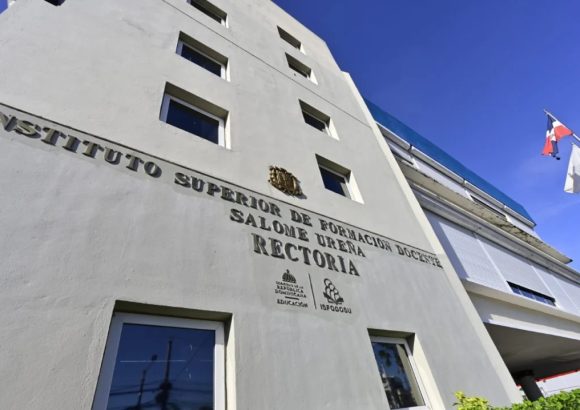
Against a backdrop of rising standards for global academic publication, a new collaborative educational initiative between two leading Latin American research institutions is working to close the opportunity gap for regional educational scholars. The Dominican Republic-based Salomé Ureña Institute of Teacher Training Higher Education (ISFODOSU) has partnered with Chile’s Interuniversity Institute for Educational Research (IESED-Chile) to deliver Advanced Training Workshop No. 09/2026: Academic Scientific Writing in Education, a three-session program designed to equip local faculty, early-career researchers and academic leaders with the skills to turn empirical classroom inquiry into high-impact, internationally indexed publications.
This workshop builds on a longstanding strategic alliance between the two institutions, rooted in a shared mission to translate on-the-ground educational research into rigorous, evidence-based insights that can shape public policy and improve teaching practice across Latin America and the Caribbean. Coordinated by Dr. Vladimir Figueroa Gutiérrez, Director of Research at ISFODOSU, and moderated by Carolina Correa González, Educational Policy Coordinator at IESED-Chile’s Universidad de Los Lagos Santiago campus, the program guided participants through a comprehensive exploration of modern academic communication, covering structural design, editorial standards, digital tools and ethical best practices. The initiative responds to growing pressure on regional researchers: leading global academic databases including Scopus and Web of Science continue to tighten methodological and editorial requirements, making it harder for emerging Global South scholars to secure international publication for their work.
Held across three weekly sessions in August 2026, the workshop combined virtual and hybrid participation formats to maximize access for researchers across the region. The first module, “Fundamentals of Scientific Writing and Academic Communication,” was led by Yoselin Taveras Sánchez of ISFODOSU on August 4. Taveras Sánchez reframed academic writing, challenging the common view that it is a bureaucratic administrative requirement, and instead positioned it as the core process through which educational research gains social legitimacy and real-world impact. Drawing on foundational principles of scientific communication established by leading scholars Robert Day and Barbara Gastel, she emphasized that research cannot be considered complete until its findings are effectively communicated to the broader academic community.
Taveras Sánchez pushed back against the pervasive misconception that scholarly authority relies on convoluted syntax and overly specialized jargon. “We do not write to demonstrate how much we know,” she stressed. “We write so that others may understand, evaluate, and utilize the knowledge produced.” To support researchers in building consistent, rigorous academic discourse, she introduced the “Polygon of Rigor,” a novel framework centered on six core pillars: objectivity, logical coherence, precision, empirical verifiability, methodological reproducibility, and research ethics. She also clarified common misconceptions around objectivity, noting that it does not require exclusive use of third-person prose—instead, it depends on methodological rigor, high-quality evidence, and full transparency around research procedures and outcomes. She encouraged participants to adopt the direct, clear writing style now prioritized by top international academic publishers.
The second module, held August 11 in a hybrid format hosted from IESED-Chile’s Santiago campus, was led by Dr. Figueroa Gutiérrez and focused on “Scientific Publication, Indexing, and Impact.” Dr. Figueroa Gutiérrez traced the evolution of scientific publishing from its 17th-century origins to today’s digital, database-driven ecosystem, breaking down the peer review process, open-access publishing models, journal metrics, and the full editorial pathway from initial submission to final publication. He also addressed practical concerns including Article Processing Charges and shared actionable guidance for identifying and avoiding predatory journals that exploit early-career researchers.
Dr. Figueroa Gutiérrez emphasized that double-blind peer review remains the cornerstone of academic credibility, while noting that the global Open Science movement is fundamentally reshaping how research data, methods and findings are shared across the international community. He encouraged participating researchers to align their publication strategies with the San Francisco Declaration on Research Assessment (DORA), a global agreement that prioritizes the quality and societal impact of research over reliance on journal impact factors alone. Echoing the first module’s focus on clear writing, he applied the KISS (Keep It Simple, Stupid) Principle to academic composition, arguing that “Complexity should reside in the thinking and in the research itself, not needlessly in the way we write.” He also offered guidance on responsible generative AI use, warning that using tools to generate original text or source primary references carries significant risks of AI hallucinations and factual inaccuracies. Instead, he recommended limiting AI use to auxiliary tasks such as syntax review, structural checks, summary writing based on verified sources, and reference formatting.
The workshop series concluded on August 18 with a masterclass from Dr. Katherine Báez-Vizcaíno titled “Construction and Composition of the Scientific Article.” Dr. Báez-Vizcaíno connected foundational research design to manuscript development, walking participants through the specific requirements of different article types, including empirical studies, systematic reviews, meta-analyses, bibliometric analyses and theoretical papers. A core focus of her session was supporting participants to convert existing work—including institutional research reports, master’s theses and doctoral dissertations—into concise, journal-ready articles. “Select only the information that holds real relevance for the scientific community,” she advised. “Use the final objective of your research to define the precise scope of your article.”
Dr. Báez-Vizcaíno shared actionable structural guidance, recommending article titles under 20 words and structured abstracts that clearly outline context, research objectives, methodology, key findings and conclusions. She broke down the widely used IMRD (Introduction, Method, Results, Discussion) manuscript structure, explaining that introductions should move from broad contextual background to a clear articulation of the specific knowledge gap the research addresses; methods sections must include sufficient detail to enable other researchers to replicate the work; results should be presented objectively without overinterpretation; and discussions should situate new findings alongside existing research while openly acknowledging study limitations. She also demonstrated specialized academic AI tools including Consensus, Litmaps, and NotebookLM, but stressed that technology can never replace human scholarly judgment or accountability. “Because artificial intelligence lacks human agency, it cannot bear academic responsibility,” she asserted. “The ultimate responsibility for data integrity, source accuracy, and published findings rests solely with the human researcher.”
Looking beyond the workshop itself, the program highlights the critical role of cross-regional institutional collaboration in strengthening educational research capacity across Latin America and the Caribbean. By combining ISFODOSU’s deep expertise in teacher training with IESED-Chile’s extensive regional research network, the initiative delivered practical, actionable tools to help regional scholars improve the quality, clarity and global reach of their academic output. Most importantly, the three-week program reinforced a collective vision for educational research in the Global South: insights generated in local classrooms and institutions should not remain confined to internal institutional reports. When refined into rigorous, transparent, accessible scholarship, this research can inform evidence-based policy, strengthen teacher preparation programs, and drive meaningful, inclusive educational progress across the region.