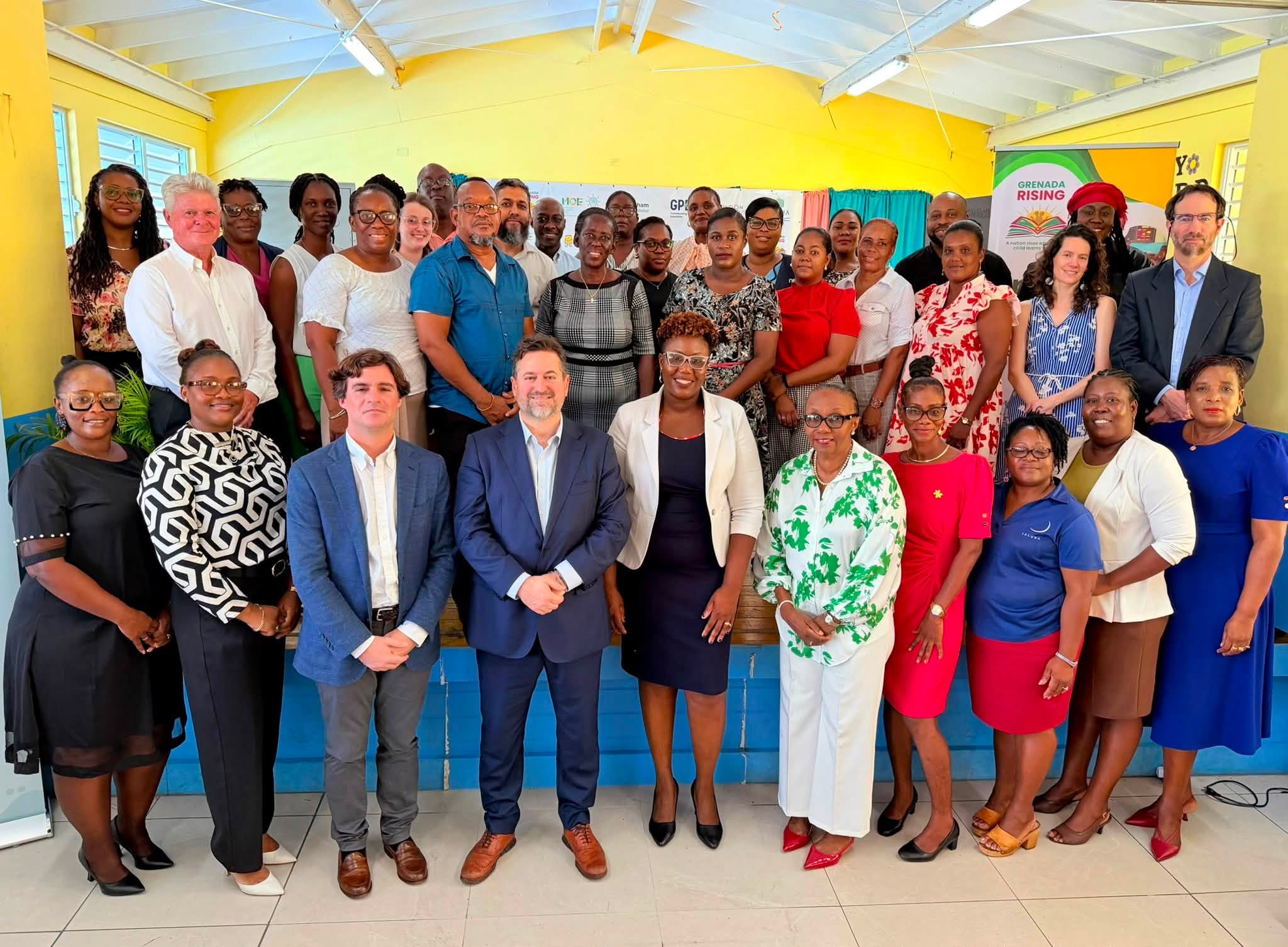
On August 25, 2026, Grenada’s Ministry of Education officially launched the pilot phase of the transformative Grenada RISING – Foundational Learning Programme during a ceremony hosted at St David’s Catholic School in Belle Vue, St David. Developed as a cross-sector collaborative response to a persistent national literacy crisis, the initiative marks a deliberate shift in policy to guarantee that every child in the country achieves functional reading, writing, and reading comprehension skills by the age of 9.
The programme is the product of a multi-stakeholder partnership between the Government of Grenada (the lead policy owner), SUMMA (the Laboratory of Education Research and Innovation for Latin America and the Caribbean), the Global Partnership for Education (GPE), the Grenada Private Sector Alliance for Education, the Rassmuss Foundation, and Pratham International. Each partner brings specialized expertise and resources to address the root causes of low literacy outcomes across the country’s education system. Core components of the initiative include equipping classroom teachers with evidence-based literacy instruction strategies, providing sustained in-school coaching for educators, and rolling out targeted family engagement supports to build a culture of reading across communities and homes. Karreen Francis-Gulston, an experienced literacy coordinator, has been appointed to lead the programme as national coordinator.
Lorraine St Louis-Nedd, Permanent Secretary for Educational Administration, opened the launch by emphasizing the urgent need for systemic intervention, citing recent data from Grenada’s Minimum Competency Test (MCT). The assessment revealed that two-thirds of current students fail to meet basic literacy competency requirements – a gap that does not end at primary school. St Louis-Nedd noted that literacy struggles follow students into secondary education, and have created measurable challenges for the national workforce, with local employers consistently reporting that new graduates lack the foundational reading and writing skills required for open positions. “It’s not something we are proud of, but this statistic has been a wake-up call,” she said. “Enough is enough. This programme brings all stakeholders together to do something different, to turn the tide on low literacy – and this launch is that turning point.”
SUMMA, the regional education research laboratory with more than 10 years of experience partnering with education ministries across Latin America and the Caribbean, will lead technical coordination for the pilot. Javier Gonzales, PhD, Director and Co-Founder of SUMMA, highlighted the central role of literacy as a foundational human right that unlocks access to all other social and economic opportunities. Gonzales stressed that while education innovation continues to evolve, the success of the programme will depend on human connection, not digital tools or artificial intelligence. “Everything we are doing with Grenada RISING centers on the interaction between teachers and students,” he explained. “It is not about technology or AI. It is the human, caring work of teachers that will deliver the outcomes we seek, and level the playing field for all children.”
The Rassmuss Foundation contributes its evidence-based Jumpstart methodology, which has already delivered proven improvements in literacy outcomes in Chile and St Vincent and the Grenadines. Stefan Franken, General Director of the Rassmuss Foundation, noted that early gaps in literacy have long-lasting impacts on lifelong outcomes, limiting employment prospects and social mobility well into adulthood. “International evidence is clear: if a student does not reach a comprehensive level of reading proficiency by the critical early age, they struggle to build all other skills through school and life,” Franken said. “This puts Grenada at the forefront of what modern education needs to prioritize.”
The pilot phase of the programme will be implemented across eight participating primary schools: Holy Innocents Anglican School, Mt. Moritz Anglican School, Sacred Heart Catholic School, Samaritan Presbyterian School, St David’s Catholic School, St George’s Anglican Junior School, St Martin de Porres Catholic School, and St Patrick’s Catholic School. At the launch ceremony, formal partnership agreements were signed with the principals of each school to confirm their commitment to the initiative. Andrea Phillip, CEO of Grenada Schools Inc., and the two participating school principals also delivered remarks at the event.
Global and regional partners bring additional proven resources to the effort: Pratham International, one of the world’s largest non-profit education organizations, contributes its Teaching at the Right Level (TaRL) approach, a widely tested intervention that has helped struggling readers accelerate progress and close proficiency gaps quickly. The Global Partnership for Education provides both core funding and global technical expertise in foundational learning improvement. The newly formed Grenada Private Sector Alliance for Education, launched in May 2026, mobilizes private sector investment for the initiative, with GPE matching private donations in kind. To date, the alliance has raised more than US$425,000 to support programme activities.
The launch event was attended by senior Ministry of Education officials, technical implementation teams, school leaders, classroom educators, and representatives from all partner organizations. Following the official launch, the programme will immediately move into the pre-implementation phase, focusing on the training and preparation of all frontline implementation staff, including instructional coaches, mentors, management teams, and participating classroom teachers.
Officials from all stakeholder groups emphasized that the pilot is the first step in a national commitment to universal foundational literacy, with the goal of scaling successful outcomes across the entire education system once the pilot phase is complete.