分类: education

  • Stronger literacy push after exam decline

    Stronger literacy push after exam decline

    When this year’s Common Entrance exam results revealed a worrying steep drop in national English test scores, education policymakers moved quickly to address growing fears that thousands of incoming secondary school students were not prepared for the academic demands of high school. The result is a targeted, intensive summer literacy intervention that is already reporting measurable early gains for the learners who need it most.

    As part of the country’s National Literacy Programme, the Ministry of Education Transformation launched the Summer Learning Pod initiative, with a pilot site hosted at Westbury Primary School. Currently, 70 students between the ages of 11 and 13, all of whom showed critical gaps in reading and writing proficiency in this year’s exams, are receiving specialized daily support designed to close literacy gaps before they begin secondary school. The 3-week programme, set to conclude this Friday, relies on two evidence-based instructional frameworks developed by Lindamood-Bell: Seeing Stars and the Visualizing and Verbalizing approach, delivered through small-group instruction tailored to each student’s skill level.

    Each structured method targets a core component of literacy proficiency. The Seeing Stars framework helps learners build word recognition and spelling skills by training them to create clear mental images of letter sequences within words, a technique that strengthens automatic decoding. The Visualizing and Verbalizing approach, by contrast, boosts reading and listening comprehension by teaching students to form mental imagery of the content they read, then rephrase that content in their own words to deepen understanding. With a strict 1:5 instructor-to-student ratio, every learner receives personalized attention that is often hard to access in crowded standard classroom settings.

    The intervention was launched in direct response to newly released national data showing that the average English score dropped from 72.5 in 2025 to 64.2 in 2026. Education officials flagged widespread weaknesses in core skills including grammar, vocabulary, reading comprehension, and analysis of expository nonfiction texts, gaps that experts warn could create persistent barriers to success as students move to the more rigorous curriculum of secondary school. To remove common barriers to access, the programme also provides all participating students with free daily transportation and school lunches, ensuring that low-income learners are not excluded from the support they need.

    Project consultant Isabel Medellin says early progress assessments already show clear, transformative improvements for many participants, pointing to the rapid growth of one 11-year-old student named Jayden as a striking example. When Jayden first joined the programme, initial baseline testing placed his reading proficiency at roughly a first-grade level, with extremely weak foundational skills that left him struggling to decode even short, simple words. “When we first began his instruction, he was working on words with single syllables, two or three sounds. So words like ‘cat’ or ‘boat,’” Medellin explained.

    After less than three weeks of daily targeted instruction, observed in part by peripatetic teacher support officer Lee Carter, Jayden’s skills and confidence have both surged dramatically. “So now he’s working on two-syllable words. He is reading passages with more complex single-syllable and two-syllable words. He’s increasing his sight word recognition, and his confidence has increased so much,” Medellin said. She added that the shift in Jayden’s classroom engagement has been as notable as his academic progress: “He is always raising his hand to answer the questions, and it’s been really great to see that within just barely three weeks, he has gone from struggling to decode words with two or three letters to now he can take on two-syllable words and decode them back to back.”

    All participants complete a baseline assessment at the start of the programme and a follow-up assessment at the end to measure growth, allowing educators to document exactly how much progress each student makes over the three-week intervention. Education officials say the early results from the pilot will inform future expansion of targeted summer literacy support to address ongoing declines in secondary school readiness.

  • St. Joseph’s Academy Invests EC$12,500 in Junior Chef Prize Money in Commercial Ovens

    St. Joseph’s Academy Invests EC$12,500 in Junior Chef Prize Money in Commercial Ovens

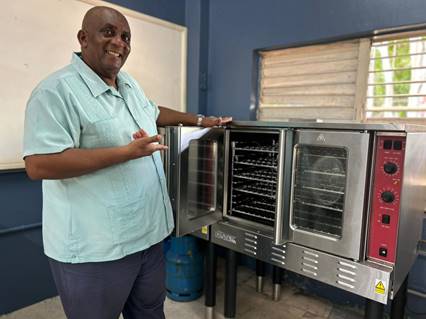
    St. Joseph’s Academy, a prominent educational institution focused on nurturing culinary talent, has made a strategic decision to redirect EC$12,500 earmarked for junior chef competition prize money toward the acquisition of new commercial-grade ovens for its culinary arts training program.

    The investment marks a key shift in how the school supports its emerging culinary students, prioritizing long-term skill development over one-time competition rewards. The new commercial ovens will replace outdated equipment in the school’s teaching kitchen, giving hundreds of aspiring junior chefs access to industry-standard tools that mirror the working conditions found in professional restaurants, bakeries, and catering operations across the region.

    School administrators explained that the decision came after identifying a critical gap in training infrastructure. While the annual junior chef competition has long incentivized student excellence, many participants noted that limited access to modern cooking equipment held back their progress outside of competition events. By reallocating the prize budget, the academy is creating sustained benefits that will serve current and future cohorts of culinary students for years to come.

    Local culinary industry leaders have welcomed the move, noting that hands-on experience with commercial equipment gives student graduates a significant advantage when entering the workforce. The new ovens are expected to be installed and operational before the start of the next academic semester, when the academy will launch an expanded junior chef training track to meet growing student interest in culinary careers.

  • Parents invited to free seminar on understanding children’s communication difficulties

    Parents invited to free seminar on understanding children’s communication difficulties

    Two community-focused educational groups, Education Consulting, Academic Advising and Mentoring (ECAAM) and Creative Teacher 767, have partnered to launch a valuable new initiative aimed at equipping adults who work with or care for children with the skills to address childhood communication difficulties. The organizations are opening registration for a fully free, interactive online seminar titled “Understanding Communication Difficulties in Children,” designed to deliver practical, research-backed strategies to caregivers, parents, teachers, and any other adults invested in children’s development.

    Unlike generic informational sessions, this upcoming workshop centers on actionable takeaways that adults can implement immediately in everyday settings, from family homes to community activities. Organizers emphasize that communication serves as the non-negotiable foundation for nearly every critical aspect of childhood growth: it enables academic learning, fosters healthy social relationships, and supports long-term emotional well-being. Catching communication challenges early and delivering targeted, appropriate support, they note, can create transformative, lasting improvements to a child’s self-confidence and overall developmental trajectory.

    During the live two-hour session on Zoom, participants will walk away with four core sets of insights. Attendees will first learn how to spot the often-overlooked early warning signs of communication difficulties in children of different ages. They will also explore the varied, non-verbal ways many children communicate beyond traditional spoken language, helping adults recognize and meet children where they are. The seminar will also introduce attendees to simple, practical techniques that can be integrated into daily routines at home to encourage more open communication, and guidance on when and how to access specialized professional support for children who need more targeted intervention.

    “Clear communication helps children connect, learn, and thrive,” shared organizers in an official press release announcing the event. “This seminar is intended to empower parents and caregivers with knowledge and practical tools that can help children find their voice and participate more fully in everyday life.”

    The event is the product of the two organizations’ shared long-term mission to support families through accessible education, targeted advocacy, and intentional community engagement. By opening this seminar to the public at no cost, the groups are working to break down barriers to reliable, actionable guidance for caregivers who may not have access to specialized professional development or counseling resources. Their ultimate goal is to strengthen the reciprocal communication between children and the supportive adults in their lives, creating more inclusive environments where every child can be heard.

    While participation does not require any payment, attendees must complete advance registration to secure a spot. All registered participants will receive a private Zoom link directly to their email ahead of the scheduled event. Interested adults are invited to scan the QR code included on the official event flyer to complete their registration quickly.

    The seminar is scheduled to take place live on Zoom on Saturday, July 25, 2026, kicking off at 3:00 PM local time. The entire session will remain free for all registered attendees.

  • Educator calls for full-time school counsellors

    Educator calls for full-time school counsellors

    As Barbados grapples with a steadily climbing national crime rate, its ripple effects are now reaching the island’s classrooms, pushing veteran St Philip educator Betty-Lyn Estwick to push for a critical policy shift: placing a full-time, permanent counselor in every school to support young people living with the trauma of family-connected crime. Estwick outlined her proposal during Monday’s St Philip Ideas Forum, hosted at Princess Margaret Secondary School, where she shared firsthand observations of children who witnessed family members commit violent offenses, only to go on to replicate that harmful behavior later in life.

    Estwick argued that part-time, visiting counselors, who only spend a few hours or one day a week on campus, are unable to provide the consistent, long-term support at-risk youth need. Instead, she called for dedicated, full-time staff who can monitor students showing early warning signs of falling into criminal patterns, and intervene early to steer them away from a life of violence. “If we look at the backgrounds of many people currently committing murder on the island, we see this pattern of intergenerational exposure to crime,” she noted. “Children of murder victims, abused youth, and vulnerable young people need consistent, ongoing follow-up and support that only a permanent on-site counselor can provide.”

    Estwick also drew sharp criticism to the Ministry of Education Transformation’s upcoming universal free breakfast program, set to launch in September. She argued the initiative is unnecessary to serve all students, claiming that existing community-led breakfast programs already identify needy children through on-the-ground knowledge from teachers. Instead of rolling out a new universal program, she suggested the government should allocate the funding to upgrading existing initiatives and improving overall school infrastructure to create better learning environments for both students and staff, calling the proposed universal program “a joke.”

    Responding to Estwick’s call for early intervention for at-risk youth, Attorney General Wilfred Abrahams confirmed that the government is already moving forward with a targeted diversion program, spearheaded by the Barbados Defence Force, designed to identify vulnerable youth before they enter the criminal justice system. New legislation to establish the residential program will be introduced imminently, Abrahams said, adding that the initiative will be developed in partnership with the Ministry of Education and the Social Empowerment Agency. Unlike existing programs that only work with youth who have already broken the law, this new effort will focus on pre-emptive intervention for children showing early signs of heading down the wrong path.

    Education Transformation Minister Chad Blackman pushed back against Estwick’s criticism of the free breakfast program, defending its core purpose and goals. Blackman explained that while some students may not come from low-income backgrounds, many arrive at school early having not eaten any breakfast, often because their parents leave for work well before the school day begins. “We can build state-of-the-art schools, train every teacher to the highest standard, and roll out all the best education technology in the world, but if a child is hungry, they simply cannot learn,” Blackman said. Extensive research confirms that access to a nutritious morning meal improves academic outcomes, he added, making the program a fundamental investment in education transformation.

    St Philip North Member of Parliament Dr. Sonia Browne, who has run a community school breakfast program for years, backed the minister’s position. She noted that her own program found that many food-insecure students are not from underprivileged backgrounds – they just arrive at school too early for their parents to prepare breakfast, and any hungry child should be fed regardless of their family’s income. Her policy has always been that “if you’re hungry, you get fed,” she said.

    Blackman also clarified that the new program does not aim to replace existing community and philanthropic meal initiatives. Instead, the government is partnering with more than 40 churches and community organizations to coordinate delivery, and will meet with these groups within two days to finalize arrangements. The goal is to preserve the spirit of local philanthropy while creating a more coordinated, comprehensive system that reaches more hungry children, he added. The minister also rejected claims that funding for the breakfast program will divert resources from school infrastructure improvements, noting that the government is already advancing extensive modernization and refurbishment work across the island’s school network, much of which is between 50 and 200 years old. This work, carried out over the recent summer break after the secondary school entrance examination, includes upgrades to improve schools’ resilience to hurricanes and climate change impacts, alongside general modernization to create safe, functional learning spaces for students and teachers. Beyond infrastructure, the government is also investing in teacher training and new education technology, he added.

    The forum also included calls for greater investment in homegrown education technology from Teddy Leon, founder of local startup EduConnect. The real-time platform connects schools and parents, cutting down on administrative work for teachers while improving communication between families and school staff. Unlike foreign-developed education tools that are not adapted to Barbados’ unique context, Leon said, the island should prioritize building its own digital education infrastructure developed by local innovators who understand the country’s specific challenges. EduConnect, which has been piloted at multiple schools across Barbados, allows administrators to send messages to individual parents, entire classes, or all schools across the island with one click, delivering messages even to users without mobile data. Leon urged the government to build deeper, more intentional partnerships with local tech innovators to strengthen the island’s education ecosystem.

  • Belize’s First Aviation Camp of 25 Kids Takes Flight

    Belize’s First Aviation Camp of 25 Kids Takes Flight

    In a bustling hangar at Belize’s Sir Barry Bowen Municipal Airport, 25 curious young minds stepped beyond the passenger cabin this week to dive into the multi-faceted world of aviation at Belize’s first ever STEM Aviation Camp. Running for five full days, the week-long immersive initiative is designed to introduce local teens to the wide range of rewarding careers aviation has to offer, connecting classroom-based STEM learning to hands-on, real-world industry experience.

    The trailblazing program is a collaborative effort between the cross-border non-profit STEMU Foundation, Saint Catherine Academy, Deep Blue Avionics, regional carrier Tropic Air, the Belize Defence Force (BDF) Air Wing, and the Belize Civil Aviation Authority, with sponsorship support from RF&G Insurance Ltd. Interest in the inaugural camp far outpaced organizers’ initial projections, with selected participants traveling daily from across the country — including Belize City, Belmopan, Orange Walk, and Corozal — to take part in the activities.

    Jamie Usher, Vice-Principal of Student Affairs at Saint Catherine Academy and President of the Belize Robotics Federation, framed the camp as a new approach to making STEM education tangible for young learners. “As an educator and a female leader in STEM-focused careers, we are thrilled to create this space where hands-on, real-life experiences tie together science, technology, engineering, and math, while also building critical teamwork and problem-solving skills,” Usher explained. “It turns abstract textbook concepts into something dynamic and alive that young people can see themselves working in one day.”

    The camp curriculum is structured to move students from foundational knowledge to on-site industry exploration. After the first two days spent covering core aviation theory, core industry vocabulary, and the standard international phonetic alphabet, participants moved to on-site visits, starting with the Sir Barry Bowen Municipal Airport hangar. The week’s schedule also includes guided tours of the BDF Air Wing facilities and the Belize Civil Aviation Department headquarters at the Philip S.W. Goldson International Airport, with planned time on the active flight line by the end of the week.

    To date, organizers have introduced students to at least eight distinct aviation career paths, ranging from aircraft engineering and maintenance to airport firefighting, flight operations, and ground support services. Jarrus Mitchell, founder of the STEMU Foundation — a Belize-U.S. non-profit launched in 2023 to expand equitable access to high-quality STEM education across Belize — said an aviation-focused camp was a natural expansion of the organization’s mission. “This is our first annual STEM aviation camp, and our core goal is to give kids hands-on exposure to the full range of careers available in aviation that many have never heard of,” Mitchell said. He added that the foundation’s long-term vision for Belize includes expanding access to vocational training and professional development across a range of high-demand sectors, including engineering, agriculture, healthcare, and information technology.

    For many of the young participants, the experience has already upended long-held assumptions about who can work in aviation and what careers the industry offers. After meeting Terry Folsom, an aviation engineer with Deep Blue Avionics, 14-year-old participant Damariel Aguilar said the experience changed her perspective on gender roles in the field. “I learned that both boys and girls can be pilots and engineers,” Aguilar said. “Miss Terry taught me that women can work in these roles just like men, just like she does.”

    Fellow camper Abigail Rivero noted that the camp fills a critical gap in youth career preparation, giving young people early exposure to fields they would not otherwise encounter in standard school curricula. “This summer camp introduces kids to so many different fields that we don’t learn about in regular class,” Rivero said. “When it’s time to pick a career path, we’ll already have experience with these options, so we don’t have to wonder if we missed out on something we might love.”

    Each student has taken away unique new skills aligned with their interests: For Skye Williams, the most memorable takeaway was a concrete lesson in applied physics, learning about the four core forces that enable flight: lift, thrust, drag, and weight. For Yuvan Lalwani, the week brought both a new understanding of industry communication and practical applied math. “I learned the phonetic alphabet: Y for Yankee, A for Alpha, B for Bravo,” Lalwani said. “I also learned how to calculate flight speed, and now I can figure out how long a trip will take before I even get on a plane.”

    By the end of the week on Friday, participants will have completed a full journey from classroom theory to standing on the flight line of Belize’s busiest international airport, laying the groundwork for a new generation of Belizean aviation professionals.

  • Abinader commits to turn national education consultation into public policy

    Abinader commits to turn national education consultation into public policy

    SANTO DOMINGO — On Wednesday, Dominican Republic President Luis Abinader formally accepted the final results of the country’s landmark National Consultation on the Future of Education, promising to translate the widespread public consensus forged through the multi-stakeholder process into actionable policy that will reshape the nation’s education landscape for decades to come.

    The handover ceremony, held at the National Palace, marked a key milestone in the government’s push for systemic educational reform. The consultation, organized and executed by the Executive Commission for Educational Transformation, represents one of the broadest exercises in citizen engagement in Dominican education policy in recent history. Stakeholders from every corner of society — including classroom educators, higher education institutions, private sector leaders, civil society groups, local families, and Dominican citizens residing overseas — contributed insights and recommendations that were consolidated into the final report.

    Speaking at the event, President Abinader highlighted that the consultation’s outcomes reflect a unified national vision for the future of education, and will act as the foundational blueprint for a completely updated legal framework governing the sector. “The law we will draft will not codify the outdated system we currently operate under; it will pave the way for the modern, responsive system our country will need for future generations,” Abinader stated.

    The president outlined five core priorities that will guide the upcoming reform process: expanding and strengthening early childhood education, growing access to inclusive education for marginalized groups, upgrading technical and vocational training programs to meet labor market demands, reinforcing the quality of higher education, and equipping students with the adaptable skill sets required to thrive in a fast-evolving global economy.

    The final report codifies a clear set of priorities identified through the consultation process. Key among these are revisions to outdated school curricula, more rigorous and ongoing teacher training initiatives, and the deeper integration of digital technology, artificial intelligence, innovation practices and academic research into daily learning. The report also emphasizes the urgent need to foster critical thinking, creative problem-solving, ethical reasoning, and strong civic values among students.

    Moving forward, the consultation’s findings will form the backbone of new national public education policies, as well as the drafting of an updated General Law on Education, Science, and Technology. The overarching goal of the reform push is to modernize the Dominican education system and create a skilled, competitive workforce that will drive long-term, inclusive national development.

  • Technology revolutionizes the marking of 9th AF exams

    Technology revolutionizes the marking of 9th AF exams

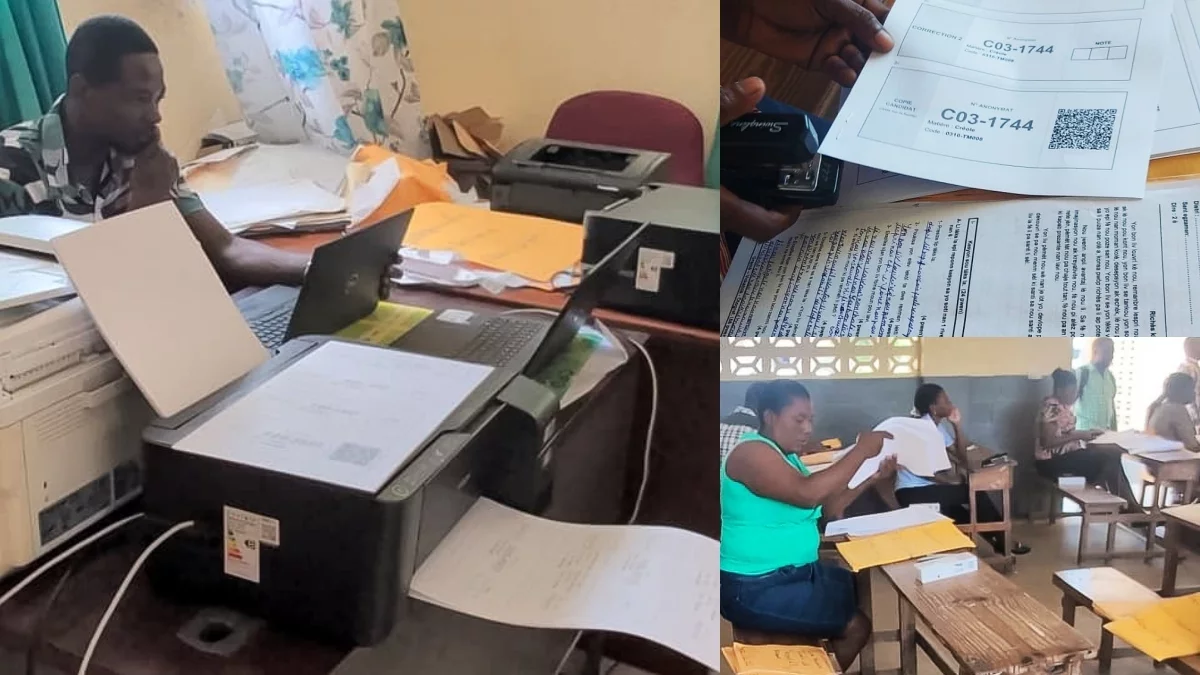
    In a landmark shift for public examination administration, Haiti’s Departmental Directorate of Education for the Northeast (DDE-NE) has launched a fully technology-driven marking process for the 2026 9th AF exams, leaving century-old manual workflows behind. The systemic overhaul was designed to address longstanding vulnerabilities in traditional marking, cut avoidable human error, boost procedural transparency, and ensure every candidate receives a final grade that accurately reflects their actual performance.

    For decades, exam marking in the region relied on partially manual operations, from hand-writing candidate identification codes on marking envelopes to manual entry of finalized scores into central databases. While administrative teams consistently managed the process to the best of their ability, the manual framework carried inherent risks: transcription mistakes, reversed candidate codes, and data entry errors that could ultimately alter a student’s final result and impact their academic trajectory.

    To eliminate these risks permanently, DDE-NE rolled out three key layered innovations as part of its new fully secure marking protocol this exam cycle. First, the department replaced hand-written envelope coding — long the top source of administrative error — with individually generated, strictly confidential secure marking sheets for every candidate and every subject. By securing exam paper identification from the very start of the process, the department has strengthened the reliability of the entire marking workflow.

    The most transformative change comes to post-marking score processing. Where teams once manually transferred marks from marking grids to central digital databases, all grids are now scanned and automatically uploaded to the department’s computer system immediately after marking. This automation cuts the risk of manual data entry errors drastically while also accelerating overall result processing. Every score assigned by an examiner is recorded directly into the system with no intermediate transcription step.

    The digital overhaul has also reshaped the roles of marking center teams, shifting their focus from repetitive administrative work to high-impact quality oversight. Inspectors and operations staff no longer spend hundreds of collective hours entering marks; instead, their core responsibility is now verifying the accuracy of digitized data, flagging potential anomalies, and certifying that results meet compliance standards before final validation. This reorganization lets institutional human resources focus on quality control rather than repetitive tasks, further reducing the chance of preventable error.

    A third key innovation brings full end-to-end traceability to the marking process. For the first time, every examiner is issued a personal electronic badge that automatically logs their arrival and departure from marking sessions, as well as the total number of papers they complete during each shift. This system gives DDE-NE leadership precise, real-time oversight of all operations: every step is traceable, every action is documented, and every staff member’s role is recorded with full transparency.

    Beyond procedural modernization, the reform advances a deeper core goal: upholding fairness for all test-takers. In high-stakes national examinations, a single mark can shape a student’s future academic opportunities, and DDE-NE’s reform prioritizes protecting every candidate’s fundamental right to an accurate assessment of their work. By minimizing human error and expanding layered control mechanisms, the department is working to deliver on that promise.

    This marking overhaul is just the latest step in a months-long push by DDE-NE to digitize all its public education services. Prior reforms have already modernized administrative tracking, staff attendance monitoring, and general education activity management, and the new marking process represents the next milestone in this ongoing digital transformation. Through the initiative, DDE-NE underscores a core principle: technology is not a goal in itself, but a tool to deliver better public governance and a fairer education system for all students in the region.

  • Revamped ITVET Campus Opens Doors in Hope Creek Village

    Revamped ITVET Campus Opens Doors in Hope Creek Village

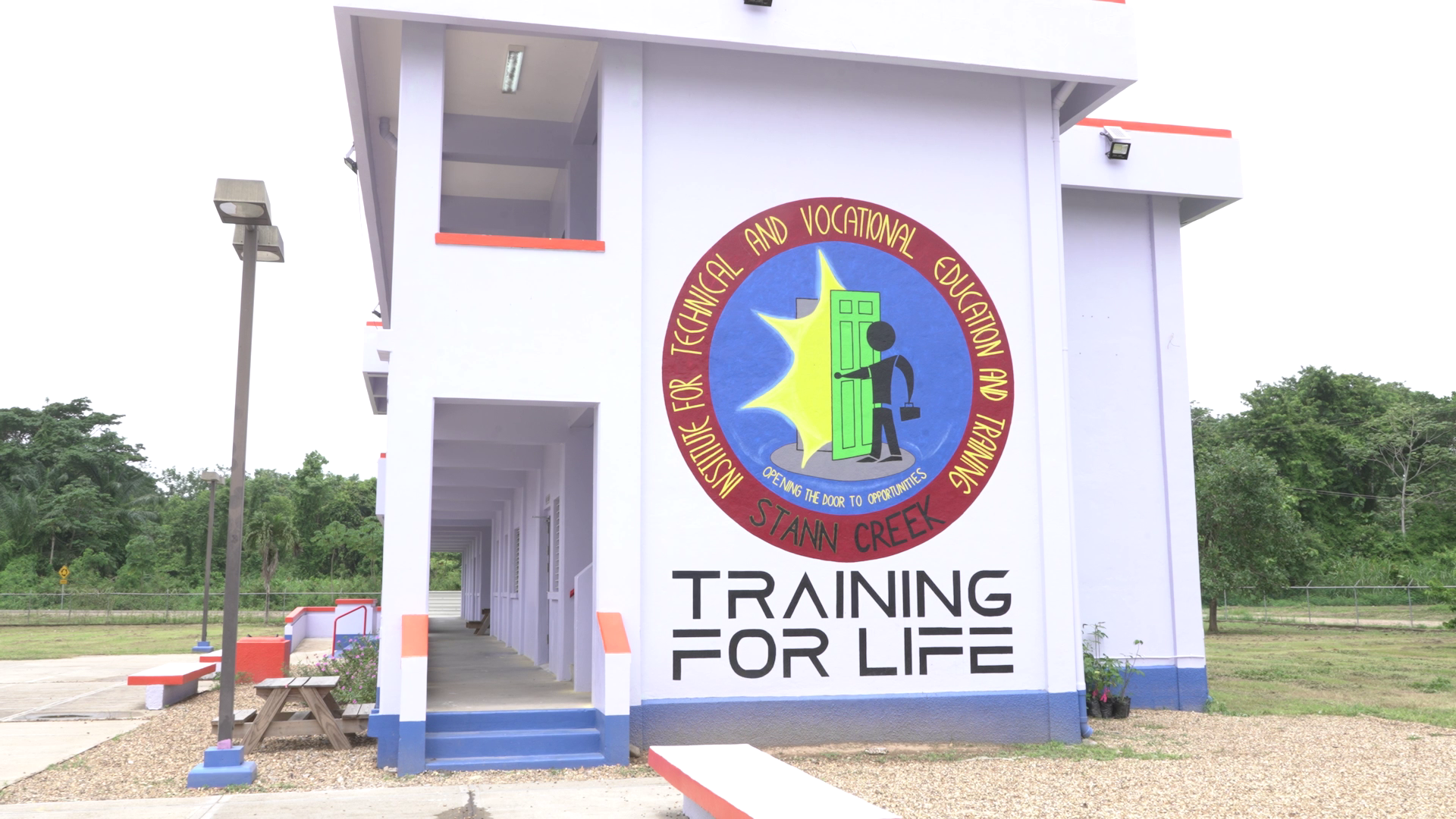
    For generations of young people and working adults in southern Belize, technical and vocational education has stood as one of the most reliable pathways to stable employment, in-demand skills, and upward economic mobility. Now, that critical pathway has received a transformative upgrade, with the official inauguration of the fully renovated Stann Creek ITVET (Institute for Technical and Vocational Education and Training) campus in Hope Creek Village, following a 12-month, $1.4 million rehabilitation project.

    The campus reopening, originally scheduled for late June 2026, was delayed by an unexpected heavy downpour, but the setback did little to reduce the milestone’s importance for the local community. A formal ribbon-cutting ceremony finally marked the completion of the project, which addresses years of structural decay that had limited the institution’s ability to serve a growing student body. Speaking at the event, Dangriga Area Representative Dr. Louis Zabaneh emphasized that the upgrades will touch lives across the entire Dangriga, Sarawee, and Hope Creek constituency.

    “Walking through the campus, it is clear that every classroom, office, and training lab is now fully functional,” Dr. Zabaneh noted. “One of the most persistent problems we faced, constant roof leaks that disrupted classes and damaged equipment, has finally been solved. These improvements will go a long way in helping us better serve our community, especially the students who come here to build the skills they need for successful careers.”

    Funded by the Caribbean Development Bank through the 10th cycle of the Basic Needs Trust Fund (BNTF), the project was implemented jointly by the Belize Social Investment Fund and the Ministry of Education. Beyond superficial aesthetic changes, the renovation completely overhauls the campus’s core infrastructure to meet modern training standards. Dorett Tennyson, project manager for the BNFT, outlined the full scope of work completed over the past year: “We fixed persistent roof leaks, repainted all campus buildings, upgraded security lighting across the grounds, and replaced every window and door. We fully refurbished all existing restroom facilities, added a new staff restroom on the ground floor of the administration building, installed new tile flooring in the computer lab, and even provided new equipment for the building and trade training programs.”

    Once a small campus serving fewer than 50 students total, Stann Creek ITVET has seen rapid growth in demand over the past decade, with more than 200 students graduating in recent years and applications continuing to climb. Campus manager Gwendolyn Garcia Martinez says the improved facilities have already sparked even more interest from prospective students, with more people eager to enroll and spreading the word about the upgraded institution to their communities.

    The impact of the renovation is already extending beyond traditional student populations, Garcia Martinez explained. Local businesses and tourism operators, the region’s largest employment sector, have reached out to the campus to partner on employee upskilling programs. The institution will also now be able to accommodate vocational training for asylum seekers in the area, expanding its public service mission.

    “The impact of this renovation is going to be far greater than any of us can fully anticipate right now,” Garcia Martinez said. “This upgraded campus gives us the capacity to serve far more people across this region, and to do it better than we ever could before.”

    Looking ahead, the second phase of the improvement project will focus on strengthening the quality of instruction itself. Professional development training sessions for campus instructors are scheduled for early August, designed to give educators the tools and resources they need to deliver more effective, industry-aligned training to the next generation of Belize’s workforce.

  • CARICOM digital TVET project strengthens region’s readiness for the digital economy

    CARICOM digital TVET project strengthens region’s readiness for the digital economy

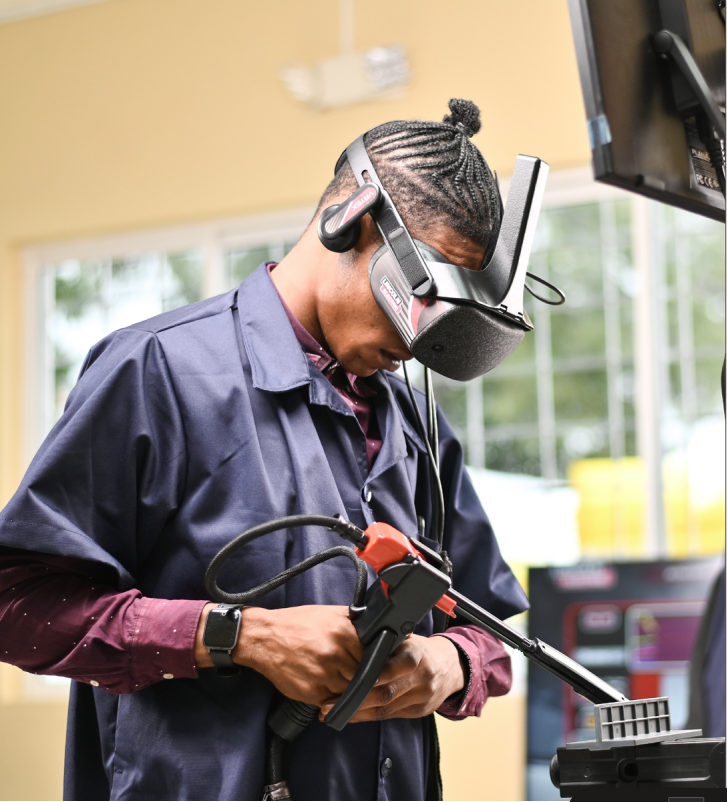
    After years of collaborative planning and implementation across multiple Caribbean nations, a landmark regional initiative to modernize technical and vocational education and training (TVET) through digital innovation has officially wrapped up, establishing a long-lasting institutional framework that will advance digital learning and strengthen regional workforce development for years to come.

    According to an official press release from the Caribbean Community (CARICOM), the Digitalisation of Technical and Vocational Education and Training Delivery Project has served as a powerful case study for how coordinated regional action can generate context-specific, practical solutions that address the distinct challenges and priorities of CARICOM member states. Unlike imported education models that often fail to align with local needs, the initiative was built from the ground up to serve the Caribbean region.

    During the project’s virtual closing ceremony held in recent weeks, Dr. Denise Stoney-James, Deputy Programme Manager for Education at the CARICOM Secretariat and the initiative’s Project Manager, explained that the project was launched to answer the rising demand for digital transformation across the region’s education systems. “CARICOM TVET institutions needed a practical, regionally owned pathway to accelerate digital transformation, not borrowed models, but solutions built for CARICOM Member States,” she noted.

    Stoney-James emphasized that the initiative demonstrates the tangible value of pooling regional expertise to advance shared goals. “This initiative sought to harness digital technology to transform Technical and Vocational Education and Training across the Caribbean. It reflects the power of regional cooperation and the importance of solutions tailored to our own realities,” she added.

    The project was delivered through a unique trilateral partnership that brought together the CARICOM Secretariat, the Brazilian Cooperation Agency, and dozens of regional education and training institutions across the bloc. The collaboration combined international development support with regional local knowledge to ensure all outputs aligned with national and regional priorities.

    Over the course of the initiative, the partnership developed three custom online learning units designed exclusively for CARICOM learners. Beyond creating new learning content, the project also provided specialized capacity-building training for hundreds of education professionals including instructors, learning monitors, instructional designers, and national focal points from four pilot countries: Barbados, Grenada, Jamaica, and Trinidad and Tobago. This training ensures that local teams can continue delivering high-quality digital instruction long after the project’s official conclusion.

    A core priority of the project was the development of learning resources that center Caribbean experiences and local context. All digital course materials feature CARICOM-based instructors and examples tied directly to local industries and community needs, while the initiative also invested in building the technical infrastructure and governance systems required to support long-term sustained use of the new digital tools.

    To embed national ownership of the project outcomes, all new courses were integrated directly into each participating country’s existing national learning platforms, rather than creating parallel external systems. The initiative also introduced targeted incentive programs designed to boost participation among women and other marginalized groups that have historically been underrepresented in technical vocational training. Additionally, the project established regional exchange networks and communities of practice to encourage ongoing collaboration and knowledge sharing between educators and institutions across member states.

    The CARICOM Secretariat reports that the project has already delivered measurable, meaningful results across the pilot countries. Digital delivery capacity across national TVET systems has been strengthened significantly, and all four pilot nations have successfully integrated the new digital systems into their existing national education infrastructure.

    Beyond immediate capacity gains, the initiative has created a sustainable, nationally owned model that reduces regional reliance on external development assistance while boosting the institutional resilience of CARICOM’s TVET systems. The foundation of technical and institutional capacity built through the project also sets the stage for wide expansion across the bloc, with multiple additional CARICOM member states already confirming their interest in adopting the successful model.

    Reflecting on the initiative’s long-term importance, Stoney-James noted that its impact extends far beyond its immediate tangible outputs. “The project not only delivered immediate results but also created the conditions for sustainable expansion, positioning CARICOM TVET systems to meet the demands of a rapidly evolving digital economy,” she said.

    She also highlighted one of the project’s most critical takeaways for future regional digital transformation efforts: that lasting change depends not only on rolling out new technology, but on preparing local institutions to manage and maintain that technology over time. “Sustainable digital transformation depends not only on the solutions we build, but on the capacity of institutions to adopt, own, and sustain them over time,” Stoney-James affirmed.

  • CARICOM Develops Online Courses for Technical and Vocational Students

    CARICOM Develops Online Courses for Technical and Vocational Students

    When regional institutions across the Caribbean Community (CARICOM) set out to modernize their Technical and Vocational Education and Training (TVET) systems, they rejected one-size-fits-all imported frameworks in favor of solutions built specifically for the unique needs of member states. That core vision guided the landmark Digitalisation of TVET Delivery Project, which concluded its initial phase with a virtual closing ceremony that celebrated tangible progress and laid the groundwork for long-term regional expansion.

    Dr. Denise Stoney-James, Deputy Programme Manager for Education at the CARICOM Secretariat and the project’s lead manager, framed the initiative as a model for what collective regional action can achieve when complementary strengths are aligned around a shared goal. “This initiative sought to harness digital technology to transform Technical and Vocational Education and Training across the Caribbean. It reflects the power of regional cooperation and the importance of solutions tailored to our own realities,” she noted, emphasizing that locally rooted design has been central to the project’s early success.

    Built on a innovative trilateral partnership structure that brings together the CARICOM Secretariat, the Brazilian Cooperation Agency, global technical experts, and regional education institutions, the project has already delivered a suite of targeted outcomes designed for long-term impact. Three custom online learning units have been developed from the ground up to fit CARICOM’s learner population, while education personnel including instructors, program monitors, instructional designers, and national focal points across four pilot countries—Barbados, Grenada, Jamaica, and Trinidad and Tobago—have completed hands-on training to lead ongoing digital delivery after the initial project phase concludes.

    Unlike generic off-the-shelf digital learning materials, all content created through the project is culturally contextualized, featuring local CARICOM instructors and examples that reflect regional economic and social realities. To ensure long-term accessibility, new technical infrastructure and governance frameworks have been established, and all courses have been integrated into existing national education platforms to cement country ownership of the initiative. Targeted incentive programs have been implemented to boost enrollment among women and marginalized groups, expanding access to digital skills training for underrepresented populations, while regional peer networks and communities of practice have been launched to foster ongoing knowledge sharing across member states.

    Early outcomes from the pilot phase mark a significant step forward for Caribbean TVET modernization. Regional capacity for digital TVET delivery has been substantially strengthened, with all four pilot countries successfully integrating the new digital tools and content into their existing national education systems. The project has also established a fully sustainable, country-led operating model that reduces long-term reliance on external support and builds regional institutional resilience. Critically, the initiative has laid the technical and institutional groundwork for region-wide scaling, with multiple additional CARICOM member states already indicating they are prepared to adopt the model for their own TVET systems.

    Stoney-James emphasized that the project’s impact extends far beyond its immediate deliverables, positioning regional TVET systems to meet the shifting demands of the 21st century digital economy. “The project not only delivered immediate results but also created the conditions for sustainable expansion, positioning CARICOM TVET systems to meet the demands of a rapidly evolving digital economy,” she said.

    The initiative also yielded key lessons that will shape future regional digital transformation efforts: institutional readiness, the project found, matters more than access to cutting-edge technology. While digital tools can be shared quickly across borders, long-term sustainability depends on national ownership, flexible implementation pathways, and alignment with each country’s existing institutional maturity. “Sustainable digital transformation depends not only on the solutions we build, but on the capacity of institutions to adopt, own, and sustain them over time,” Stoney-James affirmed.

    The project was developed to address long-standing structural gaps that have held back CARICOM TVET systems for years. For decades, regional institutions have struggled to keep pace with global digital shifts, with limited access to high-quality digital training and Industry 4.0 content, and wide disparities in institutional capacity across member states. While a small number of institutions had made independent progress toward digital modernization, many were still building the foundational systems needed to support digital delivery.

    A second equally critical gap was the lack of learning content tailored to CARICOM’s specific context. In most cases, existing digital TVET materials were not aligned with CARICOM Vocational Qualifications (CVQs) and did not reflect the actual skill needs of regional labour markets, leaving a damaging mismatch between the skills graduates gained and the skills that regional employers demand. At the same time, demand for digital and technical expertise across the Caribbean has grown rapidly, as economic diversification, competitiveness efforts, and the rise of technology-driven workplaces created an urgent need for a coordinated regional response.

    Launched in November 2022, the Digitalisation of TVET Delivery Project was developed as a strategic partnership between the CARICOM Secretariat and the Caribbean Association of National Training Authorities (CANTA), in response to a call for proposals from the Trilateral Technical Cooperation between Brazil, the European Union (EU) and Germany. The CARICOM Secretariat’s Human Resource Development (HRD) Programme ultimately secured €700,000 in technical support funding from the partnership to implement the initiative across CANTA member states. Brazil’s National Service for Industrial Training (SENAI), one of the largest TVET institutions in the world and a leading global innovator in vocational digitalization, joined as a core technical partner to lead the conversion of traditional in-person TVET curricula to flexible online programs. The project’s operational planning phase got underway in 2023, with a series of virtual planning meetings between all core partners followed by an in-person workshop convened in Brasilia, Brazil, from June 26 to 30 2023 to align on project goals and implementation timelines.

    Today, the initiative stands as a proof of concept for regionally led digital transformation, offering a timely strategic pathway to reduce capacity disparities across CARICOM, strengthen regional economic resilience, and equip Caribbean learners with the in-demand skills needed to thrive in a fast-changing global economy.