分类: education

  • Our certification is world class, says CXC

    Our certification is world class, says CXC

    The Caribbean Examinations Council (CXC) has vigorously reaffirmed its position as a globally respected educational institution, with leadership emphasizing its alignment with international standards. Dr. Nicole Manning, Director of Operations, provided exclusive commentary to Barbados TODAY addressing recent criticisms while highlighting the organization’s expanding international credibility.

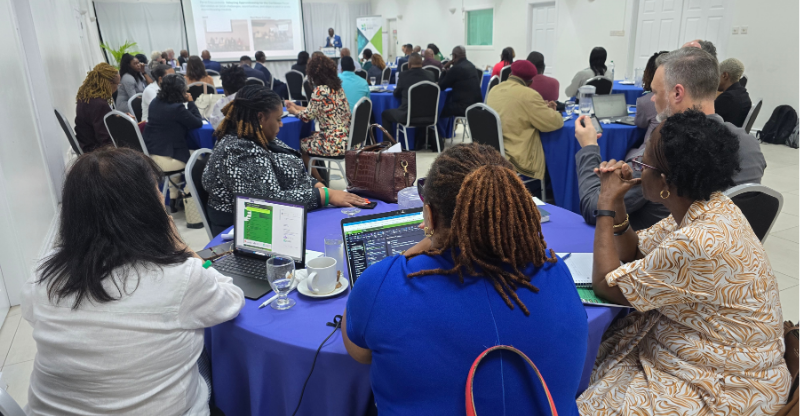
    Executive leadership, including CEO and Registrar Dr. Wayne Wesley, recently acknowledged public scrutiny during a staff awards ceremony while reaffirming the Council’s commitment to administering examinations with unwavering professionalism and integrity. The organization maintains that its certification processes meet rigorous global benchmarks.

    Recent collaborative engagements with international credential evaluation services, particularly World Education Services (WES), have substantially strengthened CXC’s global positioning. According to Dr. Manning, these partnerships have yielded positive feedback from educational institutions across six different countries worldwide, with many reporting satisfaction with Caribbean students’ qualifications and academic preparedness.

    The Council’s Caribbean Advanced Proficiency Examination (CAPE) program offers significant advantages for students pursuing international education, including course exemptions and degree pathway acceleration. Notably, CAPE qualifications can lead to associate degree equivalency, potentially reducing undergraduate completion time by up to two years at certain institutions.

    Dr. Manning emphasized that CXC certifications enjoy widespread acceptance at prestigious global universities, including Oxford, Yale, and Harvard. This recognition demonstrates the qualifications’ robustness and eliminates any substantive questions regarding their international validity. The Council continues to encourage Caribbean stakeholders to recognize the inherent value of their regional educational credentials.
  • Over 10 000 students to sit online exams next month

    Over 10 000 students to sit online exams next month

    The Caribbean Examinations Council (CXC) is pioneering a transformative shift in regional assessment methods by implementing fully digital multiple-choice examinations for the January sitting of the Caribbean Secondary Education Certificate (CSEC). This landmark initiative will see over 10,000 students participating in mandatory electronic testing, eliminating traditional paper-based answer sheets in favor of computer-based selection.

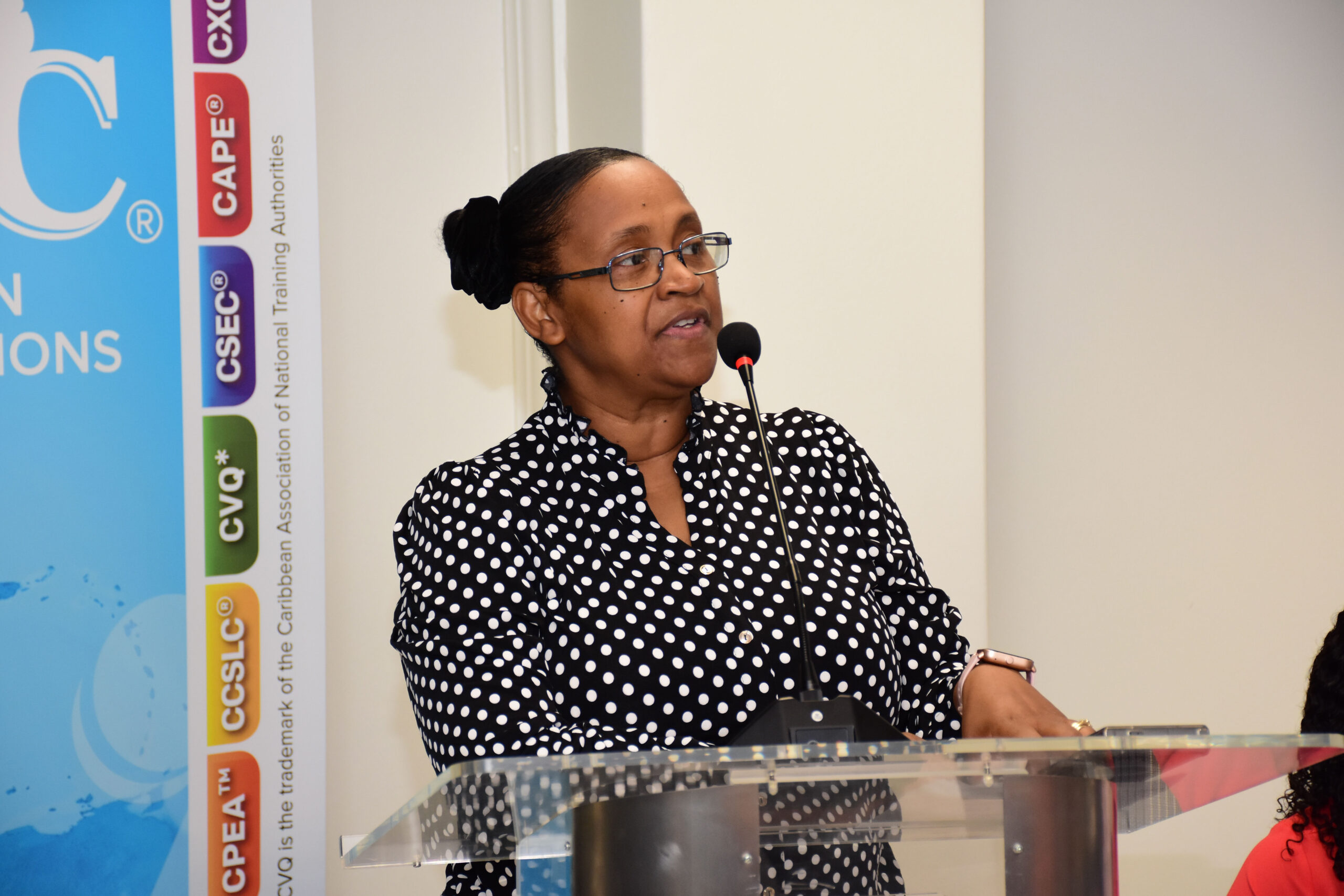
    Dr. Nicole Manning, CXC’s Director of Operations, confirmed in an exclusive interview that this represents a decisive evolution in secondary education assessment across the Caribbean region. While electronic testing isn’t entirely new to CXC, January 2024 marks the first complete transition to digital administration for multiple-choice components.

    The examination framework employs a hybrid model for comprehensive assessment. While multiple-choice sections will be fully digital, Paper Two will appear on-screen while candidates write responses on paper, creating a transitional approach that balances technological adaptation with familiar examination techniques.

    Infrastructure readiness and examination security have been paramount considerations in this digital rollout. CXC has implemented robust safeguards including the deployment of 18 additional specialized invigilators alongside detailed operational manuals. The council has proactively engaged telecommunications and utility companies across participating territories to ensure uninterrupted internet connectivity and power supply during critical examination periods.

    Dr. Manning emphasized that the January sitting was strategically selected for initial implementation due to its smaller candidate pool of approximately 10,000 subject entries, compared to the May/June session which typically involves over 100,000 candidates across nearly 600,000 subject areas. This scaled approach allows for manageable infrastructure testing and operational refinement.

    The digital initiative encompasses 13 CSEC subjects including Mathematics, English, Principles of Business, Principles of Accounts, multiple languages, and core sciences. While January participation is compulsory, the May/June 2024 sitting will maintain electronic testing as an optional component, with paper-based alternatives remaining available.

    This transition represents a significant step toward CXC’s long-envisioned goal of on-demand examinations, potentially enabling faster results processing and greater administrative agility across the Caribbean education system. The success of January’s digital rollout could pave the way for mandatory electronic testing across all examination sessions in future years.

  • Education Ministry strengthening “quality and accountability”

    Education Ministry strengthening “quality and accountability”

    In a significant move to transform its educational landscape, Guyana’s Ministry of Education has officially inaugurated the National Education Leadership Academy (NELA), marking a pivotal step toward enhancing school leadership and institutional accountability. The launch ceremony at Pegasus Corporate Suites on December 15, 2025, gathered education officials and practitioners to witness what authorities describe as a cornerstone initiative for improving learning outcomes nationwide.

    Chief Education Officer Saddam Hussain outlined an ambitious package of reforms scheduled for implementation in early 2026. These measures include reinstating teacher appraisals after a five-year hiatus, introducing performance report cards for all schools and regional education departments, and establishing a transparent school ranking system. ‘When there is a clamour for a particular school, then it’s based on the ranking and not necessarily what we think the good schools are,’ Hussain stated, emphasizing data-driven decision making.

    NELA represents a collaborative effort funded by the Global Partnership for Education and the Inter-American Development Bank, with implementation support from UNESCO’s International Institute for Educational Planning. The inaugural cohort comprises 100 education professionals—including school administrators, education officers, and ministry staff—who will undergo comprehensive leadership training.

    Complementing NELA’s launch, the ministry will soon introduce a Continuous Professional Development Policy alongside national teacher awards. Hussain explained this dual approach: ‘You have a system where teachers are held accountable but you also have a system where those who have excelled are rewarded for their efforts.’

    The academy’s mandate extends beyond conventional training, encompassing research into systemic challenges and solutions for parental engagement, school attractiveness, and leadership development. Hussain highlighted the need for ‘independence of thought’ among education leaders, citing concerning examples where school administrators resisted basic responsibilities like operating water systems installed with IDB support.

    Education Minister Sonia Parag addressed the gathering, noting that while infrastructure expansion—with over 100 schools built since 2020—and technological integration have improved access, transformational leadership remains crucial. ‘When this tier is strong, systems improve, teaching improves, learning improves and most importantly opportunity expands,’ Parag asserted, describing NELA’s mission to develop empathetic, ethical, and data-driven leaders.

    The initial 100 participants will engage in an 18-month blended learning program combining theoretical instruction with practical applications in educational leadership, mentoring, and collaborative improvement strategies.

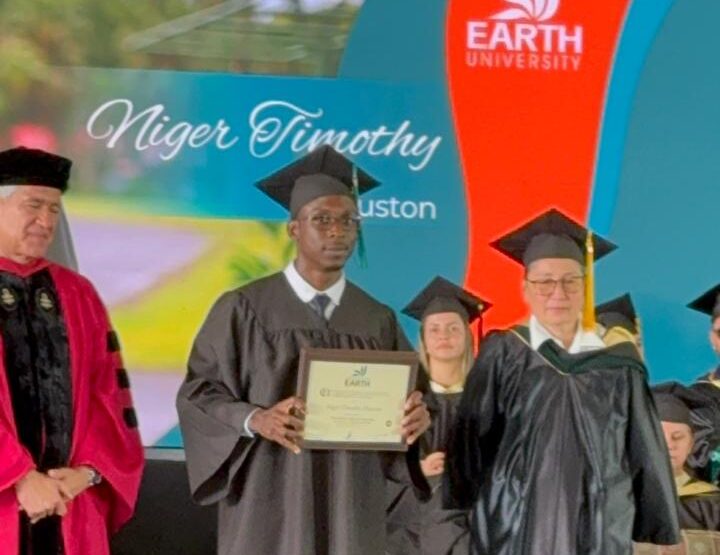
  • Niger Timothy Houston graduates as Agricultural Engineer from EARTH University

    Niger Timothy Houston graduates as Agricultural Engineer from EARTH University

    Grenada has marked a significant educational achievement with Niger Timothy Houston’s graduation as an Agricultural Engineer from EARTH University in Costa Rica. The December 5th ceremony recognized 108 graduates from 27 countries, highlighting Grenada’s growing commitment to sustainable agriculture education.

    Houston represents an expanding cohort of Grenadian students choosing EARTH University for advanced training in sustainable agriculture. With four currently enrolled students and one previous graduate, this educational partnership strengthens as Grenada prioritizes agricultural modernization and food security resilience.

    In reflective remarks, Houston described his EARTH University experience as fundamentally transformative, providing both technical skills and personal development. “EARTH has equipped me with the confidence, global perspective, and practical abilities to serve Grenada meaningfully,” he stated, emphasizing the program’s focus on real-world problem solving and leadership development. Houston actively encouraged other young Grenadians to pursue this educational opportunity.

    The graduation ceremony attracted significant support from international education advocates. Dr. Khan Nedd, Chair of the W.K. Kellogg Foundation Board of Trustees and EARTH University director, attended to affirm the importance of educational investments that strengthen communities. Dr. Nedd’s philanthropic leadership aligns with EARTH’s mission to prepare professionals for agricultural, climate, and equity challenges.

    Victor Sánchez of EARTH’s Development and Advancement Division highlighted the university’s comprehensive educational approach, combining technical training with character development. “Our program cultivates persistence, discipline, and environmental responsibility while preparing students for global leadership,” Sánchez noted, expressing particular confidence in Grenadian students’ potential.

    Belmont Estate, through Managing Director Shadel Nyack Compton, has developed a robust partnership with EARTH University, providing internship opportunities for third-year students and graduates. Compton expressed strong endorsement of EARTH’s educational model, stating, “This institution delivers exactly the training Grenada needs to build an innovative, sustainable agricultural future.”

    The graduation celebrations concluded with vibrant cultural presentations featuring active participation from Grenadian students, symbolizing both national pride and global connectivity. This educational milestone represents Grenada’s strategic investment in developing leaders capable of advancing climate-smart agriculture and rural transformation.

  • Colombia and Russia strengthen ties in Education

    Colombia and Russia strengthen ties in Education

    Colombia and Russia have formalized a comprehensive educational partnership through a newly signed memorandum that establishes extensive academic exchange programs between the two nations. The agreement enables Colombian students, academics, and professionals to pursue undergraduate and graduate studies at Russian universities, with particular emphasis on strategic fields including artificial intelligence, agribusiness, advanced technologies, and applied sciences.

    As part of the enhanced cooperation, Russia has committed to increasing its scholarship allocation for Colombian candidates by confirming an additional 20 scholarships immediately. Both governments anticipate this number will grow progressively following the memorandum’s implementation. The partnership framework also facilitates the development of dual-degree programs, collaborative research initiatives, and mutual exchange of scientific materials and educational resources.

    The bilateral agreement further provides for the organization of joint academic conferences, seminars, and research projects designed to address global challenges. Colombian authorities emphasized that this collaboration will significantly strengthen the quality of higher education in Colombia while connecting the nation to cutting-edge scientific and technological advancements worldwide.

    In reciprocal arrangements, Colombia will facilitate access for Russian citizens to its higher education institutions and provide additional consideration points for Russian applicants seeking Colombia Scholarship opportunities. The alliance additionally promotes linguistic exchange through mutual support for Russian and Spanish language learning programs, creating enhanced opportunities for students and professionals from both countries.

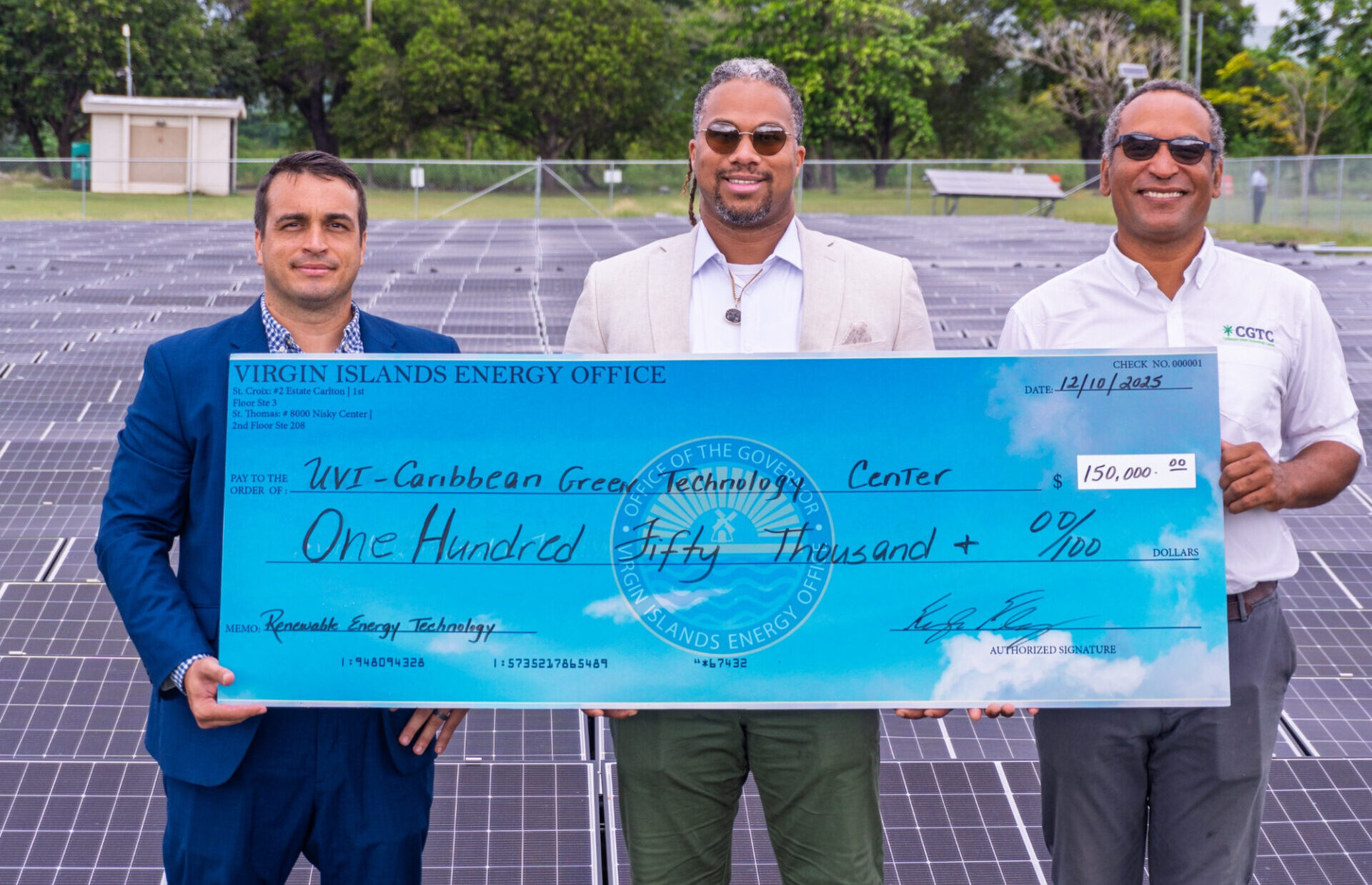
  • University of Virgin Islands receives funding for Renewable Energy Technology scholarships

    University of Virgin Islands receives funding for Renewable Energy Technology scholarships

    The University of the Virgin Islands (UVI) has secured a significant $150,000 investment from the Virgin Islands Energy Office (VIEO) to establish scholarships for its pioneering Associate of Applied Science program in Renewable Energy Technology. The formal funding presentation occurred at the UVI RTPark Solar Farm, where VIEO Deputy Director Michael Jaffurs transferred the commitment to Dr. Gregory Guannel, Director of UVI’s Caribbean Green Technology Center.

    Scheduled for launch in Spring 2026, these scholarships will eliminate financial barriers for qualified U.S. citizens and legal residents of the U.S. Virgin Islands pursuing renewable energy studies. The initiative supports both the degree program and an upcoming Certificate in Renewable Energy Technology, creating accessible pathways into the growing green energy sector.

    Dr. Guannel characterized the investment as a transformative development for local workforce preparation. “This generous commitment ensures Virgin Islanders can acquire essential training to actively participate in our territory’s clean energy transition,” he stated. “We’re addressing urgent community needs by equipping students with technical expertise while expressing profound gratitude to VIEO for their partnership in nurturing future renewable energy professionals.”

    VIEO Director Kyle Fleming emphasized the strategic alignment of federal funding with local workforce development. “We’re leveraging Department of Energy resources to create a synergistic pipeline that prepares residents to build, maintain, and expand the clean energy systems our communities increasingly adopt,” Fleming explained. “This scholarship transforms federal funding into tangible opportunities for Virgin Islanders to lead our territory’s energy transformation.”

    The Renewable Energy Technology program, established in 2024 through collaboration between UVI’s College of Science and Mathematics and the Caribbean Green Technology Center, delivers comprehensive two-year training in electrical fundamentals, renewable energy systems, and photovoltaic installation and maintenance. The curriculum combines theoretical coursework with practical internships, preparing graduates for immediate workforce entry while providing a foundation for advanced degrees in physics or applied mathematics.

    Program completers will additionally qualify to undertake the North American Board of Certified Energy Practitioners (NABCEP) PV Associate examination—a globally recognized certification in photovoltaic system installation that enhances professional credentials internationally.

    Prospective students seeking program details or scholarship eligibility information are directed to visit www.uvi.edu or contact the UVI Office of Public Relations directly.

  • Eerste STEM-conventie laat kinderen spelend ontdekken hoe wetenschap werkt

    Eerste STEM-conventie laat kinderen spelend ontdekken hoe wetenschap werkt

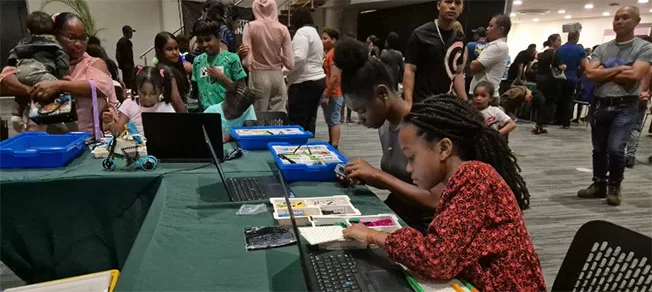
    Suriname’s educational landscape witnessed a transformative event as the inaugural STEM Convention for children aged 3-14 erupted with excitement at the Assuria Highrise this Monday. Hundreds of young participants immersed themselves in interactive experiments, engineering challenges, and technological demonstrations, marking a significant milestone in the nation’s educational development.

    Organized through a collaborative effort between Surinaams Knutselhoekje (HSKH) and Esport Suriname, the convention transformed the venue into a dynamic learning laboratory. Children engaged with diverse stations featuring homemade lava lamps using cooking oil and effervescent tablets, constructed electric propellers from scratch, and operated full-feature racing simulators with steering wheels and pedal systems. This hands-on approach provided tangible introductions to fundamental principles of Science, Technology, Engineering, and Mathematics.

    Leann Djohari of HSKH explained the pedagogical philosophy behind the event: “STEM education fundamentally revolves around experiential learning. Children achieve deeper conceptual understanding when they physically execute tasks themselves. They observe immediate consequences of their actions—performing A results in B—which reinforces knowledge retention and develops critical cause-effect reasoning skills.”

    The convention’s practical methodology manifested through multiple engaging zones. Under the guidance of young instructors and digital tutorials, participants assembled functional robots, programmed basic devices, and explored electrical engineering concepts. A chemistry laboratory attracted considerable attention with interactive experiments, while a dedicated virtual reality zone allowed children to experience immersive digital environments.

    Founded by Cherelys Dwarkasing, HSKH has spent five years democratizing STEM education throughout Suriname. The organization visits a different district each quarter to ensure nationwide accessibility. This year’s convention coincidentally aligned with HSKH’s anniversary, adding celebratory significance to the event.

    Djohari declared the initiative an overwhelming success: “We anticipated approximately 300 children, but attendance substantially exceeded our projections.” She emphasized that STEM education extends beyond technical skills: “It cultivates creativity, critical thinking, collaboration, and communication—abilities increasingly essential in our rapidly evolving technological landscape. Early exposure better prepares children for future challenges, embodying the principle that early learning establishes lasting foundations.”

    Buoyed by the enthusiastic response, organizers indicate this inaugural event will likely catalyze expanded STEM initiatives throughout Suriname. HSKH aims to foster scientific and technical proficiency at a pace matching the boundless curiosity of children who exclaimed “Waaw!” throughout Monday’s groundbreaking convention.

  • SAGE Learning Hub and Network Hardware launches at TAMCC and Newlo

    SAGE Learning Hub and Network Hardware launches at TAMCC and Newlo

    Grenada’s educational landscape is set for a significant transformation with the upcoming inauguration of two pioneering digital learning facilities. The Skills to Access the Green Economy (SAGE) programme will unveil a comprehensive SAGE Learning Hub and Network Hardware installation at T A Marryshow Community College (TAMCC) on December 15, 2025, followed by another hub at the New Life Organisation (Newlo) the subsequent day.

    These cutting-edge educational centers represent a strategic investment in Caribbean sustainable development, engineered to bridge digital divides and accelerate regional transition toward environmentally conscious economic models. Financed through substantial backing from the Government of Canada, the initiative underscores international cooperation in building climate-resilient education infrastructure.

    The newly established hubs feature innovative smart classroom technologies and interactive digital tools that redefine conventional pedagogical approaches. This educational architecture creates dynamic, flexible learning environments specifically designed to cultivate both digital literacy and green economy competencies essential for success in evolving global job markets.

    Pat Bidart, Senior Technical Advisor for the SAGE programme, emphasized the transformative potential of these facilities: “This infrastructure represents a quantum leap in educational methodology, fundamentally integrating sustainability principles with practical skills development. Through Canada’s partnership, we’re empowering Caribbean learners with future-ready capabilities for emerging green industries.”

    Beyond formal education, the hubs will serve as community resources, offering free access to digital equipment and dedicated learning spaces. Local residents will gain opportunities for online education participation, professional certification programs, and digital skill enhancement in supportive environments.

    This community-oriented strategy ensures that technological benefits extend beyond academic institutions to broader societal development. The programme particularly focuses on inclusive access for women and youth populations, addressing historical barriers to technological participation.

    As part of a broader regional transformation effort, SAGE continues to advance technical and vocational education through STEM integration, green learning pathways, and digital inclusion initiatives. The upcoming launch events will gather educators, students, community leaders, and development partners to celebrate these advancements in sustainable education infrastructure.

    The SAGE programme operates under Colleges and Institutes Canada (CICan) with Canadian government funding, working across six Caribbean nations to enhance institutional capacity, develop green sector training programs, and create economic opportunities through demand-driven skills development.

  • Apprenticeship summit charts path to skilled green workforce

    Apprenticeship summit charts path to skilled green workforce

    Saint Lucia became the epicenter for Caribbean workforce development as regional technical education leaders convened for a groundbreaking two-day Apprenticeship Summit from December 4-5. The gathering, hosted under Canada’s Skills to Access the Green Economy (SAGE) programme at Rodney Bay’s Bay Gardens Hotel, marked a strategic effort to align vocational training with emerging environmental economic opportunities.

    Educators, policy architects, and industry representatives from across CARICOM member states collaborated to establish a standardized apprenticeship framework designed to equip workers with sustainable skills. Perry Thomas, Executive Director of Saint Lucia’s TVET Council, highlighted the summit’s critical mission: “We are rationalizing existing regional models to create a harmonized Technical and Vocational Education and Training system through the Caribbean Association of National Training Authorities.”

    The summit built upon pilot initiatives already implemented in six nations—Grenada, Saint Lucia, Dominica, Guyana, Belize, and Jamaica—which provided foundational data and implementation models. These programs demonstrated the potential for standardized trades training across diverse Caribbean economies.

    Pat Bidart, Senior Technical Advisor for SAGE, emphasized the practical implications: “We’re addressing skills gaps among existing tradespeople—carpenters, mechanics, and other technicians who possess partial knowledge but require comprehensive training. Enhanced skills development will directly improve housing construction, automotive repair, and multiple technical sectors.”

    The Canadian-funded initiative represents a coordinated response to both economic and environmental challenges, aiming to create a workforce capable of driving sustainable development throughout the region. Organizers expressed confidence that the summit would ignite the necessary passion and commitment to develop future-ready workers who can advance CARICOM’s green economic transformation.

  • Education : Investment Scenarios for Haitian Preschools

    Education : Investment Scenarios for Haitian Preschools

    Port-au-Prince, Haiti – Haitian education officials and international partners have concluded a landmark three-day workshop establishing comprehensive investment strategies to revolutionize early childhood education nationwide. The gathering marked a pivotal moment in Haiti’s educational development, focusing on implementing findings from the groundbreaking National Preschool Education Survey.

    Minister of National Education Augustin Antoine articulated a powerful vision for educational equity, emphasizing that “whether a child comes from wealthy or impoverished circumstances, they must receive identical educational opportunities. We are committed to standardizing the preschool sector and eliminating disparities between urban and rural regions.”

    The comprehensive survey data provides unprecedented insights into Haiti’s preschool infrastructure, detailing operational mechanisms, service diversity, cost structures, and systemic challenges. Minister Antoine highlighted the transformative potential of this information, noting it will “drive strategic planning and ground-level interventions to meet population expectations while bringing coherence to educational initiatives.”

    UNICEF Representative in Haiti Geetajanli Narayan characterized the collected data as “an invaluable foundation for guiding future policy and strategic decisions.” She emphasized the workshop’s role in evaluating “the most effective public policy options to ensure equitable expansion of public preschools while enhancing quality and sustainability of non-public services.”

    Professor Alain Mingat facilitated critical sessions exploring investment scenarios aligned with forthcoming National Preschool Policy priorities. The discussions culminated in a unified call for international cooperation agencies to bolster the Haitian government’s financial commitments to preschool education.

    The high-level participation underscored global support for Haiti’s educational transformation, featuring representatives from multiple international agencies including the French Development Agency, Inter-American Development Bank, UNESCO, World Food Programme, and diplomatic corps from France, Taiwan, Mexico, and Spain.