分类: business

  • Mitur presents Dominican tourism model to Lauder Institute students

    Mitur presents Dominican tourism model to Lauder Institute students

    Santo Domingo, Dominican Republic – In a strategic move to highlight its innovative approach to tourism development, the Dominican Republic’s Ministry of Tourism (Mitur) recently facilitated an academic exchange with fourteen graduate students from the University of Pennsylvania’s prestigious Lauder Institute. The specialized session focused on the data intelligence methodologies that have propelled the Caribbean nation to its current status as a premier global destination.

    Central to the presentation was Liliana Cruz, Mitur’s Director of Intelligence, who detailed the government’s reliance on sophisticated data analytics to guide sector-wide strategy. Cruz explained how the systematic analysis of market trends and visitor behavioral patterns directly informs national planning, resource allocation, and policy development. This evidence-based framework, she emphasized, is fundamental to maintaining a competitive edge and was underscored by the country’s consistently high tourist satisfaction scores, a critical metric for success.

    The academic dialogue was further enriched by insights from Mitur’s technical teams specializing in economic research and tourism market analysis, who stressed the value of international knowledge-sharing partnerships in fostering sustainable industry growth.

    Beyond the analytical deep-dive, the visit was designed to offer an immersive cultural experience. The delegation was treated to an authentic folkloric performance and a tasting of traditional Dominican confectionery, effectively demonstrating how the nation’s rich cultural and gastronomic heritage is strategically leveraged as a unique selling proposition within its tourism product.

  • Lamborghini to open first dealership in Dominican Republic, reports say

    Lamborghini to open first dealership in Dominican Republic, reports say

    Santo Domingo is set to become the newest destination for ultra-luxury automotive excellence as Lamborghini confirms plans to establish its inaugural official dealership in the Dominican Republic by late 2026. This strategic expansion, verified through Puerto Rican publication El Nuevo Día, represents a significant advancement for the Caribbean’s high-end vehicle market and underscores the nation’s growing status as a premium investment destination.

    The groundbreaking initiative has been formalized through a partnership agreement with Dominican investors collaborating alongside Martín Josephi and his enterprise Grand Chelem, recognized for overseeing one of the region’s most extensive collections of supercars and premium automobiles. This collaboration signals strong market confidence in the Dominican Republic’s luxury automotive sector and its substantial development prospects.

    This Caribbean venture forms part of Lamborghini’s broader Latin American growth strategy, complementing existing operations in Brazil, Mexico, Peru, and Puerto Rico while anticipating additional market entries including Santiago, Chile. The region has emerged as a crucial expansion territory for luxury automotive manufacturers, fueled by an increasing population of affluent consumers pursuing exclusive, high-performance transportation solutions.

    The Santo Domingo facility will transcend conventional automobile sales by delivering a comprehensive brand immersion experience. Prospective clients will receive individualized consultations, bespoke vehicle customization options, and premium after-sales support services. This approach reflects contemporary trends in experiential retailing where customer engagement fundamentally influences purchasing behavior.

    Lamborghini’s market entry reinforces the Dominican Republic’s emerging profile as a luxury investment hub, attracting premium brands seeking to capitalize on the expanding Caribbean and Latin American markets. The development further enhances the country’s upscale lifestyle offerings and demonstrates its increasing appeal to global luxury enterprises.

  • Government moves to curb sargassum impact on tourism at Council of Ministers

    Government moves to curb sargassum impact on tourism at Council of Ministers

    SANTO DOMINGO – In a decisive move to protect its vital tourism economy, the Dominican Republic government has unveiled a dual strategy addressing environmental challenges and workforce development. The initiatives received formal approval during the extended 56th Council of Ministers session, presided over by President Luis Abinader and Vice President Raquel Peña.

    The cornerstone environmental measure is the establishment of a new regulatory framework for sargassum management. This comprehensive policy sets forth official protocols for the collection, disposal, and potential commercial reuse of the invasive seaweed. The directive is designed to mitigate the ecological damage inflicted on coastal ecosystems and shorelines, thereby preserving the natural appeal that is fundamental to the nation’s tourism appeal. The persistent sargassum influx has long threatened beach quality and marine health, posing a significant risk to a sector that serves as a primary engine for job creation and foreign revenue.

    Concurrently, the administration is launching an ambitious workforce enhancement program tailored to the hospitality industry. This educational initiative will develop specialized technical and vocational training curricula in high-demand fields such as hotel administration, gastronomy, and tourism services. The objective is to elevate the overall caliber of service delivery, ensuring the local workforce is equipped with cutting-edge skills to enhance the country’s competitive standing in the global tourism market.

    The high-level meeting, which extended over three hours, also featured a progress assessment of the broader national development blueprint, Meta RD 2036. This strategic plan aims to fundamentally reshape the nation’s productive infrastructure and accelerate sustainable economic expansion. Collectively, these actions underscore a cohesive governmental commitment to fostering economic resilience through targeted environmental stewardship and strategic human capital investment.

  • Fertilizer Costs Surge, PM Blames Global Fuel Spike

    Fertilizer Costs Surge, PM Blames Global Fuel Spike

    Belize’s agricultural sector faces mounting economic pressure as skyrocketing fertilizer costs threaten production stability. Prime Minister John Briceño has identified the global fuel price surge as the primary catalyst for this crisis, emphasizing the nation’s limited capacity to counteract international market forces.

    In a recent address, PM Briceño outlined the direct correlation between petroleum prices and agricultural inputs, noting that any commodity connected to oil derivatives will experience continued price escalation. The Prime Minister characterized this as an externally generated crisis that Belize must navigate despite its minimal influence on global energy markets.

    “The reality is that everything connected to petroleum will continue becoming more expensive,” Briceño stated. “Our current hope rests on a rapid resolution to international conflicts to stabilize global prices. As a small nation, we must develop strategies to operate within constraints we didn’t create and cannot control.”

    The administration now faces the complex challenge of balancing support for agricultural producers with consumer protection measures. Briceño emphasized the government’s commitment to finding equilibrium in supporting both farmers facing increased operational costs and citizens confronting potential food price inflation.

    This economic development occurs against the backdrop of ongoing global energy market volatility, with Belize’s agricultural community particularly vulnerable to international price fluctuations. The government’s response will likely involve targeted support mechanisms for the farming sector while exploring alternative agricultural practices to mitigate long-term dependency on petroleum-based fertilizers.

  • Grenada secures fisheries breakthrough

    Grenada secures fisheries breakthrough

    In a significant development for Grenada’s maritime economy, Economic Development Minister Lennox Andrews has announced the successful lifting of international restrictions that had threatened the nation’s fisheries exports to the United States. The prohibition under the US Marine Mammal Protection Act (MMPA) has been officially suspended until December 31, 2029, following intensive regulatory reforms and compliance efforts.

    The breakthrough emerged from coordinated action between multiple government agencies and international partners. Minister Andrews revealed that a specialized task force worked meticulously to address compliance requirements, emphasizing that “achieving this goal was no easy task” and required “action with alacrity.” The minister particularly commended the Blue Economy team for their meticulous handling of the complex reapplication process, noting that improper submission would have jeopardized the entire effort.

    However, the approval comes with stringent conditions and ongoing oversight requirements. Andrews cautioned that NOAA officials retain authority to revoke the comparability finding if Grenada’s regulatory program fails to maintain applicable standards. The minister underscored the necessity of continuous improvement in environmental protections, specifically regarding minimizing incidental harm to marine mammals during commercial fishing operations.

    Concurrent with the announcement, Chief Fisheries Officer Nigel Gibbs outlined comprehensive measures being implemented to maintain compliance. These include redesigned vessel logbooks, mandatory marine mammal reporting forms, and specialized release kits for safe disentanglement of protected species. A significant gear transition from J-hooks to circle hooks is underway, substantially reducing internal injuries to non-target species.

    The Fisheries Division is advancing technological surveillance capabilities through a pilot program funded by Compete Caribbean. Approximately 20-30 vessels will participate in a fleet tracking initiative using vessel monitoring technology to enhance oversight of fishing locations and durations. Gibbs emphasized that accurate reporting—rather than penalty-free operations—remains the critical requirement, with data shared transparently with international bodies including ICCAT.

    While acknowledging current achievements meet minimum requirements, fisheries authorities recognize the need for continued evolution beyond baseline standards as the industry expands. The collective efforts represent Grenada’s commitment to balancing economic development with marine conservation priorities in its blue economy strategy.

  • Olieprijs stijgt boven $119 door aanvallen op energie-infrastructuur

    Olieprijs stijgt boven $119 door aanvallen op energie-infrastructuur

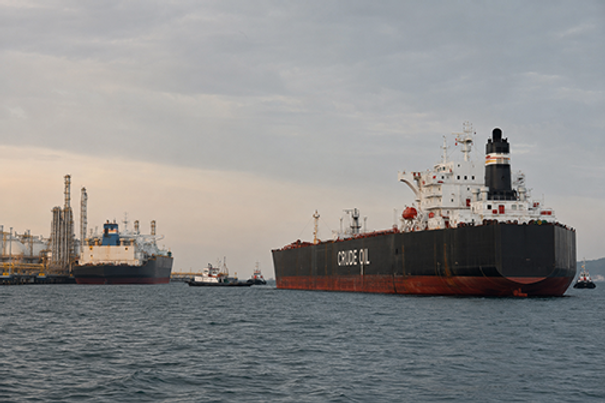
    The Middle East conflict has entered a dangerous new phase following Israel’s strike on Iran’s South Pars gas field, triggering a series of retaliatory attacks that have sent global energy markets into turmoil. Brent crude, the international benchmark, surged above $119 per barrel on Thursday after Iranian forces targeted multiple energy facilities across the region in response to the Israeli operation.

    The dramatic price movement saw Brent futures climb $6.02 (5.6%) to $113.40 per barrel by midday, after briefly touching $119.13 earlier in the session—nearing March 9th’s three-and-a-half-year high. West Texas Intermediate (WTI) crude advanced more modestly to $96.39 per barrel, having earlier surged nearly $4 to breach the $100 threshold.

    Simultaneously, premiums for Middle Eastern benchmarks including Dubai and Oman reached unprecedented levels of approximately $65 per barrel, according to traders and Reuters data, indicating severe supply concerns in key Asian markets.

    The initial Israeli strike targeted Iran’s South Pars field, which constitutes part of the world’s largest natural gas reservoir shared with Qatar. Former President Donald Trump clarified that neither the United States nor Qatar participated in the operation, while issuing a stern warning that Israel would refrain from further attacks unless Iran targeted Qatari interests.

    Iran’s retaliatory measures inflicted significant damage on QatarEnergy’s Ras Laffan industrial complex, the world’s largest LNG production hub. The attacks forced the shutdown of Shell’s 140,000-barrel-per-day Pearl gas-to-liquids facility in Qatar, triggering immediate repercussions in European energy markets. Dutch TTF gas futures surged approximately 15% to peak around €70 per megawatt-hour—the highest level in over three years.

    Additional attacks disabled approximately 17% of Saudi Arabia’s LNG capacity through strikes on the SAMREF refinery in Yanbu and a gas processing facility in the country’s eastern region. Energy analysts warn that restoration of these critical facilities could require months to potentially a full year, exacerbating pressure on global energy supplies.

    Saudi authorities reported intercepting four ballistic missiles and a drone attack targeting gas infrastructure, while the SAMREF refinery sustained damage from aerial assaults. Although oil exports from affected ports experienced temporary disruptions, operations have since resumed. In Kuwait, a separate drone attack sparked a minor fire at the Mina al-Ahmadi refinery complex.

    The escalating conflict has prompted serious economic concerns, with the U.S. Federal Reserve maintaining interest rates while warning of rising inflationary pressures driven by the energy price surge. The Trump administration is reportedly exploring measures to mitigate fuel price impacts, including potential sanctions relief for approximately 140 million barrels of Iranian oil currently stranded on tankers.

    According to Reuters, U.S. officials are also considering deploying thousands of additional troops to reinforce American military presence in the Middle East as regional tensions approach critical levels.

  • New US$2 billion gas pipeline in Berbice will depend on demand

    New US$2 billion gas pipeline in Berbice will depend on demand

    ExxonMobil Guyana President Alistair Routledge announced on Thursday that the development of a second offshore natural gas pipeline to Berbice remains contingent upon the commercial feasibility of several major industrial projects. The decision hinges on establishing a sustainable market for the gas that would justify the substantial infrastructure investment.

    Speaking at a press conference, Routledge revealed that both ExxonMobil and the Guyanese government have received preliminary expressions of interest for multiple ‘anchor projects’ that would utilize the gas resources. These potential developments include an additional power generation facility, advanced data centers, and a bauxite-to-alumina processing plant, all intended to consume natural gas from the southeastern region of the Stabroek Block.

    In a significant regional development, Routledge confirmed preliminary discussions with Suriname regarding potential pipeline sharing arrangements to achieve economies of scale. The Haimara development is projected to serve as the primary anchor for this initiative, with Pluma integrated into this development framework. The executive noted that remaining gas discoveries not incorporated in the Longtail development would be associated with the Haimara anchor project.

    Routledge provided technical insights, explaining that Pluma contains gas condensate but is considered drier than Longtail. Consequently, ExxonMobil prefers developing other reservoirs before implementing a tie-back to Pluma to optimize condensate recovery.

    Regarding the Hammerhead deposit, Routledge disclosed it contains heavier oil, with associated gas production estimated at 80-90 million standard cubic feet at peak operation. Rather than reinjecting this gas, it will be channeled into the existing pipeline supplying the Wales facility on West Bank Demerara.

    The Guyana government had previously announced partial completion of the Wales power plant by year-end 2026. The comprehensive Wales development project, valued at $759 million, includes a natural gas liquids plant for cooking gas production. When accounting for all development works, including necessary soil stabilization measures, total project costs are approaching $3 billion.

  • ICAB: Timely implementation key to Barbadians reaping benefits of Budget

    ICAB: Timely implementation key to Barbadians reaping benefits of Budget

    The Institute of Chartered Accountants of Barbados (ICAB) has issued comprehensive guidance to help citizens navigate the practical implications of the recently announced 2026 Budget measures. In a detailed release following their weekly ‘Talking Business with ICAB’ radio program, CEO Lisa Padmore emphasized that while budget summaries are widely accessible, many households require clearer interpretation of how these fiscal policies will affect their daily lives.

    ICAB’s analysis underscores a crucial caveat: the success of these economic interventions hinges entirely on execution efficiency. The organization stressed that policy announcements merely signal governmental intent, whereas actual impact depends on the rapid deployment of supporting regulations, administrative protocols, system modernizations, and public education campaigns. Businesses require operational clarity for planning purposes, taxpayers need precise filing instructions, financial institutions demand updated compliance frameworks, and households rely on predictable implementation timelines.

    Key budget components analyzed include government’s short-term strategy to buffer electricity cost fluctuations driven by global fuel volatility. While consumers should still anticipate increased utility bills, the measure aims to decelerate the rate of hikes. Similarly, maintained VAT caps and excise tax controls on fuel function as protective mechanisms against soaring oil prices, though they don’t reduce pump prices outright.

    Regarding food inflation, ICAB explained that revised customs duty calculations—applying charges to goods’ value or capped freight amounts—eliminate a potential price driver but don’t ensure lower retail costs. Tax adjustments featuring elevated tax credits and marginal income tax rate reductions could bolster disposable income for low-to-middle income earners.

    Social support measures received particular attention, including temporary monthly payments for seniors below specific income thresholds (covering pensionless individuals), targeted grants for families with multiple births addressing the unique financial pressures of raising twins or triplets, and the Barbados Republic Child Wealth Fund providing $5,000 investments for children born since November 2021 as a long-term wealth-building initiative.

    ICAB committed to ongoing monitoring of regulatory developments and providing neutral, professional guidance as implementation details emerge.

  • Increased oil price, production accelerating ExxonMobil’s cost recovery

    Increased oil price, production accelerating ExxonMobil’s cost recovery

    ExxonMobil Guyana has announced a significant acceleration in recovering its historic exploration and production costs from the Stabroek Block, moving the timeline forward from 2027 to this year. This expedited recovery is attributed to the current favorable market conditions, with oil prices hovering around $100 per barrel and production exceeding 900,000 barrels per day.

    Company President Alistair Routledge confirmed the development during a recent press conference, stating that the combination of robust production levels and strong global oil prices has created an optimal financial environment. “What we’re now seeing in this price environment is that [recovery] will accelerate. If you stay at the current oil price, then it will happen this year,” Routledge explained.

    The historic costs, dating back to the original 1999 contract with Guyana, currently stand at approximately $5 billion out of a total cost bank estimated at $40 billion. Under the Production Sharing Agreement, up to 75% of gross revenues can be allocated to cost recovery.

    Routledge emphasized that this accelerated cost recovery marks a pivotal moment for Guyana’s revenue prospects. Once these historic costs are fully recovered, Guyana’s share of profit oil will increase substantially beyond the current 14.5% (including 2% royalty). The exact percentage increase will depend on ongoing market conditions, production volumes, and operational expenditures.

    The ExxonMobil executive described this transition as moving into “a much more dynamic world” regarding national revenue, noting that the country’s financial trajectory remains “positive.” This development also reinforces the Production Sharing Contract’s effectiveness in encouraging continued investment in the Stabroek Block’s development.

    ExxonMobil has committed to spending up to $60 billion in capital expenditure throughout its operations in Guyana, in addition to annual operating expenses amounting to billions of dollars.

  • Palace Amusement announces permanent closure of Montego Bay location

    Palace Amusement announces permanent closure of Montego Bay location

    MONTEGO BAY, Jamaica — Palace Amusement Company Limited has made the difficult decision to permanently shutter its Multiplex Montego Bay cinema location following irreparable damage sustained during Category 5 Hurricane Melissa in October 2025. The entertainment venue, which had served the community for over two decades, succumbed to extensive mould infestation and structural damage that rendered the facility beyond recovery.

    In an emotional statement released via Instagram, company executives described the heartbreaking process of assessing the devastation. “To our valued patrons of Palace Multiplex serving Montego Bay and environs: It is with a sad and heavy heart that we have come to say goodbye,” the announcement began. The statement detailed how the company struggled to salvage operations but ultimately confronted the reality that the property was completely unsalvageable.

    The Multiplex had been a cornerstone of Montego Bay’s entertainment landscape since its grand opening in December 2001. Palace Amusement described the location as holding “a special place in our hearts,” noting that Montego Bay had become a “second home” for the company throughout its operational history. After months of rigorous evaluation and deliberation, management concluded that reactivating the cinema venue was financially and logistically unfeasible.

    The closure represents a significant loss for the local community and Jamaica’s entertainment sector, marking the end of an era for cinematic experiences in the region. The company expressed profound gratitude to patrons for their unwavering support throughout the cinema’s 24-year history, acknowledging the special bond formed with the Montego Bay community.