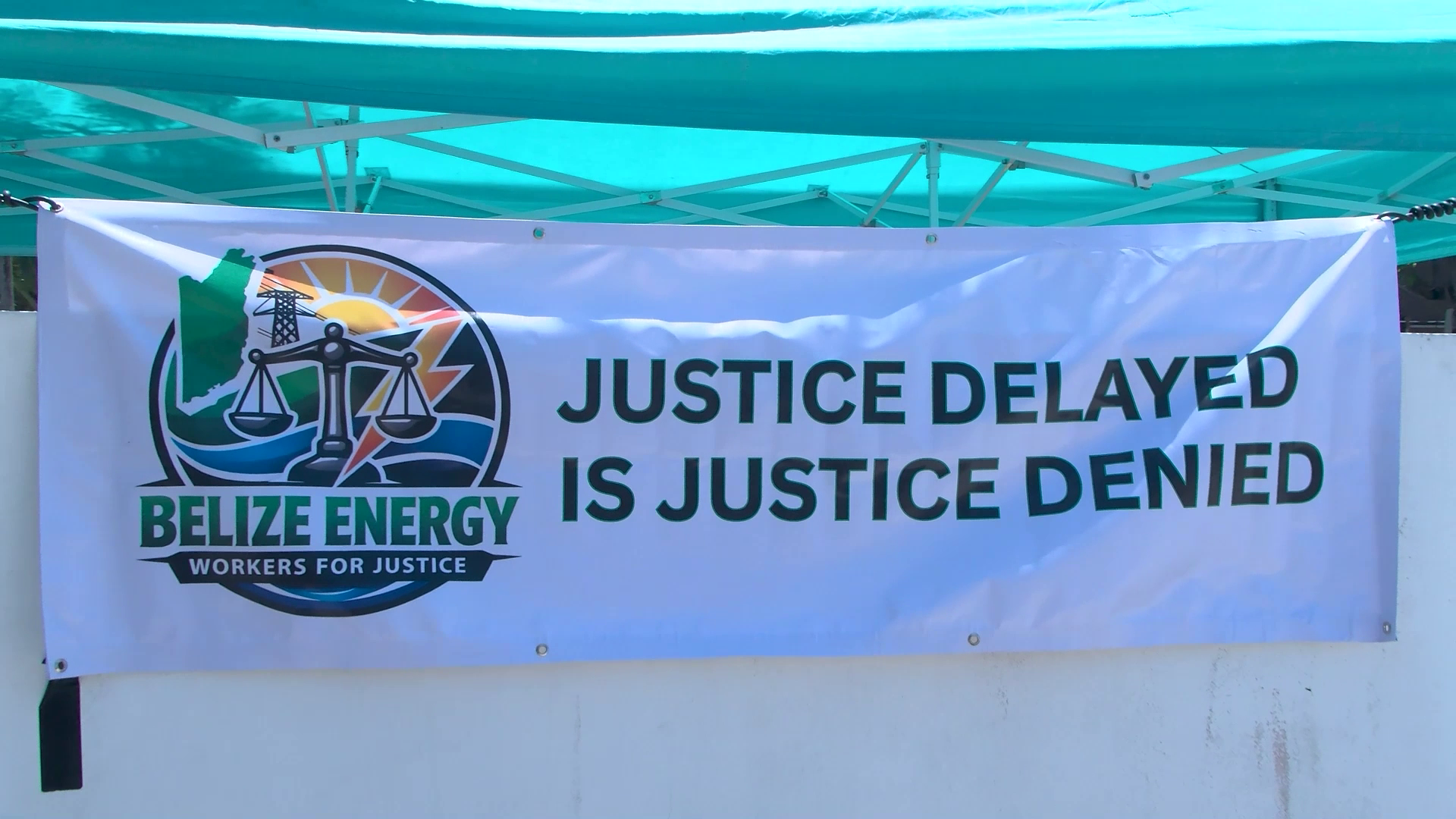
Dated July 24, 2026, a long-running dispute over unpaid severance for former employees of Belize Electricity Limited (BEL) has reached a new flashpoint, as mounting public and governmental pressure pushes the utility to end the months-long stall in legal proceedings that have left vulnerable workers in limbo. For years, hundreds of former BEL workers have waited patiently for the severance compensation they are owed, but their wait has grown increasingly desperate with each passing month. Many of these workers are now advanced in age, while others are fighting serious health conditions that have left them in urgent need of the funds they are owed. What was supposed to be a clear path to resolution through the national court system has ground to a halt, leaving workers with no timeline for closure. The breakdown comes after BEL made a formal commitment to Belize’s Ministry of Labor: during a high-level meeting with Labor Minister Kareem Musa, company representatives agreed they would file the required court documents to seek a formal legal declaration from the Belize High Court within a 30-day window. That commitment was made two months ago, and to date, no court filings have been submitted. Minister Musa has publicly called out BEL for failing to honor its promise, emphasizing the urgent human stakes behind the delay. In a statement reproduced from an evening television newscast transcript, Musa made clear his disappointment with the utility’s inaction: “Hundred percent that is wrong, because they had told me in a meeting that it would only take a month. And that was about two months ago that they were going to file the papers for a declaration in the High Court of Belize in that month. So that has gone way over a month and it should not be the case that we are waiting so long for a judicial matter where we can see that there are a lot of elderly, sick former workers of BEL. So I will press certainly from my end, and from the Ministry’s end for BEL to take the action so we can have a final determination of that.” The Belize Energy Workers Union (BEWJ), which has represented the former workers throughout the dispute, has not relaxed its advocacy for the workers’ demands. Even as some union members grapple with poor health linked to their prolonged uncertainty over unpaid compensation, the union continues to push BEL and the government to move the process forward to a final resolution. This report is a transcribed adaptation of an evening television newscast, with all translated Kriol language statements rendered using a standardized spelling system for accuracy.
分类: business
-

Symmonds defends price cap strategy amid global volatility
Escalating geopolitical unrest across the Middle East has sent global oil prices surging past the $100 per barrel threshold this week, putting Barbados’ pre-emptive energy protection policies to the test and pushing government officials to issue urgent public calls for widespread energy conservation. Though strategic hedging programs have so far created a critical temporary buffer for domestic consumers, long-term uncertainty over supply chain disruptions hangs over the small island developing nation.
The latest price spike stems from overlapping threats to two of the world’s most vital maritime chokepoints for global oil trade. Already strained by intensifying U.S.-Iran tensions along the Strait of Hormuz, through which roughly 20% of the world’s oil supplies pass, global markets were further rattled when Iran-aligned Houthi rebels in Yemen launched drone and missile attacks on two Saudi oil tankers traversing the Bab el-Mandeb Strait, the key shipping gateway connecting the Red Sea and the Indian Ocean. The rebels have openly threatened to block the route, stoking fears of prolonged supply bottlenecks that could upend months of relative global oil market stability.
In response to the market upheaval, both Brent Crude and West Texas Intermediate benchmarks have climbed rapidly, reversing months of gradual price declines and reigniting widespread fears that global inflation – which had started to cool in many regions – could spike once more. For small net oil importing nations like Barbados, which relies entirely on imported crude to meet domestic energy needs, the price surge poses an immediate threat to household and commercial budgets.
Speaking to local outlet Barbados TODAY, Barbados’ Minister of Energy and Business Development Kerrie Symmonds confirmed that government officials are monitoring the unfolding crisis in the Gulf on a daily basis, and are moving to uphold existing price protection measures put in place earlier this year. “The Ministry of Energy has been carefully monitoring daily developments in the Gulf crisis between Iran and the United States, and I am especially concerned about the persistent impact this volatility is having on global fuel prices,” Symmonds said.
To shield domestic consumers and transport operators from extreme global price swings, the Mia Mottley administration introduced a suite of fiscal and market-based measures in its March 2024 national budget. The centerpiece of these protections is a legally mandated retail price ceiling for gasoline and diesel, which prevents domestic pump prices from rising in lockstep with volatile global markets. Backing that price cap is a national strategic oil hedging program, designed to lock in bulk fuel purchase prices at fixed rates before market spikes hit, creating a financial buffer that absorbs sudden international price increases.
When the first hedging round was launched in March, global benchmark prices were sitting at $106 per barrel. The government successfully locked in a fixed rate of $92 per barrel for 80,000 barrels of crude – enough to cover Barbados’ total domestic demand for a three-month period. As that first agreement neared expiration and market tensions remained elevated, energy officials executed a second hedging contract on July 8, locking in a new fixed rate of $78 per barrel even as global prices began climbing toward the $100 mark. As of this week, that agreement continues to insulate Barbadian consumers from the full impact of the global price surge, Symmonds confirmed.
Despite this short-term success, energy analysts and government officials alike warn that small island developing states face unique structural vulnerabilities to prolonged global energy crises. Barbados’ heavy reliance on imported fuel for electricity generation, freight transport and everyday consumer travel means that sustained high crude prices inevitably spill over into other sectors – pushing up food distribution costs, increasing utility tariffs, and driving broad-based increases in the national consumer price index.
Officials stress that while current hedging agreements deliver near-term price stability, market interventions cannot fully protect the Barbadian economy indefinitely if the Gulf military standoff and threats to global shipping lanes continue into the fall and winter. With global oil supplies already tightly constrained and insurance premiums for oil tankers sailing through Middle Eastern waters rising sharply, the cost of maintaining price caps and hedging programs will continue to mount for the government.
Against this backdrop, Symmonds issued an urgent call for all Barbadians to adjust their energy consumption habits, calling for intentional energy conservation and cuts to unnecessary fuel use until the international crisis eases. “There is no end in sight to the instability that has taken hold in the Gulf, and it is therefore necessary for this country to seriously think about energy conservation because the financial pressures continue to mount,” the minister said.
-

Biz community seeks bigger cushion from oil price shocks, inflation ease
As global crude oil prices continue to swing wildly and send shockwaves through small import-dependent economies, two of Barbados’ most influential business and industry groups are sounding the alarm: without coordinated, immediate government intervention and long-term structural reform, the island nation will face intensifying inflation that erodes household purchasing power and cripples key economic sectors.
Leaders from the Alliance Owners of Public Transport (AOPT) and the Barbados Private Sector Association (BPSA) have outlined layered threats stemming from the global oil crisis, and are pushing for a combination of short-term financial support and long-term strategic shifts to insulate Barbados from volatile global energy markets.
For Barbados’ public transport sector, which relies entirely on imported diesel and gasoline to keep services running, the spike in global fuel prices has created an unsustainable financial bind. Roy Raphael, chairman of the AOPT, explained that operators are currently absorbing hundreds of dollars in daily losses from skyrocketing fuel costs, and are blocked from adjusting fares to offset these expenses by government price regulations.
“Our sector is one of the largest consumers of liquid fuel in the country, so every uptick in global oil prices hits us immediately and hits us hard,” Raphael said. “When fuel costs rise, we need additional revenue just to cover our basic operating expenses – but raising fares right now is not just unfeasible, it’s unfair to the traveling public, who are already grappling with their own rising cost of living.”
Compounding the pressure of higher fuel costs is a steady, years-long decline in public transit ridership that has already squeezed profit margins to breaking point. Adding to that, chronic congestion on Barbados’ major roads forces buses to idle for extended periods, burning expensive fuel without generating any additional revenue from trips.
“With fewer passengers paying fares and fuel costs climbing every month due to global market shifts, we have nowhere to turn but to the government for support,” Raphael added. The AOPT is calling for targeted government subsidies to help the sector offset rising fuel costs, paired with structural traffic reforms to cut unnecessary fuel consumption. The group has proposed introducing dedicated transit lanes for public transport and emergency vehicles on all major highways, a change that would cut journey times, reduce idle time, and improve overall operational efficiency.
“Adopting dedicated lanes aligns with international best practices for public transit,” Raphael noted. “Giving public service vehicles clear, unobstructed lanes will cut down on congestion-related fuel waste, which directly offsets a portion of these rising operational costs we’re facing.”
While the public transport sector faces immediate, acute pressure from rising pump prices, the broader Barbados private sector is bracing for far-reaching ripple effects that will touch every corner of the island’s economy, BPSA chairman James Clarke warned. Clarke emphasized that today’s oil market volatility is a global phenomenon, and Barbados’ heavy reliance on imported goods and raw materials means the island cannot escape its impact.
Clarke laid out the scale of the global shift: oil benchmarks have swung dramatically since the start of the year, rising from roughly $65 per barrel to peaks above $120, and have now settled at a far higher trading range than Barbados businesses planned for. Compounding this volatility is ongoing maritime insecurity along critical global shipping chokepoints, including the Strait of Hormuz, the Red Sea and the Suez Canal. These security risks have forced major shipping lines to divert from the shorter traditional routes to longer, more circuitous paths around the Cape of Good Hope in South Africa, which adds days to voyage times and dramatically increases fuel and labor costs for carriers. These added costs are ultimately passed down to importers and consumers in Barbados.
“When shipping lines have to take a longer route, that means more fuel burned, more crew time, higher overall operating costs,” Clarke explained. “Those costs trickle down to every product that comes into this country, from food to consumer goods to raw materials for local manufacturing.”
The knock-on effects extend far beyond retail consumer goods, hitting two of Barbados’ most critical economic pillars: agriculture and tourism. For agriculture, higher oil prices drive up the cost of fertilizer production, pushing up input costs for local farmers and increasing the island’s food import bill. For tourism, which is the backbone of the Barbados economy, sharp spikes in jet fuel prices are forcing airlines to raise ticket prices, which could deter international travelers from booking trips to the island. Clarke noted that jet fuel prices have more than doubled since the start of the year, jumping from around $100 per barrel to a peak of $220 in April, and remain far above pre-crisis levels.
“All of these factors add up to one outcome: higher prices across the board for every Barbadian,” Clarke said.
In response to these systemic threats, both industry groups are calling for a dual-track policy approach from the Barbados government: immediate measures to contain short-term cost pressures, paired with urgent action to accelerate the country’s transition to energy independence. The BPSA is pushing for faster deployment of renewable energy projects, widespread adoption of energy efficiency measures for both households and businesses, and a re-evaluation of global supply chain sourcing strategies to reduce exposure to volatile international energy and shipping markets.
“This crisis is a wake-up call for us to double down on the things we can control to insulate our economy from global shocks,” Clarke said. “We need to get renewable energy projects online as quickly as possible, prioritize energy conservation across all sectors, and work with our regional neighbors to build a more resilient, less oil-dependent local economy.”
-

Poker run returns to spotlight coastal communities, marine tourism and Dominica’s blue economy
This weekend, Dominica’s western coastline is set to welcome hundreds of fishing lovers and recreational boaters for an annual two-day celebration of the island’s deep maritime heritage, designed to drive visitor spending and economic growth for small local coastal communities.
According to official event organizers, the first activity on the schedule kicks off Saturday, July 25, in the coastal village of Toucari: the long-running annual Sport Fishing Tournament, which draws competitive anglers from across the entire island for a day of friendly competition on the Caribbean waters.
The following day, July 26, will see the launch of the much-anticipated Poker Run Dominica 2026, a one-of-a-kind leisure boating experience that prioritizes scenic exploration over speed. Unlike traditional powerboat races, this event tasks participating teams with traveling by sea from Le Village at Rockaway in Canefield all the way to Toucari, stopping at pre-marked checkpoints along the stunning coastal route to collect a single playing card at each stop.
Once all teams reach the final destination in Toucari, the team that has assembled the strongest five-card poker hand from their collected cards will take home the event’s grand prize of 10,000 Eastern Caribbean dollars. Since the final result depends entirely on the luck of the draw rather than how fast teams complete the route, organizers designed the event to encourage participants to slow down, soak in the coastal scenery, and engage with the local communities along their journey.
What started as a small niche gathering for boating enthusiasts has grown into far more than a simple weekend of recreation, event leaders note. Over the years, the annual festival has become a key economic driver for small coastal villages, with visiting participants and spectators pouring extra revenue into local restaurants, bars, retail shops, and other neighborhood small businesses.
“One of the most rewarding parts of organizing Poker Run year after year is seeing how directly it lifts up the communities that open their doors to our participants,” shared Jael Joseph, Marketing and Promotions Lead for Poker Run Dominica 2026. “Every year, guests get to explore hidden corners of Dominica that they would never get to experience from land, and along the way, they put money directly into the pockets of local vendors, food service workers, entertainers, and small business owners. This creates sustained economic momentum that lasts long after the event wraps up. This festival is all about celebrating our beautiful coastline and making sure the communities that call it home get to share in the benefits of our growing tourism sector.”
The weekend of activities will conclude with a closing celebration in Toucari, where participating boaters, local residents, and visiting spectators will come together for live local music, community-led festivities, and the official prize-giving ceremony to honor the tournament and poker run winners.
Organizers say the steady growth in attendance and public interest for the event mirrors a broader global shift in travel preferences: more and more visitors are seeking authentic marine-focused tourism experiences that complement Dominica’s already world-renowned eco-tourism brand, which draws millions in annual tourism revenue to the island. Organizers also extended public thanks to the Government of Dominica for its official endorsement of the event, as well as to private sponsors, volunteer workers, local community partners, and participating small businesses whose collective support makes the annual festival possible each year.
Members of the public, both local and visiting, are invited to attend all scheduled activities over the weekend, offering a chance to experience Dominica’s unspoiled coastline firsthand while directly supporting the coastal communities that form the backbone of the island’s growing marine tourism sector.
-

Empowering MSMEs for national growth
Over 50 owners and founders of micro, small and medium enterprises (MSMEs) gathered recently for a direct, high-level dialogue with Grenada’s Prime Minister Dickon Mitchell, centered on the core theme of “Empowering MSMEs for National Growth”. The landmark event, hosted by the Grenada Chamber of Industry and Commerce (GCIC) in strategic partnership with the Grenada Investment Development Corporation (GIDC) at Grenada’s Point Salines Hotel, filled a critical gap by creating an open, structured space for small business leaders to interact face-to-face with top government officials and leading business support organizations. The forum was designed explicitly to unpack the most pressing barriers holding back MSME expansion and competitiveness across the island nation.
Attendees included senior representatives from a wide range of public and private sector entities with a mandate to support MSME development: the GIDC, Grenada Development Bank (GDB), Grenada Bureau of Standards (GBS), the Ministry of Trade, Grenada Postal Corporation, the Eastern Caribbean Partial Credit Guarantee Corporation (ECPGC), and regional digital solutions provider Ethniv. During the interactive sessions, agency representatives walked attendees through existing programs and resources available to small businesses, while also listening firsthand to the on-the-ground challenges entrepreneurs navigate daily to keep their operations running.
The discussion was rooted in actionable data drawn from GCIC’s recent nationwide MSME Survey, which pinpointed the most common obstacles facing small and medium enterprises across Grenada. Key pain points identified in the research included limited access to affordable financing, weak marketing and brand visibility, constrained production capacity, gaps in export preparation, lack of targeted digital and technology support, and insufficient access to high-quality business training.
Participants in the summit represented the full diversity of Grenada’s MSME ecosystem, spanning agro-processors, traditional artisans, craft producers, small-scale manufacturers, hospitality and professional service providers, and a range of other independent entrepreneurs. The structured, open format gave every business owner the opportunity to voice specific concerns, request clarification on existing government support programs, and submit concrete recommendations to improve the overall regulatory and operational environment for MSMEs across the country.
A central throughline of the day’s conversation was the shared commitment to move beyond merely documenting challenges toward rolling out tangible, time-bound solutions. Prime Minister Mitchell urged MSME leaders to take an active role as advocates for their sector, emphasizing that open dialogue must be paired with consistent, coordinated action to deliver meaningful change. He encouraged entrepreneurs to stay focused on their long-term growth goals and remain engaged in driving the policy and operational changes their businesses need to thrive.
Honourable Andy Williams, Grenada’s Minister for Mobilisation, Implementation and Transformation, welcomed the initiative and called for more regular cross-sector dialogues of this kind. Williams highlighted the outsized contribution MSMEs make to Grenada’s economy, from driving job creation and fostering a culture of entrepreneurship to boosting overall national economic resilience and growth.
As a concrete immediate outcome of the summit, stakeholders agreed to establish a dedicated MSME task force led by the GCIC. The body will be tasked with advancing the specific issues and recommendations raised by attendees during the consultation, and ensuring that the perspectives of small business owners remain a core part of national economic policy dialogue going forward. The GCIC will coordinate closely with relevant government and private sector stakeholders to maintain ongoing engagement and track progress on the priority action items identified during the summit.
GCIC Executive Director Petipha Lewis also emphasized the critical need to expand market opportunities for locally produced goods and services. Working in collaboration with the Grenada Hotel and Tourism Association (GHTA) and other industry partners, the chamber will continue advocating for greater adoption of local products and services by hotels, restaurants, and other large businesses across the island. This initiative aims to build stronger, mutually beneficial supply chain linkages between local MSMEs and Grenada’s thriving tourism sector, as well as other parts of the national commercial ecosystem.
In comments on the summit, GCIC leadership reaffirmed the organization’s long-term commitment to strengthening Grenada’s MSME sector through a range of targeted initiatives: sustained policy advocacy, capacity building training, expanded market access programs, networking opportunities, and cross-sector partnerships that connect small businesses with the resources they need to grow.
The event also featured targeted presentations from industry partners working to address key MSME pain points. Carmen Gomez-Tigg, CEO of the Eastern Caribbean Partial Credit Guarantee Corporation (ECPCGC), shared details on programs designed to improve MSME access to affordable financing, a top barrier identified in the pre-summit survey. William Gilbert, representing digital commerce solutions provider Ethniv, outlined how the platform supports small businesses in building stronger digital presences and accessing new regional and global market opportunities. The GCIC is preparing to roll out access to the Ethniv e-commerce platform for local MSMEs in the near term, a move expected to help small businesses expand their market reach and capitalize on growth opportunities in the fast-growing digital economy.
In closing, the GCIC expressed its sincere gratitude to all participating entrepreneurs, government agencies, and private sector partners for their contributions that made the high-level engagement a success.
-

Why Is Belize City Eyeing a $46 Million Bond? Deputy Mayor Explains
On July 24, 2026, Belize City Deputy Mayor Eluidge Miller has moved to clear up widespread public confusion surrounding the municipal government’s planned $46 million bond offering, pushing back against misinformation that frames the entire sum as brand new borrowing for the city.
In a public address addressing growing community questions, Miller clarified that the total bond value combines two key financial components: the refinancing of existing short-term municipal obligations, and targeted new capital for upcoming city projects. He explained that more than $20 million of the total $46 million is tied to reprofiling existing debt, shifting what were originally 12 to 24-month short-term financial commitments into 5 to 10-year long-term instruments to ease near-term budget pressure on the city.
“I would not want for anybody to get the idea that we’re taking on $46 million in new investment,” Miller emphasized, noting that only the portion above the existing refinanced obligations counts as new capital for development.
The deputy mayor also moved to reassure investors and residents alike of the council’s strong fiscal track record, even through a series of recent external shocks that have strained local government budgets across the Caribbean. He highlighted that both the COVID-19 pandemic and 2022’s Hurricane Lisa dealt significant blows to Belize City’s economy and revenue streams, yet the council has never once defaulted on an interest or principal payment for its existing municipal debt. “We have been able to meet every single payment,” Miller said. “I am proud to say that we have never defaulted on an interest or principal payment.”
Miller also addressed a second common question from the public: why the council relies on bond offerings rather than funding large projects through its regular annual operating budget. He explained that major capital infrastructure projects carry price tags far too large to be covered by day-to-day tax revenue and operational income, making municipal bonds the most practical and accessible financing tool available to local leadership.
Beyond easing budget strain, Miller noted that bond offerings also open up opportunities for external investors to contribute to Belize City’s long-term growth. The city has relied on this financing model for years, he pointed out: over the past six to seven years, municipal bonds have enabled critical upgrades to more than 300 of the city’s more than 700 public streets, work that would not have been possible through annual budget allocations alone.
Looking ahead, if the bond offering moves forward as planned, the new capital portion will fund two key priority initiatives for the city: an expansion of Belize City’s e-mobility bus fleet to reduce carbon emissions and improve public transit access, and a new round of critical infrastructure upgrades across the city to address longstanding maintenance backlogs.
-
Bilateral trade US tariffs would reduce the competitiveness of Dominican Republic exports
A new tiered tariff scheme rolled out by the Donald Trump administration has raised alarms among top Dominican business leaders, who say the policy could erode the competitiveness of Dominican goods shipped to the United States, force price hikes, and require urgent renegotiation of existing sales contracts with American buyers.
The new tariff schedule applies levies between 10% and 12.5% on imports from 60 nations worldwide, with the Dominican Republic included in the group facing the higher 12.5% rate. The warnings come jointly from Roselyn Amaro Bergés, executive vice president of the Dominican Association of Exporters (Adoexpo), and Celso Juan Marranzini, president of the National Council of Private Companies (Conep), who confirmed the new framework replaces the temporary 10% global import surcharge the U.S. first implemented back in February. That temporary measure expired at the end of last week, making way for the new differentiated rate structure.
Unlike the flat temporary surcharge, the updated policy assigns different rates to different countries. For Dominican exports that fall under the tariff, the 2.5 percentage point increase from the old 10% rate may seem modest on paper, but business leaders say it will deliver an outsize impact on trade. This is particularly true for goods with already thin profit margins, products locked into long-term fixed-price contracts, and items that compete directly with exports from Guatemala, Honduras, and El Salvador – all of which are assigned the lower 10% tariff under the new scheme.
Amaro explained that trade teams are still conducting a line-by-line review of tariff annexes and subheadings to map the full scope of the policy’s impact on Dominican exports. So far, analysts have confirmed that U.S. officials carved out exclusions for a small set of goods, including select textiles, food products, and fertilizers. But a large share of Dominican trade remains subject to the higher rate.
Preliminary assessments identify the most at-risk sectors as non-excluded agricultural and agro-industrial goods, plastic manufactured products, iron and steel items, metal structures and components, and a range of other domestic manufactured goods that currently enter the U.S. duty-free or at preferential rates under the Dominican Republic-Central America-United States Free Trade Agreement (DR-CAFTA).
Adoexpo stressed that the impact will not be evenly distributed across the country’s export sector. The severity of harm will depend on multiple factors: the specific product in question, the baseline tariff a product already faced, its current share of the U.S. market, and an individual firm’s ability to either absorb the extra cost or pass it on to American buyers without losing sales.
The organization also acknowledged that there is a tangible risk of American importers shifting purchase orders to suppliers in countries that qualify for lower tariffs or full exemptions from the new scheme. In price-sensitive sectors, even that 2.5 percentage point gap can swing purchasing decisions, Amaro noted. U.S. buyers may respond by demanding that Dominican exporters cut prices, ask to split the cost of the new tariff, or walk away from planned future orders entirely.
Despite these headwinds, Amaro pointed out that the Dominican Republic retains key competitive advantages that could soften the blow: its close geographic proximity to the U.S. translates to shorter delivery times, Dominican exporters have a long track record of reliability, the country’s supply chains remain stable, and it has a established, rules-based trade framework in place through DR-CAFTA.
For his part, Conep’s Marranzini warned that medium- and long-term retention of the higher tariff could cause deeper damage, especially as neighboring Mexico maintains more favorable access to the U.S. market. The policy could also slow the Dominican Republic’s growing momentum in attracting nearshoring investment as companies shift supply chains out of Asia to be closer to North American consumers. Marranzini argued that proactive dialogue between Dominican and U.S. trade authorities is critical to securing the lowest possible tariff tier for Dominican exports, and that targeted government support is needed immediately to help vulnerable local companies weather the new costs.
-

American Airlines launches new digital tools to make bookings easier
In a major push to modernize air travel through digital innovation, American Airlines has rolled out a series of new customer-focused digital features aimed at removing friction from every stage of a passenger’s journey, from initial booking to post-disruption rebooking and airport security processing.
One of the most immediately available updates expands the airline’s digital payment ecosystem: travelers can now settle flight payments via Venmo directly on American Airlines’ official website, joining existing contactless payment options like Apple Pay to give customers more flexible checkout choices. The carrier has also confirmed that Venmo payment functionality will be extended to its native mobile app in the coming months, bringing the same convenience to on-the-go bookings.
Beyond payment upgrades, American Airlines has enhanced how it communicates service disruptions to passengers. The airline now provides far more transparent, granular real-time updates about flight delays and cancellations across multiple channels: its mobile app, email, SMS alerts, and official website, ensuring passengers receive timely information no matter how they choose to connect. Complementing this update is a newly launched self-service digital platform that empowers travelers to manage modified bookings independently, while also automatically accessing eligible vouchers for covered expenses including hotel accommodations, meals, and ground transportation when disruptions occur. For passengers who have had their itineraries adjusted after a service issue, American has also added automatic re-check-in, eliminating an extra step for already inconvenienced travelers.
The airline is also simplifying enrollment in the TSA PreCheck Touchless ID program, a security initiative that replaces traditional boarding pass and physical ID scanning with facial recognition to let PreCheck members use expedited security lanes. Starting in August, eligible travelers will be able to opt into this contactless identification process directly during online check-in on American’s website, making it easier than ever to access faster security screening.
These digital investments are part of a broader company-wide strategy to leverage technology to improve customer experiences, particularly at the airline’s major hub airports, including its flagship Dallas/Fort Worth (DFW) International Airport hub. At DFW, American is rolling out additional infrastructure upgrades like new electronic boarding gates that will further speed up departure processing and cut down on boarding delays.
“Technology should simplify travel, not complicate it,” noted Heather Garboden, American Airlines’ director of customer service. Garboden emphasized that the carrier’s core objective for these updates is to build intuitive digital tools that cut down on unnecessary steps and give passengers greater peace of mind at every stage of their trip, saying: “Our goal is to create digital experiences that simplify travel and give customers greater confidence at every stage of the process.”
-
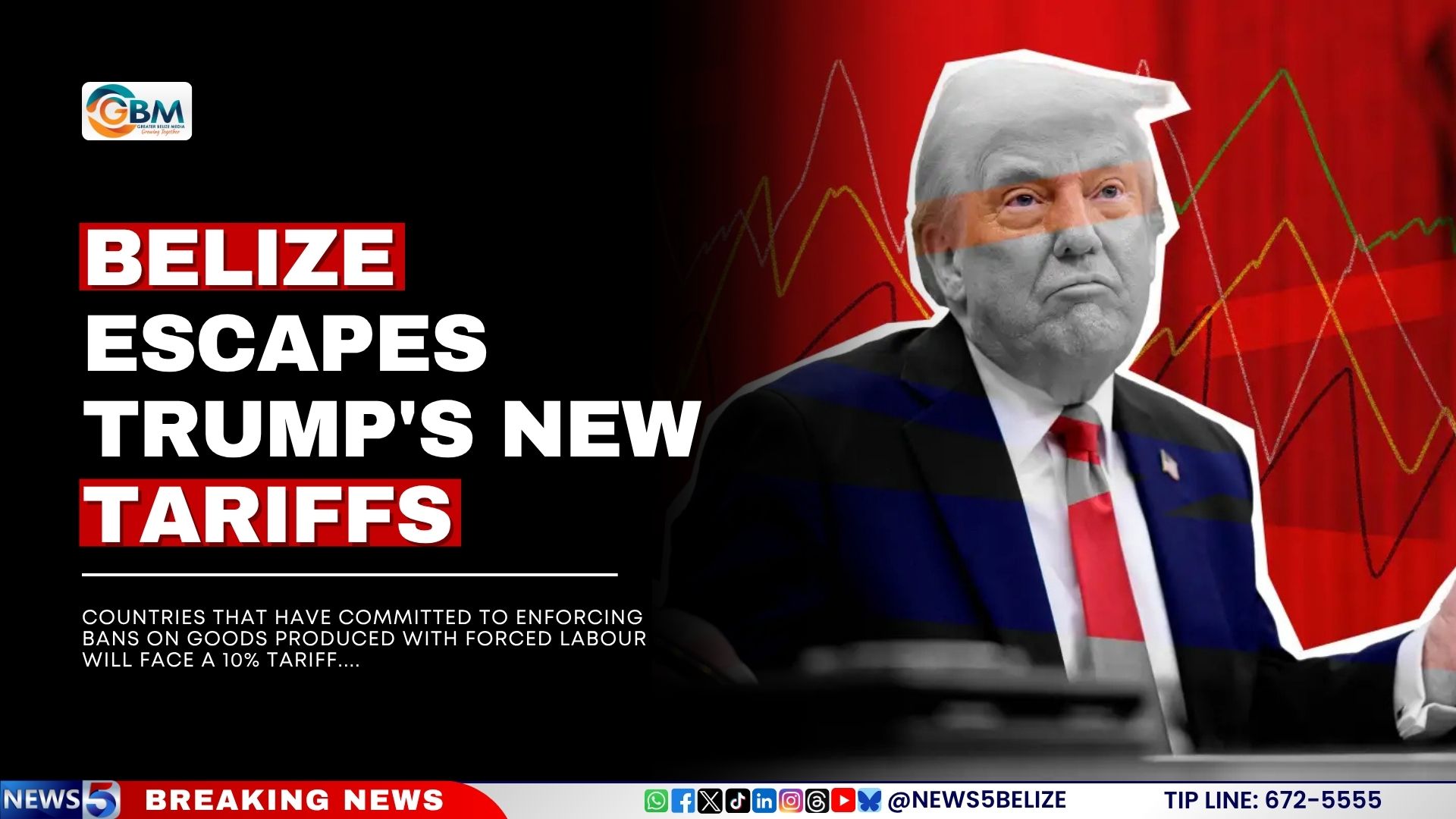
Belize Escapes Trump’s New Tariffs
In a major escalation of the Trump administration’s trade policy agenda, the United States has enacted a sweeping new round of import tariffs targeting 60 of its largest global trading partners, covering nearly all goods flowing into American markets. Effective July 24, 2026, the measures kicked in immediately after a previous temporary tariff regime expired, imposing duties ranging from 10% to 12.5% on imports from major economies including China, the United Kingdom, the European Union, Japan, Australia and Brazil. Notably, the small Central American nation of Belize has been left off the target list, escaping the new trade measures entirely.
The Trump administration has framed the tariffs as a tool to pressure global trading partners to crack down on forced labor in cross-border supply chains. The tariff structure is tiered to reflect each country’s progress on enforcement: nations that have made formal commitments to ban goods produced with forced labor face the lower 10% duty, while jurisdictions deemed to have insufficient enforcement efforts face the steeper 12.5% rate.
This latest round of tariffs forms a core pillar of President Donald Trump’s broader economic strategy, which prioritizes cutting the U.S. trade deficit and expanding domestic American manufacturing. This policy focus has remained a central priority for Trump since he returned to the presidency in 2025.
While Belize has avoided direct impact from the new measures, economists warn the tariffs will send ripple effects across the entire global trade system. Analysts project the duties will push up operational costs for U.S. businesses and raise prices for American consumers, and may also prompt many countries around the world to deepen alternative trade partnerships that reduce their economic reliance on the United States.
-

Guyana says new US ‘forced labour tariff’ will not burden Guyanese exporters
As of Friday, July 24, 2026, the United States has implemented a new 12.5% tariff targeting imports from 60 global trading partners, a policy framed as a penalty for nations that continue to allow trade in goods produced through forced labor. In response to the policy, Guyanese officials have moved quickly to clarify that local exporters will not face new disproportionate costs, while confirming the country will actively push for a full exemption from the measure.
In an official statement released Friday, Guyana’s Foreign Secretary Robert Persaud emphasized that the new 12.5% duty does not add an unplanned financial burden to local producers. The tariff replaces a 10% global tariff that expired July 24 under Section 122 of the U.S. Trade Act, and marks a continued downward trajectory from higher rates announced in previous months: a 38% rate unveiled in April 2025 was revised down to 15% before settling at the current 12.5% level.
Crucially, the tariff does not extend to Guyana’s top export commodities, oil and gold, multiple sources familiar with the policy confirmed to Demerara Waves Online News. U.S. Trade Representative Jamieson Greer first announced the tariff’s scope Thursday, noting that all affected nations, including Guyana, would be required to pay the 12.5% duty for targeted goods to gain entry to the U.S. market.
Persaud stressed that Guyana was not singled out for punitive action in the policy, which includes major global economies and regional neighbors across every continent: affected partners include Canada, the European Union, India, Trinidad and Tobago and Venezuela, among 55 other nations. Sixteen other countries are facing ongoing linked investigations, Persaud added, and Guyana is not included in that group.
Beyond that, top Guyanese officials have forcefully rejected any suggestion that forced labor-produced goods are traded through Guyana’s borders. “Guyana was not aware of evidence demonstrating that goods produced through forced labour are being manufactured in, imported into, or exported from Guyana,” Persaud said, a position reaffirmed during public hearings held by the U.S. Trade Representative (USTR) earlier this month.
Sharon Roopchand-Edwards, Permanent Secretary of Guyana’s Ministry of Foreign Affairs, told the USTR’s July 7-9 public hearing that any forced labor allegations must be resolved through lawful, evidence-based investigations, according to official hearing transcripts. Roopchand-Edwards backed the government’s position with official labor data: as of June 2026, more than 2,000 inspections across all major economic sectors have failed to turn up any substantiated cases of forced labor. The Guyana Revenue Authority has also confirmed no record of forced labor-produced goods entering the country through official ports of entry, she added.
Under Guyana’s existing Customs Act, Roopchand-Edwards noted, the government already has full authority to block imports of goods confirmed to be produced through forced labor. “When it is conclusively determined that imported goods were produced using forced labour, the responsible minister has powers to prohibit importation,” she said.
Persaud also framed the new U.S. tariff as a product of domestic U.S. political and legal shifts, rather than a judgment on Guyana’s trade practices. He explained that the policy was crafted by the current Trump administration to work around a U.S. Supreme Court ruling issued earlier this year that limits the executive branch’s authority to impose unilateral tariffs. “It is not a judgment on Guyana, and Guyana was neither singled out nor treated differently from dozens of other economies navigating the same recalibration,” Persaud said.
While the new tariff does not create new immediate costs for Guyanese exporters, Persaud confirmed the government will continue lobbying for a full exemption from the duty. Parallel to that effort, the administration is also finalizing work on a new reciprocal trade agreement with the U.S. that reflects the deepening, mature bilateral relationship between the two nations. “We are confident this process will continue on the basis of facts, mutual respect, and shared interest,” Persaud said, adding that Guyana remains fully committed to its ongoing trade and diplomatic partnership with the United States. Government officials have already engaged directly with USTR and other relevant U.S. agencies to reinforce Guyana’s position, most recently during the July public hearings, which Guyana participated in voluntarily.