
Barbados’ top agricultural industry advocacy group has renewed its lobbying push for government intervention to rein in meat imports, warning that an unprecedented surplus of locally produced pork and poultry has filled national cold storage facilities to capacity and pushed hundreds of domestic farmers to the brink of crippling financial hardship. \n\nJames Paul, chief executive of the Barbados Agricultural Society (BAS), told reporters that domestic meat producers are operating under unsustainable pressure, as overstocked cold storage leaves nowhere for farmers to house their finished products amid a supply-demand mismatch spurred by unregulated cheap foreign imports. To resolve the growing crisis, Paul is calling on the Barbadian government to launch a full review of existing trade regulations, close loopholes that allow under-taxed imported meat to enter the market, and implement temporary restrictions or a full suspension of competing foreign meat imports. This pause, he argues, would give the domestic market enough time to absorb the current surplus of local product before it leads to widespread farm failures.\n\nPaul emphasized that the large capital investments local farmers made over recent years to expand production capacity and boost operational efficiency are now at risk of being completely wiped out by the flood of cheap imported meat entering the country through unclosed regulatory gaps. The domestic pork sector, he said, has suffered the most severe damage from unfair foreign competition, with impacts rippling through major buyers and processing facilities across the entire island. \n\nMany imported pork products enter the country at reduced duty rates through regulatory loopholes, Paul explained, putting local producers at an impossible price disadvantage that locks them out of key market segments. HIPAC, one of the largest institutional purchasers of local pork in Barbados, has been forced to drastically cut the volume of local pork it buys due to intense underpriced competition from imported alternatives, he noted.\n\nThis drop in domestic purchasing comes at a time when local pig farmers deliberately expanded their herds and upgraded production facilities to meet projected domestic demand, leaving thousands of farmers stuck with unsellable excess stock and creating a fast-escalating crisis for the entire livestock industry, Paul said. The poultry sub-sector faces an equally urgent scenario, he added, with cold storage infrastructure stretched far beyond its designed limits. Both large commercial poultry operations and small independent producers are currently sitting on record high inventory levels, creating crippling operational bottlenecks that slow work at hatcheries and processing facilities across the country.\n\n“We do recognise that we have a glut of poultry on our hands. We have been talking constantly, and we know that the cold storage down there is full to the brim. Also, for some of the larger producers, the stocks are up, and then of course a lot of our smaller producers are coming on at the same time,” Paul said. He added that just one week prior, at least one major processing facility was unable to process and distribute all scheduled birds for market, offering clear proof of how severe the current backlog has become.\n\nPaul argued that Barbados’ domestic agriculture sector has reached a level of maturity where local producers can fully meet the island’s entire demand for fresh meat without relying on foreign suppliers. “We are reaching the stage where our local poultry industry should be able to satisfy 100 per cent of the demand for fresh poultry; we do not need to import anything. There is no reason for us to be going shopping abroad to whatever Caribbean destination people feel like going to or in the United States to find these products when we have them here. We need more than talk in the industry right now — we need action,” he said.\n\nFailure to act on the import imbalance, Paul warned, puts both private farmer investments and public government funding at serious risk. Many local producers took out loans through a $2 million government-backed investment program administered by the BAS to upgrade their farm facilities, and unregulated imports will make it impossible for many of these farmers to make their loan payments, he said. The BAS will continue supporting farmers through the application process with the Ministry of Agriculture to help boost farm resilience, Paul said, while continuing to push for urgent, decisive policy action to restrict imports and resolve the current glut.
分类: business
-

Antigua and Barbuda Tourism Authority USA Earns Accolades for Strengthening Travel Trade and Diaspora Engagement
The U.S. division of the Antigua and Barbuda Tourism Authority (ABTA USA) has recently received widespread industry recognition for its exceptional work in two critical areas of tourism development: expanding travel trade partnerships and deepening engagement with the Antigua and Barbuda diaspora based in the United States.
For the Caribbean island nation of Antigua and Barbuda, tourism stands as the backbone of its national economy, contributing a substantial share of annual GDP and supporting tens of thousands of local jobs across hospitality, transportation, recreational services, and small local businesses. The U.S. market has long been the largest source of international visitors to the twin islands, making strategic outreach and relationship-building in the U.S. a high priority for the national tourism body.
In its work to strengthen travel trade ties, ABTA USA has rolled out a series of targeted initiatives over the past year, including educational workshops for U.S.-based travel agents, curated familiarization (fam) trips that bring tour operators and travel influencers to experience Antigua and Barbuda’s attractions firsthand, and collaborative marketing campaigns with major online travel platforms and brick-and-mortar travel agencies. These efforts have helped increase visibility of the destination among U.S. travelers, streamline booking processes, and build long-term trust between the Antigua and Barbuda tourism sector and North American travel trade professionals.
Equally notable has been the organization’s focus on diaspora engagement. Hundreds of thousands of people with roots in Antigua and Barbuda reside in the U.S., and this community represents a consistent source of travel volume, as many return home for family visits, holidays, or cultural events. ABTA USA has launched tailored outreach programs, including cultural networking events, exclusive travel offers for diaspora members, and partnership with diaspora community organizations to co-develop tourism experiences that resonate with returning residents and their families. The authority has also leveraged diaspora voices to promote the destination to broader U.S. audiences, tapping into the authentic, first-hand knowledge that community members bring to promotion efforts.
Industry judges that presented the accolades highlighted that ABTA USA’s integrated strategy has delivered measurable results, including a year-over-year increase in visitor arrivals from the U.S., higher average booking values through travel trade channels, and stronger long-term buy-in from both travel trade partners and the diaspora community. The awards recognize not only short-term growth in tourist numbers but also the sustainable, relationship-focused approach that ABTA USA has adopted to build resilience in the destination’s tourism sector, particularly in the post-pandemic travel landscape where many Caribbean destinations are competing for a share of the growing North American travel market.
Leaders of Antigua and Barbuda’s national tourism board say the accolades are a testament to the organization’s user-centric approach, which prioritizes understanding the needs of both travel trade partners and the diaspora community. They added that they plan to expand on these successful initiatives in the coming year, rolling out new programming to reach more travel agents and deepen connections with diaspora communities across different regions of the U.S.
-
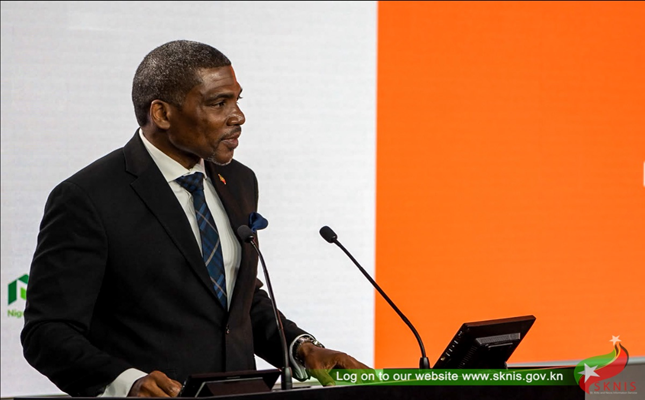
Saint Kitts and Nevis positioned as a strategic gateway linking Africa, the Caribbean and Global Capital
LONDON, UK – July 23, 2026 – At a landmark anniversary business gathering hosted at the London Stock Exchange, the Prime Minister of Saint Kitts and Nevis has framed the small Caribbean federation as an unmatched strategic connector between African markets, Caribbean regional opportunity, United Kingdom professional expertise and global investment capital. Speaking as the keynote presenter for the Royal African Society’s 125th Anniversary Flagship Business Event, Prime Minister Dr. Terrance Drew positioned his nation as an emerging hub for cross-regional investment, innovative collaboration and economic diplomacy, anchored by the country’s ambitious Sustainable Island State Agenda, a holistic development framework already gaining global attention as a model for 21st-century resilient growth.
Dr. Drew used the high-profile platform to outline the federation’s expanding leadership in building formal, productive ties between the African continent and the Caribbean region. Key initiatives that underpin this role include a landmark strategic partnership with the African Export-Import Bank (Afreximbank), a groundbreaking policy granting visa-free entry to all African nationals, active participation in the Afri-Caribbean Investment Summit, and the federation’s recent selection as the official host of the fifth AfriCaribbean Trade and Investment Forum (ACTIF), a major event set to bring hundreds of regional stakeholders and investors together in the coming years.
“Saint Kitts and Nevis is ready to serve as a bridge connecting African enterprise, Caribbean opportunity, British expertise and global capital,” Dr. Drew told attendees of the invitation-only event, which drew investors, business leaders and policymakers from more than 40 countries.
In a call to action for global stakeholders, the prime minister extended an open invitation for mission-aligned investors to partner with the federation across seven high-priority sectors: renewable energy, healthcare, sustainable agriculture, digital technology, education, ecotourism and the creative economy. These partnerships are structured to advance the core goals of the Sustainable Island State Agenda, a comprehensive national transformation plan that extends far beyond environmental action to center water security, just energy transition, food sovereignty, resilient infrastructure, circular economy development and inclusive social progress.
Dr. Drew emphasized that the strategy is designed to deliver dual value: lifting quality of life and expanding economic opportunity for all citizens of Saint Kitts and Nevis, while creating a transparent, welcoming regulatory environment for responsible international investment. “We welcome investors who share this vision. We seek investment that creates jobs, transfers knowledge, strengthens local businesses, respects our environment and leaves strong institutions behind,” he added.
Beyond attracting private capital, Dr. Drew used his keynote to call for deeper institutional collaboration between three blocs: the African continent, the Caribbean region, and the United Kingdom. He encouraged cross-sector partnerships that combine global capital with cutting-edge technology, educational exchange, innovative practice and long-term local capacity building, rather than short-term extractive investment models. He closed by reaffirming Saint Kitts and Nevis’ long-term commitment to acting as a trusted intermediary, advancing a modern, mutually beneficial relationship between Africa and the Caribbean rooted in shared economic growth, knowledge exchange and equitable sustainable development that benefits current and future generations across all regions.
-

Inflatie in jaartijd 10,5%; vooral groente, fruit en vlees werden duurder
New preliminary inflation data released by Suriname’s General Bureau of Statistics (ABS) has confirmed that consumer prices continued their upward trend in June, pushing the country’s 12-month average inflation rate to 10.5%. Month-over-month, overall inflation hit 1.2% in June, with food products emerging as the single largest driver of rising living costs across the nation.
Fresh produce recorded the most dramatic price surge among all food categories. Between May and June, the price of fruits and vegetables jumped 7.8%, and compared to June 2025, these staple goods are now 32.5% more expensive for consumers.
Meat and meat products also saw significant price growth, with a 4.9% month-over-month increase and a 16.6% year-over-year rise. Bread and cereal products followed close behind, posting a 4.7% monthly price hike and a 6.5% annual increase. Additional price increases were recorded across other food and beverage segments: other food and non-alcoholic drinks rose 1.6% month-over-month, out-of-home beverages increased 1.2%, and out-of-home meals went up 0.5% in June.
Sugar and sugar products stood as the only food category that became cheaper in June. Prices fell 0.7% compared to May, and are also slightly lower than they were one year prior.
Across the 12 main categories that make up the consumer price index, food and non-alcoholic beverages recorded the strongest overall price growth. This was followed by alcoholic beverages and tobacco, household goods, and out-of-home dining. Two categories, healthcare and transportation, remained largely price-stable through June.
ABS officials noted that the headline 10.5% annual inflation rate is an average calculated across a basket of 316 different goods and services, and substantial variation exists across individual products. Price changes for specific items ranged from a 39% decrease to a 600% increase compared to previous periods. It should also be noted that ABS does not conduct consumer price measurements in the inland districts of Marowijne, Brokopondo and Sipaliwini, where consumer prices are known to be many times higher than measured averages in other regions.
-

BRH : Analysis of the macroeconomic and financial situation and outlook for monetary policy (video)
On July 21, 2026, Ronald Gabriel, the Governor of the Bank of the Republic of Haiti (BRH), hosted a public press conference to deliver a comprehensive assessment of the country’s current macroeconomic and financial landscape, while outlining the central bank’s upcoming monetary policy direction.
During the briefing, Gabriel outlined a series of key positive gains that the Haitian financial sector has achieved in recent years. Most notably, the country has sustained a steady disinflation trend that has eased cost pressures for households and businesses. In addition, the national exchange rate has held nearly three years of consistent stability, a rare and critical achievement for a small developing economy facing ongoing structural challenges. The central bank has also built up stronger international reserve buffers to shield against external economic shocks, while the domestic banking system has demonstrated unexpected resilience through periods of uncertainty.
Beyond reviewing current economic conditions, the BRH governing board also walked through the central bank’s ongoing priority projects. These include a sweeping initiative to modernize Haiti’s outdated national payment system, upgrades to banking regulatory frameworks to improve oversight and risk management, and targeted structural reforms to crack down on money laundering and terrorist financing. The central bank has also prioritized expanding access to financial services for unbanked communities and boosting access to affordable capital for small and medium-sized enterprises (SMEs), which form the backbone of Haiti’s informal and formal economy.
A key topic of discussion during the conference was the progress Haiti has made on its action plan to exit the Financial Action Task Force (FATF) grey list, a designation that has restricted the country’s access to global financial markets in recent years. The governing board noted that ongoing reforms have put the country on track to meet FATF’s requirements, though work remains to solidify those gains.
Looking ahead, the BRH leadership emphasized that long-term economic growth and stability remain tightly tied to improvements in Haiti’s fragile security situation. Despite ongoing headwinds, Gabriel reaffirmed the central bank’s unwavering commitment to maintaining a prudent monetary policy framework, continuing to advance macroeconomic stability, and rebuilding public and investor confidence in Haiti’s domestic financial system.
-

Illegal Power Lines Pose Growing Safety Risk Across Belize
By 2026, the persistent issue of unauthorized power connections and tampered electricity meters across Belize has evolved into a growing dual crisis, threatening public safety and straining the financial stability of Belize Electricity Limited (BEL), the country’s national power provider.
What makes the problem particularly dangerous is the haphazard construction of these illegal lines across many communities. In high-risk zones, makeshift wiring is often strung directly through tree branches or left fully exposed in regions prone to seasonal flooding. This shoddy setup leaves local residents exposed to two major, life-threatening hazards: fatal electrocution and accidental electrical fires that can spread rapidly through residential areas.
As the problem continues to shift between different districts across the country, BEL officials report that containing and resolving the issue has become increasingly resource-intensive, with operational costs to address illegal connections rising steadily. In a recent interview with reporter Britney Gordon, BEL Executive Chairman Lynn Young emphasized the utility’s deep concern over the crisis, confirming that the company is pursuing all available measures to curb electricity theft and unauthorized connections.
Young declined to disclose specific enforcement strategies, noting that the operation amounts to a persistent cat-and-mouse game between utility inspectors and individuals setting up illegal connections. Revealing details about planned patrols or enforcement locations, he explained, would simply allow those responsible to shift their unauthorized setups to new areas. When asked to identify the hardest-hit districts, Young stated that illegal connections are widespread across the entire nation, with hotspots changing regularly based on local conditions.
Beyond the immediate safety risks, the widespread theft of electricity is also taking a significant toll on BEL’s bottom line, and ultimately on the country’s law-abiding power customers. Young confirmed that uncompensated power drawn through illegal connections directly contributes to BEL’s financial deficits. Because the utility incurs production and distribution costs for all electricity that enters the grid, revenue lost to theft forces BEL to absorb higher operational costs, which eventually translates to requests for increased electricity rates for all paying customers. “It affects us and it affects all of us,” Young noted, emphasizing that the burden of electricity theft is shared by every customer who pays their monthly bill.
This is not a new challenge for BEL. Back in 2022, the company first publicly reported annual losses totaling thousands of dollars from illegal connections, and launched an initiative to bring unregistered households into the formal grid through regularization. However, company officials noted at the time that underdeveloped basic infrastructure in many low-income and rural communities remained the single biggest barrier to resolving the issue long-term. As of 2026, the crisis has only grown more acute, highlighting the ongoing gap between infrastructure access and enforcement capacity across the country.
-

Thirty Years at the Bridge, Now Tony’s Barbeque Must Move
Nestled at the base of Belize’s BelCan Bridge for more than 30 years, Tony’s Barbeque has grown from a small roadside lunch stop into a beloved local institution, drawing generations of regulars and visitors alike for its signature smoked meals. Now, a major infrastructure renovation project for the crossing is forcing the decades-old eatery to pack up and move—and while its owners fully back the public works plan, conflicting official timelines have thrown their transition into disarray, prompting them to speak out this week to push for clear, coordinated guidance from authorities.
The BelCan Bridge upgrade, led by the nation’s Ministry of Infrastructure Development and Housing (MIDH), requires all local vendors and businesses occupying space near the current structure to vacate the area to make way for pre-construction preparations. Co-owner Sarah Beck, who runs the restaurant with her husband, says the pair have no objection to relocating for the project, but competing deadlines from different government bodies have left them unable to plan their move effectively.
Beck explained that back in April, MIDH issued a formal public notice ordering all nearby businesses to leave the site by May 7. But at a recent stakeholder meeting that included both MIDH representatives and officials from the Belize City Council, attendees gave a very different timeline. “In that meeting they told us that the bridge is not even going to be built until next year, and that the BelCan Bridge will be broken down after the Christmas holiday, so that will make the bridge available to the parade and whatever Christmas functions happen around that timeframe,” Beck said. “Thereafter, they told us we did not have to move until November. Possibly December and January.”
The confusion dates back to May, when MIDH Chief Engineer Evondale Moody confirmed the agency had formally contacted Belize City Mayor Bernard Wagner to coordinate relocations for four affected sites, including Tony’s Barbeque, other vendors near the local taxi stand, and a structure on the bridge’s south side near Belize Water Services. Moody noted at the time that Wagner had committed to working directly with affected businesses to coordinate their moves as quickly as possible.
Thus far, the city council has made progress on identifying a new home for Tony’s Barbeque: a spot near the Cleopatra White Polyclinic, just a short distance from the restaurant’s current location at the bridge foot. But Beck and her team still have outstanding concerns about the suitability of the site, noting they want to ensure the new location does not block public pedestrian access, and that barbecue smoke from the kitchen will not create disturbances for the nearby polyclinic or surrounding businesses.
When reached for comment on the conflicting timelines, Mayor Wagner emphasized that the city council is committed to supporting local small businesses through the transition, and that he had recently met with the Tony’s Barbeque owners to resolve outstanding issues. “We don’t want to see any entrepreneur out of business. We nurture and cherish all our entrepreneurs in the city,” Wagner said. “Tony has been a staple food outlet, barbecue outlet for many years and so I was able to speak with them this morning and have a clear pathway on how we will get past this little bump in the road. I look at it as a bump in the road.”
Wagner added that the city recognizes MIDH’s responsibility to deliver the new bridge on schedule, and that public safety is a top priority for all parties involved. “At the same time, MIDH has its responsibilities as well to see the construction of the new BelCan Bridge, and we are also always looking at safety for residents,” he said. “So that discussion this morning was to really reassure them Ms. Beck and Tony, that the city stands ready to work along with them for relocation.”
For the iconic eatery’s owners, the priority right now is not fighting the redevelopment project—it is securing a clear, coordinated plan that lets them relocate without closing their doors for good, and without creating disruptions for their new neighbors. As they wait for final confirmation on timelines and site details, the 30-year-old business remains open, serving regulars while preparing for the next chapter of its history in Belize City.
-

GST-Free School Shopping Returns in August
As the 2026 back-to-school season approaches, the Government of Belize has confirmed the return of its popular GST-free school supply shopping initiative, a targeted tax relief program designed to ease financial pressure on households preparing for the new academic year. Now entering its second consecutive year of implementation, the program brings cost-saving opportunities for families, though it comes with a notable adjustment to its schedule that will change how shoppers plan their purchases.
In the 2025 iteration of the policy, tax-free shopping spanned two full three-day weekends, running from Friday through Sunday each weekend to give parents a total of six full days to stock up on qualifying goods without paying the standard 12.5% General Sales Tax. This extended window allowed families to shop around for the best prices and fit purchases around their work and personal schedules, but for 2026, the government has reduced the tax exemption period to just two standalone Saturdays: August 15 and August 29.
The core eligibility rules for the program remain consistent with last year’s framework. The GST exemption only applies to pre-approved school-related products, including basic stationery, textbooks, workbooks, and other essential educational materials. Retailers participating in the initiative are required to clearly mark all qualifying items to help shoppers easily identify which products qualify for the tax break, preventing confusion at checkout.
For many low- and middle-income families across Belize, the annual program offers meaningful financial relief at a time of year that often puts unexpected strain on household budgets. Even with the reduced number of shopping days, government officials note the initiative still delivers tangible savings that can help families redirect limited funds to other back-to-school needs, such as uniforms, textbooks, or extracurricular fees. This announcement comes as households across the country begin planning for the start of the new academic year, which kicks off shortly after the second GST-free shopping date in late August.
-

Hatramij vraagt opheldering over inbeslagname container met insecticiden
A Surinamese consumer goods importer Hatramij N.V. is calling on national regulatory authorities to deliver urgent clarity on the seizure of a shipping container filled with household insecticide aerosol cans, which has been held by customs for nearly a month without a formal ruling. The shipment, which arrived at the country’s ports in late June, was detained by Surinamese Customs over alleged non-compliance with a newly implemented state decree governing the import of pesticide-containing aerosol products. However, more than three weeks after the seizure took place on June 27, the company has yet to receive an official, formal decision on the case.
In a public statement released this week, Hatramij N.V. explained that immediately following the seizure, it submitted a formal request to authorities to allow the company to take custody of the detained container. The goal of this request, the firm noted, was to mitigate the rapidly accumulating extra costs including port storage fees, vessel demurrage charges and third-party holding expenses that continue to rise as the impasse drags on. As of the company’s latest update, that request has not been answered, and no formal ruling on the seizure has been issued.
The ongoing lack of resolution is creating mounting financial pressure for the firm, Hatramij emphasized, warning that the prolonged uncertainty could disrupt core business operations, compromise the company’s ability to maintain consistent supply chains, and leave retail and consumer customers facing shortages of the popular household product.
Notably, the company stressed that it does not oppose the new regulatory framework governing pesticide imports. In its statement, Hatramij acknowledged that targeted rules to protect public health and consumer safety are a necessary and legitimate requirement for any import market. The firm’s objection centers not on the regulation itself, but on the opaque and unstructured rollout of the new rules.
Hatramij called for new trade regulations to be implemented through a transparent, predictable and equitable process that treats all market participants equally. The company also pushed for timely, proactive information sharing with importers and the implementation of reasonable transition periods to give businesses time to adjust their supply chains and import procedures to align with new requirements.
In closing, the company reiterated its urgent appeal to competent authorities to prioritize the processing of its case and bring clear resolution to the seizure dispute, adding that Hatramij remains fully committed to working constructively with regulators to reach a solution that aligns with both regulatory requirements and the company’s operational needs.
-

Sunrise Airways launches direct Antigua-Barbados service
In a landmark move for Caribbean regional integration, Caribbean-based carrier Sunrise Airways has launched a brand-new direct air service linking Antigua and Barbuda with the island nation of Barbados, expanding its network and advancing ongoing efforts to knit closer ties across the region. The first flight on the route touched down at Barbados’ Grantley Adams International Airport this Wednesday, drawing a crowd of senior tourism, aviation and government representatives from both island nations for an official ceremony to mark the milestone launch.
This new cross-Caribbean route is scheduled to operate two flights per week, eliminating the need for connecting travel between the two popular destinations and opening up more flexible, convenient travel options for a wide range of passengers: leisure tourists seeking new Caribbean experiences, business professionals conducting cross-border trade, and families visiting loved ones across regional borders.
For Sunrise Airways, the new Barbados route represents another key milestone in the carrier’s long-term mission to strengthen transport links across the entire Caribbean archipelago. “Every new route brings our region closer together,” a company representative noted of the development.
Antigua and Barbuda’s Minister of State for Tourism, Michael Freeland, offered enthusiastic praise for the new service, emphasizing that consistent, reasonably priced air connectivity is a foundational driver of sustainable economic growth across the Caribbean. Freeland explained that expanded, reliable air access is critical to unlocking the region’s full untapped economic potential, by removing barriers to movement for both people and commercial operations across Caribbean borders.
Per Sunrise Airways’ official announcement, the new route aligns with the carrier’s flagship “One Caribbean” initiative, a program focused on bridging gaps between Caribbean nations through improved, accessible air transport. The airline currently operates services to 20 destinations across the Caribbean, North America and Central America, with plans to continue expanding its regional network in the coming months.
Industry and government stakeholders widely expect the new Antigua-Barbados route to deliver broad benefits beyond just easier travel: it will strengthen overall regional connectivity, support growth in the vital tourism sector, boost cross-border commercial activity, and deepen people-to-people cultural exchange between the two neighboring island nations.