
MONTEGO BAY, Jamaica — Emerging from the devastation of Hurricane Melissa, Eclipse Florals and Plant Store has transformed disaster into a strategic rebirth, with proprietor Anand Kumar charting an ambitious expansion course for 2026. The catastrophic October storm obliterated the company’s inventory, infrastructure, and essential equipment, yet instead of closing operations, Kumar seized the opportunity to fundamentally reengineer his business model. The renaissance was catalyzed through strategic partnership with National Commercial Bank Jamaica Limited (NCB), which provided critical financial tools and market access opportunities that propelled the floral enterprise beyond recovery into sustainable growth. A pivotal moment arrived when Kumar participated in Devon House’s Market on the Lawn event—an experience facilitated by NCB that delivered immediate commercial validation through robust customer reengagement and sales generation. The enterprise’s resurgence was further bolstered by peer-to-peer support within Jamaica’s plant entrepreneur community, with fellow vendors contributing plants and products to restore inventory. Technological empowerment came through NCB’s mobile point-of-sale (mPOS) solution, which eliminated payment barriers and maximized sales conversion. Kumar credits NCB agent Monique Smith’s encouragement for overcoming initial market re-entry hesitancy, noting the experience has fundamentally reset his business approach from mere recovery to strategic expansion. Reinvested proceeds from successful market appearances are now fueling inventory rebuilding and future growth initiatives. Danielle Cameron Duncan, NCB’s Vice President of Payments and Digital Channels, emphasized that Eclipse Florals’ revival exemplifies the institution’s broader commitment to strengthening Jamaica’s economic fabric through small business empowerment.
分类: business
-

TAJ warns against false income tax filings as car marts fined over $12 million
KINGSTON, Jamaica — In a significant enforcement action, Jamaica’s tax authority has successfully prosecuted eleven used car dealerships for systematic tax evasion, resulting in substantial fines and the declaration of previously concealed income.
The Tax Administration Jamaica (TAJ) secured convictions against these companies after comprehensive investigations revealed they had imported and sold hundreds of vehicles between 2020 and 2023 while reporting zero income in their official tax filings. The cases, heard across multiple parish courts in Kingston, St. Andrew, Manchester, Clarendon, St. Catherine, and St. Mary, concluded with all defendants pleading guilty.
The prosecuted entities include Nostaw Limited, Karstarz Ballards International Ltd, Ballards International Ltd Automotive Limited, Auto Occasions Limited, Amalya Auto Ltd, Phillip Rankine Auto Links, Kiffin Auto Sales Company Limited, Walk In Drive Out, Videle Imports Limited, B & M Essential Limited, and Chosen Motors Works Limited.
Following court proceedings, the companies were compelled to file 32 amended tax returns declaring gross income exceeding $4 billion—a dramatic increase from their previously reported nil income. The courts imposed total fines exceeding $12.2 million for violations under Section 99(1) of Jamaica’s Income Tax Act.
The investigations were conducted by TAJ’s Intelligence, Investigation and Enforcement Unit (IIEU) with legal support from the agency’s Criminal Litigation Unit. The statute under which charges were filed criminalizes the knowing submission of false statements for tax benefits, with first offenses carrying penalties up to $2 million fines or potential imprisonment.
With Jamaica’s tax filing deadline approaching, TAJ is emphasizing the serious consequences of deliberate income misrepresentation and encouraging taxpayers with previous filing errors to proactively correct them through official customer service channels.
-

Businessman Proposes Short-Term Work Permits to Address Skills Gaps
A contentious proposal to introduce short-term work permits for foreign professionals has ignited a robust national debate in Antigua and Barbuda, exposing a critical divide between immediate economic needs and long-term workforce development strategies. The discussion unfolded on the prominent ‘Browne and Browne’ television show, featuring a direct exchange between private sector representation and government leadership.
Robeerto ‘Robbie’ Falangola, proprietor of Antigua Slipway, presented the case for limited-duration permits targeting specialized sectors experiencing significant skills shortages. He specifically highlighted the acute need during the six-to-eight-month tourism season, suggesting structured programs allowing international experts to fill critical roles temporarily while committing to knowledge transfer initiatives.
Prime Minister Gaston Browne responded with substantial skepticism, voicing profound concerns about potential displacement of local workers. He challenged the fundamental premise, questioning why permits should be granted if foreign labor might marginalize skilled Antiguans and Barbudans already possessing relevant qualifications. The Prime Minister emphasized the government’s unwavering commitment to protecting domestic employment opportunities.
Education Minister Daryll Matthew presented the administration’s alternative vision, advocating for significantly expanded vocational training and educational programs as the sustainable long-term solution. His intervention shifted focus toward systemic workforce development rather than temporary foreign supplementation.
The comprehensive dialogue extended beyond immediate labor concerns to encompass broader themes of tourism sector diversification, economic resilience, and strategic human resource planning. While no policy decisions were announced, the televised exchange revealed growing tension between addressing urgent market needs and preserving opportunities for local workforce development.
-

PM Calls on Banks to Play Bigger Role in Tourism-Led Growth
In a significant address to the nation’s financial leaders, the Prime Minister has issued a compelling directive for the banking industry to assume a more substantial and proactive role in catalyzing economic growth through tourism development. This strategic call to action positions financial institutions as pivotal partners in national economic strategy, moving beyond traditional lending into targeted sector investment.
The government’s vision centers on establishing tourism as a primary economic engine, requiring sophisticated financial products and services tailored to hospitality infrastructure, small business development in tourist regions, and innovation within the travel sector. The Prime Minister emphasized that conventional banking approaches would be insufficient to meet the ambitious growth targets set by the administration.
Key initiatives highlighted during the address included the development of specialized loan programs with favorable terms for tourism-related ventures, increased investment in destination marketing campaigns, and financial technology solutions to enhance the visitor experience. The banking sector was specifically encouraged to collaborate with tourism operators on digital payment systems, currency exchange services, and investment in sustainable tourism projects that align with environmental conservation goals.
This policy direction reflects a growing recognition of tourism’s multiplier effect on national economies, where every dollar invested in tourism infrastructure generates significant returns across transportation, retail, and service industries. The Prime Minister’s appeal signals a new era of public-private partnership where financial institutions serve as active participants in economic diversification rather than passive facilitators of transactions.
Industry analysts suggest this approach could revolutionize how developing economies leverage their natural and cultural assets for economic advancement, potentially creating a model for other nations seeking to maximize tourism’s economic potential through strategic financial sector engagement.
-

St Kitts sees strong cruise arrivals in early February – WIC News
The Federation of St. Kitts and Nevis has witnessed an extraordinary influx of cruise tourism during the initial week of February 2026, with port authorities recording seventeen vessel arrivals between February 2nd and 7th. This impressive maritime activity signals a robust recovery and substantial growth for the Caribbean nation’s tourism sector.
Among the distinguished vessels that graced the shores of St. Kitts were the Valiant Lady, Silver Ray, Seabourn Ovation, and Marella Discovery 2 on February 2nd, followed by SeaDream II, Arvia, AIDAsol, and Grand Princess on February 3rd. The subsequent days saw the arrival of Mein Schiff 2, MSC Explora 1, Celebrity Apex, Vidanta Elegant, Marella Voyager, and Celebrity Beyond on February 4th and 5th, culminating with Costa Pacifica, Silver Spirit, and Costa Fascinosa on February 6th and 7th.
This remarkable beginning sets the stage for an even more prosperous month ahead. According to official cruise schedules, St. Kitts anticipates welcoming an additional sixty-four vessels throughout the remainder of February 2026. This continuous stream of maritime visitors promises to deliver substantial economic benefits to the dual-island nation.
The sustained cruise traffic is projected to generate significant economic stimulation across multiple sectors. Local businesses including tour operators, transportation services, hospitality establishments, culinary venues, retail merchants, and artisanal craftspeople are poised to experience considerable commercial advantages from the increased visitor expenditure.
This tourism surge represents a vital economic catalyst for St. Kitts and Nevis, potentially establishing February 2026 as a record-breaking month for cruise passenger arrivals. The consistent maritime traffic underscores the islands’ growing popularity as a premier Caribbean destination while demonstrating the resilience and appeal of the nation’s tourism infrastructure and attractions.
-

98% of BTL Severance Paid, But What About Claims Older Than 6 Years?
Belize Telemedia Limited (BTL) has announced the near-completion of its severance payment obligations to former employees, fulfilling a mandate from last November’s Caribbean Court of Justice ruling. The telecommunications company reports successfully disbursing 98% of eligible claims that fall within the six-year limitation period established by national law.
According to an official statement, BTL initiated payments promptly following the judicial decision, though three former employees have yet to collect their entitled compensation. The company attributes this remaining balance to the individuals’ failure to complete necessary disbursement procedures at BTL offices.
This adherence to the statutory limitation period has ignited significant public debate regarding corporate responsibility versus legal technicalities. Critics argue that severance pay constitutes earned compensation that should transcend temporal legal boundaries, representing a fundamental matter of social justice rather than merely a contractual obligation.
Prime Minister John Briceño recently weighed in on the controversy, expressing his view that severance claims should not be subject to statute limitations. His comments came following parliamentary proceedings where he emphasized the moral imperative to compensate all former employees regardless of temporal constraints.
The Belize Communication Workers for Justice (BCWJ) has mobilized public demonstrations, conducting a three-day protest outside BTL’s Belize City headquarters. The labor advocacy group demands comprehensive payment for all affected workers, including those whose employment terminated beyond the six-year threshold.
In response to mounting pressure, BTL’s Board of Directors has initiated review procedures for claims predating the limitation period. A conclusive determination regarding these historically excluded cases is anticipated during the board’s forthcoming meeting.
-

Cemex praises Jamaican performance
Caribbean Cement Company Limited (CCC) has achieved an unprecedented financial milestone in 2025, setting new performance records despite hurricane-related disruptions affecting broader Caribbean operations. The remarkable gains were revealed by its ultimate parent company, CEMEX SAB de CV, which highlighted Jamaica’s record-breaking operating earnings before interest, taxes, depreciation, and amortization (EBITDA).
The exceptional performance was primarily driven by a 7% increase in cement volumes, fueled by robust tourism-related construction projects and residential self-build activities across Jamaica. This success represents the most significant return on investment to date from CCC’s strategic US$42-million kiln debottlenecking initiative, finalized in the third quarter of 2025. The project has enabled the company to replace lower-margin imported cement with higher-value locally produced alternatives, substantially improving profitability.
Within Cemex’s South, Central America and Caribbean (SCAC) division, which generated US$1.14 billion in revenue and US$223 million in operating EBITDA, Jamaica’s operations emerged as the standout performer. The Caribbean sub-region—encompassing Jamaica, Trinidad and Tobago, Barbados, and Guyana—contributed 39% of segment EBITDA, amounting to approximately US$87 million. Previous disclosures from Trinidad Cement Limited (TCL), which holds a 74.1% stake in CCC, have established the Jamaican operation as the group’s most critical business unit, responsible for over half of consolidated revenue and the majority of operating profits.
CCC reached maximum production capacity in July 2025 and resumed cement exports later that year, shipping 3,000 metric tonnes to Curaçao in September—a significant achievement demonstrating the expanded operational scale and enhanced efficiency.
Despite Jamaica’s outstanding results, Cemex reported a 5% decline in like-for-like operating EBITDA for the SCAC segment, attributed to Hurricane Melissa’s impact on Jamaican operations alongside increased maintenance activities in Colombia and Trinidad and Tobago. The corporation also restructured its regional presence throughout 2025, exiting the Dominican Republic market in January and divesting its Panamanian operations in October.
Regional cement volumes experienced a 2% increase in 2025, with Cemex forecasting modest single-digit price increases for construction materials in 2026. This optimistic outlook is supported by improving consumer confidence and a recovery in formal construction sectors.
Jamaican investors anticipate further clarity regarding CCC’s independent performance when the company releases its audited financial statements by March 1. Following a 5% EBITDA increase to $9.38 billion in 2024, CCC’s nine-month performance through September reached $7.68 billion, maintaining similar growth momentum.
At the corporate level, Cemex reported US$16.13 billion in consolidated sales for 2025, with net profit increasing marginally by 1% to US$970 million despite substantial one-time impairment and severance charges.
For Caribbean Cement Company, 2025 represents a transformative period: after extensive capital investment years, Jamaica’s premier cement producer has entered a new era of elevated production capacity, strengthened profit margins, and restored regional significance—establishing itself as one of the nation’s most impactful industrial enterprises moving into 2026.
-
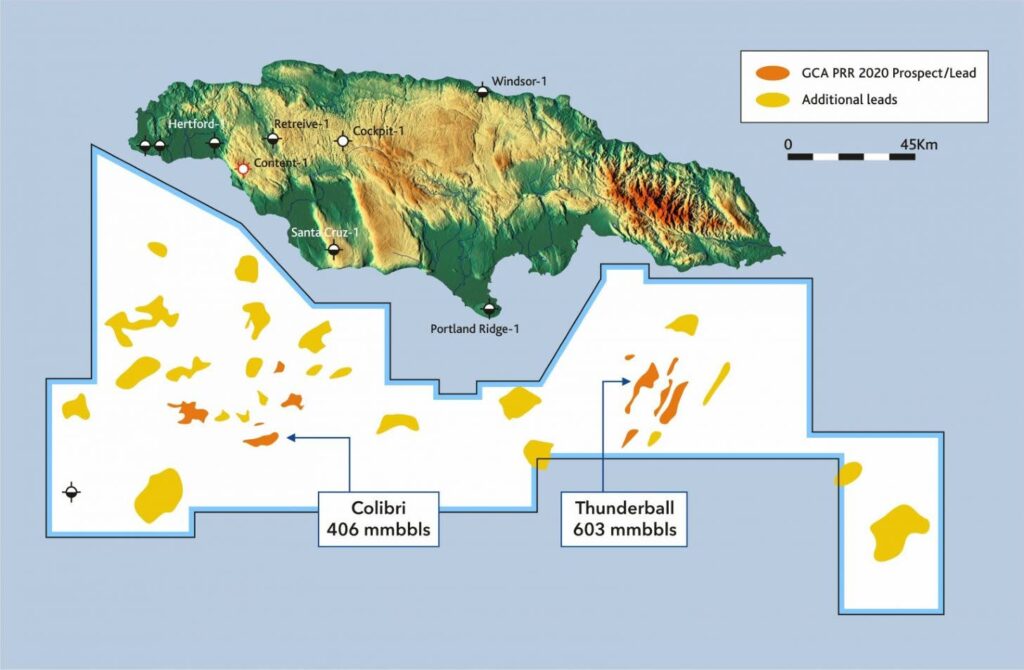
Jamaica’s offshore oil question
Jamaica’s long-dormant offshore petroleum prospects are experiencing a significant revival as modern exploration techniques seek to validate four decades of geological indicators pointing toward potential hydrocarbon reserves. United Oil & Gas, holding exclusive rights to the 22,400-square-kilometre Walton Morant offshore license, has initiated a groundbreaking seabed coring program that could fundamentally reshape investor perception of Jamaica’s energy potential.
The geological narrative supporting this endeavor combines historical data with contemporary analysis. Previous drilling operations—eleven wells drilled between onshore and offshore locations, the most recent in 1982—all documented hydrocarbon shows. More compelling evidence emerges from confirmed thermogenic oil seeps at multiple onshore locations and one documented offshore slick at Blower Rock, indicating hydrocarbons generated through natural geological processes rather than surface contamination.
United’s integrated approach merges this historical evidence with modern datasets, including $40 million worth of seismic surveys and satellite imagery analysis conducted since 2014. Advanced satellite monitoring has identified persistent surface slick anomalies coinciding with subsurface seismic features suggesting vertical hydrocarbon migration. This convergence of data points toward specific source locations beneath Jamaica’s coastal waters.
The current exploration phase employs piston coring technology to extract 40-60 shallow seabed samples, providing direct evidence for thermogenic hydrocarbons without permanent environmental impact. According to independent assessment by Iapetus Geoscience, successful coring results could elevate the geological chance of success for United’s primary Calibri prospect from 19% to 32%—a substantial improvement in frontier exploration terms.
Commercial implications extend beyond technical validation. The Walton Morant license contains over twenty identified prospects with estimated unrisked resources approaching seven billion barrels. Positive results would strengthen United’s ongoing farm-out negotiations and potentially attract partners for future drilling operations. The company faces strategic imperatives, with license expiration looming in 2028 and current financial constraints requiring external investment for advanced exploration phases.
Despite the promising indicators, United maintains measured expectations, emphasizing this phase represents risk reduction rather than discovery confirmation. For Jamaica, validation of an active offshore petroleum system could transform energy independence and investment landscapes. For global energy markets, it represents another frontier region where methodical science gradually replaces speculation with evidence-based assessment.
-
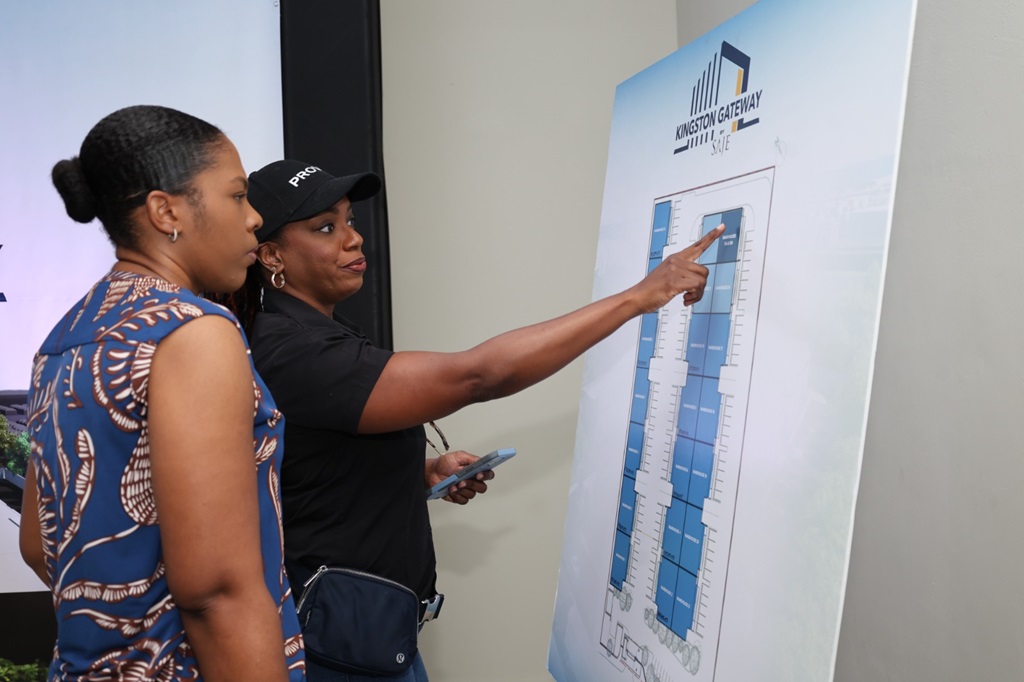
WATCH: Kingston Gateway attracting strong interest, say developers
KINGSTON, Jamaica – A landmark commercial development in Jamaica’s capital is generating unprecedented market enthusiasm, with developers reporting a near sell-out scenario following its inaugural open house event.
The Kingston Gateway Commercial and Warehouse Complex, a joint venture between Proven Properties Limited and SAJE Logistics, represents a US$13 million investment strategically positioned within the industrial corridor of Marcus Garvey Drive. The state-of-the-art facility held its first public showing on Sunday, February 8, 2026, attracting substantial interest from potential tenants and investors.
Spanning 112,000 square feet of premium rentable space, the complex features 22 warehouses constructed to international standards. The architectural design predominantly incorporates two-storey structures, with several units equipped with specialized loading docks to accommodate diverse logistical requirements.
Aisha Campbell, Chief Executive Officer of Proven Properties Limited, expressed considerable satisfaction with the project’s rapid progression. “We are excited that 10 months after breaking ground, we have advanced this development, and what you are looking at here is the result,” Campbell stated during the event.
The development team reported exceptional market response, with twelve units already reserved prior to the open house. Campbell characterized the interest as “phenomenal” and projected near complete occupancy following the event. “More people are coming in, and by the end of the day we really believe that we will be nearly sold out,” she added.
The open house attracted prominent figures from Jamaica’s business community, including Trevor Riley of SAJE Logistics, Christopher Nakash (Board Chairman of PROVEN Properties), and Andre Rochester, Vice President of the Shipping Association of Jamaica, who were observed in detailed discussions about the facility’s potential impact on Kingston’s industrial landscape.
Sales representatives, including Natalie Sawyers from PROVEN Properties, engaged with prospective clients throughout the event, providing detailed consultations about the available commercial spaces and their specifications.
-

Barita feels the chill as market-driven gains fade
BARITA Investments Limited experienced a notable shift in its financial performance for the fiscal year ending September 30, 2025, with profits declining from approximately $3.8 billion to just over $3 billion. This contraction primarily stemmed from a substantial cooling in market-driven gains, particularly investment revaluation and trading income, which plummeted by nearly 40% compared to the previous year.
The diminished earnings underscore a significant transition in the company’s revenue composition. While valuation-led profits receded, Barita demonstrated robust growth in its fundamental operations. Fee and commission income expanded by 12%, while net interest income surged by more than 70%, reflecting enhanced yields and strategic balance-sheet management. This performance recalibration highlights the company’s evolving dependence on recurring revenue streams rather than favorable market movements.
Operational efficiency showed marked improvement despite the earnings decline. Cash flow generation strengthened significantly, with operating activities swinging to a solid inflow following previous outflows. This enhancement resulted from rigorous working-capital management and a substantial contraction in the loan portfolio, which decreased by over one-third.
Barita’s balance sheet continued its expansion trajectory, with total assets growing 5% to nearly $150 billion, primarily driven by increases in pledged assets and receivables. The funding structure remained heavily reliant on repurchase agreements and borrowings—characteristic of primary dealership operations. Equity levels remained stagnant due to dividend distributions and valuation adjustments in investment reserves.
The company’s dividend policy has drawn increased scrutiny as payouts reached approximately $3 billion, effectively absorbing nearly all annual earnings. This capital allocation strategy has limited retained earnings growth, creating a tension between shareholder returns and balance-sheet flexibility amid changing market conditions.
The comprehensive income statement reflected market volatility, turning negative as realized investment losses surpassed unrealized gains. These movements demonstrate the inherent unpredictability of mark-to-market accounting during periods of market normalization.
Barita’s annual report filing experienced delays due to postponed completion of audited financial statements, with resubmission expected in early March. While not uncommon for financial institutions with complex balance sheets, such delays attract heightened attention during periods of market sensitivity.
The overall financial picture indicates not distress but rather a strategic transition. As market tailwinds diminish, Barita’s future performance will increasingly depend on operational execution, pricing discipline, and risk management rather than valuation gains—a development that signals a return to fundamental performance metrics across the securities sector.