分类: business

  • Feinsteins Take Atlantic Bank to Court Over Stake Bank Cruise Project

    Feinsteins Take Atlantic Bank to Court Over Stake Bank Cruise Project

    Prominent Belizean developers Michael and Melita Feinstein have initiated legal proceedings against Atlantic Bank Limited (ABL), Honduran construction firm OPSA, and court-appointed receiver Marlowe Neal, alleging an unlawful corporate takeover of their $250 million Stake Bank cruise port development. The lawsuit, filed in Belize’s Supreme Court, centers on ABL’s controversial declaration of loan default in March 2024, which enabled the installation of a receiver to assume control of Stake Bank Enterprises Ltd.

    The plaintiffs contend the bank acted without legal justification, asserting their project remained financially solvent and current on obligations. Court documents reveal the Feinsteins allege ABL systematically failed to apply available project funds toward loan payments before declaring default. Furthermore, the mortgage debenture instrument used to justify the receivership is described as improperly stamped and legally unenforceable under Belizean law.

    The comprehensive claim outlines what developers characterize as a coordinated conspiracy between banking and construction entities to deliberately oust them from one of Belize’s most significant tourism infrastructure projects. The defendants stand accused of multiple violations including breach of fiduciary duty, violation of Belize’s banking regulations, and reneging on $75 million in committed financing agreements.

    The Feinsteins seek judicial intervention to immediately remove the receiver, restore their operational control of the cruise port development, and award substantial damages for financial losses incurred since the takeover. The case represents a critical test for Belize’s financial governance and foreign investment protection frameworks, with potential implications for major infrastructure projects throughout the Caribbean region.


  • Caribbean Airlines to end Dominica–Puerto Rico flights, restructure Barbados hub

    Caribbean Airlines to end Dominica–Puerto Rico flights, restructure Barbados hub

    Caribbean Airlines has unveiled significant operational changes that will sever vital air connections within the Eastern Caribbean starting January 2026. The carrier confirmed it will terminate its Roseau-San Juan service effective January 10, 2026, eliminating a crucial link that facilitated connections between Dominica and North American destinations.

    The discontinued flights, designated BW 296 (Trinidad–Dominica–Puerto Rico) and BW 297 (Puerto Rico–Dominica–Trinidad), represented a key transportation artery for regional travelers. The airline has initiated direct communication with affected passengers holding reservations beyond the termination date, guaranteeing full refunds where applicable.

    This route suspension forms part of a comprehensive network optimization strategy that extends beyond Dominica. Caribbean Airlines will completely withdraw from both its Tortola, British Virgin Islands and San Juan, Puerto Rico routes, simultaneously discontinuing flights BW 292 (Trinidad–Barbados–Tortola–Puerto Rico) and BW 293 (Puerto Rico–Tortola–Barbados–Trinidad).

    In a parallel restructuring move, the airline announced it will reconfigure its Barbados hub operations beginning February 2026. Aircraft and crew currently stationed in Barbados will be relocated to Trinidad, while maintaining continued service to and from Barbados under a revised flight schedule. Company officials emphasized that these operational shifts will preserve seamless connectivity throughout the Northern and Eastern Caribbean regions.

    Acting CEO Nirmala Ramai characterized these measures as essential components of the airline’s strategic plan to enhance service reliability while optimizing resource allocation. ‘These adjustments are critical to delivering reliable service while managing our resources responsibly,’ Ramai stated, underscoring the airline’s dual commitment to maintaining regional connectivity while ensuring long-term operational sustainability and competitive positioning.

    The Trinidad-based carrier expressed gratitude to customers for their understanding during this transitional period, reaffirming its dedication to providing dependable air service across its network as it implements these structural changes to strengthen its overall travel offerings.

  • Tourism Top Producers from around the globe gather in Antigua and Barbuda for Black Pineapple Awards

    Tourism Top Producers from around the globe gather in Antigua and Barbuda for Black Pineapple Awards

    The Caribbean nation of Antigua and Barbuda is set to celebrate its most productive travel industry partners during the prestigious 2025 Black Pineapple Awards ceremony. Organized collaboratively by the Ministry of Tourism and the Antigua and Barbuda Tourism Authority (ABTA), this gala event acknowledges the exceptional contributions of travel professionals from key source markets who have significantly driven tourism growth to the twin-island destination.

    Approximately seventy elite travel advisors from the United States, United Kingdom, Europe, Canada, the Caribbean, and Latin America will converge at Sandals Grande Antigua Resort and Spa on December 5, 2025, for the honors ceremony. These distinguished agents have demonstrated remarkable success in promoting Antigua and Barbuda as a premier travel destination.

    The Honourable Charles Fernandez, Minister of Tourism, emphasized the importance of these partnerships, stating: ‘The Black Pineapple Awards represent our profound gratitude for the excellence and experiences delivered by our travel advisors. Each recommendation they make directly contributes to our destination’s prosperity, and such dedication deserves proper recognition.’

    Colin C. James, CEO of ABTA, highlighted the successful collaboration: ‘Our travel agent partners have developed a genuine affinity for Antigua and Barbuda, which has translated into outstanding sales performance across all markets. Their investment in promoting our destination matches our own commitment, and we take pride in celebrating their achievements.’

    Accompanying the honorees will be the Directors of Tourism for each region—Dean Fenton (USA), Cherrie Osborne (UK and Europe), Charmaine Spencer (Caribbean and Latin America), and Tameka Wharton (Canada)—alongside Business Development Managers from respective markets.

    The awards ceremony will feature several distinguished categories, including the Director’s Award for exceptional room night sales, the CEO’s Award for market-specific booking performance, the Minister’s Award for consistent destination promotion, and the Prime Minister’s Global Award—the highest honor presented to the top-performing advisor across all markets for extraordinary annual revenue generation. The global award winner will receive a unique artisan-crafted wooden sculpture depicting the twin islands featuring the iconic Antigua Black pineapple.

    Beyond the awards gala, recipients will experience an exclusive curated itinerary showcasing Antigua and Barbuda’s premier attractions. The program includes accommodations at luxury resorts such as Blue Waters Resort, Galley Bay Resort and Spa, and Royalton Chic, complemented by activities ranging from welcome receptions at Tamarind Hills to comprehensive land and sea tours. Cultural highlights include visits to the UNESCO World Heritage Site at Shirley Heights, the Frigate Bird Sanctuary, and the picturesque Princess Diana Beach in Barbuda.

  • Johan Sandie benoemd tot directeur van SLM

    Johan Sandie benoemd tot directeur van SLM

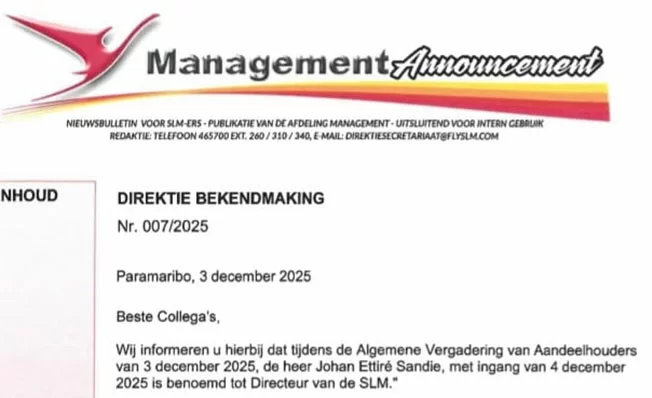
    PARAMARIBO – Surinam Airways (SLM) has announced a significant leadership transition with the official appointment of Johan Etiré Sandie as its new Managing Director. The decision was formally ratified during the General Shareholders’ Meeting on December 3rd, 2025, with Sandie’s tenure commencing effective December 4th, 2025.

    This appointment concludes the interim leadership of Steven Gonesh, who had been serving as acting director during the transition period. Gonesh will remain with the national carrier in a key operational capacity, assuming the role of Deputy Director of Operational Affairs & Accountable Manager, ensuring continuity in the airline’s critical functions.

    The Board of Commissioners expressed formal gratitude to Gonesh for his stewardship and contributions while leading the company on an interim basis. In an official communiqué, the board extended a warm welcome to Sandie, conveying their confidence in his leadership and wishing him both success and wisdom as he undertakes this pivotal executive role.

    The official announcement was formally endorsed by Marlon Telting, President-Commissioner of Surinam Airways. This leadership change comes at a crucial time for the aviation industry as carriers worldwide navigate post-pandemic recovery and operational challenges. Sandie’s appointment signals a new strategic direction for the state-owned airline as it seeks to strengthen its market position and operational efficiency.

  • Fair trade body should get its act together

    Fair trade body should get its act together

    A critical examination of Trinidad and Tobago’s pharmaceutical sector reveals systemic challenges in market competition, with the Fair Trading Commission (FTC) facing intense scrutiny for its perceived inactivity. Despite receiving $11.4 million in taxpayer funding over five years, the regulatory body has demonstrated remarkable reluctance to address market concentration concerns, as revealed during recent parliamentary committee disclosures.

    The core issue stems from fundamental market distortions created by state-subsidized healthcare systems, which have systematically shifted consumer behavior from local pharmacies toward large chains offering significantly lower prices. This transition has created an environment where a handful of major distributors dominate the market, particularly those securing lucrative government contracts for supplying public healthcare facilities.

    Recent developments highlight the FTC’s operational paralysis. In 2024, the Private Pharmacy Retail Business Association filed a formal complaint alleging monopolistic practices within the drug sector. Rather than initiating investigation procedures, the FTC dismissed the submission on technical grounds, requesting additional documentation instead of addressing the substantive concerns. Compounding this regulatory inertia, FTC executive director Bevan Narinesingh revealed the commission’s hesitation to pursue matters without a fully constituted board—an explanation that raises questions about the organization’s operational capacity.

    The political dimension has further complicated the situation. Prime Minister Kamla Persad-Bissessar has drawn parallels between pharmaceutical market concerns and previous allegations about foreign exchange cartels, accusing previous administrations of enabling monopolistic practices that benefit privileged interests. However, market analysis suggests the situation involves more complex structural factors rather than simple monopolistic exploitation.

    Contrary to conventional economic theory suggesting monopolies inherently drive prices upward, some major distributors actually offer common medications like Panadol at reduced prices. This apparent paradox underscores the market’s unique dynamics, where state procurement practices create economies of scale for selected distributors while simultaneously delaying payments to suppliers—creating a contradictory environment of both advantage and financial strain.

    The fundamental concern remains the FTC’s failure to provide transparent market data and timely regulatory intervention. Without authoritative analysis from the designated regulatory body, the pharmaceutical market continues operating amid uncertainty regarding competition, pricing structures, and market fairness—leaving both consumers and smaller market participants without clear guidance or protection.

  • Trinidad’s opportunity with Exxon to get local content right

    Trinidad’s opportunity with Exxon to get local content right

    In a landmark development for Caribbean energy markets, ExxonMobil has finalized a comprehensive production sharing contract for Trinidad and Tobago’s Ultra Deep 1 block (UD1), marking the largest multinational oil company’s strategic expansion beyond its Guyana successes. The agreement, signed just three months after Prime Minister Kamla Persad-Bissessar’s administration took office, covers 7,765 square kilometers of unexplored maritime territory—an area larger than Trinidad itself—positioned at the nation’s eastern maritime boundary near Barbados and Guyana.

    The contractual framework mandates accelerated exploration timelines, with 3D seismic acquisition scheduled for 2026 and initial drilling by 2028—exceptionally rapid deployment for deepwater operations. This urgency reflects Exxon’s regional operational advantages and the block’s strategic significance amid ongoing Venezuela-Guyana territorial disputes that create complex geopolitical dimensions for the project.

    Critical to the agreement’s implementation are robust local content provisions detailed in Article 39 of the production sharing contract, requiring preferential treatment for Trinidadian companies across supply chains, workforce development, and technology transfer. The contract stipulates that all tenders must be advertised, evaluated, and awarded within Trinidad, with mandatory high weighting for local value addition in evaluation criteria. Exxon must further ensure technology transfer in seven strategic areas including fabrication, seismic processing, maritime services, and business support functions.

    However, enforcement mechanisms remain problematic through the under-resourced Permanent Local Content Committee (PLCC), which lacks sufficient staffing, authority, and governmental support despite its mandate to monitor compliance. Industry analysts emphasize that strengthening the PLCC represents the most urgent reform priority, requiring no new legislation but rather political will and administrative reinforcement.

    The discovery of commercially viable reserves could prove transformational for Trinidad’s declining hydrocarbon sector, where oil production has dwindled below 50,000 barrels daily. Successful development might mirror Guyana’s spectacular output growth from zero to 900,000 barrels daily since 2019, potentially establishing a new Caribbean energy corridor alongside Suriname’s emerging developments.

  • Brazilian dwarf: the seed to reviving Trinidad and Tobago’s coconut industry

    Brazilian dwarf: the seed to reviving Trinidad and Tobago’s coconut industry

    The Trinidad and Tobago Ministry of Agriculture and Fisheries has initiated a comprehensive strategy to resurrect the nation’s declining coconut sector, targeting US$1 billion in agricultural exports. Minister Ravi Ratiram unveiled the ambitious plan during a ceremonial distribution of Brazilian dwarf coconut seedlings at the Central Experiment Station in Centeno on December 1.

    Minister Ratiram revealed alarming statistics showing agriculture’s contribution to GDP has plummeted by $1.4 billion to just $650 million over the past decade, representing a more than 50% deterioration. The ministry’s intervention focuses on developing a complete coconut value chain rather than simply increasing raw nut production. This integrated approach encompasses farming, processing, manufacturing, distribution, and export operations.

    The Brazilian green dwarf coconut variety was specifically selected for its superior genetics, pest resistance, and exceptional water-producing capacity of over 600ml per nut. Each participating farmer received ten seedlings as part of the initial phase, with over 150 growers already expressing interest in the revitalization program.

    The Caribbean Agricultural Research and Development Institute (CARDI) plays a crucial role in this initiative, providing expertise in genetic improvement, pest management, and technical training. Executive Director Ansari Hosein outlined parallel efforts including establishing seed gardens across nine EU countries, with projected annual production of 45,000 nuts within two years.

    Global market projections indicate substantial opportunity, with the coconut water market expected to surpass US$11 billion by 2060 and the overall coconut market anticipated to exceed US$58 billion by 2030. The ministry recognizes challenges including aging tree populations, lethal yellowing disease, South American palm weevils, and decades of underinvestment.

    Chief Technical Officer Ian Mohammed emphasized that the seedling distribution symbolizes both literal and figurative investment in transforming agriculture into a driver of food security, rural development, and economic diversification. The program represents a strategic partnership between government, research institutions, and farmers to restore Trinidad and Tobago’s position in the global coconut market.

  • Angostura wins 20 international awards

    Angostura wins 20 international awards

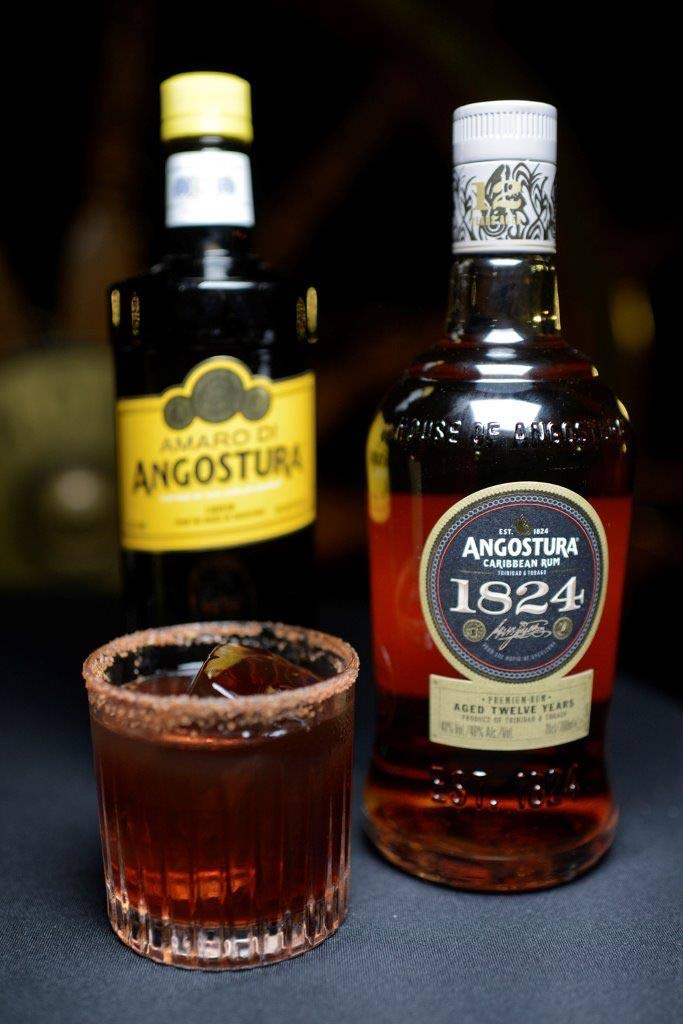
    Trinidad-based spirits producer Angostura has achieved remarkable recognition in the international spirits industry, securing an impressive total of 20 awards across multiple prestigious competitions in 2025. The distillery’s exceptional performance spans three major international events: the World Spirits Awards, International Wine and Spirit Competition (IWSC), and Spirits Business Rum and Cachaça and Liqueur Masters.

    At the World Spirits Awards in Germany, Angostura’s premium rum collection earned seven medals, with three products—Founders Reserve 1824, Tamboo Spiced rum, and Grand Reserve 1919—achieving gold medal status. This outstanding performance contributed to the distillery being classified as ‘world-class’ following a comprehensive assessment of 13 international distilleries.

    The International Wine and Spirit Competition recognized Angostura with six awards after rigorous blind taste-testing evaluations conducted by approximately 200 expert judges. Meanwhile, the Spirits Business awards honored the company with three gold and two silver medals for excellence in rum production. Additionally, Amaro di Angostura secured a gold medal at the Liqueur Masters 2025 competition.

    Financially, Angostura demonstrated strong performance with $757 million in revenue and $145 million profit before tax for the nine-month period ending September 30, 2025. The company’s profit after tax showed significant growth, increasing by 10% from the previous year to reach $104 million.

    CEO Ian Forbes attributed this success to the company’s longstanding heritage, stating in a December 3 media release: ‘These international accolades among distinguished competition evidence Angostura’s over 200 years of craftsmanship, innovation and dedication to excellence. The recognition reinforces our global appeal and the growing prestige of our brands’ iconic heritage, highlighting our ability to compete among the world’s finest rum producers.’

  • Agostini posts $312m profit amid complaints of pharmaceutical monopoly

    Agostini posts $312m profit amid complaints of pharmaceutical monopoly

    Celebrating its centennial anniversary, Caribbean conglomerate Agostini Ltd. has announced robust financial results for fiscal year 2025, demonstrating significant growth amid strategic expansion. The Trinidad-based group reported a 6.9% increase in revenue, reaching $5.44 billion compared to $5.09 billion in the previous year.

    Chairman Christian Mouttet characterized the period as one of ‘strategic transformation,’ noting the company achieved ‘another year of record revenue and earnings.’ The performance was primarily driven by two major acquisitions—Pharmacy Holdings Ltd (PHL) and Massy Distribution (Trinidad) Ltd—which substantially expanded Agostini’s presence in pharmaceutical and consumer distribution markets.

    Financial metrics showed substantial improvement across key indicators: Profit attributable to shareholders climbed to $230.3 million from $209.7 million, while earnings per share increased from $3.03 to $3.33. Operating profit rose 5.4% to $511.2 million, and pretax profit reached $435.6 million. After accounting for $123.3 million in taxes, net profit settled at $312.3 million, marking a 7.6% year-over-year improvement.

    The group’s comprehensive income, incorporating foreign exchange gains and pension adjustments, totaled $328.2 million, with $247.8 million attributable to shareholders and $80.4 million to non-controlling interests. Total assets grew to $4.89 billion, while shareholder equity increased to $2.48 billion.

    Despite these gains, the company acknowledged challenges including persistent inflation, supply chain disruptions, and foreign exchange constraints that continue to pressure margins. Finance costs increased to $75.6 million, though these were partially offset by foreign exchange gains of $15.57 million.

    Agostini’s expansion strategy has attracted regulatory attention. Recent parliamentary hearings examined market concentration in pharmaceutical distribution, with industry representatives noting that Agostini’s Aventa division reportedly imports approximately 74% of privately supplied medicines. While no formal investigation has been announced, the Prime Minister has signaled intentions to address drug pricing and market dominance concerns.

    The conglomerate continues to pursue growth through acquisition, currently proposing a share-swap merger with Prestige Holdings Ltd. that would exchange one AGL share for every 4.8 PHL shares. This transaction remains subject to regulatory approval from the Trinidad and Tobago Fair Trade Commission.

  • Roadmap for building Trinidad and Tobago’s innovation ecosystem

    Roadmap for building Trinidad and Tobago’s innovation ecosystem

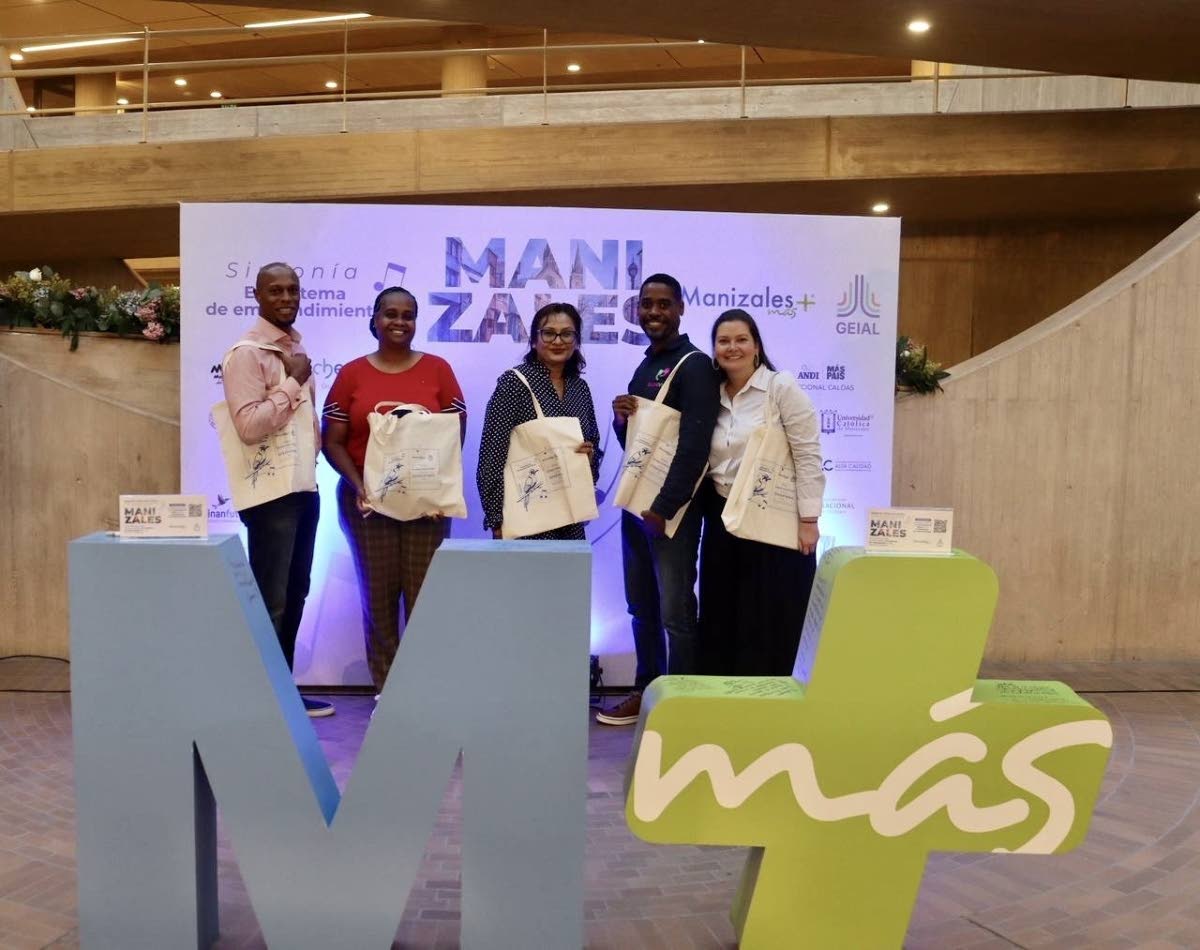
    A recent study tour to Manizales, Colombia has provided Trinidad and Tobago with a strategic blueprint for developing a robust national innovation ecosystem. Led by Vashti Guyadeen of the Trinidad and Tobago Chamber of Industry and Commerce, the delegation examined Colombia’s successful Triple Helix model that integrates academia, industry, and government collaboration to accelerate entrepreneurship and economic growth.

    The research identified five foundational pillars essential for innovation ecosystem development: coordinated national governance to align ministerial initiatives, integrated programming across accelerator programs and university initiatives, accessible infrastructure including prototyping labs and research facilities, capacity development through entrepreneurship training, and data-driven decision making using systematic innovation metrics.

    Educational alignment emerged as a critical success factor, with recommendations for cross-disciplinary entrepreneurship education, enhanced research commercialization pathways through innovation vouchers and matching grants, strengthened internship programs, and shared infrastructure agreements among tertiary institutions modeled after Colombia’s SUMA alliance.

    The proposed institutional architecture calls for a National Innovation Partnership comprising senior leaders from public, private, academic, financial, and civil society sectors to set strategic priorities and oversee funding allocations. This co-ownership model reduces government dependency while increasing sustainability.

    Priority sectors identified for diversification include technology (fintech, cybersecurity, energy tech), advanced manufacturing utilizing Industry 4.0 technologies, agriculture technology with climate-smart farming approaches, and creative industries leveraging global demand for music and digital content.

    Strategic infrastructure requirements encompass enhanced accessibility to Cariri’s existing facilities, purpose-built innovation hubs, structured national mentorship networks, and continuously coordinated accelerator programs. Financing mechanisms should include a National Innovation Fund, private sector venture arms, diaspora engagement for investment and technical capacity, and risk mitigation instruments like credit guarantee schemes.

    Accountability measures propose transparent tracking through key indicators: new firm creation, SME scale-up performance, research commercialization outputs, non-energy job creation, venture capital investment levels, and Global Innovation Index performance, with annual Innovation Report Cards to monitor national progress.

    The Manizales case study demonstrates that formalized governance, integrated programming, and shared accountability create successful innovation ecosystems, offering Trinidad and Tobago a proven framework for economic diversification and resilience building.