
分类: business

  • Dominican economy grows 3.9% in February, best performance in 11 months

    Dominican economy grows 3.9% in February, best performance in 11 months

    New preliminary data released by the Central Bank of the Dominican Republic via its Monthly Indicator of Economic Activity (IMAE) shows that the Caribbean nation’s economy delivered its most robust performance in nearly 12 months during February 2026, posting a 3.9% year-on-year expansion. This strong February result lifted the average growth rate across the first two months of 2026 to 3.7%, outpacing many moderate growth projections for regional economies.

    This upward momentum was anchored by outsize gains in three foundational sectors of the Dominican economy: mining, construction, and services. Mining led all sectors with a 9.4% annual expansion, followed by construction at 5.8% and the broad services sector at 3.5%. Within services, multiple sub-sectors posted particularly notable growth: education, healthcare, tourism-linked hospitality (including hotels, bars and restaurants), financial services, and professional business activities all contributed heavily to the overall expansion. Additional modest but steady growth came from other core sectors: agriculture grew 3.2% year-on-year, local domestic manufacturing expanded 2.4%, and free trade zone manufacturing recorded a 1.2% increase.

    A closer look at the driving forces behind sector growth reveals a mix of public and private momentum. Construction activity, one of the top growth contributors, was buoyed by rising public infrastructure spending and growing private investment across residential, commercial, and tourism-focused development projects, paired with increasingly favorable lending rates that lowered borrowing costs for developers. The mining sector’s double-digit expansion stemmed from higher production volumes of gold, silver, and key construction materials, aligned with growing regional demand for commodities.

    Tourism, a longstanding economic pillar for the Dominican Republic, continued its recovery and expansion: the country recorded a 10% year-on-year jump in air arrivals through the first two months of 2026, hitting nearly 1.65 million total international visitors. The financial sector also strengthened its position, with financial intermediation activity growing alongside an 8.1% annual increase in credit extended to the private sector, signaling growing business and consumer confidence. For agriculture, higher overall production volumes and targeted government support programs boosted the sector’s performance for the period.

    Even with the stronger-than-expected growth print, the Central Bank has cautioned that ongoing headwinds remain on the global horizon. Persistent geopolitical tensions and upward pressure on global oil prices continue to create widespread uncertainty for small open economies like the Dominican Republic. In response, the central bank reaffirmed its policy commitment to preserving macroeconomic stability and keeping inflation anchored within target ranges through the remainder of 2026.

  • Seamoss project expands opportunities for women and youth

    Seamoss project expands opportunities for women and youth

    Across Saint Lucia, a transformative development initiative focused on expanding inclusion and economic growth in the local seamoss industry has wrapped up its implementation, leaving lasting positive change for marginalized groups including women and young people.

    Named the Empowering Youth and Women in the Seamoss Industry project, the effort was financed by the British High Commission and brought to life through on-the-ground coordination by the Eau Piquant Seamoss Farmers Association. A core priority of the program was upskilling local women to convert raw seamoss into high-value, natural skincare goods, creating new income streams that align with the growing global demand for plant-based personal care products.

    For many participants, the project has already reshaped their professional and personal lives. Claudia Clovis-David, a stay-at-home mother who previously worked as a seamoss farmer before a hemorrhagic stroke forced her to step back from active harvesting, is one of the program’s success stories. After mastering the process of crafting soap from seamoss and other natural ingredients, she now has a flexible work model that fits her family responsibilities.

    “It’s something that’s flexible, allowing me to be with my family and generate an income at the same time,” Clovis-David shared in an interview with St. Lucia Times. “I enjoy working with seamoss. It has a lot of great benefits, so I’m happy for this opportunity to interact with seamoss again.”

    Beyond supporting adult women entrepreneurs, the initiative also made long-term investments in youth engagement through partnerships with local secondary education institutions. Working alongside Beanfield Secondary School, the project organizers introduced third-form students to modern marketing strategies for seamoss-derived products, culminating in a student competition to design original logos for upcoming product lines. Organizers note that this early exposure is designed to spark lasting interest in the sector, paving the way for greater youth participation in Saint Lucia’s seamoss economy in coming years.

    The project also addressed longstanding accessibility barriers that have excluded many community members from seamoss farming. To make the work safer and more comfortable for people who cannot swim, the initiative funded the installation of purpose-built resting stations in ocean waters adjacent to active farming zones.

    Brian Walker, vice president of the Eau Piquant Seamoss Farmers Association, highlighted that the project’s participatory design was key to its strong outcomes. Unlike many externally funded initiatives that leave local communities out of planning, this program embedded the association in both the development and execution phases, fostering a shared sense of ownership over the work. “This project allowed us to be directly involved in the implementation and planning stage where funding monies were used, and that gives us a level of ownership of what we do and appreciation for the industry as a whole,” Walker explained, before extending gratitude to the British High Commission for its support.

    Doyin Adele-Shiyanbola, resident British Commissioner, echoed that praise, noting she was particularly impressed by how quickly participants have turned their new skills into active businesses. “I heard about how some of the women are already selling their products, and how they wanted to take it to a different level and market it not just in Saint Lucia but globally. I found that really inspiring,” she said.

    Looking ahead, program participants are now preparing to scale their new ventures, with plans to pursue regional and international market opportunities for their seamoss-based products as they launch their small businesses.

  • GHTA and ANSA Coatings Grenada Ltd announce strategic partnership

    GHTA and ANSA Coatings Grenada Ltd announce strategic partnership

    Grenada’s leading tourism industry group has joined forces with a top regional paint supplier to drive quality improvements across the island nation’s hospitality sector, marking a new collaborative milestone for local tourism infrastructure development.

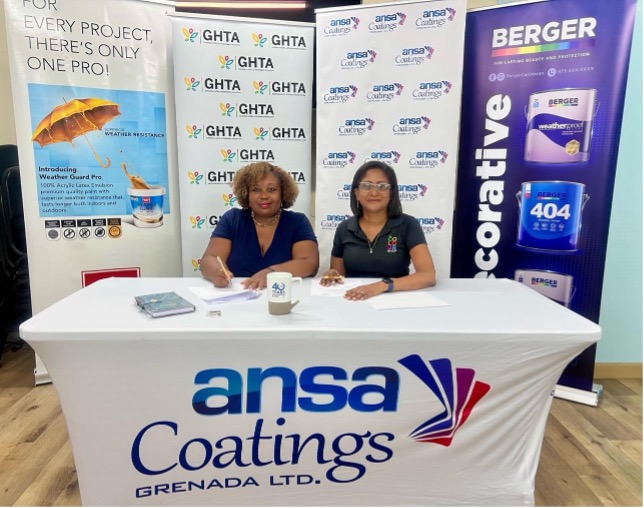
    The Grenada Hotel and Tourism Association (GHTA) and ANSA Coatings Grenada Limited (ACGL), a subsidiary of the diversified ANSA McAL Group specializing in high-performance paint manufacturing and distribution, formally signed their strategic partnership agreement on March 31, 2026. The deal was sealed by GHTA Chief Executive Officer Arlene Friday and ACGL Commercial Manager Reyan Neckles during an official signing ceremony.

    This cross-sector collaboration is built around a shared goal of elevating the standard of building maintenance and renovation services available to tourism and hospitality operators across Grenada, while making premium paint products more affordable for industry stakeholders. Under the 3-year terms of the agreement, ACGL will hold official designation as a GHTA-endorsed Paint Partner, and extend exclusive discounted pricing on two of its flagship product lines, Berger and Sissons paints, to all active GHTA member businesses.

    In comments following the signing, Friday emphasized the tangible value the partnership delivers to GHTA’s membership, noting that the arrangement does more than just cut costs for hoteliers and hospitality providers. “This agreement not only offers tangible benefits to our members but also strengthens the overarching quality and appeal of Grenada’s tourism and hospitality facilities,” Friday said, framing the partnership as a key investment in the island’s global reputation as a top travel destination.

    Neckles echoed Friday’s optimism, emphasizing ACGL’s longstanding commitment to supporting the growth of Grenada’s core economic sectors. “We are proud to support the Grenada Hotel and Tourism Association. Our collaboration underscores our commitment to providing superior products and services that contribute to the vibrancy and success of Grenada’s tourism sector,” Neckles said.

    The partnership is structured as an ongoing collaborative effort, with formal commitments from both organizations to expand engagement over the 3-year term. GHTA has pledged to actively promote ACGL’s full range of products and services to its membership through multiple dedicated channels, including increased digital brand visibility and targeted social media outreach to hospitality operators.

    Leaders from both organizations say the alliance exemplifies how cross-sector partnerships can advance shared priorities: it delivers cost savings and quality improvements to GHTA members, strengthens ACGL’s position as a leading local supplier, and drives sustained, quality-focused growth for Grenada’s $1.5 billion tourism sector, the island’s largest contributor to GDP. By aligning the expertise of a local industry association with the product offerings of a trusted regional manufacturer, the partnership aims to lift the overall quality and long-term sustainability of Grenada’s tourism infrastructure for years to come.

    *Disclaimer: NOW Grenada does not assume responsibility for the opinions, statements, or third-party contributed content included in this announcement. Individuals may report alleged content abuse via official channels provided by the outlet.*

  • Global Agencies Form Taskforce to Tackle Economic Fallout from Middle East War

    Global Agencies Form Taskforce to Tackle Economic Fallout from Middle East War

    As an ongoing military conflict involving Iran, the United States and Israel stretches on, ripple effects have begun to destabilize the global economy, with warning from economic analysts that these disruptions could persist for months or even years. In a proactive response to the growing crisis, three of the world’s most influential multilateral institutions — the International Energy Agency (IEA), International Monetary Fund (IMF), and World Bank Group — have joined forces to form a dedicated coordination taskforce aimed at lessening the conflict’s broad energy and economic damage.

    The joint announcement, made via a public media statement from Washington D.C. on Wednesday afternoon, lays out the urgent need for unified action amid unprecedented market turmoil. Per the statement, the Middle East conflict has already claimed untold damage to livelihoods across the region and triggered one of the most severe global energy supply shortages in modern history. Unlike economic shocks from past regional conflicts, the current fallout is deeply asymmetric, placing the heaviest burden on energy-importing nations, particularly low-income economies that lack the policy buffer to absorb sudden price spikes.

    Since the outbreak of hostilities, targeted strikes on critical regional oil infrastructure have sent crude and natural gas prices soaring. Iran has also halted commercial vessel traffic through the Strait of Hormuz, the world’s most critical chokepoint for global commodity trade, which handles roughly a fifth of the world’s daily oil consumption. The disruption extends far beyond energy markets: higher fertilizer costs have sparked fears of imminent food price inflation, while key global supply chains for critical materials including helium, phosphate, and aluminum have been thrown off course. Flight disruptions at major Gulf aviation hubs have also hit international tourism hard, erasing revenue for destinations that depend on international travel.

    The cascading shocks have already spiked widespread market volatility, weakened currency valuations across emerging markets, and shifted inflation expectations higher. These developments have raised the specter of forced monetary policy tightening across major economies, which would further drag down already slowing global growth projections. Both the IMF and World Bank have issued repeated warnings about the conflict’s impact on the global economic outlook in recent weeks, stressing that the ultimate scale of damage will be tied directly to how long the conflict remains unresolved.

    In an environment of extreme economic uncertainty, institutional leaders emphasized that coordinated action is non-negotiable. “It is paramount that our institutions join forces to monitor developments, align analysis, and coordinate support to policymakers to navigate this crisis,” the statement noted, adding that targeted support is especially critical for the countries most exposed to downstream disruptions, which often face limited policy room to maneuver and already carry unsustainable debt loads. Among the regions identified as most at risk is the Caribbean, which relies almost entirely on imported fuel and food to sustain its population and economy.

    The newly formed taskforce has outlined three core pillars for its coordinated response. First, it will conduct a granular, global assessment of impact severity through standardized cross-institutional data sharing, covering energy market dynamics, trade flows, fiscal and balance of payments pressures, inflation trajectories, commodity export restrictions, and supply chain breakdowns. Second, it will align response mechanisms, including delivering targeted policy guidance to national governments, evaluating country-specific financing needs, deploying concessional financing and other forms of financial support, and rolling out risk mitigation tools where market volatility creates unmanageable exposure. Third, the taskforce will coordinate with a broad network of stakeholders, including other multilateral bodies, regional development organizations, and bilateral donor partners, to deliver efficient, unified support to vulnerable countries in need. The group also noted it will draw on the technical expertise of other specialized international organizations to address niche challenges emerging from the conflict.

  • Puerto Plata to welcome 54 cruise ships in April 2026

    Puerto Plata to welcome 54 cruise ships in April 2026

    The Dominican Republic’s Ministry of Tourism has unveiled a landmark update for the country’s northern cruise sector, confirming that the popular coastal destination of Puerto Plata will welcome 54 scheduled cruise ship calls in April 2026. This announcement underscores the steady, long-term expansion of cruise tourism across the Dominican Republic’s northern coastline.

    The scheduled arrivals will be split between two major local port facilities: the well-established Amber Cove terminal will host 19 cruise ship operations, while the growing Taíno Bay port will accommodate the remaining 35 calls, reflecting the increasing capacity and demand for cruise stops in the region.

    David Collado, the Dominican Republic’s Tourism Minister, attributed the cruise sector’s consistent strong performance to a targeted national strategy that prioritizes long-term infrastructure planning, rigorous daily operational monitoring, and ongoing upgrades to the services delivered to international visitors. Collado noted that this intentional, visitor-focused approach has significantly boosted the country’s competitive standing among top cruise destinations across the Caribbean, a region that draws millions of cruise passengers every year.

    Local tourism leadership echoed Collado’s optimism, emphasizing that the early announcement of the 2026 April schedule creates unique opportunities for advance operational planning. With clear advance knowledge of arrival volumes, stakeholders can refine passenger flow management, streamline communication and collaboration between port operators, local tour providers, and national government agencies, and eliminate last-minute logistical bottlenecks that can detract from visitor experiences.

    Industry and government projections indicate that the higher volume of cruise arrivals will deliver widespread benefits across Puerto Plata’s local economy. Beyond boosting the revenue of local tourism-dependent businesses, the increased passenger footfall is expected to drive incremental improvements in service standards, help refine visitor experience offerings, and create additional informal and formal employment opportunities for local residents.

    With consistent strategic planning and close cross-institutional coordination, Puerto Plata is continuing to solidify its reputation as one of the Caribbean’s premier cruise tourism hubs, attracting growing numbers of major cruise lines and their passengers year after year.

  • Agri Expo 30 a Landmark Success, Highlights Nevis’ Growing Agriculture Sector

    Agri Expo 30 a Landmark Success, Highlights Nevis’ Growing Agriculture Sector

    CHARLESTOWN, Nevis – March 31, 2026 – Three decades after its launch, Nevis’ flagship agricultural exhibition has cemented its reputation as a cornerstone of the island’s economic and cultural life, wrapping its 30th anniversary iteration with record turnout and widespread acclaim from regional attendees and participants.

    Held across March 26 and 27 at Charlestown’s Elquemedo T. Willett Park under the theme “Rooted in History, Utilizing Land & Sea,” Agri Expo 30 drew unprecedented participation that outpaced 2025’s event by nearly 70%, according to Nevis Island Administration (NIA) officials. The two-day gathering, designed to celebrate Nevis’ centuries-old agricultural heritage while highlighting its innovative, sustainable future, has grown far beyond a local showcase to become the premier agricultural event in the Caribbean sub-region.

    In his post-event remarks, Deputy Premier of Nevis and Minister of Agriculture Eric Evelyn lauded the exposition as an overwhelming success that exceeded all pre-event expectations. “This year the participation was at an all-time high. We had 147 registered vendors as opposed to 87 in 2025,” Evelyn noted, adding that the annual gathering has become a highly anticipated fixture not just for Nevis and St. Kitts residents, but for agricultural stakeholders across the Eastern Caribbean.

    The event drew official delegations and independent attendees from neighboring island jurisdictions including Anguilla, St. Martin, and St. Eustatius, a track record of regional engagement that Evelyn says confirms Agri Expo’s standing as the largest and most well-organized agricultural gathering of its kind in the sub-region. “I don’t think that anyone who would have attended Agri Expo 30 would have been disappointed in any way. The feedback has been extraordinary and once again we lived up to expectations,” he added.

    Evelyn also extended praise to the full team at the NIA Ministry and Department of Agriculture for their seamless execution of the milestone event. “It was practically seamless on both days, and so I want to say a very big thank you to the entire team… for going far beyond the call of duty to ensure that we have another hugely successful event,” he said.

    Beyond drawing crowds, Agri Expo 30 showcased the remarkable diversity of Nevis’ agricultural sector, with exhibits spanning fresh local produce, exotic fruits, ornamental plants, livestock, value-added agro-processed goods, and fisheries products. The range of displays highlighted the island’s unique agricultural identity, which draws equally from its fertile terrestrial lands and abundant coastal marine resources.

    To engage attendees of all age groups, the 30th anniversary expo paired its vendor exhibits with a full schedule of agricultural competitions, local cultural entertainment, and hands-on educational programming aimed at encouraging support for local production and domestic consumption of Nevis-grown goods.

    Marking 30 years of consistent operation, the expo stands as a public testament to the hard work, dedication, and resilience of Nevis’ farming community and broader agricultural sector stakeholders. Looking ahead to the next decade of the event, Evelyn emphasized that sustained public and private investment in agricultural innovation, infrastructure, and youth engagement will be critical to securing long-term growth, food security, and sustainability for Nevis’ agriculture industry, which remains central to the island’s community resilience and economic development.

  • Saint Kitts and Nevis strengthens tourism ties in UK and Europe through strategic engagements and partnerships

    Saint Kitts and Nevis strengthens tourism ties in UK and Europe through strategic engagements and partnerships

    As the global travel and tourism sector continues its post-pandemic evolution, small island economies are doubling down on strategic market expansion to capture a larger share of international visitor spending. The Federation of Saint Kitts and Nevis is the latest nation to advance this goal, with a high-level government-led tourism delegation completing a landmark multi-stop mission across the United Kingdom and Europe in late March 2026 aimed at strengthening industry partnerships and growing long-term revenue.\n\nLed by Honourable Marsha T. Henderson, the country’s Minister of Tourism, the delegation included senior industry leaders Melnecia Marshall, Deputy CEO of the St. Kitts Tourism Authority, and Calvin Duggins, Chief Operations Officer of the St. Christopher Air and Sea Ports Authority (SCASPA). The mission kicked off in Birmingham, UK, with a targeted outreach event connecting the delegation with members of the local Saint Kitts and Nevis diaspora. During the session, representatives updated the expat community on major tourism sector developments across the islands and urged them to serve as informal brand ambassadors, leveraging their personal and professional networks to attract more European visitors.\n\nA key milestone of the UK leg of the trip was the official regional launch of the federation’s signature “We Limin” tourism marketing campaign. The initiative, which had already rolled out successfully in New York and Canada ahead of the UK launch, is designed to showcase Saint Kitts and Nevis’ distinct cultural identity and natural attractions to international travelers, while also encouraging diaspora investment and ongoing engagement with the islands.\n\nBeyond marketing and diaspora outreach, the delegation prioritized expanding the federation’s fast-growing cruise tourism sector, a core driver of annual visitor arrivals. In Italy, the team held productive strategic talks with senior executives from global cruise giant Costa Cruises, focused on exploring mutually beneficial opportunities including new homeporting arrangements and expanded joint destination marketing. During the discussions, Costa Cruises leaders highlighted the strong performance of Port Zante, Saint Kitts’ main cruise facility, which currently ranks among the top-rated ports in the entire Costa Cruises network.\n\nAddressing local reporters at the Prime Minister’s post-mission press conference held at the National Emergency Management Agency Conference Room on March 30, Minister Henderson emphasized that the core goal of the European talks was to solidify long-term relevance in a shifting global tourism market. “Our discussions were rooted in intentional relationship building,” Henderson explained. “We are working to secure our long-term positioning so that Saint Kitts and Nevis can capture greater value as the industry evolves, moving beyond our current role as a popular port of call to capitalize on emerging homeporting opportunities that deliver far greater economic benefits.”\n\nThe delegation continued this cruise sector expansion work in Germany, where they met with leadership from AIDA Cruises to explore similar collaborative opportunities to deepen ties and grow the federation’s visibility across the European cruise market.\n\nTo complement business-to-business partnership discussions, the team also carried out an ambitious regional media outreach campaign across the UK, completing more than a dozen interviews with major national and international media outlets. The interviews highlighted upcoming signature events on the islands, including the popular annual Nevis to Saint Kitts cross-channel swim. As a direct outcome of these outreach efforts, three European media outlets accepted invitations to visit the federation to cover the swim in person, with one reporter even participating directly in the event.\n\nEarly returns from the mission are already exceeding expectations, Henderson confirmed, with international journalists already on-island generating authentic, on-the-ground coverage of the destination’s attractions and events. The tourism minister also praised her delegation for their commitment to the project, noting that high-level international missions require significant preparation and time away from home, but deliver outsized benefits for the federation’s people and economy.\n\n“These engagements are not just about adding short-term arrivals,” Henderson noted. “They are about building enduring partnerships that will drive sustainable tourism growth, create new local jobs, and expand economic opportunities for all residents of Saint Kitts and Nevis for years to come.”

  • Bouva: Energie moet motor zijn voor brede economische groei Suriname

    Bouva: Energie moet motor zijn voor brede economische groei Suriname

    Opening the 2026 Caribbean Energy Week on Tuesday in Paramaribo’s iconic Royal Torarica venue, Suriname’s Minister of Foreign Affairs, International Business and International Cooperation Melvin Bouva laid out the South American nation’s ambitious strategy: leverage its rapidly expanding oil and gas industry as a springboard for sweeping national economic transformation and deeper global partnership.

    The three-day industry conference brings together heads of government, institutional investors, and C-suite energy executives from across the globe, with a shared goal of cementing the Caribbean region’s status as one of the world’s fastest-growing emerging energy hubs. In his opening keynote address, Bouva framed Suriname’s current moment as a historic turning point. Recent large-scale offshore oil and gas discoveries have already catapulted the small nation onto the global energy map, drawing unprecedented attention from international energy firms and capital markets.

    But Bouva issued a clear caution: rich natural resource endowments alone do not guarantee long-term shared prosperity. Instead, he argued, the oil and gas sector must act as a catalyst to drive diversification across Suriname’s broader economy, rather than serving as an end goal in itself. His vision positions the emerging energy industry as the foundational base to nurture local entrepreneurship, upskill national workforces, and incubate entirely new domestic industries across other sectors.

    “The success of our energy sector will not be measured solely in barrels of oil produced or cubic feet of gas extracted,” Bouva emphasized. “Its true success will be counted in the new local businesses it spawns, the marketable skills it builds for our people, and the lasting, mutually beneficial partnerships it forges with the global community.”

    International partnerships stand as a core pillar of Suriname’s new economic strategy, according to the minister. In today’s interconnected global economy, he noted, modern diplomacy is no longer limited to political engagement; it is increasingly focused on advancing economic cooperation that delivers mutual benefits. That means connecting untapped regional opportunities to global investment capital, pairing innovative development ideas with financial resources, and aligning Suriname’s national development ambitions with the expertise and scale of international partners.

    A key priority of this approach is ensuring natural resource development delivers sustainable, long-term value creation that benefits all Surinamese people, Bouva said. The government is committed to creating space for robust local participation in the energy sector, supporting the growth of domestic Surinamese businesses to compete and thrive alongside large international investors.

    To back this strategy, Bouva outlined a series of targeted policy reforms the Surinamese government has already implemented to strengthen the country’s investment climate. These reforms include the enactment of a modern, investor-friendly national investment law, enhanced regulatory capacity for the Suriname Investment and Trade Agency (SITA), and the development of a balanced local content policy designed to maximize the economic spillover benefits of energy development for domestic stakeholders. Through these changes, Bouva said, Suriname is working to establish itself as a transparent, reliable, and open partner for global trade and investment.

    In closing, Bouva reiterated that while energy development can serve as a powerful engine for Suriname’s economy, sustained and shared progress ultimately depends on investment in people, collaborative governance, and a clear long-term vision. He called on all attendees and stakeholders to seize the current momentum of the region’s energy boom, and work collectively to build a sustainable, inclusive future for Suriname and the entire Caribbean.

  • BESCO disputes union claim for Portvale factory

    BESCO disputes union claim for Portvale factory

    A bitter industrial dispute at Barbados’ only operational sugar manufacturing facility has deepened, with operator Barbados Energy and Sugar Company Inc. (BESCO) publicly rejecting the Unity Workers’ Union’s (UWU) core demand that the Portvale Sugar Factory be legally classified as a retail shop. In a paid public notice released Tuesday, the cooperative slammed the UWU’s classification argument as legally baseless, warning that forcing the change would saddle the already fragile sugar operation with untenable financial costs.

    The UWU, headed by organizer Caswell Franklyn, has pushed for Portvale to be brought under the nation’s labor legislation governing retail stores and shops, a change that would alter how overtime and working hours are calculated for factory staff. But BESCO pushed back against this framing, noting that independent industrial relations experts who reviewed the applicable law have concluded the union’s interpretation is incorrect. The company emphasized that Portvale is fundamentally an industrial manufacturing facility, not a retail outlet, and its current shift scheduling already adheres to all relevant health, safety, and industrial workplace regulations.

    This public clash comes amid months of simmering tensions between BESCO management and the UWU, centered on two core points: union recognition and working condition standards. The dispute has already spilled over into industrial action, with a multi-day work stoppage earlier this month grinding sugarcane harvesting to a halt across the entire island, disrupting operations for Barbados’ last working sugar mill.

    The root of the recognition conflict lies in competing claims: the UWU asserts it represents a majority of Portvale’s workforce, with more than 50 workers registered to the union, but BESCO disputes this count, putting the UWU’s membership at just 38. The operator already recognizes the Barbados Workers’ Union (BWU) as the official bargaining agent for employees, a status the UWU is actively challenging.

    Beyond recognition, the UWU has raised alarms about the facility’s current shift system and working hour structure, arguing the arrangements violate national labor standards. BESCO has pushed back against these claims, noting that the current shift framework was agreed upon in existing employment contracts, and includes structured premium compensation for non-standard working hours. Under the current system, workers earn a 15% shift premium added to their base hourly rate for shifts within a standard 40-hour work week, rising to 25% extra for weekend work that falls within an additional 16 hours of scheduled labor. Any time worked beyond a 56-hour weekly total is compensated at 1.5 times the regular base rate, the company confirmed.

    BESCO also provided context for the current employment structure, noting that many current Portvale workers were rehired after the sugar industry underwent restructuring and privatization, which included substantial severance packages for workers exiting the sector at that time. The new employment terms, including the shift and pay system, were put in place when these workers were brought back on staff, the company added.

    On the financial impact of the UWU’s demands, BESCO warned that reclassifying the factory as a retail shop to meet the union’s overtime restructuring demands would create unsustainable cost pressures that threaten the facility’s long-term viability. The company called the UWU’s overall demands “excessive, and financially unsustainable” for the business.

    Despite the ongoing standoff and public disagreement, BESCO struck a conciliatory final note, affirming that it remains committed to good-faith negotiations. The company stated it is still “ready to meet in good faith with the duly recognised bargaining agent and all relevant parties” to resolve the conflict. In a closing appeal, BESCO called on all stakeholders to center discussions on solutions that “protect workers’ livelihoods and the long-term future of sugar manufacturing in Barbados.”

  • Bus Association Demands Gas Subsidies or Two Dollar Fare Increase

    Bus Association Demands Gas Subsidies or Two Dollar Fare Increase

    As of March 31, 2026, Belize’s network of independent bus operators is on the brink of operational collapse, pushed by skyrocketing global fuel prices and steadily climbing overhead operating costs. The industry’s leading body, the Belize Bus Association (BBA), has issued a formal ultimatum to national transport authorities, laying out three non-negotiable policy solutions it says are the only ways to keep service running for commuters across the country — or face imminent industry-wide collective action.

    In a formal letter addressed to Belize’s Transport Minister Dr. Louis Zabaneh, the BBA outlined three immediate relief measures that would stabilize the struggling sector: full exemption from Goods and Services Tax (GST) on fuel and import duties on bus parts and batteries, the reinstatement of COVID-era government fuel subsidies for independent operators, and approval for a regulated upward adjustment to passenger fares.

    BBA President Philip Jones laid out the group’s proposed fare changes in comments to reporters, noting that operators had previously negotiated for a $2 base fare for short routes and higher rates for long-distance trips. Under the current revised proposal, short route fares would rise from an existing $2 to $3, while long-haul fares to destinations like Belmopan would jump from $7-$8 to $9-$10.

    Independent operators warn that without policy intervention from the government, they have no remaining financial buffer to absorb ongoing fuel costs. Ferland Gilharry, a BBA executive committee member, framed the current situation as an existential crisis for small, independent operators — ranging from individual owner-operators to rural school bus providers that are not part of the country’s new public-private partnership (PPP) National Bus Company (NBC).

    “What we are facing right now is not a minor inconvenience — it is a full-blown crisis for every independent operator in the country,” Gilharry explained. “All we are asking for is a level playing field, nothing more.”

    A core point of contention for the BBA is what it calls unequal government support between the publicly backed PPP entity and independent operators, who the association says control the vast majority of Belize’s bus market. Jones noted that the NBC only holds roughly 17 to 18 percent of the national market share, with just 47 to 50 active buses in operation. By contrast, more than 600 independent buses serve communities across the country, covering remote rural village routes, intercity highway corridors, and local urban commutes that form the backbone of Belize’s public transit network. Despite carrying the majority of daily passengers, independent operators receive none of the taxpayer-funded backing that the NBC accesses through its PPP structure.

    The association emphasizes that its request is not for special handouts, but equal treatment as the government advances plans to modernize Belize’s public transit system. Independent operators say they agree with the goal of modernization, but argue that as providers that serve the taxpaying public, they deserve the same support opportunities extended to the national PPP operator.

    “We chose to remain independent, that is true, but we still serve the general public,” Gilharry pointed out. “The taxes that the government uses to fund the NBC’s benefits come from the same public that we carry every single day. It is disingenuous to give one group exclusive privileges and leave the majority that actually serves most commuters out to dry.”

    After submitting the formal letter to the minister yesterday, the BBA says it will give government authorities a short window to respond to its demands. Once the response period ends, Jones says the association’s leadership will convene with its full membership to decide on next steps, with collective industrial action now on the table if no agreement is reached. The organization’s warning comes as authorities have already reiterated that any unapproved fare increase by independent operators would be considered illegal under current transport regulations, leaving operators with little remaining legal option to offset rising costs if the government rejects their demands.