分类: business

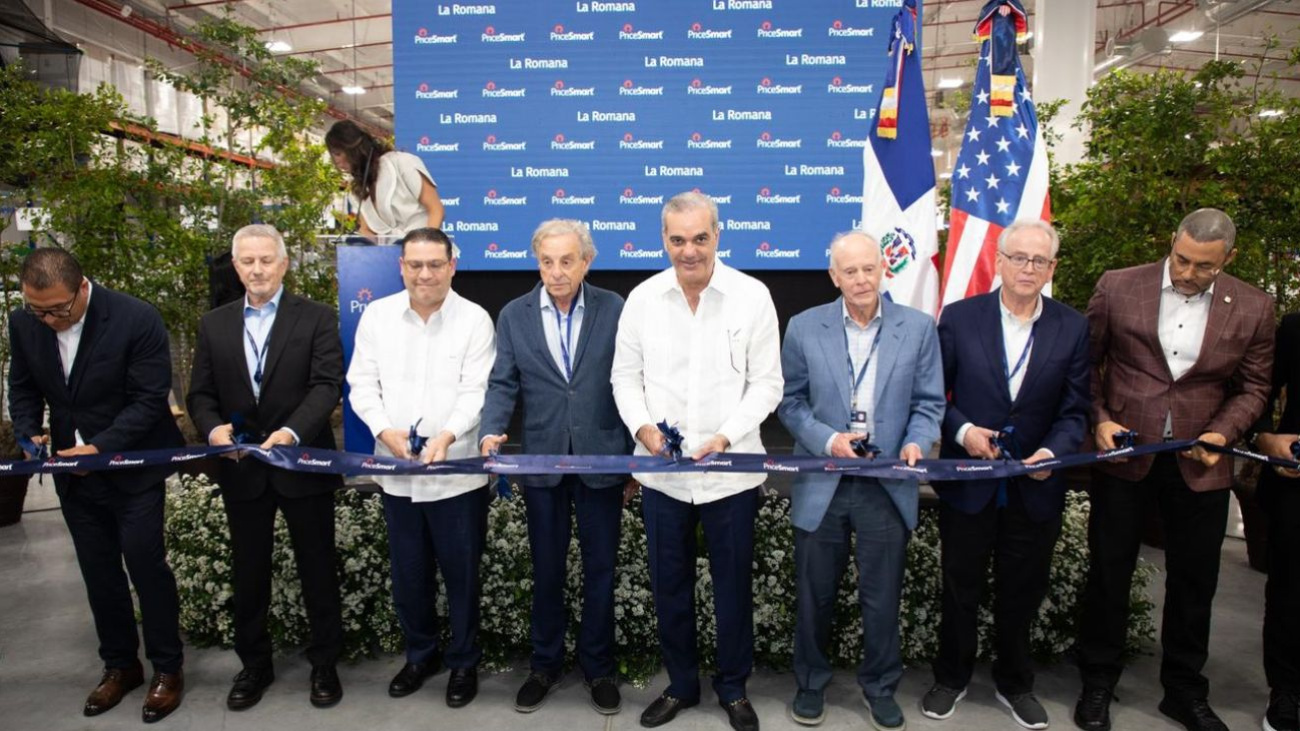
  • President Abinader inaugurates new PriceSmart club in La Romana, supporting local suppliers

    President Abinader inaugurates new PriceSmart club in La Romana, supporting local suppliers

    LA ROMANA — Dominican Republic President Luis Abinader joined senior leadership from global warehouse retail chain PriceSmart this week to mark the official opening of the company’s newest membership club in this eastern Dominican city, a $21.1 million project that expands the retailer’s footprint in the country and injects new momentum into regional economic growth.

    Strategically positioned along the heavily traveled La Romana–Higüey highway, the new 6,205-square-meter facility boasts nearly 4,000 square meters of dedicated retail sales space alongside 309 customer parking spots. To serve member needs, the location offers a full suite of amenities including an in-club pharmacy, professional optical center, prepared food section, and flexible digital shopping solutions: members can opt for contactless Click & Go pickup or schedule direct home delivery for their orders.

    A major outcome of the new opening is job creation: the club has generated approximately 125 full-time direct positions, with the vast majority of roles filled by local La Romana residents. The launch marks a key milestone for PriceSmart’s regional expansion, bringing the company’s total count of clubs operating in the Dominican Republic to six, and its overall footprint across Latin America and the Caribbean to 57 locations.

    In line with global corporate sustainability goals, PriceSmart constructed the new facility to meet EDGE green building certification standards. The club is equipped with a suite of eco-friendly features, including rooftop solar panels, energy-saving LED lighting throughout the building, high-efficiency commercial cooling systems, and on-site waste recycling infrastructure to lower the location’s carbon footprint.

    For members, the club stocks more than 1,600 different products, with more than 700 of those items sourced directly from Dominican-based vendors, supporting local manufacturing and agricultural sectors. Beyond its core retail operations, PriceSmart used the opening to highlight its ongoing commitment to community development in the country. Through the PriceSmart Foundation, the company will roll out targeted local initiatives including regular food donation drives, infrastructure and program support for local public schools, and expanded youth education and skills training programs, cementing the chain’s long-term investment in both economic growth and social progress across the Dominican Republic.

  • The Dominican Innovation Gap no one is assigned to fix

    The Dominican Innovation Gap no one is assigned to fix

    The Dominican Republic boasts no shortage of ambitious entrepreneurs, innovative business initiatives, and accessible capital on paper. Yet despite these promising foundational inputs, the country’s startup ecosystem continues to underperform, held back by a largely invisible but deeply impactful gap: no single entity has been assigned clear ownership of the middle space where policy design, capital allocation, and on-the-ground execution intersect.

    This unclaimed gap is where promising early-stage ventures stall, where well-meaning government incentives fall short of their goals, and where public and private institutions gradually lose credibility with the founders they aim to support. Crucially, this is not an ideological failure of vision, nor a shortage of enthusiasm for innovation. It is an operational breakdown that repeats cycle after cycle, because no existing organization has been structured or empowered to resolve it.

    ## Why Paper Policies Rarely Translate to Real-World Results

    Modern conversations about Dominican innovation policy, regulatory reform, and investment incentives regularly misdiagnose the core problem. The widespread assumption holds that updating legislation, announcing new funding pools, or launching government support programs will automatically deliver the desired outcomes of a thriving startup scene. But innovation does not fail at the legislative drafting stage. It fails in the translation from policy intent to on-the-ground implementation.

    When a young startup navigates overlapping requirements from environmental permitting, banking compliance, investment readiness, and operational scaling, founders do not experience these systems as separate, disconnected processes. Friction emerges at the intersections, where conflicting timelines, misaligned risk frameworks, and misaligned incentives create bottlenecks no single founder can resolve on their own.

    For example, in the high-profile Cabo Rojo development project, compliance frameworks built for large, slow-moving infrastructure projects directly clashed with the tight timelines that early-stage innovation depends on, where multi-year uncertainty can sink a venture before it launches. For Dominican startups that choose to raise capital abroad, the decision is not a rejection of national pride or a lack of ambition — it is a practical response to gaps in local supporting infrastructure, a shortage of patient long-term capital, and a lack of experienced operators who have successfully scaled complex business systems in the country before.

    These are not abstract, unforeseeable problems. They are predictable, repeating breakdowns that the ecosystem has failed to address systematically.

    ## The Invisible Failure Point: No Ownership for the Integration Layer

    Institutional stakeholders rarely acknowledge an uncomfortable core truth about the current ecosystem. Different entities own discrete parts of the process: government ministries design broad policy frameworks, commercial banks manage capital risk, private investors deploy funding, and startup accelerators offer mentorship to early founders. But no single entity owns the integration layer that connects these separate parts. No organization is tasked with answering the critical, practical questions that determine startup success:

    How will this new regulatory change impact the timelines for deployed capital? Does this new government incentive align with the actual operational constraints that early-stage founders face? How can a founder move from confirming eligibility for support to full execution without getting tangled in misaligned systems?

    As a result, early-stage startups are forced to act as their own translators between legal frameworks, financial institutions, operational requirements, and growth targets long before they have the team size, expertise, or resources to take on that work. Most of these ventures fail quietly, without public attention. Some leave the country entirely to find more supportive ecosystems, and only a small handful manage to build their success elsewhere.

    ## Why Adding More Programs Does Not Fix the Problem

    The standard institutional response to weak innovation outcomes is to layer on more new programs: additional incubators, more high-profile demo days, more press announcements of new initiatives. But none of these additions address the core problem: disconnected systems that operate with misaligned incentives and no cross-institutional coordination. Innovation ecosystems do not fail for a lack of enthusiasm or good intentions. They fail because end-to-end execution is nobody’s explicit mandate.

    Until leading institutions treat cross-system operational alignment as a core, priority function — rather than an afterthought to policy design — outcomes for founders will not improve.

    ## A New, Actionable Question for Institutional Stakeholders

    The most productive shift for ecosystem leaders is not to keep asking the broad, vague question, “How do we support startups?” Instead, they should reframe the question to target the actual gap: “Where do our existing systems break down when a real startup tries to navigate them?”

    This reframing leads to entirely different, actionable work:
    – Mapping regulatory approval timelines against the actual realities of capital deployment timelines
    – Stress-testing proposed incentives against real-world execution risk before they are launched
    – Identifying systemic failure points before founders encounter them and lose time or capital
    – Redesigning clunky processes to resolve bottlenecks without requiring full legislative overhauls

    This work is not traditional large-scale policy reform. It is intentional operational design — and it is the missing core function in the Dominican innovation ecosystem.

    ## The Missing Role: Operational Translation Between Ambition and Reality

    Global innovation ecosystems that compete at the highest level share one key trait: they make execution clear, accessible, and streamlined for founders. The Massachusetts Institute of Technology (MIT)’s renowned innovation ecosystem did not grow to global prominence solely on its institutional prestige. It succeeded because it reduced existential risk for founders experimenting on the cutting edge of new technology and business models. That risk reduction did not come from bold vision statements alone. It came from dedicated people and processes whose core job was to translate systemic complexity into clear, actionable steps for founders.

    The Dominican Republic does not need to copy the exact model of Silicon Valley or other mature ecosystems to succeed. What it does need is to assign explicit responsibility for the unowned middle space between entrepreneurial ambition and on-the-ground reality.

    ## What Changes When the Gap Is Addressed

    If Dominican institutions step up to own this operational middle, the impact will transform the ecosystem:
    – Far fewer promising startups will be forced to leave the country to scale their businesses
    – Capital will deploy with clearer, more aligned expectations between investors and founders
    – Regulations will actually achieve their intended public goals, instead of creating unintended bottlenecks
    – Public-private collaboration will become functional and results-driven, rather than a purely symbolic exercise

    Most importantly, innovation will stop being a sporadic, once-in-a-while success story and start growing as a cumulative, self-reinforcing driver of economic growth.

    ## Moving From Diagnosis to Action

    This gap is entirely solvable, but it cannot be fixed with another new program or a symbolic press release. Resolving it requires three concrete steps: cross-institutional mapping of current operational processes, clear accountability for fixing execution bottlenecks, and short, targeted interventions that turn policy intent into actionable, founder-friendly processes. This work is not glamorous or high-profile. But it is decisive for the future of Dominican innovation.

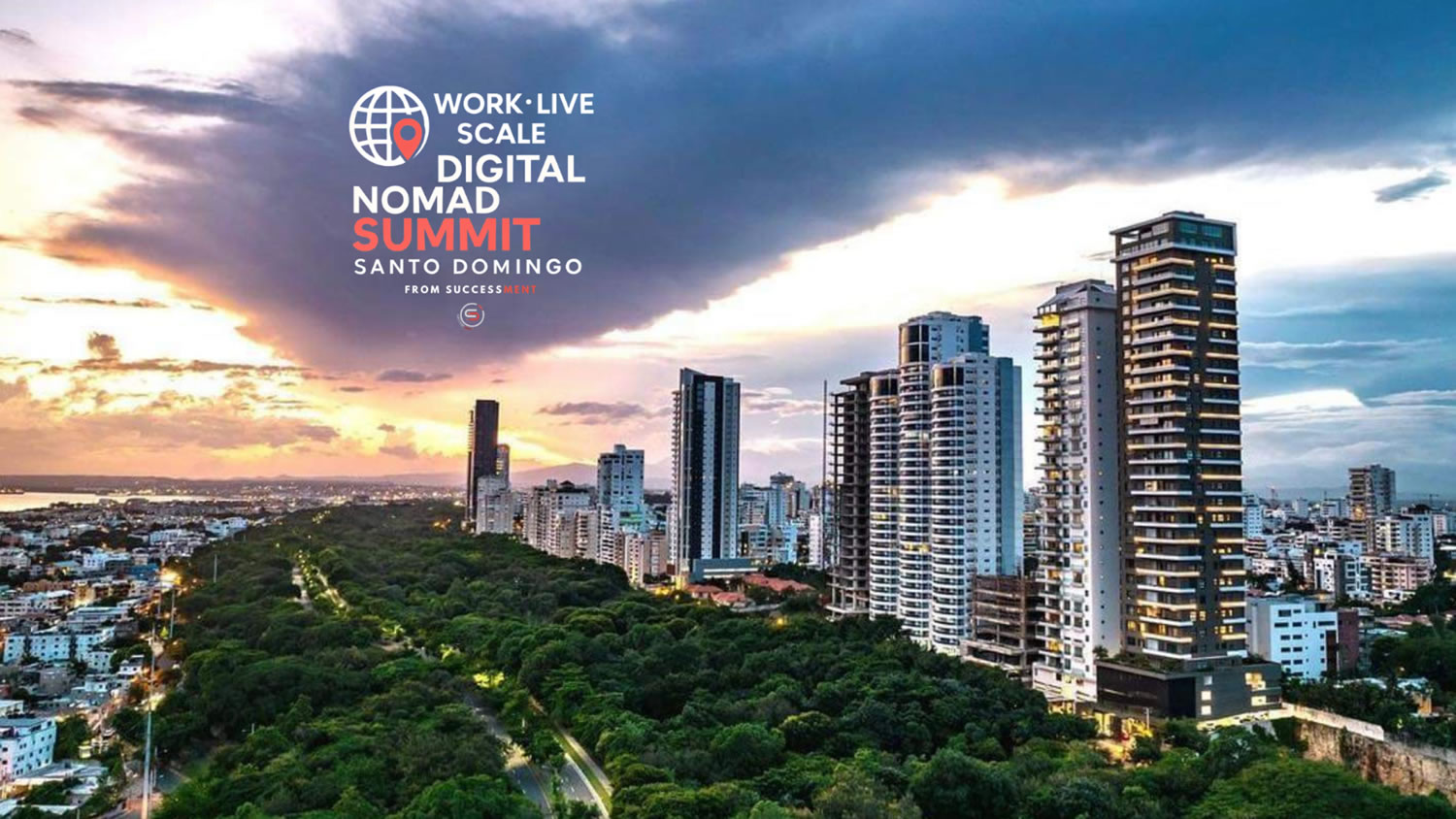
    To advance this work, the Digital Nomad Weekly team is convening the Digital Nomad Summit in Santo Domingo, a high-level global gathering bringing together founders, investors, policymakers, remote work leaders, and diaspora innovators working to shape the future of work and cross-border business in emerging markets.

    Until someone takes explicit responsibility for making disconnected systems work together for founders, Dominican innovation will continue to fall through the cracks — not for a lack of talented, ambitious entrepreneurs, but for a lack of clear ownership of the operational space that determines success.

  • Why Pre-Seed Venture Capital Fails Startups in the Dominican Republic—and Across LATAM

    Why Pre-Seed Venture Capital Fails Startups in the Dominican Republic—and Across LATAM

    For decades, entrepreneurs and analysts across Latin America and the Dominican Republic have repeated a familiar claim: local startups fail to scale simply because there is not enough venture capital available to fuel their growth. This narrative is convenient — it frames regional underperformance as a problem that can be solved with an injection of new funding, with no deeper structural changes required. But a closer look at investment data and ecosystem outcomes reveals a far more foundational issue: the problem is not a lack of capital, but a fundamental failure to price early-stage risk correctly.

    In recent years, Latin America has consistently drawn between $4 billion and $6 billion in annual venture investment, even amid global market downturns and tightening credit cycles. What is less widely reported is that only 10 to 15 percent of this capital actually reaches the pre-seed layer of the ecosystem, the stage where founders experiment, iterate on ideas, and discover product-market fit. This mismatch is not a capital shortage — it is a systemic breakdown in how investors approach uncertainty.

    ## The Misalignment of Pre-Seed Investment Practices

    In mature startup ecosystems like that of the United States, pre-seed investing is built on an explicit acceptance of uncertainty. Top-tier U.S. venture firms operate with a clear understanding that 70 to 80 percent of their early-stage bets will return little to no capital, and that entire funds are carried by a small subset of outsized, high-growth winners. This is not reckless investing — it is disciplined portfolio construction that embraces the inherent uncertainty of early-stage innovation.

    This model stands in stark contrast to common practices across the Dominican Republic and much of Latin America. Here, most pre-seed investors refuse to commit capital until a startup has already demonstrated traction, generated early revenue, or proven its business model through external validation. In effect, investors demand proof of concept before funding the very process that is designed to generate that proof. The result is a damaging distortion of the startup pipeline: capital arrives too late to shape the company’s early strategic direction, but too early to rely on the stable performance that investors demand.

    ## The Tangible Economic Cost of Mispriced Risk

    The impact of misaligned risk pricing is not just theoretical — it creates measurable drag on regional economic growth. A simple comparison of two startup pipeline models makes the gap clear. In the current, risk-averse system common across LATAM, roughly 10 out of 100 potential early-stage startups will receive funding. Of those 10, only one or two will survive, and rarely will any scale into a major regional or global player.

    In a system where risk is priced correctly, by contrast, the same pool of potential founders produces a dramatically different outcome. Forty or more startups can receive pre-seed funding, allowing for far more experimentation. While most will still fail, a larger subset will advance, and ultimately one or two will scale into major companies that drive regional economic growth. The difference between these two models is not marginal: it determines whether a region retains its most talented founders, or loses them to ecosystems that are structured to support their growth.

    For small and mid-sized economies like the Dominican Republic, a single high-growth scalable startup can generate tens or hundreds of millions of dollars in enterprise value, create hundreds of high-quality jobs, spawn a new cycle of reinvestment, and build global credibility for the local ecosystem. Too often, the absence of these outcomes is blamed on limited local market size or bad timing. In reality, it is most often a direct result of how early-stage risk is structured.

    This structural challenge has deep historical roots. Early-stage investing across much of Latin America inherited its core instincts from traditional finance sectors like commercial banking, private equity, and corporate finance — fields that are explicitly designed to minimize uncertainty and prioritize collateral, predictability, and downside protection. Startups, by their very nature, offer none of these attributes: they are inherently uncertain, asymmetric, and nonlinear in their growth. When forced into traditional financing frameworks, capital becomes defensive in a sector that demands calculated exposure to upside potential. Founders respond by over-engineering artificial stability and underinvesting in the discovery and experimentation needed to build a scalable business, leaving the entire ecosystem underperforming its potential.

    ## A Hidden Second Constraint: Lack of Structured Execution Support

    Even when capital is available to early-stage founders, a second, less visible constraint often holds back performance: the absence of a mature support layer for structured execution. Many early-stage LATAM startups are not held back solely by lack of funding — they are held back by lack of access to proven frameworks for revenue design, go-to-market strategy, and data-driven performance measurement. When these foundational systems are missing, additional capital does not accelerate growth — it only amplifies existing inefficiencies.

    In mature ecosystems, this support layer exists quietly, made up of experienced operators, embedded industry expertise, and repeatable frameworks that turn early-stage ambiguity into measurable progress. Across most of Latin America, this layer is still in the early stages of development, meaning even well-funded startups struggle to deliver consistent outcomes.

    ## Redesigning the System for Sustainable Growth

    If the core problem is mispriced risk, the solution is not simply to inject more capital into the existing broken system. It requires a full redesign of how risk is structured, deployed, and supported across the ecosystem. In well-functioning ecosystems, pre-seed capital is allocated across diversified portfolios, not bet on isolated individual startups. This framework allows failure to play its necessary role: contained, informative, and a required part of the innovation process. At the same time, early-stage founders are not left to navigate uncertainty alone: they receive structured support to build revenue models, enter new markets, and measure performance from day one.

    Local and regional institutions also have a critical role to play. Instead of acting as passive sponsors of innovation, they need to become active participants: providing access to data infrastructure, piloting new startup solutions, and most critically, serving as early customers for young companies. This transforms startups from speculative side projects into integrated components of the broader local economy. When all these elements align, risk does not disappear — it becomes legible, and once it is legible, it becomes investable.

    ## From Local Startups to Global Exportable Value

    The implications of fixing this system extend far beyond the venture capital sector. When early-stage innovation systems work correctly, they do not just produce a handful of local startups — they produce globally scalable companies and exportable intellectual property that can drive long-term economic growth. This distinction is particularly critical for economies like the Dominican Republic.

    Growth driven exclusively by local domestic consumption will always hit a structural ceiling limited by population and purchasing power. Growth driven by exportable innovation — including software, financial infrastructure, data platforms, and operational models — can scale far beyond geographic borders. The Dominican Republic has already built world-leading strengths in tourism, logistics, and services. The next phase of its economic evolution will not come from replicating these existing models, but from building entirely new sectors designed from inception to compete regionally and globally. That transformation begins at the pre-seed stage, not just with more capital, but with correctly structured risk and the support systems needed to turn that risk into tangible value.

    ## A Quiet Shift Toward Systemic Change

    Across Latin America and the Caribbean, a subtle but meaningful shift is already underway. A growing community of investors, operators, and institutional stakeholders are moving away from narrative-driven innovation hype — focused on visibility, headline events, and isolated success stories — toward a more deliberate approach focused on building repeatable, scalable, institutionalized innovation systems.

    These conversations are no longer confined to academic reports and policy panels. They are increasingly happening in practical, collaborative settings where capital, execution expertise, and institutional strategy intersect to solve real problems. Events like the Digital Nomad Summit in Santo Domingo have emerged as early convergence points, where stakeholders are not just discussing the underlying mechanics of risk, capital deployment, and scalable execution in the Caribbean — they are actively testing and refining these models with the actors building the next phase of the regional ecosystem.

    For investors and founders operating in or entering the Dominican market today, the signal is clear. The next era of regional innovation will not be defined by how much total capital is deployed. It will be defined by how precisely risk is understood, structured, and operationalized — and by the stakeholders that position themselves at the intersection of these critical decisions as the ecosystem aligns for growth.

  • Capital Without a System: How U.S. Angels and Diaspora Investors Should Approach the Dominican Republic

    Capital Without a System: How U.S. Angels and Diaspora Investors Should Approach the Dominican Republic

    A rising tide of U.S. angel investment and diaspora capital is flowing toward the Dominican Republic, drawn by four compelling advantages: geographic proximity to North American markets, deep cultural alignment, steadily improving macroeconomic indicators, and a visible surge in local entrepreneurial activity. What many of these new investors fail to grasp, however, is that this growing inflow is entering a market that still lacks a fully developed, mature venture capital ecosystem — a gap that changes every rule of early-stage investing.

    In established VC markets, investors can afford a degree of imprecision. The layered nature of the ecosystem, with established pathways for follow-on funding and sequential capital rounds, absorbs early misjudgments and lets mistakes correct themselves over time. In the Dominican Republic, that margin for error simply does not exist.

    ### The Dangerous Illusion of Entry Readiness
    A growing body of public guidance walks new investors through the practicalities of doing business in the Dominican Republic: how to structure legal entities, navigate local regulatory frameworks, and align with national operating norms. This guidance is not useless — it does cut down on transaction friction when investors first enter the market. But it also creates a harmful misconception: the idea that correct legal structuring equals correct investing.

    That is not the case. A solid legal structure cannot turn a fundamentally unviable business into a low-risk investment; it only formalizes a weak opportunity. In a market where early-stage funding is already scarce, the damage from this misunderstanding compounds far faster than it would in a mature ecosystem.

    ### The Overlooked Structural Gap in the Local Capital Stack
    The Dominican Republic shares a common challenge that defines much of Latin America: it boasts abundant entrepreneurial energy, but its capital stack remains incomplete. Across the region, early-stage venture capital has contracted rather than expanded in recent years. Data from regional VC firm Cuantico VC shows that pre-seed and seed funding has grown far more selective, with available capital concentrating in a small pool of already-validated companies.

    The result is a shift that redefines early-stage investing: instead of institutions funding experimental new startups, individual angels now carry most of that risk. In practical terms, that means three key departures from how mature markets work: there is no reliable, standardized pathway from angel investment to seed funding to Series A; follow-on capital is never a given, only an uncertainty; and valuations are driven more by persuasive founding narratives than anchored to established market norms.

    For investors, this rewrites the entire role: you are not joining an existing functional ecosystem — you are filling the gaps created by the absence of one.

    ### Common Analytical Biases That Derail New Investors
    Diaspora investors and first-time angels are often drawn to the Dominican Republic by a mix of personal connection and informed conviction. They understand local culture, spot unmet market needs, and often feel a personal responsibility to drive economic growth locally. This combination of motivation and insight is powerful, but it also opens the door to predictable cognitive biases that derail investments.

    The most common failures in the market are not legal or regulatory — they are analytical. Capital is often allocated based on personal connections rather than rigorous due diligence, on founding storytelling instead of actual revenue data, on estimated market size instead of verified consumer purchasing activity, and on early non-economic traction signals that do not translate to long-term viability.

    In dense, mature VC ecosystems, these mistakes are survivable: downstream funding can step in to correct early missteps. In the Dominican Republic, no such safety net exists. There is no secondary capital to fix the errors made by early investors.

    ### What Actually Reduces Investment Risk in a Constrained Market
    If legal structure is not the answer to de-risking, what is? In a capital-constrained startup ecosystem, the only reliable guardrail is verifiable evidence of a functioning revenue model — not hypothetical potential, not five-year projections, not user engagement metrics. Actual revenue.

    More specifically, three interconnected indicators signal that a business is a legitimate, investable opportunity:
    1. **Consistency**: Recurring revenue, even at a small scale, proves that the business solves a real customer problem, not a hypothetical one.
    2. **Intentional pricing**: Pricing built to deliver consistent margins, rather than pulled from thin air, demonstrates that a founder understands the full economics of their business, not just how to build a product.
    3. **Repeatable customer acquisition**: A clear, scalable process for consistently gaining new customers shows that growth is not a one-off stroke of luck.

    These indicators do not eliminate risk entirely, but they make risk measurable — and only measurable risk can be priced appropriately for early-stage investing.

    ### The Local Banking System: A Constraint That Acts as a Filter
    One of the most underdiscussed dynamics in the Dominican Republic’s ecosystem is the role of the existing domestic banking sector. The country’s banking industry is stable, well-capitalized, and inherently conservative: it is not built to underwrite the uncertainty of early-stage startups, prioritizing collateralized lending over investments based on potential. At the same time, integration with global financial infrastructure remains uneven, with cross-border payment delays and limited access to flexible credit instruments.

    To outside investors, these conditions look like unnecessary friction. To local market participants, they act as a natural filter. Any startup that can generate and sustain revenue while working within these constraints is already solving a real problem, regardless of external funding. In many VC-saturated ecosystems, startups can subsidize weak revenue with continuous capital injections. In the Dominican Republic, that is not possible.

    ### The Underexploited Opportunity for Institutional Investors
    The core challenge facing the Dominican Republic’s ecosystem is not a lack of capital — it is a lack of coordination between capital providers, underwriting standards, and startup operator performance. For institutional investors, this creates a narrow but actionable opening to add value and generate returns through four targeted strategies:
    1. **Underwrite based on revenue, not fixed collateral**: Early-stage credit and hybrid funding instruments can be tied to verified consistent revenue and cash flow patterns, rather than requiring traditional fixed asset collateral.
    2. **Bridge private capital, don’t replace it**: Institutional capital delivers the most value when it backs already-validated startup operators, rather than trying to lead on early-stage risk taking.
    3. **Standardize performance signals across the ecosystem**: Shared clear definitions of what counts as meaningful traction — including what qualifies as real revenue, repeatability, and healthy margins — cuts through market noise and improves capital allocation for every participant.
    4. **Remove friction for financial movement**: Cutting delays in cross-border payments and expanding access to affordable working capital directly helps scalable revenue systems grow.

    None of these steps require a fully mature venture capital market to work. They only require aligned agreement across market participants on what defines a legitimate, viable business.

    ### The Quiet Reorganization of the Local Ecosystem
    Structural gaps like these rarely get discussed openly in the Dominican Republic, because they sit at the intersection of capital allocation, on-the-ground startup operations, and institutional constraints. Most industry platforms only address one of these three areas, rarely bringing all three together. That gap is starting to close, however, not through top-down policy change, but through intentional convening of stakeholders.

    New collaborative spaces are emerging where investors can assess actual startup performance instead of just reviewing polished pitch decks, where founders have to defend their revenue logic instead of relying on storytelling, and where capital is evaluated against local market constraints instead of abstract VC best practice from mature markets. One example is the upcoming Digital Nomad Summit Santo Domingo 2026, which is shifting its focus from boosting market visibility to aligning capital providers around shared standards.

    The shift is subtle but transformative: moving from general market exposure to rigorous evaluation, from discussion panels to actionable pressure testing, from narrative building to third-party validation. In markets without a mature venture pipeline, these integrated collaborative spaces are not optional — they are how functional markets organize themselves from the ground up.

    ### Execution: The Missing Infrastructure Layer
    Alignment around standards alone is not enough to deliver results. The consistent gap holding back early-stage investments across Latin America is not a lack of capital — it is a lack of structured systems that turn capital investment into predictable, sustainable revenue.

    This creates a need for a new kind of local infrastructure focused on three core operational pillars: structured revenue architecture, scalable customer acquisition systems, and operational discipline directly tied to consistent monetization. Firms that operate in this space, bridging strategy, data, and on-the-ground execution, are becoming the linchpin for whether early-stage capital generates returns or gets wasted on endless unproductive iteration.

    In constrained ecosystems like the Dominican Republic, the core question is no longer whether a startup can raise funding. It is whether a startup can convert that capital into consistent, repeatable revenue fast enough to survive until it can scale.

    ### Final Thought
    In markets with mature venture ecosystems, capital organizes the ecosystem itself. In the Dominican Republic, the ecosystem is still in the process of organizing itself. That process is being driven not by the volume of capital coming in, but by the precision of how that capital is deployed, how operators are held accountable for results, and what systems turn entrepreneurial activity into actual economic output.

    Investors who grasp this fundamental shift will not just participate in the market’s growth — they will help shape what it becomes. Increasingly, they are doing this not through isolated individual transactions, but through new networks, collaborative platforms, and execution infrastructure that did not exist in the country before. That is where the real long-term leverage for returns and impact lies.

  • Dominican Republic moves toward mandatory Real Estate Agent Licensing

    Dominican Republic moves toward mandatory Real Estate Agent Licensing

    The Dominican Republic’s fast-expanding real estate industry, one of the Caribbean’s most dynamic investment hubs, is on the cusp of sweeping regulatory reform that could reshape its future. For decades, the country’s red-hot property market, fueled by record tourism inflows, rising foreign direct investment, and explosive residential development, has operated without a unified national regulatory framework for industry practitioners, leaving critical gaps in accountability and consumer protection. Now, a landmark piece of legislation working its way through the national legislature aims to fix these longstanding vulnerabilities.

    Over the past decade, the Dominican Republic has solidified its status as a top Caribbean real estate destination, drawing global property buyers and developers to popular hotspots including Punta Cana, the capital city of Santo Domingo, beachside Las Terrenas, historic Puerto Plata, and luxury-focused Cap Cana. But as the market has ballooned, systemic risks have grown alongside it. Without mandatory licensing or government oversight, virtually any individual can work as a real estate agent or broker without formal certification, creating fertile ground for a range of harmful practices: unvetted brokerage activity, misleading advertising for new development projects, unauthorized property listings, inconsistent professional standards, and a rising tide of fraud and transaction disputes that have eroded trust for both local homebuyers and international investors. Industry leaders have pushed for reform for years, warning that the status quo creates unnecessary risks that threaten long-term sector growth.

    In April 2026, the Dominican Senate took a key first step forward, approving the regulatory bill in its initial reading. The legislation targets two core problem areas: unregulated real estate intermediation and deceptive industry advertising. If enacted, it would introduce sweeping changes to how the sector operates, including mandatory national licensing for all real estate professionals, stronger legal safeguards for consumers and investors, standardized rules for property advertising, greater transparency across all property transactions, and clearly defined ethical and operational standards for all market participants. Oversight and enforcement of the new rules would fall to the country’s Ministry of Housing and Buildings (MIVHED), which would take charge of professional registration, licensing management, and ongoing compliance monitoring.

    Stakeholders across the industry broadly support the reform effort, framing it as a transformative milestone for the sector’s professionalization. Backers argue that formal regulation will deliver far-reaching benefits, from boosting confidence among international investors to cracking down on fraud and informal market activity, improving the Dominican Republic’s global reputation as a safe place to invest in property, and laying the groundwork for more stable, sustainable long-term growth. For overseas developers and investors that have driven much of the sector’s recent expansion, the new rules would create a more transparent, predictable business environment while raising the bar for operational practices across every segment of the market.

    While the bill has cleared its first major hurdle in the Senate, it still requires additional legislative approvals and further parliamentary debate before it can be signed into law. Even so, the progress of the reform signals a clear growing momentum toward building a more regulated, transparent, and institutionalized real estate market in the Dominican Republic — a shift that is widely seen as increasingly critical as the sector continues its rapid upward trajectory.

  • Digital Nomad Summit Santo Domingo strengthens Dominican Republic’s global profile with new speakers and cross-border innovation initiatives

    Digital Nomad Summit Santo Domingo strengthens Dominican Republic’s global profile with new speakers and cross-border innovation initiatives

    Santo Domingo, Dominican Republic – In a landmark announcement this April 2025, organizers of the Digital Nomad Summit Santo Domingo (DNS) have unveiled a suite of updated programming and strategic partnerships designed to accelerate the Dominican Republic’s transformation into a leading regional center for remote work, cross-border commerce and innovation-driven growth. Curated and produced by Successment, Latin America’s top-tier firm specializing in innovation strategy and revenue operations for emerging markets, the summit has emerged as a critical convening point connecting entrepreneurs, global investors, public policymakers and international talent to the fast-growing Caribbean-Latin American corridor.

    Organizers have confirmed three high-profile keynote speakers who represent the intersection of public sector ambition and private sector leadership shaping the country’s innovation trajectory. Arlette Palacio, who leads the Sustainability Committee at the American Chamber of Commerce in the Dominican Republic (AMCHAMDR) and serves as founder and CEO of educational innovation firm Educology, will deliver a keynote exploring how sustainability investment, intentional talent development and forward-thinking private sector collaboration lay the foundation for globally competitive innovation ecosystems. Armando J. Manzueta Peña, Vice Minister of Innovation & Technology at the country’s Ministry of Public Administration (MAP), will outline the Dominican government’s ongoing work to modernize public services, build out digital government infrastructure and develop a citizen-centric, productive digital economy. Rounding out the confirmed speaker lineup is Biviana Riveiro, Executive Director of ProDominicana, who will break down the national strategy to grow services exports, boost global market competitiveness and cement the country’s status as the go-to regional hub for cross-border innovation activity.

    Beyond keynote programming, the 2025 summit has rolled out several new initiatives designed to move beyond dialogue and drive tangible commercial connections. A dedicated startup track, anchored by a high-stakes pitch competition for emerging founders, is currently in development in partnership with local and regional institutional stakeholders, with final sponsorship confirmation from partners including Eurocámara RD expected shortly. This track is specifically designed to elevate underrepresented emerging founders from the Dominican Republic and the broader Caribbean-Latin American region, transforming the summit into a live, active deal-making environment rather than just a conference. Looking ahead to the 2026 edition, organizers plan to expand cross-border innovation programming even further, forging new connections between Dominican institutions and their global counterparts across real estate, tourism, technology, public policy, venture investment and diaspora capital channels.

    Strategic relationship-building is at the core of this year’s summit, with new partnerships confirmed across influencer engagement and media collaboration. A first-of-its-kind Digital Nomad Influencer Roundtable is now officially set, featuring prominent content creators Nicole Abreu (@itsnickiiabreu), Rosalyn Kinkead (@smartcaribbean), Julio & Anthony (@dominicanbridge) and Jay Abroad (@iamjayabroad). Collectively, these creators hold large, engaged audiences of digital nomads and remote professionals across the U.S. and the Dominican Republic, and they will help amplify the country’s unique value proposition to global mobile workers. Confirmed media partners for the event include leading local outlets Dominican Today and Periódico elDinero, while organizers are in late-stage discussions with a slate of high-profile potential sponsors spanning aviation, finance, technology, tourism and higher education, including Arajet, ProDominicana, Google, SoftBank, Mastercard, Visa, the Dominican Ministry of Tourism, ADOEXPO, BanReservas, Asociación Cibao, UNIBE and PUCMM. Organizers project total attendance will top 300 regional and global industry and government leaders.

    The summit will also play host to two exclusive global launches that deliver new data and tools to the region’s innovation ecosystem. First, the event will mark the worldwide release of the 2026 Dominican Innovation & Transnational Export Report (DITER 2026), a first-of-its-kind data initiative endorsed by leading Dominican institutions INTEC and Promipymes. The report will deliver granular, up-to-date insights into the current state of the Dominican Republic’s innovation economy and its global export competitiveness. Second, Successment will publicly introduce ZARI Mobility, the Dominican Republic’s first fintech platform focused on risk modeling for cross-border mobility. The platform is built to expand access to financial services for under-served groups and strengthen data-driven decision-making for businesses operating across emerging markets.

    In a statement accompanying the announcement, Jonathan Joel Mentor, Principal and CEO of Successment and founder of the Digital Nomad Summit Santo Domingo, framed the event as a turning point for the region’s innovation economy. “The Dominican Republic is no longer talking about innovation—we’re executing it,” Mentor said. “The Digital Nomad Summit is where global and local actors come together to build real commercial relationships across borders. Our goal is simple: create a deal-room environment where the Dominican Republic stands as the Japan of the Caribbean—disciplined, competitive, and open for global business. This Summit is an inflection point for the region’s innovation economy.”

    Now recognized as the leading global gathering in the Caribbean-LATAM corridor focused on the intersection of innovation, talent mobility, remote work and cross-border commerce, DNS brings together public sector leaders, venture investors, global digital talent and private sector innovators to reimagine what competitiveness looks like for 21st century emerging markets. More information about the event, registration and programming updates is available at the official DNS website: www.digitalnomadsummit.co.

  • How Dominican corporations and banks can turn innovation into a new economic export

    How Dominican corporations and banks can turn innovation into a new economic export

    Every nation has a buzzword that gets thrown around without meaningful action, and for the Dominican Republic, that term is innovation. It appears in executive conference keynotes, government policy speeches, and glossy institutional initiatives, but very little of what gets labeled innovation here actually lives up to the name. Most of what is marketed as transformative change is nothing more than incremental modernization, rebranded as a sweeping national strategy.

    Behind this empty rhetoric lies a critical gap: the core drivers of long-term wealth creation—robust intellectual property development, large-scale venture product development, cross-border digital services, and sustained corporate-funded research and development—remain almost entirely missing from the Dominican economy. This gap cannot be closed with catchy slogans, small government grants, or copying the surface-level aesthetic of Silicon Valley. It will only be fixed when the Dominican private sector steps into its role as the catalyst for change. In an economy where domestic corporations control the bulk of available capital, physical and digital infrastructure, and industry influence, innovation is no longer just a national aspiration—it is a non-negotiable corporate obligation.

    This reality lays bare what can be called the Dominican innovation paradox: the country draws millions of digital nomads, attracts top global industry operators, and produces world-class Dominican-born entrepreneurs, yet it chronically underinvests in the innovation capacity that would secure its position as a regional economic leader. The core of the paradox is straightforward and alarming: most groundbreaking innovation from Dominican founders and members of the Dominican diaspora happens abroad, because domestic corporations rarely prioritize innovation at home.

    Part of this issue is structural: most Dominican companies lack formal dedicated innovation budgets, internal frameworks to guide new development, and systems to measure return on innovation investment. But the deeper problem is cultural: innovation is treated as a niche experimental side project, not a core asset class that drives long-term growth. Leading countries that have turned innovation into an economic engine—from Finland and Singapore to Chile, South Korea, and the United Arab Emirates—treat innovation investment as critical national infrastructure. Dominican corporations do not need to wait for sweeping legislative reform to adopt this same approach; they can act now, but only if they first understand what real innovation programs are designed to achieve.

    At their core, legitimate innovation programs serve three clear purposes: they generate new revenue streams, strengthen a company’s long-term strategic position against competitors, and expand organizational capabilities through intellectual property, data assets, and new business models. Every other activity—hackathons, public idea contests, photo-op accelerator programs— is just performance art with no lasting economic impact. When the author, a long-time startup scaling expert, asks Dominican executives who claim to be investing in innovation what share of their annual revenue comes from products or initiatives launched in the last five years, most refuse to answer. That silence reveals the problem: innovation without measurable revenue impact is not innovation at all. Innovation that does not reduce long-term strategic risk is not innovation. Innovation that does not produce new intellectual property is not innovation. This basic clarity is what the Dominican economy lacks, and it is what corporate leaders must implement immediately.

    Across the globe, high-performing companies do not wait for a national innovation ecosystem to mature on its own—they build it themselves. The most effective tool for this is a purpose-built corporate accelerator, but it is critical to distinguish these strategic engines from empty public relations projects. A real corporate accelerator is far more than a branded startup incubator with a press release. It is a core strategic mechanism that allows established companies to test new markets, integrate cutting-edge external innovations, attract top specialized talent, develop proprietary technology, and deploy capital creatively, all without being forced to navigate outdated domestic venture capital regulations. It gives established corporations the speed and agility of startups without the high risk of fragility that plagues many early-stage companies.

    When designed correctly, a corporate accelerator acts as a bridge between large established Dominican corporations and the already talented pool of domestic startups, diaspora founders, and regional innovators who are currently building their groundbreaking work outside of the country. It also solves a pressing national challenge: the Dominican economy desperately needs formal institutional pathways that turn existing local talent into tangible economic output. Independent non-corporate accelerators do valuable community-level work, but they are not structured to carry the weight of national economic transformation. They cannot build exportable intellectual property at scale, they cannot deploy enough capital to move the needle, and they cannot shift the conservative risk culture of domestic banking. Corporate accelerators can do all of these things.

    Even among large corporations, banks have a unique and underdiscussed role to play in building the risk architecture innovation requires. Dominican banks are often characterized as conservative, but they are not unaware of shifting market dynamics. They understand that the region is moving toward credit models based on real-time behavioral data rather than traditional paper documentation, and they recognize that corporate-backed innovation carries far less risk than funding isolated early-stage startups. This is where the deepest national transformation can occur: large corporations and leading banks working together to co-design risk frameworks that support sustained innovation.

    In advanced innovation economies, this model already works effectively. A large domestic corporation first defines the sector it wants to innovate in—whether that is energy, mobility, retail, logistics, health, tourism, or finance. Local banks then provide working capital facilities tied directly to the performance of the accelerator’s startup portfolio. Regional banks across the Caribbean, Central America, and broader Latin America open cross-border liquidity windows to support expansion beyond Dominican borders. International financial institutions and multilateral development banks, such as the IDB, IFC, CAF, and EIB, co-finance the development of exportable technology, with risk mitigated by the domestic corporation’s existing industry expertise.

    This blended capital structure allows Dominican corporations to pursue innovation without putting their core business at unnecessary risk, and it gives banks a hedged, data-rich environment where innovation becomes a predictable, underwritable asset rather than a speculative gamble. This is how real economic modernization happens: not through endless industry conferences, but through intentional, functional capital structures that support risk-taking.

    If Dominican corporations move forward to build serious, outcome-focused corporate accelerators, three transformative outcomes will follow for the entire nation. First, domestic Dominican startups will finally gain the institutional pathways they need to scale at home, rather than being forced to move abroad to access capital and support. Second, Dominican corporate executives will transition from being simply operators of existing businesses to being architects of a regional innovation hub. Third, the country will stop exporting its most valuable innovation talent and intellectual property, and instead start compounding that value domestically.

    This shift would transform the Dominican Republic’s global reputation: moving from a country known primarily for its tourist beaches to a country recognized for world-changing technological and business breakthroughs. It is also the difference between an economy that retains and grows its own talent, and one that continuously leaks its most skilled innovators to foreign markets.

    As the author notes, emerging economies in the Global South deserve innovation institutions built for real impact, not just decorative rhetoric. The Dominican Republic, with its unique geographic position bridging North America, Latin America, and Europe, and its fast-growing digital nomad economy, cannot afford to treat innovation as an optional add-on. The corporations that move first to implement this model will define how high the country can rise in the global innovation economy. Every other company will be left reading about success from the outside, admiring LinkedIn posts from innovators who built their careers elsewhere.

    This conversation will continue at the 2026 Digital Nomad Summit in Santo Domingo, which will bring together Dominican private sector leaders, digital nomads, entrepreneurs, and global industry leaders to collaborate on turning this vision into action. Jonathan Joel Mentor, the author of this analysis, is CEO of Successment and architect of the Digital Nomad Summit™, a UN World Summit Award Nominee, and winner of the ADOEXPO National Excellence in Exportation Award.

  • Wine consumption slides in 2025

    Wine consumption slides in 2025

    PARIS, France – The global wine industry entered 2025 facing a rare confluence of interconnected challenges that pushed annual worldwide wine consumption to its lowest level in years, according to a new annual report released Tuesday by the International Organisation of Vine and Wine (OIV), the sector’s leading global trade body.

    The organization’s full-year analysis confirms that global wine consumption dropped 2.7% in 2025, falling to 208 million hectoliters. This latest decline extends a persistent downward trend that has cut global consumption by 14% cumulatively since 2018, marking one of the longest sustained contractions the industry has ever recorded.

    OIV officials framed the downturn as the product of overlapping long-term cultural shifts and short-term economic strain that have reshaped consumer behavior across nearly every major market. “This evolution reflects the interaction between longer-term changes in consumption patterns and a more difficult economic environment in recent years,” the OIV explained in its review. In most mature, established wine markets, shifting lifestyle priorities, evolving social norms and generational turnover continue to alter how consumers approach wine purchases and consumption, the organization added.

    Since 2020, the global wine sector has also been battered by an unbroken string of external shocks that have eroded consumer purchasing power and confidence. The COVID-19 pandemic, escalating geopolitical tensions, widespread global trade disruptions and persistent inflationary pressures have all combined to create an increasingly challenging operating landscape for producers and distributors, the report noted.

    Nine out of the world’s 10 largest national wine markets recorded volume declines in 2025, with three major economies driving the bulk of the global drop: China, France and the United States. The U.S., which holds the title of the world’s largest single wine market, saw consumption fall 4.3% last year. OIV attributes this decline to three core factors: shrinking household purchasing power amid ongoing inflation, a broader trend of reduced alcohol intake among younger generations of American consumers, and a growing market share for alternative alcoholic beverages that have siphoned demand away from wine.

    When asked about the lingering impact of tariffs introduced by former U.S. President Donald Trump on global wine trade, OIV director John Barker told AFP that it remains difficult to separate that effect from the host of other headwinds currently hitting the U.S. market.

    France, Europe’s largest national wine market and one of the world’s top wine-producing nations, recorded a 3.2% drop in domestic consumption in 2025. China, meanwhile, saw one of the steepest single-year declines globally: national wine consumption fell 13% in 2025, and has plummeted 61% overall since 2020. OIV notes that wine demand in China remains uniquely sensitive to shifts in household income and price point changes, making the market particularly vulnerable to broader economic slowdowns.

    Against this backdrop of falling demand, global wine production actually ticked up 0.6% in 2025 to 227 million hectoliters. However, OIV emphasizes that this small increase only represents a partial rebound from a historically low production level recorded in 2024. The 2025 output marks the third consecutive year of below-average global wine production, a trend shaped by both growing climate volatility and proactive production adjustments made by producers responding to softer demand.

    Despite the run of reduced output, OIV does not expect below-average production to trigger widespread supply shortages in the near term. Instead, the organization projects that current market conditions will lead to a gradual drawdown of existing industry stockpiles rather than broad gaps in supply. For the global wine sector, the core challenge going forward remains adjusting to the new reality of weaker global consumer demand, the report concluded.

  • CTO Secretary General Dona Regis-Prosper To Keynote 2026 Caribbean Food Forum In Antigua

    CTO Secretary General Dona Regis-Prosper To Keynote 2026 Caribbean Food Forum In Antigua

    The Caribbean’s food and tourism sectors are gearing up for a landmark collaborative gathering next May, when the 2026 Caribbean Food Forum opens its doors to cross-industry leaders in Antigua. The one-day hybrid event, scheduled for Thursday, May 21 at the John E. St. Luce Finance and Conference Center, will welcome both in-person attendees and virtual participants from across the globe. Hosted by the Antigua and Barbuda Tourism Authority (ABTA) and sponsored by Grace Foods, the forum stands as the centerpiece of the country’s annual celebration of local culinary culture, Annual Culinary Month.

    Caribbean Tourism Organization (CTO) Secretary-General and CEO Dona Regis-Prosper will take the stage as the event’s keynote speaker, bringing decades of regional tourism leadership to the conversation. Her address will center on three pressing, interconnected topics: the growth of regenerative tourism models, the development of resilient sustainable food systems across the region, and the Caribbean’s evolving role in the multi-trillion-dollar global food economy. Joining Regis-Prosper from the CTO leadership team is Narendra Ramgulam, the organization’s Deputy Director of Sustainable Tourism, who will dive into how targeted investment in agritourism and cohesive destination branding can unlock inclusive, long-term economic growth for Caribbean communities.

    This year’s forum carries the forward-looking theme “The Future Is Local: Caribbean Food at the Crossroads of Global Impact”, a framing designed to highlight the tension and opportunity between preserving local food heritage and tapping into global market demand. Attendees will span key sectors that power the Caribbean’s economy, including tourism operators, agricultural producers, award-winning culinary artists, hospitality executives and impact investment leaders. Beyond keynote addresses, the event’s full agenda includes three in-depth panel discussions covering topics from climate resilience for small-scale food producers to diaspora engagement and supporting emerging food entrepreneurs. Attendees will also get to experience a curated marketplace and luncheon showcasing local producers, independent culinary artisans and iconic Caribbean food brands, while additional breakout sessions will explore how digital technology, sustainable farming practices and improved global market access can lift regional food businesses.

    Colin C. James, CEO of the Antigua and Barbuda Tourism Authority, framed the forum as a critical strategic step forward for the entire region. “The Caribbean Food Forum is a timely and strategic initiative that aligns perfectly with our shared vision for sustainable, community-centered tourism development,” James explained in remarks ahead of the event. “By elevating our local food systems and connecting them to global opportunity, we strengthen the unique value of our destinations, create deeply immersive cultural experiences for visitors, and build meaningful, income-generating pathways for local and regional producers and entrepreneurs.”

    Donyelle Bird-Browne, USA-based senior business development manager for strategic partnerships and one of the forum’s lead organizers, emphasized that the event is designed to deliver more than just discussion. “CTO’s participation and formal endorsement underscores the critical role that integrated food systems play in shaping the future of both Caribbean tourism and broader economic resilience,” Bird-Browne noted. Following the close of the forum, organizers will synthesize key insights and consensus from attendees into a public white paper, which will outline concrete policy and investment recommendations as well as a clear actionable roadmap for cross-regional collaboration on food and tourism integration.

    Registration for the 2026 Caribbean Food Forum remains open until Tuesday, May 19, 2026. Interested participants can secure their spot for either in-person or virtual attendance through the official Zoom registration portal: https://us06web.zoom.us/webinar/register/WN_pC0oONwQRsiix3jNGXyTvw. More details on Antigua and Barbuda’s full schedule of Annual Culinary Month events are available through the Antigua and Barbuda Tourism Authority’s official channels.

  • Ferry-airline partnership could open new Caribbean travel opportunities, says LIAT Air CEO

    Ferry-airline partnership could open new Caribbean travel opportunities, says LIAT Air CEO

    Caribbean-based regional airline LIAT is paving the way for more interconnected island travel, as Chief Executive Officer Hafsah Abdulsalam revealed the carrier is in early discussions over a strategic partnership with major regional ferry operator L’Express Des Iles. The announcement came during a celebratory event marking the launch of LIAT’s brand-new twice-weekly air route between Antigua and Guadeloupe, which commenced commercial service on Friday.

    When questioned about collaboration plans with the Guadeloupe-headquartered ferry firm — which already moves thousands of travelers annually between multiple Caribbean island destinations — Abdulsalam confirmed preliminary conversations have already gotten underway. The core goal of the proposed alliance, she explained, is to integrate LIAT’s air networks with L’Express Des Iles’ established sea routes to create a more cohesive regional transportation ecosystem.

    LIAT’s leadership sees untapped potential in combining air and sea travel options to cut down on travel friction for visitors and local residents alike. Abdulsalam noted that L’Express Des Iles already operates well-developed ferry connections from Guadeloupe to popular destinations including Dominica and St. Lucia, infrastructure that LIAT could leverage as it scales up its regional footprint. “We’re trying to tap into that market,” she added, framing the partnership as a natural extension of LIAT’s mission to improve cross-island connectivity.

    If the partnership moves forward, travelers across the Eastern Caribbean stand to benefit from far more seamless multi-destination itineraries, eliminating the logistical headaches that often come with mixing separate air and sea bookings. Beyond improving passenger experience, the integrated network is also expected to drive growth for two key pillars of the regional economy: tourism and cross-border commerce, by making it easier for visitors to explore multiple islands and for local businesses to move people and goods more efficiently.

    Friday’s inauguration of the Antigua-Guadeloupe route marks a key milestone in LIAT’s regional expansion strategy. The new route will operate two flights per week between the two island nations, creating more reliable and frequent travel options for passengers connecting through Antigua’s regional hub and exploring Guadeloupe’s cultural and tourist offerings.