分类: business

  • Gasoline and Diesel Prices rise RD$5 in the Dominican Republic for March 14–20

    Gasoline and Diesel Prices rise RD$5 in the Dominican Republic for March 14–20

    The Dominican government has announced a significant increase in fuel prices effective March 14-20, 2026, implementing a five-peso-per-gallon hike for both gasoline and diesel products while maintaining current pricing for liquefied petroleum gas (LPG).

    According to the Ministry of Industry, Commerce, and MSMEs (MICM), premium gasoline will now retail at RD$295.10 per gallon, with regular gasoline priced at RD$277.50. Diesel products have similarly increased, with regular diesel reaching RD$229.80 per gallon and premium diesel climbing to RD$247.10.

    The most substantial increases affect specialized fuels, with avtur fuel jumping by RD$67.37 to RD$302.40 per gallon and kerosene rising by RD$73.20 to reach RD$343.80 per gallon.

    This pricing adjustment reflects ongoing volatility in global energy markets, primarily driven by escalating geopolitical tensions in the Middle East. Recent conflicts involving Iran have raised concerns about potential disruptions to oil shipments through the Strait of Hormuz, a critical maritime passage handling approximately 20% of global oil exports.

    To mitigate the impact on consumers, the government has allocated a substantial subsidy of RD$1,189.8 million for the coming week. This intervention aims to cushion domestic markets from even steeper price increases that would otherwise result from international market pressures.

  • Liberty Caribbean celebrates newly SCTE-certified technicians

    Liberty Caribbean celebrates newly SCTE-certified technicians

    MIAMI, FL – March 13, 2026 – Liberty Caribbean, operating under the Flow, Liberty Business, and BTC brands, has achieved a significant milestone with three technicians earning prestigious certifications from the Society of Cable Telecommunications Engineers (SCTE). This accomplishment represents the first concrete success of the company’s Technician Pathways initiative launched in 2025.

    The newly certified professionals include Amraz Hosein from Trinidad & Tobago and Lamar Uffer from Jamaica, both achieving Broadband Premises Installer (BPI) certifications, and Antwon Walter from the Cayman Islands, who earned the Broadband Wireless Specialist (BWS) credential.

    Dominic Boon, Vice President of People at Liberty Caribbean, emphasized the program’s significance: ‘Technicians form the backbone of our operations—they scale poles, restore services after severe weather events, and maintain critical connectivity for our communities. Their success establishes a new benchmark for technical excellence and professional pride across our organization.’

    The Technician Pathways program represents a substantial organizational investment in regional workforce development, combining structured training, mentorship, and examination preparation with practical on-the-job coaching. The initiative aims to professionalize field roles, elevate service standards, and create clear career progression opportunities for technical staff.

    To date, 583 technicians have enrolled in the program and are actively pursuing SCTE credentials. Beyond immediate service improvements, certified technicians will be positioned for advanced roles, mentoring responsibilities, and participation in cross-market technical projects, creating sustainable career advancement opportunities within the telecommunications sector.

    The achievement underscores Liberty Caribbean’s commitment to aligning Caribbean technical standards with global benchmarks while reinforcing a culture of continuous skills development that benefits employees, customers, and the broader regional community.

  • Bureaucratie en falend toezicht brengen Surinaamse landbouwexport bijna tot stilstand

    Bureaucratie en falend toezicht brengen Surinaamse landbouwexport bijna tot stilstand

    Suriname’s agricultural export sector faces an existential crisis as systemic deficiencies trigger a catastrophic decline in international shipments. Official data reveals a staggering collapse from 65 tons of monthly vegetable exports in 2018 to merely 15 tons currently, while active exporters dwindled from 13 to just 7 companies.

    The crisis stems from multiple structural failures. The European Union’s 2019 ban on bitter melon (sopropo) exports—despite six years of advance warning—eliminated 40% of Suriname’s export revenue. Unlike Mexico and Santo Domingo which successfully regained market access, Suriname remains excluded from key markets.

    Ram Soeknandan, President of the Vegetable Exporters Association (VEAPS), condemns the policy inertia: “While political parties universally promise agricultural support, once elected they neglect practical collaboration with scientific institutions.” He notes the bitter irony that while commercial sopropo exports remain prohibited, individuals freely ship the vegetable via postal services to relatives abroad.

    Seasoned exporter Bhiesnoe Gopal of Gopex NV identifies rampant corruption in production chains as crippling legitimate businesses. Unscrupulous exporters ship products without proper cultivation documentation, while the National Plant Protection Organization (NPPO) turns a blind eye. This malpractice contaminates legitimate shipments when mixed with illicit produce.

    Critical staffing shortages plague inspection services, creating arbitrary enforcement that undermines process reliability. Although packing house and Vito inspections function adequately, bureaucratic rigidity at Zanderij customs requires perfect alignment between shipment manifests and actual cargo—a practical impossibility that causes extensive delays.

    Logistical failures compound these issues. Despite ISO 9001 certification, Surinam Air Cargo (SAC) lacks adequate cold chain infrastructure. Produce frequently sits exposed after weighing due to workers’ reluctance to transport it 500 meters to refrigeration units. Flight schedules exacerbate the problem—cargo must arrive by 11 AM for flights departing hours later.

    Packaging regulations create additional obstacles. Surpost packaging triggers frequent scanner alarms at customs, causing two-day delays that render perishables unsalable. Financial protections remain virtually nonexistent—with no local representatives of transport companies, insurance claims become impossible to process, forcing exporters like Gopal to prefer KLM for its marginally better reliability.

    The Federation of Surinamese Agrarians (FSA) warns of complete institutional collapse, citing the paralysis of the National Food Safety Institute and demanding autonomous professional institutions free from political interference. Without immediate structural reforms, Suriname’s agricultural export sector faces irreversible decline and permanent market exclusion.


  • EBS-bond uit scherpe kritiek op toelage van SRD 40.000 voor managers

    EBS-bond uit scherpe kritiek op toelage van SRD 40.000 voor managers

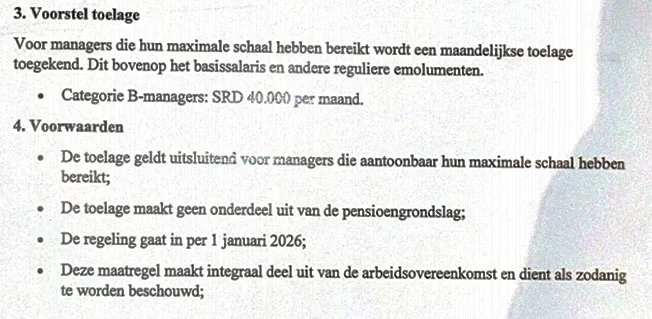
    A significant labor dispute has erupted at Surinamese state-owned energy company EBS after revelations of a controversial proposal to grant managers substantial monthly allowances. The Organization of Workers in the Energy Sector (OWOS) has launched vehement protests against a memorandum suggesting monthly supplements of SRD 40,000 (approximately $40,000) for senior managers who have reached their maximum salary scale.

    The conflict centers on a December memorandum allegedly approved solely by General Director Leo Brunswijk without full executive board consultation. According to OWOS President Marciano Hellings, the document was recently discovered and appears to circumvent standard approval processes. The proposed policy aims to retain experienced management personnel and recognize their contributions through additional compensation beyond base salaries and existing benefits.

    Hellings has characterized the proposal as “unprecedented and unacceptable,” particularly highlighting the stark contrast with ordinary employees’ compensation struggles. Many rank-and-file workers have reportedly waited years for salary structure improvements, with some denied modest SRD 1,500 raises due to purported financial constraints.

    The union leader questions the financial logic behind simultaneously claiming inability to fund small employee raises while allocating substantial resources for management bonuses. Hellings suggests this creates a perception of preferential treatment for a small corporate elite while most staff contend with relatively low wages.

    OWOS has formally requested that both EBS management and the Board of Commissioners investigate the proposal’s origins and financial implications. The union contends this incident reflects broader systemic issues, including allegations of strategically placing highly compensated individuals in key positions.

    The controversy has generated significant unrest among union members, with Hellings reporting being “inundated with questions from angry employees” demanding explanations for the astronomical management allowances amid general staff austerity. The union is now appealing to the state-owned enterprise’s shareholder for intervention and transparency regarding EBS compensation policies.

  • Tribunal blocks FSC bid to halt Equity appeal By Emmanuel Joseph

    Tribunal blocks FSC bid to halt Equity appeal By Emmanuel Joseph

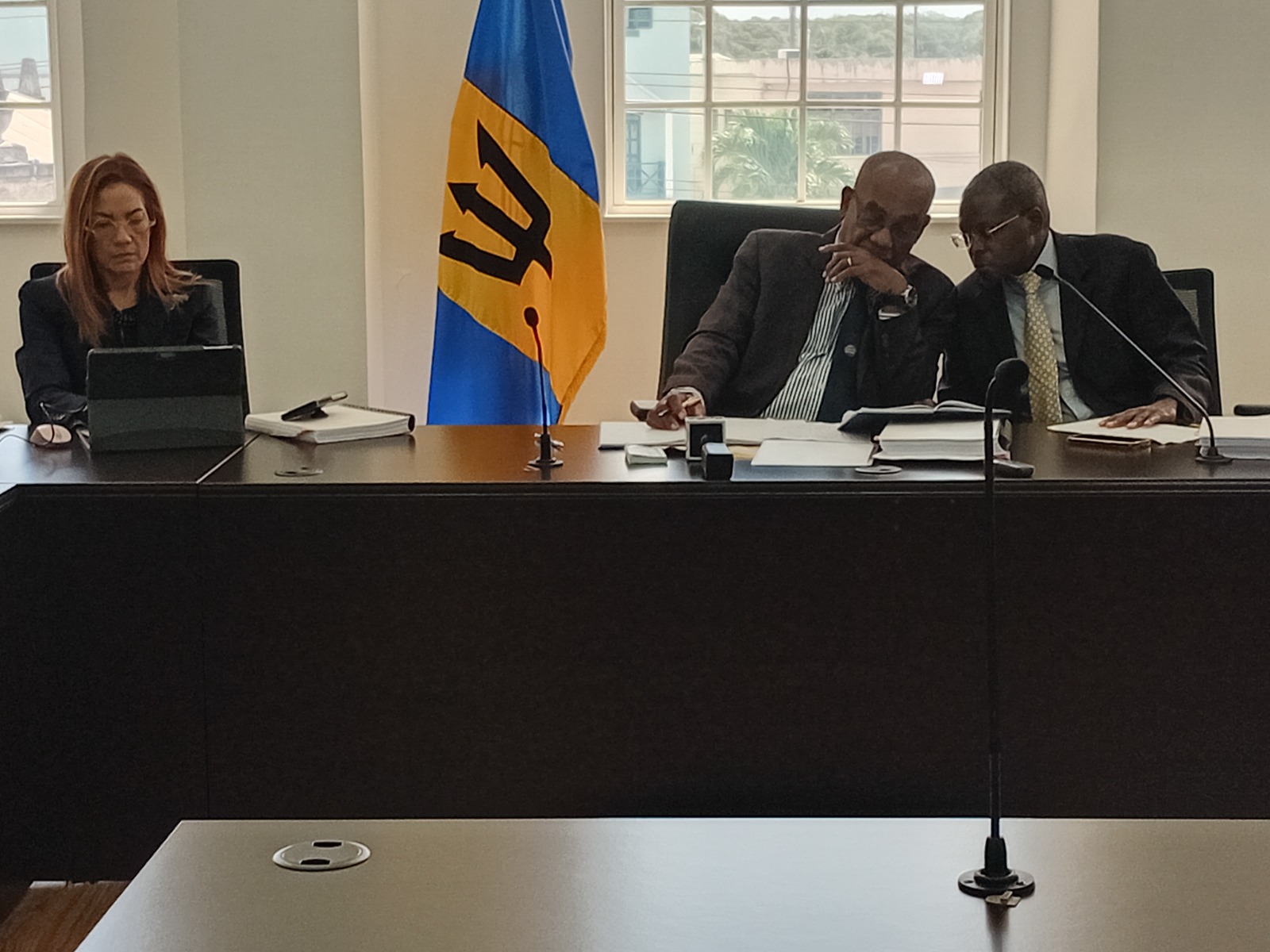
    In a landmark first ruling, the newly established Financial Services Commission Appeals Tribunal has rejected a motion by the Financial Services Commission (FSC) to suspend appeal proceedings initiated by Equity Insurance Company Limited. The decision was delivered on Thursday by tribunal chair Christopher Blackman, a retired High Court judge, during a case management conference.

    The FSC, represented by attorney Amanda Best, had petitioned for a stay of the appeal pending the outcome of a separate winding-up application against the insurer currently before the High Court. That case was recently adjourned until March 25.

    Opposing the regulator’s request, Equity’s legal counsel Larry Smith characterized the FSC’s application as “high-handed.” Smith argued that the FSC had created an impossible situation for Equity by revoking its license in December while failing to establish the necessary appeals tribunal until February 20, effectively leaving the company without recourse for two months.

    “The FSC stepped into Equity’s affairs, made their decisions, issued the revocation notice, but failed to put in place the legislative mechanism that would allow Equity to advance its appeal,” Smith contended. “Now they seek a stay without presenting any legal basis for such application.”

    After considering arguments from both sides and consulting with fellow tribunal members Nigel Bennett and Connie Smith, Justice Blackman dismissed the FSC’s application. The tribunal chair emphasized that the regulator should have sought a stay order from the High Court when they had the opportunity, rather than approaching the appeals tribunal after the fact.

    The conference established procedural guidelines for the appeal process, setting March 26 as the deadline for the FSC to respond to an affidavit filed by Equity Managing Director Karis Pounder. Equity will then have until April 14 to submit any rebuttal to the commission’s response.

    The tribunal has scheduled its next session for April 30 to review progress and determine future proceedings, with the substantive appeal hearing likely occurring between late May and early June. The three-member tribunal, appointed for an initial two-year term, convened at the Henry Forde and David Simmons Legal and Judicial Complex in The City.

  • Light & Power warns of higher costs from oil market volatility

    Light & Power warns of higher costs from oil market volatility

    Barbados residents face imminent increases in their electricity expenses as the Barbados Light & Power Company Ltd announced Thursday that rising global oil prices will directly impact consumer power bills. The utility company attributed this development to ongoing geopolitical tensions in the Persian Gulf region, which have driven up international fuel costs and consequently elevated electricity generation expenses.

    The power provider explained that approximately 80% of Barbados’s electricity is generated using fuel procured on the international market, creating a direct correlation between global oil price fluctuations and the fuel component of consumer electricity statements. Recent weeks have witnessed substantial volatility in crude oil markets, with West Texas Intermediate benchmark prices climbing from approximately $64 per barrel last month to recent highs before stabilizing near $87 per barrel.

    This price movement has directly influenced the Fuel Clause Adjustment (FCA), a standard billing mechanism that reflects actual fuel procurement costs. The FCA has increased from 28.9949 cents per kilowatt-hour in February to 35.8256 cents per kilowatt-hour for March, based on a benchmark price of $75 per barrel at the time of calculation.

    For typical households consuming 250 kilowatt-hours monthly, this adjustment translates to an estimated $17 increase in their electricity bill. Company officials emphasized that the FCA represents a direct pass-through of fuel expenses without any markup applied by the utility.

    Johann Greaves, Vice-President of Operations, acknowledged the additional financial strain this places on consumers: ‘We recognize that numerous households and businesses are already navigating elevated living costs, and any upward adjustment in electricity expenses compounds these financial pressures.’

    With global oil markets expected to remain volatile, the company committed to closely monitoring international conditions and maintaining transparent communication with customers to facilitate informed financial planning. Simultaneously, Light & Power continues supporting national initiatives to reduce Barbados’s long-term vulnerability to international fuel price fluctuations through expanded renewable energy integration and diversified energy sources as part of the island’s broader energy transition strategy.

    Consumers are advised to implement practical energy conservation measures, particularly regarding high-consumption appliances, to mitigate the impact of rising fuel costs on their monthly electricity expenditures.

  • BTL Faces Tough Questions on Unapproved Merger

    BTL Faces Tough Questions on Unapproved Merger

    Belize’s telecommunications landscape faces a pivotal regulatory showdown as the Public Utilities Commission (PUC) intensifies its examination of Belize Telemedia Limited’s proposed acquisition of Speednet, the operator behind Smart networks. Despite BTL’s revised submission on February 10th, regulatory authorities have identified substantial concerns regarding the unapproved merger, prompting a formal demand for detailed responses by April 13th.

    The Commission’s rigorous inquiry transcends routine procedural matters, focusing instead on fundamental consumer protection issues. Regulators are demanding specific commitments regarding potential price modifications, service quality preservation, market competition guarantees, network integration strategies, and financial stability assurances. This represents a significant departure from previous regulatory approaches, emphasizing transparency and public accountability.

    In an unprecedented move, the PUC has published all investigative questions online and actively solicited input from both Smart and BTL subscribers, recognizing that the merger’s outcome will profoundly impact national connectivity infrastructure. The regulatory body’s assertive stance signals a potential transformation of Belize’s telecom sector, possibly ending BTL’s historical market dominance through enforced competitive reforms.

    Proponents of the consolidation argue that Belize’s modest market size cannot sustain duplicate network infrastructures, suggesting that a unified entity could reduce operational costs and ultimately benefit consumers. Conversely, skeptics question whether genuine competition can thrive within such a constrained market, raising the alternative possibility of implementing a rigorously regulated monopoly.

    The Commission’s intervention reflects broader considerations about protecting government investments in SSB and safeguarding public interests, as forced market competition would inevitably diminish BTL’s profitability and market share. This regulatory confrontation will ultimately determine whether Belize pursues market-driven competition or optimized consolidation, with lasting implications for national digital connectivity.

  • Abinader opens 38th National Agricultural Fair focused on technology

    Abinader opens 38th National Agricultural Fair focused on technology

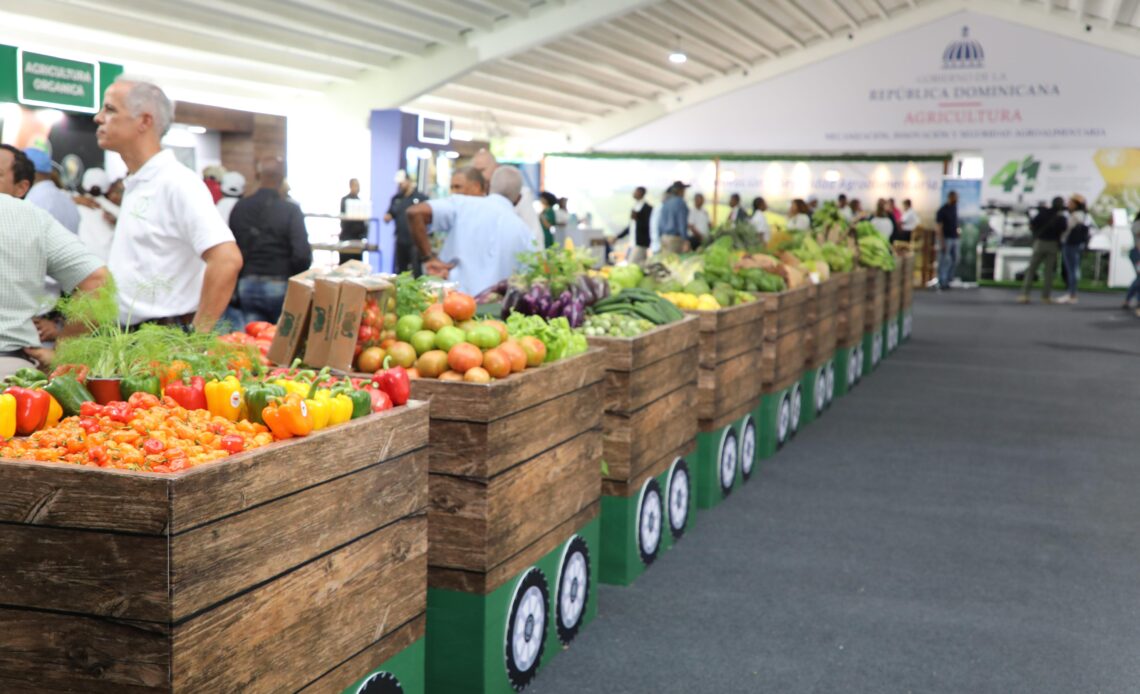
    Santo Domingo has become the epicenter of agricultural innovation as President Luis Abinader joined industry leaders to inaugurate the 38th National Agricultural Fair. The landmark event, hosted at the Julio Antonio Brache Arzeno Livestock City, will showcase cutting-edge farming technologies over its 11-day run, signaling a transformative shift toward mechanization in the Dominican Republic’s agricultural sector.

    Agriculture Minister Francisco Oliverio Espaillat presented compelling economic data during the opening ceremonies, revealing that agriculture constitutes 4.5% of the nation’s GDP and sustains over 365,000 direct employment opportunities—approximately 7% of the national workforce. The minister further highlighted remarkable progress in food security, with malnutrition rates plummeting from 8.7% in 2019 to 3.6% in 2025. The government’s ambitious ‘Zero Hunger’ initiative aims to further reduce this figure to 2.5% by 2028.

    José Manuel Mallén, President of the National Livestock Association, characterized the fair as the premier platform for agricultural exhibition and collaboration among producers, corporations, and institutions. The event commenced with a special tribute to businessman and rancher Julio Antonio Brache Arzeno, recognizing his substantial contributions to the national cattle industry.

    This year’s edition features South Korea as the guest nation, emphasizing international cooperation in agricultural technology and innovation. The expansive fairgrounds host approximately 70 farms exhibiting more than 500 cattle, nearly 400 goats and sheep, and 330 horses competing in traditional disciplines including Paso Higüeyano and Paso Fino. Beyond livestock exhibitions, attendees can experience technological demonstrations, culinary events, cultural activities, and financial programs designed to accelerate the modernization of Dominican agriculture through institutional support and agro-industrial partnerships.

  • WIOC Says Adequate LPG Supply Available Across Antigua and Barbuda

    WIOC Says Adequate LPG Supply Available Across Antigua and Barbuda

    West Indies Oil Company Limited (WIOC) has issued a formal advisory addressing a recent surge in liquefied petroleum gas (LPG) cylinder purchases across Antigua and Barbuda, attributing the trend to unwarranted public anxiety and speculation. The energy provider has moved swiftly to reassure consumers that its supply chain remains fully operational with sufficient inventory to meet regular demand levels.

    In an official statement, WIOC confirmed that both LPG product and cylinder availability are at adequate levels, explicitly urging against stockpiling behavior. The company emphasized that current distribution capabilities can comfortably sustain normal consumption patterns without supply chain interruptions.

    Addressing circulating rumors, WIOC categorically denied engaging in any discussions with the Government of Antigua and Barbuda regarding potential price increases for LPG cylinders. This clarification aims to dispel market uncertainties that may have contributed to the recent buying surge.

    The company has implemented enhanced monitoring protocols to track distribution patterns and consumption rates in real-time. WIOC reaffirmed its commitment to maintaining reliable LPG distribution throughout the nation, with contingency measures in place to ensure continuous service delivery during this period of heightened demand.

  • Grenada Price Watch 2026: More than just groceries

    Grenada Price Watch 2026: More than just groceries

    Amid ongoing political discourse surrounding the cost-of-living crisis, Grenada’s latest Government Gazette (Volume 144, No. 11) published on March 6, 2026, presents a multifaceted economic landscape for ordinary citizens. The official Consumer Price Index data for December 2025 indicates a marginal 0.05% decline in overall living costs compared to November 2025. However, this superficial improvement masks substantial inflationary pressures affecting essential household commodities.

    Critical examination of consumer expenditure patterns reveals alarming price surges in fundamental necessities. Most notably, elderly care services have experienced a dramatic 33.33% year-on-year increase, imposing severe financial strain on families supporting aging relatives. Water utilities have risen by 5.53%, while healthcare and education—two vital public service sectors—recorded respective increases of 2.44% and 1.74%. Basic food items including margarine (5.02%), eggs (1.56%), and pasta (1.14%) have likewise become significantly more expensive compared to December 2024 levels.

    Contrasting this trend of rising essentials, the Gazette documents remarkable entrepreneurial activity within the leisure industry. Despite increasing utility costs, St. George and St. Andrew parishes alone witnessed 41 new applications for Liquor Dealing Licenses from diverse professional backgrounds including educators and construction workers. This development underscores a peculiar economic resilience within the social spending sector, with beer prices increasing 3.75% annually—substantially exceeding the general inflation rate of 0.57%.

    Global market influences continue to impact Grenada’s economy, as evidenced by imported preserved fish prices rising 2.54% compared to just 0.66% for locally sourced fresh fish. Even domestic fresh vegetables experienced a concerning 1.93% price hike in December alone. Current government stabilization measures—including a EC$10 electricity subsidy for small consumers, EC$40 cooking gas price cap, and VAT exemptions on twenty essential items—are providing crucial mitigation against international price volatility.

    The emerging economic challenge lies in the offsetting effect where utility savings are negated by rising service costs. For Grenadian households, managing living expenses represents a complex balancing act between modest savings and persistent increases across essential services. The proliferation of liquor license applications suggests many citizens are pursuing secondary income sources to maintain existing social expenditure patterns amid financial pressures.

    Sustainable economic relief will likely require multipronged approaches: containing service sector inflation, bolstering local agricultural production against global market fluctuations, and potential consumer recalibration of discretionary spending priorities.