分类: business

  • Digitalised news and shift to Online advertising major reasons for Stabroek News’ closure- Editor-in-Chief

    Digitalised news and shift to Online advertising major reasons for Stabroek News’ closure- Editor-in-Chief

    Guyana’s renowned independent newspaper Stabroek News will cease operations in March 2026 after nearly four decades of publication, citing fundamental market shifts toward digital platforms as the primary cause. Editor-in-Chief Anand Persaud revealed that the convergence of digital news consumption and advertising migration to online channels has rendered the print business model unsustainable.

    The publication’s advertising revenue experienced catastrophic decline as major corporations including Digicel, Banks DIH, and Demerara Distillers Limited redirected marketing budgets toward digital platforms. This left the newspaper dependent primarily on statutory government advertising, occasional financial statements, and legal notices. Circulation numbers plummeted from historic peaks of 40,000 Sunday copies to a mere 4,000-5,000 copies currently.

    Persaud emphasized that while political considerations may have marginally influenced some advertisers’ decisions, the core issue remains irreversible consumer behavior transformation. “People were so engrossed on their phones and what they can see in live real time,” he noted, adding that newspapers providing next-day coverage became functionally obsolete.

    The publishing company, Guyana Publications Inc., maintains solvency and will fulfill all financial obligations to its 60 employees through severance packages and contributory pension schemes. The final edition will publish March 15, followed by voluntary liquidation proceedings.

    This development mirrors regional trends, occurring shortly after Trinidad’s Newsday announced its closure following 32 years of operation. Stabroek News, established in 1986 during Guyana’s political transition from socialism, initially received funding from the US National Endowment for Democracy but evolved into an independent voice.

    Despite exploring hybrid digital-print models over five years of evaluation, management determined that digital revenue streams proved too “ephemeral” to ensure long-term viability. Persaud concluded that the newspaper preferred “to leave with dignity” rather than compromise editorial independence through financial dependencies.

  • Hesse and Gobat Address Alfa Nero Brokerage Agreement

    Hesse and Gobat Address Alfa Nero Brokerage Agreement

    In a significant development concerning the high-profile sale of the superyacht Alfa Nero, brokers John Hesse and Rupert Gobat have formally addressed the terms of their brokerage agreement. The clarification comes amidst ongoing legal and financial scrutiny surrounding the vessel, which was seized and auctioned by the Antiguan government.

    The brokers emphasized that their contractual arrangement was structured on a success-fee basis, meaning compensation was contingent solely upon the successful completion of the yacht’s sale. This statement appears to counter any speculation of guaranteed payments or retainers unrelated to the transaction’s finalization.

    Background investigations reveal the Alfa Nero became embroiled in international sanctions, leading to its abandonment in Antiguan waters. Its subsequent government-led auction was intended to settle outstanding debts, including crew wages and port fees. The involvement of high-caliber brokers like Hesse and Gobat underscores the complex asset valuation and diplomatic sensitivities inherent in selling a sanctioned luxury asset.

    The brokers’ disclosure highlights the financial risks undertaken by professionals dealing with seized assets, where payment is inherently tied to the resolution of often protracted legal and political proceedings. This case sets a notable precedent for brokerage engagements in the high-stakes maritime industry, particularly for vessels impacted by global sanctions regimes.

  • Prime Minister Gaston Browne Chairs 112th Monetary Council Meeting of the Eastern Caribbean Central Bank

    Prime Minister Gaston Browne Chairs 112th Monetary Council Meeting of the Eastern Caribbean Central Bank

    The Eastern Caribbean Central Bank’s Monetary Council convened its 112th meeting on February 13, 2026, under the remote chairmanship of Prime Minister Gaston Browne. The high-level gathering at the ECCB Campus in Saint Kitts and Nevis addressed pressing economic challenges and strategic responses to evolving global conditions.

    Amid geopolitical tensions and structural hurdles within the Eastern Caribbean Currency Union, council members prioritized maintaining monetary stability while accelerating regional transformation initiatives. The session yielded several significant outcomes, beginning with the unanimous reappointment of Timothy N.J. Antoine as ECCB Governor for an additional five-year term starting February 1, 2026. This decision reflects the council’s emphasis on leadership continuity during critical economic restructuring.

    The council extensively reviewed the Governor’s comprehensive report titled ‘ECCU 2026 and Beyond: Bold Policies for Bigger and More Resilient Economies,’ which reinforced monetary stability as the foundation of regional development strategy. The Eastern Caribbean dollar demonstrated remarkable strength with a 99.5% backing ratio—significantly exceeding the statutory 60% requirement—and foreign reserves totaling EC$5.83 billion. July 2026 will commemorate five decades of the currency’s fixed exchange rate at EC$2.70 to US$1.00.

    Considering stable domestic conditions and moderating global inflation, policymakers maintained current interest rates: the Minimum Savings Rate at 2.0%, Discount Rate at 3.0% for short-term credit, and 4.5% for long-term credit. These measures aim to preserve currency union stability and sustain investor confidence.

    The banking sector assessment revealed robust health with substantial liquidity (EC$1.41 billion in excess reserves as of January 2026), strengthened capital buffers, improved adequacy ratios, and declining non-performing loans. The ECCU Credit Bureau expansion continues, with five member states now fully operational, facilitating improved credit access.

    While projecting 3.3% growth for 2026, the council acknowledged the necessity to accelerate expansion to approximately 7% annually to double regional output within ten years. Members committed to advancing the ‘Big Push’ strategy focusing on productivity enhancement, economic diversification, food and energy security, financial market development, and climate resilience. Strategic priorities include infrastructure modernization, renewable energy expansion, human capital development, and increased financial inclusion.

    Significant regulatory advancements include progress toward establishing the Eastern Caribbean Citizenship by Investment Regulatory Authority (ECCIRA) and implementing a Regional Biometrics Programme, both expected to enhance governance and investor confidence.

    Financial modernization efforts featured the suspension of DCash 2.0 development to prioritize a Fast Payment System and participation in the CARICOM Payments and Settlement System pilot. The successful 2025 ECCU Retail Bond Programme pilot was recognized as instrumental in broadening capital market access, while plans for a 2026 Office of Financial Conduct aim to strengthen consumer protection.

    Fiscal sustainability concerns emerged as some member states risk missing the 2035 debt-to-GDP target of 60%, underscoring the need for disciplined fiscal management. Tourism remained the economic cornerstone with 3.3 million visitor arrivals and EC$6.4 billion in expenditures by Q3 2025, though long-term prosperity requires deeper economic diversification.

    The upcoming 10th Annual Growth and Resilience Dialogue (April 22-24, 2026) will further develop these initiatives under the theme ‘Big Push: Resilient Leadership in a Dynamic World.’ Leadership transition will occur on July 9, 2026, in Dominica, with Irving McIntyre expected to assume chairmanship before the 113th Monetary Council meeting on July 10, 2026.

    Prime Minister Browne reiterated Antigua and Barbuda’s steadfast commitment to regional cooperation, financial innovation, macroeconomic stability, and sustainable growth throughout the Eastern Caribbean.

  • Antigua Carnival Has Been Promoted in Dominica and Trinidad

    Antigua Carnival Has Been Promoted in Dominica and Trinidad

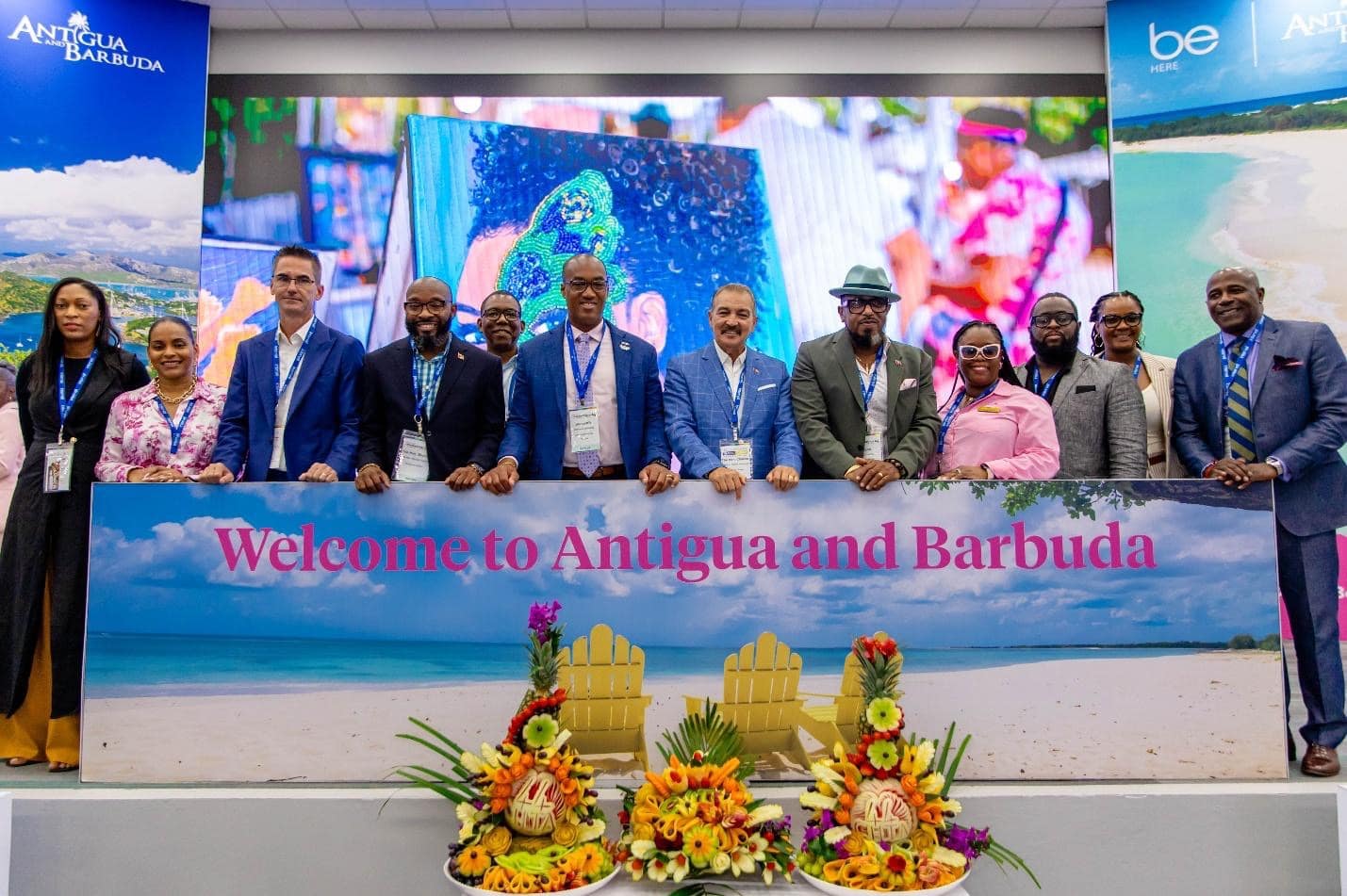
    In a strategic move to capture post-Carnival tourism traffic, Antigua and Barbuda officials launched an aggressive promotional campaign during Trinidad’s iconic Carnival celebrations. A high-level delegation comprising representatives from both the Antigua and Barbuda Tourism Authority and the Antigua and Barbuda Festivals Commission engaged directly with attendees, media outlets, and event promoters throughout the festivities.

    The initiative specifically targets maintaining regional travel momentum immediately following Trinidad’s final parade, positioning Antigua’s Carnival as the natural continuation for dedicated soca enthusiasts and festival participants. This calculated approach aims to channel the energy of Trinidad’s celebrations directly into Antigua’s tourism ecosystem.

    Beyond the obvious musical and parade attractions, representatives highlighted the dual-island nation’s diverse appeal, showcasing pristine beaches, world-class sailing facilities, gourmet culinary experiences, and rich cultural heritage. This comprehensive presentation forms part of a broader strategy to transform short-term carnival visitors into extended-stay tourists, thereby increasing tourism revenue and visitor engagement.

    The campaign represents a concerted effort to strengthen Antigua and Barbuda’s competitive position within the Caribbean’s crowded festival market. By targeting both first-time visitors and returning guests from across the Caribbean region, the tourism authority aims to create sustainable growth in its tourism sector while establishing the nation as a premier destination for cultural and recreational tourism.

  • Your Package Will Cost $1 More to Ship to the U.S.

    Your Package Will Cost $1 More to Ship to the U.S.

    The Belize Postal Service has announced a significant policy change that will increase shipping costs for packages destined for the United States. Effective immediately, all international shipments to the U.S. will incur an additional one-dollar fee, a measure formally approved by the nation’s Cabinet.

    This strategic adjustment directly responds to sweeping changes in U.S. trade regulations initiated by an executive order from President Donald Trump in July 2025. The American policy overhaul eliminated the longstanding duty-free threshold that previously allowed goods valued up to $800 to enter the United States without taxation. Under the updated framework, all dutiable international postal items are now subject to U.S. import taxes.

    Belizean officials have characterized the surcharge as an essential operational measure rather than a revenue-generating initiative. The additional dollar per package will enable the postal service to offset increased administrative costs and compliance burdens associated with the revised American regulatory requirements. These include enhanced customs documentation, processing procedures, and potential liability for undeclared goods.

    The financial impact is expected to affect both commercial enterprises and private citizens who regularly utilize postal services for transboundary shipments. Small to medium-sized businesses engaged in e-commerce and export activities may face compounded operational expenses, while individuals sending gifts or personal items to family members in the U.S. will encounter higher mailing costs.

    The policy implementation reflects broader global adjustments to the U.S. trade policy shift, with multiple nations reconsidering their postal agreements and fee structures. Belize’s approach demonstrates how smaller economies are adapting their administrative frameworks to maintain functional postal relationships with the United States while managing increased regulatory complexity.

  • Stabroek News closes operations

    Stabroek News closes operations

    In a significant development for Guyanese media, the independent newspaper Stabroek News has announced its permanent closure after four decades of operation. The decision, described by the publication’s leadership as “extraordinarily difficult and painful,” marks the end of an era for one of Guyana’s most respected journalistic institutions.

    The newspaper’s demise stems from a complex confluence of factors including sustained financial pressure from state entities, an unlevel competitive landscape, and fundamental shifts in how audiences consume news. Most notably, the state-run Department of Public Information has accrued an outstanding debt exceeding G$80,000,000 for unpaid advertisements—a financial burden that has persisted despite repeated appeals for resolution. This substantial arrears represents what the publication characterizes as a deliberate tactic to starve the independent media outlet of crucial operating funds.

    Founded in the mid-1980s by David de Caires during an era of state-controlled media dominance, Stabroek News emerged as a pioneering voice in a media landscape previously limited to government-owned publications. The newspaper maintained its editorial independence despite numerous challenges, including a previous period when advertisements from state-owned companies were deliberately withheld in what was seen as an attempt to muzzle free press.

    The publication’s struggles reflect broader challenges facing traditional journalism in the digital age. As readers increasingly turn to algorithmic news feeds and online sources, the newspaper’s commitment to balanced coverage found itself at odds with contemporary click-driven metrics. Additionally, the company faced significant structural obstacles including repeated refusals for radio broadcasting licenses and a non-competitive environment where main competitors enjoyed substantial privileges.

    Beyond the political and market challenges, Stabroek News cultivated a remarkable legacy of staff loyalty through compassionate employment practices including childcare facilities, transportation services, and comprehensive benefit schemes. These measures resulted in extraordinary staff retention rates, with nearly half of employees remaining with the company for a decade or longer.

    The closure represents not just a business failure but the end of a institution that nurtured generations of readers, writers, and thinkers in Guyana. The newspaper’s leadership exits with heads “unbowed,” bequeathing a legacy of democratic discourse and civil public conversation to the nation.

  • Officials cheer JetBlue’s added Boston-Saint Lucia flight

    Officials cheer JetBlue’s added Boston-Saint Lucia flight

    Saint Lucia’s tourism sector receives significant connectivity boost as JetBlue announces the introduction of a second weekly nonstop flight from Boston to the Caribbean destination. The new service, scheduled to commence on February 15, 2026, will operate every Saturday at 11:40 AM through April 25, effectively doubling air access from the Massachusetts region.

    Tourism authorities have identified insufficient airlift capacity as a critical constraint amid growing visitor numbers. Louis Lewis, CEO of the Saint Lucia Tourism Authority, emphasized that this expansion provides travelers from Boston and surrounding areas with twice the opportunities to experience the island during the peak winter season. The development addresses mounting concerns about meeting escalating demand while combating shortages in both flight availability and accommodation.

    The airline’s decision follows successful negotiations during last year’s strategic roadshow initiative, where tourism officials presented destination performance metrics to major carriers including JetBlue, Delta, and American Airlines. According to Business Intelligence Manager Javan Lewis, the expansion directly correlates with strong yield indicators and demonstrated demand from the Boston catchment area.

    Marketing efforts have played a pivotal role in driving this growth. Dexter Percil, Head of Global Marketing, attributed the successful early implementation of the “Come to Your Senses” campaign to accelerated booking patterns observed between September and December. The promotional strategy emphasizes Saint Lucia’s dual appeal as a romance destination and soft adventure hub, with enhanced wellness tourism promotions planned as new resort properties become operational.

    While celebrating improved air connectivity, officials acknowledge that hotel capacity remains an ongoing challenge. The anticipated opening of new properties, including LifeCo by A’ila, is expected to gradually alleviate accommodation constraints and support the island’s sustainable tourism development.

  • New agro-producing facility may be coming to Dominica, says PM SKerrit

    New agro-producing facility may be coming to Dominica, says PM SKerrit

    The Dominican government has unveiled ambitious plans to construct a state-funded agro-processing facility specifically designed to support local beekeepers and pepper sauce producers. Prime Minister Roosevelt Skerrit made the significant announcement during a recent stakeholder engagement session, highlighting the administration’s commitment to addressing critical infrastructure challenges within the agricultural processing sector.

    Prime Minister Skerrit identified several persistent obstacles facing small-scale agro-processors, emphasizing that access to appropriate infrastructure remains a fundamental constraint. “The requirements for proper processing, bottling, storage, quality testing, and standards compliance demand facilities that individual small producers cannot reasonably develop independently,” Skerrit explained during his address.

    In a groundbreaking commitment, the government revealed plans to fully finance and equip a modern processing center that will serve the specialized needs of both honey and pepper sauce producers. The facility will provide comprehensive services including production space, bottling capabilities, packaging solutions, and quality assurance infrastructure.

    “We are prepared to invest substantial resources into establishing a national production facility that will be available to producers at no cost,” Skerrit declared, underscoring the government’s willingness to shoulder the entire financial burden of the project. This initiative represents a significant intervention in Dominica’s agricultural value chain development, potentially transforming the economic prospects for small-scale agro-processors across the nation.

    The proposed facility aims to enhance product quality, improve market competitiveness, and increase export potential for Dominican honey and pepper sauce products. By centralizing processing operations, the government expects to achieve economies of scale while maintaining stringent quality standards that meet international market requirements.

  • GPH eyes luxury disruption with Antigua leading the charge

    GPH eyes luxury disruption with Antigua leading the charge

    Global Ports Holding (GPH), the world’s largest independent cruise port operator, is executing a multifaceted global expansion strategy under the leadership of Chairman and CEO Mehmet Kutman. The company’s ambitious vision encompasses geographic growth, luxury service innovation, and community-focused development.

    Caribbean Expansion: Establishing Home Porting Hubs
    GPH’s Caribbean strategy centers on developing major home porting facilities, with Antigua serving as the flagship transformation. Since acquiring the port in 2019, the company has revolutionized operations from zero home porting passengers to an anticipated 60,000-70,000 passengers this year. Kutman projects this will reach 250,000 within three years following the November completion of a dedicated home port terminal.

    The expansion extends beyond Antigua to St. Lucia, where construction is underway for completion by late 2024, and Puerto Rico, which already accommodates cruise vessels. This Caribbean network primarily targets European passengers, leveraging strong air connectivity particularly between Antigua and the United Kingdom.

    European Infrastructure Milestone
    In the Canary Islands, GPH is achieving a significant infrastructure milestone with Las Palmas set to become Europe’s largest single cruise terminal at 16,000 square meters. The facility will handle an estimated 1.5-1.7 million passengers annually with 50% home porting capacity. The development emphasizes environmental sustainability through solar panels, recycled materials, and eco-conscious construction methods.

    Latin American Frontier
    GPH is strategically targeting Latin America as the next growth frontier, with Colombia identified as the primary focus in Central America. The company’s carefully calibrated approach views Mexico’s ports as ‘very, very relevant,’ while Brazil, Honduras, and emerging markets represent promising new territories where innovative port management can transform local economies and passenger experiences.

    Luxury Market Innovation
    Recognizing the luxury cruise segment’s projected growth to 15-25 million passengers by 2028, Kutman is personally leading development of a white glove concierge service targeting ultra-high-end passengers. He notes that despite ships’ luxury amenities, passengers paying $15,000-30,000 for seven-day cruises currently receive inadequate port services.

    Community Integration Philosophy
    Central to GPH’s operational ethos is community integration. The company invests significantly in local scholarships, social programs, and training, preferentially working with local businesses over international chains. GPH maintains a globally diverse yet locally rooted workforce, drawing talent from 18-20 nationalities while prioritizing local leadership and limiting expatriate experts to initial transition periods.

    Technological Solutions
    Kutman’s technological vision focuses on intelligent solutions that enhance passenger experience while managing overtourism challenges. The company employs sophisticated software for real-time vessel tracking and AI-driven crowd management systems that include innovative approaches like replacing traditional tour group flags with discreet earphones to reduce visual pollution in destinations.

    Strategic Acquisition Approach
    GPH’s expansion strategy remains selective rather than ubiquitous. The Mediterranean represents their stronghold with 35-40% of cruise passengers, while Caribbean expansion continues with potential for two or three strategic acquisitions. The Far East and Mexican Riviera emerge as next strategic priorities, with Kutman emphasizing that the company’s success is measured by tangible community improvements rather than mere portfolio growth.

    Kutman’s investment philosophy is straightforward: ‘If we don’t bring value to the destination, there’s no need for us to be there.’ This reflects his worldview that successful port operations must balance operational efficiency, technological innovation, and genuine commitment to both passenger experience and local communities, creating symbiotic relationships where ‘their benefit is our benefit.’

  • Thousands of Trademarks, Almost No Patents: IP Filings Across CARICOM

    Thousands of Trademarks, Almost No Patents: IP Filings Across CARICOM

    A stark intellectual property (IP) imbalance is emerging across the Caribbean Community (CARICOM), revealing a regional economic strategy heavily skewed towards branding over foundational innovation. Recent analyses of regional IP filings indicate a marketplace bustling with trademark applications for goods and services, yet one that is critically deficient in the patents that signal technological advancement and homegrown research.

    Statistical data paints a concerning picture: while thousands of trademarks are registered annually by both local entrepreneurs and international corporations seeking market presence, the number of patents filed by CARICOM nationals remains exceptionally low. This trend suggests that the region’s economic players are prioritizing immediate commercial identity and consumer market protection over long-term investments in research and development (R&D) and complex technological invention.

    Experts point to multiple structural factors driving this disparity. The process of securing a patent is notoriously more arduous, expensive, and time-consuming than registering a trademark, posing a significant barrier for individual inventors and small and medium-sized enterprises (SMEs) within CARICOM member states. Furthermore, a comparative lack of robust national and regional infrastructure for scientific R&D, coupled with brain drain in STEM fields, creates an environment where groundbreaking inventions are less likely to originate.

    The implications of this IP dichotomy are profound for the future economic resilience of the Caribbean. A heavy reliance on trademarks indicates an economy focused on commerce and distribution, potentially leaving it vulnerable as a net consumer—rather than a producer—of high-value, patented technology. This pattern could hinder sustainable development, limit competitiveness in global knowledge-based industries, and perpetuate dependency on foreign innovation and imports.

    To counter this trend, policy analysts are urging CARICOM governments and regional bodies to implement decisive measures. Proposed solutions include enhancing financial and technical support for local inventors, reforming patent registration procedures to reduce bureaucratic hurdles, and forging stronger collaborations between academia and industry to stimulate a culture of homegrown technological creation and protectable invention.