分类: business

  • Economy : The IMF finds the implementation of Haiti’s Staff-Monitored Program encouraging

    Economy : The IMF finds the implementation of Haiti’s Staff-Monitored Program encouraging

    The International Monetary Fund has granted approval for the second review of Haiti’s Staff-Monitored Program (SMP), simultaneously authorizing a nine-month extension of the initiative through September 2026. This decision comes as the Caribbean nation continues to navigate extreme security challenges, institutional fragility, and significant capacity constraints under the SMP framework—an informal agreement designed to establish policy implementation track records that could eventually qualify Haiti for formal financial assistance.

    Haiti’s economic landscape remains profoundly fragile amid relentless domestic and external pressures. Real GDP contracted for the seventh consecutive year in FY2025 as gang violence intensified across the nation, while annual inflation persisted at approximately 32%. Compounding these challenges, three major external factors threaten additional strain: the impending expiration of Temporary Protected Status for Haitians in the United States in February 2026, the non-renewal of the HOPE/HELP preferential trade agreement that lapsed in September 2025, and Hurricane Melissa’s devastating impact in October 2025, which caused substantial loss of life and widespread damage to infrastructure and agricultural areas.

    Despite these overwhelming obstacles, program implementation has yielded encouraging results. All quantitative and indicative targets for the end-June test date were successfully met, with monetary financing of the fiscal deficit maintained at zero, social spending reaching programmed targets, and revenue performance staying on track. International reserves continued to accumulate, supported by robust remittance inflows and foreign exchange purchases, reaching nearly US$1.5 billion by end-July 2025.

    The extended SMP will focus on preserving macroeconomic stability and reform momentum while allowing political and security conditions to stabilize. Key priorities include advancing governance reforms to address systemic fragility, enhancing revenue mobilization, improving public financial management efficiency, and strengthening the central bank’s policy frameworks. The extension will also enable a more comprehensive assessment of international initiatives, including the UN’s Gang Suppression Force and the OAS’s ‘Haitian Led Roadmap for Recovery and Peace’.

    Critical reform areas emphasize transparency and accountability in public financial management, corruption risk mitigation in revenue administration, and ensuring accountability for serious corruption, organized crime, and money laundering. Haitian authorities are additionally encouraged to complete national assessments for money laundering and terrorist financing to support the country’s removal from the FATF grey list.

    The IMF emphasized that despite these domestic efforts, Haiti continues to require substantial international financial support—preferably in grant form rather than non-concessional loans—to address immediate humanitarian, social, and economic needs while preserving debt sustainability. Grant financing is deemed essential for placing Haiti’s economy on a steady and sustainable growth trajectory that could ultimately improve living conditions for its citizens.


  • BCCI wants upgraded cargo system implemented at Port

    BCCI wants upgraded cargo system implemented at Port

    Barbadian businesses are facing severe financial strain due to chronic inefficiencies at Bridgetown Port, with the nation’s leading commerce organization revealing that congestion-related costs have reached alarming proportions. The Barbados Chamber of Commerce and Industry (BCCI) has issued an urgent call for accelerated implementation of a new cargo clearance system, citing an annual drain of approximately $19 million in foreign exchange through demurrage charges alone.

    Lalu Vaswani, Chairman of the BCCI Customs and Trade Facilitation Committee, emphasized during a recent press conference that these substantial additional costs are inevitably passed through supply chains to consumers, exacerbating the country’s cost of living crisis. The Chamber is now advocating for decisive government action with established timelines to achieve full pre-clearance implementation.

    The core solution proposed involves fundamentally redesigning Barbados’ trade facilitation framework through pre-clearance procedures that would allow customs documentation to be processed before vessel arrival. This approach could reduce clearance times from five days to 24-48 hours, significantly minimizing exposure to punitive demurrage fees that accumulate when containers are held beyond allotted timeframes.

    Vaswani identified aging port infrastructure, originally designed for significantly lower trade volumes, as a primary contributor to the congestion problems. The BCCI’s reform agenda includes establishing measurable targets, with an initial goal of achieving 50% cargo pre-clearance within twelve months of implementation to demonstrate tangible benefits.

    Further technological enhancements are planned, including an electronic single window system that would streamline approvals across multiple agencies through a unified portal. While acknowledging that external factors like volatile international shipping rates remain challenging, Vaswani noted that government intervention had previously helped mitigate some cost pressures by capping freight charges at historical levels.

    The Chamber insists on universal commitment from all stakeholders, emphasizing that partial participation would undermine the system’s effectiveness. This comprehensive port modernization initiative represents a critical step toward reducing inflationary pressures and enhancing Barbados’ trade competitiveness.

  • Belize’s Sugar Industry Faces Labor Crunch, Rising Costs

    Belize’s Sugar Industry Faces Labor Crunch, Rising Costs

    Belize’s vital sugar industry is confronting a severe operational crisis characterized by critical labor shortages and escalating administrative costs. During the previous harvest season, over 100,000 tons of sugarcane were abandoned to decompose in fields due to an acute lack of harvest workers. This agricultural dilemma persists despite the industry’s gradual transition toward mechanized farming methods, which hasn’t yet eliminated the essential need for manual laborers.

    Historically, Belizean farmers have relied on immigrant labor to address workforce deficits. However, industry representatives now report that work permit fees for foreign agricultural workers have surged from $50 to $200 monthly per worker, creating substantial financial pressure. This 300% cost increase has made legal workforce maintenance increasingly challenging for producers.

    Prime Minister John Briceño offers a contrasting perspective, asserting that the core issue isn’t financial but structural. He emphasizes that labor availability and bureaucratic processing delays represent the genuine obstacles rather than permit fees themselves. “The charges have always been there,” Briceño stated, “We have not raised any charges. I think more than anything else it’s the availability of manual labor.”

    The disagreement came to the forefront during recent discussions between sugar producers and government officials. Cosme Hernandez, General Manager of the Progressive Sugarcane Farmers Association, confirmed the matter was raised directly with Minister Martinez. Hernandez revealed that the permit fee structure remained at $50 for over five years before dramatically increasing to the current $200 monthly rate, creating financial strain for the past several growing seasons.

    Producers have proposed returning to the previous $50 fee structure as the most viable solution to maintain both workforce legality and operational viability. This developing situation threatens both Belize’s agricultural economy and its position in the global sugar market, with stakeholders urgently seeking resolution before further crop losses occur.

  • MV Konawaruk 1899 ferry to boost trade, connectivity

    MV Konawaruk 1899 ferry to boost trade, connectivity

    In a significant boost to Guyana’s maritime infrastructure, the newly acquired Greek-built ferry MV Konawaruk 1899 has commenced operations on the Essequibo River route. The vessel, which completed its maiden voyage from Parika to Supenaam on December 19, 2025, represents a strategic investment in enhancing commercial connectivity between Region 2 (Pomeroon-Supenaam) and Region 3 (West Demerara-Essequibo Islands).

    Public Works Minister Juan Edghill, addressing dignitaries and passengers during the inaugural journey, revealed the government procured the $5 million vessel to handle growing cargo volumes, including rice, paddy, and agricultural machinery. The minister emphasized the vessel’s superior capacity, noting it can transport double the load of the aging Chinese-made Kanawan and Sabanto ferries acquired two decades ago. ‘The price that we got this vessel is really a deal,’ Edghill stated, highlighting the cost-effectiveness of the acquisition.

    Substantial modifications were required at mooring facilities to accommodate the new ferry’s significantly larger dimensions. This investment forms part of a broader maritime modernization initiative, with another Greek-built vessel expected shortly to service the Georgetown-North West route.

    Prime Minister Mark Phillips outlined the government’s vision of establishing Parika as a major regional trade hub and command center for Caribbean commerce. The modern vessel is projected to enhance scheduling reliability and reduce agricultural spoilage during transit. ‘It is our investment in imperishable goods,’ Phillips remarked, acknowledging the ferry’s role in preserving perishable commodities. The government also plans to introduce new cargo boats specifically designed for the Pomeroon and NorthWest District routes, further expanding the country’s trade capabilities.

  • STATEMENT: DAIC on announced partial travel restrictions affecting Dominican passport holders

    STATEMENT: DAIC on announced partial travel restrictions affecting Dominican passport holders

    ROSEAU, DOMINICA – November 19, 2025 – The Dominica Association of Industry and Commerce (DAIC), the nation’s primary private sector body, has issued a formal response to newly imposed U.S. travel restrictions affecting specific visa categories for Dominican passport holders. While acknowledging the measures are partial and not a blanket ban, the association highlighted their potential ramifications for the nation’s economic ecosystem.

    The DAIC emphasized that international mobility is a critical enabler for commerce, foreign investment, educational pursuits, and tourism. The announcement, therefore, raises legitimate concerns regarding its impact on business operations, investor sentiment, and overall economic vitality. The association expressed apprehension over the uncertainty such a development creates for corporations, investors, students, and families with international ties.

    In its statement, the DAIC called for the dissemination of precise and timely information to ensure the public and business community can navigate the new landscape effectively. It welcomed the ongoing diplomatic engagement between the Government of Dominica and U.S. authorities, encouraging a continued constructive dialogue to resolve the underlying issues that prompted the policy shift.

    The business group urged its members to maintain composure, rely solely on official channels for verified updates, and conduct thorough assessments of any travel or commercial plans that might be impacted. Furthermore, the DAIC advocated for sustained transparency from officials to allow enterprises to devise contingency strategies and minimize potential operational disruptions.

    Reaffirming its role, the DAIC pledged to actively collaborate with policymakers and stakeholders to advocate for solutions that foster economic stability, bolster confidence, and protect Dominica’s international standing. The association remains dedicated to fortifying a resilient private sector and supporting initiatives that enhance the country’s global economic relationships and reputation.

  • Grenada’s IMA moment of truth: A warning we should not ignore

    Grenada’s IMA moment of truth: A warning we should not ignore

    Dr. Adrian Joseph highlights growing concerns over Grenada’s economic stability as Citizenship by Investment (CBI) revenues become increasingly integral to the nation’s fiscal framework. Recent travel restrictions imposed by the United States on Caribbean nations utilizing CBI programs have amplified scrutiny on these revenue streams, prompting urgent calls for policy reassessment.

    Financial data from January to July 2025 reveals IMA/CBI contributions reached EC$117 million, accounting for approximately 14% of Grenada’s total revenue of EC$540 million. This places CBI revenues nearly equivalent to import duties and exceeds combined revenues from petrol tax, stamp tax, excise tax, and environmental levies. Despite overall revenue performance remaining on target, the country continues operating under deficit conditions, with CBI funds increasingly supporting recurrent expenditures rather than strategic investments.

    The article presents a household budget analogy: traditional tax revenues (VAT, income tax, import duties) represent stable employment income, while CBI revenues resemble unpredictable windfalls. This dependency creates significant vulnerability to external factors including geopolitical shifts, regulatory changes, and international policy decisions beyond Grenada’s control.

    Analysis demonstrates concerning scenarios: a 10% reduction in CBI revenues would decrease total revenue by 1.4%, while a 50% reduction would result in a 6.9% overall revenue decline. Recent regional developments suggest these are not hypothetical concerns, as increased scrutiny affects all Caribbean CBI programs regardless of individual management quality.

    Dr. Joseph proposes a five-point strategy for fiscal resilience: ring-fencing CBI revenues for capital investment and debt reduction; establishing stabilization buffers for revenue shocks; improving domestic revenue mobilization through compliance rather than increased burden on vulnerable populations; pursuing genuine economic diversification through agriculture, tourism, digital services, and renewable energy development; and maintaining rigorous transparency and international engagement.

    The conclusion emphasizes that nations relying on exceptional revenues for recurrent obligations lack true fiscal security. While not advocating CBI program abandonment, the analysis urges immediate policy introspection to build economic resilience before external pressures force abrupt adjustments.

  • Good News for Belize’s Sugar Industry?

    Good News for Belize’s Sugar Industry?

    In a significant move to revitalize Belize’s crucial sugar sector, the government has orchestrated a high-level convergence of industry stakeholders. The December meeting, spearheaded by Dr. Osmond Martinez, Minister of State in the Ministry of Economic Development, assembled a comprehensive coalition at the Sugar Industry Control Board headquarters in Buena Vista Village, Corozal.

    The strategic gathering included representation from major agricultural associations, factory management from BSI/ASR, the Sugar Industry Research and Development Institute (SIRDI), the Cane Production Committee, and multiple growers’ organizations. This collaborative forum addressed pressing operational challenges that have recently plagued the industry.

    Central to the discussions were critical path initiatives including harvest preparedness protocols, advanced cane testing methodologies, and essential infrastructure improvements—particularly the rehabilitation of sugar transportation roads. The dialogue further expanded to financial mechanisms, with particular emphasis on simplifying access to agricultural grants under the Climate Resilient and Sustainable Agriculture Project (CRESAP), alongside enhanced technical support systems for farming operations.

    A government communiqué confirmed that participants established concrete action plans with clearly defined responsibilities and monitoring frameworks to ensure improved program coordination. This development follows a disastrous previous season where approximately 100,000 tonnes of sugarcane deteriorated unharvested due to severe labor shortages.

    While Prime Minister John Briceño has identified timing and labor availability as fundamental concerns rather than financial constraints, industry representatives maintain that escalating costs associated with importing foreign cane cutters presents an ongoing operational dilemma. The meeting represents a coordinated effort to bridge these divergent perspectives through actionable solutions.

  • Big Changes Are Coming to Belize’s Power Grid

    Big Changes Are Coming to Belize’s Power Grid

    Belize’s national energy infrastructure is poised for a comprehensive technological transformation following a landmark financing agreement between Belize Electricity Limited (BEL) and the Caribbean Development Bank (CDB). The utility company has secured a $27.53 million financing package representing the largest direct loan ever extended by CDB to the company.

    The financing arrangement, notable for being the first provided without a Belizean government guarantee, comprises a $27.2 million loan complemented by a $330,000 grant through Canada’s Supporting Resilient and Green Energy initiative. BEL will contribute an additional $7.05 million in counterpart funding to complete the financial structure.

    At the core of this initiative is the nationwide deployment of Advanced Metering Infrastructure (AMI) featuring approximately 115,000 smart meters. This technological overhaul will enable near real-time energy monitoring capabilities, remote operational functions, and enhanced loss control mechanisms across the national grid system.

    BEL Chief Executive Officer John Mencias characterized the agreement as a demonstration of institutional confidence, stating: “This represents a landmark milestone that reflects CDB’s trust in BEL’s financial stability, governance, and management practices.”

    Alexander Augustine, CDB portfolio manager, emphasized the project’s significance in developing a smarter and more climate-resilient energy grid for the Caribbean nation.

    The implementation phase has already commenced in key regions including Belize City, Ambergris Caye, and Placencia, with a comprehensive three-year timeline established for nationwide deployment of the smart grid technology.

  • Consumers face delays in major money transfers after system overhaul

    Consumers face delays in major money transfers after system overhaul

    KINGSTON, Jamaica—Significant processing delays for substantial monetary transfers have emerged across Jamaica’s banking sector following a comprehensive upgrade to the nation’s core payment infrastructure, according to an official confirmation from the Bank of Jamaica (BOJ).

    The operational disruptions originate from the banking system’s transition to a sophisticated international messaging framework designed specifically for high-value transactions, including commercial payments and real estate acquisitions. This strategic modernization initiative, which became operational on December 15, represents Jamaica’s participation in a worldwide movement toward enhancing the speed and reliability of cross-border and large-scale financial operations.

    Despite long-term advantages, the immediate consequence has been substantial system interruptions. Multiple financial institutions have encountered technical challenges in promptly allocating funds to client accounts, creating considerable difficulties for both individual customers and business entities awaiting crucial financial settlements.

    The central banking authority emphasized in an official communication that the national payment infrastructure itself remains fully functional, attributing current processing delays to internal system adaptations required at commercial banking institutions. The BOJ has directed affected customers to address specific concerns directly with their respective financial providers.

    This technological transition was previously rescheduled from its initial November implementation target after several banking organizations cited operational preparedness challenges, compounded by disruptions from Hurricane Melissa. The extended December 15 deadline was established to ensure comprehensive participant readiness.

    Central bank officials are currently collaborating with financial institutions to address the accumulated transaction backlog. “BOJ is maintaining active surveillance of the situation and continues direct coordination with payment system participants to facilitate expedited resolution,” the statement noted, while recognizing the substantial inconveniences created by deferred fund accessibility.

    The Bank of Jamaica reiterated its dedication to maintaining a robust and efficient national payments ecosystem and confirmed ongoing cooperation with all relevant stakeholders to resolve outstanding operational challenges. Customers experiencing delays are recommended to obtain transaction-specific timelines directly from their banking institutions.

  • Toll collection for May Pen to Williamsfield set for December 27, says TJH

    Toll collection for May Pen to Williamsfield set for December 27, says TJH

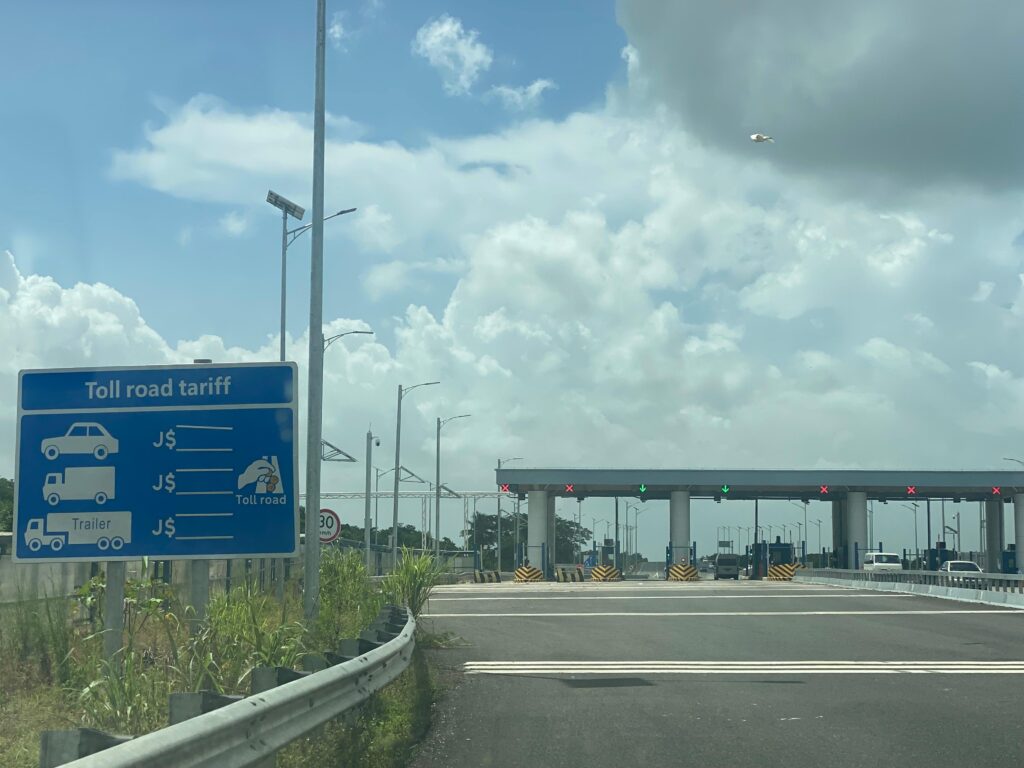
    MANCHESTER, Jamaica — TransJamaican Highway Limited (TJH) has announced the imminent commencement of toll operations along the newly completed May Pen to Williamsfield segment of the PJ Patterson Highway. The official launch is scheduled for December 27, 2025, marking a significant expansion of Jamaica’s highway infrastructure network.

    The infrastructure developer, through its official Instagram channel, detailed comprehensive service offerings that will support this new roadway section. Motorists can expect round-the-clock security patrols and systematic maintenance protocols designed to meet international standards. TJH emphasized its dedication to providing a transportation corridor characterized by safety, reliability, and operational efficiency consistent with existing segments of the TransJam Highways network.

    To ensure sustainable service delivery, TJH will implement a structured toll system at two distinct locations: the Toll Gate-Main Line Toll Plaza and the Toll Gate-Ramp Toll Plaza. The company’s announcement specifically highlighted preferential pricing for T-Tag users, who will benefit from reduced rates and automated frequent traveler incentives, including complimentary passage on every tenth weekly trip through each plaza.

    This development follows the Jamaican Ministry of Transport’s disclosure earlier last week regarding proposed toll structures for the Williamsfield to May Pen segment of Highway 2000. The approved toll schedule establishes three vehicle classifications: Class 1 at J$480, Class 2 at J$720, and Class 3 at J$1,400. T-Tag subscribers will receive modest discounts on mainline tolls, paying J$470 for Class 1 and J$700 for Class 2 vehicles, while ramp access will be priced at fifty percent of the standard mainline rate across all categories.