
Against a backdrop of heavy reliance on imported food that costs Barbados $80 million annually, the Barbados Agricultural Development and Marketing Corporation (BADMC) has launched a transformative, data-powered Agricultural Statistics Platform designed to modernize domestic farming coordination, ramp up local output, and shrink the nation’s food import dependency. The initiative is a core component of the country’s broader 25-by-25 strategy, which aims to cut the national food import bill by 25 percent by the end of 2025.
分类: business
-
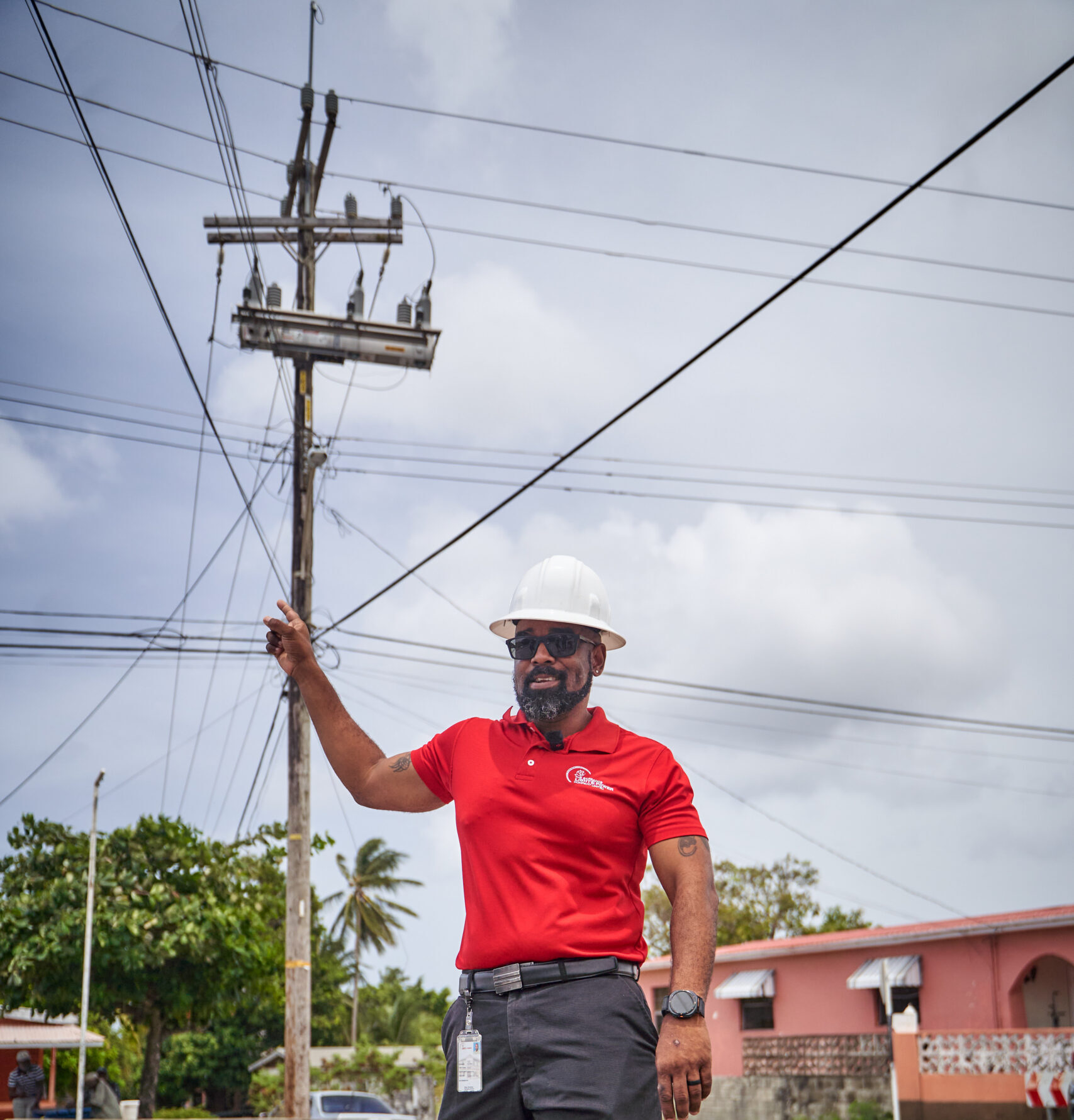
Half connected to smart grid as BL&P targets faster outage response
Barbados Light and Power Company (BL&P) announced Wednesday that 50 percent of its customer base is now linked to an upgraded automated electricity grid, a transformative update that company officials project will slash power outage durations and drastically boost service reliability across the island nation. In some cases, the smart system can resolve unplanned faults in under two minutes, company representatives confirmed during a press briefing held at BL&P’s Garrison headquarters.
The milestone marks a key progress update for BL&P’s multi-million-dollar grid modernization initiative, which first launched back in 2016. David Haynes, BL&P’s operations technology administrator, framed the achievement as a groundbreaking milestone not just for the Barbadian utility, but for energy providers across the entire Caribbean region. “This is a very unique milestone, especially not only for Barbados Light and Power, but for utilities in the Caribbean, having more than half of our grid modernized to a point where we can respond to faults in some instances in less than two minutes,” Haynes stated.
Prior to the rollout of automated grid technology, restoring power after an outage required a time-intensive, manual process. Utility crews had to travel to the affected site, conduct on-foot investigations to locate the fault, manually isolate the problematic section of the grid, and only then begin restoring service. Depending on the size and location of the outage, this process could take a minimum of 60 minutes to complete. Haynes explained that the modernized system has cut that timeline dramatically, with most outages resolved in 15 minutes or less, and many cleared far faster.
The upgrade replaces outdated manual disconnect systems with intelligent automated switches fitted with custom-built algorithms. These tools can automatically detect and isolate grid faults in less than 30 seconds, while immediately restoring power to all customers connected to unaffected sections of the line. In many minor fault events, Haynes added, customers may not even notice a temporary interruption to their service. The technology also equips grid control room operators to pinpoint the exact location of faults remotely, eliminating the need for crews to patrol entire circuit lengths to identify problems before starting repairs.
A key additional benefit of the new system is its ability to quickly resolve common transient outages caused by tree and vegetation contact with overhead power lines, a persistent issue for many Caribbean utilities. The automated switches detect these temporary faults and restore service in a matter of seconds, avoiding extended disruptions for customers.
Director of transmission and distribution Dr. Nneka Archer emphasized that the $5 million modernization investment has prioritized underserved rural communities, rather than concentrating upgrades solely on densely populated urban centers or high-traffic tourism districts. “Most of the time people think when we make investments into modernisation, we go into the town areas, we go on the west coast. We started in the rural feeders,” Archer explained, noting that these rural areas often rely on longer distribution lines that serve large customer bases, making upgrades especially impactful.
BL&P first rolled out the automated grid technology to customers in 2019, and has since expanded access to more than 70,000 customers across all of Barbados’ parishes. To date, the company has installed 61 automated switches at a total cost of roughly $5 million. When the full modernization project is completed, 81 percent of BL&P customers will be connected to the automated grid. The remaining 19 percent of customers are connected to underground networks or smaller feeders that require specialized, alternative grid modernization solutions, Archer added.
-

Vacancies: Real Value Supermarket IGA
A local grocery operation at Grenada’s Spiceland Mall, Real Value Supermarket (IGA), has launched an open recruitment drive for multiple senior and mid-level management roles to expand and strengthen its operational leadership team.
The available positions cover four key roles across the retailer’s core business divisions: Food & Beverage Manager, Grocery Manager, Food & Beverage Supervisor, and Front End Supervisor. These roles are critical to maintaining the supermarket’s daily operations, service quality, and team management across its food, grocery, and customer-facing departments.
To be considered for these openings, candidates are required to hold proven practical work experience in relevant retail or hospitality management roles. The hiring committee also highlights three core competencies that successful applicants must possess: strong leadership capabilities to guide frontline teams, excellent customer service skills to meet the high expectations of local shoppers, and the proven ability to coordinate cross-team work and oversee end-to-end daily store operations.
Interested candidates have two convenient channels to submit their applications: they can send their updated professional resume via email to [email protected], or drop off a printed copy of their application directly at the supermarket’s in-store customer service desk. The retailer frames its recruitment around a simple, customer-centric mission: building a collaborative team dedicated to delivering quality food and shopping experiences for the local community.
As a note for publication on the NOW Grenada platform, the outlet clarifies that it assumes no responsibility for the opinions, statements, and third-party content included in this contributor-provided recruitment notice. Users who encounter any abusive or inappropriate content related to this posting are invited to submit a report via the platform’s designated reporting channel.
-

Saint Lucia sees strongest cruise season in years
Saint Lucia’s just-concluded 2025/26 cruise tourism season has emerged as the strongest performing period for the island’s cruise sector since the global COVID-19 pandemic brought international travel to a standstill, with visitor arrivals now nearly matching pre-pandemic record levels, industry officials confirmed this week.
Presenting data at a cross-stakeholder sectoral review meeting held May 26 at the Harbor Club in Gros Islet — an event co-hosted by the Saint Lucia Department of Tourism, Saint Lucia Tourism Authority (SLTA), and Saint Lucia Cruise Port that brought together representatives from customs, tour operators, port management, taxi associations, and public health agencies — Javan Lewis, SLTA’s Business Intelligence Manager, shared that the season recorded a total of 673,700 cruise passenger arrivals. This marked an 8% year-over-year increase from the 2024/25 season, and only a 0.5% gap from the all-time arrival record set in the 2018/19 pre-pandemic season.
Notably, the growth in passenger numbers came despite a relatively small increase in total ship calls this season. The island welcomed 280 cruise vessel calls, just two more than the previous season, representing a 1% year-over-year rise. When compared to the 2018/19 peak, total ship calls are still down 11%. Lewis explained that this disparity between ship call growth and passenger growth is largely due to the trend toward larger cruise vessels that carry far more passengers per trip than older models. “We’re seeing growth in arrivals despite fewer calls,” he noted.
This steady recovery of cruise passenger volumes to near pre-pandemic levels has been hailed as a particularly encouraging milestone for Saint Lucia’s tourism-dependent economy, supporting thousands of local jobs across connected sectors from street vendors and hospitality workers to taxi operators and tour guides. Initial pilot survey data collected by SLTA offers a detailed profile of this season’s cruise visitors: 42% hail from the United States, making it the largest source market, followed by the United Kingdom which accounts for 31% of arrivals. The average cruise passenger is 52.7 years old, and 70% of this season’s cruise visitors identified as female. More than 63% of passengers opted for independent self-guided exploration of the island during their shore stop, and overall visitor satisfaction hit an impressive 95%: 96% of respondents praised Saint Lucia’s local cuisine, 94% expressed satisfaction with guided tour offerings, and 95% rated their shopping experiences positively.
In terms of economic impact, the 2025/26 season generated an estimated US$48.7 million (equal to roughly EC$131 million) in direct onshore spending, with the average passenger spending exactly US$80 during their time on the island. Most cruise visitors stay on shore for just one to six hours, a pattern that Lewis says points to a key area for future improvement: developing more high-quality, short-duration experiences located close to the cruise port to better cater to the needs of day-tripping passengers.
Lance Arnold, General Manager of Saint Lucia Cruise Ports, framed the review gathering as a practical working session rather than a purely ceremonial discussion, urging stakeholders to embrace constructive criticism to drive progress. “It is through being uncomfortable that we can enact change. If we are comfortable, we will not change,” he told attendees. Donalyn Vittet, Permanent Secretary in Saint Lucia’s Department of Tourism, echoed this focus on actionable solutions, emphasizing that the goal of the meeting was not just to identify sector challenges but to develop concrete plans to address them moving forward. “We are here to solve problems, not just to call them out,” Vittet said. “But I want in a big way going forward for us to put concrete means to solve them.”
-
OP-ED: Trade diversification begins at home
The 2026 Caribbean trade debate has overwhelmingly centered on a single question: which external region should source the Caribbean’s imported goods. But development finance expert Donald O. Charles argues this narrow framing perpetuates the region’s long-standing structural economic dependence — it simply swaps one set of foreign suppliers for another, leaving fundamental vulnerabilities unchanged.
In his analysis, the only metric that should guide Caribbean trade strategy is the economic multiplier effect: how much of every dollar spent within the regional economy circulates locally before leaving to pay for foreign-produced goods and services. A strong multiplier generates local employment, builds domestic productive capacity, grows tax revenue, and compounds shared regional wealth. Simply shifting import contracts from U.S. suppliers to Colombian or other Latin American providers does nothing to boost this multiplier on its own. By contrast, building a homegrown regional food processing sector that sources raw materials locally, hires Caribbean workers, pays taxes to regional governments, and sells to markets across the Caribbean, diaspora communities, and Latin America delivers exactly the multiplier gains trade policy should prioritize. Ultimately, the source of imports is not the critical variable — it is the productive capacity of domestic Caribbean enterprises that determines how much wealth remains within the region.
Charles builds his framework on two recent, incisive commentaries from the *Daily Observer*. Sir Ronald Sanders accurately noted that shifting global trade conditions have forced Caribbean nations to diversify away from long-standing reliance on U.S. trade, as old commercial assumptions have become increasingly unreliable. Priscilla Leonce, Head of Country for CIBC Antigua and Barbuda, added a crucial caveat drawing on her 37 years of banking experience: trade diversification cannot survive on ambition alone. The robust financial infrastructure that makes trade with the U.S. predictable and low-risk simply does not exist yet for proposed alternative markets. Charles’ analysis fills a gap in the ongoing conversation by outlining a clear governing framework to distinguish genuine, self-sustaining regional growth from just replacing one foreign dependence with another.
### The Persistent Structural Constraint
Current trade shifts have not altered the decades-old structural reality that underpins Caribbean economics: the United States remains the primary source market for Caribbean tourism. Foreign exchange earned from American visitors supports government budgets, covers national import bills, and sustains the mass employment that Caribbean populations depend on. Any trade policy that puts this core relationship at risk sacrifices the region’s most reliable income source for an unproven alternative.Beyond tourism, the U.S. dollar remains the dominant settlement currency for all Caribbean export activity, regardless of destination. The Eastern Caribbean (EC) dollar is backed 96% by U.S. dollar reserves — far above the legal requirement of 60% and prudential guidelines of 70-80%. The foreign exchange that supports this currency peg comes primarily from tourism and goods exports to the U.S. market. Any strategy that erodes these earnings weakens the very foundation of the Organisation of Eastern Caribbean States (OECS) monetary system. For this reason, Charles argues, the U.S. should remain a key export market for Caribbean goods when they can compete on price, as it generates the foreign exchange that strengthens Caribbean economic sovereignty. Even if new tariff policies disrupt price competitiveness temporarily, this does not change the structural importance of the U.S. relationship to regional economic stability.
### Prioritize Intra-Regional Growth First
Eastern Caribbean Central Bank (ECCB) Governor Timothy Antoine has already quantified the core barrier holding back regional trade transformation: Caribbean commercial banks hold EC$28 billion in total deposits, but only issued EC$16 billion in loans, leaving a EC$12 billion surplus of undeployed capital. This gap is not caused by a lack of demand for credit. It stems from a systemic bias in the banking sector: the enterprises best positioned to build Caribbean productive capacity — small agricultural producers, domestic manufacturers, food processors, local artisans, and construction materials suppliers — are routinely locked out of conventional lending.Charles argues the solution starts with commercial banks, which control the deposits and balance sheet capacity needed to drive growth. Medium- and long-term loans to finance equipment purchases, expand agricultural operations, capitalize food processing facilities, and build the productive infrastructure that trade diversification requires fall squarely within commercial banks’ core mandate. Closing the EC$12 billion gap requires systemic changes: expanded credit guarantee instruments, reformed secured transaction rules, and broader acceptance of both tangible and intangible assets as loan collateral.
Working capital financing is the critical complement to long-term development lending. Once commercial banks have funded the creation of productive capacity — from processing plants to agricultural supply chains — working capital keeps those operations running at scale. It covers the gap between when a producer ships goods and when payment is received, and bridges the period between securing a large order (for example, from a diaspora grocery chain in Toronto or a hotel purchasing manager in Bridgetown) and building the inventory needed to fulfill it. In short, working capital converts idle productive capacity into consistent, salable output. The intentional sequence Charles outlines is clear: commercial banks first build up regional productive sectors, then working capital financing sustains the steady trade flows those sectors generate.
The intra-regional market is the logical first destination for Caribbean-produced goods. The CARICOM Single Market and Economy was designed specifically to create the regional demand base that justifies large-scale productive investment in the Caribbean. Shared cultural preferences, existing reliable payment infrastructure, and close geographic proximity give regional producers a competitive advantage over extra-regional suppliers that no trade treaty can match. This advantage has never been fully exploited because the financing needed to guarantee consistent, reliable supply has been out of reach for most domestic producers.
Deploying capital in this intentional order unlocks incremental growth: first, commercial bank lending (supported by guarantee instruments where needed) builds local productive capacity. Then, CARICOM and CARIFORUM markets absorb initial output, allowing producers to refine production consistency and quality standards to meet the requirements of larger export markets. Next, Caribbean diaspora markets in the U.S., Canada, and the UK are natural next steps for scaled-up producers, generating additional foreign exchange that strengthens the region’s monetary sovereignty. Finally, Latin American neighbors including Brazil, Colombia, Costa Rica, and Mexico can be tapped as additional export markets.
### Building Domestic Production Creates Jobs That Solve Regional Social Crises
The multiplier strategy has a critical social dimension that the current trade debate has largely ignored. The jobs created by domestic production, raw material processing, food manufacturing, agricultural export supply chains, renewable energy installation, and small-scale industrial activity go disproportionately to young men. This demographic group’s widespread exclusion from productive economic life is the primary driver of the social instability that threatens tourism, undermines governance, and weakens the Eastern Caribbean dollar through its impact on crime, investor confidence, and the region’s reputation as a stable travel destination.Professor Justin Robinson’s “Big Push” development framework specifically identifies this dynamic. The vacuum of productive sector employment is not just an economic problem — it is the direct root cause of the social crisis that Caribbean development institutions have long attempted to address through programs that only treat symptoms, not the source. The case for economic multipliers and the case for social stabilization are one and the same, Charles argues. A regional food processing cooperative in Dominica that employs 20 young men in grading, packaging, and logistics does not just add to the country’s GDP. It removes 20 young men from the pool of unemployed, socially disconnected people whose disengagement drives crime rates that lower tourism arrivals, raise insurance premiums, and erode the foreign exchange earnings that back the Eastern Caribbean dollar.
The ECCB’s EC$12 billion deposit-lending gap is simultaneously a missed opportunity to boost economic multipliers, a missed chance to create thousands of life-changing jobs, and an unacknowledged driver of the region’s most urgent social crisis. Charles emphasizes that commercial banks holding these excess deposits should not be passive bystanders to this crisis — they have a structural role to play in solving it, generating long-term benefits for all regional stakeholders.
### A Call to Action for the Caribbean Banking System
Leonce’s call for expanded, more robust financial infrastructure for alternative trade routes is correct and necessary, Charles confirms. But that infrastructure must extend far beyond correspondent banking and letters of credit: it must prioritize the prudent, profitable deployment of the EC$12 billion in excess capital held by commercial banks, which Charles identifies as the most urgent unmet need to drive regional integration, food security, and OECS economic growth.The pieces for transformation are already in place, Charles concludes: the OECS monetary system already holds the required capital, Caribbean commercial banks already hold the deposits, the CARIFORUM trade framework already guarantees market access, and diaspora communities already represent untapped demand for Caribbean-made goods. What has been missing is a clear governing framework that directs these existing assets toward the multiplier-focused outcomes that genuine regional integration requires. The work ahead is to design and deploy a fully integrated financial architecture aligned with these shared goals.
Donald O. Charles is Founder and Managing Director of WOCAP Finance Corporation, a development finance institution operating across Jamaica, the OECS, and the broader Caribbean. His forthcoming book *The Leadership Imperative — African Wisdom, African and Western Philosophy and Artificial Intelligence: A Re-interpreted Pathway to the Flourishing of Human Society* will be submitted to Harvard Business Review Press for publication in November 2026. OIKONOMISM™, OIKONOMIST™, and OIKONOMIST NICHE STRATEGY™ are original trademarks of Donald O. Charles © 2026, with trademark applications filed in Antigua and Barbuda in April 2026.
-

2026 Nominee For Best (New) Local Product: Camgar Gourmet Coffee Syrup
Against the backdrop of Jamaica’s vibrant agricultural sector, a homegrown agro-processing startup is redefining what the island’s world-famous coffee can be. Founded by chief executive Garfield Clarke, Camgar Farm Limited has carved out a unique niche by turning locally harvested Jamaican Blue Mountain Coffee into a range of inventive, value-added gourmet food products that blend traditional island flavors with modern culinary innovation.
The company’s origins trace back to 2020, when Clarke launched his venture at the height of the COVID-19 pandemic, with an initial goal of revitalizing a small, underused coffee plantation in the iconic Wallenford coffee growing region. What began as a project to build a sustainable small-scale farming operation quickly evolved after early operational setbacks, including the dissolution of an early business partnership. Clarke pivoted the company’s strategy, shifting focus from raw coffee production to developing value-added consumer products built around Jamaica’s most celebrated agricultural export.
This strategic shift laid the groundwork for Camgar Farm’s current flagship product line, which launched official commercial sales in July 2023 after three years of product development. Today, the company’s growing portfolio stretches far beyond traditional roasted coffee beans, featuring one-of-a-kind offerings that include Sweet & Spicy Coffee Jelly, smooth Gourmet Coffee Syrup, Coffee Breadfruit Punch, and Coffee Jackass Corn. Each product fuses the rich, bold flavor of Jamaican coffee with beloved local staple ingredients, creating entirely new ways for consumers to experience Jamaican coffee outside of a standard brewed cup.
From its earliest days, Camgar Farm has centered local production in its business model. All core raw materials, including its coffee base, are sourced directly from small-scale Jamaican farmers and domestic suppliers, a choice designed to lift up the local agricultural community and ensure the authentic island flavor profile that sets its products apart.
Within Jamaica, the brand has already built a widespread retail presence, with its stocked across a growing network of sales points that span major supermarket chains, specialty food stores, agro-marts, pharmacies, and independent distributors. Key retail partners include Hi-Lo Food Stores locations across Portmore, Pavilion, Liguanea, Barbican, and Manor Park, General Foods, Loshusan Supermarket, Fresh Approach Foods, Grand Depot Ltd, Lee’s Food Fair, Progressive Foods, RADA Agro-Marts, and Alchemist Pharmacy. To expand its nationwide reach, the company also entered a distribution partnership with Frozen Delight Distributor (FDD) to streamline delivery and grow market penetration across the island.
The young company has already notched several key industry milestones that signal its growing traction in Jamaica’s food manufacturing sector. In February 2024, Camgar Farm earned a coveted spot as a selected participant in the Road Show and Pitch Competition hosted by Jamaica’s Ministry of Industry, Investment and Commerce (MIIC), a win that delivered widespread industry exposure and independent validation of its innovative product approach. Just four months later, in June 2024, the brand received a nomination in the “Best New Product” category at the prestigious Jamaica Observer Table Talk Food Awards, further boosting its credibility and visibility among consumers and industry peers. Most recently, its popular Gourmet Coffee Syrup launched wide public availability in July 2025.
Camgar Farm’s target audience spans a diverse range of consumers, including gourmet and specialty food enthusiasts, international tourists visiting Jamaica, members of the large Jamaican diaspora seeking authentic local products, and any consumer searching for unique, premium Jamaican-made culinary experiences. So far, market reception has been overwhelmingly positive: consumers have praised the brand for its creativity, distinct flavor combinations, and one-of-a-kind product offerings, and the company has already attracted interest from potential international buyers alongside strong local demand.
What sets Camgar Farm apart from competing food brands is its unique market positioning: it merges cutting-edge culinary innovation, uncompromising premium quality, and 100% authentic Jamaican flavors to deliver a gourmet coffee experience that cannot be found anywhere else. This differentiation has helped the brand stand out in both local and regional markets.
Looking ahead, the company has set ambitious growth goals: it aims to become Jamaica’s leading value-added coffee brand, build out robust regional and international distribution networks, and continue expanding its portfolio of inventive agro-processed food products. However, like many growing small food manufacturers, Camgar Farm faces notable headwinds. Its primary challenges include scaling up production capacity while retaining strict product consistency, controlling rising operational costs, and securing the capital and resources needed to support expansion into export markets. The company also grapples with raw material inventory management challenges, driven by seasonal growing cycles, fluctuating harvest supplies, and the need to maintain stable, consistent production schedules to meet retail demand.
Reflecting on the company’s journey from a small revitalized farm to a multi-product award-nominated brand, Clarke says he has learned key lessons for early-stage food entrepreneurs: investing earlier in formal branding, scalable production systems, and strategic partnerships would have accelerated the company’s growth and market penetration in its early years.
Clarke and the Camgar Farm team are calling on Jamaican consumers to support the local brand, noting that it represents everything that the island’s agricultural and entrepreneurial community has to offer: homegrown innovation, value-added agriculture, and the transformation of local raw materials into world-class competitive products. Every purchase of Camgar Farm product supports local Jamaican farmers and strengthens the island’s domestic agricultural economy as a whole.
In the wake of Hurricane Melissa, which devastated parts of Jamaica’s agricultural sector, Clarke emphasized that the company’s mission is more important than ever. The hurricane reinforced how critical it is to strengthen Jamaica’s domestic food security and invest in local agriculture. By supporting local farmers, homegrown agro-processing, and Jamaican-made products, the country can build a more resilient, sustainable, and economically inclusive food ecosystem that benefits future generations of Jamaicans.
-

Air Europa honors top Dominican travel agencies for 2025 sales
In an exclusive gala ceremony hosted at the Santo Domingo Bay Hotel in the Dominican capital, Spanish carrier Air Europa has formally recognized ten standout Dominican travel agencies that delivered the strongest sales results for the airline throughout 2025.
The high-profile event was spearheaded by Francisco “Paco” Pérez, Air Europa’s regional director overseeing Caribbean operations, who was joined on stage by María José Hidalgo, chief executive officer of the Globalia Group — Air Europa’s parent company — alongside the full commercial leadership team of the airline’s Dominican division.
In his keynote address to the gathered industry leaders, Pérez emphasized the outsized strategic importance of the Dominican travel market to Air Europa’s broader regional expansion goals, and offered warm praise for the critical partnership role local travel agencies play in scaling the airline’s presence across the Caribbean.
“Air Europa has recorded exceptional growth across our network in 2025, and the single most foundational pillar of that success has been the unwavering support and trust you, our local agency partners, have extended to our brand,” Pérez stated. He went on to confirm that the Dominican Republic has solidified its position as one of the most dynamic and high-priority markets for Air Europa across the entire Caribbean region.
Pérez further explained that the airline’s “Top Ten 2025” awards program was designed specifically to celebrate the hard work and innovation of local travel agents, who drive consistent growth for the Dominican tourism sector and deliver elevated experiences for end travelers even amid intensifying competition across the global travel industry.
The full list of agencies recognized for their sales leadership in 2025 includes Travelwise, Viajes Alkasa, Grupo VDT, Rosedy Tours, Services Travel, Gestur, Turinter, Emely Tours, Incanto Travel, Olas del Caribe, and Sombrero Tours.
Beyond honoring top-performing partners, the awards ceremony served as a platform for Air Europa to restate its long-term commitment to the Dominican Republic and its ongoing investment in robust distribution networks that strengthen air connectivity between the Caribbean nation and popular travel destinations across the European continent.
-

Central Bank projects tourism revenues to surpass US$12.5 billion in 2026
Against a backdrop of mounting global geopolitical tension and economic volatility, the Dominican Republic’s tourism sector is emerging as a surprisingly resilient powerhouse, new projections from the Central Bank of the Dominican Republic (BCRD) show. The country’s central bank forecasts that total tourism-generated revenue will cross the $12.5 billion threshold by the end of 2026, cementing the industry’s position as the foundational pillar of the nation’s economic stability and primary source of foreign exchange.
In a recent report titled “Dominican Republic Facing an Oil Shock of Uncertain Nature: An Analysis of the Impact of the Middle East War on the Economy,” BCRD outlined the strong early-year performance that is driving this optimistic forecast. Data from the first quarter of 2026 reveals the Dominican Republic welcomed 3,710,374 international visitors between January and March — a new all-time record for the first three months of any year. Of that total, 2,603,777 guests arrived via commercial air travel, while another 1,106,597 came through cruise ship ports.
The growth trend accelerated through the first quarter, with March 2026 marking a historic milestone for the country: for the first time ever, air arrivals topped 900,000 in a single month. This surge was fueled by robust expansion in key European source markets. Tourist arrivals from Germany jumped 36% year-over-year, while France and the United Kingdom both posted 17% growth, outperforming expectations for travel demand amid global headwinds.
The Dominican Republic Hotel and Tourism Association (Asonahores) has embraced BCRD’s analysis, noting the sector’s outperformance comes even as global shocks, including the ongoing armed conflict in the Middle East and rising global oil prices, threaten economic stability across much of the developing world. Asonahores emphasized that tourism has acted as a critical economic buffer insulating the Dominican Republic from broader global uncertainty.
These strong numbers are more than just a win for the travel industry — they signal widespread international confidence in the Dominican Republic’s standing as a safe, competitively priced, and high-demand travel destination, the association said. “Tourism continues to demonstrate that it is much more than an economic activity; it is an engine of stability, foreign exchange earnings, jobs, and investment for the entire nation,” Asonahores said in a statement.
Beyond tourism metrics, the broader Dominican economy has also retained investor confidence amid global turmoil. As of May 20, BCRD data shows the country’s Emerging Markets Bond Index (EMBI) spread stood at 177 basis points — well below the Latin American regional average of 264 basis points. This stable sovereign risk rating further confirms global investors’ positive outlook for the Dominican economy, industry leaders noted.
Asonahores attributed the tourism sector’s consistent strong performance to sustained collaborative work between the Dominican public and private sectors. Targeted policy investments in international tourism promotion, expanded air connectivity with major global markets, upgraded tourism infrastructure, and pro-investment regulation have all combined to boost the country’s competitiveness as a top Caribbean travel destination, the association added.
-

Supermarket mogul dead at 88
A towering figure in Bahamian business and economic development, grocery industry pioneer Rupert Roberts Jr, OBE, has died at the age of 88, just one day before what would have been his 89th birthday. He passed away peacefully on Tuesday night at the Mayo Clinic in Rochester, Minnesota, surrounded by his immediate family — wife Margaret, daughter Candy and granddaughter Paige — according to an official statement released by the Super Value group he founded. Roberts is survived by his wife, three children, multiple grandchildren and great-grandchildren, a wide network of extended family, and thousands of employees across his business enterprises.
Roberts’ career in retail began long before he launched his own brand. He cut his teeth at City Markets, working his way up from an entry-level supervisor role to store manager at a time when the entire Bahamian grocery sector was overwhelmingly dominated by foreign-owned companies. Breaking into an industry with little space for local entrepreneurs, he founded Super Value in 1965, turning a single standalone store into the nation’s largest Bahamian-owned supermarket chain over nearly six decades of steady growth. Today, the brand operates 13 locations across New Providence, balancing offerings of international consumer brands with dedicated shelf space for Bahamian farmers and local suppliers — a priority Roberts championed throughout his career. The company expanded its footprint in 2012 with the launch of Quality Markets, a subsidiary brand that extended its reach further across the local retail landscape.
Beyond the grocery sector, Roberts built a diverse business portfolio spanning real estate and multiple commercial ventures, including stakes in South Bimini International Ltd, Bahamas Paper Converting, Discount Mart Limited and Global Bahamas Limited. Alongside his commercial success, he maintained a longstanding commitment to charitable giving and community development across the archipelago, embedding social impact into his professional legacy.
Roberts also left an indelible mark on Bahamian banking. Following the 1984 Bahamianisation of Commonwealth Industrial Bank Limited — later renamed Commonwealth Bank — he was appointed as the institution’s first domestic chairman. During his tenure, the bank’s total assets surged by more than 700% to surpass $125 million, while net income grew from $1.3 million in 1984 to $4 million by 1992. Though he stepped down from the chairman role in 1988, he retained his seat on the bank’s board of directors for 36 years, continuing to shape its strategic direction for decades.
In the later stages of his public life, Roberts emerged as one of the most prominent and outspoken voices in national conversations around food pricing, inflation, import costs, taxation and strained supply chains. As ordinary Bahamian households struggled with soaring grocery bills, his insights and advocacy consistently placed him at the center of national economic debate.
One of his final interviews with local outlet The Tribune came after he spent nine weeks receiving treatment in the United States, having been airlifted abroad for medical care. In that conversation, he shared a heartfelt message of gratitude for the outpouring of support and prayers from across the country, and urged Bahamians to prioritize their health, warning: “You could develop an illness that The Bahamas is not equipped to solve. A medical condition can develop into something more expensive than you can afford.” Even amid his ongoing health challenges, Roberts made clear he had no plans to step away from work, saying: “No, no…not at all! They advised me to keep going and never stop!”
Following news of his passing, tributes poured in from across Bahamian politics, business and civil society on Wednesday. Prime Minister Philip “Brave” Davis, who recalled working under Roberts at City Markets in the 1960s before Roberts rose to become one of the nation’s top business leaders, honored Roberts as a foundational figure in The Bahamas’ economic growth, highlighting his decades of philanthropy and community support.
Opposition Leader Michael Pintard praised Roberts as a fierce advocate for Bahamian agriculture and local production, pointing to his consistent work to expand shelf space for domestic goods in retail outlets across the country. Pintard also noted that Roberts maintained an independent stance on business and economic policy, collaborating constructively with both major political parties while prioritizing national interest over partisan alignment. “I respected the fact that he did not allow politics to cloud his judgment in terms of what was in the best interest of the country, and so today I join thousands of Bahamians who mourn his passing and who thank God for the kind of life that he lived that contributed to so many persons’ upliftment, and so may he rest in peace,” Pintard said.
Don Williams, chairman of the Bahamas Chamber of Commerce and Employers Confederation, described Roberts as a leading voice for the private sector whose input shaped national discussions on pricing, retail operations and sustainable business growth. Former Retail Grocers Association president Philip Beneby remembered him as a true trailblazer for the domestic grocery industry, who partnered with stakeholders across the sector to drive growth for decades. Civil society group the Organisation for Responsible Governance also confirmed that Roberts had served on its board since the organization’s founding, playing a key role in advancing its governance and sustainability mandates.
-
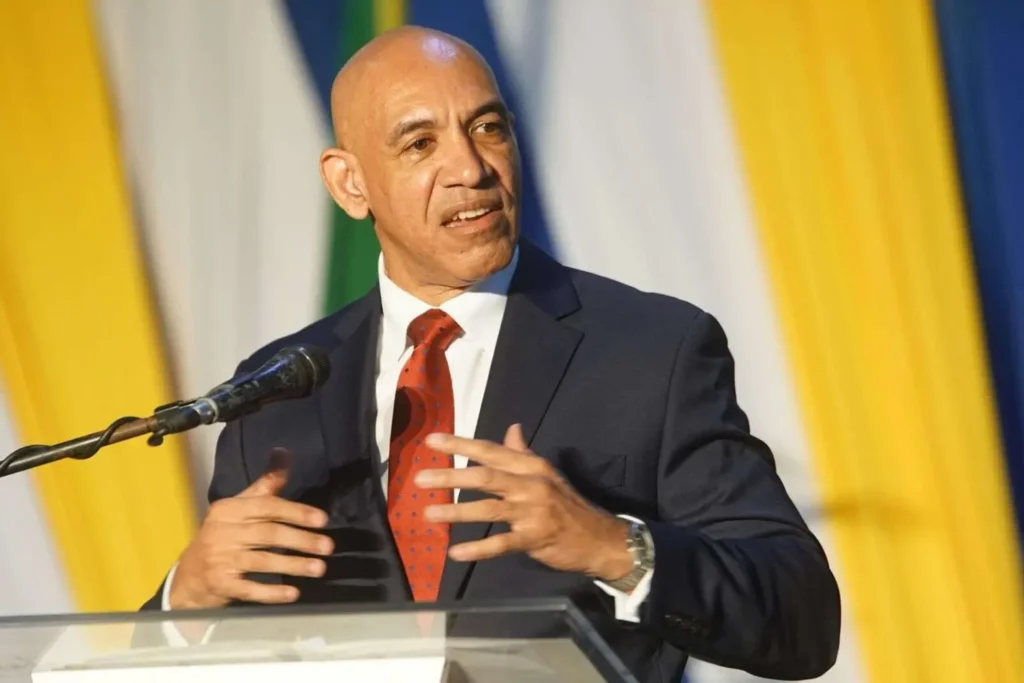
SBAJ welcomes Anderson’s appointment to NaRRA
KINGSTON, Jamaica — Jamaica’s top small business advocacy group is throwing its support behind the newly appointed leader of the country’s flagship infrastructure agency while calling for long-overdue changes to how major infrastructure contracts are awarded.
The Small Business Association of Jamaica (SBAJ) has extended congratulations to retired Major General Antony Anderson, who was tapped to serve as the first chief executive officer of the National Road Reconstruction Agency (NaRRA), the newly formalized body tasked with guiding the country’s large-scale road network upgrades.
Prime Minister Andrew Holness first revealed Anderson’s appointment during a dedicated post-Cabinet media briefing held Wednesday at the Jamaica House banquet hall. Alongside the announcement, Holness confirmed that the NaRRA Bill — the legislation that formally established the agency — had been successfully passed into law, with Anderson set to take up his new leadership role starting June 1.
In an official statement released to the public Thursday, SBAJ President Garnett Reid framed Anderson’s appointment as a milestone coming at a critical juncture for Jamaica’s infrastructure development trajectory. Reid emphasized that Anderson’s decades of decorated public service have equipped him with extensive expertise, a well-documented history of delivering results, and deep institutional knowledge that makes him well-suited to lead the new agency.
Reid also called on all public and private stakeholders to extend full collaboration and backing to Anderson, noting that robust coordinated support will be key to helping him execute NaRRA’s mandate effectively and efficiently.
But beyond welcoming the new leadership, Reid outlined a core priority the SBAJ is pushing for under Anderson’s tenure: guaranteeing that local small and medium-sized contractors get a fair share of the billions in infrastructure investment set to roll out through NaRRA.
“My only hope is that small and medium-sized contractors get some of the contracts from the NaRRA investments,” Reid stated plainly.
He underscored that structured, transparent procurement processes will be non-negotiable to correct a long-standing gap in Jamaican infrastructure development. For decades, smaller local construction firms have been sidelined for major projects, with most large contracts going instead to bigger, often international companies.
Reid further made the economic case for prioritizing local businesses, arguing that awarding contracts to Jamaican firms keeps investment capital circulating within Jamaica’s domestic economy, fuels growth of local small enterprises, and builds long-term resilience for the national economy. In contrast, he explained, when large multinational corporations win major infrastructure contracts, a large share of the financial benefits from those investments flow off the island, leaving minimal lasting impact on local communities.
Looking ahead, the SBAJ says it is eager to build a collaborative, productive working relationship with both Anderson and the entire NaRRA team. The group’s end goal is to ensure that Jamaica’s ongoing national infrastructure expansion doesn’t just improve the country’s roads — it also drives inclusive, sustainable economic growth that benefits Jamaican businesses and workers at the grassroots level.