分类: business

  • Afreximbank advances credit approval for Abaco hotel project

    Afreximbank advances credit approval for Abaco hotel project

    During the 2026 Afreximbank Roadshow held at Nassau’s Baha Mar Convention Center last Friday, a senior executive from the pan-African export finance institution confirmed that a planned luxury hotel development in The Bahamas has successfully passed the first phase of the bank’s credit assessment process, bringing the transformative tourism project one step closer to full approval.

    Okechukwu Ihejirika, Chief Operating Officer of Afreximbank’s Caribbean regional office, shared new details about the initiative with reporters on the event’s sidelines, confirming that the proposed development is earmarked for a private island in Abaco, rather than the country’s most populous main island of New Providence. While Ihejirika declined to disclose the identities of the project developers or the exact size of the financing request, he noted that the project is designed to boost international tourist arrivals to The Bahamas and unlock the untapped economic potential of the country’s world-renowned tourism sector.

    The proposal has cleared the first of up to three sequential credit approval levels required by the bank, Ihejirika explained. The next phase of the process will involve comprehensive technical and financial due diligence, after which the proposal will advance to second and third-level credit reviews. According to Ihejirika, the final approval stage moves at a rapid pace, and full formal approval and a public announcement could come in the near term, with disbursement of funds following quickly after second-level approval is granted. “We’re advancing pretty well,” he said. “We hope that very soon we will be able to make the announcement that we are going ahead with that project.”

    The hotel project marks one of a growing pipeline of private-sector investment initiatives Afreximbank is pursuing in The Bahamas, as the institution expands its regional footprint and diversifies its portfolio beyond government-backed infrastructure projects. Just last year, the bank approved and signed a $200 million infrastructure financing facility with the Bahamian government, and Ihejirika confirmed that the total value of projects currently in the country’s pipeline nears $500 million, with the new hotel proposal separate from previously announced commitments.

    “As an institution, we don’t only work with government. We also work with the private sector. That means we also have a few private sector led initiatives that we are also engaging on,” he added.

    The 2026 Afreximbank Roadshow was organized to connect the bank directly with Bahamian business leaders, raise awareness of the institution’s growing regional presence, and walk local enterprises through the range of financing products and support services it offers. Though Afreximbank has operated in the Caribbean for roughly two years and held its global annual meetings alongside the Afro-Caribbean Trade and Investment Forum in The Bahamas in 2024, the institution remains relatively new to the region, with a $5 billion total regional financing cap to support trade and development across Caribbean economies.

    Afreximbank’s strategic partnership with The Bahamas was formalized through a 2023 Memorandum of Understanding, and has already delivered tangible benefits for the country’s economic development priorities, Prime Minister Philip “Brave” Davis told roadshow attendees. Beyond infrastructure projects, the partnership has delivered a $30 million lending facility via the Bahamas Development Bank to expand access to capital for local small and medium-sized enterprises, a core priority for the Davis administration.

    “One of the key priorities for The Bahamas moving forward is the creation of even more pathways to opportunity for local entrepreneurs, especially small business owners. Economic growth must translate into broader economic participation, ensuring that more Bahamians have the chance to build businesses, create jobs, and share in the country’s progress,” Davis said. “We have made some progress in this area, but continuing to strengthen access to capital through institutions such as the Afreximbank is an important part of our ongoing efforts. This roadshow also reminds us of the importance of regional and international cooperation at a time when many economies are navigating uncertainty.”

    Several large-scale Afreximbank-backed projects are already underway across The Bahamas’ out islands, known locally as the Family Islands. A $40 million financing facility supports Cat Island Infrastructure Company’s broad connectivity and development project, scheduled for full completion by August 2027. The first phase of that project, targeted for completion this coming January, includes laying 94 miles of new water mains, paving 50 miles of new roadway, and restoring an additional 45 miles of road damaged during water infrastructure construction.

    Other active commitments include a $100 million financing facility to support the expansion of local construction firm Bahamas Striping Group, which is currently carrying out 226 miles of road works across Exuma and Eleuthera, and a $200 million framework agreement focused on developing climate-resilient infrastructure that supports increased regional trade.


  • Flow prepared for 2026 hurricane season, says operators

    Flow prepared for 2026 hurricane season, says operators

    KINGSTON, JAMAICA – As the 2026 Atlantic Hurricane Season prepares to kick off officially on June 1, leading regional telecommunications provider Liberty Caribbean – parent brand of consumer service Flow, enterprise-focused Liberty Business, and Bahamas Telecommunications Company (BTC) – has announced it is fully positioned to support communities, customers, and government partners across the Caribbean through extreme weather events.

    The company’s latest readiness push comes one year after Hurricane Melissa battered Jamaica, a disaster that company leadership says underscored just how critical robust, disaster-resilient communications infrastructure is for the hurricane-prone Caribbean region. In a formal public statement released Monday, Liberty Caribbean emphasized that its more than 100 years of operating across the Caribbean has guided its ongoing work to boost preparedness, systems resilience, and emergency response capacity for regional stakeholders.

    “Hurricane Melissa reminded us once again that connectivity is far more than technology. In moments of crisis, it becomes a lifeline for families, businesses, emergency responders, and governments,” said Inge Smidts, Chief Executive Officer of Liberty Caribbean.

    Smidts added that the hard lessons learned from last year’s storm have reinforced the company’s commitment to expanding regional investments in network hardening, operational preparedness, and post-disaster recovery capabilities. “We remain committed to ensuring our customers and communities can rely on us when it matters most,” she said.

    Over the 12 months following Hurricane Melissa, Liberty Caribbean has rolled out a series of strategic infrastructure investments across its multiple Caribbean market footprints to boost disaster resilience. In Jamaica alone, upgrades include a full modernization and expansion of the island’s mobile network, expanded spectrum capacity, increased transport route diversity to avoid single points of failure, hardened physical infrastructure to withstand high winds and flooding, expanded backup power systems, and additional network redundancy measures designed to improve overall service reliability and cut down on recovery time after outages.

    Beyond infrastructure upgrades, the company has also conducted a full cycle of emergency simulation exercises and response drills across all operating markets, finalized pre-season fuel stockpiling and logistics coordination plans, and aligned cross-functional response teams to enable rapid mobilization if storms trigger service disruptions this season.

    “Our teams have worked tirelessly to modernise our infrastructure, strengthen operational readiness, and improve how we respond during emergencies. While no network is immune to extreme weather events, our focus remains on building stronger, smarter, and more resilient systems capable of supporting the Caribbean through disruption and recovery alike,” Smidts noted.

    Forecasters at the U.S. National Oceanic and Atmospheric Administration (NOAA)’s National Weather Service are projecting a below-normal 2026 Atlantic Hurricane Season, which will run through the end of November. NOAA’s outlook puts the odds of a below-normal season at 55%, compared to a 35% chance of a near-normal season and just a 10% chance of an above-normal season.

    The official NOAA forecast calls for 8 to 14 total named storms (systems with sustained winds of at least 39 miles per hour, or 63 km/h). Of those, 3 to 6 are expected to strengthen into hurricanes with sustained winds of 75 miles per hour or higher, with 1 to 3 projected to intensify into major Category 3, 4, or 5 hurricanes that carry sustained winds of 115 mph or more. By comparison, an average Atlantic hurricane season produces 14 named storms, 7 hurricanes, and 3 major hurricanes.

    Smidts emphasized that even with a milder forecast, Liberty Caribbean remains committed to standing by regional communities before, during, and after any storm event. “We understand the responsibility that comes with serving the Caribbean. Our commitment extends beyond connectivity alone. It is also about supporting the resilience of the communities we serve and standing beside them before, during, and after times of crisis,” she said.

    To close, the company is urging all residential and business customers across its service footprint to update and review their own personal hurricane preparedness plans, and to stay updated on official weather forecasts throughout the June to November hurricane season.

  • Three Monymusk Plantation rums win gold at 2026 Beverage Testing Institute Awards

    Three Monymusk Plantation rums win gold at 2026 Beverage Testing Institute Awards

    CLARENDON, Jamaica — Jamaican rum producer National Rums of Jamaica has turned a successful new page in the island nation’s long legacy of premium spirit manufacturing, with three expressions from its iconic Monymusk Plantation line taking home top honors at the 2026 Beverage Testing Institute (BevTest) World Spirits Championship.

    In an official press statement, the company shared that two of its rums — Monymusk Plantation White Overproof Rum and Classic Gold Rum — earned an identical score of 93 points, while the third entry, Special Reserve Rum, scored a 92. All three products were awarded Gold Medals by the competition, a Chicago-based industry contest that stands as one of the most enduring and respected spirits awards globally. Unlike many public-facing awards, BevTest’s judging process relies on blind tastings conducted by panels of seasoned trade professionals, ensuring that scores and medals are awarded based solely on product quality rather than brand recognition. The full results of the championship, including the three winning Jamaican rums, are featured in Forbes’ May 2026 roundup of the world’s highest-rated rums.

    Martha Miller, Chief Executive Officer of National Rums of Jamaica, framed the triple win as a point of national and company pride. “This recognition from the Beverage Testing Institute is a proud moment for National Rums of Jamaica, the Monymusk brand, and the entire country of Jamaica,” Miller said. “To have all three of our entries — White Overproof, Classic Gold, and Special Reserve — counted among the world’s best rums speaks volumes about the consistent quality that defines our entire product portfolio.”

    Miller emphasized that the award-winning quality of the rums is no accident, and directed praise to the in-house teams that oversee every step of production. “A tremendous amount of credit has to go to our technical, production, quality control, and blending teams, who pour enormous care into their work every single day,” she explained. “Exceptional rum is not a random outcome. It requires generations of distilled expertise, unwavering consistency, and a long-term commitment to upholding the highest possible quality standards.”

    The Forbes feature includes official tasting notes compiled from the BevTest judging panel’s evaluations. The White Overproof rum was praised for its layered aroma profile of green banana, whipped cream, and sugar cookie, paired with flavor notes of warm baking spices, ripe pineapple, and toasted coconut. Judges called it “a great overproof rum with a creamy body and subtle sweet banana esters, perfect for cocktailing.”

    For the Classic Gold rum, judges highlighted notes of dunder, charred oak wood, and fresh pomegranate, describing the expression as “a complex, fruity rum to save for special occasions.” The Special Reserve, meanwhile, was singled out as “an excellent choice for experienced rum drinkers” who appreciate the distinct character of traditional Jamaican product.

    All rums in the Monymusk Plantation portfolio are manufactured, aged, and blended entirely at the Clarendon Distillery, located in southern Jamaica’s Clarendon Parish. The line stays true to the centuries-old traditional Jamaican rum-making style, defined by extended fermentation periods, a blend of pot-still and column-still distillation, and the iconic high-ester, fruit-forward profile that rum enthusiasts around the world refer to as “Jamaican funk.”

  • Caribbean tourism industry poised for further growth despite challenging global environment

    Caribbean tourism industry poised for further growth despite challenging global environment

    NEW YORK – The annual Caribbean Tourism Week kicked off in Manhattan on Monday, opening a seven-day showcase of the region’s tourism offerings as industry leaders lean into cautious optimism amid shifting global geopolitics and evolving travel demand patterns. Organized by the Barbados-headquartered Caribbean Tourism Organization (CTO), the event aligns this year with the start of Caribbean American Heritage Month, carried out under the unifying banner “One Caribbean: Infinite Experiences.”

    Addressing attendees at the opening ceremony, CTO Chairman Ian Gooding-Edghill, who also serves as Barbados’ Minister of Tourism, highlighted the sector’s resilient ongoing performance that has outpaced pre-COVID-19 levels. He reported that in 2025, the Caribbean tourism industry extended its steady growth trajectory, recording a 2.5% rise in visitor arrivals compared to 2024. That added roughly 900,000 additional visitors to the region, pushing total arrivals above pre-pandemic benchmarks set in 2019.

    Cruise travel, a core pillar of the region’s tourism ecosystem, has demonstrated particular strength, Gooding-Edghill noted. Cruise ship visits grew 5.2% year-over-year in 2025, and now stand more than 16% above 2019 pre-pandemic volumes. “These numbers confirm the lasting pull of the Caribbean tourism brand, and prove that global demand for one-of-a-kind authentic Caribbean experiences remains undimmed,” he said.

    Looking ahead to the rest of 2026, CTO forecasts hold to a cautiously optimistic outlook. The organization projects moderate but consistent growth for the year, driven by expanded air connectivity between source markets and the region, closer collaborative policy and marketing coordination across Caribbean nations, and sustained global consumer demand for immersive, experience-focused leisure travel.

    Even with the positive near-term outlook, Gooding-Edghill warned against complacency, emphasizing that the region must continuously invest in updating, strengthening, and protecting its global competitive position. That need, he explained, is what makes proactive market diversification a top strategic priority for the CTO and member states.

    To date, the Latin American market has emerged as a fast-growing source of new visitors, supported by close geographic proximity, expanding direct air links, and rising consumer interest in multi-destination Caribbean getaways. “This is no longer just an emerging opportunity—it is a rapidly accelerating growth driver for our region,” Gooding-Edghill said. At the same time, the CTO is working to deepen ties with the African tourism market through cultural exchange partnerships, connections with Caribbean diaspora communities, and long-term planning to expand direct air access.

    Gooding-Edghill framed the African market as a critical long-term growth frontier for Caribbean tourism development. Beyond economic gains, he reaffirmed that tourism remains the foundational economic pillar for most Caribbean nations, supporting millions of jobs, attracting foreign direct investment, nurturing local entrepreneurship, and opening opportunity for communities across the region. It also serves as a bridge between Caribbean cultures and global audiences, sharing the unique richness of Caribbean heritage and community with visitors from around the world.

    “These are uncertain times, but this is a resilient region with extraordinary talent, proven endurance, and bold ambition,” he said. “If we stay united, focused on the future, and disciplined in our strategy, there is no limit to what we can achieve together as One Caribbean.”

    Amid ongoing global geopolitical shifts and rising operational costs that present ongoing risks to the travel sector, Gooding-Edghill noted that regional tourism leaders and industry partners have a shared responsibility to meet current challenges head-on, upholding the region’s longstanding tradition of turning adversity into competitive advantage. Recalling past crises the region has navigated, he pointed out that each challenge has left Caribbean tourism stronger and more resilient than before, with increased investment and improved capacity to adapt to change.

    “It is our job as tourism leaders and industry partners to guide the CTO and our member states, ensuring that the millions of people across the region who depend on tourism for stable employment can have confidence we are leading them in the right direction,” he said. Closing his remarks, he reiterated the call for continued unity: “Let us keep moving forward together, as one Caribbean with infinite opportunities ahead.”

  • Oil prices up as US toughens terms of Iran war agreement

    Oil prices up as US toughens terms of Iran war agreement

    TOKYO, Japan – Global crude markets have kicked off the trading week with a sharp upward swing, reversing a steep multi-day decline after new reports emerged that Washington has toughened its negotiating positions with Tehran amid ongoing Middle East tensions. When Asian markets reopened Monday following the weekend break, benchmark prices climbed notably, driven by shifting expectations around a potential deal that could unlock greater oil exports from the region.

    West Texas Intermediate, the key pricing benchmark for United States crude, jumped 2.5% to settle at $89.60 per barrel in early trading. For August-delivery Brent crude, the global benchmark sourced from the North Sea, the uptick was equally pronounced: the contract traded at roughly $93.16 per barrel, marking a 2.2% increase from its closing position on the previous Friday.

    This rebound comes on the heels of a dramatic seven-day stretch that saw crude values plummet more than 11% across global markets. That sharp drop was fueled by widespread investor optimism that a breakthrough peace agreement between the US and Iran was imminent, a deal that market participants expected would quickly lead to the full reopening of the Strait of Hormuz. The strategic waterway remains one of the most critical chokepoints in global energy infrastructure, carrying roughly a fifth of the world’s daily oil supply to international markets.

    But over the weekend, that optimistic outlook was upended. Leading US outlets including *The New York Times* reported that former President Donald Trump had revised a draft memorandum of understanding under negotiation with Tehran, sending the modified document back to Iranian officials with several key terms tightened. The shift in negotiating posture has scrambled earlier expectations of a quick deal, injecting fresh uncertainty into Middle East energy supply dynamics and pushing traders to adjust their positions accordingly.

  • U.S. Deputy Secretary visits AES Dominicana to strengthen energy cooperation

    U.S. Deputy Secretary visits AES Dominicana to strengthen energy cooperation

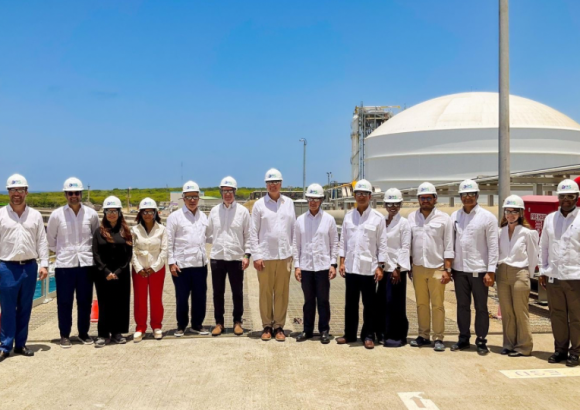
    In a high-profile visit to Boca Chica this week, AES Dominicana welcomed former U.S. Ambassador to Mexico Christopher Landau, current U.S. Ambassador to the Dominican Republic Leah Campos, and a cross-official delegation to the company’s sprawling Andrés energy complex, a cornerstone of transatlantic energy trade between the United States and the Caribbean. The meeting offered senior U.S. officials an up-close look at one of the most critical energy infrastructure projects in the region, which serves as the primary entry point for U.S.-sourced liquefied natural gas entering the Dominican market.

    During the facility tour, the delegation explored the complex’s core operational zones: cutting-edge LNG storage tanks, advanced regasification units, and the integrated power generation facility that powers a significant share of the Dominican Republic’s domestic energy grid. All of the natural gas processed at the site is sourced from U.S. export terminals located along the Gulf Coast in Louisiana and Texas, tying the two nations’ energy sectors closely together.

    Company leadership shared key trade data with the delegation, noting that the Dominican Republic is on track to import over 4 million cubic meters of LNG from the United States in 2025. This import volume cements the country’s standing as the largest importer of North American natural gas across all of Latin America, a milestone that underscores the growing integration of U.S. energy markets with the Caribbean and Central American regions.

    AES executives emphasized that the Andrés complex fills a unique strategic role beyond the Dominican Republic’s borders. The infrastructure not only strengthens regional energy security by reducing reliance on single-source energy supplies but also creates a stable foundation for sustained economic growth across neighboring markets. It also enables greater energy diversification, helping nations across the Caribbean and Central America transition away from heavier fossil fuels while scaling up cleaner energy options.

    Beyond its operational impact, the project stands as the single largest U.S. capital investment in the Dominican Republic, with total accumulated investment exceeding $2.4 billion in energy infrastructure to date. AES confirmed it continues to expand its footprint across the region, investing not only in natural gas infrastructure but also in utility-scale renewable energy projects and advanced energy storage solutions that will support the region’s long-term clean energy transition.

  • LIAT and Air Caraibes sign interline agreement

    LIAT and Air Caraibes sign interline agreement

    ST JOHN’S, Antigua – Two major regional air carriers, LIAT (2020) Limited, operating as LIAT Air, and Air Caraïbes, have launched a new interline agreement designed to transform air travel across the Caribbean and beyond. Announced on Monday, the partnership enables passengers of both airlines to book end-to-end journeys across the companies’ combined route networks on a single ticket, with one consolidated point of purchase.

    Interline tickets under the new agreement are accessible to consumers via registered travel agents and all authorized global distribution channels. The partnership merges two complementary route networks: LIAT Air’s far-reaching intra-Caribbean footprint, which links Eastern Caribbean islands, Guyana, Jamaica, the Dominican Republic, Trinidad, Barbados and other neighboring markets from its hub at Antigua’s V.C. Bird International Airport, and Air Caraïbes’ network, which includes regional services operating out of Guadeloupe, Martinique and French Guiana, plus long-haul service connecting the Caribbean to Paris-Orly Airport in France.

    For travelers, the agreement eliminates long-standing pain points associated with connecting travel between the two carriers. Itineraries that combine flights operated by both airlines can be booked through travel agents and global distribution systems, with checked baggage automatically transferred through to a passenger’s final destination. Travelers no longer need to purchase separate tickets for each leg of their journey, re-check their baggage during layovers, or pay duplicate baggage and processing fees when transferring between LIAT Air and Air Caraïbes flights.

    Hafsah Abdulsalam, Chief Executive Officer of LIAT (2020) Limited, framed the partnership as a critical milestone in meeting long-standing demand from regional stakeholders. “This agreement is an important step in delivering the kind of regional connectivity Caribbean travellers, tourism operators and businesses have been asking for,” Abdulsalam said. “By linking our networks with Air Caraïbes, we are making it significantly easier to move between the English, French and Dutch-speaking Caribbean, and to connect from any of our island destinations onward to Europe through Paris. It is a meaningful expansion of what a ticket on LIAT Air can take you to.”

    Hugues Heddebault, Commercial Director of Air Caraïbes, echoed that sentiment, noting that cross-Caribbean travel has long been bogged down by fragmented infrastructure and overly complicated booking processes. “Travelling across the Caribbean should never mean navigating fragmented journeys or unnecessary complexity,” Heddebault said. “Our ambition is simple: to bring territories closer together and make travel smoother for those who live, work, or travel across the region. This partnership with LIAT Air makes it easier to connect destinations across the Caribbean and provides more seamless access to Paris and Europe via our hubs in Pointe-à-Pitre and Fort-de-France.”

    Heddebault added that the agreement goes beyond a standard commercial arrangement, reflecting a shared vision for regional growth. “Beyond a commercial agreement, it reflects a strong conviction: a better-connected Caribbean is a more open, more accessible, and more dynamic Caribbean,” he said.

    Both carriers emphasized that the partnership is expected to deliver broad benefits to regional tourism and economic integration. By streamlining inter-island travel and lowering associated costs, while creating more convenient connections between Caribbean communities and major European source markets for tourism, the agreement is projected to drive growth in visitor arrivals, expand opportunities for regional business travel, and make travel easier for members of the Caribbean diaspora moving throughout the region.

  • German companies explore new investment opportunities in Dominican Republic

    German companies explore new investment opportunities in Dominican Republic

    The Dominican Republic has cemented its standing as one of Germany’s most critical strategic partners in Latin America, following the successful conclusion of the inaugural German Week hosted in the capital city of Santo Domingo. The high-profile gathering brought together more than 30 leading German companies and public institutions, creating a platform to explore new collaborative opportunities and showcase the deepening bond between the two nations.

    In her remarks at the event, German Ambassador to the Dominican Republic Maike Friedrichsen highlighted that bilateral relations between Berlin and Santo Domingo are currently at their most robust level in modern history. This momentum, she explained, has been fueled by rapidly expanding economic linkages and the launch of a growing roster of cross-sector cooperation initiatives.

    Ambassador Friedrichsen shared key data showing that German direct investment in the Dominican Republic has grown 15 times over the past 10 years. This dramatic surge reflects rising German business interest in a range of high-priority Dominican sectors, including export-oriented free trade zones, regional logistics networks, large-scale infrastructure projects, advanced medical technology, and utility-scale renewable energy development. She added that the bilateral relationship will continue to deepen as both governments and private sectors work together to unlock new opportunities for inclusive business growth and sustainable development.

    Beyond economic and trade collaboration, Friedrichsen underlined that the partnership between the two countries extends to critical global and regional priorities. These include joint action on environmental protection, advancement of circular economy models, acceleration of renewable energy adoption, investment in resilient infrastructure, and support for strengthening the rule of law across the region.

    Notably, the first German Week drew official delegates and business representatives from multiple neighboring Caribbean and Central American nations. This regional participation further underscores the Dominican Republic’s evolving role as a central hub for strategic dialogue and practical collaboration between Germany and the broader Caribbean community.

    The ambassador closed her remarks by expressing sincere gratitude for the warm hospitality extended by Dominican Vice President Raquel Peña, and reaffirmed the German government and private sector’s long-term commitment to continuing to expand and deepen the multifaceted bilateral partnership between the two nations.

  • COMMENTARY: The Caribbean Airline Realignment: A Financial Analysis

    COMMENTARY: The Caribbean Airline Realignment: A Financial Analysis

    The Caribbean region’s airline industry has entered a period of profound transformation, as carriers across the area navigate shifting market dynamics, post-pandemic recovery pressures, and evolving tourist demand to reshape their operational and financial footprints. For decades, the Caribbean airline sector has been a cornerstone of the region’s tourism-reliant economy, connecting island nations, supporting local hospitality industries, and facilitating the movement of millions of visitors each year. But the 2020 global travel collapse delivered an unprecedented shock to carriers, leaving many with depleted cash reserves, massive debt loads, and urgent need for structural change.

    In the wake of the crisis, a wave of realignment has swept through the industry, encompassing mergers between smaller regional carriers, strategic partnership agreements with larger international airlines, route network overhauls, and targeted cost-cutting restructuring initiatives. Financial analysis of these moves reveals key trends: carriers are prioritizing high-demand tourist routes between major gateway airports and popular vacation islands, while scaling back underperforming inter-island services that have long struggled with low load factors. At the same time, many carriers are renegotiating aircraft leasing agreements and pursuing government-backed financial support to shore up their balance sheets.

    Industry analysts note that the realignment is not without risks. Increased consolidation could reduce competition on some routes, leading to higher airfares that may deter price-sensitive travelers, a key demographic for the Caribbean tourism sector. On the other hand, proponents argue that streamlined operations and stronger financial footing will enable remaining carriers to invest in better service quality and more sustainable operations, including the gradual transition to more fuel-efficient aircraft that align with the region’s climate goals. Looking forward, the success of these realignment efforts will depend on how carriers balance financial stability with the need to keep air travel accessible, supporting the broader economic recovery of the Caribbean region.

  • Heritage’s $570m offshore  contract under scrutiny

    Heritage’s $570m offshore contract under scrutiny

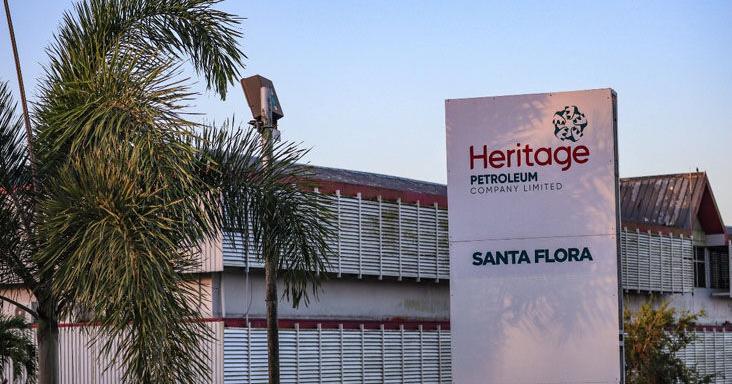
    A nearly $571 million offshore energy infrastructure contract, set to be awarded by Trinidad and Tobago’s state-linked Heritage Petroleum Co. Ltd. via a closed limited bidding process, has become the center of growing scrutiny from seasoned energy industry insiders, who question the compliance and fairness of the procurement strategy.

    The contract in question covers the delivery of a specialized offshore production and compression facility, designed to process hydrocarbons from the company’s West/Southwest Soldado fields. Rather than opening bidding to all qualified suppliers globally, Heritage has opted for a limited process that excludes international vendors entirely, granting pre-qualification to just three local companies: TOSL Engineering, Namalco Construction Services Limited, and Anti-Corrosion Technical Services Limited (ACTS).

    Internal company documents obtained by the Sunday Express confirm the total contract value is pegged at $570,611,800, with a tender submission deadline set for the end of May 2026. Per the internal document outlining procurement strategy, Heritage plans to enter a five-year lease agreement for the facility, aligning with the firm’s long-term strategy of outsourcing core operational capacity instead of building in-house capabilities. TOSL Engineering already holds an existing contract with Heritage for a Mobile Offshore Production Unit (MOPU) at the same fields, a deal that has been extended twice and is currently set to expire in March 2026; the company is now seeking an additional one-year extension to March 2027 while a new provider is finalized.

    Industry observers have raised multiple red flags about the process, starting with its deviation from standard open bidding requirements outlined in local public procurement law. Section 5.1 of Trinidad and Tobago’s Public Procurement and Disposal of Public Property Regulations mandates that open bidding must be used by public bodies unless the complexity of the project or specific market conditions make an alternative method more likely to deliver best value for money. Insiders argue no such compelling justification has been made public for this half-billion-dollar contract.

    Critics also point to unusually fast pre-qualification approvals that deviate from standard industry timelines. One insider noted that one pre-qualified applicant had its submission approved just one hour and 28 minutes after it was received, while a second was approved within seven days. Standard evaluations that assess financial stability, technical capability, and health, safety and environment (HSE) compliance typically take four to six weeks to complete, leading to questions about whether the required due diligence was actually conducted.

    Further concerns center around the lack of experience of two of the pre-qualified local firms, ACTS and Namalco, which insiders say have no proven track record of delivering large-scale offshore production and compression facilities. More critically, industry sources say Heritage artificially narrowed the eligible supplier pool by excluding major international vendors that have documented expertise in this specialized sector. Market research compiled by observers identifies multiple global firms, including Canada’s Compass Energy, Singapore’s Grander Energy and Aurora Maritime, and the UK’s Aquaterra Energy, all of which have the capability to deliver the project. These international companies were not invited to participate at all.

    Insiders question whether Heritage properly conducted global market soundings to identify all capable suppliers before restricting the bid list to three local entities. For a contract of this size and strategic importance, observers say the decision to limit bidding runs counter to the legislative mandate that prioritizes open competition to secure the best value for public funds.

    “For a contract worth hundreds of millions of dollars over five years, a legitimate question arises: Why were only three local companies invited when the offshore production and compression market is demonstrably international?” one senior insider noted. “That question becomes even more pressing if there is no evidence that only three suppliers worldwide were capable of performing the work.”

    Many industry experts argue that a far more appropriate and legally compliant approach would have been open bidding paired with a pre-qualification process to shortlist only technically and financially capable vendors. This model would preserve broad competition, ensure transparency, and deliver the best value for money, which is the core requirement of public procurement law in the country. Without a robust, documented justification for restricting competition, insiders warn the current procurement process violates Heritage’s legal obligations to conduct bidding in a transparent, fair, and non-discriminatory manner, leaving the entire award vulnerable to formal legal challenge under the 2015 Public Procurement and Disposal of Public Property Act, as amended. Heritage has so far defended its decision to use limited bidding, but has not released a public justification for excluding international suppliers or for deviating from the open bidding requirement.