分类: business

  • BTIA President Efrén Pérez Ratified for Second Term Atop Regional Tourism Federation

    BTIA President Efrén Pérez Ratified for Second Term Atop Regional Tourism Federation

    In a significant development for Central America and the Caribbean tourism sector, Efrén Pérez, current president of the Belize Tourism Industry Association, has secured unanimous approval to serve a second consecutive term as president of the Federation of Tourism Chambers of Central America and the Dominican Republic (FEDECATUR). The official ratification was announced during the III Ibero-American Forum on Sustainable Tourism, Innovation, and Development, a high-profile industry gathering hosted in San Pedro Sula, Honduras that drew hundreds of stakeholders including tourism leaders, public sector representatives, global intergovernmental body delegates, and private sector executives from across the Ibero-American region.

    FEDECATUR’s Board of Directors highlighted the key achievements of Pérez’s first term to justify their unanimous decision to re-appoint him. During his initial mandate, Pérez spearheaded meaningful progress in institutional strengthening for the regional federation, and advanced a cohesive regional policy agenda focused on three core pillars: cross-market tourism integration, environmentally sustainable tourism practices, and industry innovation through new technologies and business models.

    Speaking after the confirmation, Pérez framed the renewed mandate as a collective vote of confidence in the shared vision of a more connected, competitive, and fully integrated tourism economy across Central America and the Dominican Republic. “Our ongoing commitment remains centered on amplifying the voice of the private tourism sector across the region, and building a strategic, constructive partnership with regional governments,” Pérez stated. “Together, our goal is to drive inclusive economic growth, expand quality job opportunities, and deliver long-term prosperity for local communities that depend on tourism.”

    For his second term, FEDECATUR has already laid out a clear policy roadmap. Key priorities include expanding and deepening public-private sector dialogue on regional tourism challenges, upgrading air and land transportation connectivity across member states, lowering regulatory barriers that hinder cross-border visitor mobility, and embedding sustainable development as a non-negotiable core pillar of all regional tourism policy. The federation also plans to strengthen collaborative ties with international tourism bodies and multilateral institutions to access funding, technical expertise, and global market opportunities for member stakeholders.

    As the leading representative body for the organized private tourism sector across eight nations, FEDECATUR counts Belize, Guatemala, El Salvador, Honduras, Nicaragua, Costa Rica, Panama, and the Dominican Republic among its core membership. The organization works to align industry priorities, advocate for policy reforms that benefit regional tourism, and position Central America and the Dominican Republic as a cohesive, competitive global tourism destination.


  • Caribbean strategic advisors and PROVEN Wealth Barbados form regional investment partnership

    Caribbean strategic advisors and PROVEN Wealth Barbados form regional investment partnership

    Two leading Caribbean financial players have joined forces to unlock new investment pathways and expand capital access for growing businesses and development initiatives across Barbados and the broader Caribbean region. Caribbean Strategic Advisors Inc. (CSA) and PROVEN Wealth (Barbados) Limited (PWB) announced their new strategic partnership in a joint press release, outlining a shared vision to address the region’s existing gap between available capital and unmet financing demand.

    The collaboration merges the unique strengths of both organizations to create a comprehensive, end-to-end investment platform. CSA brings deep expertise in transaction sourcing, strategic business consulting, and custom capital structuring, while PWB contributes fully regulated investment services spanning securities trading, brokerage, personalized investment advising, and professional wealth management. This complementary skill set is designed to address every stage of the investment process, from initial project identification to final capital deployment.

    Through the new alliance, the two firms aim to build a unified regional investment platform that channels both individual and institutional capital into high-impact sectors. Key focus areas will include infrastructure development, the global energy transition, private sector expansion, and other industries that drive sustainable long-term economic growth across the Caribbean.

    Industry observers note that the timing of the partnership responds to a unique market dynamic in the region: Barbados and many neighboring Caribbean nations hold substantial levels of domestic savings and institutional liquidity, yet local businesses and large-scale infrastructure projects continue to face challenges accessing the growth capital they need to scale. The alliance is structured to complement existing funding sources by proactively identifying, structuring, and facilitating investment opportunities that appeal to both domestic and cross-regional investors.

    Oliver Jordan, Co-Founder and Managing Director of CSA, emphasized that the partnership fills a critical gap in the regional investment ecosystem. “Mobilising capital at scale requires three capabilities working in concert: disciplined transaction origination, sound structuring, and regulated distribution. The CSA–PROVEN alliance brings those elements together within a single platform — positioning us to deliver institutional-grade opportunities to Barbadian and Caribbean investors, and meaningful long-term capital to Caribbean enterprises,” Jordan explained.

    Garfield Sinclair, Chairman of PWB, echoed this sentiment, noting that the combined expertise and resources of the two firms will strengthen the region’s entire investment landscape. “We believe there is a significant opportunity to strengthen the regional investment ecosystem by combining origination capability, regulated market access, and execution capacity within a coordinated platform. The alliance reflects a shared commitment to expanding investment participation and supporting long-term economic growth across the Caribbean,” Sinclair said.

    Beyond immediate investment activity, the partnership is aligned with Barbados’ broader national goal of solidifying its status as a leading regional hub for investment structuring, large-scale institutional capital mobilization, and financing for the economy’s productive sectors. Across the wider Caribbean, the initiative is expected to support inclusive economic development by deepening regional capital markets and expanding access to high-quality investment opportunities for both investors and enterprises.

    The announcement of the alliance comes as Barbados’ domestic capital markets are experiencing a notable uptick in activity. It follows CSA’s recent role as sole financial advisor for the public share offering of Roberts Manufacturing Company Limited, a landmark deal that marked the first domestic public equity offering launched in Barbados in several years.

  • COMMENTARY: The Cost of Money in the ECCU

    COMMENTARY: The Cost of Money in the ECCU

    For small open economies bound together in a monetary union like the Eastern Caribbean Currency Union (ECCU), the dynamics of money go far beyond simple transactions and cash holdings. Every aspect of the currency system, from interest rate setting to currency stability, carries a tangible cost that shapes the daily lives of citizens, the growth trajectory of local businesses, and the fiscal space of member governments. To understand these costs, we must first examine the structural foundations that underpin the ECCU: a long-standing currency board arrangement pegged to the U.S. dollar, which has delivered decades of exchange rate stability but also imposes unique tradeoffs that are often overlooked in mainstream policy discussions.

    One of the most immediate costs of money for ECCU residents is the cost of borrowing. Across the union, commercial interest rates remain significantly higher than those available in larger advanced economies, even with the currency peg locking in low exchange rate risk. This gap stems from multiple factors: small domestic financial markets that lack depth, higher perceived risk of default in small island economies, and rigidities in the regulatory environment that limit competition among lending institutions. For small and medium-sized enterprises (SMEs) that form the backbone of the ECCU’s tourism-dependent and service-based economy, these elevated borrowing costs often mean abandoned expansion plans, missed opportunities to innovate, and a persistent gap in job creation that holds back inclusive growth. For individual households, high lending rates translate into less access to affordable mortgages, consumer loans for education or healthcare, and greater financial vulnerability when economic shocks hit.

    Beyond borrowing costs, the ECCU’s currency framework carries another significant cost: the requirement to hold large foreign reserve buffers to maintain the U.S. dollar peg. The Eastern Caribbean Central Bank (ECCB) is required to keep a high percentage of the monetary base backed by foreign reserve assets to guarantee full convertibility at the fixed exchange rate. While this reserve requirement is critical to maintaining market confidence and the peg’s credibility, it also represents an opportunity cost. Those reserves could otherwise be deployed to finance domestic infrastructure projects, social programs, or green transition investments that would deliver long-term economic and social benefits to member states. For small island nations already facing tight fiscal constraints and growing costs from climate change adaptation, this locked-up capital represents a substantial ongoing burden that cannot be ignored.

    Inflation, too, imposes a silent cost of money across the ECCU. In recent years, global inflationary pressures driven by supply chain disruptions, rising energy and food prices, and post-pandemic demand shifts have spilled over into the ECCU, eroding the purchasing power of household incomes and savings. Because the ECCU imports nearly all of its essential goods, it is disproportionately exposed to global price swings, meaning inflation hits lower-income households the hardest, as they spend a larger share of their income on basic necessities. This erosion of purchasing power is a hidden but persistent cost that reduces living standards across the union, even when nominal wages remain stagnant.

    Looking ahead, the evolving global financial landscape is creating new cost dynamics for the ECCU. As major central banks around the world raised interest rates to combat inflation in recent years, the ECCB has had to follow suit to maintain the attractiveness of the Eastern Caribbean dollar and protect reserve levels, passing on higher global borrowing costs to domestic borrowers. At the same time, the rise of digital payment technologies and crypto assets presents both opportunities to reduce transaction costs and new risks that require costly regulatory and infrastructure upgrades to protect consumers and financial stability.

    Addressing the cumulative cost of money in the ECCU will require targeted policy reforms that preserve the core benefits of the existing currency arrangement while easing its burdens on households and businesses. Proposals to deepen regional financial integration, increase competition in the banking sector, and unlock capital for domestic investment are all critical steps to reduce borrowing and opportunity costs. Investing in digital financial infrastructure can also lower transaction costs for cross-border remittances and daily commerce, bringing greater financial inclusion to unbanked and underbanked populations across the region. Ultimately, confronting the cost of money is not just a technical monetary policy issue—it is a core priority for boosting shared prosperity and building more resilient economies across the Eastern Caribbean.

  • Antigua and Barbuda Faces Aging Population Trend as Median Age Hits 35.5

    Antigua and Barbuda Faces Aging Population Trend as Median Age Hits 35.5

    Demographic age structure stands as one of the most powerful determinants of a country’s long-term economic health, influencing everything from labor market capacity to the sustainability of public social programs and the composition of domestic consumer demand. For the Caribbean Community (CARICOM), a 15-member regional bloc, new 2023 demographic estimates from the United Nations Department of Economic and Social Affairs’ World Population Prospects 2024 reveal a stark split in median ages, creating vastly different economic challenges and opportunities across member states.

    At one end of the spectrum, four CARICOM economies retain relatively young demographic profiles, with median ages falling below the global median of 30 years. Haiti, the bloc’s youngest nation, records a median age of just 23.5 years, followed by Guyana at 25.6, Belize at 25.9, and Suriname at 28.1. Persistently higher birth rates in these countries, most notably Haiti and Guyana, have kept populations young even as fertility rates decline across most of the broader region. For these young economies, the central economic challenge is creating enough quality formal employment to absorb a rapidly expanding cohort of working-age people, a hurdle that will define growth and social stability for decades to come.

    On the opposite end of the demographic spectrum, 11 CARICOM member states have already surpassed the global median age, with three nations leading the older end of the distribution. Montserrat, the bloc’s oldest territory, has a median age of 41.5 years, followed closely by Barbados at 38.9 and Trinidad and Tobago at 36.7. This aging trend has been driven by two long-term demographic shifts: decades of falling fertility rates that have reduced the number of young people entering the population, and sustained emigration of working-age residents that shrinks the labor pool over time. For these aging economies, the growing strain is felt acutely in public finance: as the working-age population contracts, the share of older residents relying on public pension systems and healthcare services grows, stretching government budgets and forcing difficult policy trade-offs.

    Between the two clear tiers of young and aging member states, eight nations fall in a middle demographic range, with median ages clustering between 31 and 36 years. Recent regional fertility data suggests this demographic split will shift in the coming decades, with an increasing number of CARICOM economies moving from the young, growing cohort group into the aging, shrinking labor force group over time.

    This analysis was published by CARISTATS, a free regional statistical and analysis platform. The outlet has called for voluntary reader support, noting that users can pledge a future subscription to endorse its work, with no charges incurred until payment systems are formally activated.

  • Disgruntled Former BEL Workers Take Fight to National Assembly

    Disgruntled Former BEL Workers Take Fight to National Assembly

    After months of unaddressed grievances and stalled negotiations, a group of disgruntled former employees of Belize Electricity Limited (BEL) has escalated its campaign for owed severance pay by demonstrating on the steps of Belize’s National Assembly. Organized under the banner Belize Energy Workers for Justice, the group says it has exhausted all lower-level avenues to resolve the dispute—holding public protests, meeting with government officials, staging press conferences, and protesting directly at BEL headquarters—yet has been met with continued inaction.

    The core of the workers’ demand is straightforward: they are seeking the same severance compensation that was awarded to former employees of Belize Telemedia Limited (BTL) following a binding court ruling. According to the group, BEL has rejected this comparison, arguing that the BTL ruling does not apply to its former workers, and is now preparing to bring the dispute before the High Court to seek declaratory confirmation of its position.

    In addition to demanding immediate payment of their owed severance, the workers are calling for leadership changes at the top of BEL, specifically the removal of newly appointed company chairman Lynn Young.

    Dorla Staine, a representative of Belize Energy Workers for Justice, spoke on behalf of the group during the National Assembly demonstration, outlining the urgency of the workers’ situation. “We have already exhausted every channel,” Staine explained. “We met with the responsible minister, who publicly expressed support and promised to bring our case before Cabinet and the Attorney General for review. But even as we wait, BEL is moving forward with new court action over a matter that has already been ruled on. We came here today to appeal directly to the Prime Minister, as the nation’s top leader, to intervene on behalf of elderly workers who gave decades of service to Belize.”

    Staine pushed back against BEL’s claim that the BTL severance precedent does not apply, noting that unlike BTL workers, the former BEL employees’ severance pay is not already incorporated into their existing pension benefits—a key distinction BEL has refused to acknowledge. She also emphasized that the years-long legal process has already taken a devastating toll on the group of mostly elderly former workers. “This legal battle already dragged on for five years: the Marin Group first filed the case in 2020, and the ruling was only issued in 2025,” Staine said. “Many of our members do not have five more years to wait. We have already lost colleagues to death, others are hospitalized, and many more are struggling with poor health just to get by each day.”

    As the dispute heads toward a new round of High Court litigation, the former workers warn that time is running out for many of their members, and are pressing elected and corporate leaders to intervene before more workers pass away without ever receiving the compensation they are owed.

  • BermudAir Charts New Route from North Carolina to Belize

    BermudAir Charts New Route from North Carolina to Belize

    As the global travel and tourism sector continues to adjust to post-pandemic market shifts, a new air connectivity development is poised to expand access to one of Central America’s most popular tropical getaway destinations. Caribbean-based premium carrier BermudAir has publicly announced plans to launch a new twice-weekly nonstop seasonal route connecting Raleigh-Durham International Airport in North Carolina to Belize, with service scheduled to debut in December 2026. The route is tailored specifically to meet high seasonal demand from North American travelers seeking to escape frigid winter temperatures, with flights operating from December 20 through May 2 of each travel season.

  • New Flights to Belize? Government in Talks with BermudAir

    New Flights to Belize? Government in Talks with BermudAir

    Against a backdrop of widespread operational contraction across the global aviation sector, the Central American nation of Belize is actively pursuing expanded air connectivity through ongoing negotiations with niche premium carrier BermudAir, Belize’s Ministry of Tourism confirmed recently.

    Tourism Minister Anthony Mahler publicly acknowledged that discussions between the government and the Bermuda-based airline have been progressing for several months, with early conversations even exploring the possibility of custom-branded aircraft bearing a Belizean national identity. According to Mahler, BermudAir’s leadership views Belize as an ideal strategic addition to its route network, aligning perfectly with the carrier’s premium-focused business model that caters to leisure and high-value travelers.

    Mahler outlined that the talks have covered potential new routes originating from multiple points across the United States, Guatemala, and an additional undisclosed market. He noted that BermudAir made the ongoing negotiations public earlier than the Belizean side had planned, as the government still required additional time to review the carrier’s full proposal and formal demands. Despite the premature announcement, Mahler stressed that the airline remains fully committed to forging a partnership with Belize.

    The minister emphasized that while the government is encouraged by BermudAir’s strong interest, all discussions remain in the preliminary stage, and no binding contractual agreement has been reached to date.

    This development emerges at a moment of upheaval for the global airline industry, with major carriers pulling capacity and cutting underperforming routes to adjust to shifting demand and rising operational costs. Just in Belize’s existing market, two major U.S. carriers – Spirit Airlines and JetBlue – have already withdrawn all their routes serving the country, while American Airlines has scaled back its domestic flight operations within Belize.

    Mahler openly acknowledged the difficult operating environment facing the global aviation sector, but framed the current shifts as a natural cycle of change for Belize’s air connectivity. “These are trying times for the entire industry… You lose some, and you gain some. I believe another airline will increase its capacity to Belize,” he said, projecting cautious optimism about the future of the country’s aviation market.

    Beyond negotiations with BermudAir, Mahler added that the Belizean government is also holding parallel discussions with existing carriers that already serve the country. Those talks are focused on adding new service from additional U.S. cities, with at least four to five potential new routes currently being evaluated for viability.

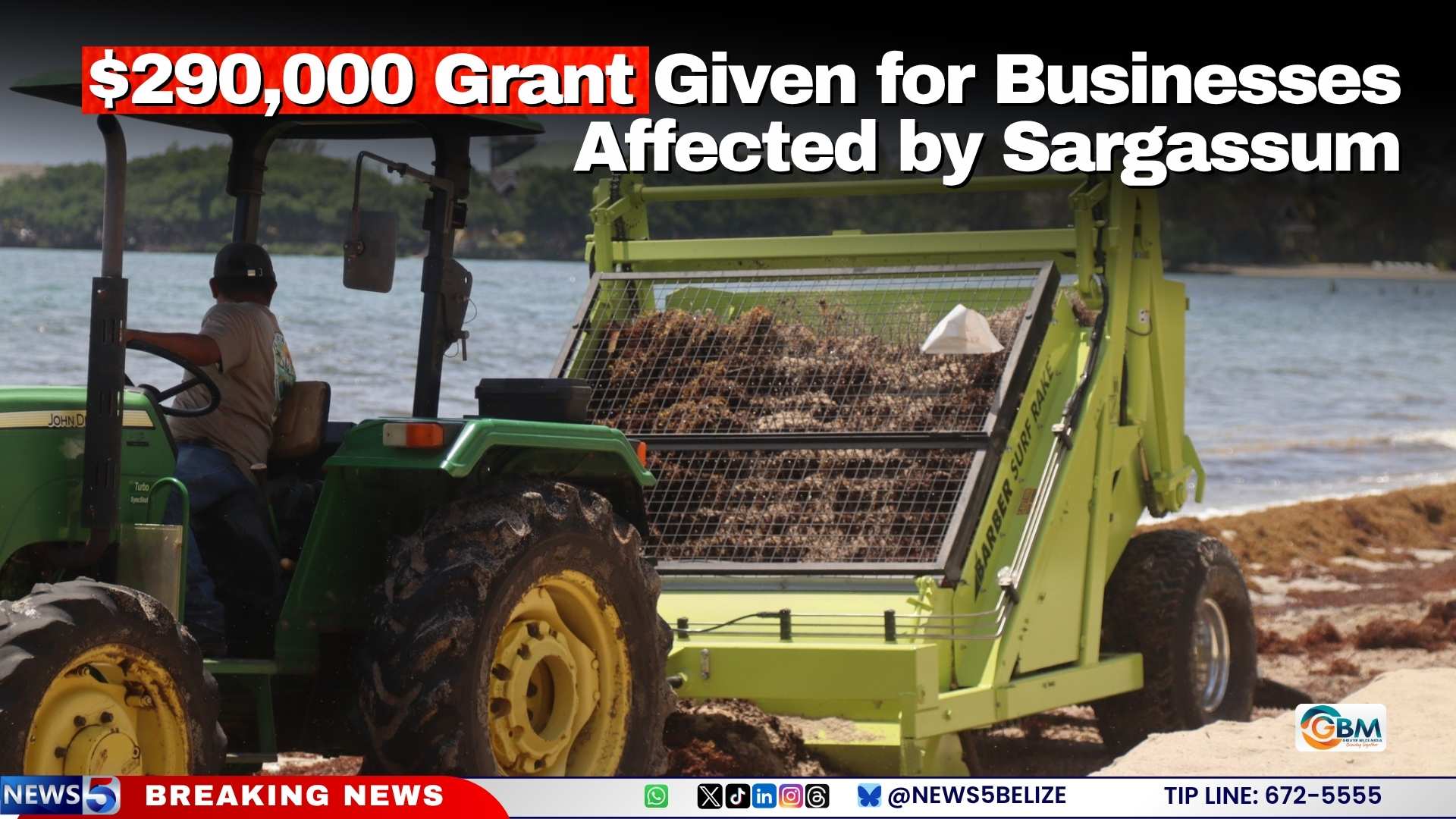
  • $290,000 Grant Given for Businesses Affected by Sargassum

    $290,000 Grant Given for Businesses Affected by Sargassum

    Coastal communities across Belize are grappling with a worsening crisis of proliferating sargassum seaweed washing up on their popular shorelines, prompting the national government to roll out new targeted interventions: a six-figure grant for affected private businesses and specialized new machinery to ramp up cleanup operations.

    Announced in an official statement from the country’s National Sargassum Task Force, the multi-pronged response comes as invasive sargassum accumulates at persistent high levels across several of Belize’s most tourism-reliant coastal zones. Co-chaired by the Ministry of Blue Economy and Marine Conservation and the Ministry of Tourism, the task force has prioritized response efforts for the hardest-hit regions, which include key tourist destinations: Ambergris Caye, Caye Caulker, Hopkins, Seine Bight, and Placencia.

    To boost the efficiency of on-ground cleanup, the task force has acquired purpose-built new equipment, specifically a Barber Beach Rake and a New Holland tractor. These heavy-duty tools are scheduled to be deployed first in Placencia, a popular coastal community that has struggled with ongoing, large-scale sargassum buildup on its beaches.

    Placencia Village Chairman Warren Garbutt recognized the coordinated response while acknowledging the long-term complexity of the sargassum issue. “We do realise there is no one fixed solution to this problem and stand ready to work together to find effective and efficient ways to improve the quality of our beaches and visitors’ experience,” Garbutt said.

    Beyond expanded cleanup infrastructure, the government is delivering direct economic support to businesses that have suffered financial losses from the seaweed invasion. The Belize Fund for a Sustainable Future has approved a BZ$290,000 grant that will be distributed to impacted private sector businesses throughout June. The Belize Tourism Board is also contributing to local response efforts, providing municipalities with dedicated funding for cleanup operations and running field trials of new sargassum removal technology across affected coastal areas.

    The ongoing intervention reflects the Belizean government’s continued commitment to addressing the sargassum crisis, which threatens both the country’s critical tourism sector and the ecological health of its coastal marine ecosystems, which are core to the nation’s blue economy strategy.

  • LETTER: Who Cares About the Future Sustainability of Caribbean Resorts?

    LETTER: Who Cares About the Future Sustainability of Caribbean Resorts?

    The Caribbean region has long stood as one of the world’s most coveted tourism destinations, drawing millions of visitors annually to its sun-drenched coastlines, crystal-clear waters, and vibrant cultural heritage. At the heart of this $30 billion annual industry sit hundreds of large and small resorts, which form the backbone of local economies across dozens of island nations. Yet, as the climate crisis accelerates and global travel patterns evolve, a critical question is gaining increasing urgency: who is taking meaningful action to safeguard the long-term sustainability of these vital economic assets?

    This question, first raised in an open letter from Caribbean tourism industry insiders and environmental advocates, shines a light on a growing gap between stated sustainability commitments and on-the-ground action. Many resort operators have rolled out green marketing initiatives in recent years, from reducing single-use plastics to offering carbon-neutral vacation packages. But critics argue these efforts often amount to little more than surface-level changes, failing to address the core systemic threats that put the entire region’s tourism future at risk.

    The most pressing threat is climate change itself. Caribbean islands are on the frontlines of rising sea levels, more intense tropical storm systems, and coastal erosion that is already eating away at valuable beachfront property. A 2023 study from the Intergovernmental Panel on Climate Change (IPCC) estimates that up to 30% of the Caribbean’s coastal tourism infrastructure could be submerged or rendered uninhabitable by 2050 if current emission rates continue. Despite this stark warning, many resort developers are still pushing forward with new construction projects in low-lying coastal zones, with minimal investment in adaptive infrastructure like sea walls, elevated foundations, or natural mangrove barriers that can buffer against storm damage.

    Beyond climate risks, the region also faces ongoing challenges around resource management. Water scarcity is an increasingly urgent issue on many arid islands, yet large resorts often consume up to 10 times more water per guest than local residents, with little investment in recycling or conservation infrastructure. Similarly, many resorts still struggle with proper waste management, sending thousands of tons of solid waste annually to already overcrowded local landfills, while failing to invest in circular economy practices that could reduce waste generation.

    Local communities, who rely on tourism for more than 50% of GDP in many Caribbean nations, are also calling for greater social sustainability. Many large resort operations are owned by foreign companies, meaning a significant portion of tourism revenue leaves the region rather than circulating through local economies. Critics also point to ongoing issues with inadequate wages for resort workers, limited access to affordable housing for local staff, and the exclusion of small local businesses from resort supply chains.

    So far, responsibility for driving sustainability change has fallen between multiple stakeholders. National governments across the region have often prioritized short-term tourism revenue growth over long-term regulation, citing the need to attract foreign investment and create jobs. International hotel brands have framed their incremental sustainability steps as sufficient, arguing that larger systemic changes would raise costs and make their properties less competitive. Meanwhile, consumers often say they care about sustainability when booking travel, but few are willing to pay the premium that more transformative sustainable practices require.

    The authors of the open letter argue that this fragmented approach is no longer viable. They are calling for a coordinated regional pact that brings together governments, hotel brands, local communities, and multilateral development banks to drive transformative change. Key proposals include mandatory climate risk assessments for all new resort projects, tax incentives for resorts that invest in renewable energy and water conservation, and requirements that resorts source a minimum percentage of their goods and services from local suppliers. They are also calling for billions in climate adaptation funding from wealthy nations, which have contributed the most to global emissions but have done little to help frontline regions like the Caribbean adapt to existing impacts.

    Industry leaders who support the initiative note that investing in sustainability is not just an environmental imperative—it is also a business necessity. A growing number of travelers are prioritizing sustainable destinations, and resorts that can demonstrate genuine sustainability are already seeing higher occupancy rates and can charge premium prices. Furthermore, investing in adaptive infrastructure now can prevent billions of dollars in damage from future storms and sea level rise, protecting jobs and economic stability for generations to come.

    As the Caribbean enters its peak 2024 tourism season, the conversation around resort sustainability is only expected to grow. The question that started as a single open letter has now sparked a regional debate about the future of the Caribbean’s most important industry: whether stakeholders will continue to prioritize short-term profits, or come together to build a resilient, equitable, and sustainable tourism model that can benefit both visitors and local communities for decades to come.

  • Tourism Authority Promotes Charmaine Spencer To Chief Marketing Officer and Shermain Jeremy To Regional Tourism Director

    Tourism Authority Promotes Charmaine Spencer To Chief Marketing Officer and Shermain Jeremy To Regional Tourism Director

    The regional tourism authority has announced a pair of high-impact executive promotions that strengthen its leadership team as the organization works to accelerate post-pandemic tourism recovery and expand market reach. Charmaine Spencer has been elevated to the position of Chief Marketing Officer, while Shermain Jeremy will step into the role of Regional Tourism Director, according to an official statement released by the authority this week.

    Both promotions come at a critical juncture for the region’s tourism sector, which has been working to rebuild visitor volumes and diversify its audience base after years of global travel disruption. Industry observers note that the internal appointments signal the organization’s confidence in the experience and strategic vision of both long-standing team members.

    In her new role as Chief Marketing Officer, Spencer will oversee all global marketing strategies, brand development initiatives, and digital outreach campaigns designed to attract key visitor segments from emerging and established source markets. She brings years of hands-on experience in tourism marketing and audience engagement to the C-suite, having previously led multiple successful destination promotion campaigns that delivered double-digit growth in visitor inquiries for the authority.

    Jeremy, meanwhile, will take on end-to-end responsibility for coordinating regional tourism operations, aligning the work of local tourism boards, hospitality stakeholders, and community partners to deliver cohesive visitor experiences. Her remit will also include developing sustainable tourism frameworks that support local livelihoods while preserving the region’s natural and cultural heritage.

    A spokesperson for the tourism authority noted that both leaders have deep roots in the region and a proven track record of delivering results that benefit both the sector and local communities. The appointments are expected to be formally effective starting next month, with a transition plan already in place to ensure continuity across all ongoing tourism development projects.