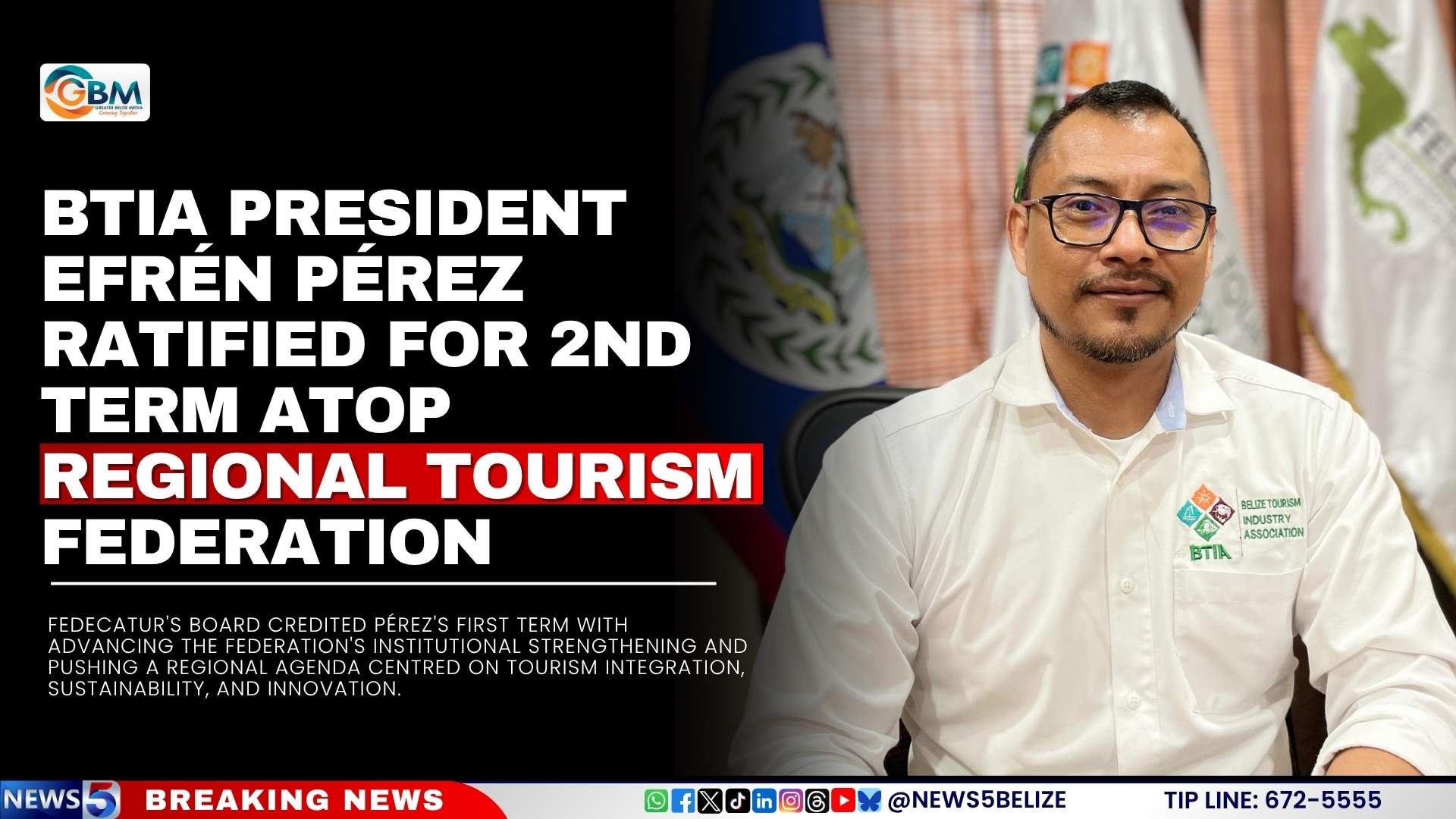
In a significant development for Central America and the Caribbean tourism sector, Efrén Pérez, current president of the Belize Tourism Industry Association, has secured unanimous approval to serve a second consecutive term as president of the Federation of Tourism Chambers of Central America and the Dominican Republic (FEDECATUR). The official ratification was announced during the III Ibero-American Forum on Sustainable Tourism, Innovation, and Development, a high-profile industry gathering hosted in San Pedro Sula, Honduras that drew hundreds of stakeholders including tourism leaders, public sector representatives, global intergovernmental body delegates, and private sector executives from across the Ibero-American region.
FEDECATUR’s Board of Directors highlighted the key achievements of Pérez’s first term to justify their unanimous decision to re-appoint him. During his initial mandate, Pérez spearheaded meaningful progress in institutional strengthening for the regional federation, and advanced a cohesive regional policy agenda focused on three core pillars: cross-market tourism integration, environmentally sustainable tourism practices, and industry innovation through new technologies and business models.
Speaking after the confirmation, Pérez framed the renewed mandate as a collective vote of confidence in the shared vision of a more connected, competitive, and fully integrated tourism economy across Central America and the Dominican Republic. “Our ongoing commitment remains centered on amplifying the voice of the private tourism sector across the region, and building a strategic, constructive partnership with regional governments,” Pérez stated. “Together, our goal is to drive inclusive economic growth, expand quality job opportunities, and deliver long-term prosperity for local communities that depend on tourism.”
For his second term, FEDECATUR has already laid out a clear policy roadmap. Key priorities include expanding and deepening public-private sector dialogue on regional tourism challenges, upgrading air and land transportation connectivity across member states, lowering regulatory barriers that hinder cross-border visitor mobility, and embedding sustainable development as a non-negotiable core pillar of all regional tourism policy. The federation also plans to strengthen collaborative ties with international tourism bodies and multilateral institutions to access funding, technical expertise, and global market opportunities for member stakeholders.
As the leading representative body for the organized private tourism sector across eight nations, FEDECATUR counts Belize, Guatemala, El Salvador, Honduras, Nicaragua, Costa Rica, Panama, and the Dominican Republic among its core membership. The organization works to align industry priorities, advocate for policy reforms that benefit regional tourism, and position Central America and the Dominican Republic as a cohesive, competitive global tourism destination.