分类: business

  • SpaceX to make historic IPO that could make Musk a trillionaire

    SpaceX to make historic IPO that could make Musk a trillionaire

    After decades of pushing the boundaries of private space exploration, Elon Musk’s SpaceX is set to make its landmark public market debut on the Nasdaq exchange this Friday, in what will go down as the largest initial public offering in global financial history. The much-anticipated listing has already sent waves through Wall Street, with analysts and investors alike bracing for a debut that could reshape global market dynamics and cement Musk’s status as the wealthiest individual the world has ever seen.

    In its official filing with the U.S. Securities and Exchange Commission, SpaceX confirmed it has priced 555 million outstanding shares at $135 per share, pushing the company’s pre-trading valuation to just under $1.8 trillion. This valuation puts SpaceX ahead of Musk’s own electric vehicle giant Tesla, social media conglomerate Meta, and retail behemoth Walmart on the list of the world’s most valuable public companies. The offering is on track to raise a record-breaking $75 billion, dwarfing the previous all-time high set by Saudi Aramco’s 2019 $29.4 billion debut. If underwriters exercise their full option to purchase an additional 83 million shares, the total capital raised will surge past $86 billion.

    Founded by Musk in 2002 as a disruptive private venture to reimagine space travel, SpaceX will trade under the ticker symbol “SPCX”, with a secondary listing on Nasdaq’s Texas exchange. The debut comes as a wave of high-profile private technology and artificial intelligence firms prepare for their own public market entries: OpenAI and Anthropic, two leading AI developers, have already submitted regulatory filings for their upcoming IPOs, making SpaceX the first major player to open its shares to the broader public.

    In keeping with tradition for high-profile listings, SpaceX executives will ring the opening bell at Nasdaq’s iconic Times Square headquarters in New York to mark the start of trading. In a move that sets this IPO apart from most large offerings, Musk folded two of his other high-profile private holdings — artificial intelligence firm xAI and social platform X, formerly known as Twitter — into SpaceX earlier this year, making this the most ambitious financial gambit of his career.

    A syndicate led by top global investment banks Goldman Sachs, Morgan Stanley, and Bank of America, including more than 20 additional financial institutions, is underwriting the historic offering. Industry outlet Bloomberg reports that the offering was oversubscribed by more than four times among institutional investors, with demand from everyday retail investors also reaching exceptional levels. In an unusual allocation, more than 20% of the offering has been reserved for retail investors, a far larger share than the standard IPO allotment, giving Musk’s large global fanbase an opportunity to purchase a stake in the company.

    The entire success of the valuation hinges on broad investor confidence in Musk’s reputation as a visionary tech entrepreneur, who will retain the triple role of chief executive, chief technology officer, and board chair of the newly public company. Insiders note that the IPO is expected to create thousands of new millionaires and dozens of new billionaires among current and former SpaceX employees, as well as early investors who backed the company over its 23-year journey.

    Still, the offering is not without its skeptics on Wall Street. Many market analysts have raised concerns that SpaceX’s lofty valuation depends entirely on Musk delivering on audacious, science-fiction-level goals that rely on unproven technology, including the deployment of orbital data centers and the first crewed mission to establish a human colony on Mars. While the company’s revenue grew rapidly to $18.7 billion in 2025, it posted a net loss of $4.9 billion for the year. In an aggressive projection included in its public filing, SpaceX claims it could eventually generate more than $28.5 trillion in combined revenue across its business lines.

    If the IPO meets market expectations on Friday, Musk will become the first trillionaire in human history. As of Thursday, Forbes pegged Musk’s net worth at $782 billion, nearly three times the total wealth of Larry Page, the Google co-founder who ranks second on the outlet’s global rich list.

    The historic listing has already drawn sharp criticism from global equity and advocacy groups. Nabil Ahmed, senior director of economic justice at Oxfam America, argued that concentrating a trillion dollars of wealth in the hands of a single individual undermines both equitable economic opportunity and the health of democratic institutions. On the eve of the IPO, progressive activists staged a protest outside Nasdaq’s New York headquarters, erecting a giant inflatable caricature of Musk to oppose xAI’s Grok chatbot, which has been used to generate non-consensual sexual deepfake images of private individuals.


  • Juici Patties opens first Georgia location in Atlanta

    Juici Patties opens first Georgia location in Atlanta

    ATLANTA, Ga. — One of Jamaica’s most recognizable culinary brands has marked a major milestone in its U.S. expansion, opening its first brick-and-mortar location in the state of Georgia in the heart of Atlanta. The new restaurant, which welcomed its first customers on June 1, 2026, sits at 860 Donald Lee Hollowell Parkway, positioning it to serve both Atlanta’s established Caribbean community and the city’s growing base of curious food explorers.

    Unlike corporate-owned outposts, this new Juici Patties location is run by a husband-and-wife franchise team with deep, longstanding personal ties to the brand. For Murine, one half of the ownership duo, Juici Patties is a taste of home: she was born and raised in Jamaica before moving to the U.S. Her husband Kevin, a native of the Netherlands, first encountered the brand during repeated trips to Jamaica with his wife, and quickly developed a lifelong passion for the chain’s flaky, savory patties and one-of-a-kind authentic Jamaican flavors. Having lived in Atlanta for more than 20 years, the couple saw a clear gap in the city’s diverse food scene for genuine Jamaican street food classics, and jumped at the chance to bring a beloved cultural institution to the community they call home.

    “Opening Juici Patties in Atlanta means bringing a little piece of Jamaican comfort closer to home,” the pair shared in a joint statement. “We are excited to share a brand that means so much to us with the city we love.”

    For Juici Patties USA, the Atlanta launch represents far more than just a new restaurant opening: it is a critical step in the brand’s plan to grow its footprint beyond its core established markets in Florida and New York, where the chain has already built a loyal customer base. Company leaders note that Atlanta’s unique demographic landscape makes it the perfect next market: the city is home to a large, vibrant Jamaican and Caribbean community that has long sought easy access to authentic home-style flavors, alongside a rapidly growing population of adventurous diners eager to try new international cuisines.

    The Atlanta location serves the full iconic Juici Patties menu that fans have loved for decades. Headlining the offerings is the chain’s world-famous mild beef patty, which has already become the top-selling item among first-time Atlanta visitors. Guests have also shown strong enthusiasm for Bigga soft drinks, Jamaica’s most iconic domestic soda brand. For many first-time visitors, the restaurant is also introducing a classic Jamaican street food combination that has been a staple across the island for generations: a savory, flaky patty wrapped inside a soft, sweet warm cocoa bread.

    In the weeks since opening, the new location has already seen an outpouring of support from local diners and community leaders alike. Franchise owners credit the early success to widespread local word of mouth and viral visibility on social media platforms, particularly TikTok, which has helped draw crowds of both Jamaican expats and curious foodies. The pair says early community turnout has far outpaced their initial expectations.

    “We are incredibly grateful for the warm welcome we’ve received,” the owners said. “The support from the community has exceeded our expectations.”

    Local institutions and neighborhood leaders have also stepped forward to praise the new business, highlighting the investment it brings to the Donald Lee Hollowell Parkway corridor. Members of the Atlanta Police Department and neighborhood association leaders have personally welcomed the restaurant to the area, while local residents have highlighted the new full- and part-time employment opportunities the opening has created for local workers.

    Company officials confirmed that the Atlanta location is just the first of what will be multiple Juici Patties outposts across the state of Georgia. While the brand’s immediate focus is on getting the new Atlanta location established and serving customers, leadership is already actively scouting locations and exploring franchise opportunities across the state for future expansion.

    As Juici Patties continues its steady growth across the United States, the brand reaffirmed its core commitment: to share authentic Jamaican culinary traditions with new audiences, create accessible entrepreneurial opportunities for local business owners, and build lasting, mutually beneficial connections with every community it enters.

  • BVI to scrap visas for work permit holders

    BVI to scrap visas for work permit holders

    In a landmark policy shift aimed at strengthening the territory’s economic competitiveness, the government of the British Virgin Islands has confirmed plans to eliminate visa requirements for foreign work permit holders within the coming weeks. The reform, designed to ease chronic recruitment headaches for local businesses and attract increased foreign investment, was formally announced by Premier Dr. Natalio Wheatley during his 2026 State of the Territory Address earlier this week.

    Wheatley framed the visa change as a core pillar of a broader slate of pro-growth and business-friendly reforms that the administration is rolling out across the territory. “In the coming weeks, we will also be removing visas for work permit holders, giving relief to businesses who cannot onboard staff quickly enough to support their operations,” the Premier told attendees during the address.

    The planned visa elimination is part of a coordinated government push to overhaul the territory’s labour market, advance economic diversification, and streamline investment regulations. Prior to this announcement, the Wheatley administration has already advanced a series of incremental changes to improve labour processing, including the digitization of work permit application workflows, expanded public outreach to connect workers with open roles, and widespread education campaigns to inform both employers and employees of workplace rights. The government has also deepened collaborative partnerships with local business associations to cut red tape and improve the speed of public service delivery for hiring requests.

    Moving forward, the government plans to extend its labour reform efforts to high-priority sectors that have long reported staffing gaps, including hospitality, agriculture and fisheries, marine-based industries, and skilled trades. Officials note that the visa reform will align with the territory’s existing employment strategies and work to increase overall workforce participation across all key economic segments.

    The policy change comes amid years of consistent feedback from local employers, who have repeatedly flagged lengthy delays in labour and immigration processing as a major barrier to operating and expanding their businesses. Multiple sectors across the territory continue to struggle with unfilled vacancies, prompting the government to accelerate its timeline for labour market reforms. Prior digital overhauls, including the launch of end-to-end online work permit application systems and streamlined inter-agency coordination for employer requests, have laid the groundwork for the broader visa change announced this week.

    In addition to labour market reforms, the government is advancing parallel changes to improve the overall investment climate in the British Virgin Islands. These include draft legislation for a new comprehensive Investment Act, and plans to launch a dedicated trade and investment promotion agency that will operate as a one-stop service hub for both domestic and international investors looking to establish or expand operations in the territory.

    “My government is 100 per cent committed to creating a business-friendly environment that will facilitate the expansion of our economy,” Wheatley emphasized. While the government has confirmed the reform will roll out in the coming weeks, no exact implementation date has been released to the public as of yet.

  • Visa, OpenAI partner to enable payments through AI agents

    Visa, OpenAI partner to enable payments through AI agents

    The global payments leader Visa has announced a new strategic collaboration with artificial intelligence research firm OpenAI, aiming to embed secure, user-controlled payment capabilities directly into AI-driven commerce tools. The partnership was unveiled publicly on June 10 during the annual Visa Payments Forum held in San Francisco, marking a major step forward in preparing global digital commerce for the rise of AI agent-driven transactions.

    Under the terms of the collaboration, Visa will weave its existing worldwide payment infrastructure — including its global processing network, digital credentialing systems, industry-leading tokenization technology, and advanced fraud prevention frameworks — directly into OpenAI’s AI-powered products and experiences. This integration will allow autonomous AI agents to initiate legitimate transactions on behalf of consumers and businesses, all while retaining strict oversight and control by the end user.

    Visa officials note that this joint project fits neatly into the company’s broader Visa Intelligent Commerce strategy, an ongoing effort to expand the reach of secure payment processing into emerging digital ecosystems beyond traditional e-commerce and in-person shopping. Beyond consumer-facing use cases, the two companies also plan to explore new enterprise applications, including developer tools built on OpenAI’s Codex AI model, and more streamlined automated conversational business workflows.

    The partnership arrives at a pivotal moment for the AI and payment industries, as both sectors shift beyond the current generation of text-based chatbots toward developing more capable autonomous systems that can complete end-to-end tasks for users. That includes everything from scheduling appointments and organizing travel to placing orders, settling invoices, and processing other types of commercial transactions.

    To address growing concerns about data security and unauthorized spending, Visa emphasized that all AI-initiated payments will operate within clear, user-defined permission parameters. These controls include customizable spending caps, restrictions on approved merchant categories, and mandatory user approval for transactions that meet pre-set criteria. Every transaction will leverage Visa’s tokenized credential system, real-time risk-based authorization, and 24/7 AI-powered fraud monitoring to protect users’ financial data.

    “AI will reshape global commerce more deeply than either the internet or mobile technology did in their early days,” said Jack Forestell, Visa’s chief product and strategy officer, in a statement ahead of the forum. “As AI agents become active, everyday participants in the global economy, Visa’s core priority is to make sure every transaction they process remains trusted, fully secure, and completely seamless for all parties.”

    Marco Mahrus, OpenAI’s head of commerce partnerships, echoed that perspective, noting that industry analysts broadly expect AI agents to take on an increasingly large role in helping people complete money-related tasks. These range from routine everyday purchases and bill payments to far more complex multi-step commercial transactions that currently require hours of manual work from consumers or business teams.

    Ultimately, the collaboration is designed to give developers and merchants across industries a simplified, standardized pathway to accept Visa payments that are initiated by AI agents, without sacrificing the core pillars of security, transaction transparency, and end-user control that have become hallmarks of the modern payment ecosystem.

  • Tourism Ministry begins major redevelopment of Monte Río Beach in Azua

    Tourism Ministry begins major redevelopment of Monte Río Beach in Azua

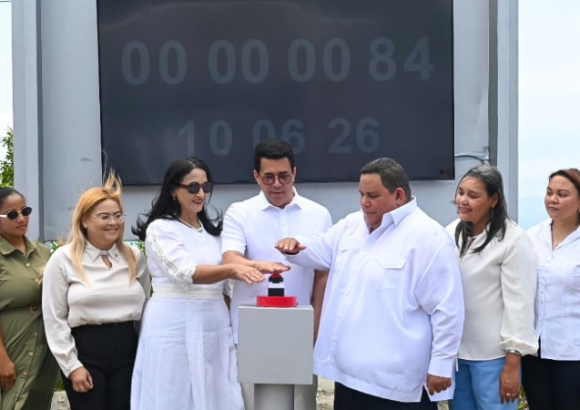
    AZUA, DOMINICAN REPUBLIC – Dominican Republic’s Ministry of Tourism has officially launched a major $265 million Dominican peso infrastructure development project at Monte Río Beach, a long-planned initiative designed to unlock the coastal site’s untapped tourism appeal and elevate the visitor experience for both domestic and international travelers. Tourism Minister David Collado led the inauguration ceremony, marking the start of what government officials project will be a transformative investment for the southern region of the country.

    Spanning more than 46,200 square meters of coastal land, the comprehensive upgrade touches every aspect of the beach destination’s public services and visitor amenities. Core civil works include full rehabilitation of existing access roads, new paved public streets, expanded designated parking lots, accessible sidewalks, reinforced retaining walls, and stabilized embankments to protect the coastal infrastructure from erosion. Beyond transportation and structural works, the project adds a full suite of new public facilities: a full-service beachfront restaurant, gender-inclusive public restrooms and outdoor shower stations, dedicated security booths for round-the-clock visitor safety, a children’s playground, an open-air public fitness area, and a elevated scenic overlook that showcases panoramic views of the Azua coastline.

    The initiative also addresses critical utility gaps that have long limited Monte Río Beach’s ability to accommodate larger crowds. Upgrades to the local potable water network, sanitation systems, stormwater drainage infrastructure, and regional electrical grid are all included in the project scope, alongside a full overhaul of public lighting across the entire beach area. To preserve the site’s natural coastal ecosystem, planners have integrated a large-scale landscaping and environmental restoration program, which will be paired with the addition of sustainable wooden beach walkways, clear directional and informational signage, strategically placed waste disposal stations, and durable public urban furniture for visitor comfort.

    Speaking at the inauguration, Minister Collado emphasized that the Monte Río Beach upgrade is more than a construction project – it is a catalyst for long-term economic development. Decades of unmet demand for improved public infrastructure at the popular coastal site have held back Azua’s ability to compete as a top-tier tourism destination in the Dominican Republic, a country whose economy relies heavily on tourism revenue. Collado noted that the completed project will not only draw more visitors to the region but also create new local jobs, support small business growth, and cement Azua’s position as a key contributor to national economic growth in the coming years.

  • WATCH: Serving Jamaica is the most satisfying experience, says Byles

    WATCH: Serving Jamaica is the most satisfying experience, says Byles

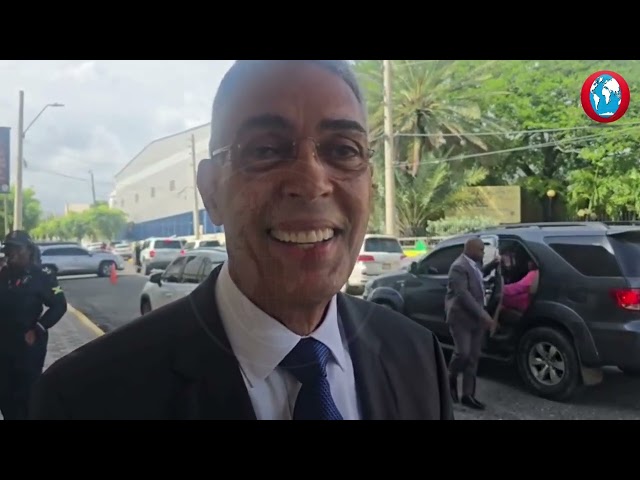
    KINGSTON, Jamaica — As Richard Byles prepares to step down from his post as Governor of the Bank of Jamaica later this summer, the outgoing central bank leader has opened up about his decades-long career, describing his public service for the Caribbean nation as one of the most fulfilling chapters of his professional life.

    In an interview with Observer Online conducted Tuesday, immediately after the quarterly parliamentary finance committee meeting wrapped up, Byles emphasized that contributing to Jamaica’s progress through his work at the central bank and his previous role as co-chair of the Economic Programme Oversight Committee (EPOC) has been unmatched in terms of personal satisfaction.

    “It was a great honour to serve Jamaica through the Bank of Jamaica, just as much as it was an honor to co-chair EPOC. Helping Jamaica is the most satisfying thing that I’ve done in my life,” Byles told reporters. “Although I have spent nearly two decades building my career in the private sector, working for the government and the country at large is a wonderful, deeply rewarding experience.”

    Byles’ current term as governor is scheduled to conclude in August. When asked about his plans for the next chapter, he said he intends to step back from full-time responsibilities to rest and recharge, but made clear he remains committed to supporting Jamaica’s economic development moving forward.

    “I’m always open to help in Jamaica, to the extent I can,” he added. “If my opinion and my decades of experience can be useful, I’m happy to contribute — just not in a full-time capacity going forward.”

    On the topic of potential adjustments or improvements he has considered for the central bank moving forward, Byles noted that any insights he has will first be shared with Jamaica’s Finance Minister Fayval Williams. “I feel it’s something that I should discuss with the minister first to put her in the loop of what I am thinking,” he explained. “She and the incoming governor can take those ideas forward if they see fit.”

  • Antigua and Barbuda Revises GDP Growth Outlook Down to 4%

    Antigua and Barbuda Revises GDP Growth Outlook Down to 4%

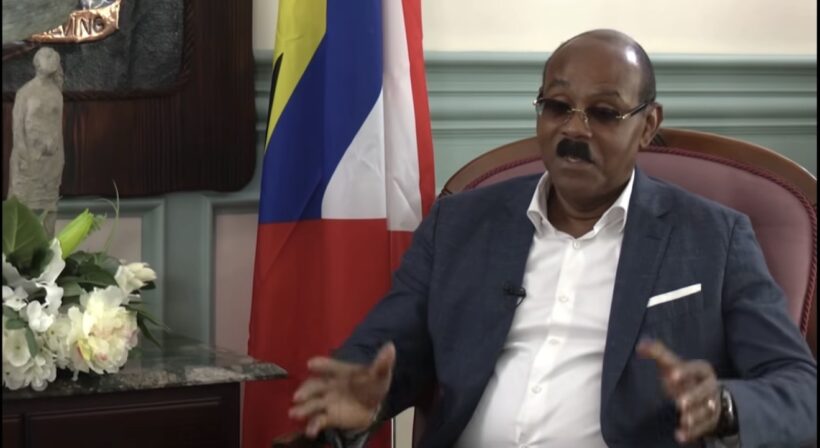
    Small island nation Antigua and Barbuda has revised its 2026 economic growth projection downward from 6% to 4%, driven by mounting pressure from soaring global fuel and food costs that are dampening domestic economic activity, according to Prime Minister and Finance Minister Gaston Browne.

    Browne confirmed that escalating global uncertainty, most notably the persistent geopolitical tensions in the Middle East, has left the government with no choice but to adjust its earlier optimistic growth outlook. Speaking with local state media, he outlined that the administration entered the year with far more ambitious projections, but shifting global market conditions have forced a recalibration of national economic expectations.

    “At the opening of 2026, we held an optimistic outlook and penciled in an expansion of roughly 6%,” Browne explained. “However, when assessed against current global trends, our projected growth now lands much closer to 4%.”

    Despite the downward revision, Browne emphasized that the adjusted 4% growth rate still represents a solid expansion for the Caribbean economy. When compared to growth forecasts for peer small island nations across the region, Antigua and Barbuda’s performance still holds up favorably, he noted.

    The prime minister pinpointed widespread disruptions to the global energy supply chain, particularly heightened security risks surrounding the Strait of Hormuz, as the core driver of recent fuel price spikes. As a small developing island state, Antigua and Barbuda is almost entirely dependent on imported petroleum products to meet domestic energy needs, leaving its economy exceptionally exposed to sudden swings in international energy pricing.

    Beyond energy costs, Browne also warned that rising input costs for global agriculture – including higher transportation expenses and more expensive fertilizer – have pushed up food prices across international markets. This has added a second layer of economic pressure for Antigua and Barbuda, which, like most small island states, imports the vast majority of its food supply.

    Even in the face of these overlapping headwinds, Browne remains cautiously optimistic that the economy can regain lost momentum before the end of the year. He noted that a de-escalation of geopolitical tensions and an easing of global commodity market volatility could set the stage for a stronger finish to 2026.

    “We hold onto hope that these ongoing challenges will be resolved, allowing economic activity to pick up steam in the fourth quarter of 2026,” Browne said. “That would put our economy on a strong, stable footing as we move into 2027.”

    He closed by reiterating that even with the adjusted forecast, Antigua and Barbuda is still on track to post one of the strongest economic growth rates among all Caribbean nations in 2026.

  • Antigua and Barbuda to Host OECS Services Sector Training Initiative

    Antigua and Barbuda to Host OECS Services Sector Training Initiative

    Against a backdrop of ongoing post-pandemic economic adjustment and intensifying competition in global services markets, Antigua and Barbuda has been selected to host a landmark specialized training initiative for the services sector, developed in partnership with the Organisation of Eastern Caribbean States (OECS). Scheduled to run from June 29 to July 2, 2026, the four-day program will take place daily from 9:00 a.m. to 3:30 p.m. at the Customs and Excise Division Conference Room located in Deep Water Harbour, Antigua.

    This capacity-building effort forms a core component of a broader regional consultancy project commissioned by the OECS, with the formal mandate of strengthening technical knowledge, improving policy design capabilities, and honing negotiation skills for both public and private sector stakeholders across the bloc’s services industries. The 11-nation OECS bloc, whose participating member states include Antigua and Barbuda, Dominica, Grenada, Montserrat, Saint Kitts and Nevis, Saint Lucia, and Saint Vincent and the Grenadines, developed the initiative to advance the core goals of the Revised Treaty of Basseterre. That landmark agreement established the Eastern Caribbean Economic Union (ECEU), which works to accelerate deep economic integration, harmonize cross-border policy frameworks, and build a unified single economic space across the Eastern Caribbean.

    The timing of the program addresses a pressing need for the OECS: in the years following the COVID-19 pandemic, member states have prioritized building economic resilience and boosting competitiveness in global services trade, grappling with both persistent post-pandemic aftershocks and broader global economic headwinds. To that end, the training program is tailored to upskill three key groups that shape services sector performance: trade officials and public sector policymakers, representatives of Business Support Organisations (BSOs), and private sector services industry leaders.

    Over the course of the four days, participants will engage in a structured set of learning and collaboration activities. Attendees will contribute to the development of a customized Specialized Services Sector Training Plan aligned with the unique national needs of OECS member states, take part in a hands-on national workshop designed to build practical policy development and trade negotiation skills, and join a stakeholder sensitization seminar covering high-priority topics. Key seminar themes include emerging trends in traditional and non-traditional services sectors, existing obligations related to trade in services (TIS), strategies to address persistent barriers to cross-border services trade, and cutting-edge market intelligence tools to support domestic services sector growth.

    To remove barriers to participation for stakeholders across the region, the entire program will be delivered in a hybrid format, allowing both in-person and remote attendance for public and private sector representatives. OECS officials note that the initiative is designed to deliver long-term tangible benefits for the entire bloc: upon completion, member states will be better positioned to leverage the terms of existing trade agreements, update outdated domestic regulatory frameworks for the services sector, and boost their global competitiveness. By strengthening institutional capacity and improving policy coherence across public and private stakeholders, the program ultimately aims to drive sustainable long-term economic growth, boost regional economic resilience, and expand the participation of OECS member states in both regional and international trade networks.

    Local stakeholders in Antigua and Barbuda who are interested in participating in the initiative have been directed to contact the country’s Ministry of Trade via phone at 562-1532 or 562-8114 to request further information and secure registration details.

  • Discover Dominica Authority to host discussion on wellness tourism and its role in Dominica’s development

    Discover Dominica Authority to host discussion on wellness tourism and its role in Dominica’s development

    Against the backdrop of a rapidly expanding global wellness travel market, the Discover Dominica Authority (DDA) has announced an upcoming high-profile panel discussion that aims to unpack the transformative potential of wellness tourism for the Caribbean island’s local economies, communities, and long-term tourism brand positioning.

    Scheduled for Thursday, June 11, 2026, from 10:00 AM to 11:30 AM at the scenic Jungle Bay Resort & Spa, the discussion carries the theme “Wellness Tourism in Dominica: A Destination That Benefits Everyone,” and forms a core centerpiece of DDA’s 2026 Tourism Awareness Program, an annual initiative carried out this year under the overarching banner “Wellness by Nature.”

    Unlike conventional conversations that frame wellness tourism as a luxury niche limited to high-end spas and private retreats, organizers have structured the session to center on how Dominica’s unique natural assets and indigenous cultural knowledge can turn wellness-focused travel into a driver of broad-based economic and social progress. The dialogue will explore how embedding the island’s abundant natural landscapes, traditional healing practices, and local cultural heritage into wellness offerings can strengthen Dominica’s competitive edge in the fast-growing global experience-driven travel sector, while opening new doors for local entrepreneurship and community participation.

    A diverse cross-sector lineup of expert panelists has been assembled to bring multiple perspectives to the conversation. The group includes Dr. Paula Lockhart, a prominent holistic wellness advocate and co-author of *Natural Plant-Based Remedies*; Marva Williams, DDA’s Chief Executive Officer and Director of Tourism; Ellen Joseph, a holistic practitioner and wellness consultant at Rosalie Bay Eco Resort & Spa; Antonina Okinina, lead wellness practitioner at InterContinental Cabrits Resort & Spa; and Renauld Deschamps, a certified naturopath, herbalist, and President of the Dominica Herbal Business Association. Monelle Alexis, DDA’s Communications and Public Relations Specialist, will serve as moderator for the interactive session.

    Odile Jno Baptiste, Product Promotions Manager at DDA, emphasized that Dominica’s approach to wellness tourism goes far beyond the conventional spa model that dominates mainstream perceptions of the sector. “When people think about wellness tourism, they often think about spas and retreats. In Dominica, wellness is also found in our rivers, hot springs, local foods, traditional practices, and the ways people connect with nature,” Jno Baptiste explained. “This discussion will highlight how those experiences can create opportunities for communities and entrepreneurs while contributing to the well-being of both residents and visitors.”

    Organizers have issued an open call for broad participation, inviting tourism industry stakeholders, independent wellness practitioners, local small business entrepreneurs, university students, community organization representatives, and general members of the public to attend. The event will include a dedicated interactive question-and-answer segment that gives attendees the chance to pose questions directly to panelists and share their own insights on developing inclusive wellness tourism in the country.

    Per DDA’s official press release, the annual Tourism Awareness Program is designed to deepen public understanding of tourism’s outsize contribution to Dominica’s national development, and encourage broader public participation in industry-building initiatives. This year’s focus on wellness is intentional: it is meant to showcase how the island’s unspoiled natural resources, existing wellness offerings, and generations of local traditional expertise can be leveraged to deliver shared, long-lasting benefits for local residents, host communities, and visitors alike.

    Anyone seeking additional details about the event can contact the Discover Dominica Authority directly at +1 (767) 448-2045.

  • SVG, not private entity, benefits from sand harvesting in N. Leeward — BRAGSA

    SVG, not private entity, benefits from sand harvesting in N. Leeward — BRAGSA

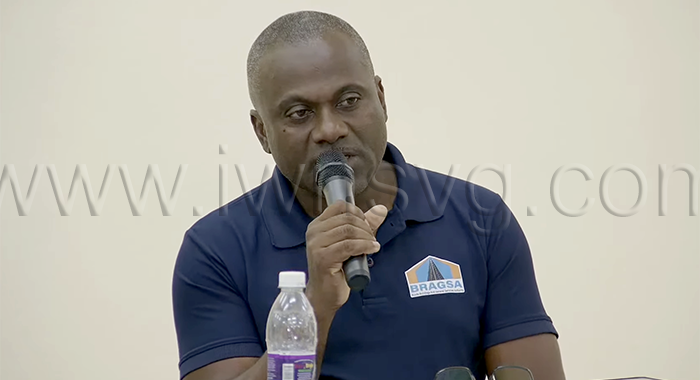
    At a recent town hall gathering hosted as part of North Leeward MP Kishore Shallow’s community-focused “North Leeward Matters” series at the Golden Grove Playing Field, Kem Bartholomew, Chief Executive Officer of St. Vincent’s state-owned Buildings, Roads and General Services Authority (BRAGSA), laid out the strategic and legal rationale for a new sand and aggregate harvesting initiative along the Roseau River in North Leeward. For Bartholomew, the project is far more than a commercial venture: it is both a statutory obligation for the agency and a transformative economic opportunity that would waste valuable natural resources if left untapped.

    Shallow opened the discussion by explaining why the forum was convened, even after initial public consultations were held in April. He emphasized that the June 2026 meeting was organized to create space for open dialogue, answer outstanding community questions, clarify shared benefits, and clear pathways to speed up the project’s progress.
    Bartholomew framed the new Roseau River operation as a natural extension of decades of successful state-run aggregate extraction at St. Vincent’s Rabacca site, located on the island’s windward coast. He noted that volcanic deposits, continuously replenished by natural geologic activity and major events like the 2021 La Soufriere volcanic eruption, have created an enormous surplus of construction-grade material across the island. “There is so much material that we cannot extract it fast enough,” he told assembled residents, adding that post-eruption sediment flows have left massive stockpiles along Rabacca’s riverbanks that the authority has yet to fully utilize.

    Despite high demand from both domestic and international buyers, Bartholomew explained that steep transport costs from Rabacca to southern St. Vincent have put local aggregate at a price disadvantage compared to imported material from Guyana. That logistics challenge drove BRAGSA’s 2025 strategic review, which identified the development of new, lower-cost extraction sites closer to high-demand markets and export routes as a key priority for growing public sector revenue. The review confirmed that high-quality volcanic aggregate matching Rabacca’s deposits exists in large quantities on the Leeward coast, where extraction and transport via barge would cut costs dramatically.

    The move to develop Roseau River also gained early momentum from private sector interest: Glossy Bay, a private development on the Grenadines island of Canouan that had long sourced aggregate from Guyana, reached out to BRAGSA to secure a local supply of construction material. The authority moved quickly to advance the project, with a clear priority of benefiting Grenadines communities first. For years, truckers and construction operators in the Grenadines — including Union Island, Canouan, and Bequia — have faced exorbitant costs to access aggregate from Rabacca, which sits 19 miles northeast of Kingstown. “The same way the people on mainland have access to this material, we should get it to the Grenadines before anywhere else,” Bartholomew said, outlining the project’s core equitable access mandate.

    Walking attendees through the project’s transparent, step-by-step approval process, the BRAGSA CEO stressed that the state authority retains full leadership of the initiative, rather than ceding control to a private operator. Back in January, BRAGSA’s Physical Planning and Surveying Department, alongside the Office of the Chief Engineer, held initial stakeholder meetings with mainland industry partners to confirm material specifications before conducting a formal reconnaissance survey of potential Leeward extraction sites by boat.

    Bartholomew personally pushed to select the Roseau River site over the originally preferred Richmond/Wallibou River location, to protect the long-standing, low-cost public access to aggregate that North Leeward residents have relied on for decades at Richmond. “I do not want to be a part of disturbing the historic operations at Richmond,” he explained, noting that local residents currently harvest material from Richmond for no cost, a practice the new Roseau project will not disrupt.

    Following the site selection, BRAGSA technical staff traveled to Canouan to inspect the planned offloading and usage site, before submitting a formal development application to St. Vincent’s Physical Planning authorities in February. The agency granted approval in principle, contingent on three key requirements: completion of survey drawings and design for a temporary beach access ramp, design for limited on-site equipment storage and worker amenities, and a full independent environmental and social impact assessment (ESIA).

    To meet these conditions while minimizing disruption to the local area, BRAGSA authorized only limited site clearing at Roseau, with explicit instructions to local contractors that no fruit trees were to be cut to keep the project’s environmental footprint as small as possible. Once preliminary survey work was completed, the authority contracted independent environmental specialist Dr. Reynold Murray to conduct the ESIA, and after submitting all required documentation to planning authorities, received full final approval to launch operations.

    Bartholomew publicly disclosed the project’s first commercial contract: a deal with Glossy Bay for 110,000 tonnes of sifted aggregate, valued at approximately 3.8 million Eastern Caribbean dollars. The developer has already paid an upfront deposit of roughly EC$500,000, combining cash and equipment to kickstart operations, and will arrange and pay for barge transport of the material itself, with no transport liability falling to BRAGSA. Bartholomew noted that the barge set to be used is a vessel BRAGSA has previously hired to import crushed aggregate and plastering sand to Kingstown, underscoring that St. Vincent has long relied on imported construction material due to a historic shortage of affordable domestic supply.

    Again, he emphasized that allowing the Roseau River’s volcanic aggregate to wash unused out to sea would be both economically wasteful and a violation of BRAGSA’s legal mandate. Under the 2008 Act that established the agency, BRAGSA is statutorily required to maintain rivers, including removing excess sediment accumulation that can alter river flow and increase flood risk. Citing his core governing principle that “do nothing is never an option,” Bartholomew pointed to Rabacca as an example of what happens when excess sediment is left unmanaged: porous sediment deposits build up above the river channel, obscuring the waterway and altering its natural function. For North Leeward, for the Grenadines, and for St. Vincent’s broader economy, the Roseau River project turns an abundant, unused natural resource into shared public benefit, he concluded.