分类: business

  • Government Raises Fuel Prices by Between RD$3.00 and RD$6.00

    Government Raises Fuel Prices by Between RD$3.00 and RD$6.00

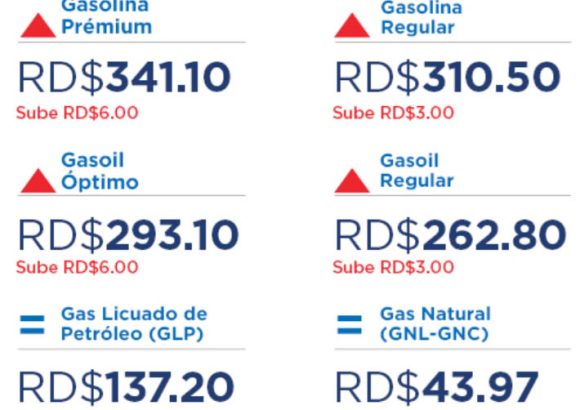
    On Friday, authorities in the Dominican Republic implemented a new round of fuel price adjustments that will take effect across the country from June 13 through June 19, official data from the nation’s Ministry of Industry, Commerce and MSMEs (MICM) confirms. The regulatory body confirmed modest to moderate price increases for the country’s most widely used transportation and industrial fuels, with hikes ranging between 3 Dominican pesos (RD$3.00) and RD$6.00 per gallon, depending on the fuel grade.

    For the country’s most popular gasoline categories, premium-grade gasoline will see the largest adjustment, jumping RD$6.00 per gallon to reach a new retail price of RD$341.10. Standard regular gasoline will see a smaller RD$3.00 increase, bringing the new weekly price to RD$313.50 per gallon.

    Diesel, a critical fuel for the Dominican Republic’s freight, logistics and agricultural sectors, will follow a similar pattern to gasoline. Higher-grade premium diesel will match the premium gasoline increase of RD$6.00 per gallon, settling at a new retail rate of RD$293.10, while regular diesel will see a RD$3.00 uptick to RD$262.80 per gallon.

    In a move that will provide relief to household budgets, the government opted to leave the prices of two commonly used residential energy sources unchanged. Liquefied petroleum gas (LPG), a primary fuel for cooking and home heating across much of the country, will remain stable at RD$137.20 per gallon. Natural gas, used for both residential and commercial energy needs, will also hold steady at RD$43.97 per cubic meter for the upcoming week.

    Weekly fuel price adjustments are a standard regulatory practice in the Dominican Republic, allowing the government to align domestic retail prices with shifting global crude oil markets and transportation costs.

  • Sandals Plans Major Expansion With 100 New Rooms and Overwater Bungalows

    Sandals Plans Major Expansion With 100 New Rooms and Overwater Bungalows

    A major expansion project is set to reshape Sandals Resorts International’s Antiguan property, with plans to add 100 new guest rooms — including 16 luxury overwater bungalows — details of which were formally shared during Wednesday’s meeting of the Antiguan Cabinet.

    Maurice Merchant, the nation’s Director General of Communications, confirmed that Prime Minister Gaston Browne updated Cabinet members on recent negotiations held between government officials and Sandals Group representatives. As the Caribbean hospitality brand advances its goal to grow its room inventory across Antigua and Barbuda, the proposal has already received a warm reception from the country’s top governing body. Cabinet members not only approved the initiative, but also emphasized their enthusiasm for the far-reaching positive impacts it could deliver to Antigua and Barbuda’s core tourism sector.

    This expansion announcement aligns with the Antiguan government’s long-running strategy to proactively attract foreign and private investment to the tourism industry, which stands as one of the primary pillars of the country’s national economy, supporting thousands of local jobs and driving consistent foreign exchange earnings.

    While no official construction or completion timeline was released to the public during the post-Cabinet briefing, Merchant noted that ongoing talks between government stakeholders and Sandals leadership are moving forward smoothly as the resort firm solidifies its development blueprints for the twin-island nation.

    When the expansion is fully completed, the new rooms and signature overwater bungalows will significantly broaden Antigua’s portfolio of high-end accommodation options. Industry analysts and tourism officials expect the upgrade to boost the destination’s overall competitiveness in the crowded Caribbean luxury travel market, drawing more high-spending visitors seeking exclusive premium resort experiences.

  • Gov’t signs pact for 30-year deal to invest $250m in cruise port

    Gov’t signs pact for 30-year deal to invest $250m in cruise port

    In a landmark move set to reshape the Caribbean nation’s tourism and maritime economies, the government of St. Vincent and the Grenadines (SVG) has formalized a strategic memorandum of understanding (MoU) with Global Ports Holding (GPH) — the world’s largest cruise port operator — to launch a decades-long concession and large-scale modernization of SVG’s Kingstown Cruise Terminal. The agreement, signed Wednesday in the capital city of Kingstown, unlocks up to EC$250 million in phased private investment and reserves 30% ownership of the new operating entity for local Vincentian citizens, marking a community-focused approach to infrastructure development.

    For the half-decade preceding the deal, the previous SVG administration operated the Kingstown Cruise Terminal at a net loss, pouring EC$15 million in public funds into the facility over five years. The terminal only turned a profit once during that period, posting a modest EC$266,000 gain in 2023. This consistent underperformance created a pressing need for a new operational and development model that would shift public financial risk to private expertise while ensuring local communities capture long-term value from the project.

    SVG Prime Minister Godwin Friday framed the MoU signing as a defining milestone in the ongoing transformation of the country’s maritime and tourism sectors, while emphasizing that the agreement represents a foundational framework rather than a finalized binding contract. “This memorandum establishes the basis upon which both parties will work to finalize a comprehensive partnership that serves the best interest of the people of St. Vincent and the Grenadines and the continuing business operations of GPH,” Friday explained.

    Under the terms of the proposed 30-year concession, GPH has committed to a phased development program with an estimated total investment between EC$225 million and EC$250 million, with potential for further investment as project plans are refined. The first phase, carrying a price tag of up to EC$75 million, will focus on modernizing the existing Kingstown terminal facilities, upgrading supporting port-wide infrastructure, building expanded public and commercial spaces, and enhancing shore excursion offerings to improve overall visitor experience. The second phase will deliver additional upgrades including improved marine and berthing infrastructure, better accessibility for all visitors, a reconfigured parking and transportation network, and further capacity expansions to accommodate long-term growth in cruise tourism across SVG.

    A core, community-centric provision of the MoU requires the creation of a special purpose vehicle (SPV) to open up to 30% of the concession company’s shareholding exclusively to SVG nationals. This structure ensures that local residents gain both direct and indirect economic benefits from the projected growth in cruise tourism, with larger profits translating to higher returns for local shareholders. The SVG government will also secure a seat on the new operating company’s board of directors to guarantee transparent governance and public oversight on behalf of the nation’s people.

    GPH Chairman Mehmet Kutman noted that the local ownership model is a proven success, adapted from the company’s existing project in The Bahamas, where more than 3,600 Bahamian citizens already hold stakes in the local cruise port operation. “In the Bahamas, they put their money, they invested, they got their principal back already through the dividends. Now they’re sitting on quite a lot of money, so the same thing is going to be here,” Kutman said. “Thirty percent of the concession company, the SPV… will be offered to the public here. I strongly recommend everybody take shares. It’s a good investment.”

    SVG officials project the partnership will deliver widespread economic benefits across multiple sectors of the local economy, reversing the terminal’s historical underperformance. The construction and operational phases of the project are expected to generate hundreds of new jobs, while expanded terminal capacity will drive growth in cruise passenger arrivals and visitor spending. The ripple effects will benefit a broad cross-section of local workers and small business owners, including taxi operators, tour guides, street vendors, retailers, restaurants, and cultural practitioners, putting additional income directly into the pockets of ordinary Vincentians.

    Tourism Minister Kishore Shallow, who also oversees civil aviation and sustainable development for SVG, emphasized that the GPH partnership directly addresses the terminal’s long-running financial struggles. “For the last five years, barring 2023, the cruise port operated at a loss… four out of five years we have operated at a loss, and this occurred during a period which the cumulative expenditure totalled just over 15 million dollars,” Shallow said, contrasting that record with GPH’s planned nine-figure investment. “That is significant… Tremendous.”

    A key policy guarantee from the SVG government is that the entire modernization project will proceed without adding new public debt to the national balance sheet, aligning with the administration’s infrastructure modernization strategy that prioritizes private investment over public borrowing. Additionally, officials have committed to upholding strict environmental sustainability standards, with development proceeding only after a full environmental impact assessment (EIA) and the issuance of all required regulatory permits. Shallow noted that the government rejects economic growth that comes at the cost of SVG’s natural environment, making sustainability a core guiding principle for the project.

    Both parties aim to move quickly to finalize a definitive concession agreement, with the goal of breaking ground on construction before the start of the next cruise season. Kutman confirmed that GPH is prepared to begin on-the-ground work immediately once all permits and final approvals are secured, though he noted that the full economic benefits of the project will likely become most visible to local residents by the 2027-2028 cruise season. Looking ahead, GPH plans to showcase St. Vincent and the Grenadines as a top emerging cruise destination at the 2027 SeaTrade Global cruise industry conference, drawing international attention and additional tourist traffic to the country.

  • Blue Economy value chain groups invited to virtual information sessions

    Blue Economy value chain groups invited to virtual information sessions

    The Organisation of Eastern Caribbean States (OECS) Commission has opened a new call for grant proposals focused on supporting micro, small, and medium-sized enterprises (MSMEs) in the Caribbean blue economy, and is inviting eligible entities to join two upcoming virtual information sessions to walk applicants through the program’s details.

    As part of the Regional MSME Matching Grants Programme — the funding arm of the larger World Bank-backed Unleashing the Blue Economy of the Caribbean (UBEC) Project — this second call for proposals operates under the initiative’s Window 2, specifically targeting collaborative value chain groups operating across three Eastern Caribbean nations: Grenada, St Lucia, and St Vincent and the Grenadines.

    The scheduled virtual information sessions are designed to give prospective applicants clear, actionable insight into the program’s objectives, eligibility criteria, application submission steps, and the tangible ways this grant funding can boost the growth and market competitiveness of participating blue economy value chain groups. The first session will be held from 10 a.m. to 12 p.m. local time on Friday, 12 June 2026, with registration available at https://bit.ly/49Io3NK. A second identical session will follow two weeks later, running during the same time slot on Friday, 26 June 2026; interested participants can register for this session at https://bit.ly/4uLlCT1. Eligible stakeholders are free to register for whichever session fits their schedule, and program organizers strongly encourage all interested groups to attend at one session to get guidance for building a competitive application.

    The core mission of the Regional MSME Matching Grants Programme is to expand and strengthen inclusive economic opportunities within the Caribbean blue economy. It specifically prioritizes MSMEs operating in three high-impact blue economy sectors: commercial fisheries, marine tourism, and marine waste management. For this current call, approved collaborative value chain groups can receive matching grants ranging from $100,000 to $150,000 USD.

    To qualify as a value chain group under the program, entities must form a collaborative partnership of at least three registered MSMEs that work in sequence to add incremental value to a shared product or service. Common examples of eligible structures include a group comprising a small-scale fisher, a regional seafood processor, and a local restaurant partnering to streamline access to local premium seafood markets; a marine tour operator, a local accommodation provider, and a coastal transportation company collaborating to deliver enhanced visitor experiences; or a waste collection firm, a regional recycling facility, and a local manufacturer working together to upcycle marine plastic and other waste into new marketable goods.

    By supporting these collaborative cross-MSME partnerships, the program targets four key outcomes: raising overall sector productivity, strengthening domestic and regional market connections, boosting climate and economic resilience for small enterprises, and creating long-term sustainable economic opportunities across the blue economy. To be eligible, all participating MSMEs must be legally registered entities operating within the borders of Grenada, St Lucia, or St Vincent and the Grenadines, and the full group must meet all additional eligibility requirements laid out in the official call for proposals documentation.

    Application forms and full program documentation are available for download at https://bit.ly/4dh0ZX9. Completed applications must be submitted via email to [email protected], and prospective applicants can direct additional questions to the program’s support inbox at [email protected].

    The entire UBEC initiative, which the matching grant program falls under, is financed by the World Bank and implemented on the ground by the OECS Commission. Its overarching goal is to drive sustainable economic growth, encourage innovation, and build long-term resilience across blue economy sectors in the three participating Eastern Caribbean nations.

  • Nieuw ministerie, Olie Gas en Milieu investeert SRD 3,4 miljard in Staatsolie

    Nieuw ministerie, Olie Gas en Milieu investeert SRD 3,4 miljard in Staatsolie

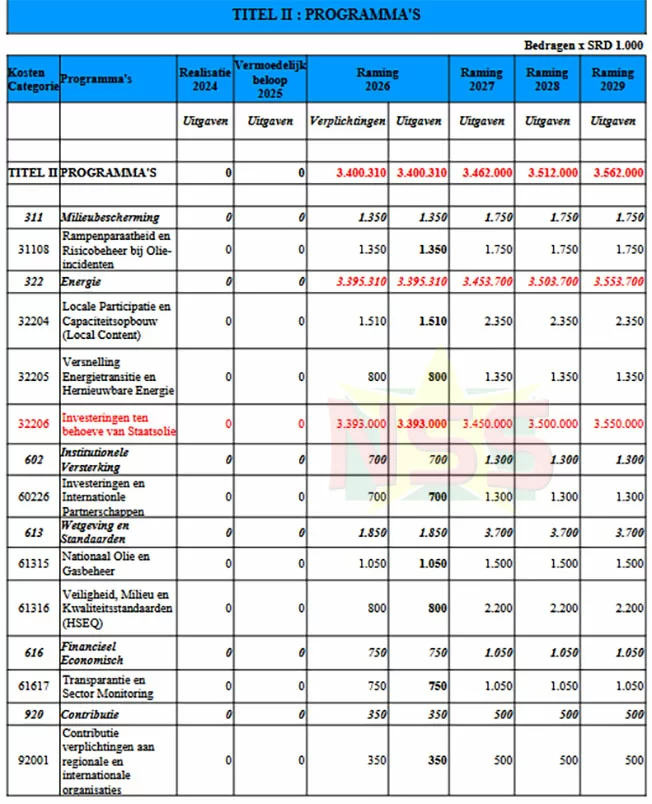
    Suriname’s newly established Ministry of Oil, Gas and Environment has earmarked a massive SRD 3.393 billion for investments in state-owned energy giant Staatsolie in its 2026 fiscal budget, a figure that accounts for nearly the entire program budget allocated to the Directorate of Oil and Gas.

    A breakdown of the proposed 2026 budget shows the Directorate of Oil and Gas holds a total program budget of just over SRD 3.4 billion, with 99.8% of that allocation directed to the dedicated Staatsolie investment program. Budget documentation explains these capital injections are critical to maintaining and expanding the state oil company’s existing operations, with investments targeted at three core areas: onshore oil production expansion, upgrades to the national refinery, and broader development of Suriname’s energy sector. Ministry officials have explicitly clarified that this funding package is separate from the large-scale offshore GranMorgu project, which will advance through separate financing channels.

    While the overwhelming majority of the 2026 budget focuses on direct Staatsolie investments, the directorate has set aside modest, targeted allocations for sector-wide governance, regulatory development, and oversight. A total of SRD 1.51 million has been allocated to develop a local content policy, designed to help Surinamese domestic businesses and local workers capture a greater share of economic opportunities generated by the fast-growing oil and gas sector.

    Another SRD 1.35 million is budgeted for disaster preparedness and risk management for oil-related incidents. This funding will enable the government to update the National Oil Spill Response Plan, conduct emergency response drills, and carry out comprehensive risk assessments for all offshore energy operations.

    Additional smaller allocations will support the development of a national oil and gas policy framework, modernization of outdated petroleum legislation, strengthening of industry safety and environmental standards, and expanded sector transparency. As part of the transparency push, Suriname is working toward alignment with global open governance initiatives including the Extractive Industries Transparency Initiative (EITI).

    The 2026 budget also formalizes the operational buildout of the new directorate itself. More than SRD 7 million is allocated for wages and salaries to fill new roles, while an additional SRD 7.8 million is reserved for operational goods and services. The budget outlines plans to staff multiple specialized departments to carry out the directorate’s core regulatory and development mandates.

    Taken together, the 2026 spending plan positions the newly created ministry to play a central role in guiding Suriname’s oil and gas sector development from its first full fiscal year of operation. At the same time, the extreme concentration of funding confirms that targeted investment in Staatsolie remains the overwhelming near-term priority for the country’s energy strategy.

  • Rhapsody of the Seas makes first summer call to St. Kitts’ Port Zante – WIC News

    Rhapsody of the Seas makes first summer call to St. Kitts’ Port Zante – WIC News

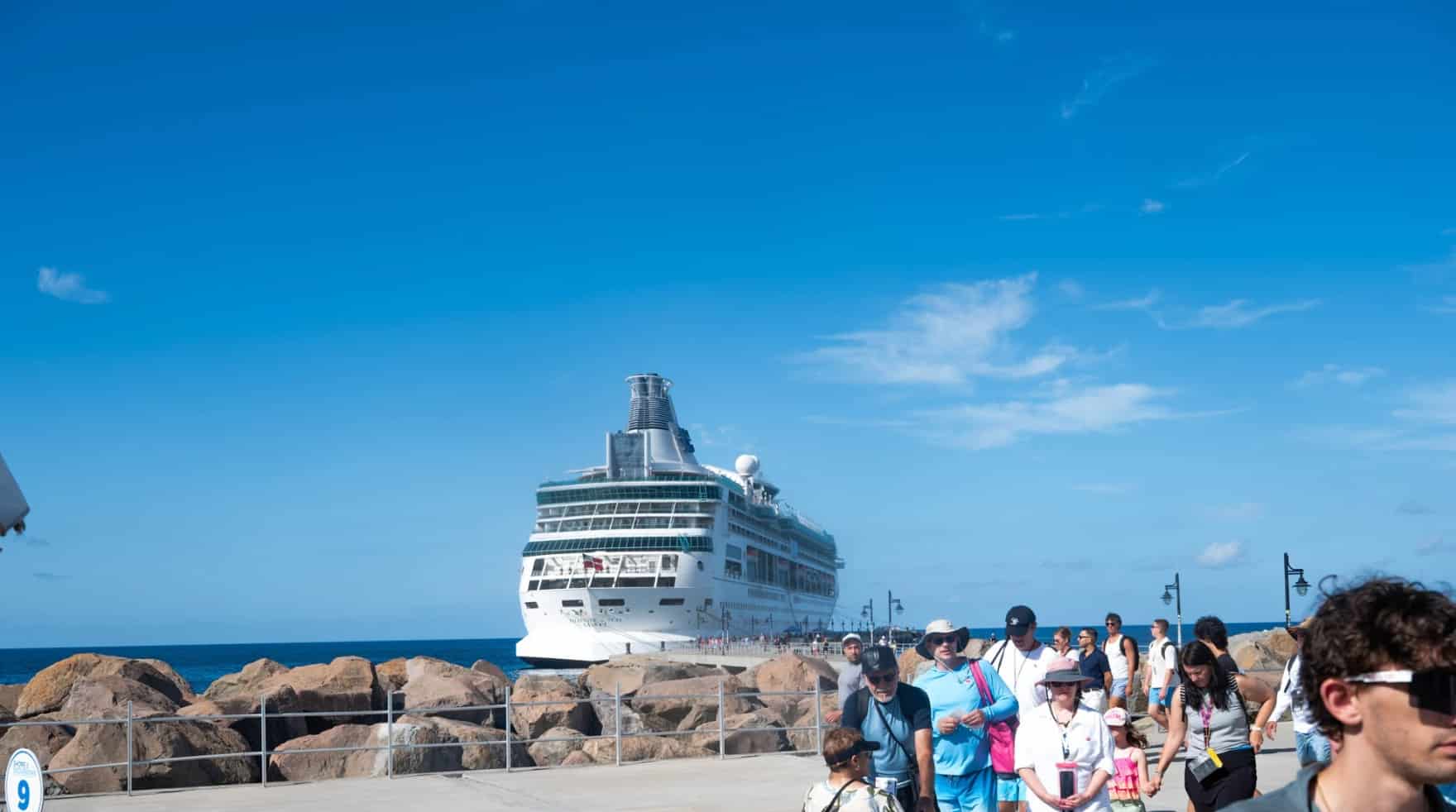
    On June 10, 2026, Royal Caribbean’s Rhapsody of the Seas made its inaugural scheduled summer stop at Port Zante in Basseterre, the capital of the Federation of St. Kitts and Nevis, marking the launch of a months-long off-season cruise series that is set to inject new momentum into the Caribbean nation’s local tourism economy.

    Carrying approximately 2,360 visitors on board, the vessel sailed to Port Zante after departing from neighboring Antigua, giving passengers a full day to explore the twin-island federation before it set sail for Frederiksted, St. Croix, later that afternoon. According to the St. Christopher Air and Sea Ports Authority (SCASPA), this first call opens the door to nine scheduled visits from Rhapsody of the Seas that will run through the end of September, extending cruise tourism activity into what has historically been the low season for the destination.

    In an official Facebook post announcing the arrival, SCASPA emphasized that the repeated visits from the cruise line underline the destination’s growing commitment to establishing itself as a year-round cruise hub for global travelers. Beyond the nine calls from Rhapsody of the Seas, the port authority confirmed that a total of 20 cruise ship calls are already on the calendar for Port Zante across the 2026 summer period, a schedule that reinforces St. Kitts and Nevis’ standing as a premier Caribbean cruise destination while delivering tangible benefits to local communities.

    “The sustained cruise activity through the traditional off-season allows us to strengthen our position as a year-round destination while supporting vibrant visitor experiences, local businesses, and broad-based economic activity across the island,” the port authority noted in its statement.

    For the more than 2,000 passengers who stepped off Rhapsody of the Seas on opening day, the stop offered a full slate of opportunities to engage with St. Kitts’ unique natural, historical, and cultural offerings. Many visitors headed to iconic attractions including Brimstone Hill Fortress National Park, a UNESCO World Heritage Site that showcases centuries of Caribbean colonial history, while others opted for leisurely trips along the island’s famous scenic railway. Adventure-focused travelers could also take advantage of world-class snorkeling and scuba diving sites surrounding the island, while those seeking relaxation could unwind on the island’s golden sand beaches.

    Visitors also had the chance to immerse themselves in local culture in downtown Basseterre, where they could sample traditional Kittitian cuisine, browse handcrafted goods from local artisans, and shop at local businesses. All of this tourist activity flows directly into the local economy, supporting a wide range of stakeholders from taxi operators, tour guides, and hoteliers to independent craft vendors, local restaurants, and small retail businesses that rely on cruise passenger spending to drive revenue, particularly during the typically slower summer months.

    Industry observers note that expanding off-season cruise calls represents a strategic win for St. Kitts and Nevis, as it helps smooth seasonal fluctuations in tourism revenue, creates more consistent employment for local workers, and raises the destination’s profile among major cruise lines looking to expand their Caribbean itineraries beyond the peak winter travel season.

  • CHTA President-Elect urges Review of CAL Decision to End Dominica Service

    CHTA President-Elect urges Review of CAL Decision to End Dominica Service

    BASSETERRE, St. Kitts – Just weeks after Caribbean Airlines (CAL) officially ended its air services between Trinidad and Tobago, Dominica, and St. Kitts and Nevis, the incoming president of the Caribbean Hotel and Tourism Association (CHTA) is sounding the alarm over the move, pushing the airline and the Trinidad and Tobago government to reconsider the financially motivated decision.

    When announcing the route cuts earlier this year, government officials and airline leadership cited cumulative losses exceeding $2.3 million on the two discontinued services as the core justification for ending the routes, which formally ceased operations at the start of June 2026.

    In a recent interview with Caribbean Pulse News, Gregor Nassief, CHTA’s president-elect, made clear his deep disappointment with the call to cut the Dominica-Trinidad route, laying out the far-reaching harm the cancellation could bring to both regional connectivity and the Caribbean’s $50 billion tourism sector. He stressed that the small losses recorded on the route are insignificant when compared to underperforming routes CAL operates to other destinations, and that new air links require an extended runway period to grow into profitability.

    “I fear that the potential of this route was not given sufficient time. I really hope that CAL is able to re-look at that. As we talk about external shocks to the Caribbean, high airfares and rising prices, the Caribbean needs to look internally to itself as a domestic market for tourism, corporate travel, sports and entertainment,” Nassief said in the interview.

    A veteran hospitality leader, Nassief emphasized that consistent, affordable inter-island air connectivity is the backbone of sustainable tourism development across the Caribbean. Ending the Dominica-Trinidad route does not only disrupt direct travel between the two island nations, he argued, but also undermines years of coordinated work to build out the region’s multi-destination tourism product — a key strategy for extending visitor stays and boosting overall tourism revenue. He noted that the two islands offer complementary experiences that appeal perfectly to international travelers: visitors can spend days exploring Dominica’s world-famous rainforests, rivers and natural attractions, then head to Trinidad for its vibrant culture, cuisine and urban attractions.

    Beyond intra-regional travel, Nassief pointed out that the route served as a critical, efficient gateway for international visitors coming from major source markets including the United States and Canada. Currently, Dominica has no direct air service to major North American hubs like New York’s JFK Airport or Toronto Pearson International Airport, meaning the Port of Spain connection was the most seamless option for travelers from those markets to reach the island. This loss, he said, will be felt on both sides of the route, weakening access for travelers to both destinations.

    The CHTA leader also used the moment to draw attention to the longstanding crisis of excessive air travel taxes across the Caribbean, which he called one of the biggest barriers to deeper regional integration. Nassief explained that across the region, taxes on intra-Caribbean travel can reach as high as 50 percent of ticket costs, compared to a global average of just 15 percent.

    “It’s two decades overdue [for reform]. It is crazy that, as a region, we tax our travellers up to 50 percent while the average international travel tax is around 15 percent. We make it so difficult for our own people to travel,” he said.

    According to Nassief’s estimates, this excessive tax burden and the resulting high cost of inter-regional travel is costing the Caribbean billions of dollars in lost economic activity annually. It holds back progress in three critical areas: free movement for residents traveling for business, medical care, leisure and cultural events, the growth of multi-destination tourism products, and the region’s ability to capitalize on future airlift from fast-growing emerging markets.

    Looking ahead, Nassief acknowledged that new direct air links from emerging source markets including the Middle East, Africa, Asia and South America are likely to become a reality in coming years. However, he stressed that these new long-haul services will almost certainly route through major Caribbean hub airports rather than flying directly to smaller island nations, making strong intra-regional connectivity from those hubs more important than ever to distribute the economic benefits of new international traffic across the region.

    Nassief closed by reiterating his appeal, saying that restoring the Dominica-Trinidad route is a critical step toward building a more resilient, integrated and prosperous regional tourism industry for all Caribbean nations.

  • Businessman Larry Gonsalves Dies; WIOC Pays Tribute

    Businessman Larry Gonsalves Dies; WIOC Pays Tribute

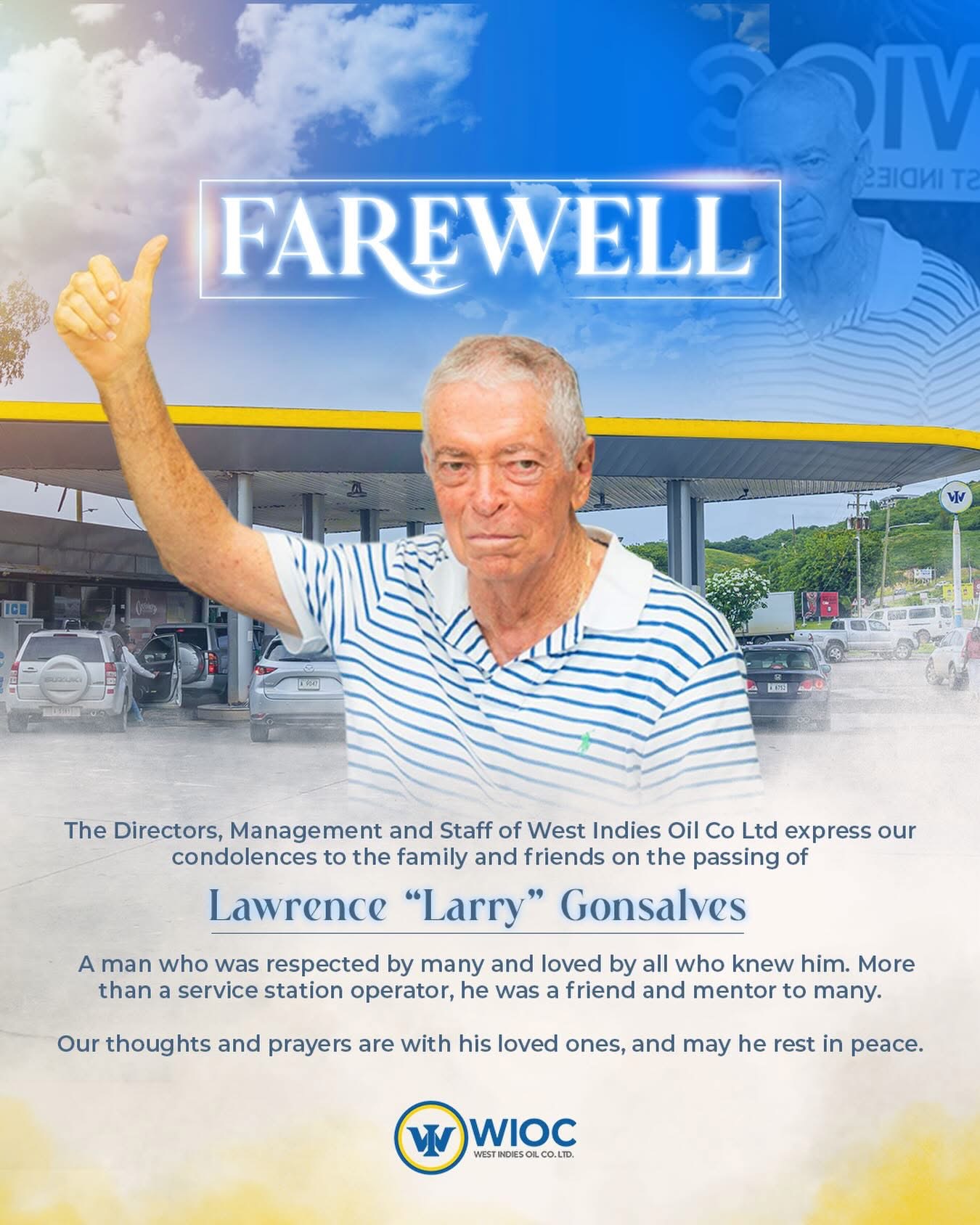
    The Caribbean business community is mourning the loss of one of its most respected long-standing members, prominent fuel retail sector figure Lawrence “Larry” Gonsalves, with regional energy firm West Indies Oil Company Ltd. (WIOC) the latest to issue a heartfelt tribute to his life and legacy.

    In an official public statement released following Gonsalves’ death, WIOC’s full board of directors, senior management, and all company staff joined together to extend deep condolences to the bereaved family, friends, and loved ones he left behind.

    The company highlighted that Gonsalves built a reputation that stretched far beyond his work operating service stations across the region. While his professional contributions to the local fuel retail industry were substantial, his most enduring impact came from his personal connections, and his willingness to lift up emerging entrepreneurs as a trusted mentor, WIOC emphasized.

    Described as a figure admired by everyone who crossed paths with him, Gonsalves earned widespread respect across the business community over decades of active engagement in local public and commercial life. “A man who was respected by many and loved by all who knew him. More than a service station operator, he was a friend and mentor to many,” the WIOC statement read.

    The organization closed by reaffirming that Gonsalves’ contributions, guidance, and warm spirit will long be remembered by every person whose life he influenced over his decades-long career, adding that the entire WIOC community holds his family in their thoughts and prayers at this difficult time.

  • IMF: Goudsector blijft achter ondanks economische groei

    IMF: Goudsector blijft achter ondanks economische groei

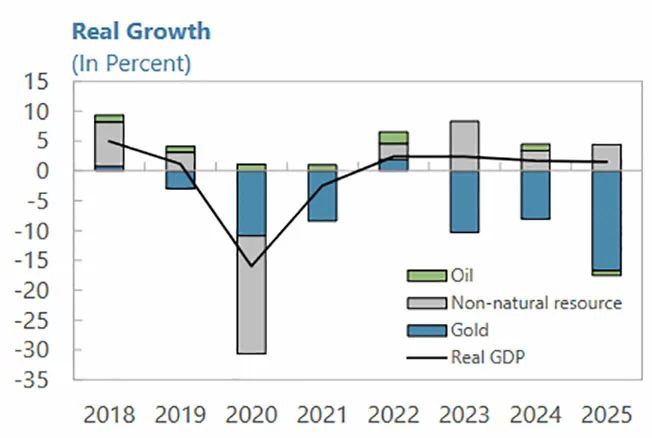
    In a newly released country assessment published Wednesday, the International Monetary Fund (IMF) has drawn attention to a key imbalance in Suriname’s evolving economy: while the nation as a whole posted solid expansion in 2025, its historically critical gold sector has failed to meet performance projections, held back by systemic challenges including rampant illegal smuggling and weaker-than-expected output.

    The IMF’s analysis confirms that Suriname’s 2025 economic growth was driven almost entirely by segments outside the extractive mining industry. Non-commodity sectors, in particular, delivered robust expansion, clocking in at an estimated 4.4% year-over-year growth. This positive momentum from non-resource industries stands in sharp contrast to the gold sector, where production shortfalls and unrecorded outflow of gold revenues into the informal, unregulated economy have dragged down its overall contribution to national gross domestic product.

    For decades, the gold sector has occupied a central role in Suriname’s economic framework, serving as the country’s top source of export earnings and a key supplier of much-needed foreign exchange. When gold output and formal exports underperform, the ripple effects are immediately felt in public finances and the country’s balance of payments, creating unnecessary volatility that undermines broader economic stability, the IMF noted.

    To address these persistent gaps, the IMF emphasizes that targeted, urgent action is required from Suriname’s government. The international financial body calls for increased transparency across all levels of the gold supply chain, more aggressive enforcement to crack down on illegal activity, enhanced monitoring systems to track gold from extraction to export, and targeted investment to strengthen the institutional capacity of state agencies tasked with regulating the sector.

    Notwithstanding the gold sector’s disappointing performance, the IMF maintains an overall optimistic outlook for Suriname’s long-term economic trajectory. Upcoming development of the country’s offshore oil industry, paired with continued expansion of the non-resource sectors that drove 2025 growth, is expected to support solid economic expansion in the coming years.

    Even so, the IMF issued a critical warning: Suriname must not rely exclusively on future oil revenues to secure its economic future. To deliver sustainable long-term growth and consistent, stable public revenue streams, existing core sectors including gold must be better regulated and managed, the fund stressed.

    In its concluding remarks, the IMF reiterated that the performance of the gold sector will remain a decisive factor for Suriname’s economic stability over the next several years, particularly as the country prepares for the launch of full-scale offshore oil production slated to begin in 2028.

  • $9M Showdown Between Cane Farmers and Tate & Lyle Sugars Moves Forward

    $9M Showdown Between Cane Farmers and Tate & Lyle Sugars Moves Forward

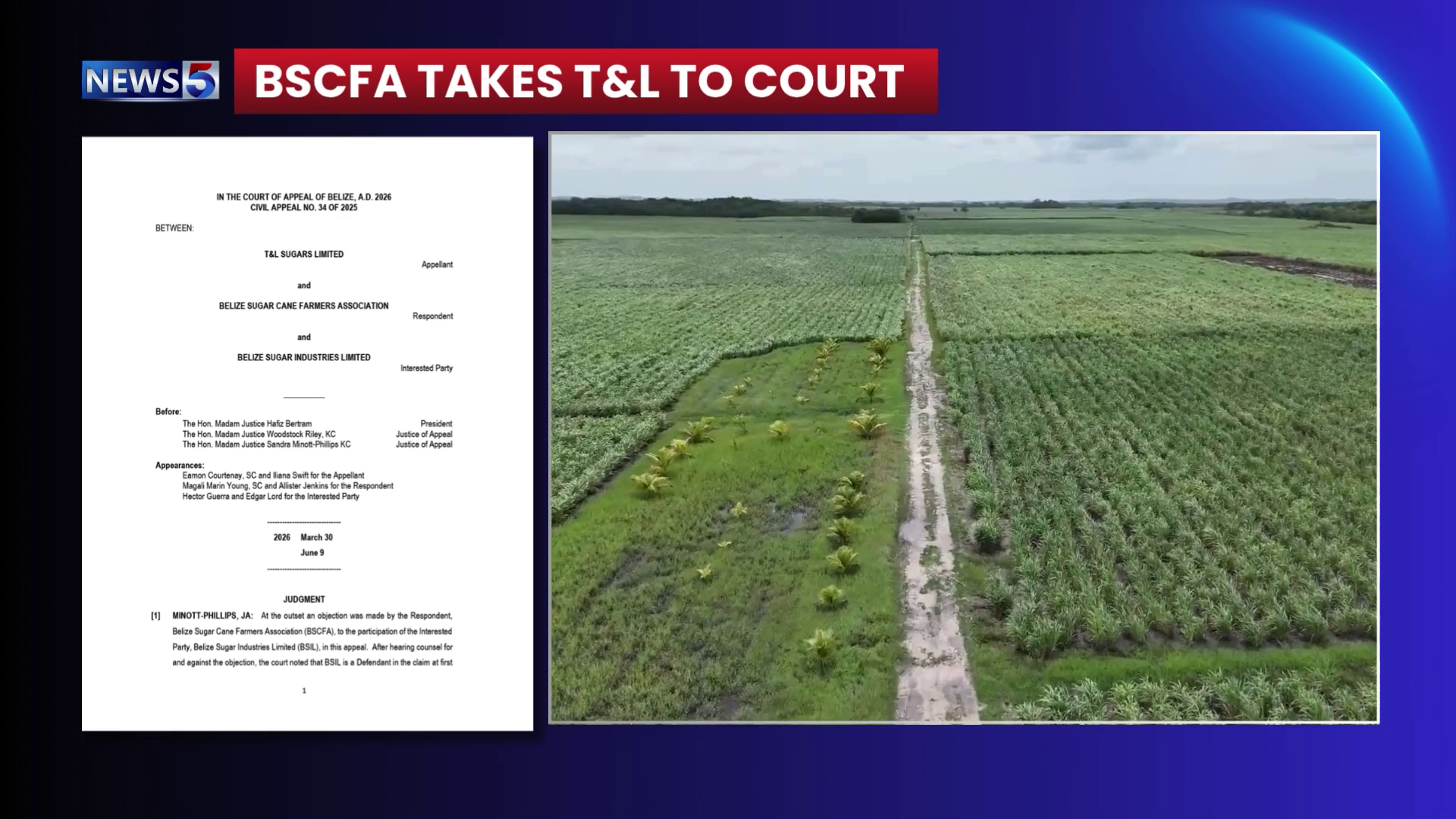
    On June 10, 2026, a key jurisdictional ruling cleared the path for a high-stakes $9 million legal dispute between Belize’s sugar cane producers and global sugar giant Tate & Lyle Sugars to be heard domestically, ending months of procedural wrangling over where the case would be tried.

    The litigation, brought by the Belize Sugar Cane Farmers Association (BSCFA), centers on claims that Tate & Lyle Sugars (TLS) has withheld more than $9 million in Fairtrade premium payments owed to over 2,000 independent cane farmers covering the 2021 to 2023 production period, plus accumulated interest. In a major win for the BSCFA, the Court of Appeal rejected TLS’s bid to move the proceedings to London, confirming that Belizean courts hold sole jurisdiction over the dispute.

    At the core of the disagreement is a technical contractual dispute following the expiration of the BSCFA’s 2020–2021 industry agreement. Tate & Lyle Sugars argues that the farmers’ association is ineligible for premiums because it never signed a new Letter of Enhancement after the prior agreement lapsed. The company has 42 days from the ruling to formalize its legal defense ahead of the upcoming trial.

    But the BSCFA and its legal team push back strongly against this position. Magali Marin-Young, lead attorney for the association, explained that Fairtrade rules do not require a separate written letter of enhancement for eligible producers. “Even without this additional signed document, premiums are due to every sugarcane producer association that sells Fairtrade-certified cane to the mill, and that includes the BSCFA,” Marin-Young stated. The legal team further alleges that TLS deliberately withheld the Letter of Enhancement from the BSCFA after 2021, when contract renegotiation talks between the BSCFA and mill operator BSI (a sister company to TLS under shared parent company ASR) broke down and sparked industry unrest. Marin-Young noted that TLS extended new enhancement agreements to other Belizean producer groups during the same period, leaving the BSCFA unfairly excluded.

    BSCFA Vice Chairman Alfredo Ortega emphasized that the association has maintained continuous Fairtrade certification throughout the disputed period, even without receiving the premium payments. “We have worked extremely hard to keep our certification up to date, even as Tate & Lyle used the contractual technicality as a tool to pressure us and withhold funds owed to our farmers,” Ortega said. He acknowledged that the legal fight comes at an extraordinarily challenging time for Belize’s cane industry, but stressed that farmers have no choice but to pursue what is rightfully theirs.

    The stakes are already high for the sector, which is grappling with a cascading series of crises that have squeezed farmer incomes for years. Former Belizean Agriculture Minister Jose Abelardo Mai warned that the costly litigation arrives at the worst possible moment for the already struggling industry. “Today, farmers face sky-high fuel costs, increasingly erratic weather from climate change, decades of degraded soil from 50 years of twice-annual field burning, and widespread outbreaks of new pests and diseases that have cut average yields to just 11 tons per acre,” Mai explained. He added that the industry’s central mill also faces critical infrastructure gaps, including an urgent need for a $10 million replacement boiler that has not been funded. Ortega echoed these challenges, noting that farmers also face persistent labor shortages for cane harvesting and frequent unplanned mill outages that disrupt harvest schedules.

    Despite the myriad headwinds, Ortega said the BSCFA remains committed to seeing the trial through. “Sugar cane is in our blood here in northern Belize; this industry has sustained our communities for generations,” he said. “Even with all the challenges we face, we will continue fighting to secure the compensation our farmers have earned.” With jurisdiction now settled, the case will proceed to a full trial in Belizean courts in the coming months.