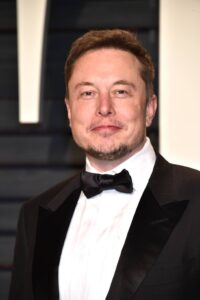
After decades of pushing the boundaries of private space exploration, Elon Musk’s SpaceX is set to make its landmark public market debut on the Nasdaq exchange this Friday, in what will go down as the largest initial public offering in global financial history. The much-anticipated listing has already sent waves through Wall Street, with analysts and investors alike bracing for a debut that could reshape global market dynamics and cement Musk’s status as the wealthiest individual the world has ever seen.
In its official filing with the U.S. Securities and Exchange Commission, SpaceX confirmed it has priced 555 million outstanding shares at $135 per share, pushing the company’s pre-trading valuation to just under $1.8 trillion. This valuation puts SpaceX ahead of Musk’s own electric vehicle giant Tesla, social media conglomerate Meta, and retail behemoth Walmart on the list of the world’s most valuable public companies. The offering is on track to raise a record-breaking $75 billion, dwarfing the previous all-time high set by Saudi Aramco’s 2019 $29.4 billion debut. If underwriters exercise their full option to purchase an additional 83 million shares, the total capital raised will surge past $86 billion.
Founded by Musk in 2002 as a disruptive private venture to reimagine space travel, SpaceX will trade under the ticker symbol “SPCX”, with a secondary listing on Nasdaq’s Texas exchange. The debut comes as a wave of high-profile private technology and artificial intelligence firms prepare for their own public market entries: OpenAI and Anthropic, two leading AI developers, have already submitted regulatory filings for their upcoming IPOs, making SpaceX the first major player to open its shares to the broader public.
In keeping with tradition for high-profile listings, SpaceX executives will ring the opening bell at Nasdaq’s iconic Times Square headquarters in New York to mark the start of trading. In a move that sets this IPO apart from most large offerings, Musk folded two of his other high-profile private holdings — artificial intelligence firm xAI and social platform X, formerly known as Twitter — into SpaceX earlier this year, making this the most ambitious financial gambit of his career.
A syndicate led by top global investment banks Goldman Sachs, Morgan Stanley, and Bank of America, including more than 20 additional financial institutions, is underwriting the historic offering. Industry outlet Bloomberg reports that the offering was oversubscribed by more than four times among institutional investors, with demand from everyday retail investors also reaching exceptional levels. In an unusual allocation, more than 20% of the offering has been reserved for retail investors, a far larger share than the standard IPO allotment, giving Musk’s large global fanbase an opportunity to purchase a stake in the company.
The entire success of the valuation hinges on broad investor confidence in Musk’s reputation as a visionary tech entrepreneur, who will retain the triple role of chief executive, chief technology officer, and board chair of the newly public company. Insiders note that the IPO is expected to create thousands of new millionaires and dozens of new billionaires among current and former SpaceX employees, as well as early investors who backed the company over its 23-year journey.
Still, the offering is not without its skeptics on Wall Street. Many market analysts have raised concerns that SpaceX’s lofty valuation depends entirely on Musk delivering on audacious, science-fiction-level goals that rely on unproven technology, including the deployment of orbital data centers and the first crewed mission to establish a human colony on Mars. While the company’s revenue grew rapidly to $18.7 billion in 2025, it posted a net loss of $4.9 billion for the year. In an aggressive projection included in its public filing, SpaceX claims it could eventually generate more than $28.5 trillion in combined revenue across its business lines.
If the IPO meets market expectations on Friday, Musk will become the first trillionaire in human history. As of Thursday, Forbes pegged Musk’s net worth at $782 billion, nearly three times the total wealth of Larry Page, the Google co-founder who ranks second on the outlet’s global rich list.
The historic listing has already drawn sharp criticism from global equity and advocacy groups. Nabil Ahmed, senior director of economic justice at Oxfam America, argued that concentrating a trillion dollars of wealth in the hands of a single individual undermines both equitable economic opportunity and the health of democratic institutions. On the eve of the IPO, progressive activists staged a protest outside Nasdaq’s New York headquarters, erecting a giant inflatable caricature of Musk to oppose xAI’s Grok chatbot, which has been used to generate non-consensual sexual deepfake images of private individuals.