分类: business

  • Digicel introduces new Digi-Duo mobile and fibre bundle

    Digicel introduces new Digi-Duo mobile and fibre bundle

    Digicel St. Lucia has launched an innovative new convergence package called Digi-Duo, merging mobile connectivity and home fibre internet into a single, cost-effective offering built for the needs of contemporary families.

    Crafted to address the growing demand for reliable connectivity both at home and while out and about, the new bundle promises faster speeds, greater overall value, and a more seamless user experience than managing separate mobile and fixed-line services from different providers.

    Pricing for the entry-level Digi-Duo plan starts at just $191 per month. For this monthly rate, new customers receive 20GB of mobile data and a 350 Mbps home fibre connection, all consolidated onto one bill for added convenience. The company has also structured attractive perks for existing subscribers: current Digicel+ customers can add mobile service to their existing home internet plan for only $55 extra per month, unlocking enhanced savings. Additionally, users can extend the full benefits of the bundle to a second household member for just $50 more monthly, making it simple for the whole family to access high-quality connectivity without breaking the bank.

    This new bundle builds on Digicel’s ongoing pledge to expand access to faster, more affordable internet. The 350 Mbps entry-level home fibre speed, first rolled out across the provider’s network in 2025, is now a standard feature of all base-tier Digi-Duo plans. Backed by Digicel’s upgraded national network, the combined service supports a wide range of modern connected activities, from high-definition streaming across multiple devices to uninterrupted video calls with family and friends.

    Joel Wallace, CEO of Digicel St. Lucia, shared his perspective on the launch in an official statement. “Our focus is simple: to give customers more speed, more value, and more reasons to choose Digicel,” Wallace said. “From our new Digi-Duo bundle, which brings together the best of mobile and home fibre connectivity, to our enhanced entry-level fibre speeds, we are committed to delivering smarter, better connectivity experiences that power everyday life. Our ongoing investments in the network and offerings ensure that customers truly feel the difference in performance and value.”

    Wallace, who was appointed Regional CEO for Digicel’s operations across Saint Lucia, Saint Vincent, Grenada and Dominica earlier in 2025, brings decades of industry experience to the role. He has continued to lead customer-focused product innovation and network quality improvements across the company’s mobile, residential fibre, and business service lines.

    Digicel maintains its long-term commitment to expanding and upgrading digital infrastructure across the Caribbean, with a focus on rolling out customer-centric solutions that foster meaningful real-world connections. Interested customers can sign up for the new Digi-Duo bundle either in-person at any Digicel retail location or online via the company’s official St. Lucia website at https://www.digicelgroup.com/lc.

  • Forum urges shift from aid to private investment

    Forum urges shift from aid to private investment

    On Thursday, a cross-sector coalition of Caribbean regional leaders and major global investors issued a clear call to action: Caribbean governments must break long-standing patterns of aid dependence and aggressively pivot toward mobilizing private sector capital to drive inclusive, sustained growth. Opening the high-stakes inaugural Caribbean Economic Forum (CEF) — a gathering that unites global investment firms, national government officials, and leading multilateral financial bodies — organizers laid out an ambitious core goal: to reframe the Caribbean from a patchwork of fragmented small markets into a cohesive, globally competitive, and investable asset class.

    Clinton White, founder of Counselor Global Solutions and co-convenor of the CEF, delivered the opening welcome remarks, drawing on his decades of experience working and living in the region during his tenure covering Caribbean economies for the now-disbanded U.S. Agency for International Development. White pointed to Barbados’ decades-long track record of economic resilience as a powerful case study for what small Caribbean states can accomplish when they embrace strategic economic transformation. “After gaining independence in 1966, this 166-square-mile island completely rewrote its economic story: it moved from a system almost entirely reliant on sugar exports to a diversified economy powered by tourism, international financial services, education, and a fast-growing innovation and sustainability sector,” White explained. “That transformation proves small states can deliver extraordinary outcomes when they set clear, ambitious goals.”

    White traced the origins of the forum back to a 2020 partnership he forged with CEF Executive Director Kiran Maharaj, USAID, and the Trinidad and Tobago Chamber of Industry and Commerce. The founding principle of that collaboration, he noted, is that no government can deliver large-scale economic transformation on its own. “We all acknowledge that development assistance still plays a critical role in the region, but we also recognize that aid alone will never be enough to tackle the full scale of the Caribbean’s opportunities and challenges,” White said in his address. “Aid can kickstart change, but only private investment can sustain it. Grants can build institutional capacity, but private capital builds entire industries, generates long-term jobs, and rewrites economic trajectories for entire communities.”

    White’s opening arguments drew heavily on data from the newly published *Caribbean Development Dynamics 2026* report from the Organisation for Economic Co-operation and Development (OECD), which frames the Caribbean as standing at a defining crossroads for development. The report confirms that nearly 80% of all current investment flowing into the Caribbean already comes from the private sector. With that in mind, White argued, the region’s top challenge is no longer convincing global investors of the Caribbean’s inherent value — it is removing structural barriers to channel existing investor interest into high-impact, transformative sectors that deliver broad-based growth. Key priority sectors he identified include renewable energy, climate-resilient sustainable tourism, the blue economy, digital transformation, and artificial intelligence innovation.

    “At the end of the day, this forum is not about us — it’s about the next generation of Caribbean people,” White emphasized. “Our goal is to build economies where young people don’t feel forced to leave their home islands to find opportunity. The choices we make in this room will determine whether the next generation inherits a region defined by vulnerability, or one defined by resilience, innovation, and shared prosperity for all.”

    Following White’s remarks, CEF co-founder Gregory Hill, who also serves as Managing Partner at ACERO Capital, took the stage to challenge attendees to set aside generic conference rhetoric and focus exclusively on tangible financial execution. Hill pushed back against the long-held international narrative that frames the Caribbean as a collection of isolated, economically vulnerable small states, instead positioning the region as one of the world’s most strategically important untapped investment frontiers.

    “Let me be completely blunt and clear from the start: this is not just another regional development conference,” Hill told assembled delegates. “We are not here to talk — we are here to work, we are here to collaborate, and we are here to deliver actual results. We did not gather just to discuss what development could look like; we are here to finance it. So bring your checkbooks.”

    Hill argued that the Caribbean economy can no longer afford endless cycles of diagnostic reports and policy discussions that never translate to on-the-ground action. He noted that the combined balance sheets of the global institutional investors and financial bodies represented at the forum total roughly $25 trillion — creating an unprecedented opportunity to close the long-standing gap between abundant global capital and the pipeline of viable, high-impact local projects across the Caribbean.

    Over the course of the forum, discussions will center on four core strategic pillars: accelerating the region’s energy transition, building climate-resilient infrastructure, advancing food security through agricultural modernization, and growing the Caribbean’s creative economy. To deliver scaled investment across these sectors, Hill argued, the region needs a modernized financial framework that leverages blended finance structures to reduce risk for private sector entities entering the market.

    Hill also called for a fundamental shift in how the success of multilateral development banks and development finance institutions operating in the Caribbean is measured. He proposed that these entities should be evaluated primarily by their ability to mobilize and deploy private capital into productive regional assets, rather than by the total volume of independent loans or grants they disburse.

    “Success will not be measured by how eloquent our speeches are today,” Hill said. “Success will only be measured by the formal mandates we sign, the partnerships we lock in, the projects that get actual funding, the businesses that expand, and the jobs that are created for Caribbean people. If we get this right, future generations will look back and see that this was the moment the Caribbean stopped viewing itself as a collection of independent, isolated, fractured economies — and started acting as a unified, investable asset class that delivers shared prosperity for all.”

  • New BHTA chair urges private sector to move from ‘sidelines to table’

    New BHTA chair urges private sector to move from ‘sidelines to table’

    Barbados’ tourism industry is currently hitting historic highs, but deep-seated disengagement among private sector stakeholders puts its long-term prosperity at severe risk, according to newly elected Barbados Hotel and Tourism Association (BHTA) Chair Kelly-Ann Payne. In her first address after winning the leadership post at the association’s annual general meeting, the veteran hospitality executive did not hold back in sounding the alarm over a growing culture of apathy that is eroding the industry’s institutional foundation.

  • UNI Global Union Demands Urgent Talks as US$1.8 Billion CIBC-Butterfield Merger Raises Worker Concerns

    UNI Global Union Demands Urgent Talks as US$1.8 Billion CIBC-Butterfield Merger Raises Worker Concerns

    A proposed $1.8 billion merger between the Canadian Imperial Bank of Commerce (CIBC) and Butterfield Bank has sparked urgent calls from UNI Global Union, the global federation representing service sector workers, for immediate stakeholder talks over mounting concerns about job security and working conditions for frontline employees.

    The merger, which would combine CIBC’s Caribbean banking operations with Butterfield’s existing regional footprint, has been framed by company leadership as a strategic move to strengthen market competitiveness, expand service offerings, and drive long-term growth in the Caribbean financial sector. But labor advocates have warned that industry consolidation of this scale almost always brings sweeping restructuring that puts hundreds of roles at risk, while potentially eroding existing collective bargaining agreements and worker benefits.

    UNI Global Union, which represents more than 15 million workers across 150 countries, has emphasized that it is not opposing the merger outright. Instead, the organization is pushing for binding, good-faith talks between union leadership, CIBC, Butterfield, and relevant regulatory bodies to address worker concerns before any deal is finalized. The federation is calling for clear guarantees that existing jobs will be protected, that collective bargaining rights will be preserved for all staff across the combined entity, and that any future restructuring processes will be carried out with full transparency and input from labor representatives.

    Regional labor groups have echoed these demands, noting that the Caribbean banking sector has already faced a wave of consolidation in recent years that has led to widespread layoffs and reduced access to local banking services in smaller communities. UNI Global Union says that without proactive negotiation, the merger risks repeating these harms, leaving frontline workers bearing the brunt of corporate restructuring while executive leadership and shareholders capture the financial benefits of the deal.

    Regulators in Canada and the Caribbean are currently reviewing the proposed merger to assess its compliance with local financial regulations and competition rules. UNI Global Union is also calling on regulators to require labor impact assessments as part of their approval process, arguing that protecting worker livelihoods should be a core consideration when evaluating whether large corporate mergers are in the public interest.

  • Number Portability Set for July Rollout in Antigua and Barbuda

    Number Portability Set for July Rollout in Antigua and Barbuda

    Consumers across Antigua and Barbuda are on the cusp of a long-awaited shakeup to the country’s telecommunications market, as the government confirms a July rollout for mobile number portability — a policy that will let mobile users switch between local service providers without surrendering their existing phone numbers.

    When fully implemented, the reform will extend number portability rights to customers of the nation’s three major mobile and internet providers: Flow, Digicel, and APUA Inet. Officials argue that eliminating the requirement to change phone numbers when switching networks will deliver tangible benefits to consumers, unlocking greater choice for users and injecting healthier competition into a relatively concentrated local telecommunications sector.

    Maurice Merchant, Director General of Communications, outlined the government’s timeline during a post-Cabinet media briefing held Thursday, confirming that the long-delayed system is on track to go live next month. “Government believes that this should become effective in July of this year,” Merchant stated, clarifying the core function of the policy for consumers: “If you wish to switch from APUA Inet to Flow, you can take your number with you. That’s what number portability is.”

    The upcoming launch comes years after the national legislature passed legislation to enable number portability, with implementation held up for an extended period by persistent coordination challenges between the competing telecom operators. When pressed about the years-long delay, Merchant explained that cross-firm collaboration between market rivals has been the biggest barrier to progress. “We must recognize that they are competitors in this field and so collaboration sometimes is not the easiest thing and hence it has taken a while,” he said.

    Merchant also highlighted that the policy has the potential to reshape the dynamics of Antigua and Barbuda’s telecom market by lowering the barrier to exit for customers unhappy with their current provider’s service or pricing. “It may mean good for certain providers and it may not, because there may be an exodus of individuals from any particular service provider to another,” he noted.

    The number portability plan formed part of a broader Cabinet review of Antigua and Barbuda’s national communications infrastructure, which also covered progress updates on the country’s ongoing subsea cable project and ongoing government efforts to attract new internet service providers to the twin-island nation. All these linked initiatives are designed to boost network reliability for local users, expand competition across the sector, and strengthen the country’s digital communications backbone to support long-term economic development.

    Additional details on the rollout schedule, customer registration process, and any associated fees are expected to be announced by Utilities Minister Melford Nicholas in the coming weeks.

  • Female Labour Force Participation Across CARICOM Ranges From 45% to 71%

    Female Labour Force Participation Across CARICOM Ranges From 45% to 71%

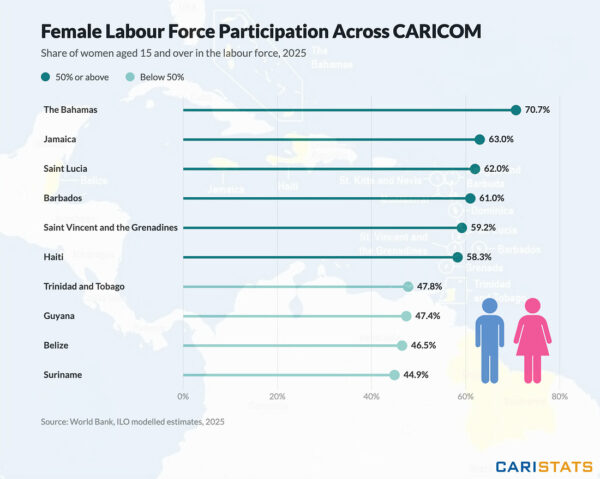
    Female labor market engagement stands as one of the most fundamental catalysts for expanding national economic output and boosting household earnings across the globe. Within the Caribbean Community (CARICOM), however, this critical metric shows greater divergence between member states than almost any other key economic indicator, according to the latest 2025 data. When measuring the share of women aged 15 and above who are either actively employed or searching for work, figures span from a low of 44.9% in Suriname to a regional high of 70.7% in The Bahamas. To put this gap in perspective, less than one out of every two adult women participates in the formal labor market in Suriname, while nearly seven out of 10 do so in The Bahamas.

    Across the 10 CARICOM member states tracked, six nations record female labor force participation rates above 58%, with The Bahamas claiming the top spot followed closely by Jamaica and Saint Lucia. The remaining four member states fall into a tight cluster between 45% and 49%, with Guyana emerging as a notable success story of gradual growth. Once sitting in the upper 30% range back in 1990, Guyana has lifted its female participation rate to 47% today, marking meaningful progress over three and a half decades.

    Disparities are also stark when comparing labor force engagement between women and men within individual CARICOM countries. In two nations, The Bahamas and Barbados, women’s probability of participating in the labor market comes almost level with that of men. The World Bank has highlighted that the gender gap in both countries is actually smaller than the average gap recorded across the world’s group of highest-income economies. At the opposite end of the spectrum, Belize shows one of the widest gender gaps globally, with men far more likely to participate in the labor force than their female counterparts.

    Uniquely among all CARICOM member states, The Bahamas achieves two standout milestones: it boasts not only one of the highest female labor force participation rates in the entire region, but also one of the smallest gender participation gaps among all its member nations.

  • Government Aims to Produce 200,000 Antigua Black Pineapple Plants

    Government Aims to Produce 200,000 Antigua Black Pineapple Plants

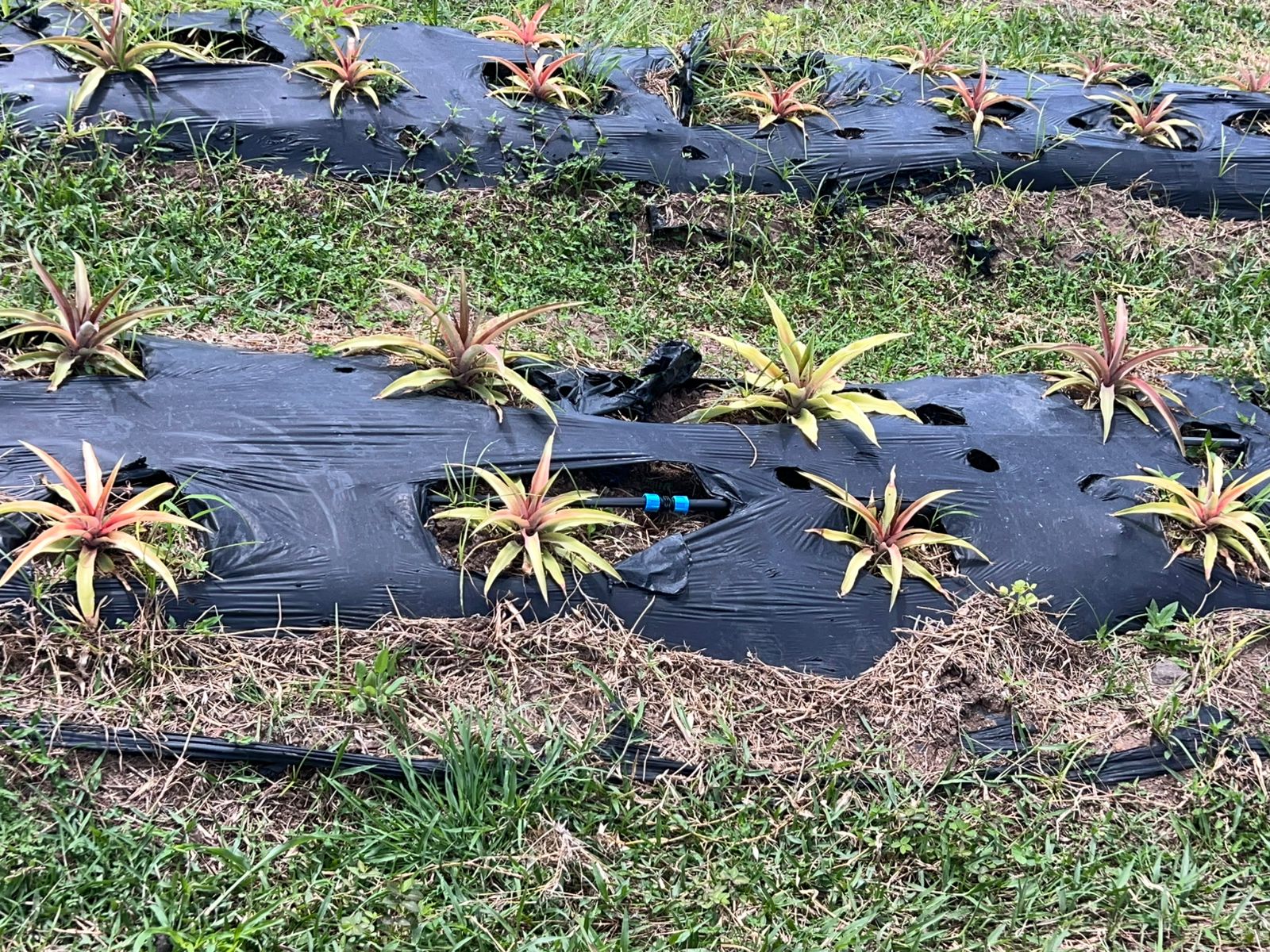
    Antigua and Barbuda’s government is ramping up a strategic long-term agricultural initiative to breathe new life into the country’s legendary Black Pineapple industry, targeting propagation of at least 200,000 genetically improved plants to restore the iconic crop’s legacy.

    Details of the industry revival plan were formally unveiled during this week’s post-Cabinet briefing on Thursday, where government officials confirmed that a new shipment of 15,000 tissue-cultured Antigua Black Pineapple seedlings is scheduled to arrive on the island in the coming days.

    Maurice Merchant, Director General of Communications, explained that the incoming batch of cultivated plants will join an existing 15,000 plants already established at the Cades Bay Agricultural Station, the central hub for the entire propagation project. “Another 15,000 tissue cultures will arrive in the coming days and they will be propagated at the Cades Bay Station,” Merchant stated in his remarks to reporters. “The ultimate aim is to have at least 200,000 Antigua Black Pineapple plants propagated and ready for cultivation at this facility.”

    This large-scale expansion is a core component of a broader national program designed to recover and boost production of the fruit, which has long been celebrated as one of Antigua and Barbuda’s most unique and recognizable agricultural exports. For years, local farmers raised growing concerns that decades of cultivation had eroded the crop’s quality, with the fruit failing to reach its signature large size and delivering lower crop yields than in previous generations.

    To address these challenges, agricultural officials launched a scientific genetic improvement initiative more than 12 months ago, when roughly 50 original Antigua Black Pineapple samples were sent to research facilities in St. Vincent for tissue culturing and genetic refinement. The scientific process has successfully preserved all the distinct characteristics that make the Antigua Black Pineapple famous, while eliminating genetic degradation and producing high-quality starting material for large-scale propagation.

    “The scientific process cleaned up the genetics so it remains the authentic Antigua Black Pineapple,” Merchant emphasized, confirming that the program has achieved its core goal of retaining the crop’s unique flavor and identity while boosting its productivity.

    All propagation work is being conducted at the Cades Bay agricultural facility, where young seedlings are multiplied in controlled conditions before being distributed to local farmers for commercial cultivation across the island. Merchant cautioned that pineapples have a naturally long growing cycle, meaning consumers will not see expanded supply hit local and international markets overnight. Even with this timeline, however, government and agricultural leaders are confident the initiative will deliver significant growth in available Antigua Black Pineapple in the coming years, ultimately reviving an industry that is a key part of the country’s agricultural and cultural identity.

    “It is anticipated that we should have regenerated growth of Antigua Black Pineapple very soon on the market,” Merchant added.

  • Undercover Inspections Hit Shops Amid Price Gouging Complaints

    Undercover Inspections Hit Shops Amid Price Gouging Complaints

    As soaring living costs push more consumers to struggle with skyrocketing checkout prices, national regulators in Belize have announced a major shift in enforcement strategy to crack down on widespread price gouging. Amid a steady surge in consumer complaints about unfair pricing on essential goods, the Supplies Control Unit (SCU) is rolling out an aggressive, proactive overhaul of its monitoring operations: expanding its workforce, opening new regional offices across the country, and replacing its old complaint-only model with routine surprise undercover inspections designed to catch pricing violations in real time.

    Speaking on the new approach, SCU Controller Lennox Nicholson explained that the shift follows a critical policy change from several years prior that vastly expanded the unit’s regulatory authority. Under the agency’s previous structure, regulators were only empowered to oversee a narrow subset of consumer goods, leaving most potential price gouging cases unaddressed. Even when members of the public reported suspicious pricing, the SCU was often forced to inform complainants that the product in question fell outside its jurisdiction, leaving unfair practices unchallenged.

    “That all changed when the list of regulated goods was expanded,” Nicholson noted. “Now we have broader authority, greater responsibility, and the ability to intervene across a far wider range of essential products that consumers rely on every day.” While the agency is working to encourage the public to resume reporting suspicious pricing activity, it has proactively integrated random surprise inspections into its regular schedule, maintaining a consistent visible and undercover presence in retail spaces across the country. Unlike the old system that only responded to complaints, the SCU now conducts checks even when no public reports have been filed, making market fairness an ongoing priority rather than a reactive measure.

    The agency’s geographic expansion has also drastically improved its ability to enforce rules consistently. Previously, all personnel were based in the capital city of Belmopan, requiring long travel times to reach northern districts like Orange Walk and Corozal and delaying inspections. Now, with local staff based in regional offices, regulators can respond quickly and check retail locations far more frequently.

    When selecting which establishments to inspect, the SCU prioritizes two key groups to maximize public protection: high-traffic retailers that serve large volumes of consumers, and smaller, less visible businesses where the risk of non-compliance with pricing rules is typically higher. The new enforcement push comes as growing numbers of Belizean consumers report feeling financial strain from ongoing cost of living increases, making fair pricing for essential goods a top public priority.

    This report is adapted from a transcribed transcript of an evening television newscast from Belize.

  • Belize’s 2026 Sugar Cane Crop Closes Earlier than Expected

    Belize’s 2026 Sugar Cane Crop Closes Earlier than Expected

    Belize’s $120 million sugar cane industry has announced an early close to its 2026 growing season, cutting the harvest short by several weeks to address a cascade of interconnected challenges that have derailed production targets for the year. The official end of harvesting operations is scheduled for June 21, more than two months ahead of the typical season close, after farmers and mill operators agreed that remaining unharvested cane could not be profitably or practically collected given current constraints.

    For small and large-scale sugar cane producers across the country, this decision brings a mix of relief and lingering anxiety. The 2026 season has been one of the most difficult in recent memory, marked by soaring input costs, unpredictable weather patterns, widespread pest infestations, labor shortages, and unexpected processing disruptions at the country’s sugar mills. Industry stakeholders convened a crisis meeting earlier this week to evaluate the remaining cane in the fields and weigh the costs of continuing harvest against potential returns, ultimately reaching a unanimous decision to wrap operations early.

    Vladimir Puck, Chairman of the Corozal Sugar Cane Producers Association (CSCPA), explained that labor shortages have emerged as the most persistent and crippling barrier to production, a challenge the industry has faced for nearly three years running. “The biggest issue we’re grappling with right now is a lack of available cane cutters,” Puck shared in an interview. “Even without other problems, that single issue would hold us back. On top of that, the mill also experienced unexpected mechanical breakdowns during the season, which further slowed processing and created backlogs that we can’t make up at this point.”

    Olivia Carballo-Avilez, Cane Farmer Relations Manager for Belize Sugar Industries (BSI), outlined the gap between initial projections and final production numbers. When the season launched in January, stakeholders forecast total cane deliveries of just under 1 million tons. As of the week of the early close announcement, total deliveries hit roughly 815,000 tons, falling far short of the target. Recent heavy rainfall has turned field conditions muddy and impassable for harvesting crews, with only 20,000 to 25,000 additional tons deemed accessible even with extended operations. These poor field conditions have also disrupted factory processing schedules, creating additional pressure to end the season early. “We sat down together as stakeholders and made the collective decision to close the crop based on the realities we’re facing on the ground,” Carballo-Avilez noted.

    The 2026 season was launched with high hopes and major public investment: at the opening ceremony in January, Prime Minister John Briceño announced a $120 million industry-wide revitalization plan, including $3 million earmarked directly to support smallholder farmers. Briceño emphasized the government’s commitment to strengthening the sugar sector, which is a cornerstone of Belize’s rural economy, by placing the Ministry of Sugar directly under his oversight and launching a coordinated plan to address longstanding industry issues alongside producer associations and BSI.

    Not all outcomes from the 2026 season are negative. Farmers report that overall cane quality has improved thanks to technical support from the Sugar Industry Research and Development Institute (SIRDI), resulting in higher sugar output per ton of harvested cane that partially offsets lower total production volumes. Even so, industry leaders warn that urgent intervention is needed to avoid a repeat of poor production results in the 2027 season.

    Alfredo Ortega, Vice Chairman of the Belize Sugar Cane Farmers Association (BSCFA), explained that growing pest infestations are already threatening next year’s crop, and many small-scale producers cannot afford the cost of pest control treatments on their own. “Right now, we’re seeing rising infestation rates across multiple cane fields,” Ortega explained. “If we don’t address this immediately, we’ll see a sharp drop in cane quality for the next crop. The current payments farmers receive don’t cover the cost of spraying for pests, so we’re waiting on the government, SIRDI and CRESAP to roll out a support program to provide these resources to producers.”

    Puck added that mealybug infestations have hit cane fields particularly hard this year, and the problem has not improved despite ongoing efforts to manage it. Shifting weather patterns and widespread yellowing cane have further compounded pest pressures, creating a growing set of threats that the industry has yet to bring under control. While farmers remain cautiously optimistic that targeted support will help them turn around production for the 2027 season, widespread uncertainty remains about the sector’s near-term trajectory. This report was compiled by Britney Gordon for News Five.

  • Tourism posts strong growth in 2025, driven by higher occupancy, revenue

    Tourism posts strong growth in 2025, driven by higher occupancy, revenue

    Barbados’ tourism sector closed out 2025 with robust, broad-based growth, fueled by swelling international visitor demand, climbing hospitality pricing, and targeted industry investment that reinforced the sector’s position as the island nation’s primary economic engine, according to the Barbados Hotel and Tourism Association (BHTA).

    In his annual general meeting address, BHTA CEO Senator Ryan Forde highlighted the industry’s remarkable resilience in the face of ongoing global economic volatility, noting that tourism has anchored 19 consecutive quarters of national economic expansion. A deep dive into 2025 performance metrics reveals consistent gains across all key industry indicators: hotel occupancy climbed from 63.8% in 2024 to 65.2% last year, while the average daily room rate (ADR) jumped 13.7% from $631.81 to $718.19. This combination of higher occupancy and stronger pricing pushed revenue per available room (RevPAR) – a critical benchmark for hospitality performance – up nearly 16% year-over-year, from $40.79 to $487.17.

    Targeted efforts to boost visitation during the traditional low summer shoulder season also delivered tangible results. Average occupancy between May and October hit 55.2%, a 2.9% improvement over 2024, with only September recording occupancy below the 50% threshold. “Tourism is built on the full visitor experience, not any single offering,” Forde said. “We will continue to lead the nation’s growth as we balance an unprecedented wave of new developments, property refurbishments, and experience upgrades, all while navigating ongoing global geopolitical tensions.”

    Beyond core performance gains, the BHTA rolled out several transformative industry initiatives in 2025. The flagship project is the new Bajan Harvest Hub, developed with funding from a competitive regional grant awarded through Compete Caribbean. Led by BHTA’s Greg Alleyne, the hub operates as a coordinated, climate-resilient, demand-driven supply network that connects local farmers and packing facilities directly to hospitality buyers via structured planning and digital tools, fundamentally strengthening linkages between the agriculture and tourism sectors.

    The association also completed a full rebranding and expansion of the BHTA Tourism Fund, a program first launched in the early 2000s. Under the leadership of project lead Sade Deane, the overhaul expanded the fund’s eligibility to cover all BHTA membership categories, resolving longstanding issues around brand alignment and low participation. In community outreach, the association launched the Adopt-A-School Futsal Tournament, spearheaded by Tessalee Moore and Rianna Taylor. The event brought industry stakeholders together in the slow period following the annual Crop Over festival, raising more than $30,000 to fund critical school supplies and infrastructure including water tanks, projectors, fans, and football nets.

    Membership growth also reflected the BHTA’s expanding influence, with 39 new organizations joining the association in 2025. Forde projected further membership expansion in 2026, driven by the upcoming opening of three major new hospitality properties: Hotel Indigo, Royalton Vessence Barbados, and the Blue Monkey Hotel and Beach Club. He credited the association’s aggressive advocacy work for both strong retention and new recruitment, noting that efforts have already secured partial policy wins in the national government budget. The budget reallocated oversight of the car rental industry to the Ministry of Tourism and International Transport, enabling the sector to access specialized support, while standalone restaurants secured enhanced concessional assistance to improve their global competitiveness. “I say partial because we are still working through the operational details of these changes with the Ministry of Finance,” Forde explained. “We are hopeful that the minister and his team can finalize the guidelines and launch implementation early this quarter.”

    Over the past year, the BHTA also prioritized aggressive international destination marketing, sending delegations to nine major global trade shows across the United Kingdom, the U.S., Canada, Europe, Latin America, and the Caribbean. A high-level delegation including Forde, representatives from Barbados Tourism Marketing Inc. (BTMI), and private sector operators attended the TEAMS Sports Tourism Conference in Ohio, where the team secured promising leads for destination-based sporting events across volleyball, wrestling, futsal, and cheerleading. Forde confirmed that Barbados has already won the bid to host the 2027 World Bridge tournament in September 2025, an event expected to draw between 2,500 and 4,000 international attendees.

    At the World Travel Market in London, U.K. travel operators reaffirmed Barbados’ position as a top destination in its market segment, praising the hundreds of millions of dollars in ongoing investment in property renovations and new hotel developments. In a major regional win, a joint bid by the BHTA, BTMI, and Barbados’ Ministry of Tourism secured hosting rights for the 2026 Caribbean Hospitality Industry Exchange Forum (CHIEF), CSHAE, and Taste of the Caribbean in November 2026, as well as Marketplace 45 in May 2027.

    The BHTA also saw explosive growth in its digital and public outreach in 2025: total social media impressions hit 3,749,067, a 210.1% year-over-year increase, while total follower count across Facebook, Instagram, and the newly launched professional LinkedIn page grew 30% to more than 14,000.

    Looking ahead to 2026 and beyond, Forde acknowledged that headwinds including rising oil prices, airline industry volatility, and geopolitical tensions have introduced some uncertainty for both consumer and business spending. But he emphasized that the sector’s collective approach positions it to continue growing. “External pressures build year after year, but the resilience of the Barbados economy is rooted in the strength of our people,” Forde said. “An individualistic ‘I’ or ‘me’ mindset cannot survive tough times in a dynamic industry like tourism. Instead, we rely on a collective ‘we’ and ‘us’ mindset, as we face challenges and seize opportunities together… The Decade of Change continues.”