分类: business

  • Mining district roads will be fixed after rain eases- Natural Resources Minister

    Mining district roads will be fixed after rain eases- Natural Resources Minister

    As of Friday, June 19, 2026, Guyana’s government has formally committed to repairing severely damaged road infrastructure in key mining regions once the ongoing period of extreme heavy rainfall comes to an end, according to Natural Resources Minister Vickram Bharrat.

    In an interview with local outlet Demerara Waves Online News, Bharrat confirmed that President Irfaan Ali has already assembled a multi-agency assessment committee tasked with laying the groundwork for the upcoming repairs. The cross-ministerial working group includes representatives from the Ministry of Natural Resources, Ministry of Public Works, Ministry of Agriculture, Ministry of Amerindian Affairs, and the Ministry of Local Government and Regional Development, ensuring coordinated action across all relevant sectors.

    Bharrat emphasized that large-scale repair work is unfeasible while precipitation remains heavy, telling reporters, “It’s too much to do during the rainy season but it will be fixed after the rain.”

    The government’s announcement comes in direct response to an urgent public appeal from the Guyana Gold and Diamond Miners Association (GGDMA), which has raised alarms over the growing threat to national gold output at a time when global gold prices are at a high. The industry body reports that countless roads and navigable waterways across major gold mining zones have become completely impassable due to weeks of excessive rainfall.

    While the association has not yet released a concrete numerical projection for how the poor conditions will cut into production, GGDMA Managing Director Avalon Jagnandan warned that continued bad weather and delayed road repairs will almost certainly deliver a measurable blow to output. “Miners would not be able to properly access their work grounds and get key supplies in their camps. These will certainly hinder production,” Jagnandan explained.

    Beyond blocked roads, the extreme rainfall has forced numerous mining operators to shutter their camps entirely, as widespread flooding has rendered work sites completely unworkable. The GGDMA highlighted the particularly severe crisis along the Puruni River, where floodwaters have overtopped the river’s banks so extensively that the original river channel can no longer be distinguished from the surrounding floodplain. With the river expanding dramatically and carrying powerful, fast-moving currents, all pontoon crossing operations in the area have been suspended—creating even more barriers to access and bringing additional mining operations to a standstill.


  • Miners Association appeals to authorities to fix badly damaged roads in mining district

    Miners Association appeals to authorities to fix badly damaged roads in mining district

    On Friday, June 19, 2026, the Guyana Gold and Diamond Miners Association (GGDMA) issued an urgent public appeal to the Guyanese government, calling for immediate repairs to heavily damaged interior access roads that serve the country’s key gold and diamond mining regions. The infrastructure damage is a direct consequence of ongoing extreme rainfall that has battered the mining heartland of the nation.

    In the GGDMA’s official statement, Managing Director Avalon Jagnandan emphasized the critical need for rapid intervention from relevant government ministries and regulatory bodies. “We need authorities to help rapidly repair the damaged road infrastructure that will allow miners to access mining areas more easily,” Jagnandan said, framing the repairs as a make-or-break issue for the sector’s ongoing operations.

    Shortly after the appeal was made public, Minister of Mining Vickram Bharrat responded, confirming that full repairs to the mining district road networks will commence once the severe rainfall subsides. Bharrat acknowledged the severity of the crisis, noting that the damaged infrastructure is already weighing heavily on miners and their output at a time when global gold prices are sitting at a historic all-time high. On the day of the appeal, the London Gold Fix opened with spot gold trading at $4,164.55 per ounce, creating a high-stakes window for domestic production that is currently being squandered by weather-related disruptions.

    When asked whether the association had contacted the government privately before launching its public appeal, Jagnandan clarified that the crisis is an ongoing, rapidly evolving situation that demands immediate public attention, adding that the group is actively engaging with authorities to resolve the issue. While the GGDMA has not yet released a formal statistical projection for lost gold output, Jagnandan warned that continued poor weather and delayed road repairs will almost certainly drag down production levels. “Miners would not be able to properly access their work grounds and get key supplies in their camps. These will certainly hinder production,” he explained.

    Beyond road damage, the unrelenting rainfall has triggered widespread flooding that has forced dozens of small and medium mining operators to shut down their camps entirely, as work sites have become completely unworkable. The situation is particularly acute along the Puruni River, where floodwaters have overtopped the river’s banks so extensively that the natural river channel is no longer distinguishable from surrounding low-lying lands. The combination of vastly expanded flood coverage and powerful fast-moving currents has forced operators to suspend all pontoon crossings in the region, cutting off access to large swathes of active mining territory and grinding operations to a halt.

    In addition to its appeal for government support, the GGDMA has issued urgent safety guidance for miners still operating in flood-impacted areas, urging extra vigilance as saturated soil has become far more prone to collapse. In recent weeks, multiple mining pit collapses have been recorded across affected districts, resulting in fatalities, injuries, and extensive damage to heavy mining equipment. The association has reminded all mining operators to adhere strictly to all established safety protocols set out by the Guyana Geology and Mines Commission, while also advising miners to continue selling gold to the Guyana Gold Board or licensed private buyers, and maintain full, accurate records of all transactions.

    The sector is facing additional strain beyond weather-related disruptions, the GGDMA confirmed: a recent spike in criminal activity across remote hinterland mining regions has eroded confidence among small, vulnerable independent miners. Over the past several months, multiple miners have been assaulted and robbed in isolated mining districts, creating further uncertainty for an industry already grappling with extreme weather challenges.

  • IDB says regional exports rise significantly in early 2026

    IDB says regional exports rise significantly in early 2026

    New data from the Inter-American Development Bank (IDB) reveals a robust expansion of export activity across Latin America and the Caribbean, with the total value of regional goods shipments rising 15.7% year-over-year in the first quarter of 2026. This strong performance builds on the 7.8% annual growth the region recorded in 2025, according to the bank’s latest *Trade Trends Estimates – Latin America and the Caribbean* report.

    The upward trend is fueled by simultaneous growth in both export volumes and per-unit pricing, the analysis confirms. Leading the expansion are mineral exports, most notably gold and copper, followed by resilient gains in the agribusiness sector, where soybeans, coffee, and meat have all posted strong returns. Energy exports, particularly crude oil, have also made a substantial contribution to overall regional growth.

    Paolo Giordano, lead economist for the IDB’s Productivity, Trade, and Innovation Sector and the report’s lead coordinator, noted that the region has steadily strengthened its export standing even amid widespread volatility and uncertainty in global trade markets. The consistent growth momentum, he argued, demonstrates the region’s growing adaptive capacity to shifting global conditions.

    Giordano emphasized that the current export uptick creates a timely window for policymakers to advance structural reforms that can lift long-term productivity, enhance regional competitiveness, expand market diversification across global trading blocs, and build stronger resilience to future external economic shocks.

    Despite ongoing global economic uncertainty, the IDB maintains a broadly positive medium-term outlook for regional trade. Still, the report warns of lingering risks that could disrupt performance in the coming months. Shifting global commodity prices will create uneven impacts across the region: net energy and food importing nations will face additional cost pressure, while commodity exporting economies stand to benefit from elevated global prices. Meanwhile, sustained high prices for fertilizers and global shipping services are pushing up production and distribution costs across the region, creating a mixed landscape of both opportunities and risks for export growth.

    On the import side, the IDB estimates total regional imports grew 6.7% in 2025, followed by a 9.7% year-over-year acceleration in the first quarter of 2026. This growth has been driven primarily by increased purchases of goods from markets outside the Latin America and Caribbean region, with intra-regional trade expanding at a far more moderate pace. The report also notes that commodity prices followed widely divergent trends in early 2026, a reflection of growing global market fragmentation and ongoing shifts in global supply and demand dynamics.

  • Collado’s titanic effort to maintain the cruise boom

    Collado’s titanic effort to maintain the cruise boom

    The Dominican Republic’s tourism sector, long the nation’s economic cornerstone, has avoided a potentially damaging decline in cruise arrivals after proactive intervention from Tourism Minister David Collado, who moved swiftly to reverse operational cuts from major global cruise lines.

    Collado has made it clear from the start of his administration that his team’s priority is delivering tangible, on-the-ground projects that drive long-term, stable growth for the country’s $10 billion-plus tourism industry. Beyond infrastructure upgrades that include new public park development, beachside problem resolution, and critical seawall restoration, the ministry is focused on protecting visitor volumes to key destinations such as Puerto Plata, which is on track to welcome more than 2.6 million cruise passengers this year alone.

    When data from the peak travel months of May, June, and July raised red flags for the cruise segment—one of the highest contributors to tourism revenue in the Dominican Republic—Collado moved quickly to address the slowdown rather than waiting for the decline to deepen. “We were elected to govern, not just observe,” he noted, emphasizing that proactive problem-solving is a core responsibility of public leadership in the sector. “I cannot allow tourism to decline or for a false perception to arise that the sector is shrinking. A public administrator must prevent and act before problems occur.”

    Collado recently held direct, high-level talks with C-suite executives from three of the world’s largest cruise operators: MSC Cruises, Royal Caribbean, and Carnival Cruise Line. During those discussions, he flagged an alarming roughly 30% drop in scheduled operations at Dominican ports from some lines. Further analysis revealed a key driver of the shift: the opening of new port infrastructure in the Bahamas, which had siphoned off multiple itineraries originally planned for the Dominican Republic.

    Recognizing that tourism is the Dominican Republic’s most valuable economic asset, Collado’s team prioritized immediate negotiation to reverse the losses. In a rare win for the country—given that cruise itineraries are typically locked in up to two years in advance—Royal Caribbean agreed to adjust its scheduled routes to add 48,000 additional passenger arrivals to the Dominican Republic. Of that total, nearly 18,000 extra visitors will arrive in a month that was originally projected to post negative growth for cruise tourism.

    Collado has since publicly thanked Royal Caribbean for the adjustment via his social media channels, choosing to withhold granular details of the negotiations to preserve the collaborative, trust-based relationships his ministry has built with all private sector cruise partners.

    Looking ahead, the minister attributes emerging positive results in the Dominican tourism sector to consistent, coordinated planning between the Ministry of Tourism (Mitur) and private industry stakeholders, a partnership that works continuously to strengthen the country’s competitiveness as a top Caribbean destination.

    “Good news doesn’t happen by chance. It’s the result of taking action, working hard, seeking consensus, and overcoming obstacles every day so that Dominican tourism continues to grow,” Collado said.

  • Jamaica Customs to speed up release of new motor vehicles

    Jamaica Customs to speed up release of new motor vehicles

    KINGSTON, Jamaica — In a major push to modernize trade operations and boost economic productivity, the Jamaica Customs Agency (JCA) has unveiled a key update to its national Trade Facilitation Programme. Starting Monday, June 22, 2026, new motor vehicles imported by licensed authorized new car dealers will be eligible for immediate release from the country’s ports of entry, marking a significant departure from long-standing regulatory protocols.

    For decades, all imported new vehicles were required to complete a mandatory in-person physical verification check before they could be cleared for departure from port facilities. Under the new framework, this pre-clearance inspection will be replaced with post-clearance verification, shifting the compliance check to after the vehicle has been released to the dealer. The JCA announced the policy shift in an official public statement issued Friday, noting that the change came after a months-long ongoing risk assessment of imports from authorized new car dealers. That assessment ultimately classified this category of vehicle shipments as low-risk, justifying the regulatory adjustment.

    Fayval Williams, Jamaica’s Minister of Finance and the Public Service, emphasized that the policy update aligns directly with the Jamaican government’s core national productivity goals, which center on cutting red tape and increasing operational efficiency across all public sector trade functions. “This initiative reflects the Government’s commitment to improving efficiency, productivity and the ease of doing business in Jamaica,” Williams stated in the official announcement.

    Williams explained that the enhanced trade facilitation measure will cut down wait times for vehicle clearance and create a more stable, predictable operating environment for legitimate automotive sector businesses to scale and expand. She also framed the change as one incremental step in a far broader public sector modernization agenda that the administration is advancing across government agencies. “The Government will continue to review operating procedures and services, identifying opportunities to simplify processes with the aim of increasing efficiency,” Williams added.

    Kirk Benjamin, Acting CEO and Commissioner of Customs, echoed that perspective, pointing out that the previous pre-clearance inspection system imposed unnecessary delays and added avoidable costs for a category of imports that already carried minimal compliance risk. “For years, new motor vehicles imported by authorised dealers had to be physically verified before they could leave the port. This change will reduce time, cost and congestion at our ports of entry,” Benjamin said.

    Benjamin also clarified that the update is not an ad-hoc one-off change, but a deliberate expansion of the JCA’s ongoing Trade Facilitation Programme. “These vehicles come from a small group of authorised dealers, in high volumes, with a high level of compliance, and they present a very low risk profile. That combination makes them an ideal fit for post-clearance verification,” Benjamin explained. Beyond streamlining dealer operations, the policy shift will also allow the JCA to reallocate limited customs resources that were previously dedicated to pre-clearance physical inspections to other higher-priority, higher-risk trade areas, boosting overall agency efficiency.

  • Carib Cement mum but stakeholders welcome ease on importation

    Carib Cement mum but stakeholders welcome ease on importation

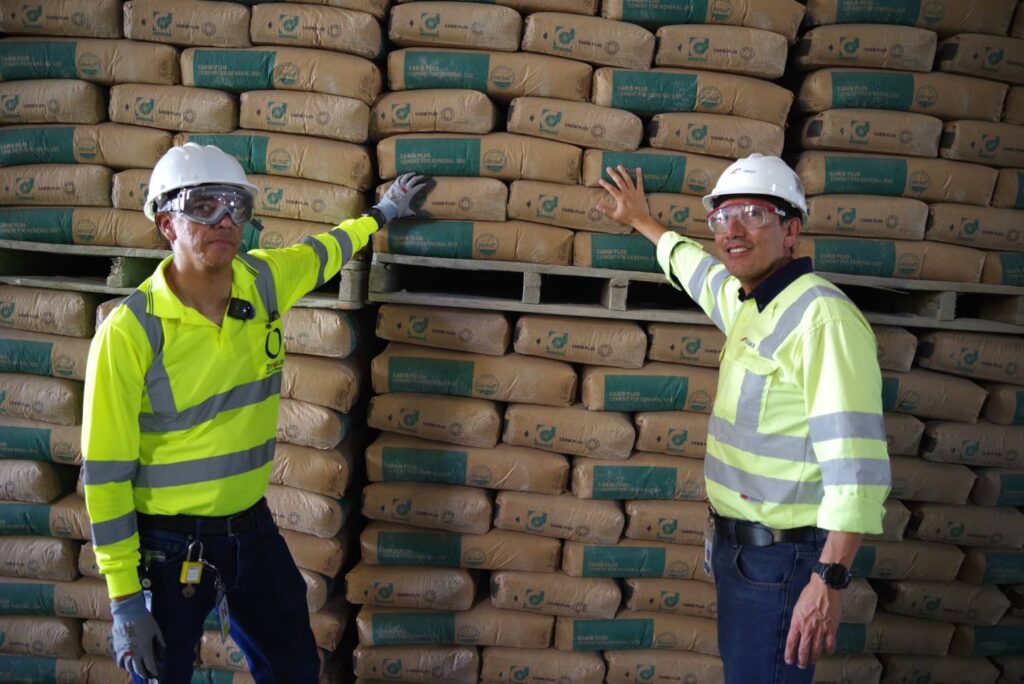
    Jamaica’s government has moved to address a critical national cement shortage triggered by extreme weather and rising demand by approving temporary import permits for five private companies, a decision that has drawn a mixed response from major stakeholders in the country’s construction sector. Caribbean Cement Company, Jamaica’s dominant domestic cement producer, has so far declined to publicly comment on the policy shift, but two leading construction industry figures have shared divergent perspectives on the short-term relief and long-term implications of the move.

    Norman Horne, executive chairman of ARC Manufacturing Limited, emerged as a prominent supporter of the government’s decision, framing the temporary import expansion as an urgent and necessary step to stabilize Jamaica’s tight cement market. In an interview with the Jamaica Observer on Friday, Horne emphasized that cement is an indispensable commodity across nearly every sector of Jamaican life – even playing a critical role in end-of-life burial arrangements. He explained that the current shortage stems from two overlapping pressures: severe production disruptions at Caribbean Cement caused by Hurricane Melissa in late October 2025 and other weather-related incidents, alongside a sustained surge in national demand that has pushed cement consumption up by between 9 and 15 percent compared to previous levels.

    “Cement forms the backbone of Jamaica’s construction industry and national infrastructure,” Horne noted, as he commended the administration for acting quickly to address the gap. Even as he backed the temporary import plan, however, Horne stressed that the measure should only be a short-term fix. He pointed out that Caribbean Cement has made significant long-term investments in Jamaica’s domestic production ecosystem, leveraging local raw materials to support Jamaican workers, sustain local households, and contribute directly to national gross domestic product. Once market conditions stabilize, Horne said he expects Caribbean Cement to resume its role as the nation’s primary cement supplier, noting that Jamaica’s long-term economic interest lies in expanding domestic production rather than relying on imported goods.

    The temporary import plan was first announced by Senator Aubyn Hill, Minister of Industry, Investment and Commerce, during a post-Cabinet media briefing earlier this week. Hill confirmed that the five approved firms will hold import rights for a six-month period, with allocated tonnages split across the group: Jamaica Logistics International Limited and Hard Rock Cement will each be permitted to bring in 100,000 tonnes of cement, Tank-Weld Metals and Island Concrete Limited each receive a 60,000-tonne quota, and Gore Developments Limited will be allowed to import 20,000 tonnes. In addition to the new permits granted to the five companies, Hill also announced an expansion of the existing import quota for Buying House Company Limited – Jamaica’s long-standing authorized cement importer, which has held import rights since 2006 – by an additional 150,000 tonnes.

    Richard Mullings, president of the Incorporated Masterbuilders Association of Jamaica, told the Jamaica Observer that the organization welcomes the addition of new supply and limited market competition that will ease immediate pressures on contractors. Like Horne, Mullings acknowledged that the temporary measure will address urgent near-term demand gaps, but he raised pointed questions about the government’s lack of a clear long-term strategy to guarantee a consistent, sustainable, and resilient domestic cement supply.

    Mullings noted that while the government has framed the new imports as a strictly short-term intervention, he has yet to see any formal plans or monitoring mechanisms to ensure that quota holders meet their supply commitments, or to prevent a repeat of the damaging shortages the country is currently experiencing. His organization has already submitted formal correspondence to Minister Hill seeking clarification on these monitoring mechanisms, as well as details on how the government will uphold existing policies designed to protect local contractors. Mullings argued that the administration has a responsibility to enforce the statutory margin of preference already written into regulation that is intended to protect domestic contractors’ market share in Jamaica’s local economy. Going forward, industry leaders will be watching closely for the government to release its long-term strategy for shoring up domestic cement production and reducing the country’s vulnerability to future supply shocks.

  • Puerto Plata, world epicenter of cruises with the Pamac Cruise Summit

    Puerto Plata, world epicenter of cruises with the Pamac Cruise Summit

    The Dominican Republic’s northern coastal province of Puerto Plata has secured the right to host the 2026 Pamac Cruise Summit, one of the most influential annual gatherings for the worldwide cruise sector, organized by the Florida-Caribbean Cruise Association (FCCA). Scheduled to run from June 22 to 26, 2026, the summit is set to draw a high-profile crowd including C-suite executives from leading global cruise lines, destination management representatives from across the Americas, infrastructure investors, and other key strategic stakeholders across the cruise value chain.

    For more than 10 years, the Pamac Cruise Summit has held the status of the flagship annual conference for FCCA Platinum members. Over that time, it has evolved into a vital industry platform that facilitates knowledge sharing, partnership building, and collaborative growth between major cruise operators and coastal and island destinations across the Caribbean and Latin America. It is widely regarded as a key space for aligning industry priorities, addressing common challenges, and unlocking new opportunities for regional tourism development.

    Puerto Plata’s selection as the 2026 host comes on the back of its already strong performance as a leading cruise destination in the Dominican Republic. Official data from May of this year shows that the province’s two major cruise ports handled 86% of all cruise passenger arrivals to the entire country. Of that total, Amber Cove accounted for 49% of the national volume, welcoming 18,802 passengers, while Taino Bay took a 37% share with 51,233 cruise visitors docking at its terminal.

    Regional Tourism Director Carlos Atahualpa Paulino emphasized that the FCCA’s decision to award the summit to Puerto Plata is far more than just an event win: it represents a major vote of confidence in both the province and the Dominican Republic as a whole. “This selection will put our destination front and center in the conversations of the entire international cruise industry,” Paulino noted. He also credited the successful bid to the targeted efforts led by Dominican Minister of Tourism David Collado, as well as the long-standing cooperation agreement between the Dominican national government, led by President Luis Abinader, and the FCCA.

    Local and national tourism authorities project that the 2026 summit will deliver a substantial, multi-sector economic boost to Puerto Plata long before the first attendees arrive. The event is expected to drive significant increases in hotel occupancy throughout the hosting period, while also injecting new revenue into local transportation providers, family-owned restaurants and gastronomy businesses, retail outlets, and other auxiliary tourism services that rely on visitor spending.

    Beyond immediate economic gains, industry leaders and government officials believe the summit will create long-term value for the Dominican Republic. It is expected to amplify the destination’s global brand exposure, draw new foreign and domestic investment into cruise infrastructure and tourism services, and cement the position of both Puerto Plata and the Dominican Republic as leading, reliable benchmarks for cruise and leisure tourism across the entire Caribbean region.

  • Over 100 hospitality professionals complete Caribbean Supercharged Training in Grenada

    Over 100 hospitality professionals complete Caribbean Supercharged Training in Grenada

    Grenada’s tourism sector has marked a major milestone in workforce development, with more than 100 local hospitality professionals successfully completing the second level of the Caribbean Supercharged Training Series, a collaborative upskilling initiative led by the Caribbean Hotel and Tourism Association Education Foundation (CHTAEF) and the Tourism Enhancement Fund of the Grenada Hotel and Tourism Association (GHTA).

    The industry-focused training program was designed to address core skill gaps across the regional hospitality sector, with coursework structured around three high-priority competency areas: supervisory and management leadership, Hazard Analysis and Critical Control Points (HACCP) food safety protocols, and customer service excellence through the specialized “The Big Score: Service with a Difference” curriculum. All sessions were led by experienced industry facilitators Louise John and Suzanne Brooks, with on-the-ground support from two prominent local Grenadian hotels, Point Salines Hotel and True Blue Bay Hotel, which served as local program partners.

    A formal closing ceremony to honor the graduating cohort was chaired by Arlene Friday, Chief Executive Officer of GHTA, who opened the event by welcoming participating learners, program partners, lead trainers, cross-sector tourism stakeholders, and media representatives. In her opening address, Friday praised the graduates for their consistent dedication to ongoing professional development and self-improvement, emphasizing that the collective upskilling effort directly elevates three critical pillars of the destination’s tourism industry: leadership capacity, standardized food safety, and customer service excellence. “To the participants: you came eager to learn, you engaged fully, and you committed to change,” Friday stated in her remarks. “That commitment matters — not just to your individual properties, but to the reputation and long-term future of our entire Grenadian destination.”

    Elvis Lewis, President of GHTA, used his remarks to spotlight the critical role of the GHTA Tourism Enhancement Fund in enabling accessible, industry-aligned training for local hospitality workers, and urged graduates to translate their new knowledge and skills into tangible improvements in their daily work, rather than treating the certification as a final career milestone. “The certificate you receive today is not the destination; it is a passport to the next phase of your professional and personal growth,” Lewis told the graduating cohort.

    A message of encouragement from CHTAEF Chair Karolyn Troubetzkoy was delivered on her behalf by Maxine Pierre, while official remarks from Senator the Honourable Adrian Thomas, Grenada’s Minister for Tourism, the Creative Economy and Culture, were presented by Chief Planning Officer Petra Fraser. The minister’s statement called on graduates to embrace the training as a starting point for transformative change across the sector. “Let this training be the beginning of a new attitude, a new confidence, a new standard, and a new commitment to excellence,” the statement read. “The tourism industry of tomorrow will not be built by buildings alone, beaches alone, or marketing slogans alone. It will be built by trained people, confident people, creative people, disciplined people, and patriotic people who understand that every visitor interaction is an opportunity to lift the image of Grenada.”

    This second iteration of the Caribbean Supercharged Training Series underscores the shared, long-term commitment of CHTAEF, the GHTA Tourism Enhancement Fund, and local industry partners to investing in Grenada’s tourism workforce and raising the bar for the overall visitor experience on the island.

  • ECAB Advises Customers Visa and Mastercard Cards No Longer Accepted in Cuba

    ECAB Advises Customers Visa and Mastercard Cards No Longer Accepted in Cuba

    Travelers and businesses planning financial activity in Cuba are facing a major shift in payment options, as all Visa and Mastercard branded cards are no longer accepted for transactions across the country. The change stems from a recent United States Executive Order signed into effect on May 1, 2026, which has triggered operational restrictions for the international financial partner that previously handled all credit card processing for Cuban financial institutions.

    After the new executive order entered force, Cuba’s Central Bank issued a formal notification confirming that the third-party processing partner has significantly scaled back its operations in the jurisdiction, leaving no infrastructure to support Visa and Mastercard transactions. This suspension applies to all card types issued by the Eastern Caribbean Amalgamated Bank (ECAB) and other issuing institutions, including standard credit cards, debit cards linked to personal checking accounts, and prepaid cards loaded for travel.

    ECAB and other card-issuing institutions have issued urgent advisories to their customer bases urging anyone with upcoming travel or business plans in Cuba to arrange alternative payment methods well in advance of their departure. Financial leaders note that failing to prepare alternate payment options could lead to significant disruptions to travel plans, business operations, and daily purchases during a stay in Cuba.

    In their advisory, bank management apologized for the unplanned disruption this policy change creates for cardholders, emphasizing that the suspension is a result of external regulatory changes outside of the issuing bank’s control. They expressed gratitude for customers’ patience and understanding as the global financial system adjusts to the new policy framework. Customers with questions about the change or concerns about upcoming travel are encouraged to reach out to their bank’s customer support team for further guidance.

  • Digicel introduces new Digi-Duo mobile and fibre bundle

    Digicel introduces new Digi-Duo mobile and fibre bundle

    Digicel St. Lucia has launched an innovative new convergence package called Digi-Duo, merging mobile connectivity and home fibre internet into a single, cost-effective offering built for the needs of contemporary families.

    Crafted to address the growing demand for reliable connectivity both at home and while out and about, the new bundle promises faster speeds, greater overall value, and a more seamless user experience than managing separate mobile and fixed-line services from different providers.

    Pricing for the entry-level Digi-Duo plan starts at just $191 per month. For this monthly rate, new customers receive 20GB of mobile data and a 350 Mbps home fibre connection, all consolidated onto one bill for added convenience. The company has also structured attractive perks for existing subscribers: current Digicel+ customers can add mobile service to their existing home internet plan for only $55 extra per month, unlocking enhanced savings. Additionally, users can extend the full benefits of the bundle to a second household member for just $50 more monthly, making it simple for the whole family to access high-quality connectivity without breaking the bank.

    This new bundle builds on Digicel’s ongoing pledge to expand access to faster, more affordable internet. The 350 Mbps entry-level home fibre speed, first rolled out across the provider’s network in 2025, is now a standard feature of all base-tier Digi-Duo plans. Backed by Digicel’s upgraded national network, the combined service supports a wide range of modern connected activities, from high-definition streaming across multiple devices to uninterrupted video calls with family and friends.

    Joel Wallace, CEO of Digicel St. Lucia, shared his perspective on the launch in an official statement. “Our focus is simple: to give customers more speed, more value, and more reasons to choose Digicel,” Wallace said. “From our new Digi-Duo bundle, which brings together the best of mobile and home fibre connectivity, to our enhanced entry-level fibre speeds, we are committed to delivering smarter, better connectivity experiences that power everyday life. Our ongoing investments in the network and offerings ensure that customers truly feel the difference in performance and value.”

    Wallace, who was appointed Regional CEO for Digicel’s operations across Saint Lucia, Saint Vincent, Grenada and Dominica earlier in 2025, brings decades of industry experience to the role. He has continued to lead customer-focused product innovation and network quality improvements across the company’s mobile, residential fibre, and business service lines.

    Digicel maintains its long-term commitment to expanding and upgrading digital infrastructure across the Caribbean, with a focus on rolling out customer-centric solutions that foster meaningful real-world connections. Interested customers can sign up for the new Digi-Duo bundle either in-person at any Digicel retail location or online via the company’s official St. Lucia website at https://www.digicelgroup.com/lc.