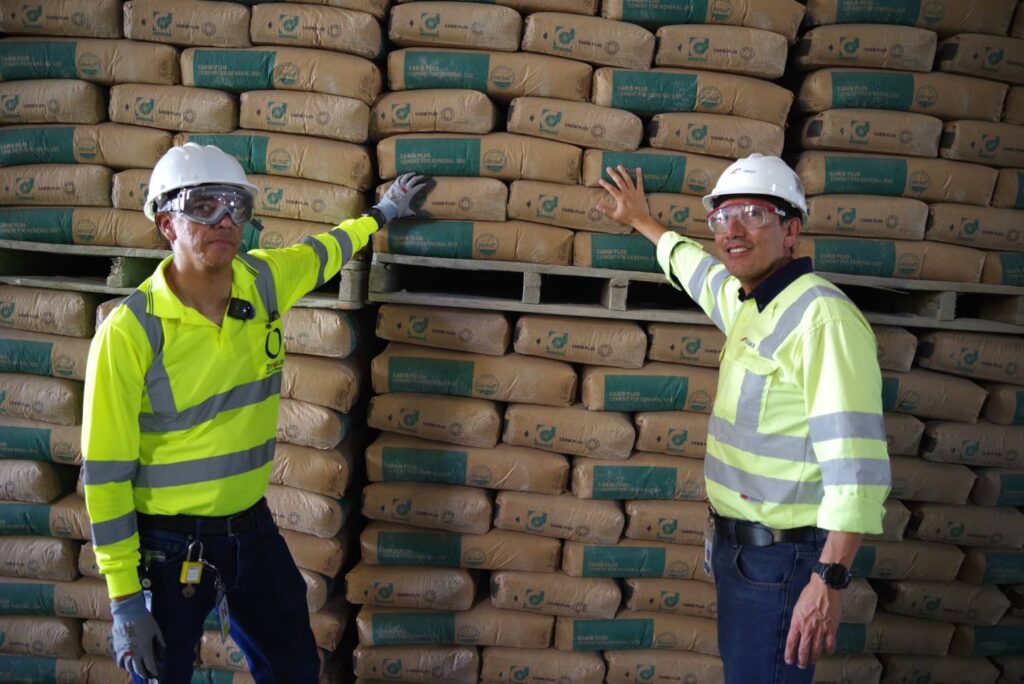
Jamaica’s government has moved to address a critical national cement shortage triggered by extreme weather and rising demand by approving temporary import permits for five private companies, a decision that has drawn a mixed response from major stakeholders in the country’s construction sector. Caribbean Cement Company, Jamaica’s dominant domestic cement producer, has so far declined to publicly comment on the policy shift, but two leading construction industry figures have shared divergent perspectives on the short-term relief and long-term implications of the move.
Norman Horne, executive chairman of ARC Manufacturing Limited, emerged as a prominent supporter of the government’s decision, framing the temporary import expansion as an urgent and necessary step to stabilize Jamaica’s tight cement market. In an interview with the Jamaica Observer on Friday, Horne emphasized that cement is an indispensable commodity across nearly every sector of Jamaican life – even playing a critical role in end-of-life burial arrangements. He explained that the current shortage stems from two overlapping pressures: severe production disruptions at Caribbean Cement caused by Hurricane Melissa in late October 2025 and other weather-related incidents, alongside a sustained surge in national demand that has pushed cement consumption up by between 9 and 15 percent compared to previous levels.
“Cement forms the backbone of Jamaica’s construction industry and national infrastructure,” Horne noted, as he commended the administration for acting quickly to address the gap. Even as he backed the temporary import plan, however, Horne stressed that the measure should only be a short-term fix. He pointed out that Caribbean Cement has made significant long-term investments in Jamaica’s domestic production ecosystem, leveraging local raw materials to support Jamaican workers, sustain local households, and contribute directly to national gross domestic product. Once market conditions stabilize, Horne said he expects Caribbean Cement to resume its role as the nation’s primary cement supplier, noting that Jamaica’s long-term economic interest lies in expanding domestic production rather than relying on imported goods.
The temporary import plan was first announced by Senator Aubyn Hill, Minister of Industry, Investment and Commerce, during a post-Cabinet media briefing earlier this week. Hill confirmed that the five approved firms will hold import rights for a six-month period, with allocated tonnages split across the group: Jamaica Logistics International Limited and Hard Rock Cement will each be permitted to bring in 100,000 tonnes of cement, Tank-Weld Metals and Island Concrete Limited each receive a 60,000-tonne quota, and Gore Developments Limited will be allowed to import 20,000 tonnes. In addition to the new permits granted to the five companies, Hill also announced an expansion of the existing import quota for Buying House Company Limited – Jamaica’s long-standing authorized cement importer, which has held import rights since 2006 – by an additional 150,000 tonnes.
Richard Mullings, president of the Incorporated Masterbuilders Association of Jamaica, told the Jamaica Observer that the organization welcomes the addition of new supply and limited market competition that will ease immediate pressures on contractors. Like Horne, Mullings acknowledged that the temporary measure will address urgent near-term demand gaps, but he raised pointed questions about the government’s lack of a clear long-term strategy to guarantee a consistent, sustainable, and resilient domestic cement supply.
Mullings noted that while the government has framed the new imports as a strictly short-term intervention, he has yet to see any formal plans or monitoring mechanisms to ensure that quota holders meet their supply commitments, or to prevent a repeat of the damaging shortages the country is currently experiencing. His organization has already submitted formal correspondence to Minister Hill seeking clarification on these monitoring mechanisms, as well as details on how the government will uphold existing policies designed to protect local contractors. Mullings argued that the administration has a responsibility to enforce the statutory margin of preference already written into regulation that is intended to protect domestic contractors’ market share in Jamaica’s local economy. Going forward, industry leaders will be watching closely for the government to release its long-term strategy for shoring up domestic cement production and reducing the country’s vulnerability to future supply shocks.